A canal · a secret plan · the first armed peacekeepers
The Suez Crisis of 1956
Who Owns a Shortcut?
Seventy years after the Suez Crisis, this film explains the canal and the war fought over it. Why a canal across the Isthmus of Suez shortened the route from Europe to Asia, why it needs no locks, how it was dug, at first with forced labour, and opened in 1869, and how Britain came to control it. Then 1956: the Aswan Dam funding withdrawn, Nasser's nationalisation, the secret Protocol of Sèvres, Israel's invasion of Sinai, the Anglo-French landings at Port Said, and the pressure from Washington, Moscow and the United Nations that stopped the war and created the first armed UN peacekeeping force. Each government's account is given in its own terms, and casualty figures are attributed. Race ships around Africa and through the canal, compare sea levels, set the secret plan against what happened, and step through the days.
Interactive 3D film11 min1798 to 2026Published 21 October 2026
A canal, a secret plan and the first armed peacekeepers
Who owns a shortcut?
Seventy years since the Suez Crisis.
Seventy years ago this month, Israel invaded Egypt's Sinai peninsula. Within a week, British and French paratroopers were landing at the mouth of the Suez Canal.
It was a war over a channel of water in the desert, and it was stopped not on the battlefield but by money, threats and a vote at the United Nations.
Why did one canal matter so much? And whose was it?
29 Oct
Israeli forces enter Sinai
5 Nov
British and French paratroopers at Port Said
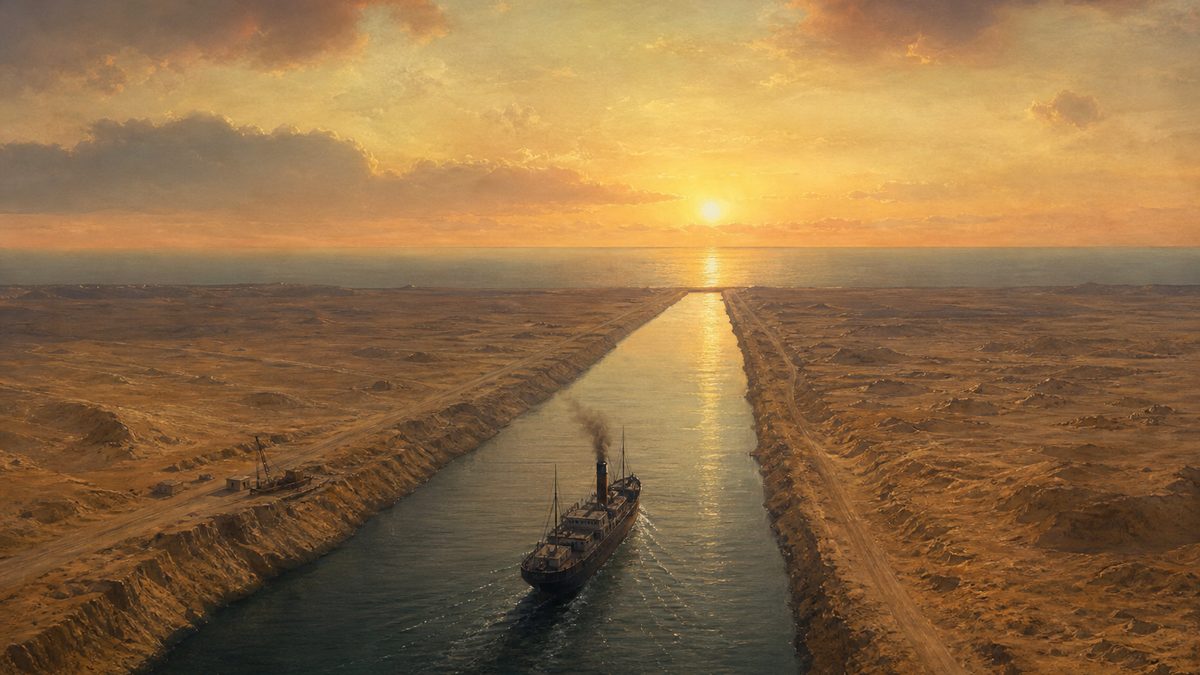
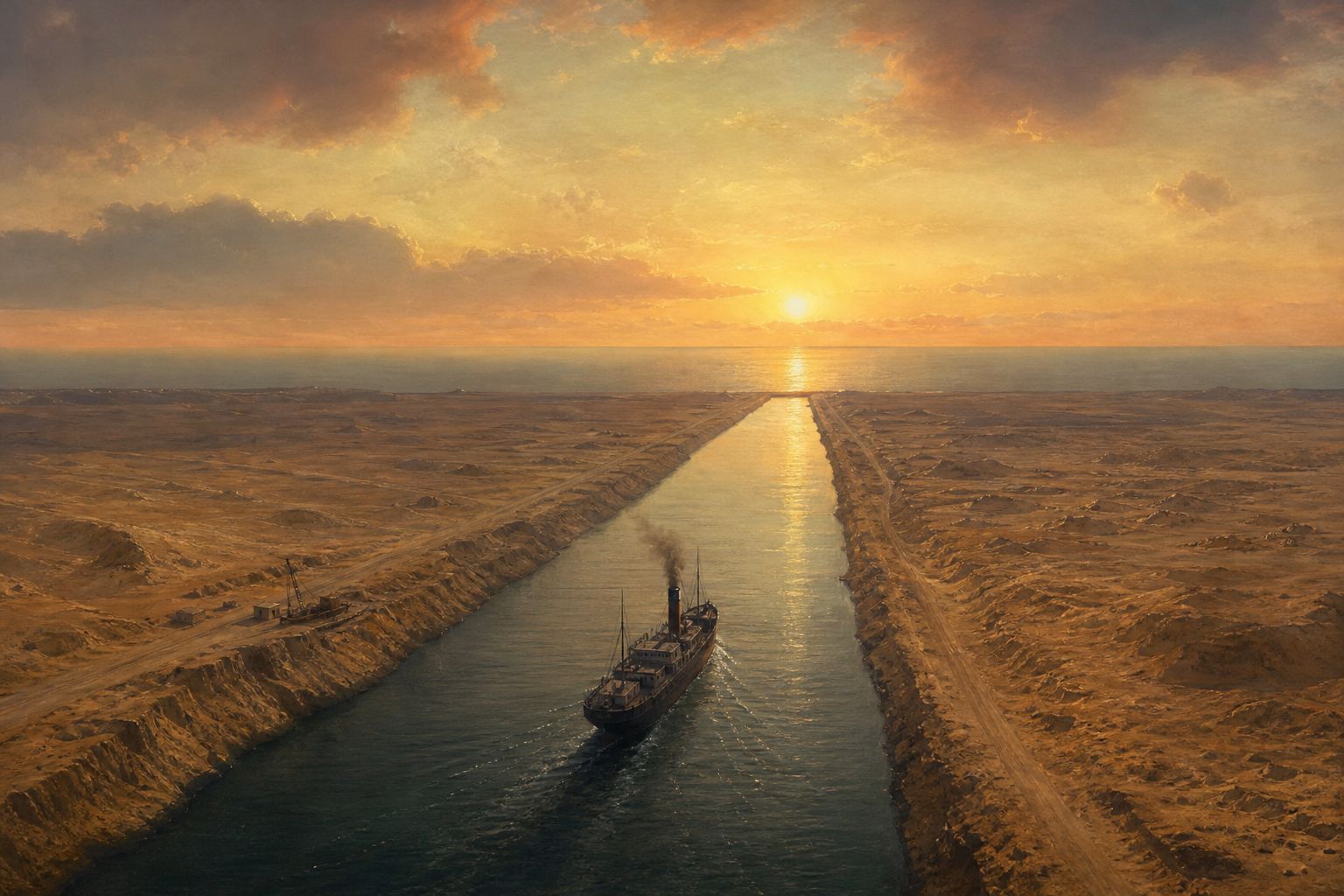
Autumn 1956A road of water The canal runs entirely through Egyptian territory, from Port Said to Suez. AI-generated still.
Egypt: a national waterway on Egyptian soil
Britain: protecting an international waterway
France: Egypt’s support for the rebels in Algeria
Israel: raids from Gaza and a blocked sea lane
Four governments, four accounts
Prologue · The anniversary
Seventy years on
Israel’s invasion of Sinai began on 29 October 1956; British and French troops landed at Port Said on 5–6 November. In 2026 talks mark the crisis “seventy years on”: Culture Perth & Kinross on 27 October, and the National Army Museum in London on 11 December, which recalls that the failure of the operation led to the resignation of Prime Minister Anthony Eden.
How to use: pick a chapter or press ← → · drag to rotate · four steps have buttons you can press.
Find the narrow neck of land where Africa meets Asia: the Isthmus of Suez. On one side lies the Mediterranean; on the other, the Red Sea, which opens to the Indian Ocean.
Before 1869, a ship from Europe to India had to sail all the way around Africa, past the Cape of Good Hope.
A canal through the isthmus cut the sea route from Rotterdam to Mumbai by about forty-one percent, according to the geographer Jean-Paul Rodrigue. Press Sail both routes.
164 km
long when it opened in 1869
193 km
long today, after widening
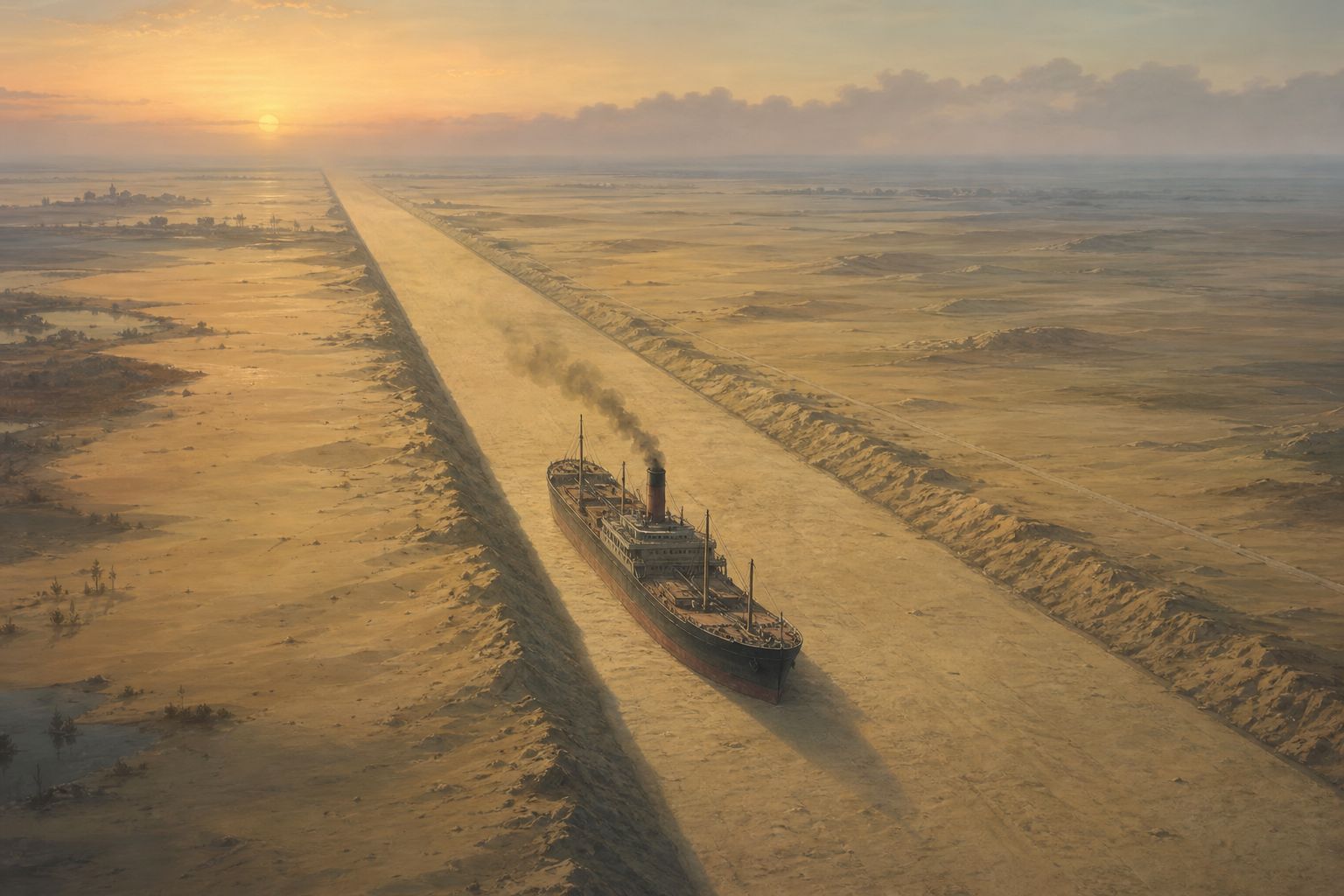
The canalA ship in the desert In normal years about fifty ships a day used the canal (History.com); in late August 2026 traffic was still 36% below normal (Lloyd’s List Intelligence). AI-generated still.
around Africa
21,000 km
through Suez
12,000 km
Persian Gulf to northern Europe (Rodrigue)
Chapter I · The shortcut
Why a canal there
The Isthmus of Suez is the land bridge between Africa and Asia, between the Mediterranean and the Gulf of Suez, an arm of the Red Sea. The canal runs from Port Said in the north to Suez in the south. It was 164 km long and 8 m deep at its opening in 1869 and is about 193 km long today (Wikipedia, Suez Canal).
Jean-Paul Rodrigue, The Geography of Transport Systems: the canal cut about 6,000 km from the Asia–Europe journey; Persian Gulf to northern Europe fell from 21,000 km around Africa to 12,000 km; Rotterdam to Mumbai became 41% shorter.
During Napoleon's expedition to Egypt, from 1798, his surveyors concluded that the Red Sea stood about eight and a half metres higher than the Mediterranean. A canal would have needed locks, chambers that raise and lower ships, and the plan was dropped.
They were wrong. The two seas are almost level, with the Red Sea only about a metre higher, and the land between them is flat, with lakes in the middle.
So the Suez Canal has no locks at all. In Panama, by contrast, locks lift ships twenty-six metres. Press the buttons to compare.
~1850 BC Senusret III: Red Sea to the Nile
~600 BC Necho II begins a canal, unfinished
~500 BC Darius I completes one
8th century AD the old canals are filled in
Earlier canals (CNRS; Wikipedia)
+8.5 m
Red Sea above the Mediterranean (a mistake)
What the 1798 survey believed
~1.2 m
Red Sea above the eastern Mediterranean
0
locks on the Suez Canal
What it really is
Suez Canal
0 m
Panama Canal
26 m
How high ships are lifted
Chapter I · The shortcut
Why Suez needs no locks
CNRS (historian Caroline Piquet): canals linked the Red Sea to the Nile Delta from the reign of Senusret III in the early second millennium BC, and were filled in for good in the 8th century AD; Bonaparte’s 1798 expedition made the measurements behind the first feasibility studies. Wikipedia (Suez Canal): Necho II began a canal around 600 BC and Darius I completed one; Napoleon’s plan was abandoned on the mistaken belief that the Red Sea was 8.5 m higher, which would have required locks. In fact the Red Sea is about 1.2 m higher than the eastern Mediterranean, and the flat terrain lets the canal run without locks.
Panama Canal locks (Wikipedia): the locks lift ships 26 m to the canal’s main level. The cross-section in the scene is not to scale; heights are exaggerated so they can be seen.
In 1854 a French diplomat, Ferdinand de Lesseps, won permission from Egypt's ruler, who governed under the Ottoman sultan, to found the Suez Canal Company. It would run the canal for ninety-nine years, and then hand it to Egypt.
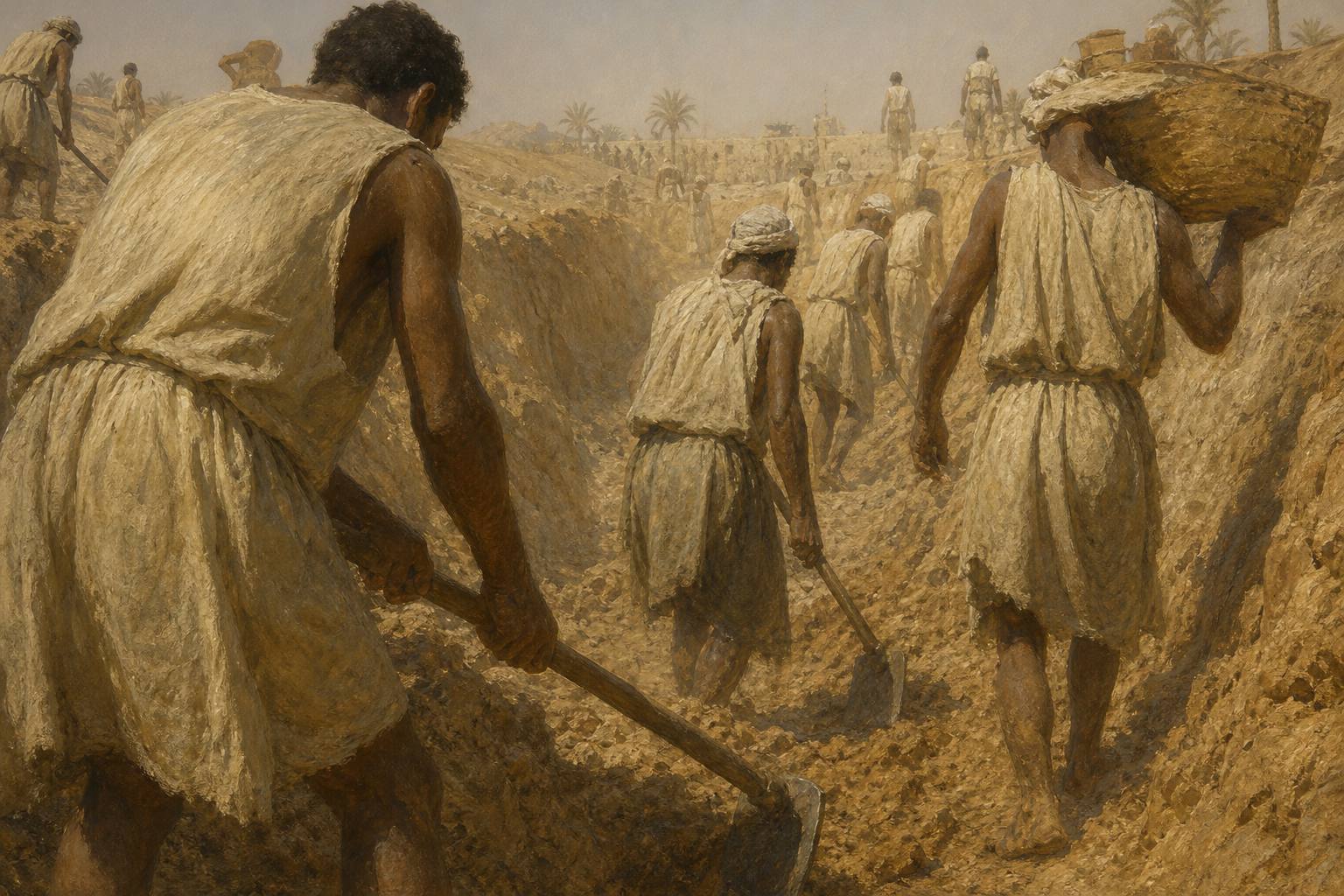
Digging began in 1859. Egypt's ruler supplied forced labour, the corvée: peasants called up for a month at a time.
The historian Caroline Piquet writes that about four hundred thousand were mobilised in the first years, and that tens of thousands are thought to have died.
After protests, and a ruling by the French emperor Napoleon the Third, hired workers and steam dredgers replaced the forced labour. On the seventeenth of November 1869, the canal opened.
99 years
of company operation, then back to Egypt (in 1968)
The concessionThe corvée Nasser later spoke of 120,000 deaths; Piquet says no reliable archive supports that figure. AI-generated still.
1859–62
~400,000 peasants called up, a month at a time (Piquet)
halt
the Ottoman government orders work stopped
The corvée yearsPort Said, 1869 After Britain criticised the corvée, Napoleon III arbitrated and workers from Greece, Italy and Dalmatia were hired. AI-generated still.
Chapter I · The shortcut
Building the canal
CNRS (Caroline Piquet): in 1854 de Lesseps, a French diplomat close to the Viceroy, obtained authorisation to found the Suez Canal Company, with operating rights for 99 years; under the 1856 contract Egypt would take over in 1968. The Viceroy proposed corvée labour, mobilising peasants for a month at a time; between 1859 and 1862 about 400,000 fellahs were mobilised and tens of thousands are thought to have died. Nasser later cited 120,000 deaths, but no accurate archives support that figure. After British criticism, Napoleon III arbitrated; foreign labourers and dredgers replaced the corvée. Wikipedia: work began on 25 April 1859 and the canal opened on 17 November 1869.
Shares, an occupation and a treaty on free passage.
In 1875 Egypt was bankrupt. Its ruler, Ismail, sold his forty-four percent of the company to the British government for four million pounds.
The canal ran through Egyptian land, but the company that ran it was now controlled by French and British interests. In 1882 Britain invaded and occupied Egypt.
In 1888 the great powers signed the Convention of Constantinople: the canal was to be open in war as in peace, to every ship, whatever its flag.
A 1936 treaty let Britain keep troops along the canal; by 1954 the base held some seventy thousand. Egypt repealed the treaty in 1951, and violence grew around the base.
In July 1952 army officers, the Free Officers, overthrew King Farouk. By 1954 one of them, Colonel Gamal Abdel Nasser, had taken charge. Britain agreed that year to leave, and by 1956 its troops were gone.
1875: the shares From 1875 the British government was a principal stockholder of the company (Britannica). AI-generated still.
French + British
interests controlling the company by 1956 (Britannica)
1882
British occupation begins
Whose company?
In time of war as in time of peace, to every vessel of commerce or of war, without distinction of flagConvention of Constantinople, 1888
The Canal Zone base National Army Museum: 54 British servicemen were killed in the Canal Zone between 1950 and 1956. AI-generated still.
Jul 1952 Free Officers depose King Farouk
1954 Nasser acting head of state; Britain agrees to go within 20 months
1956 last British unit leaves; Nasser elected president
From king to colonel
Chapter II · Whose canal?
From shares to soldiers
CNRS: after Egypt’s bankruptcy in 1875 Britain bought the Viceroy’s 44% of the company; Britain occupied Egypt in 1882. Wikipedia (Suez Canal): the price was £4 million; the 1888 Convention of Constantinople says the canal shall be open “in time of war as in time of peace, to every vessel of commerce or of war, without distinction of flag”; under the 1936 Anglo-Egyptian treaty the UK kept control of the canal. National Army Museum: Egypt repealed the 1936 treaty in October 1951; by 1954 the garrison numbered 70,000; an agreement of 19 October 1954 gave Britain 20 months to withdraw, and the last British unit left Port Said in 1956.
History (UK): the Society of Free Officers seized power in 1952 and King Farouk abdicated; Colonel Nasser became acting head of state in 1954 and was elected president unopposed in 1956. The shaded base zone on the map is approximate.
Nasser's great project was a high dam on the Nile at Aswan. In December 1955 the United States and Britain offered nearly seventy million dollars toward it, and the World Bank was to lend most of the cost.
But this was the Cold War. In September 1955 Egypt had bought Soviet weapons through Czechoslovakia, and in May 1956 it recognised the People's Republic of China.
On the nineteenth of July 1956, Secretary of State John Foster Dulles withdrew the American offer, and Britain followed. The reason given was difficulty over the financial details.
The Nile at Aswan Engineers had argued since the 1940s that a big dam above the old Aswan dam would raise Egypt’s output. AI-generated still.
~$70 million
from the US and Britain (History.com)
World Bank
to lend the largest share
The offer, December 1955
Sep 1955
Czech arms deal: Soviet-bloc weapons for Egypt (Wikipedia)
16 May 1956
Egypt recognises the People’s Republic of China (Wikipedia)
Cold War ties
the US and Britain cancel their offers
the World Bank package falls with them
History.com: Dulles was also reacting to Nasser’s ties with Moscow
19–20 July 1956
Chapter III · The dam and the decree
The Aswan offer withdrawn
History.com: in December 1955 the United States and Britain announced nearly $70 million for the Aswan Dam; on 19 July 1956 Secretary of State John Foster Dulles withdrew the offer, citing difficulties in arranging the financial details, though the article says his real motive was Nasser’s attacks on Western colonialism and his dealings with the Soviet Union. EBSCO: the World Bank was to take the “lion’s share” of the cost if the US and UK contributed; the British and Americans cancelled their offers on 19 and 20 July. Wikipedia (Suez Crisis): Egypt had recognised the People’s Republic of China on 16 May 1956. Israel’s Ministry of Defense archive names the Czech–Egyptian arms deal as a factor in the regional balance.
The dam was later built with Soviet help and completed in 1970 (EBSCO).
A week later, Nasser spoke to a huge crowd in Alexandria. When he said the name de Lesseps, it was the signal for Egyptian teams to take over the canal.
Today, citizens, he declared, the Suez Canal Company has been nationalised. Its income, he said, would build the dam now, without American aid, and shareholders would be paid at the last price on the Paris stock exchange.
Egypt called the move completely legal: its own canal, on its own soil. In London, Prime Minister Anthony Eden said Nasser was not a man who could be trusted to keep an agreement.
Alexandria, evening Egyptian officials began taking over the company’s offices while the speech was still being broadcast (FRUS). AI-generated still.
nationalise: the state takes ownership of a private company
an Egyptian agency runs the canal
staff must stay at work
shareholders paid at the Paris closing price
The decree (FRUS)
the canal lies wholly on Egyptian soil
Nasser: the move is “completely legal” (EBSCO)
the tolls would repay the dam in five years (National Army Museum)
Egypt’s case
He has shown that he is not a man who can be trusted to keep an agreement.Anthony Eden, 8 August 1956 (National Army Museum)
Britain’s case
Chapter III · The dam and the decree
The nationalisation
US Office of the Historian (FRUS editorial note): on 26 July 1956 Nasser announced in Alexandria a decree nationalising the Suez Canal Company; Egyptian officials began taking over during the broadcast. The canal was to be run by an autonomous Egyptian agency; employees had to remain at work; shareholders were to be compensated at the previous day’s closing price on the Paris Bourse. Nasser said the revenue would let Egypt build the High Dam without American aid. EBSCO: he said the move was “completely legal”. Wikipedia: he used the name “de Lesseps” as the code word for the takeover.
National Army Museum: Egypt expected the tolls to repay the dam’s cost in five years. Office of the Historian: Nasser offered the company “full economic compensation”; in the following months the US proposed a Suez Canal Users’ Association, which failed to win full support.
Maps, routes, arrows and the cross-section in the 3D scenes are simplified sketches, not to scale; positions are approximate.
Talks went on through the summer, without result. Then, from the twenty-second to the twenty-fourth of October, British, French and Israeli leaders met in secret at a house in Sèvres, near Paris.
Each had its own reasons. Israel cited raids by fedayeen fighters from Gaza, then under Egyptian control, Egypt's blockade of the Straits of Tiran, and Egypt's new arms.
France saw Nasser as a backer of the rebels fighting French rule in Algeria. Britain said in public that its quarrel was not with Egypt; privately, Eden wanted Nasser destroyed.
The Protocol of Sèvres set out the plan. Israel would attack first. Britain and France would then demand that both sides pull back ten miles from the canal, and step in if Egypt refused; separating the two armies would be the pretext. Press the buttons to compare the plan with what happened.
Israel: fedayeen raids from Gaza; the Tiran blockade; the Czech–Egyptian arms deal (Israeli MoD archive)
Egypt: the raids grew after Israel’s February 1955 attack on Gaza (Wikipedia)
Gaza and Tiran
France: Egyptian support for Algeria’s FLN rebels
Britain, in public: “our quarrel is not with Egypt, still less with the Arab world”
Eden, in private: Nasser “destroyed” (Museum of the Prime Ministers)
Paris and London
29 Oct, evening: Israel attacks
30 Oct: appeal to both sides, 12 hours to reply
31 Oct: Anglo-French operations if Egypt refuses
Israel to take the Straits of Tiran
Britain and France to appear as “peacemakers” (National Army Museum)
The protocol, in short
denied
Eden later denied any such agreement existed
2002
a copy of the French pages surfaces (Wikipedia)
Kept secret
Chapter IV · The secret plan
The Protocol of Sèvres
Wikipedia (Protocol of Sèvres): from 22 to 24 October 1956 Ben-Gurion, Peres and Dayan for Israel, Bourgès-Maunoury, Pineau and General Challe for France, and Foreign Secretary Selwyn Lloyd and Patrick Dean for Britain met at Sèvres. Israel would attack on the evening of 29 October; on 30 October Britain and France would appeal to both sides to halt and withdraw ten miles from the canal, with Egypt to accept temporary Anglo-French occupation of key positions; if Egypt did not agree within twelve hours, Anglo-French operations would begin early on 31 October; Israel would occupy the western shore of the Gulf of Aqaba and the islands of Tiran and Sanafir. Eden later denied that any such agreement existed.
Israel Ministry of Defense archive: Israel’s aims were to lift the Egyptian blockade of the Straits of Tiran and to remove the threat of fedayeen raids from the Gaza Strip; the Czech–Egyptian arms deal was undermining the military balance. Wikipedia (Suez Crisis): France was allied with Israel against Egypt in part because of Egyptian support for Algeria’s FLN. Museum of the Prime Ministers: Eden said in public “Our quarrel is not with Egypt, still less with the Arab world”, but privately wanted Nasser “destroyed”. The arrows on the map are schematic.
On the evening of the twenty-ninth of October, Israeli paratroopers dropped near the Mitla Pass in Sinai, and Israeli columns pushed across the peninsula, to within about ten miles of the canal.
The next day, Britain and France issued their ultimatum to both sides, with twelve hours to answer. On the thirty-first, British bombers began striking Egyptian airfields.
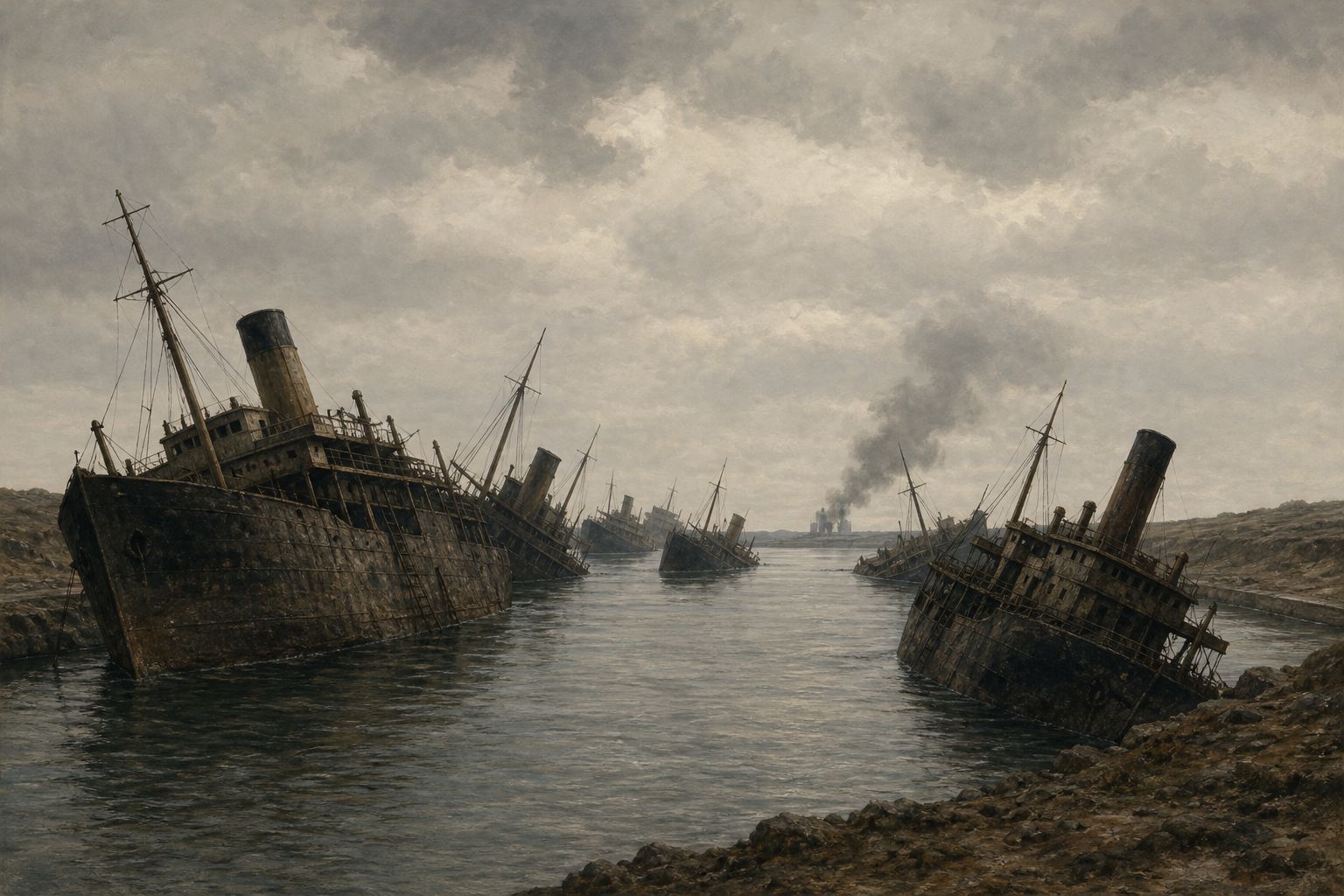
Egypt answered by sinking ships to block the canal. According to the Imperial War Museum, twenty-two were sunk around Port Said alone. That same week, Soviet tanks were crushing the uprising in Hungary.
The Mitla Pass Israel’s Ministry of Defense archive: a paratroop battalion under Raphael Eitan dropped near the pass on the evening of 29 October. AI-generated still.
12 h
to reply
10 miles
each side to pull back from the canal
The ultimatum, 30 OctoberBlockships The canal stayed closed until April 1957. AI-generated still.
“the Tripartite Aggression”: in the Arab world
“the Sinai War” (Operation Kadesh): in Israel
“Suez”: in Britain
One war, several names
Chapter IV · The secret plan
The war in Sinai
Israel Ministry of Defense archive: on the evening of 29 October 1956 Battalion 890, commanded by Raphael Eitan, was dropped near the Mitla Pass; the orders were to create a threat to the canal, occupy the Straits of Tiran and destroy the Egyptian presence in northern Sinai. Office of the Historian: Israeli forces advanced to within 10 miles of the canal. Wikipedia (Suez Crisis): Britain and France sent their ultimatums on 30 October and began attacks on 31 October. Imperial War Museums: from 31 October RAF and Fleet Air Arm aircraft bombed targets in Egypt; twenty-two blockships were sunk in the Port Said area.
The Soviet intervention in Hungary is told in its own film on PlanetPast. Arrows and the 10-mile bands on the map are schematic.
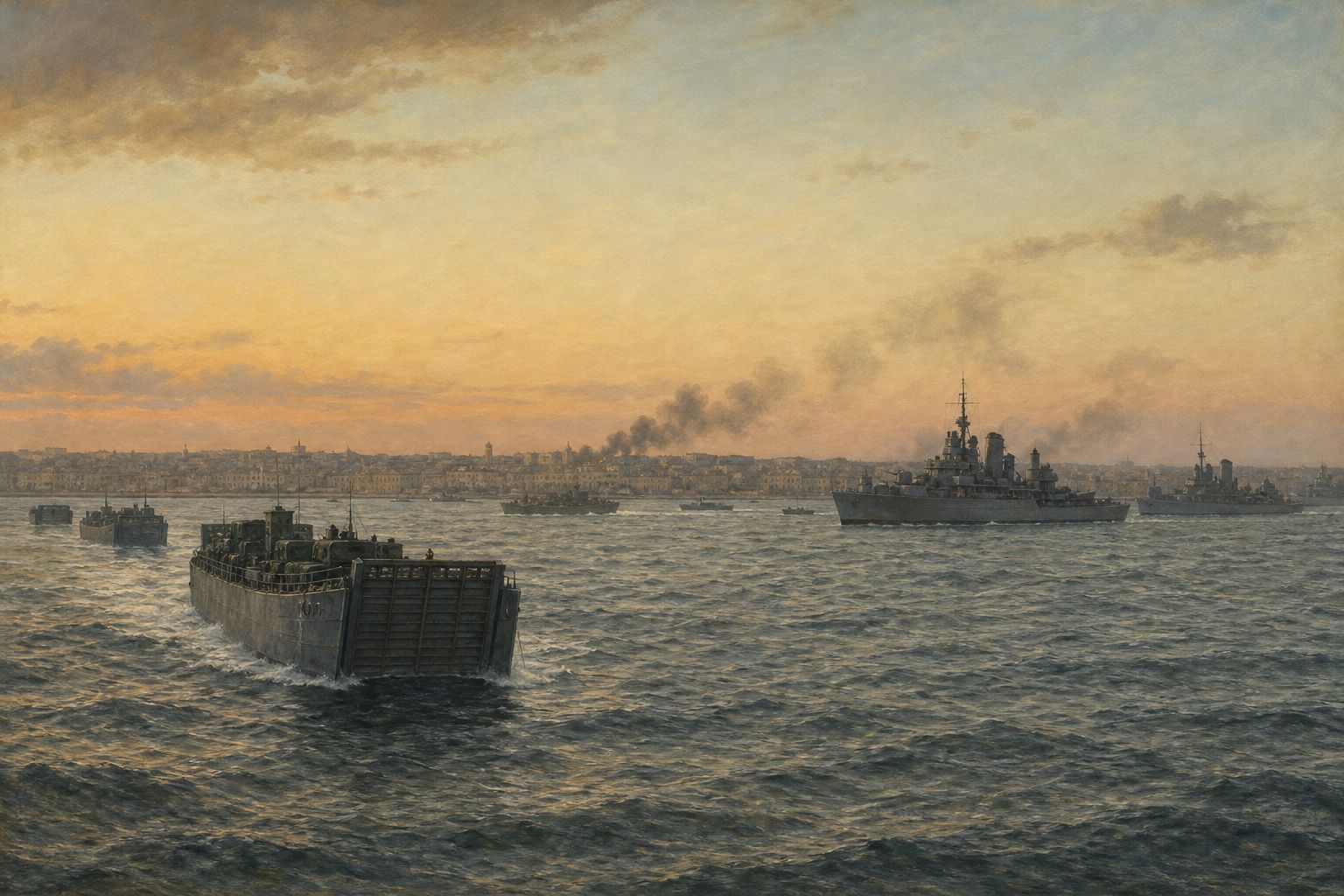
On the fifth of November, British paratroopers landed on El Gamil airfield west of Port Said, and French paratroopers near Port Fuad, across the water.
On the sixth came the landing from the sea, and for the first time British commandos were flown into battle by helicopter.
The human cost is still debated. For the Anglo-French operation, the Imperial War Museum gives sixteen British soldiers killed, and about nine hundred Egyptian soldiers and a thousand civilians killed.
In Sinai, Israel's dead are given as about one hundred and seventy to one hundred and ninety, and Egypt's as roughly one to three thousand. Egypt's total losses were never reliably established.
688
British paratroopers onto El Gamil (IWM)
~500
French paratroopers (IWM)
5 November, 05:15 GMT6 November, 04:30 About 45,000 British troops took part in the operation, according to the Imperial War Museum. AI-generated still.
Egyptian, Sinai (estimates, Wikipedia)
~1,000–3,000
Egyptian civilians (IWM)
~1,000
Egyptian soldiers (IWM)
~900
Israeli (Wikipedia; EBSCO)
172–189
British (IWM)
16
French (Wikipedia)
10
Killed, by source
IWM’s figures are for the Anglo-French operation
Egypt’s dead in Sinai: estimates of ~1,000 to 3,000 (Wikipedia)
no full Egyptian count was ever published
Why the numbers differ
Chapter IV · The secret plan
The landings
Imperial War Museums: at 05:15 GMT on 5 November, 688 men of the 3rd Battalion, Parachute Regiment, dropped onto El Gamil airfield west of Port Said; about 500 French paratroopers jumped at Raswa and later Port Fuad. On 6 November Royal Marine Commandos landed at Port Said with Centurion tanks, and 45 Commando was flown in by helicopter from HMS Ocean and Theseus, the first use of helicopters for this purpose. About 45,000 British troops took part; 16 British were killed and 96 wounded at Suez; about 900 Egyptian soldiers and about 1,000 civilians were killed. National Army Museum: the seaborne invasion began at 4.30 am.
Casualty figures differ between sources and were never fully established for Egypt; the film gives each figure with the source that reports it.
Wikipedia (Suez Crisis) gives Israel 172 killed and 817 wounded, Britain 22 killed, France 10 killed, and says Egyptian deaths were “never reliably established”. EBSCO gives Israel 189 killed and Egypt an estimated 1,030 killed in Sinai.
The invasion had a problem in Washington. President Eisenhower had not been told in advance, and he feared it would push Arab states toward the Soviet Union.
Britain's pound was under attack, and the canal's closure had hit its oil supply. Britain asked the International Monetary Fund for a loan; the Americans blocked it until there was a ceasefire, and threatened to sell their British bonds, which could have made the pound fall.
Moscow, according to the Nobel Prize account, threatened the attackers with atomic weapons.
not told
the US learned of the attack only once it began (NobelPrize.org: not told beforehand)
Not told in advance
sterling under sustained attack
oil supply hit by the canal’s closure
IMF loan only after a ceasefire
threat to sell US-held sterling bonds
Financial pressure (National Army Museum)
$45 million
lost by the Bank of England, 30 Oct–2 Nov (Wikipedia)
A run on the pound
…will place a question upon the very existence of Israel as a StateSoviet Premier Bulganin to Ben-Gurion, 5 November 1956 (Jewish Virtual Library)
Moscow’s warning to Israel
Chapter V · Stopped from outside
Washington, Moscow and the pound
NobelPrize.org: the United States had not been told beforehand, and the Soviet Union threatened the attackers with atomic weapons. National Army Museum: the US feared escalation and Soviet intervention, and Eisenhower worried that backing the attack could push Arab states toward the Soviets; sterling was under sustained attack and oil supply was hit by the canal’s closure; Britain asked the IMF for a loan, which the Americans refused unless a ceasefire was agreed, and they threatened to sell US sterling bond holdings. Wikipedia (Suez Crisis): the Bank of England lost $45 million between 30 October and 2 November.
Bulganin’s note to Ben-Gurion of 5 November 1956 (Jewish Virtual Library) warned that Israel’s actions placed a question upon “the very existence of Israel as a State” and recalled the Soviet ambassador. Office of the Historian: the US also condemned the Soviet intervention in Hungary that week. The arcs on the globe are schematic.
At the United Nations, British and French vetoes, the right of a permanent member to block a decision, stalled the Security Council. So the question went to the General Assembly, where there is no veto, meeting in its first ever emergency special session.
On the second of November it called for a ceasefire, by sixty-four votes to five. Canada's foreign minister, Lester Pearson, proposed a United Nations force to separate the armies.
On the fifth, the Assembly set up the United Nations Emergency Force, the first armed UN peacekeeping force; unarmed UN observers had served since 1948. Britain and France gave in, and the guns fell silent at midnight on the sixth of November.
2 vetoes
a veto: one permanent member blocks a decision; Britain and France block the Council
1st
emergency special session of the General Assembly, 1–10 Nov
31 October
in favour
64
against
5
abstained
6
Resolution 997, 2 November 1956
US vote
the US votes for UN resolutions condemning its allies’ invasion (Office of the Historian)
Washington at the UN
2 Nov Res. 997: ceasefire, withdrawal
4 Nov Res. 998: plan a UN force (Pearson)
5 Nov Res. 1000: UN Emergency Force, commander named
6–7 Nov ceasefire at midnight
Five days at the UN
Chapter V · Stopped from outside
The United Nations steps in
UN Peacekeeping: on 31 October the Security Council adopted no decision because of vetoes by France and the United Kingdom; the matter went to the General Assembly under the “Uniting for Peace” resolution, which met in emergency special session from 1 to 10 November, called for a ceasefire and withdrawal, and established the first UNEF “to secure and supervise the cessation of hostilities”. Wikipedia (first emergency special session): Resolution 997 passed on 2 November by 64 to 5 (Australia, New Zealand, Britain, France, Israel) with 6 abstentions; Lester Pearson introduced the idea of a UN force on 4 November; Resolution 1000 of 5 November established the UN Command. National Army Museum: the ceasefire took effect at midnight on 6–7 November.
NobelPrize.org: Pearson received the 1957 Nobel Peace Prize “for his crucial contribution to the deployment of a United Nations Emergency Force in the wake of the Suez Crisis”. Blocks in the scene are evenly spaced, not to scale in time.
The first United Nations troops, from Denmark and Norway, reached Port Said on the twenty-second of November. British and French forces were gone by the twenty-second of December.
The wrecks were cleared, and the canal reopened to shipping in April 1957, still in Egyptian hands.
Israel completed its withdrawal from Sinai and Gaza on the eighth of March, saying it expected its ships to pass freely through the Straits of Tiran.
In London, Anthony Eden resigned on the ninth of January 1957, officially giving ill health as his reason.
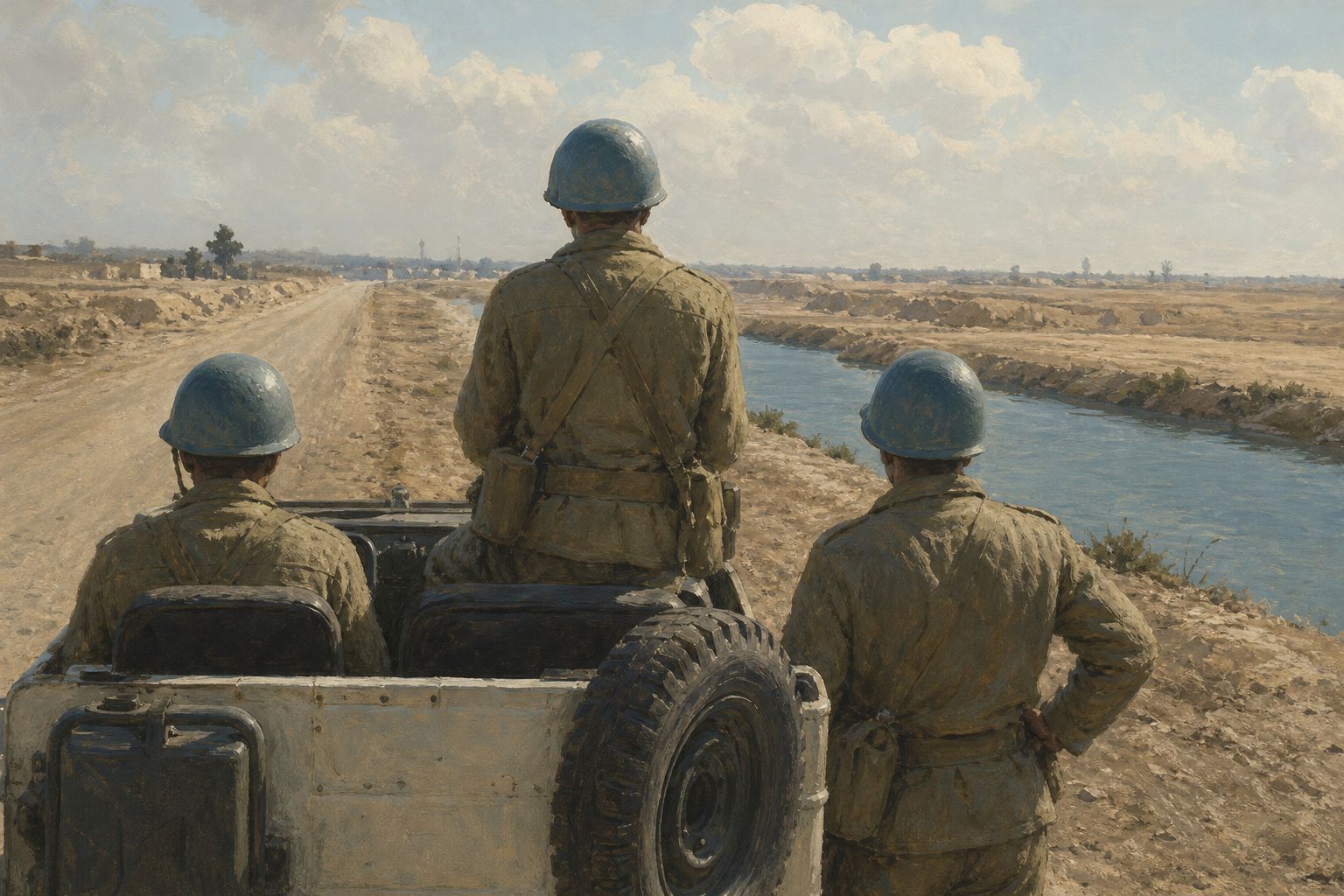
UNEF arrives By the end of November more than 1,300 UN troops were in place (IWM). The force served until June 1967. AI-generated still.
22 Nov 1956 first UNEF troops at Port Said
22 Dec 1956 British and French forces gone
8 Mar 1957 Israeli withdrawal complete
Apr 1957 canal reopens
Withdrawal (UN; IWM)
Israel will protect ships of its own flagIsraeli government statement on withdrawal, 1 March 1957
Eden resigns
Harold Macmillan succeeds him
9 January 1957
Chapter VI · After Suez
Withdrawal and reopening
Imperial War Museums: the first UNEF contingent, from Denmark and Norway, reached Port Said on 22 November 1956; by the end of November over 1,300 UN troops were present; the last British troops left on 23 December; twenty-two blockships were cleared, and the canal reopened in April 1957. UN Peacekeeping: French and British forces left on 22 December 1956; Israel’s withdrawal was completed on 8 March 1957; the UN cleared the canal; UNEF was stationed on Egyptian territory with Egypt’s consent and served until June 1967. National Army Museum: the canal remained under Egyptian sovereignty.
Israeli government statement, 1 March 1957 (Jewish Virtual Library): Israel expected “continued freedom of navigation” in the Gulf of Aqaba and said it would protect ships of its own flag. Britannica and the Museum of the Prime Ministers: Eden resigned on 9 January 1957, giving ill health as his reason; Harold Macmillan succeeded him (National Army Museum). UN positions on the map are schematic.
Suez is often seen as the moment it became clear that Britain could no longer act as a great power without the United States. The crisis strengthened Nasser's standing, and France was humiliated too.
The canal itself closed again from 1967 to 1975, after the Six-Day War, when Israel occupied Sinai. In normal years about fifty ships a day pass through it; in 2026, with trouble in the Red Sea, traffic is still about a third lower.
Who should decide over a waterway that the whole world uses: the country it crosses, or the ships that need it? Seventy years on, that question has not gone away.
Britain: future major operations would need US support (National Army Museum)
Egypt: the canal stays Egyptian; Nasser’s standing rises
Israel: freedom of navigation through the Straits of Tiran
the UN: its first armed peacekeeping force (unarmed observers since 1948)
What historians point to
1869 opened
1956–57 nationalised; closed by war
1967–75 closed after the Six-Day War
2015 a new parallel channel
normal years ~50 ships a day
Aug 2026 36% below normal (Lloyd’s List)
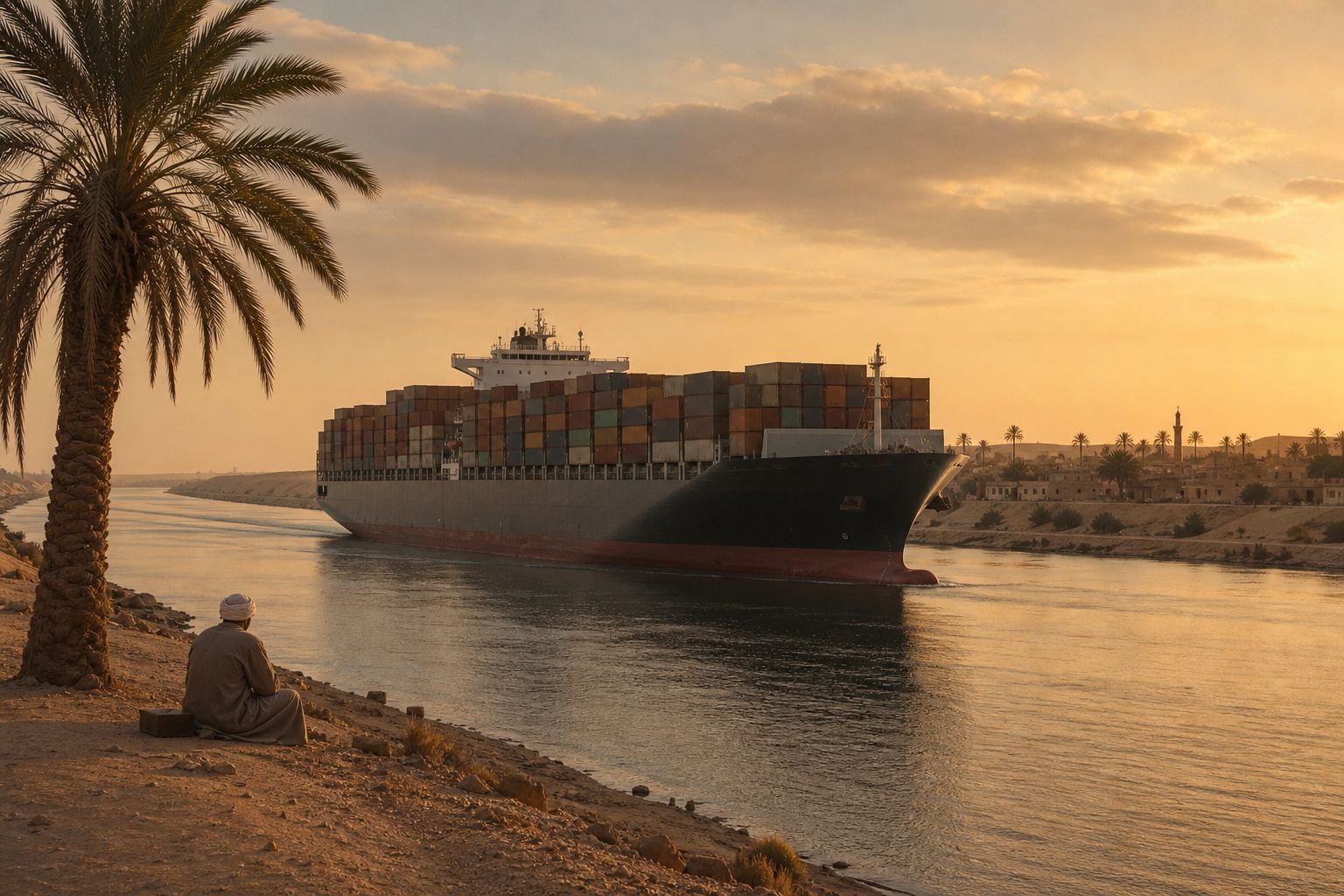
The canal sinceEgypt’s canal Since July 1956 the canal has been run by an Egyptian agency (FRUS). AI-generated still.
1956
the year the canal company became an Egyptian state agency
Seventy years on
Epilogue
Sources
Wikipedia (Suez Crisis): the crisis strengthened Nasser’s standing and led to international humiliation for the British, and historians argue it signified the end of Britain’s role as a superpower; the French were also humiliated. National Army Museum: Britain was no longer in the same league as the US or USSR, and future major operations would need American support. Culture Perth & Kinross: a turning point that hastened the decline of European imperial power. History.com: the canal closed after the 1967 Six-Day War, when Israel occupied Sinai, and reopened in 1975; about 50 ships passed daily in normal times. Lloyd’s List Intelligence: in the week of 24–30 August 2026, Suez transits were 36% below normal levels. UN Peacekeeping: UNEF I was the earliest armed peacekeeping operation; unarmed military observers had been deployed since 1948.
Every date, number and quotation in this film comes from the sources below. Where sources differ, the film says which one it follows.
Casualty figures differ between sources and were never fully established for Egypt; the film gives each figure with the source that reports it.
Stills are AI-generated illustrations, not photographs. They show no real people.
Maps, routes, arrows and the cross-section in the 3D scenes are simplified sketches, not to scale; positions are approximate.