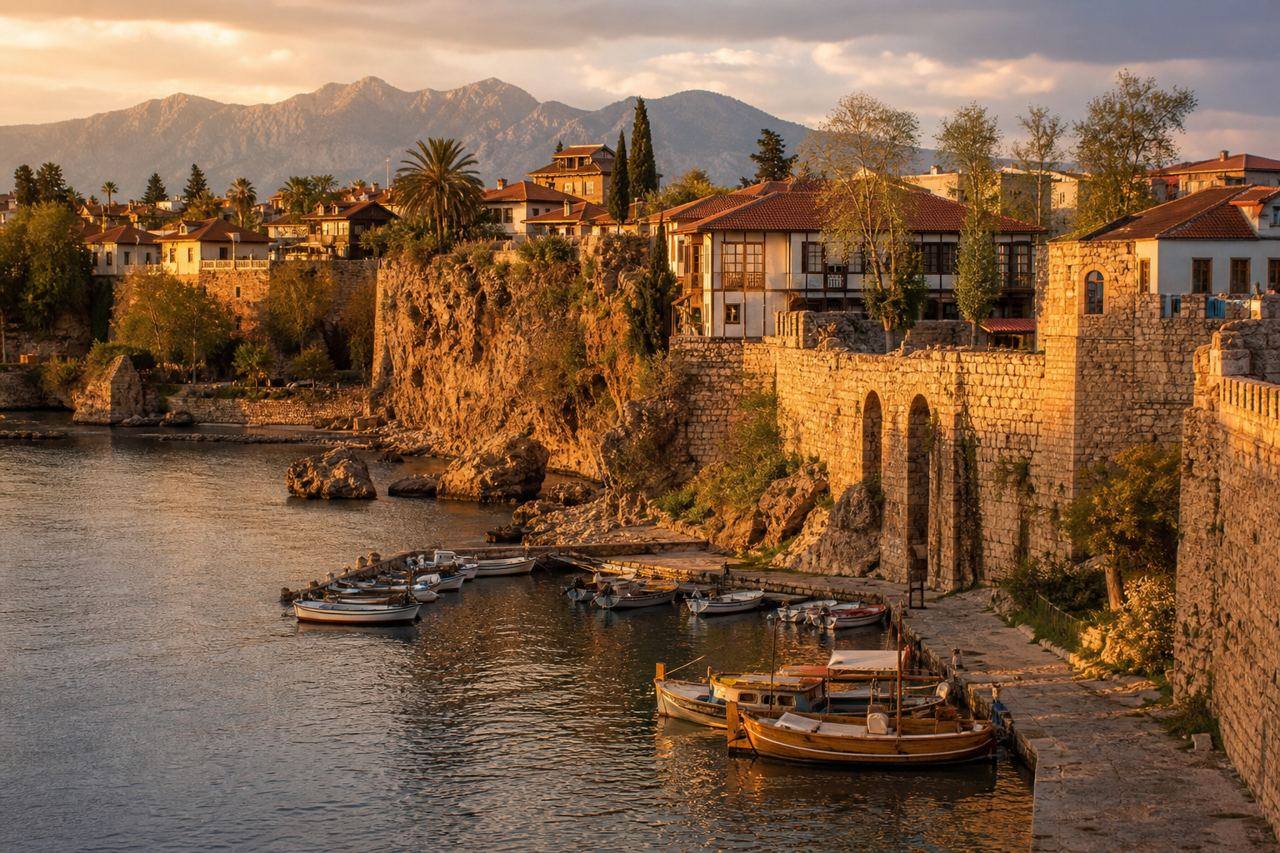
COP31 opens in Antalya, Türkiye, on 9 November 2026, with Australia leading the negotiations. This film explains the machinery behind the headlines: why climate is a problem no country can solve alone, the 1992 climate convention and its split between developed and developing countries, how a COP decides by consensus, what Kyoto, Copenhagen and Paris each tried, the fights over money and loss and damage, how each bloc describes its own position, and how this year's host was chosen.
Interactive 3D film11 min1990 to 2026Published 3 November 2026
How the UN climate talks work, and why this year they meet in Antalya.
Nearly two hundred countries sit down together, and any one of them can block a deal.
So why do they meet every year, and why do they decide almost nothing by vote?
This year the meeting, called COP31, runs from the ninth to the twentieth of November in Antalya, on Türkiye’s Mediterranean coast.
To follow the news, start with the sky we all share.
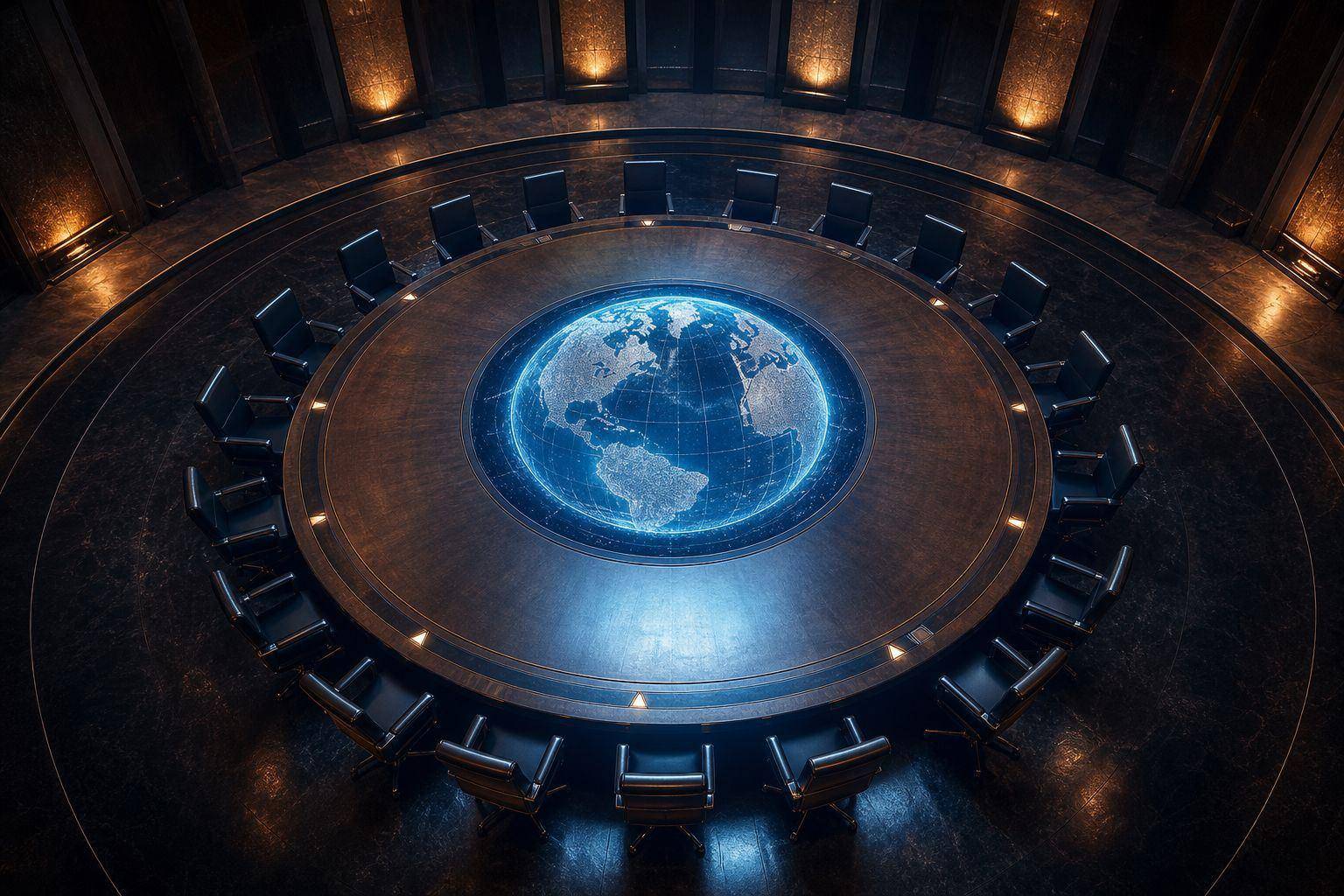
One table Every Party gets a chair; none gets a casting vote. AI-generated still.
9–20 Nov
2026, Antalya, Türkiye
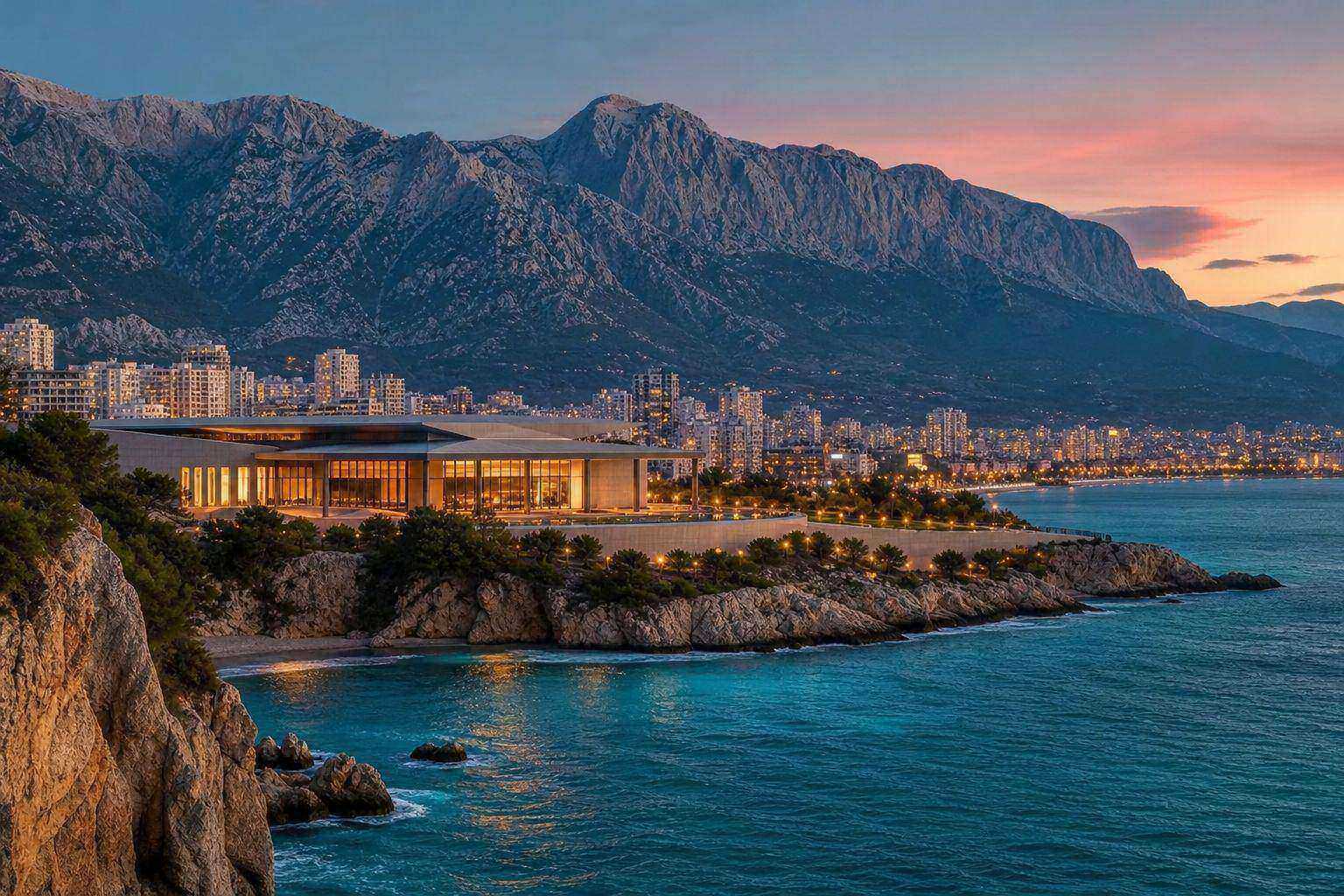
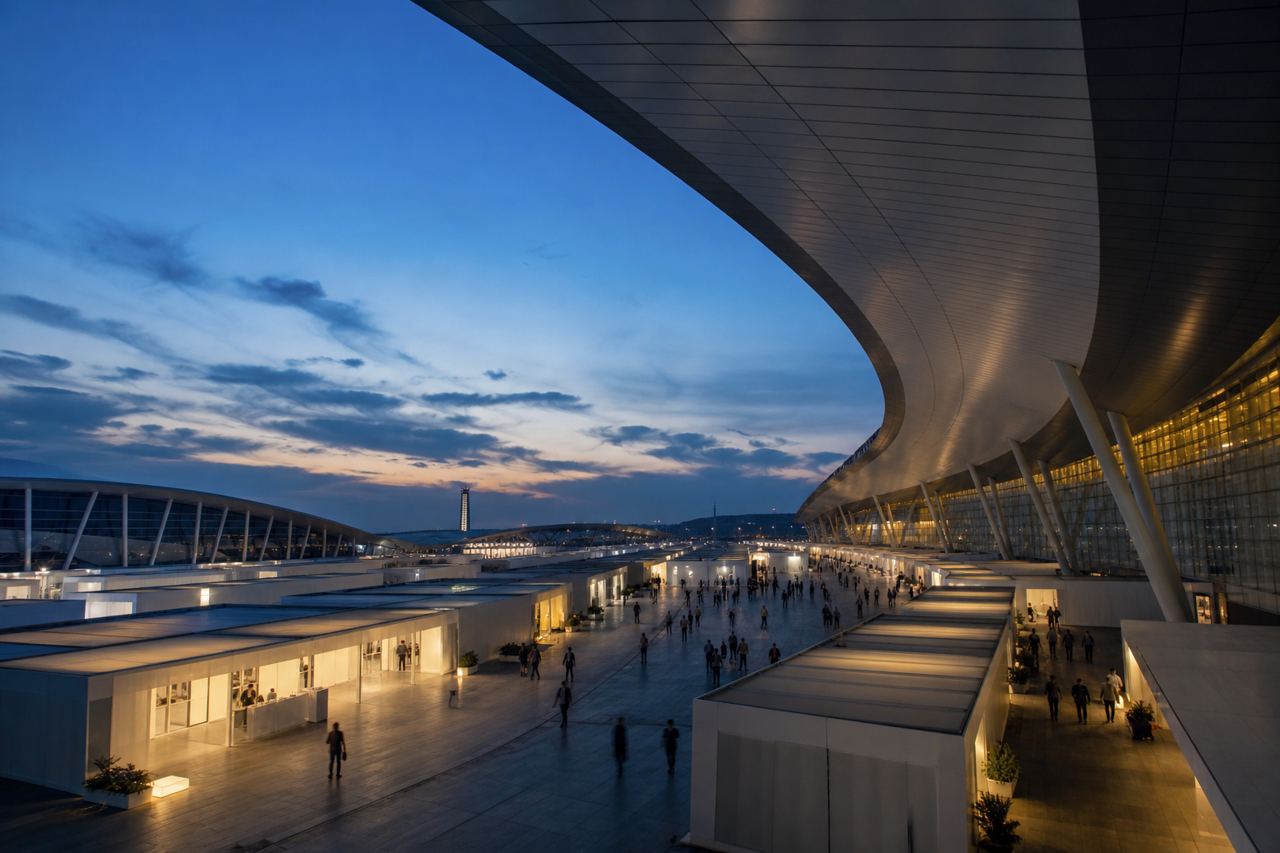
COP31The host city A Mediterranean resort city under the Taurus mountains. AI-generated still.
Prologue
COP31 in Antalya
UNRIC: COP31 will be held in Antalya, Türkiye, from 9 to 20 November 2026, with the incoming presidency and Australia working “in line with the Türkiye-Australia Partnership Modalities”. Under the agreed modalities, a Turkish representative is elected COP President, while Australia’s representative is “President of Negotiations” with “exclusive authority in relation to the negotiations”, and a pre-COP is held in a Pacific island country.
The conference is the hook; the rest of the film is the long-established machinery behind it.
The 3D scenes are simplified teaching models: the globe markers, the seats in the hall and the columns are schematic.
Carbon dioxide released anywhere joins the same atmosphere and stays for centuries.
A tonne emitted in one country warms every country.
No single country is most of the problem. The EU’s EDGAR database puts China at about twenty-nine percent of all greenhouse gases in 2024.
The United States is at eleven, India at eight.
History looks different. Counting only carbon dioxide since the 1750s, the United States released about a quarter.
The EU as it was in 2017, Britain included, released about a fifth.
So a country that cuts alone pays the cost, while everyone shares the benefit. Compare today with history.
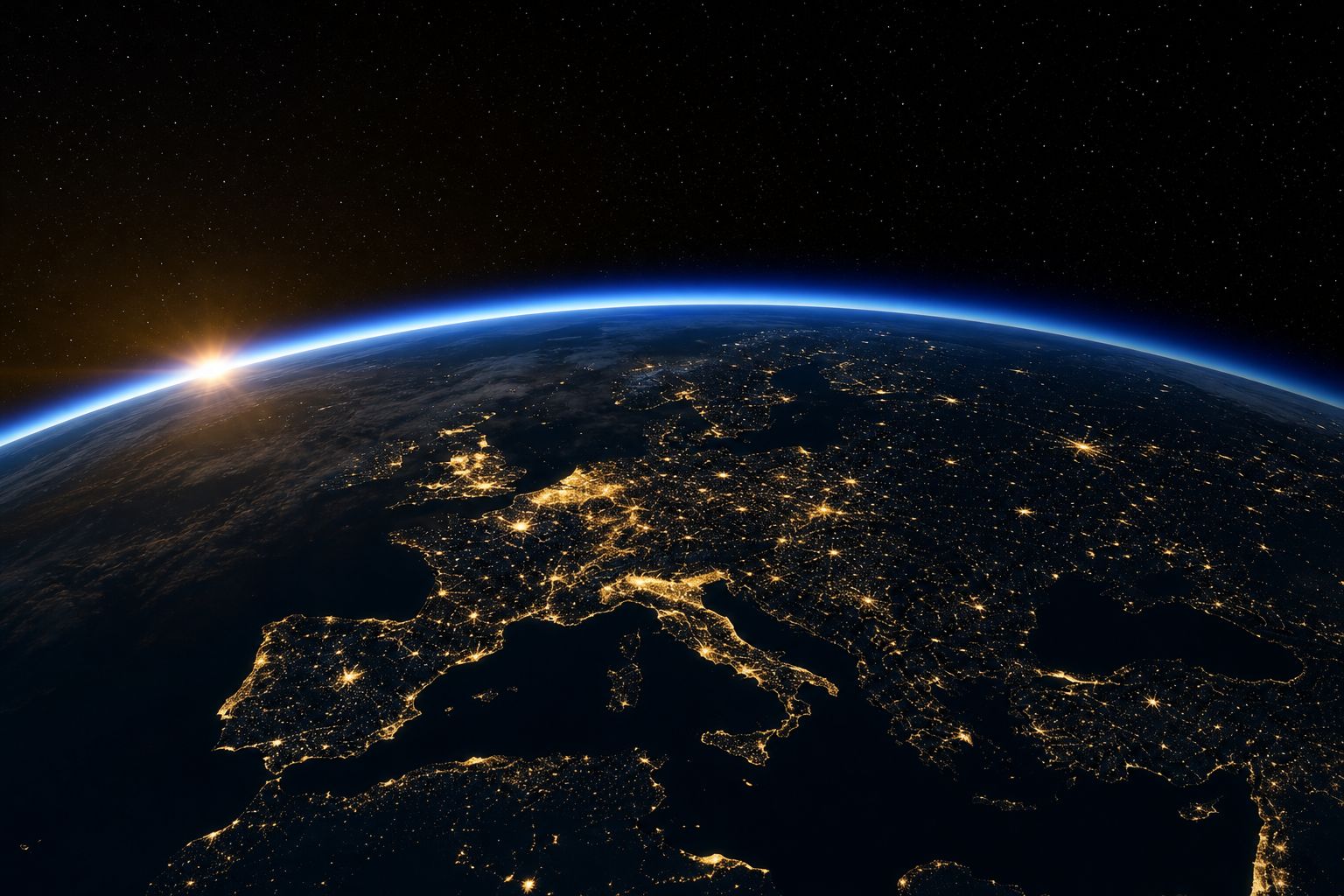
A thin shared layer Seen edge-on from orbit, the whole atmosphere is a thin blue rim. AI-generated still.
China
29.2 %
United States
11.1 %
India
8.2 %
EU27
6 %
Russia
4.8 %
Indonesia
2.5 %
Brazil
2.4 %
Japan
2 %
Share of world greenhouse gases, 2024 (EDGAR)
Two centuries of smoke Counted since 1751, the US total is about twice China’s, by Our World in Data’s reckoning. AI-generated still.
25%
United States
22%
EU-28, including the UK
Carbon dioxide only, 1751–2017
Chapter I · One sky
A problem nobody can solve alone
NASA: carbon dioxide “hangs around, for a long time: between 300 to 1,000 years.” EDGAR 2025 report (EU Joint Research Centre), greenhouse gases excluding land use, 2024: world 53.2 Gt CO₂e; China 29.20%, United States 11.11%, India 8.22%, EU27 5.95%, Russia 4.84%, Indonesia 2.49%, Brazil 2.44%, Japan 2.00%. Our World in Data, cumulative CO₂ only (not all greenhouse gases) 1751–2017: United States 25%, EU-28 (the EU of 2017, including the UK) 22%.
How greenhouse gases trap heat is the subject of the film “The Greenhouse Effect”. Try it: switch between today and history.
The 3D scenes are simplified teaching models: the globe markers, the seats in the hall and the columns are schematic.
In 1990 the UN’s climate science panel, the IPCC, warned that human emissions would warm the planet.
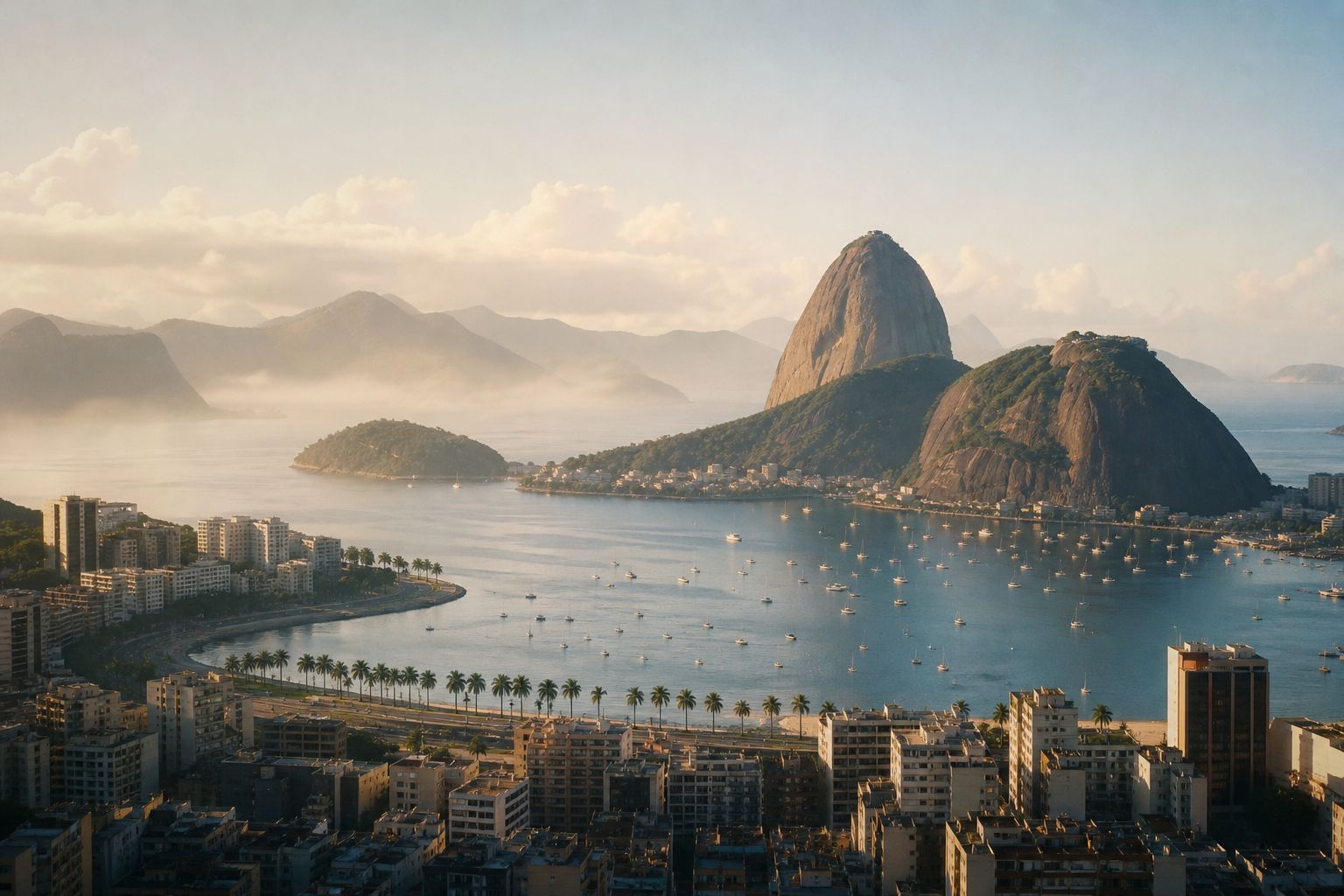
In June 1992, at the Earth Summit in Rio de Janeiro, governments opened a treaty for signature: the United Nations Framework Convention on Climate Change.
Its aim is to stop greenhouse gases reaching a level that would dangerously disturb the climate. It names no number.
It came into force in March 1994. Today it has 198 Parties: almost every country, plus the European Union.
1990 first IPCC assessment
9 May 1992 convention adopted in New York
June 1992 opened for signature in Rio
21 Mar 1994 in force
From science to treatyRio, 1992 The bay city that gave its name to the Earth Summit treaties. AI-generated still.
…prevent dangerous anthropogenic interference with the climate systemUNFCCC, 1992
Article 2, the objective
198
Parties: 197 states and the EU
166
signatures by June 1993
Membership today
Chapter I · One sky
The 1992 convention
UNFCCC: the Convention was adopted in New York on 9 May 1992, opened for signature at the UN Conference on Environment and Development in Rio de Janeiro (3–14 June 1992), had 166 signatures by 19 June 1993, and entered into force on 21 March 1994. It has 198 Parties (197 States and one regional economic integration organisation). Its objective is to stabilise greenhouse gas concentrations “at a level that would prevent dangerous anthropogenic (human induced) interference with the climate system”. Wikipedia: the IPCC’s First Assessment Report (1990) led to the creation of the UNFCCC.
The 3D scenes are simplified teaching models: the globe markers, the seats in the hall and the columns are schematic.
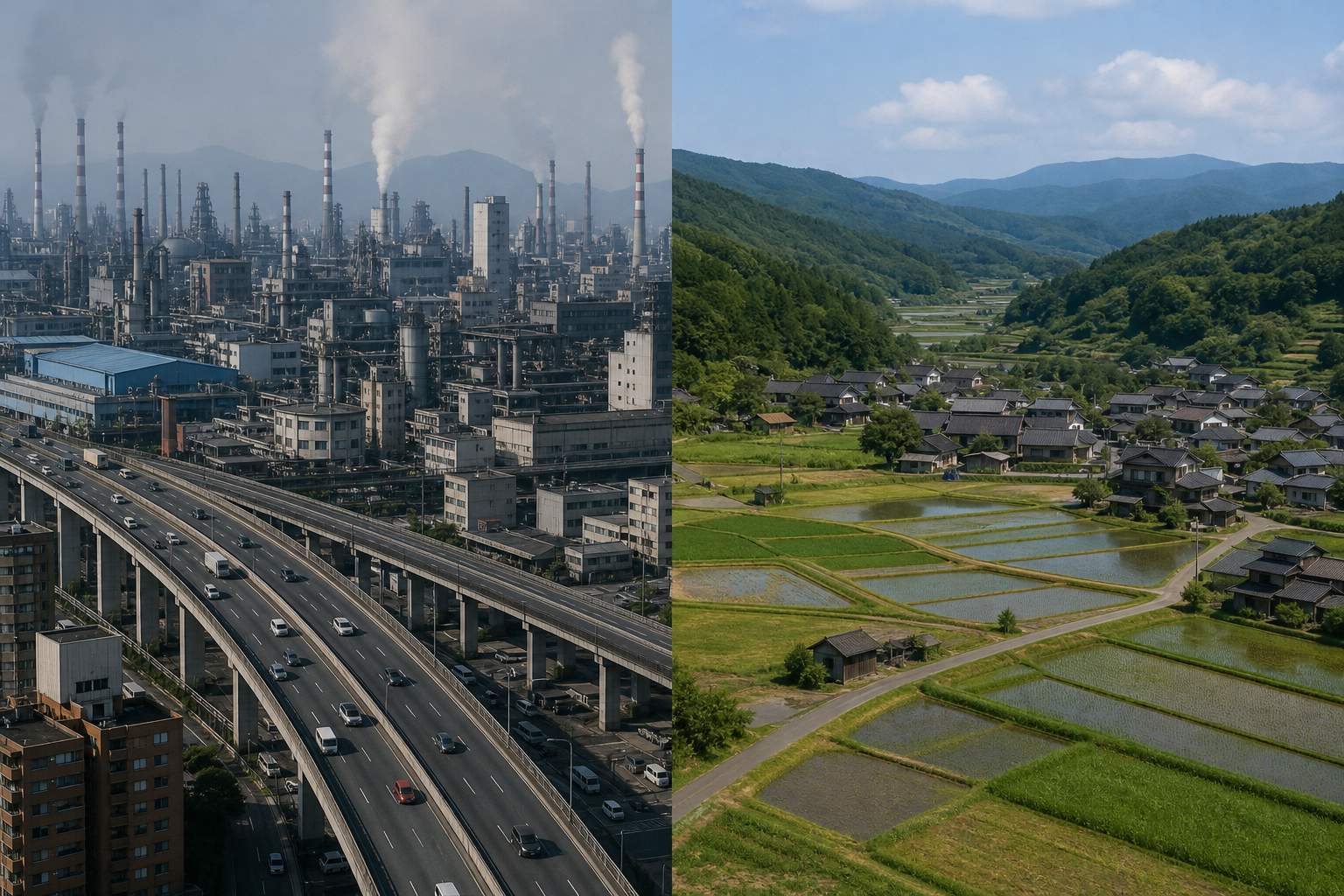
Its first annex lists forty-three Parties: the industrialised countries of 1992, the former planned economies of Eastern Europe, and the European Union.
Everyone else, from China and India to the smallest island nations, is ‘non-Annex I’: mostly developing countries.
The principle is called common but differentiated responsibilities: everyone must act, but those who emitted most and can afford most should lead.
That line, drawn in 1992, still runs through almost every argument. Colour the room to see it.
43
Parties, incl. the EU
24
of them also in Annex II, the funders
Annex ITwo worlds of 1992 The split was drawn on who had industrialised by 1992, not on who would grow next. AI-generated still.
common but differentiated responsibilities and respective capabilitiesUNFCCC, 1992
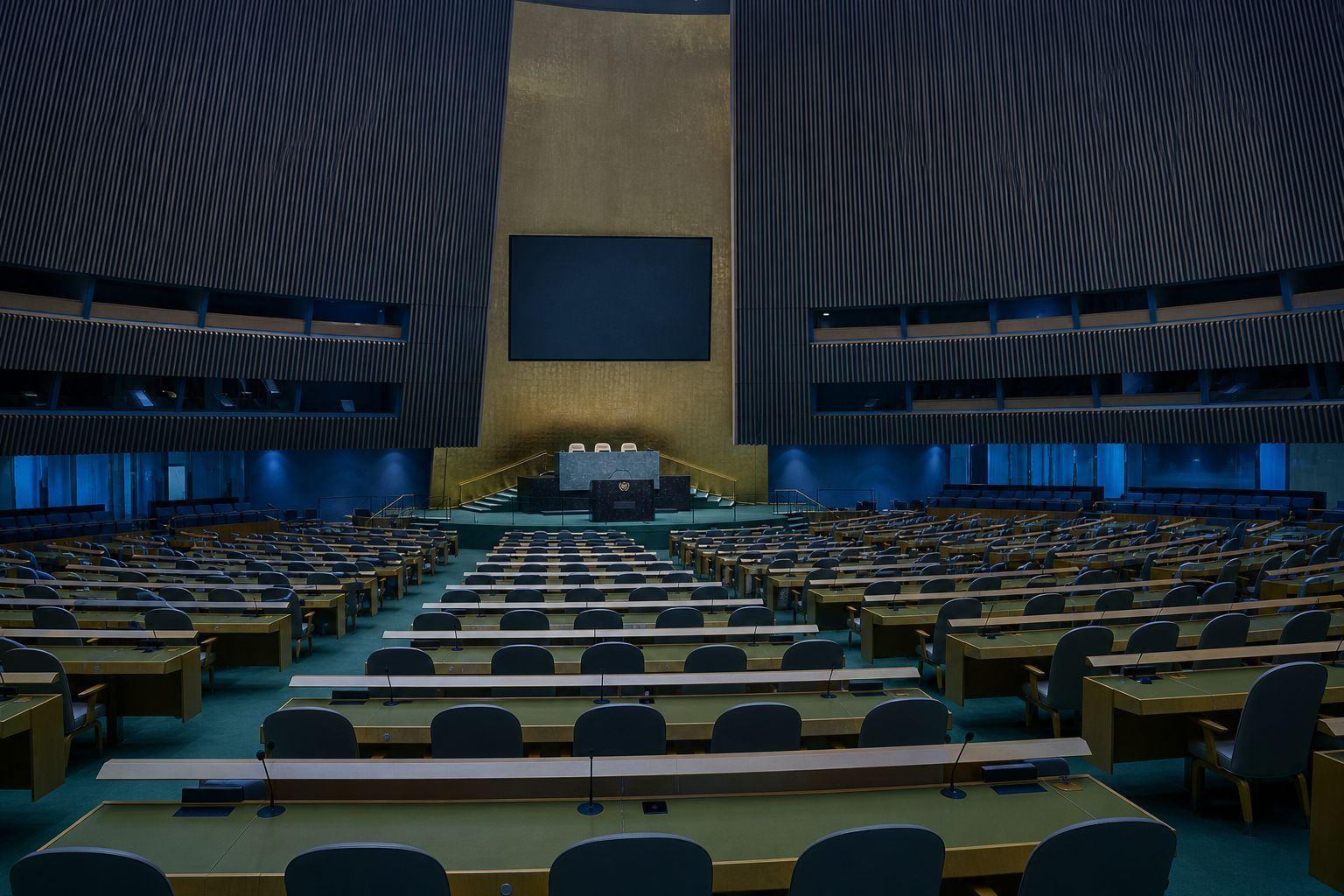
Article 3(1)The plenary Annex I or not, every delegation gets the same kind of desk. AI-generated still.
Chapter II · The rules of the room
Annex I and common but differentiated responsibilities
Wikipedia (UNFCCC): Annex I has 43 Parties including the EU, industrialised countries plus economies in transition; Annex II has 24 of them (OECD members of 1992, excluding Turkey), which must give financial and technical support; non-Annex I Parties are mostly developing countries. Article 3(1): Parties act on the basis of “common but differentiated responsibilities and respective capabilities”, with developed countries taking the lead. UNFCCC: industrialised countries are expected to do the most because they produced most past and current emissions.
Türkiye, this year’s host, is in Annex I but not Annex II. Try it: colour the room by annex.
The 3D scenes are simplified teaching models: the globe markers, the seats in the hall and the columns are schematic.
The convention’s top body is the Conference of the Parties, the COP. Every Party has a seat, and it meets once a year.
The first met in Berlin in March 1995. Antalya will be the thirty-first.
The host rotates among the five UN regional groups, from Africa to Western Europe and Others.
If nobody offers to host, the meeting goes to Bonn, home of the UN climate secretariat. Play the globe.
The Conference of the Parties Tens of thousands attend: delegates, heads of government, observers and journalists. AI-generated still.
COP1
Berlin, March 1995
COP31
Antalya, November 2026
The first and the latest
African States
Asia-Pacific States
Eastern European States
Latin American and Caribbean States
Western European and Other States
The five UN regional groups
COP23, 2017: Fiji presided, in Bonn
COP25, 2019: Chile presided, in Madrid
Host and president can differ
Chapter II · The rules of the room
What a COP is
UNFCCC: the COP is “the supreme decision-making body of the Convention”, in which all Parties are represented; it meets every year unless the Parties decide otherwise; the first COP was held in Berlin in March 1995. The presidency rotates among the five UN regional groups; a regional group consults to pick a candidate, which submits an offer; “if there is no offer to host, the default site is the seat of the secretariat in Bonn, Germany.” Fiji held the COP23 presidency in Bonn, and Chile kept the COP25 presidency when it moved to Madrid.
Try it: play every COP on the globe. There was no COP in 2020: COP26 was postponed to 2021.
The 3D scenes are simplified teaching models: the globe markers, the seats in the hall and the columns are schematic.
Now the strangest rule. The Parties have never agreed how to vote, so decisions are taken by consensus.
Consensus is not unanimity. The president proposes a decision and, if no Party formally objects, brings down the gavel.
That gives every country, large or small, a kind of veto, and it pushes the text toward words everyone can live with.
It also makes the gavel powerful. At COP29 in 2024, India objected to the finance deal only after it had been gavelled through.
India protested, but the deal stood. Try it.
0
the Parties have never adopted a majority-vote rule
Voting rules agreedThe gavel The moment it falls, a draft becomes a COP decision. AI-generated still.
Any single Party can block
Texts get vaguer to pass
The president’s judgement matters
What consensus does
We cannot accept it.Chandni Raina, after the gavel; the deal stood
India, closing plenary, COP29
Chapter II · The rules of the room
Consensus
Wikipedia (UNFCCC): Parties have not agreed on a process for majority voting, so all decisions are made by consensus, which in effect gives each Party a veto. UNFCCC: the COP President works with delegations to reach consensus. Climate Home News (2024): at COP29 the finance goal was “gavelled through” before India’s Chandni Raina told the closing plenary, “We cannot accept it.” At COP30, Colombia objected after adoption and the COP President said adopted decisions could not be revoked (Climate Home News, 2025).
Try it: add one objection, then strike the gavel; or strike the gavel first and object afterwards, as India did. The simulator is simplified; in a real plenary the president judges whether an objection has been made.
The 3D scenes are simplified teaching models: the globe markers, the seats in the hall and the columns are schematic.
The first big attempt came at Kyoto in December 1997.
The Kyoto Protocol gave developed countries legally binding targets to cut emissions; developing countries had none.
The United States signed, but never sent it to the Senate, which had voted ninety-five to nothing against any deal that spared developing countries.
In 2001 President George W. Bush rejected it, citing the exemption for China and India. It came into force anyway, in 2005.
The thirty-six countries that saw the first period through met their targets, yet world emissions rose by about a third from 1990 to 2010.
Kyoto, December The old imperial capital of Japan hosted COP3. AI-generated still.The Senate, July 1997 The non-binding Byrd–Hagel resolution also opposed any deal that would seriously harm the US economy. AI-generated still.
1998 US signs
2001 US rejects
2005 in force
2011 Canada withdraws
Kyoto’s road
36 / 36
participating countries in compliance, 2008–2012; 9 used the flexibility mechanisms
+32%
world emissions, 1990–2010
Results
Chapter III · Kyoto to Copenhagen
The Kyoto Protocol
Wikipedia (Kyoto Protocol): adopted 11 December 1997, in force 16 February 2005. The US signed on 12 November 1998 but never submitted it to the Senate; the Byrd–Hagel resolution (1997, 95–0) opposed agreements that did not require developing countries to cut emissions or that “would seriously harm the economy of the United States”. In 2001 President Bush said he opposed it because it exempts most of the world, including China and India. Canada withdrew (announced 2011, effective 2012). Wikipedia (UNFCCC): all 36 developed countries participating in the first period (2008–2012) complied, nine of them by using the flexibility mechanisms (funding emission cuts in other countries) because their national emissions were slightly above target; global emissions rose 32% from 1990 to 2010.
The 3D scenes are simplified teaching models: the globe markers, the seats in the hall and the columns are schematic.
A successor was meant to come at Copenhagen in 2009. It ended in disarray.
A short accord was drafted by the United States with Brazil, South Africa, India and China.
It said warming should stay below two degrees, compared with pre-industrial times.
With several countries objecting, the conference only ‘took note’ of it.
Still, it left a goal: one hundred billion dollars a year by 2020 for developing countries.
And Tuvalu, a Pacific atoll nation, demanded a tighter limit: 1.5 degrees.
Copenhagen, December A winter summit with expectations of a successor to Kyoto. AI-generated still.
United States
Brazil, South Africa, India, China (the BASIC group)
Drafted by five
The meeting has failed.President Evo Morales, 2009
BoliviaTuvalu’s demand Tuvalu’s delegation interrupted a session in Copenhagen to make its case. AI-generated still.
Chapter III · Kyoto to Copenhagen
Copenhagen
Wikipedia (Copenhagen Accord): drafted by the United States and the BASIC countries (Brazil, South Africa, India, China); on 18 December 2009 delegates agreed only to “take note of” it; it recognises “the scientific view that the increase in global temperature should be below 2 degrees Celsius”, sets a goal of raising $100 billion a year by 2020 for developing countries, and is not legally binding. Bolivia’s President Evo Morales said, “The meeting has failed.” Wikipedia (AOSIS): at Copenhagen, Tuvalu’s delegation interrupted a session to demand a 1.5 °C limit instead of 2 °C.
The 3D scenes are simplified teaching models: the globe markers, the seats in the hall and the columns are schematic.
Paris, in December 2015, turned the design upside down.
Instead of targets handed down, each country writes its own plan, called a nationally determined contribution.
The shared goal: hold warming well below two degrees, and pursue efforts to limit it to 1.5, a line the small island states fought to include.
Every five years, countries must submit a new plan, meant to go further than the last. This is the ratchet.
Since 2024 they also report progress under common rules, so that others can check.
Paris, December 2015 Paris swapped Kyoto’s top-down targets for plans each country writes itself. AI-generated still.
well below 2 °C … pursuing efforts to limit the temperature increase to 1.5 °CParis Agreement, 2015
Article 2
2015 agreement adopted
2020 first five-year round of plans
2023 first global stocktake
2025 new plans, with 2035 targets
The five-year ratchet
194
as of 27 January 2026, after the US exit
Parties to Paris
Chapter IV · The Paris design
The Paris Agreement
UNFCCC: adopted by 195 Parties at COP21 on 12 December 2015, in force 4 November 2016, 194 Parties as of 27 January 2026. It aims to hold the increase “well below 2°C above pre-industrial levels” while pursuing efforts to limit it to 1.5°C. Countries submit nationally determined contributions on a five-year cycle, each meant to be more ambitious than the last; from 2024 they report under the enhanced transparency framework; the global stocktake assesses collective progress. Wikipedia (AOSIS): AOSIS initiated the negotiating item that led to the 1.5 °C target.
The 3D scenes are simplified teaching models: the globe markers, the seats in the hall and the columns are schematic.
The first global stocktake, at COP28 in Dubai in 2023, found the world off track.
It called for transitioning away from fossil fuels in energy systems, words oil producers had resisted, and for tripling renewable power by 2030.
How big is the gap? A 2025 UN Environment Programme report says current policies lead to up to 2.8 degrees of warming this century.
If every pledge is kept, 2.3 to 2.5.
A 1.5-degree path needs emissions cut by more than half by 2035; the pledges deliver about fifteen percent. Switch between the paths.
−43%
cut needed by 2030 vs 2019 for 1.5 °C: an IPCC figure cited by the 2023 stocktake
COP28, DubaiIn energy systems The text also asked for a faster phase-down of unabated coal power. AI-generated still.Tripling renewables And a doubling of the rate of energy-efficiency improvement by 2030. AI-generated still.
Current policies
≤ 2.8
Pledges kept
2.3–2.5
Paris limit
1.5
Warming this century (UNEP 2025)
Pledges
15 %
2 °C path
35 %
1.5 °C path
55 %
Cut by 2035 vs 2019 (NewClimate Institute summary)
Chapter IV · The Paris design
The stocktake and the gap
UNFCCC (2023): the first global stocktake at COP28 found Parties off track, called for tripling renewable capacity and doubling energy-efficiency improvement by 2030, and, citing the IPCC, said emissions must fall 43% by 2030 from 2019 for 1.5°C. European Parliament Think Tank: the decision calls on Parties to “transition away from fossil fuels in energy systems, in a just, orderly and equitable manner”, language that faced opposition from oil-producing countries. UNEP Emissions Gap Report 2025, as summarised by NewClimate Institute: current policies lead to up to 2.8°C; full NDC implementation to 2.3–2.5°C; 1.5°C-aligned pathways need 55% (2°C: 35%) below 2019 by 2035, against about 15% from the pledges. IPS News, reporting on the same report: emissions reached 57.7 Gt CO₂e in 2024.
Try it: switch between current policies, pledges and the 1.5 °C path. The 2.3–2.5 °C range is drawn as a lighter band.
The 3D scenes are simplified teaching models: the globe markers, the seats in the hall and the columns are schematic.
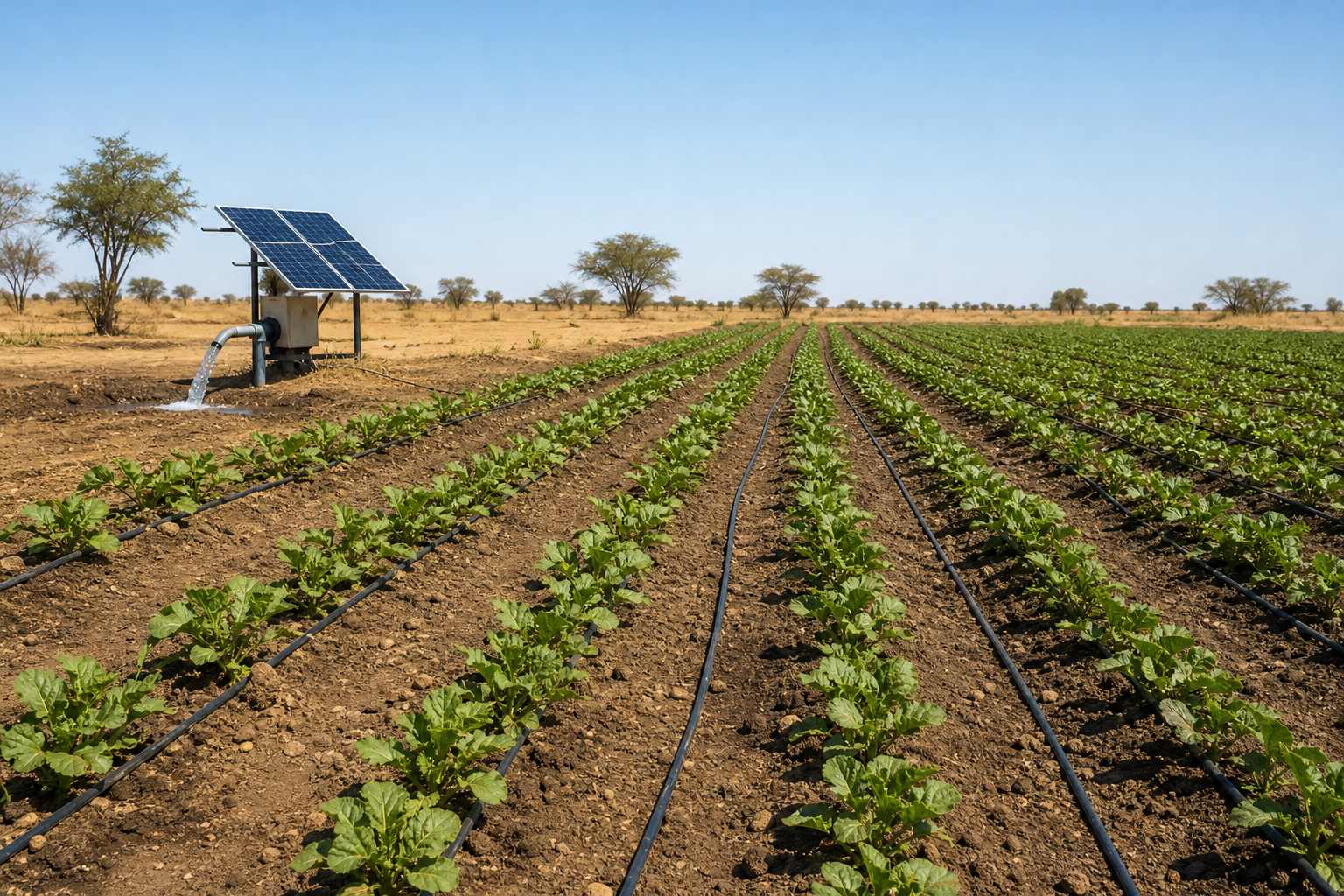
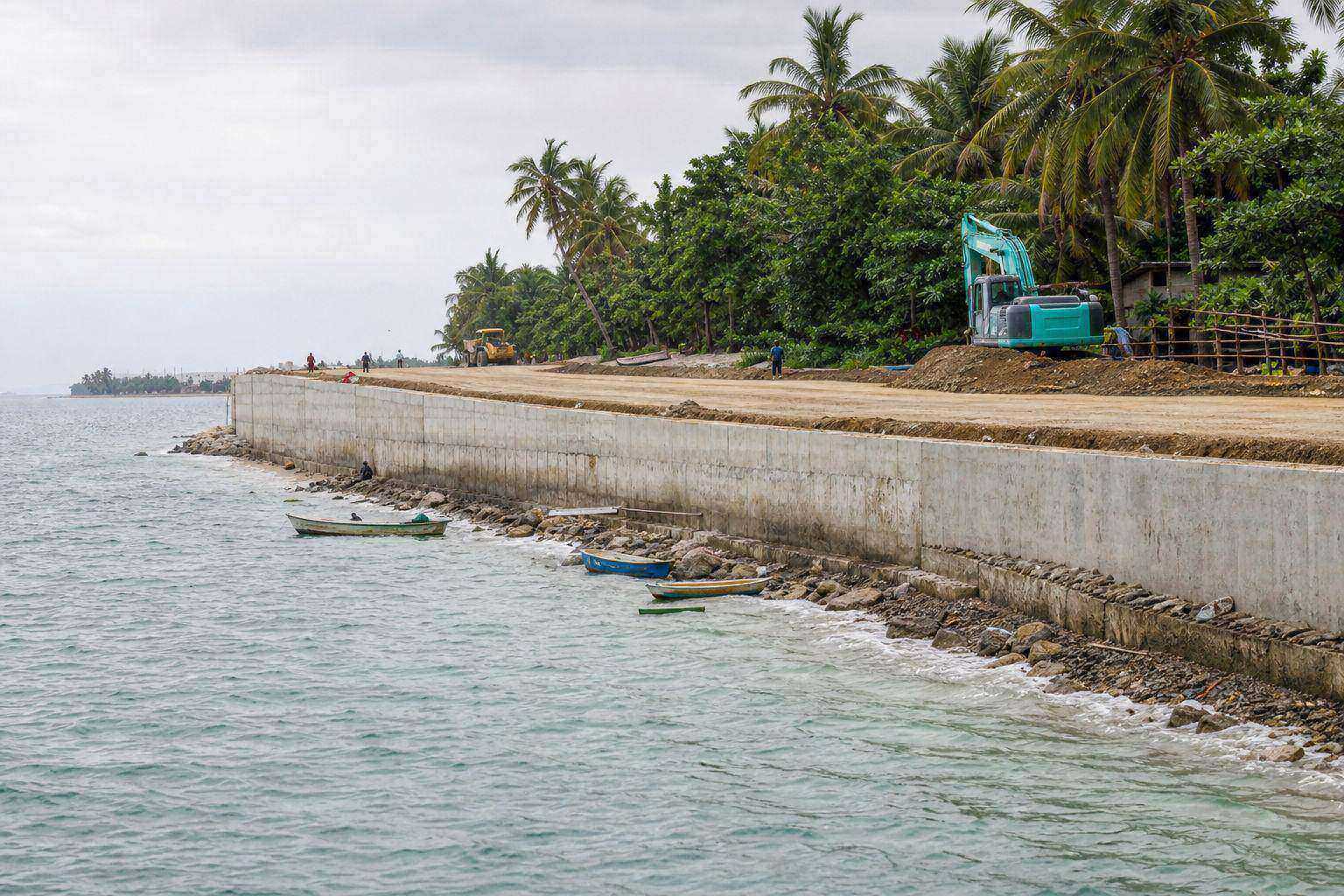
It pays to cut emissions, and for adaptation: preparing for the heat, floods and droughts already on the way.
By the OECD’s count, developed countries first passed the hundred-billion goal in 2022, two years late.
At COP29 in Baku, a new goal was set: three hundred billion dollars a year by 2035.
It also called for 1.3 trillion a year from all sources.
India’s negotiator called it a paltry sum.
Under every finance fight sits the 1992 question: who pays, and who counts as rich today? Compare the sums.
What the money buys Irrigation for drier farms is one kind of adaptation spending. AI-generated still.
$115.9 bn
provided and mobilised for developing countries
Delivered in 2022 (OECD)
$300 bn
a year by 2035, to developing countries
$1.3 tn
a year by 2035, all sources
COP29, Baku, 24 Nov 2024
a paltry sumChandni Raina, India’s Department of Economic Affairs
India, COP29Adaptation on the coast The least developed countries and small islands had asked for a guaranteed minimum share (IISD). AI-generated still.
Chapter V · Money and loss
Climate finance
OECD (2024): developed countries provided and mobilised USD 115.9 billion for developing countries in 2022, “exceeding the annual 100 billion goal for the first time”. Wikipedia (Copenhagen Accord): the goal was $100 billion a year by 2020. UNFCCC (24 November 2024): the COP29 goal raises finance to developing countries “from the previous goal of USD 100 billion annually, to USD 300 billion annually by 2035” and calls for USD 1.3 trillion per year by 2035 from public and private sources. Climate Home News (2024): India’s Chandni Raina: “We cannot accept it”, calling it “a paltry sum”; Germany’s climate envoy Jennifer Morgan wrote that the target “demonstrates our seriousness” and that Germany stands to give more if fast-growing economies also step up; LDC and small-island groups had sought minimum allocations (IISD).
Try it: switch between the old goal, the new goal and the call. Columns are to scale: the 1.3 trillion call is thirteen times the old goal.
The 3D scenes are simplified teaching models: the globe markers, the seats in the hall and the columns are schematic.
Some harm can no longer be avoided: homes lost to the sea, harvests lost to drought. The talks call this loss and damage.
At COP27 in Sharm el-Sheikh, Egypt, in 2022, after years of pressure from small island states, governments agreed to create a dedicated fund.
At COP28 in Dubai it was set running on the very first day, and more than 700 million dollars was pledged soon after.
The Paris deal recognises loss and damage, while stating that this gives no basis for liability or compensation.
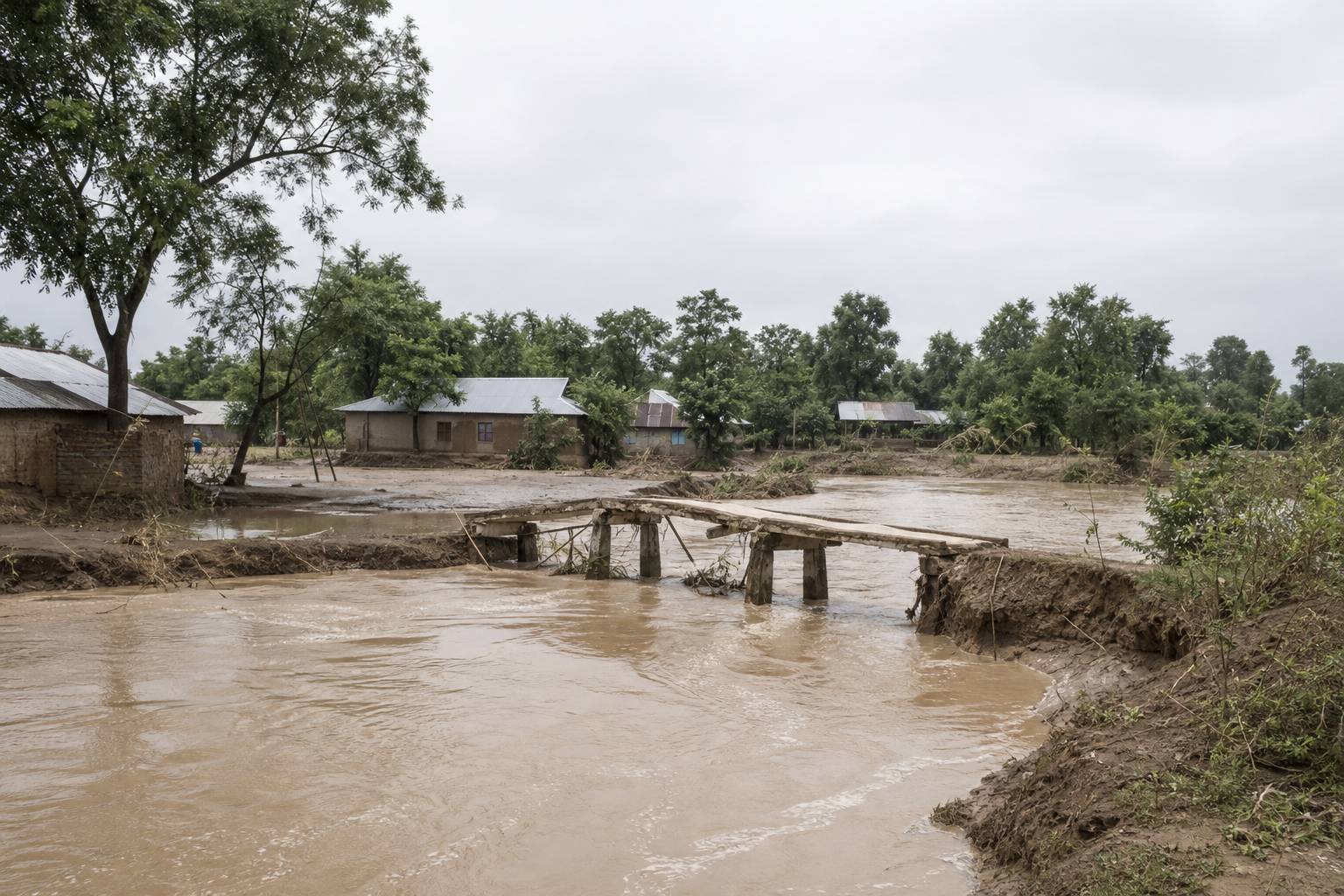
After the water Loss and damage covers harm beyond what adaptation can prevent. AI-generated still.
2013 Warsaw: small islands seek a mechanism
2015 Paris recognises loss and damage
2022 COP27 agrees a fund
2023 COP28 starts it running
A long push
$700 m+
pledged soon after day one
Dubai, 30 Nov 2023
Recognises averting, minimising and addressing loss and damage
No basis for liability or compensation
What the Paris text does and does not do
Chapter V · Money and loss
Loss and damage
UNFCCC (20 November 2022): COP27 agreed to set up new funding arrangements and a dedicated fund to help developing countries respond to loss and damage. UNFCCC (13 December 2023): at COP28, Parties agreed on operationalising the fund on the first day, with commitments above USD 700 million soon after. Wikipedia (AOSIS): AOSIS pushed for a loss and damage mechanism at Warsaw in 2013 and was instrumental in Article 8 of the Paris Agreement, which “recognizes the importance of averting, minimizing and addressing loss and damage” but does not “provide a basis for any liability of compensation.”
The 3D scenes are simplified teaching models: the globe markers, the seats in the hall and the columns are schematic.
Countries negotiate mostly in blocs, each in its own terms.
The thirty-nine members of the Alliance of Small Island States warn that rising seas could make some islands uninhabitable.
Large developing economies such as India say they are pushed toward zero-carbon paths even at the cost of their growth.
They point to the convention’s principle that developed countries should take the lead.
Speaking for the twenty-two-nation Arab Group in 2024, a Saudi official said it would not accept any text that targets specific sectors, including fossil fuels.
Germany’s climate envoy said the developed countries’ offer showed they were serious, and more could follow if fast-growing economies stepped up. Pick a bloc.
Small island states AOSIS was founded in 1990, before the convention itself. AI-generated still.Large developing economies India was the world’s third-largest emitter in 2024, at about 8% of the total (EDGAR). AI-generated still.Oil producers At COP30 the opposition to a fossil-fuel roadmap was led by Saudi Arabia, with Russia and other Gulf states. AI-generated still.
demonstrates our seriousnessJennifer Morgan, on the developed countries’ finance offer
Germany, COP29
Chapter VI · Many voices
The blocs, in their own terms
Wikipedia (AOSIS): founded in 1990, 39 member states; some islands are “at risk of becoming uninhabitable due to sea level rise”; has advocated 1.5 °C since 2008. Climate Home News (2024): India’s Chandni Raina said the Global South “is being pushed to transit to no-carbon pathways even at the cost of our growth”. UNFCCC, Article 3(1): developed country Parties “should take the lead”. The New Arab (2024): Albara Tawfiq, a Saudi official speaking for the 22-nation Arab Group: “The Arab Group will not accept any text that targets any specific sectors, including fossil fuel.” Climate Home News (2024): Germany’s climate envoy Jennifer Morgan wrote that the developed countries’ finance target “demonstrates our seriousness” and that Germany stands to give more if fast-growing economies also step up.
Each position is given as its holders state it, not as the film’s view. The clusters in the room are illustrative: many countries belong to several groups.
The 3D scenes are simplified teaching models: the globe markers, the seats in the hall and the columns are schematic.
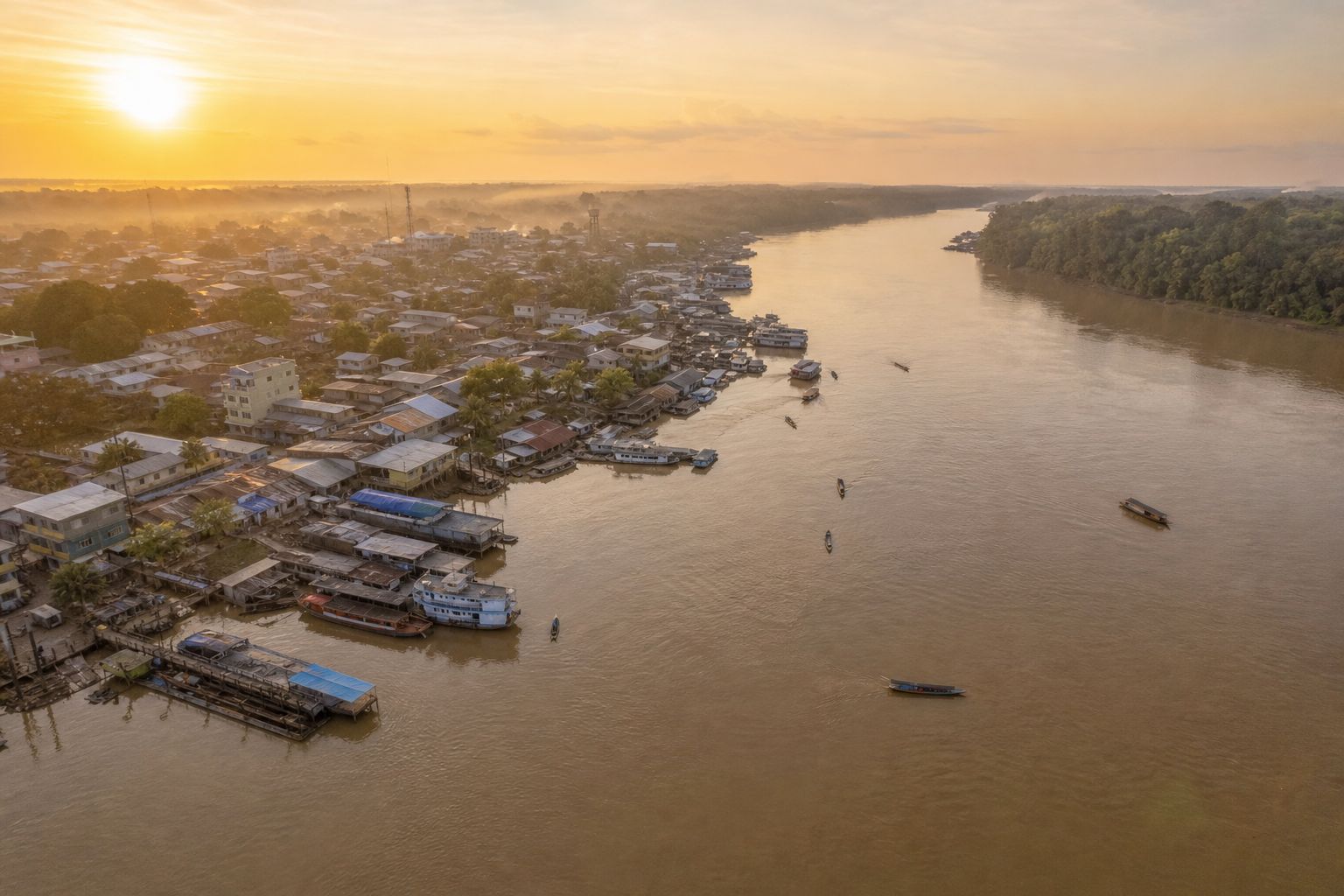
COP30 met in Belém, on the edge of the Amazon, in November 2025.
Its main decision called for efforts to at least triple adaptation finance by 2035.
More than eighty countries wanted a roadmap away from fossil fuels; the final text did not mention fossil fuels at all.
Then, in January 2026, the United States left the Paris Agreement for the second time.
It also gave notice to leave the convention itself, which takes effect in February 2027.
Belém, the Amazon Belém lies near the mouth of the Amazon, gateway to the rainforest. AI-generated still.
A just transition mechanism
Trade as a formal topic
Adaptation indicators, rejected by the EU and others
Also agreed in Belém
80+
countries for it
0
mentions of fossil fuels in the final text
A roadmap away from fossil fuels
2020 leaves Paris
2021 rejoins
7 Jan 2026 announces exit from the convention
27 Jan 2026 Paris exit takes effect
27 Feb 2027 convention exit takes effect
The United States and the treaties
Chapter VI · Many voices
Belém
Climate Home News (22 November 2025): COP30 adopted the “Belém political package”, including the Global Mutirão decision, which calls for “efforts to at least triple” adaptation finance by 2035 within the $300 billion goal; more than 80 countries called for a fossil-fuel roadmap, opposed mainly by producers led by Saudi Arabia, with Russia, India and other Gulf states; the final text has no explicit mention of fossil fuels; COP30 President André Corrêa do Lago said Brazil would prepare two roadmaps outside the UN process; Colombia objected and the president said adopted decisions could not be revoked. Harvard EELP: the US withdrawal from Paris became effective on 27 January 2026; on 7 January 2026 the US announced it would withdraw from the UNFCCC. Climate Home News (4 March 2026): the US withdrawal from the convention “will take effect on February 27, 2027”, one year after formal notification. Wikipedia (UNFCCC): the US had also left Paris in 2020 and rejoined in 2021.
The 3D scenes are simplified teaching models: the globe markers, the seats in the hall and the columns are schematic.
2026 was the turn of the Western European and Others Group, whose twenty-eight members include both Türkiye and Australia. Both wanted to host.
Neither would withdraw. For more than a year the stand-off threatened to send COP31 to Bonn by default.
At COP30 they settled it: Türkiye hosts and presides.
Australia’s minister, Chris Bowen, is President of Negotiations, with exclusive authority over the talks.
A pre-COP meeting was set for a Pacific island country. Whether a split presidency works is one thing Antalya will test.
28
countries, including Türkiye and Australia
Western European and Others Group
irresponsible for multilateralismChris Bowen, on letting COP31 fall back to Bonn
A stalemateAntalya The deal was announced in Belém on 19 November 2025 and set out in writing two days later. AI-generated still.The Pacific pre-COP The Pacific, Australia’s partner in its bid, picks the island country itself; Australia handles the logistics. AI-generated still.
Chapter VII · The road to Antalya
How COP31’s host was chosen
Climate Home News (20 November 2025): it was the turn of the 28-country Western Europe and Others Group to host in 2026; Türkiye and Australia both bid; if Türkiye had blocked Australia the summit would have moved to Bonn, which Chris Bowen called “irresponsible for multilateralism”; the stalemate had lasted over a year. Australian joint media release (23 November 2025): COP31 is hosted by Türkiye in Antalya, Bowen is President of Negotiations, and “the Pacific will host a special pre-COP”. COP31 Presidency modalities (21 November 2025): the Turkish representative is nominated for election as COP President; Australia’s representative is President of Negotiations with “exclusive authority in relation to the negotiations” and Vice-President of the COP; the pre-COP location is “to be decided by the Pacific”, with Australia handling its logistics.
A former Turkish climate diplomat, quoted by Climate Home News, summed up the split: “We bear the burden, but they hold the power.” In September 2026, Türkiye’s minister and COP31 President-designate Murat Kurum said “Türkiye and Australia are not co-presidents” and “the final decision lies with the presidency of COP31”; Australia’s team pointed to Bowen’s words that the two are “working together seamlessly and with one goal” (Climate Home News, 11 September 2026).
The 3D scenes are simplified teaching models: the globe markers, the seats in the hall and the columns are schematic.
Thirty years of COPs have not stopped emissions rising.
But they built the one room where large and small countries sit at the same table.
When the gavel falls in Antalya, listen for who objected, and who stayed silent.
1992 Rio: the convention
1995 Berlin: COP1
1997 Kyoto Protocol
2015 Paris Agreement
2024 Baku: $300 bn goal
2026 Antalya: COP31
Thirty years in six datesThe table Global emissions rose 2.3% in 2024, to 57.7 billion tonnes, says UNEP. AI-generated still.
New national plans for 2035
Money for adaptation
Any words on fossil fuels
How the split presidency works
Watch for in Antalya
Epilogue · Sources
Sources
Every fact in this film comes from the sources below, fetched in November 2026. The chapter stills and pictures are AI-generated: they show no real meetings, people or flags. The globe, the hall of 198 seats, the warming columns and the finance columns are simplified teaching models; bloc clusters in the hall are illustrative. Positions of countries and groups are given as they state them, with the speaker and date. COP31 itself is news: this film was written before it opened.