In a small trial reported in October 2026, more than half of younger adults with type 2 diabetes were in remission after 24 weeks of a supervised low-energy diet and exercise programme. To understand what that means, this film explains the condition itself: glucose as the body's fuel, how the pancreas makes insulin and glucagon, the GLUT4 doors that let glucose into cells, insulin resistance and tiring beta cells, the three main types of diabetes, how it is diagnosed, a century of treatment from insulin to metformin, and the evidence on remission. Education only, not medical advice.
Interactive 3D film9 min1869 to 2026Published 1 November 2026
Sugar, insulin, and what a new trial on remission shows.
About one adult in nine worldwide lives with diabetes, according to the International Diabetes Federation, and more than nine in ten of them have type 2.
At the turn of October, researchers from England and Canada reported a small trial in adults aged eighteen to forty-five with type 2 diabetes.
On a medically supervised programme of meal replacements and exercise, more than half were in remission after twenty-four weeks.
Remission means blood sugar below the diabetes line with no diabetes medicines. It is not a cure, and this is one trial. First: what is type 2 diabetes?
589 million
adults aged 20–79 with diabetes
853 million
projected for 2050
IDF Diabetes Atlas 2025 (11th edition)
RESET for Remission: 96 adults
Leicester (England), Montreal and Edmonton (Canada)
Presented at EASD 2026, Milan, 28 Sep–2 Oct
The trial in brief
Meal replacements, low in energy
Supervised exercise
Medicines stopped by the medical team
The programme, in brief
HbA1c below 6.5% — the blood test explained in Chapter III
No glucose-lowering medicine for at least 12 weeks
“Remission” in this trial
Prologue
A trial in younger adults
IDF Diabetes Atlas, 11th edition (2025): 589 million adults aged 20–79, about 1 in 9, had diabetes in 2024, projected to reach 853 million by 2050; type 2 is more than 90% of cases. ScienceDaily (30 October 2026) and Healio (7 October 2026) report the RESET for Remission trial, presented at the annual meeting of the European Association for the Study of Diabetes in Milan (28 September–2 October 2026) and published in The Lancet Regional Health – Americas (Dasgupta, Yates and colleagues). 96 adults aged 18–45 with type 2 diabetes diagnosed within six years took part at the University of Leicester, McGill University and the University of Alberta. Remission meant an HbA1c below 6.5% (48 mmol/mol) with no glucose-lowering medicine for at least 12 weeks. It is one small, short, open-label trial.
This film is education, not medical advice. Questions about blood sugar, diet or medicines are for a doctor.
The 3D cells, organs and curves are simplified teaching models, not to scale and not medical values.
One of the body's main fuels is glucose, a simple sugar carried in the blood to every organ.
When you eat starch or sugar, digestion turns much of it into glucose, so the level in your blood rises after a meal.
Between meals and overnight, the liver releases and makes glucose, so the level does not normally fall too low.
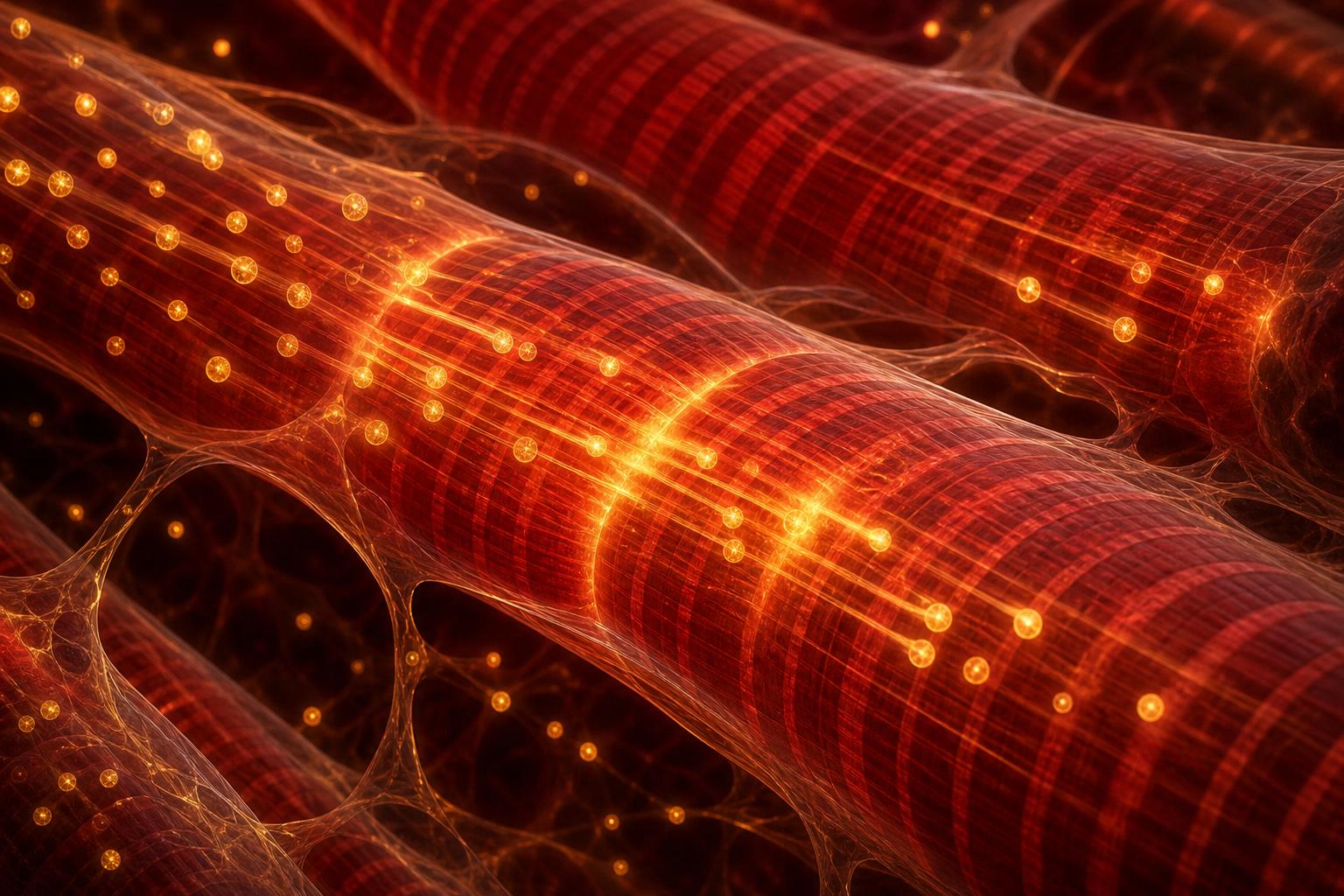
Fuel for muscle Muscle fibres drawing in sugar, as imagined. AI-generated still.C6H12O6
C
6 carbon atoms
H
12 hydrogen atoms
O
6 oxygen atoms
Glucose
Food: rises after a meal
Liver: released while fasting
Two sources of blood glucose
Chapter I · Fuel and a key
The body’s fuel
Glucose (C₆H₁₂O₆) is used by cells for energy. According to the US National Institute of Diabetes and Digestive and Kidney Diseases (NIDDK), blood glucose rises after a meal, and the liver also makes glucose, for example during fasting, so that the level stays in its normal range.
The 3D cells, organs and curves are simplified teaching models, not to scale and not medical values.
Keeping that level steady is the job of the pancreas. Scattered through it are about a million tiny clusters of cells, the islets of Langerhans, first described in 1869.
Beta cells in the islets make insulin. When glucose rises, they release it into the blood.
Alpha cells make glucagon, which pushes the other way, raising glucose when it runs low. Switch between a meal and a fast to see which hormone flows.
~1 million
in a normal human pancreas
1869
described by Paul Langerhans
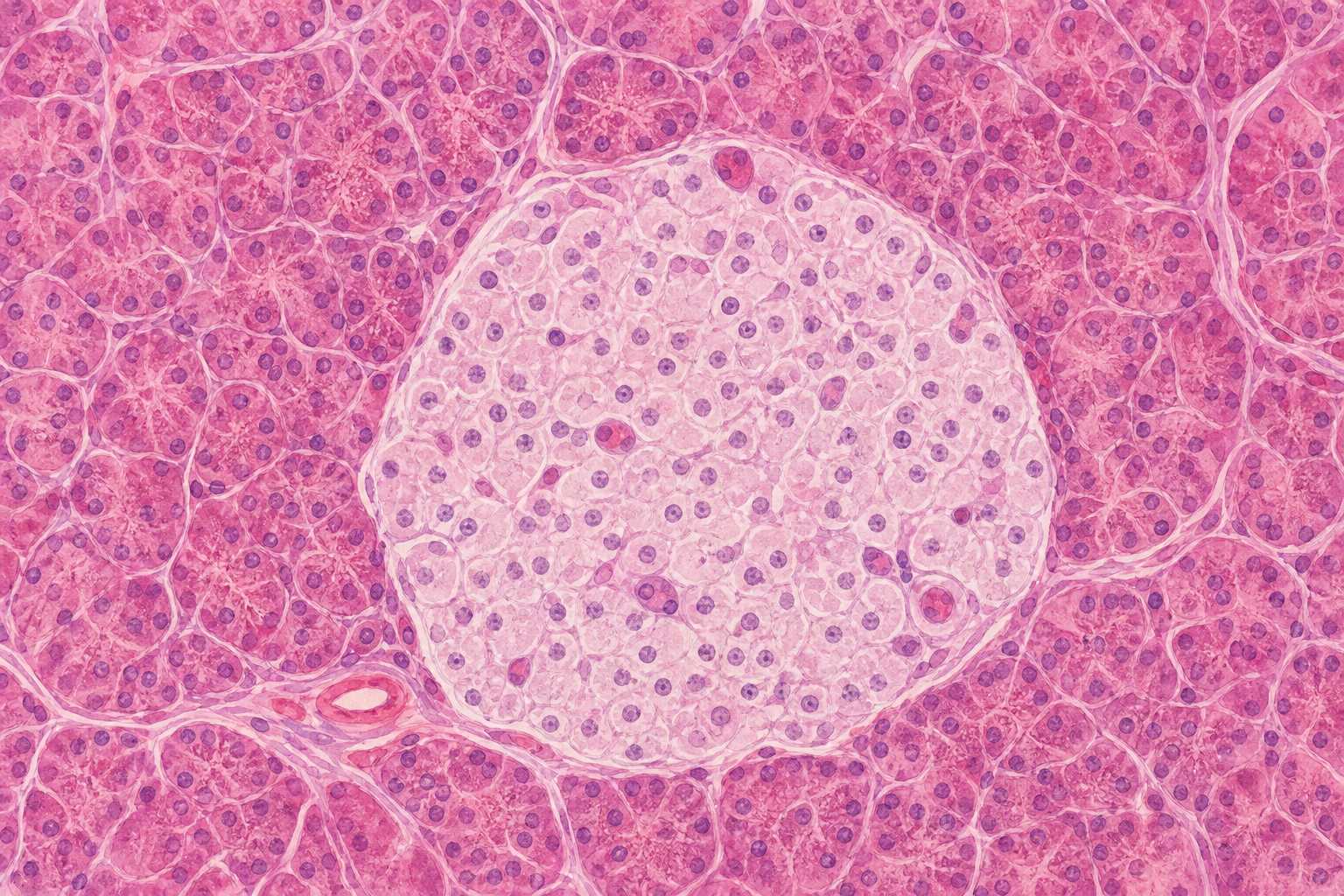
IsletsUnder the microscope A pale islet among the pancreas’s digestive tissue, in the style of a stained slide. AI-generated still.
β (beta) cells → insulin: lowers blood glucose
α (alpha) cells → glucagon: raises blood glucose
Beta cells are the most common islet cell
Two cell types, two hormones
Chapter I · Fuel and a key
Insulin and glucagon
Encyclopaedia Britannica: a normal human pancreas contains about 1 million islets, first described by the German physician Paul Langerhans in 1869. Beta cells, the most common type, produce insulin; alpha cells produce glucagon; delta cells produce somatostatin. NIDDK: when blood glucose rises after a meal, the pancreas releases insulin to bring it back into the normal range.
Try it: the buttons switch the model between “after a meal” and “fasting”.
The 3D cells, organs and curves are simplified teaching models, not to scale and not medical values.
Insulin works like a key. In muscle and fat cells it fits receptors on the cell's surface.
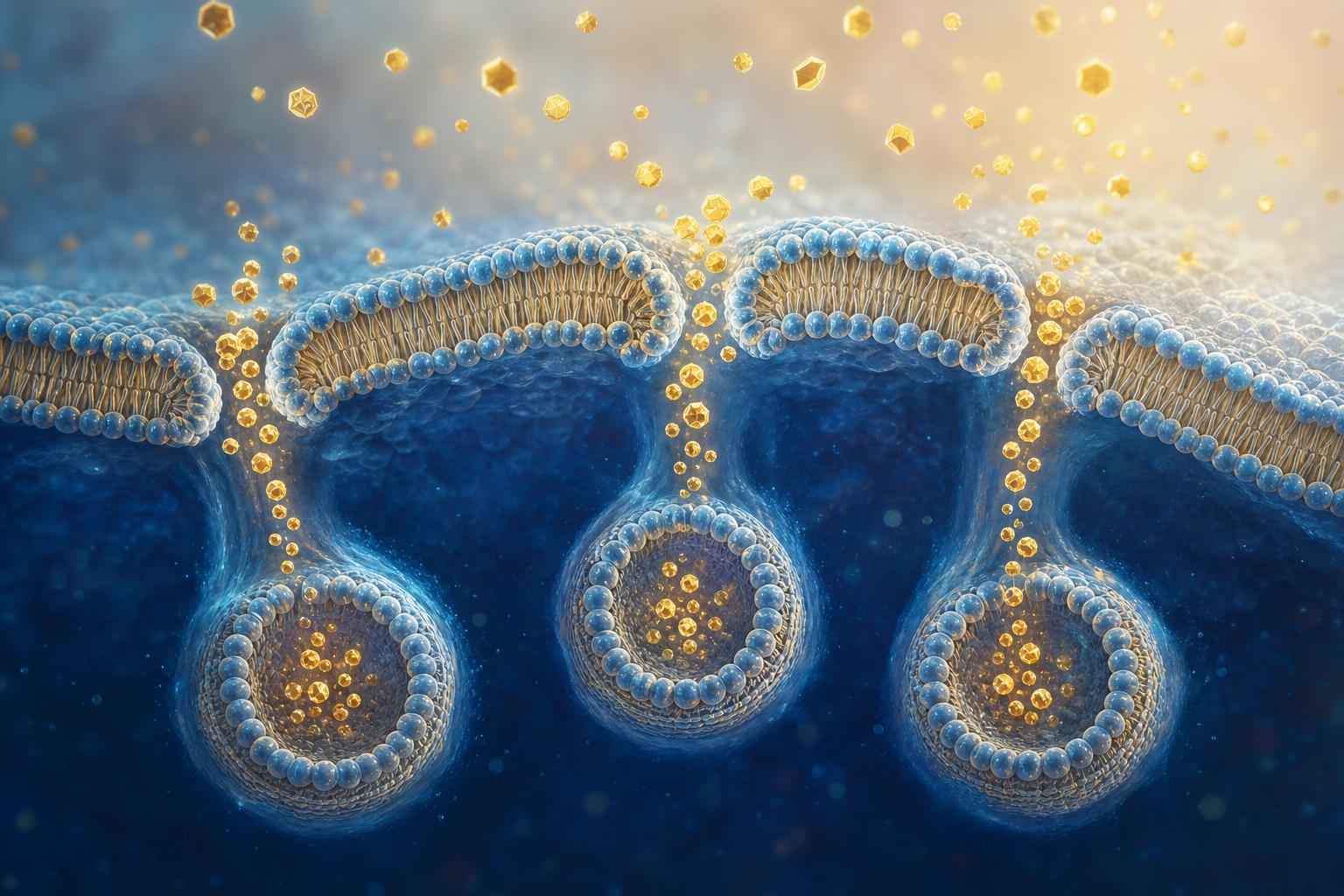
That signal sends little bubbles inside the cell up to the surface. They carry glucose doors called GLUT4, and fuse with it.
With the doors in place, glucose flows in. When insulin fades, the doors are pulled back inside. Try it with the buttons.
1 · Insulin binds its receptor
2 · GLUT4 bubbles move to the surface
3 · Glucose enters the cell
The insulin signal
GLUT4 waits in storage compartments inside the cell
Few doors at the surface, little glucose uptake
Without insulinDoors arriving Vesicles fusing with a membrane and opening a path for sugar, as imagined. AI-generated still.
Chapter I · Fuel and a key
GLUT4
Koester and colleagues (Scientific Reports, 2022): GLUT4 is a glucose transporter found in insulin-sensitive cells such as muscle and fat. Without insulin it is held inside the cell in storage compartments; insulin mobilises some of these vesicles to the plasma membrane, where they dock and fuse, increasing glucose transport into the cell. In insulin resistance and type 2 diabetes several steps of this traffic are impaired. NIDDK: insulin helps glucose enter muscle, fat and liver cells.
The 3D cells, organs and curves are simplified teaching models, not to scale and not medical values.
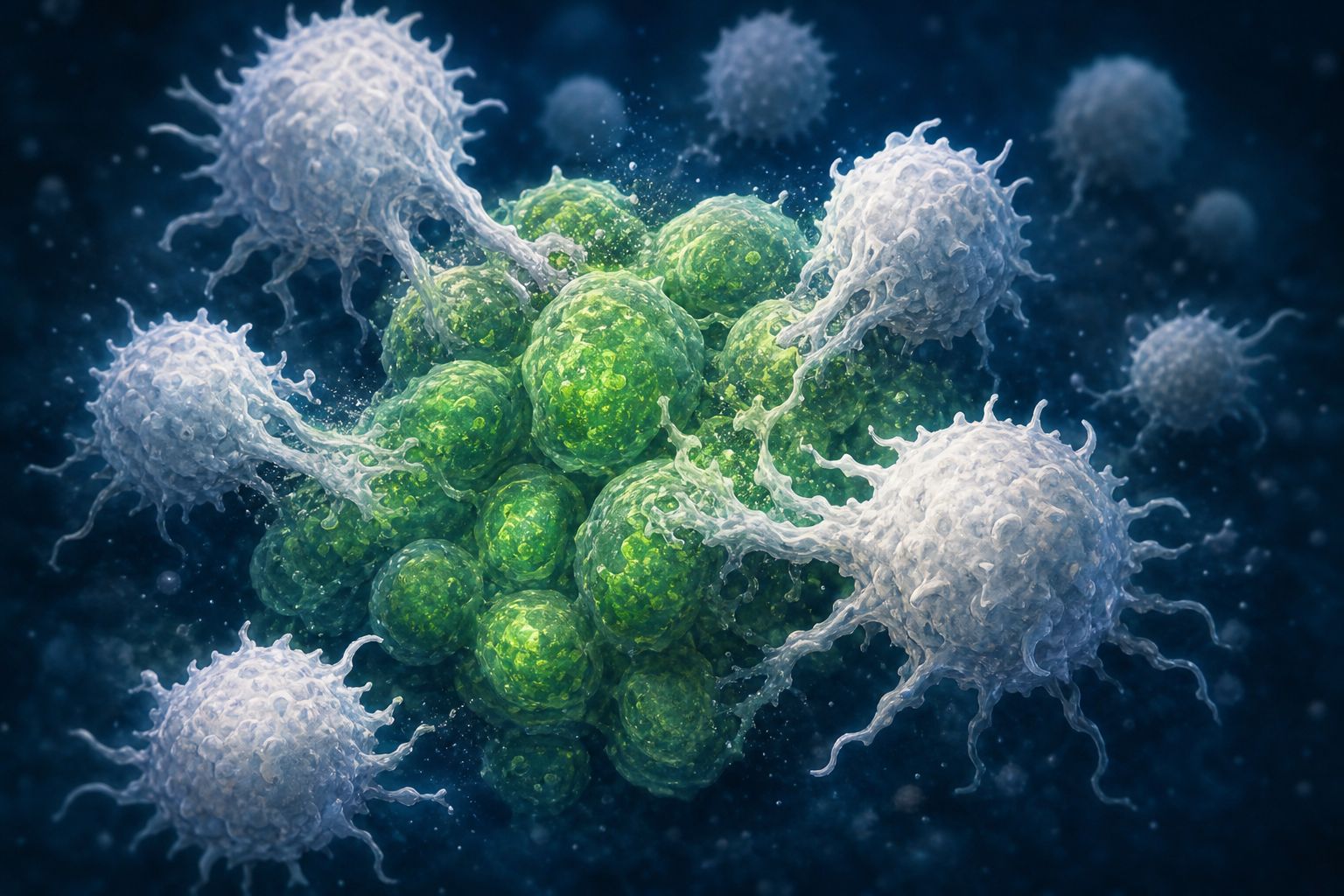
Diabetes means blood glucose stays too high. In type 1, the immune system attacks the beta cells, for reasons not fully understood, so the body makes little or no insulin.
Gestational diabetes appears during pregnancy, when hormones blunt insulin's effect and the pancreas cannot make enough extra.
Type 2 is by far the most common. Insulin is still made, but the body responds to it poorly, and over time the beta cells cannot keep up.
Type 1 Immune cells closing in on insulin-making cells, as imagined. AI-generated still.
Type 1: symptoms often come on over days or weeks
Gestational: most people have no symptoms
Type 2: often develops slowly, over years
The main types (NIDDK)
90%+
of all diabetes (IDF)
Type 2
Chapter II · When the key fails
Type 1, type 2 and gestational diabetes
NIDDK: in type 1 diabetes the immune system destroys the insulin-producing beta cells; genes and environmental factors may trigger it. In type 2 the pancreas does not make enough insulin and the body has trouble using it; the exact causes are not fully known. In gestational diabetes, pregnancy hormones make it harder for cells to respond to insulin, and the pancreas cannot make enough extra. The International Diabetes Federation says type 2 accounts for more than 90% of diabetes.
The 3D cells, organs and curves are simplified teaching models, not to scale and not medical values.
Insulin resistance, and a pancreas working overtime.
That poor response is called insulin resistance: in muscle, fat and liver cells, the key turns less easily.
At first the pancreas makes up for it by making more insulin, and blood glucose can stay normal for a time.
When the beta cells can no longer keep up, glucose climbs: first to prediabetes, then to type 2 diabetes. Try the four stages and watch the curve.
Muscle
Fat
Liver
Cells that answer insulin
The pancreas makes extra insulin
Glucose stays normal while it can keep up
Compensation (NIDDK)
Normal: 99 mg/dL (5.5 mmol/L) or below
Prediabetes: 100–125 mg/dL (5.6–6.9 mmol/L)
Diabetes: 126 mg/dL (7.0 mmol/L) or above
Fasting plasma glucose (NIDDK)
Chapter II · When the key fails
Insulin resistance and tiring beta cells
NIDDK: insulin resistance is when cells in muscle, fat and liver do not respond well to insulin and cannot easily take up glucose. The pancreas makes more insulin to compensate, and as long as it can, glucose stays in the healthy range. Prediabetes develops when insulin resistance is present and/or beta cells cannot make enough insulin; people with prediabetes have up to a 50% chance of developing diabetes within 5 to 10 years.
Try it: the four buttons show four illustrative stages; the curve is a teaching model, not a person’s data.
This film is education, not medical advice. Questions about blood sugar, diet or medicines are for a doctor.
Genes, age, surroundings and body all play a part.
Who develops it? Genes and family history matter, and risk rises with age, although type 2 can start in childhood.
Physical inactivity and excess weight raise it too, especially fat around the waist. Asian Americans may have higher risk even without a high body mass index.
Eating sugar does not directly cause type 2, but a diet high in sugar can add weight. And many of these factors are not a matter of choice.
Families share more than genes A shared table: habits and surroundings run in families too. AI-generated still.
Family history and genes
Older age
Some ethnic groups
Gestational diabetes in the past
Inactivity, smoking, excess weight
Risk factors (NIDDK)
Belly fat releases substances that promote inflammation (NIDDK)
Insulin resistance may contribute to fatty liver disease (NIDDK)
Sugar is not a direct cause (British Heart Foundation)
Fat, sugar and insulin
Chapter II · When the key fails
Risk is not blame
NIDDK lists overweight or obesity, older age, family history, physical inactivity, smoking, prediabetes and a history of gestational diabetes as risk factors, and notes that some racial and ethnic groups face higher risk; Asian Americans may have higher risk even without a high BMI. Excess visceral (belly) fat is linked to insulin resistance, and insulin resistance may contribute to fatty liver disease. Type 2 can start at any age, including childhood. The British Heart Foundation: eating too much sugar does not directly cause type 2 diabetes, but a high-sugar diet can lead to weight gain, which increases the risk.
The 3D cells, organs and curves are simplified teaching models, not to scale and not medical values.
Type 2 diabetes is often silent. Many people have no symptoms; others notice thirst, passing more urine, tiredness or blurred vision.
The International Diabetes Federation estimates that two hundred and fifty-two million adults with diabetes do not know it.
In Thailand, early results of a national health survey found diabetes in about one person in ten examined, and more than a quarter of them did not know.
Over years, high glucose can damage blood vessels and nerves. Without good care, it raises the risk of heart disease, of stroke, and of disease in the kidneys, eyes and feet.
Feeling very thirsty or hungry
Urinating more often
Sores that heal slowly
Frequent infections
Possible symptoms (NIDDK)
252 million
adults with undiagnosed diabetes
4 in 10+
of all adults with diabetes
Unaware (IDF Diabetes Atlas 2025)
10.6%
of those examined, up from 9.5%
27%
of them did not know
Thailand (7th national health survey, preliminary)
Heart disease and stroke
Kidney disease
Eye disease
Nerve damage and foot problems
If diabetes is not well managed (NIDDK)
Chapter III · A silent condition
Symptoms and complications
NIDDK: many people with type 2 diabetes have no symptoms; when present they can be mild and develop over several years — increased thirst and urination, hunger, fatigue, blurred vision, slow-healing sores and frequent infections. If diabetes is not well managed it can lead to heart disease and stroke, nerve damage, kidney disease, eye disease and foot problems. The IDF Diabetes Atlas (2025) estimates 252 million of the 589 million adults with diabetes are unaware of it. Thailand: preliminary results of the 7th National Health Examination Survey, presented by the Health Systems Research Institute and reported by Thansettakij (August 2025), put diabetes at 10.6% of those examined, up from 9.5% in the 6th survey; 27% did not know they had it.
This film is education, not medical advice. Questions about blood sugar, diet or medicines are for a doctor.
The 3D cells, organs and curves are simplified teaching models, not to scale and not medical values.
Doctors diagnose it with blood tests. One measures glucose after a night without food: one hundred and twenty-six milligrams per decilitre, or seven point zero millimoles per litre, or higher, points to diabetes.
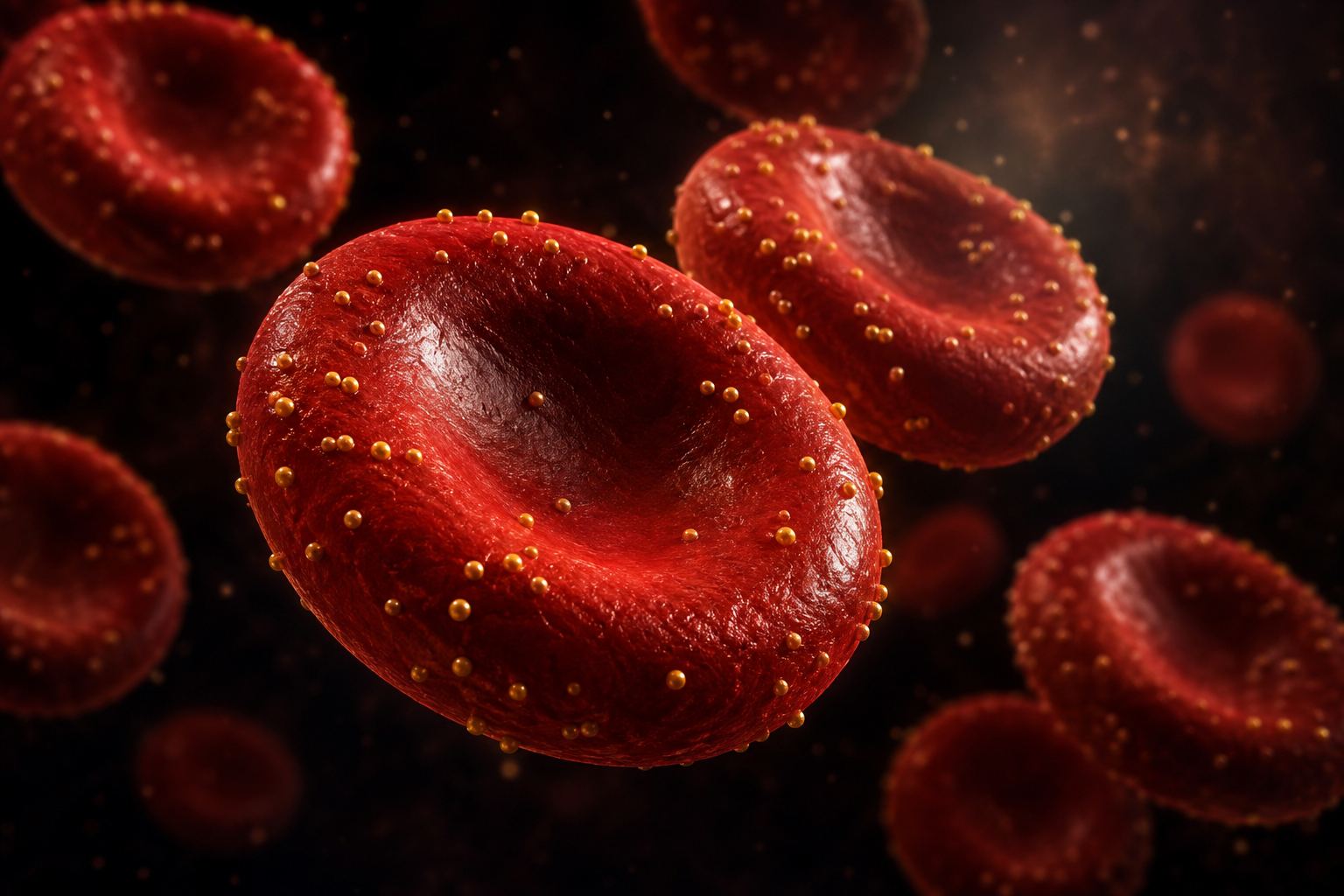
Another, HbA1c, measures how much haemoglobin in red blood cells has glucose stuck to it, a record of roughly the last three months. Six point five per cent or more points to diabetes. Try the three levels.
A glucose tolerance test checks the level two hours after a sugary drink. Usually a second test confirms the result.
≥ 126 mg/dL
= 7.0 mmol/L: diabetes
Fasting plasma glucose
Below 5.7%: normal
5.7–6.4%: prediabetes
6.5% or above (48 mmol/mol): diabetes
HbA1c bands (NIDDK)Sugar on red cells Red cells live about three months, so the glucose they carry records the recent average. AI-generated still.
≥ 200 mg/dL
= 11.1 mmol/L, 2 hours after the drink: diabetes
Glucose tolerance test (OGTT)
Chapter III · A silent condition
Diagnosis
NIDDK (non-pregnant adults): diabetes is an A1C of 6.5% or above, a fasting plasma glucose of 126 mg/dL or above (7.0 mmol/L), or a 2-hour oral glucose tolerance test result of 200 mg/dL or above (11.1 mmol/L); a random glucose of 200 mg/dL or more is used only with symptoms. A second test is usually used to confirm. A1C may be less reliable with some anaemias and haemoglobin variants. American Diabetes Association: A1C is the share of haemoglobin with glucose attached, reflecting roughly the past 2–3 months. These are diagnostic thresholds for doctors, not personal targets.
Try it: the three buttons show illustrative HbA1c levels in each band.
This film is education, not medical advice. Questions about blood sugar, diet or medicines are for a doctor.
Before insulin, type 1 diabetes was a death sentence.
In 1921, at the University of Toronto, Frederick Banting and Charles Best, working in John Macleod's laboratory, extracted insulin, and the biochemist James Collip helped purify it.
On the eleventh of January 1922, fourteen-year-old Leonard Thompson became the first person treated with it. In 1923 Banting and Macleod won the Nobel Prize, and shared the money with Best and Collip.
Today, some people with type 2 use insulin too.
A new medicine A glass bottle of the period on a laboratory bench. AI-generated still.
1921 Banting and Best extract insulin in Toronto
11 Jan 1922 First injection: Leonard Thompson, 14
Oct 1923 First commercial supply ships
Insulin
Banting + Macleod
laureates, who shared the prize money with Best and Collip
$1
each: the price of their US patents, sold to the university
Nobel Prize in Physiology or Medicine, 1923
Essential in type 1
Used by some people with type 2
Insulin today (NIDDK)
Chapter IV · A century of treatment
The discovery of insulin
NobelPrize.org: before insulin, diabetes was a death sentence. In 1921 Frederick Banting and his assistant Charles Best, working in John Macleod’s laboratory at the University of Toronto, extracted insulin; the biochemist James Collip helped purify it for people. On 11 January 1922 Leonard Thompson, aged 14, received the first insulin injection for diabetes. Banting and Macleod won the 1923 Nobel Prize in Physiology or Medicine and shared the prize money with Best and Collip. Banting, Collip and Best sold their US patents to the University of Toronto for $1 each. NIDDK: people with type 2 diabetes may need medicines, which may include insulin.
The 3D cells, organs and curves are simplified teaching models, not to scale and not medical values.
One of the most widely used type 2 medicines has roots in folk medicine. Goat's rue, a meadow plant, contains guanidine, which was found to lower blood glucose.
Early drugs from that chemistry proved too toxic. Metformin, a related compound first made in 1922, was reported for diabetes in 1957 by the French physician Jean Sterne.
It reduces the glucose the liver makes and helps the body respond to insulin. There are many other medicines, including GLP-1 drugs, which have their own PlanetPast film.
Galega officinalis Goat’s rue in flower; its name comes from the Greek for milk, and it was used to boost milk yield in livestock. AI-generated still.HN=C(NH2)2
N
three nitrogen atoms around one carbon
Guanidine
1918 Guanidine lowers glucose in animals
1922 Metformin first synthesised
1957 Jean Sterne reports it for diabetes
1995 Launched in the United States
Metformin (Bailey, 2017)
Less glucose made by the liver
Less glucose absorbed from food
A better response to insulin
How metformin works (MedlinePlus)
Chapter IV · A century of treatment
Metformin
Bailey (Diabetologia, 2017): Galega officinalis (goat’s rue) was a traditional herbal medicine in medieval Europe. Guanidine, a compound in the plant, was reported in 1918 to lower blood glucose in animals; guanidine derivatives such as galegine and synthalin were used in the 1920s but toxicity limited them. Metformin (dimethylbiguanide) was synthesised in 1922. In 1957 the physician Jean Sterne, working in Paris, reported it as a diabetes treatment and proposed the name Glucophage; it was launched in the USA in 1995. MedlinePlus: metformin decreases the glucose absorbed from food and the glucose made by the liver, and increases the body’s response to insulin. Which medicine suits a person is decided with their doctor. GLP-1 medicines are covered in the PlanetPast film on GLP-1 drugs.
This film is education, not medical advice. Questions about blood sugar, diet or medicines are for a doctor.
The 3D cells, organs and curves are simplified teaching models, not to scale and not medical values.
Can type 2 diabetes go into remission? The DiRECT trial, in Scotland and north-east England, followed three hundred and six people for a year.
Forty-six per cent on a supervised weight-management programme reached remission, against four per cent on usual care. Those who lost more weight were more likely to reach it.
Roy Taylor's twin cycle hypothesis offers one explanation: two vicious circles, one in the liver, where fat blunts insulin, and one in the pancreas, where fat may stop beta cells working.
Losing that fat might break both circles. It is still a hypothesis. Toggle the model to compare.
306
people aged 20–65
49
primary-care practices
12 months
of follow-up
DiRECT (The Lancet, 2018)
46%
on the programme
4%
on usual care
In remission at 12 months
Liver fat → the liver resists insulin
Pancreas fat → beta cells falter
A proposal, still being tested
The twin cycle hypothesis
Type 2 diabetes is a potentially reversible state of excess fat in liver and pancreas.Roy Taylor, Newcastle University, 2019: his hypothesis
Chapter V · Remission
Remission, and a hypothesis
DiRECT (Lean et al., The Lancet, 2018): 306 people aged 20–65 from 49 primary-care practices in Scotland and the Tyneside region of England; remission (HbA1c below 48 mmol/mol off diabetes medicines) at 12 months in 46% of the intervention group against 4% of controls; no participant who gained weight reached remission. Roy Taylor of Newcastle University calls his explanation the “twin cycle hypothesis”: excess fat in the liver and pancreas underlies type 2 diabetes, and losing it can restore the pancreas’s early insulin response. It is a hypothesis, supported by his group’s studies but not proven as the whole mechanism.
Try it: the buttons switch the schematic between “excess fat” and “fat lost”; it illustrates the hypothesis, not a measurement.
This film is education, not medical advice. Questions about blood sugar, diet or medicines are for a doctor.
The new trial, RESET for Remission, tested a similar approach in ninety-six adults aged eighteen to forty-five, diagnosed within six years.
Half stopped their diabetes medicines at the start, under medical supervision, and had twelve weeks of a low-energy diet built on meal replacements, with supervised exercise, then twelve weeks of weight maintenance.
At twenty-four weeks, fifty-four per cent were in remission, slightly down from fifty-eight at twelve weeks. On usual care it was four per cent, as in DiRECT.
Fat in the liver and pancreas fell, and muscle, a big user of glucose, was kept. Side effects such as headache and constipation were common.
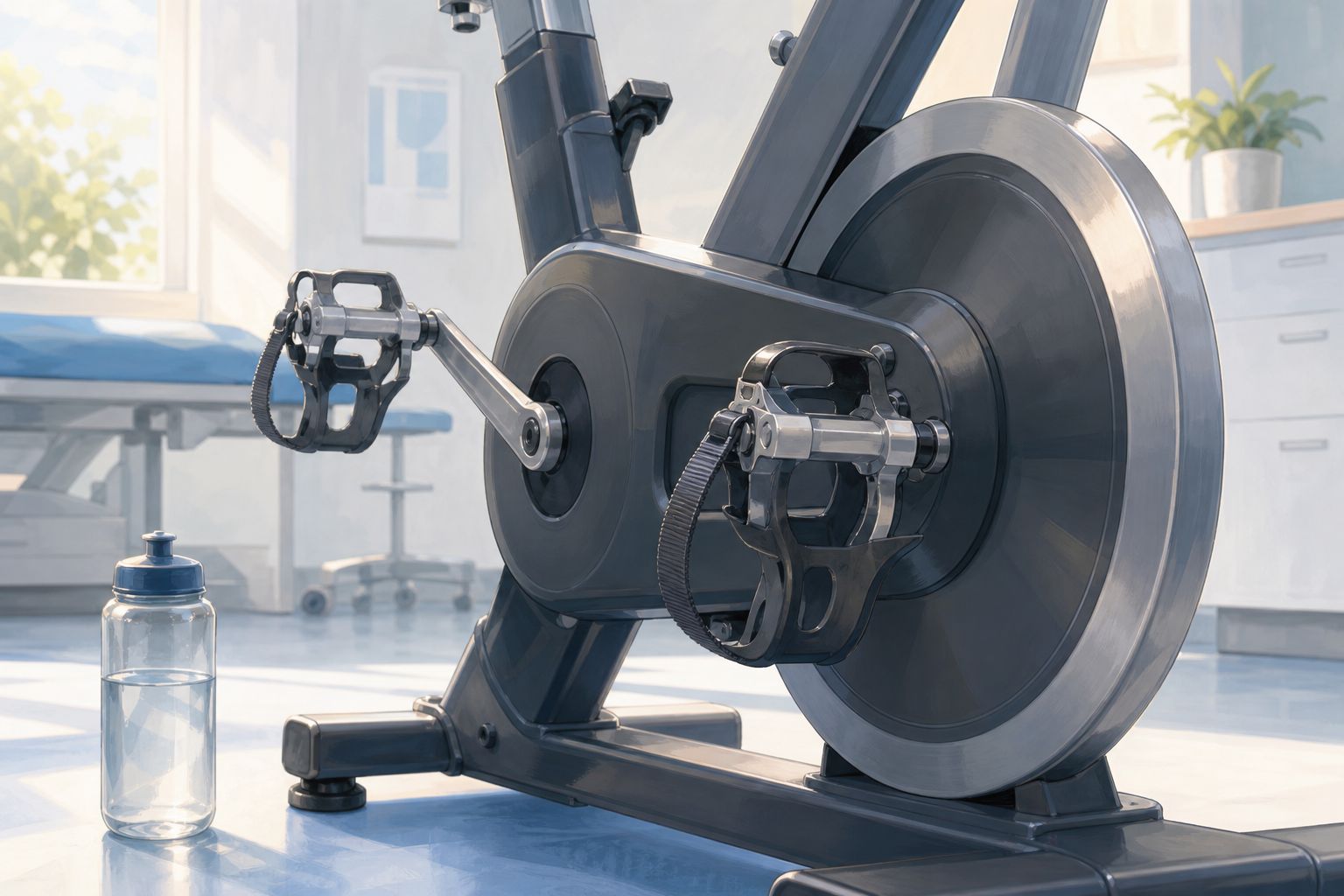
Supervised exercise Aerobic and resistance training, twice a week with staff, in the first 12 weeks. AI-generated still.
Weeks 1–12: meal replacements and two supervised exercise sessions a week
Weeks 13–24: weight maintenance, with a dietitian and an exercise physiologist
Only with a medical team
The programme
HbA1c below 6.5% (48 mmol/mol)
No glucose-lowering medicine for at least 12 weeks
“Remission” here meant
9.1%
greater drop in liver fat (absolute)
1.3%
greater drop in pancreatic fat fraction
similar
muscle volume in both groups
Compared with usual care at 24 weeks (Healio)
Chapter V · Remission
RESET for Remission
Healio and ScienceDaily: 96 adults (mean age 38) with type 2 diabetes diagnosed within six years, randomised at the University of Leicester (40 from the UK) and McGill and Alberta (56 from Canada) between 2021 and 2025. The intervention group stopped glucose-lowering drugs at the start under medical supervision; for 12 weeks they followed a low-energy diet in which formulated meal replacements replaced all meals for the first two weeks and most meals after that, with two supervised exercise sessions a week, then 12 weeks of weight maintenance. Remission (HbA1c below 6.5% with no glucose-lowering medication for at least 12 weeks): 58% vs 4% at 12 weeks and 54% vs 4% at 24 weeks. Liver fat and pancreatic fat fell more than with usual care; fat-free mass and muscle volume were similar between groups, and the authors note that preserving muscle during weight loss may have important implications. No serious adverse events; constipation, headache, dizziness and fatigue were common. Limits: small, open-label, ages 18–45, 24 weeks. Such programmes are done only with a medical team.
This film is education, not medical advice. Questions about blood sugar, diet or medicines are for a doctor.
Will remission last once people go back to everyday life? Nobody knows yet. RESET was small and short, and its participants knew which group they were in.
What is known: remission is not a cure. Glucose can rise again, so regular check-ups still matter.
A century after the first insulin, care has come a long way. Any change to diet, exercise or medicines belongs with a doctor; if you have questions about your own blood sugar, talk to one.
Does remission last beyond 24 weeks?
Does it work as well in older adults?
What is exercise’s own share?
Open questions
Not a cure: glucose can return to the diabetes range
HbA1c checked at least every six months
After remission (RACGP)
1869 Langerhans describes the islets
1922 First patient treated with insulin
1957 Metformin reported for diabetes
2018 DiRECT: 46% remission at a year
2026 RESET: 54% at 24 weeks in younger adults
Diabetes through time
Education, not medical advice: talk to a doctor
Stills are AI-generated
3D cells, organs and curves are schematic
About this film
Epilogue · Sources
Sources
Open questions from the RESET investigators (ScienceDaily, Healio): the trial lasted only 24 weeks and enrolled only adults aged 18–45; longer studies are needed to see whether weight loss, muscle and remission are maintained, and the specific role of physical activity needs more research. Remission is not a cure (RACGP): glucose can return to the diabetic range, and HbA1c should be checked at least every six months; people in remission still need regular checks (University of Leicester, 2025). This film is education, not medical advice: it gives no doses, diet plans or targets; talk to a doctor. The chapter stills and pictures are AI-generated illustrations; the 3D cells, organs and curves are simplified teaching models.