Society · History
One money, twenty-one countries
How the euro was built, and how it works.
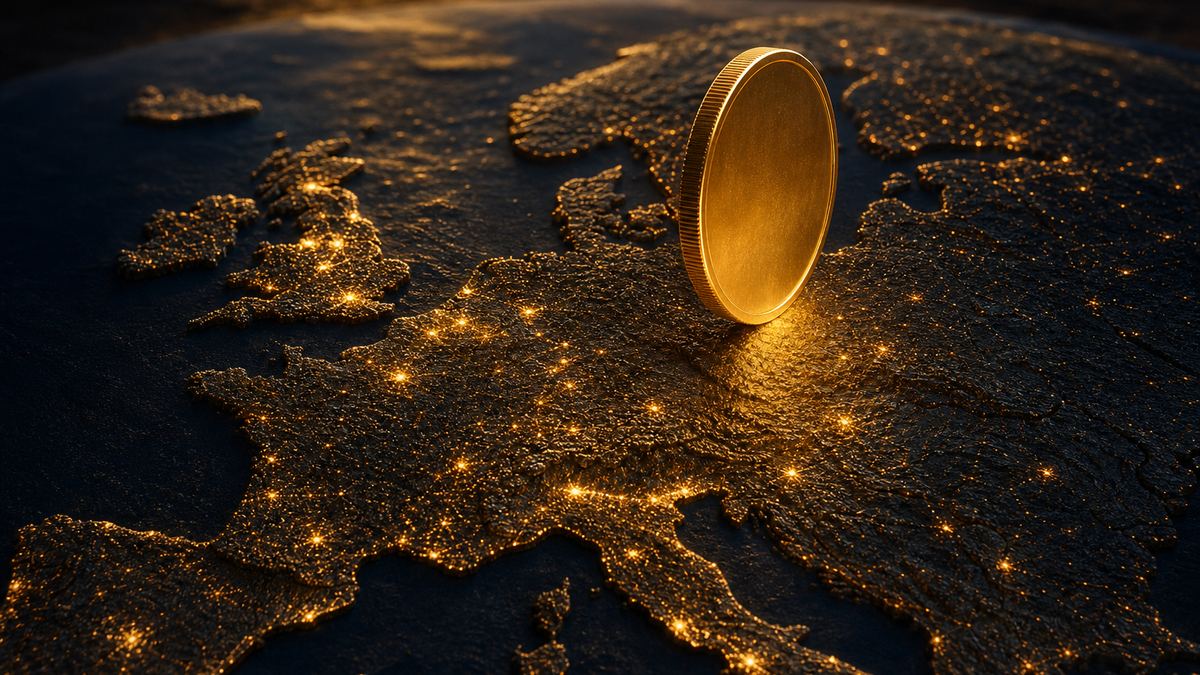
Twenty-one countries and about three hundred and sixty million people share one money, the euro, and one interest rate, set in Frankfurt.
On the twenty-ninth of October 2026, the woman who leads that decision, Christine Lagarde, said she will step down as president of the European Central Bank on the seventh of February 2027, months before her term ends.
How can one money, and one interest rate, serve so many different economies? This film shows how the euro was built, how it works, and where it comes under strain.

- 21
- member countries since 1 Jan 2026
- ~360 million
- people, 1 Jan 2026 (Eurostat figure)
- 7 Feb 2027
- Lagarde’s last day (ECB)
- Oct 2027
- when her term was due to end (RTÉ)
- Why Europe made one money
- The entrance test
- One rate for all, and who votes
- The crisis, and what comes next
An early exit
European Central Bank: on 29 October 2026 President Christine Lagarde informed the Governing Council and the President of the European Council, António Costa, that she will step down on 7 February 2027; her successor is appointed under Article 283(2) of the Treaty on the Functioning of the European Union. RTÉ, citing Reuters: her term was due to end in October 2027; at the time of the announcement the ECB’s deposit rate stood at 2.5%.
The euro area’s population, about 360 million on 1 January 2026, is the Eurostat figure quoted by Wikipedia’s Eurozone article.
The map is a simplified teaching model: borders are smoothed and very small states are shown as dots. Heights and colours mark membership, not size or wealth.
Sources: European Central Bank press release (29 Oct 2026): ECB President Lagarde to step down on 7 February 2027; RTÉ News (29 Oct 2026): Lagarde announces resignation after months of speculation; France 24 (29 Oct 2026): ECB chief Lagarde to step down early, triggering succession race; Wikipedia: Eurozone (members, adoption dates, non-EU users)