PlanetPast
EN

History · society

The Breakup of Yugoslavia

One Country, Seven States

On 25 October 2026 Serbia votes in a snap election after two years of protests. Serbia was once the largest part of a bigger country that no longer exists. This film tells how Yugoslavia was formed in 1918, torn apart in the Second World War, rebuilt by Tito’s Partisans as a federation of six republics, and kept apart from both Cold War blocs; how debt, the death of Tito and rival nationalisms cracked it in the 1980s; how it broke apart in the wars of 1991 to 1999, including the Srebrenica genocide; and what the courts and the map look like now.

Interactive 3D film11 min1918 to 2026Published 24 October 2026

Watch the interactive filmRead in ไทย

Prologue

History

One country, seven states

How Yugoslavia was built, and how it came apart.

On the twenty-fifth of October 2026, Serbia holds a snap election, after two years of student-led protests that began when a railway-station roof in Novi Sad collapsed and killed sixteen people.

Serbia was once the largest part of a bigger country that no longer exists. For most of the twentieth century, Slovenes, Croats, Serbs, Bosniaks, Montenegrins, Macedonians and Albanians lived in one state: Yugoslavia.

Today seven states stand on its land, if Kosovo is counted, and Serbia does not count it. How was Yugoslavia built, and why did it break apart in war?

250
seats in the National Assembly
16
killed in the Novi Sad canopy collapse, 1 November 2024
Serbia’s election, 25 October 2026
  • Slovenes, Croats, Serbs
  • Bosniaks (Bosnian Muslims), Montenegrins, Macedonians
  • Albanians, Hungarians and many smaller groups
The peoples of Yugoslavia (among others)
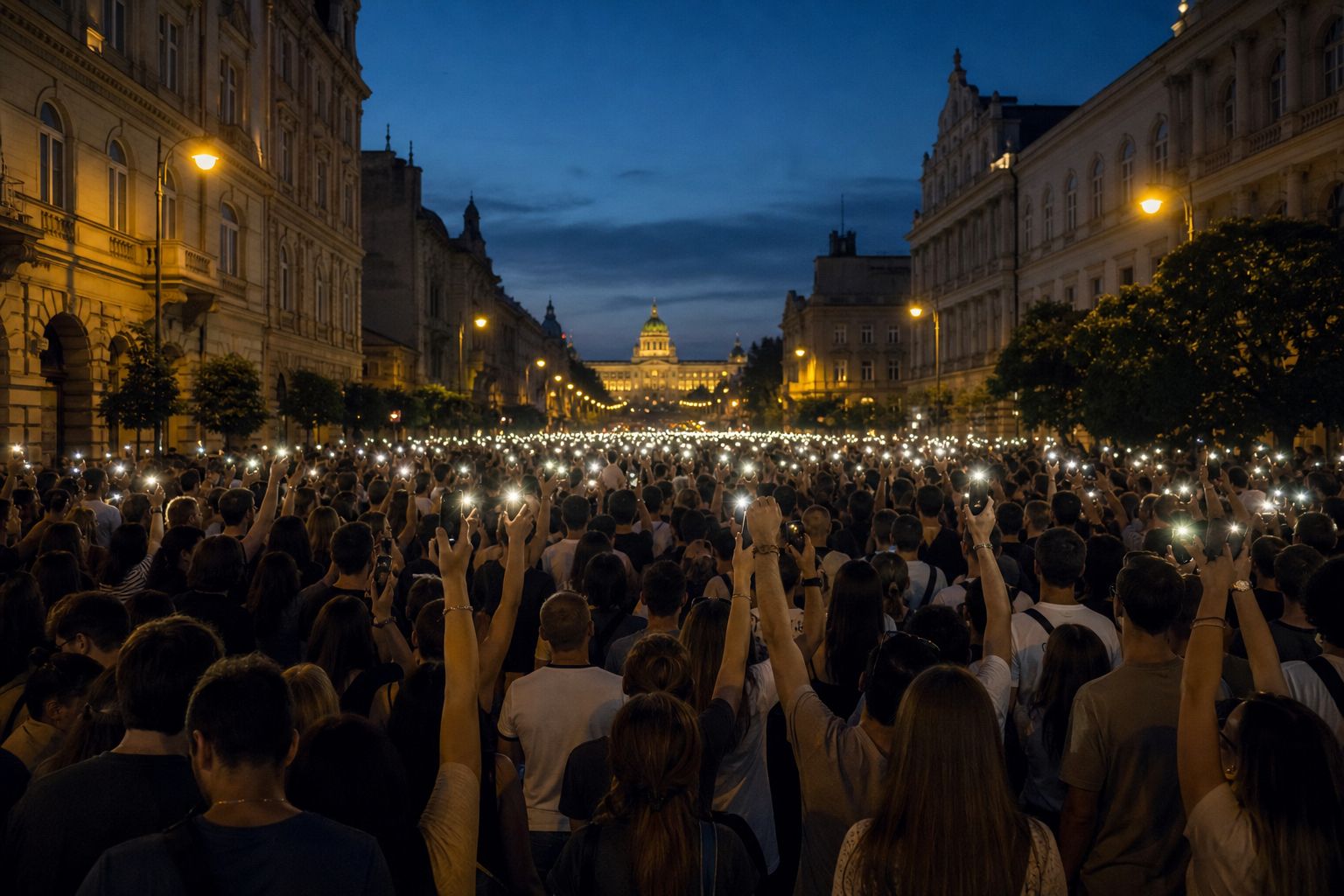
A rally in the capital Students and supporters gather; phones held up as lights. AI-generated still.
  • Slovenia · Croatia · Bosnia and Herzegovina
  • Serbia · Montenegro · North Macedonia
  • Kosovo, whose independence Serbia does not recognise
On its land today
Prologue

A snap election

Reuters (via The Star, 9 September 2026): Serbia’s government asked for parliament to be dissolved and a snap election held on 25 October, more than a year early, after nearly two years of student-led protests that began when a concrete canopy at the Novi Sad railway station collapsed in November 2024, killing 16 people. The opposition and protesters accuse the governing side of corruption and of restricting media freedom; the governing side denies the accusations. The Rio Times: the vote fills all 250 seats; the ruling Serbian Progressive Party, with Aleksandar Vučić as its candidate for prime minister, faces the student-backed list, and final polls disagreed on who leads.

Kosovo declared independence in 2008; Serbia rejects it, and states are divided on recognising it.

Map: Natural Earth borders of today’s states, which follow the old republic borders closely; schematic, not a legal map.

Sources: Reuters via The Star (9 Sep 2026): Serbia to hold parliamentary vote on October 25, president says; The Rio Times (Oct 2026): Serbia final polls split before Sunday vote; Wikipedia: Novi Sad railway station canopy collapse; Wikipedia: advisory opinion on Kosovo’s declaration of independence
Chapter I · A kingdom of South Slavs

Chapter I

A kingdom of South Slavs

Born from the end of the First World War.

The country was born on the first of December 1918, as the First World War ended and the Austro-Hungarian Empire fell apart. The Kingdom of Serbia joined with newly freed South Slav lands of the old empire.

It was called the Kingdom of Serbs, Croats and Slovenes. In 1929 King Alexander the First renamed it Yugoslavia, which means the land of the South Slavs.

From the start, its peoples argued over how it should be run: from the centre, in Belgrade, or as a looser union of its parts. That argument never really ended.

  1. 1 Dec 1918 Kingdom of Serbs, Croats and Slovenes
  2. 3 Oct 1929 Renamed Kingdom of Yugoslavia
  3. 6 Apr 1941 Invaded by the Axis
The first Yugoslavia
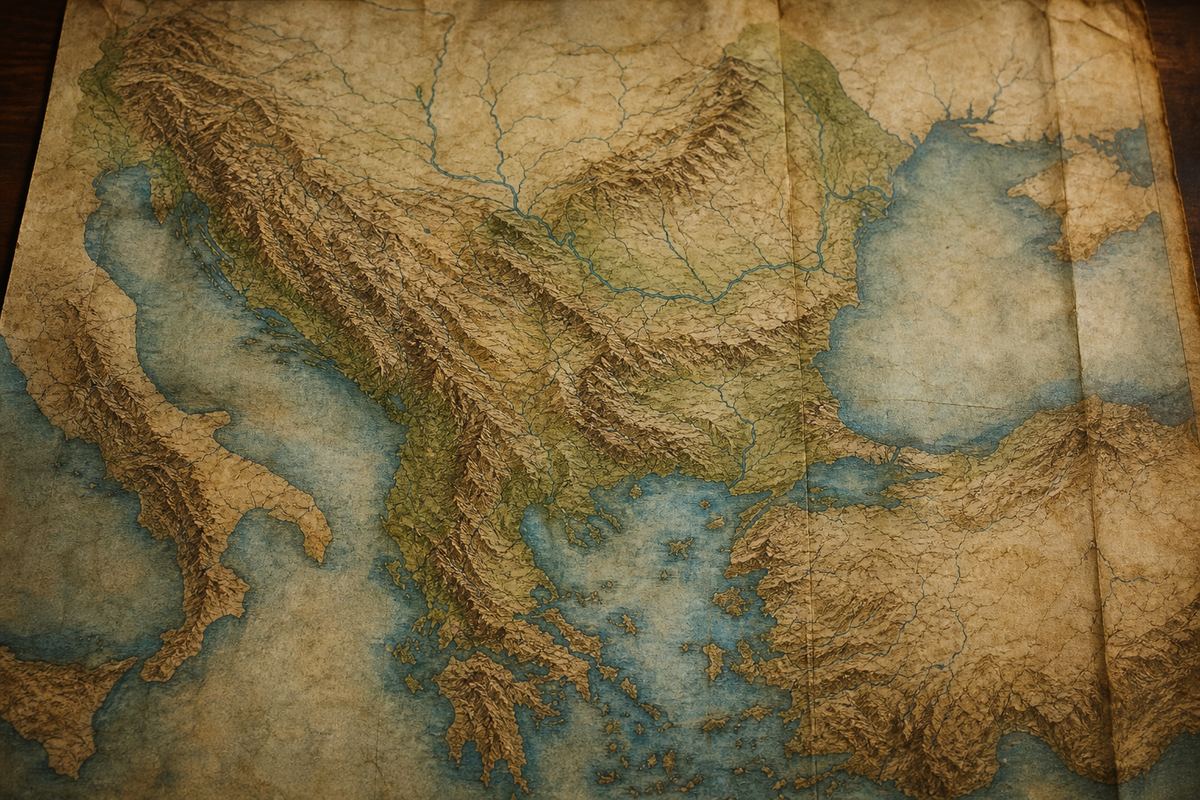
The Balkan peninsula An old-style map with no borders drawn: mountains, rivers and coast. AI-generated still.
south + Slavs
the two Slavic words in the name: land of the South Slavs
The name
  • Rule from the centre, in Belgrade
  • Or a looser union of its parts
The old argument
Chapter I · A kingdom of South Slavs

The first Yugoslavia

Wikipedia, Yugoslavia: the Kingdom of Serbs, Croats and Slovenes was formed on 1 December 1918, after the First World War, from the merger of the Kingdom of Serbia and the State of Slovenes, Croats and Serbs, which had been formed from South Slav lands of Austria-Hungary. King Alexander I renamed it Yugoslavia on 3 October 1929. The name means “Land of the South Slavs”. Wikipedia’s Breakup of Yugoslavia describes the long-running tension between centralists and those who wanted more autonomy for the country’s parts.

On the map, the outline of the later federation is used for the kingdom; its internal divisions were different.

Map: Natural Earth borders of today’s states, which follow the old republic borders closely; schematic, not a legal map.

Sources: Wikipedia: Yugoslavia; Wikipedia: Breakup of Yugoslavia

Chapter II · Occupation and civil war

Chapter II

Occupation and civil war

A country invaded, divided, and at war with itself.

On the sixth of April 1941, German, Italian and Hungarian forces invaded. The Axis powers occupied the kingdom and carved it up.

In Croatia and Bosnia, a fascist movement called the Ustaša set up a puppet state, the so-called Independent State of Croatia. It persecuted and murdered Serbs, Jews and Roma. At its Jasenovac camp alone, the US Holocaust Memorial Museum estimates seventy-seven to ninety-nine thousand people were killed.

Two resistance movements fought the occupiers, and soon each other. The royalist Chetniks at times collaborated with the Axis, and killed tens of thousands of Muslims and Croats. The communist-led Partisans were commanded by Josip Broz, known as Tito.

Historians estimate that about a million people in Yugoslavia died in the war.

  • Invaded by Germany, Italy and Hungary
  • Occupied and partitioned by the Axis
  • 10 April: Ustaša proclaim the “Independent State of Croatia”
April 1941
45–52k
Serbs
12–20k
Jews
15–20k
Roma
Murdered at Jasenovac, 1941–45 (USHMM estimates)
50–68k
estimated dead in Croatia and Bosnia
Chetnik killings (Wikipedia, Chetniks)
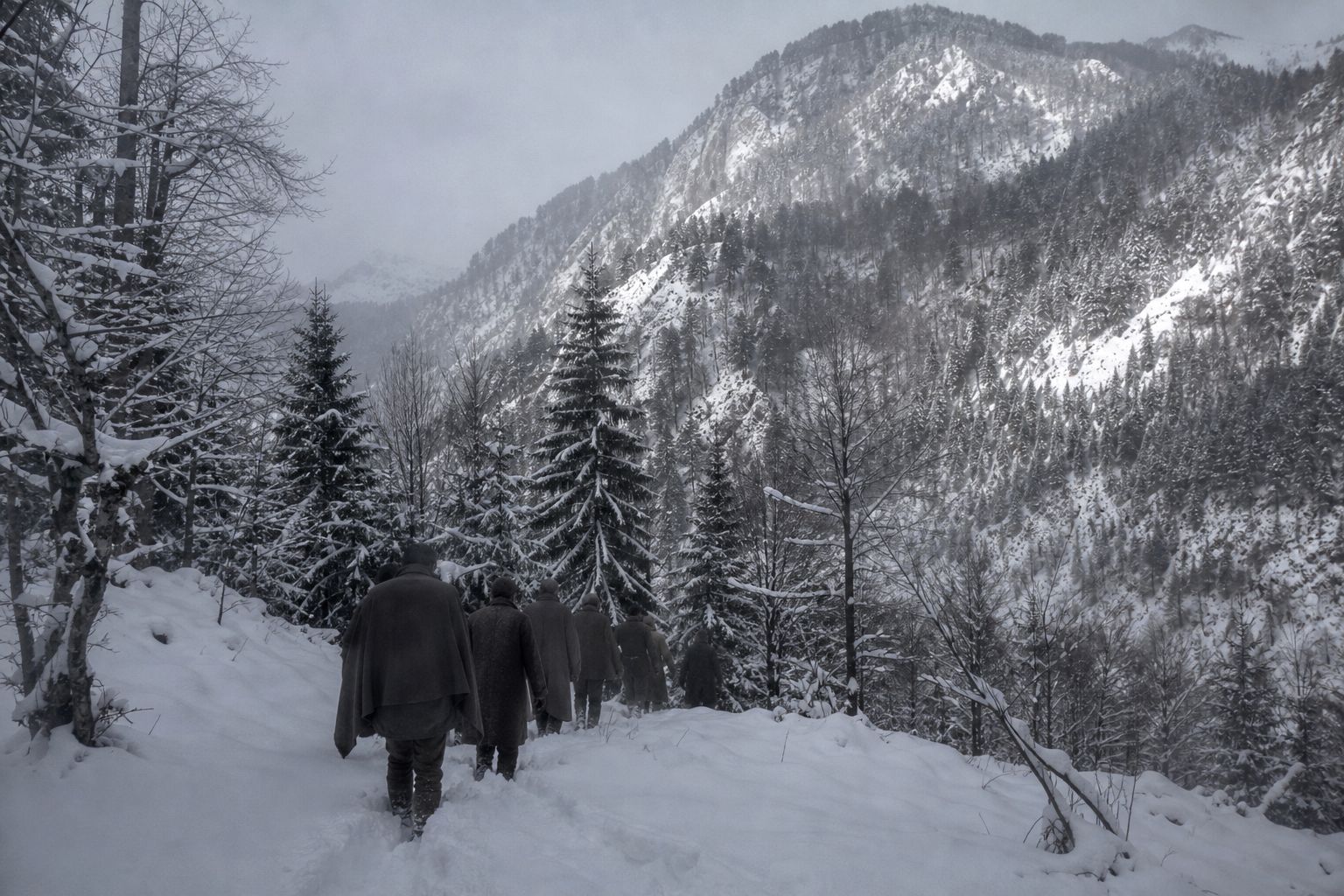
Resistance in the mountains Much of the fighting took place in the mountains of Bosnia and Montenegro. AI-generated still.
Official post-war figure1.70
Žerjavić and Kočović~1.0
War dead in Yugoslavia, 1941–45 (estimates)
Chapter II · Occupation and civil war

Invasion, terror and two resistances

Wikipedia, Yugoslavia: German, Italian and Hungarian forces invaded on 6 April 1941, and the Axis occupied and partitioned the country. USHMM: the Ustaša, a fascist, nationalist movement, proclaimed the so-called Independent State of Croatia on 10 April 1941, endorsed by Germany and Italy; between 77,000 and 99,000 people were murdered at Jasenovac, among them 45,000–52,000 Serbs, 12,000–20,000 Jews and 15,000–20,000 Roma; exact figures are hard to establish and have been shaped by postwar ethnic and ideological conflict. Wikipedia, Yugoslav Partisans: the communist-led Partisans were organised on Tito’s initiative; their relations with Draža Mihailović’s royalist Chetniks turned into open conflict from October 1941. Wikipedia, Chetniks: the Chetniks engaged in tactical or selective collaboration with Axis forces for almost all of the war, used terror against Croats and against Muslims in Bosnia, Herzegovina and Sandžak, and estimates of the people they killed in Croatia and Bosnia and Herzegovina range from 50,000 to 68,000. The official post-war count of Yugoslav war dead was 1,704,000; researchers Vladimir Žerjavić and Bogoljub Kočović later put it at about one million.

Casualty figures are estimates and are attributed; the parties to these wars still dispute much of their history.

Map: Natural Earth borders of today’s states, which follow the old republic borders closely; schematic, not a legal map.

Sources: Wikipedia: Yugoslavia; United States Holocaust Memorial Museum, Holocaust Encyclopedia: Jasenovac; Wikipedia: Yugoslav Partisans; Wikipedia: Chetniks

Tito's Partisans drew fighters from every people of the country, under the slogan brotherhood and unity. The Allies came to back them, and in October 1944, with the Soviet Red Army, they took Belgrade.

On the twenty-ninth of November 1945, the monarchy was abolished and a federal republic proclaimed. It had six republics: Slovenia, Croatia, Bosnia and Herzegovina, Serbia, Montenegro and Macedonia.

Inside Serbia were two autonomous provinces: Vojvodina in the north, and Kosovo in the south, where most people were Albanian. Switch between the whole, the republics and the provinces.

Brotherhood and unityThe Partisans’ ideal, later the motto of the new Yugoslavia
  1. 1943 Allies recognise the Partisans (Tehran)
  2. Oct 1944 Belgrade taken with the Red Army
  3. 29 Nov 1945 Federal republic proclaimed
From resistance to republic
  • Slovenia · Croatia
  • Bosnia and Herzegovina · Serbia
  • Montenegro · Macedonia
Six republics
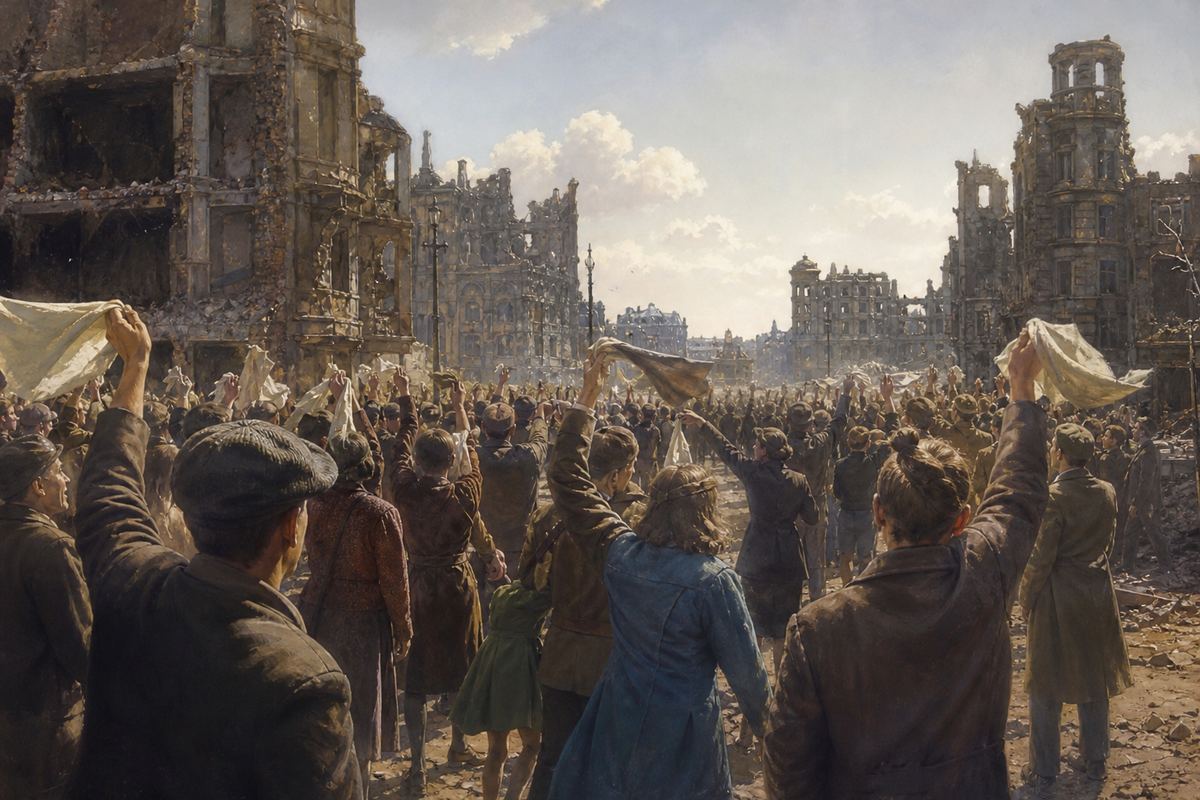
1945 A city celebrating the end of the war. AI-generated still.
Vojvodina
in the north
Kosovo
south; ~80% Albanian by the 1980s
Two provinces inside Serbia
Chapter II · Occupation and civil war

The second Yugoslavia

Wikipedia, Yugoslav Partisans: the Partisans drew members from Serbs, Croats, Slovenes, Montenegrins, Bosnian Muslims, Macedonians and others; their cardinal ideal, “brotherhood and unity”, became the motto of the new Yugoslavia. They won Allied recognition after the Tehran Conference of 1943, and in October 1944 liberated Belgrade together with the Soviet Red Army. Wikipedia, Yugoslavia: on 29 November 1945 the Constituent Assembly proclaimed a federal republic and abolished the monarchy. Its six republics were Bosnia and Herzegovina, Croatia, Macedonia, Montenegro, Serbia and Slovenia; Kosovo and Vojvodina were autonomous provinces within Serbia. Ethnic Albanians made up about 80% of Kosovo’s population in the 1980s.

Try it: the provinces are marked at Kosovo’s border; Vojvodina has no separate outline on this map and is shown by its label only.

Map: Natural Earth borders of today’s states, which follow the old republic borders closely; schematic, not a legal map.

Sources: Wikipedia: Yugoslav Partisans; Wikipedia: Yugoslavia

Chapter III · Tito’s Yugoslavia

Chapter III

Tito’s Yugoslavia

A communist country that would not take Moscow’s orders.

Tito ruled as a communist, but in 1948 he broke with Stalin and the Soviet Union. Yugoslavia went its own way: from 1950, workers' councils were given the running of factories, a system called self-management.

In the Cold War it sat between the blocs: NATO members Italy and Greece on one side, and Hungary, Romania and Bulgaria, in the Soviet-led Warsaw Pact, on the other. Show the blocs on the map. In 1961, Tito, India and other countries started the Non-Aligned Movement.

At home, a new constitution in 1974 handed more power to the republics and the two provinces, and reduced Serbia's influence. Many Serbs saw it as a concession to Croat and Albanian nationalists.

  1. 1948 Break with Stalin
  2. 1950 Workers’ councils run factories (self-management)
  3. 1961 Non-Aligned Movement
  4. 1963 Renamed Socialist Federal Republic
  5. 1974 New constitution: more power to republics
Tito’s own path
Non-aligned A conference hall of the 1960s, as such summits looked. AI-generated still.
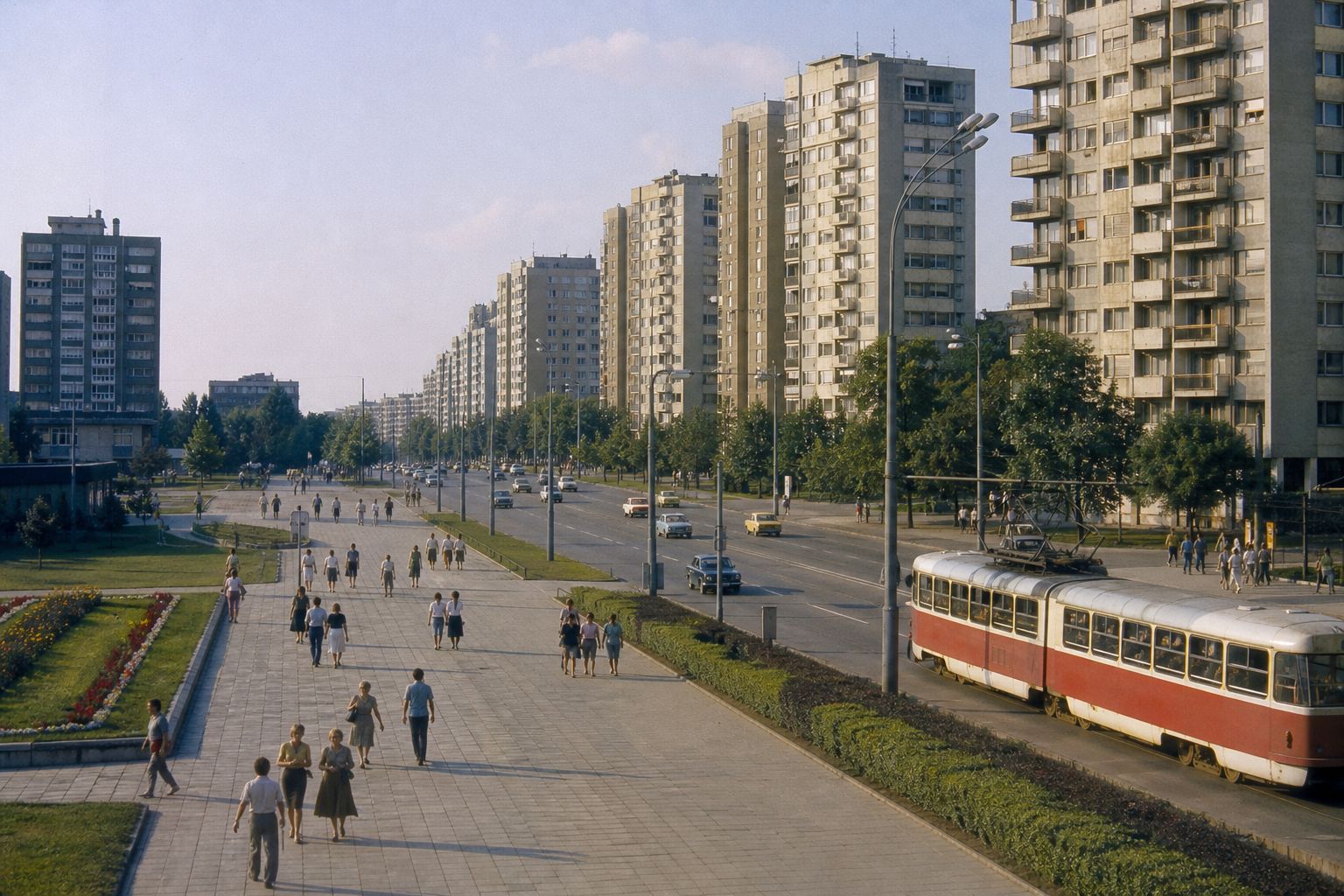
A socialist capital Modernist apartment blocks and wide boulevards of the 1970s. AI-generated still.
  • More rights for the republics
  • Kosovo and Vojvodina almost equal to republics, but no right to secede
  • Albanian and Hungarian recognised as minority languages
The 1974 constitution
Chapter III · Tito’s Yugoslavia

Between the blocs

Wikipedia, Yugoslavia: in 1948 Yugoslavia distanced itself from the Soviets and pursued its own path to socialism under Tito; constitutional amendments in 1953 entrenched “workers’ self-management” and decentralisation. GlobalSecurity.org: enterprises formed prototype workers’ councils in 1949, and the Federal Assembly passed laws in 1950 and 1951 to implement the system fully. In 1961 Tito, with India and others, started the Non-Aligned Movement. The country was renamed the Socialist Federal Republic of Yugoslavia on 7 April 1963. The 1974 constitution gave more rights to the republics and to the provinces in Serbia and reduced Serbia’s influence; Kosovo and Vojvodina received much the same status as the republics, though they could not secede, and Albanian and Hungarian were recognised as minority languages. Serbs saw it as a concession to Croat and Albanian nationalists. HISTORY.com: the Warsaw Pact was formed on 14 May 1955 and included Hungary, Romania and Bulgaria. Wikipedia, NATO members: Italy was a founding member in 1949; Greece joined in 1952.

Try it: the bloc colours show alliance membership in the 1960s–80s; Austria was neutral and Albania left the Warsaw Pact in the 1960s.

Map: Natural Earth borders of today’s states, which follow the old republic borders closely; schematic, not a legal map.

Sources: Wikipedia: Yugoslavia; GlobalSecurity.org: Socialist Yugoslavia, self-management; HISTORY.com: the Warsaw Pact is formed (14 May 1955); Wikipedia: member states of NATO

Chapter IV · The cracks

Chapter IV

The cracks

No leader, a heavy debt, and rival nationalisms.

Tito died on the fourth of May 1980. In his place came a collective presidency, with a member from each of the six republics and two provinces.

The economy, which had grown fast in the 1960s and 70s, was in trouble. By 1981 foreign debt had reached nearly twenty billion dollars. Real wages fell by a quarter between 1979 and 1985, and about a million people were out of work.

Hard times sharpened old questions. Richer Slovenia and Croatia resented paying for poorer regions. In 1981, Albanians in Kosovo protested to demand that it become a republic.

4 May 1980
Tito dies
6 + 2
republics and provinces represented in the presidency
After Tito
6.1%
average growth a year, 1960–80
$19.9 bn
foreign debt by 1981
−25%
real earnings, 1979–85
The economy (Wikipedia, Breakup of Yugoslavia)
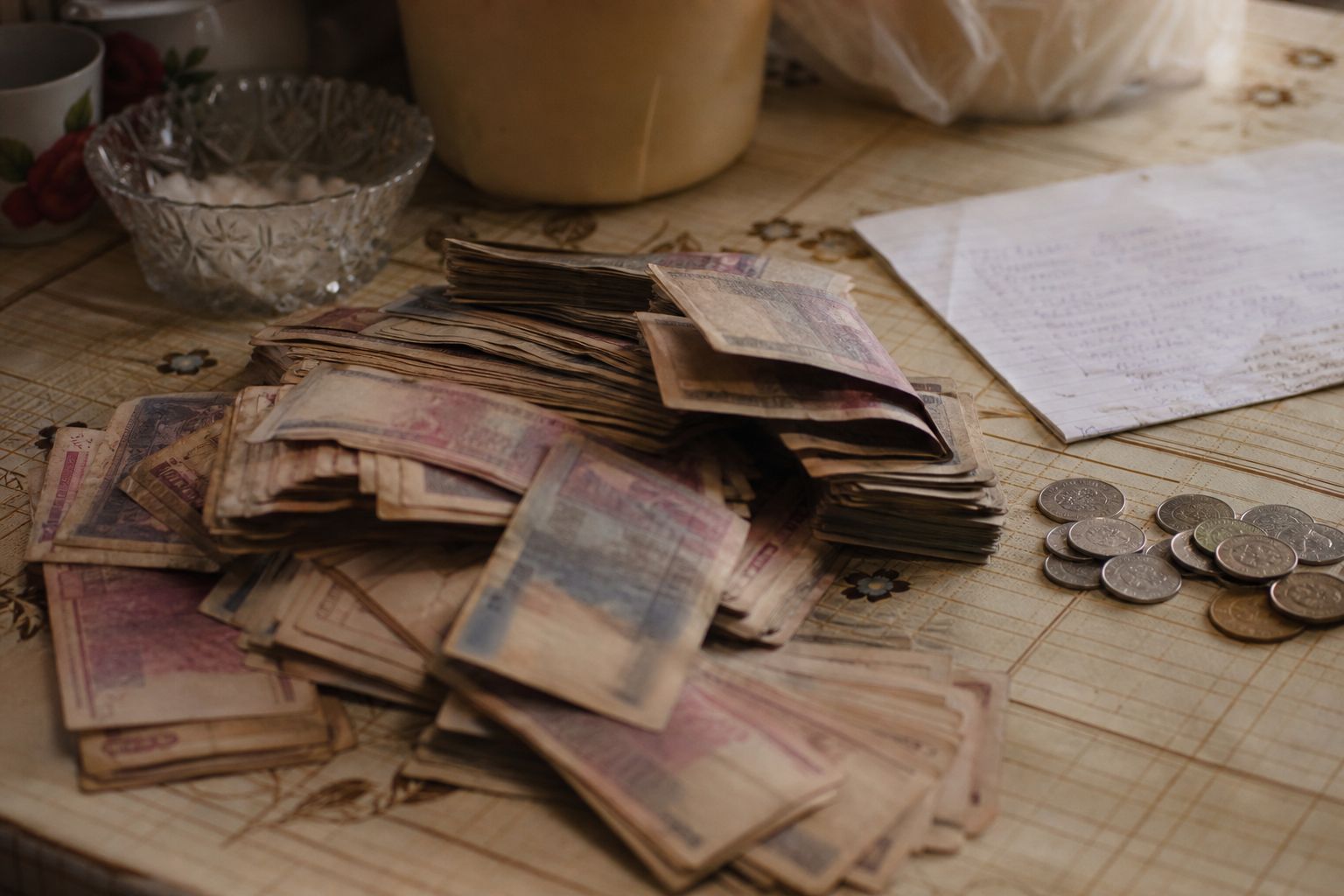
Money losing its value Worn banknotes of ever larger denominations. AI-generated still.
  • Richer north: why pay for the poorer south?
  • Kosovo: Albanians ask for a republic (1981)
  • Kosovo’s income: 47% → 27% of the national average
Old questions, sharper
Chapter IV · The cracks

Debt and a leaderless federation

Wikipedia, Yugoslavia: after Tito’s death in 1980 a collective presidency was formed, an eight-member council with representatives of the six republics and two provinces (until 1988 the party leader also sat on it ex officio). Wikipedia, Breakup of Yugoslavia: GDP growth averaged 6.1% a year from 1960 to 1980; foreign debt reached $19.9 billion by 1981; real earnings fell 25% from 1979 to 1985; unemployment was about one million in 1980; Kosovo Albanian protests demanding republic status began in 1981, and Kosovo’s income per head fell from 47% to 27% of the Yugoslav average. Slovenia and Croatia, the richer republics, resented funding the poorer ones.

On the map, the eight columns stand for the eight members of the collective presidency, one per republic or province; placement is schematic.

Map: Natural Earth borders of today’s states, which follow the old republic borders closely; schematic, not a legal map.

Sources: Wikipedia: Yugoslavia; Wikipedia: Breakup of Yugoslavia

In 1987, Slobodan Milošević, a communist official, took charge of the party in Serbia and became its most powerful politician. In 1989, changes to Serbia's constitution brought Kosovo and Vojvodina back under Belgrade's control.

Two visions now collided. Milošević and his supporters said Serbs, spread across several republics, needed protection, and that the country needed a stronger centre. Leaders in Slovenia and Croatia wanted more autonomy, more democracy, or a way out.

In January 1990, the delegations of Slovenia and Croatia walked out of the congress of the League of Communists, the ruling party since the war. The party that had held the country together was finished. See the map from each side.

  1. 1986 Serbian Academy memorandum fuels Serbian nationalism
  2. Sep 1987 Milošević takes charge in Serbia
  3. Mar 1989 Serbia reasserts control of Kosovo and Vojvodina
  4. Jun 1989 Gazimestan speech, 600 years after the Battle of Kosovo
Toward the break
  • Belgrade: protect Serbs in every republic; a stronger centre
  • Ljubljana and Zagreb: autonomy, democracy, or independence
  • Some scholars (e.g. Woodward): economic pressure was a main cause
Two visions, and one more explanation
strikes
1987–88, over wages and IMF-backed subsidy cuts
Why the economy mattered
walk-out
Slovene and Croatian delegates leave the 14th Congress
23 January 1990
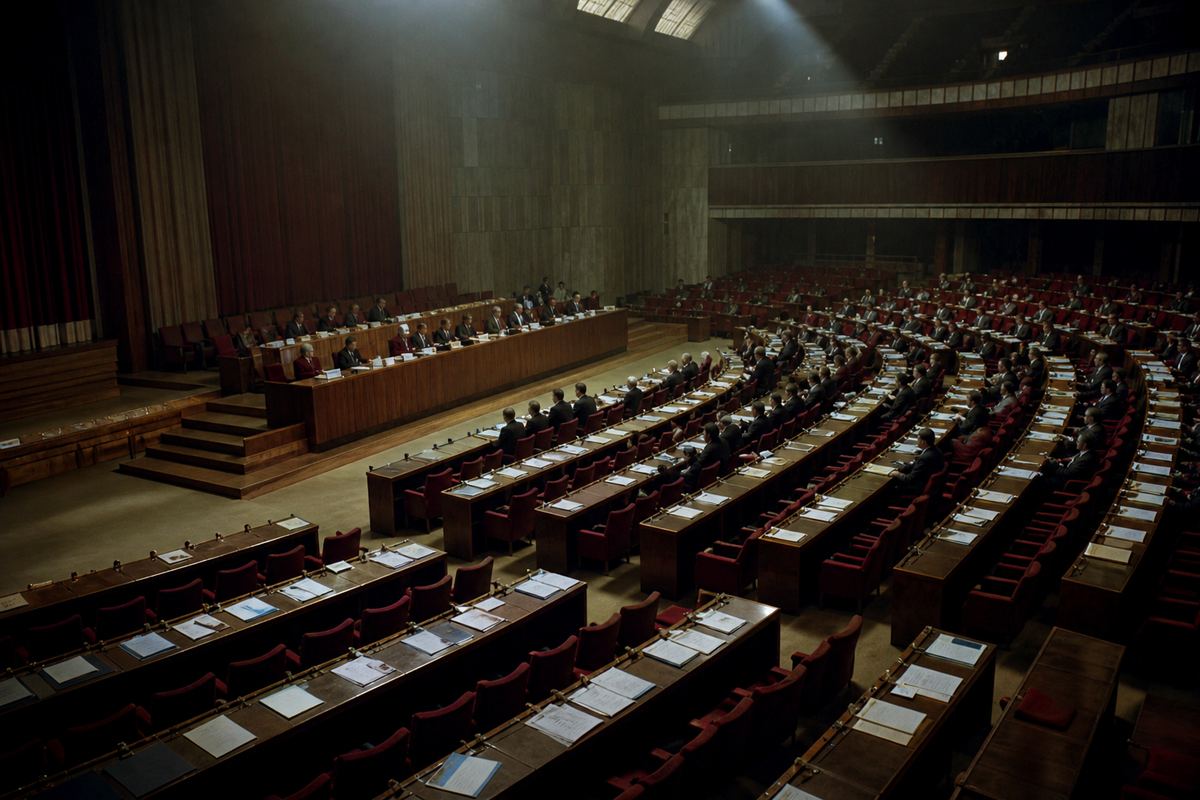
January 1990 A congress hall with half its seats empty. AI-generated still.
Chapter IV · The cracks

Rival visions

Wikipedia, Breakup of Yugoslavia: Slobodan Milošević became Serbia’s most powerful politician at a session on 23–24 September 1987. In March 1989 amendments to Serbia’s constitution reasserted control over Kosovo and Vojvodina, and in June 1989 he gave the Gazimestan speech on the 600th anniversary of the Battle of Kosovo. The 14th Congress of the League of Communists collapsed in January 1990 when Croatian and Slovene delegations walked out on 23 January. The article sets out competing explanations: the Serbian leadership’s framing that Serbs needed protection and the state needed centralisation; the Slovene and Croatian framing of autonomy, democratisation and resentment at funding poorer republics; economic explanations (Davidson, Woodward); and the role of foreign recognition, which remains debated.

Try it: the arrows are a schematic of each side’s view, not a measure of anything.

Map: Natural Earth borders of today’s states, which follow the old republic borders closely; schematic, not a legal map.

Sources: Wikipedia: Breakup of Yugoslavia

Chapter V · The wars of the 1990s

Chapter V

The wars of the 1990s

One country becomes five, then seven.

In 1990 every republic held multi-party elections, and nationalist parties did well. In referendums, about ninety-five percent of Slovenian voters and ninety-three percent of Croatian voters chose independence.

On the twenty-fifth of June 1991, both declared independence. The Yugoslav army moved into Slovenia, but after about ten days of fighting it pulled out. Macedonia followed that September, and Bosnia and Herzegovina in March 1992.

In April 1992, Serbia and Montenegro formed a new, smaller Federal Republic of Yugoslavia. Step through the years and watch the map split.

Slovenia, Dec 199094.8%
Croatia, May 199193.2%
Macedonia, Sep 199195.3%
Bosnia, Mar 1992*99.7%
Votes for independence (share of those voting)
  1. 25 Jun 1991 Slovenia and Croatia
  2. 25 Sep 1991 Macedonia
  3. 15 Jan 1992 Slovenia and Croatia recognised
  4. 3 Mar 1992 Bosnia and Herzegovina
  5. 27 Apr 1992 Federal Republic of Yugoslavia (Serbia + Montenegro)
Declarations
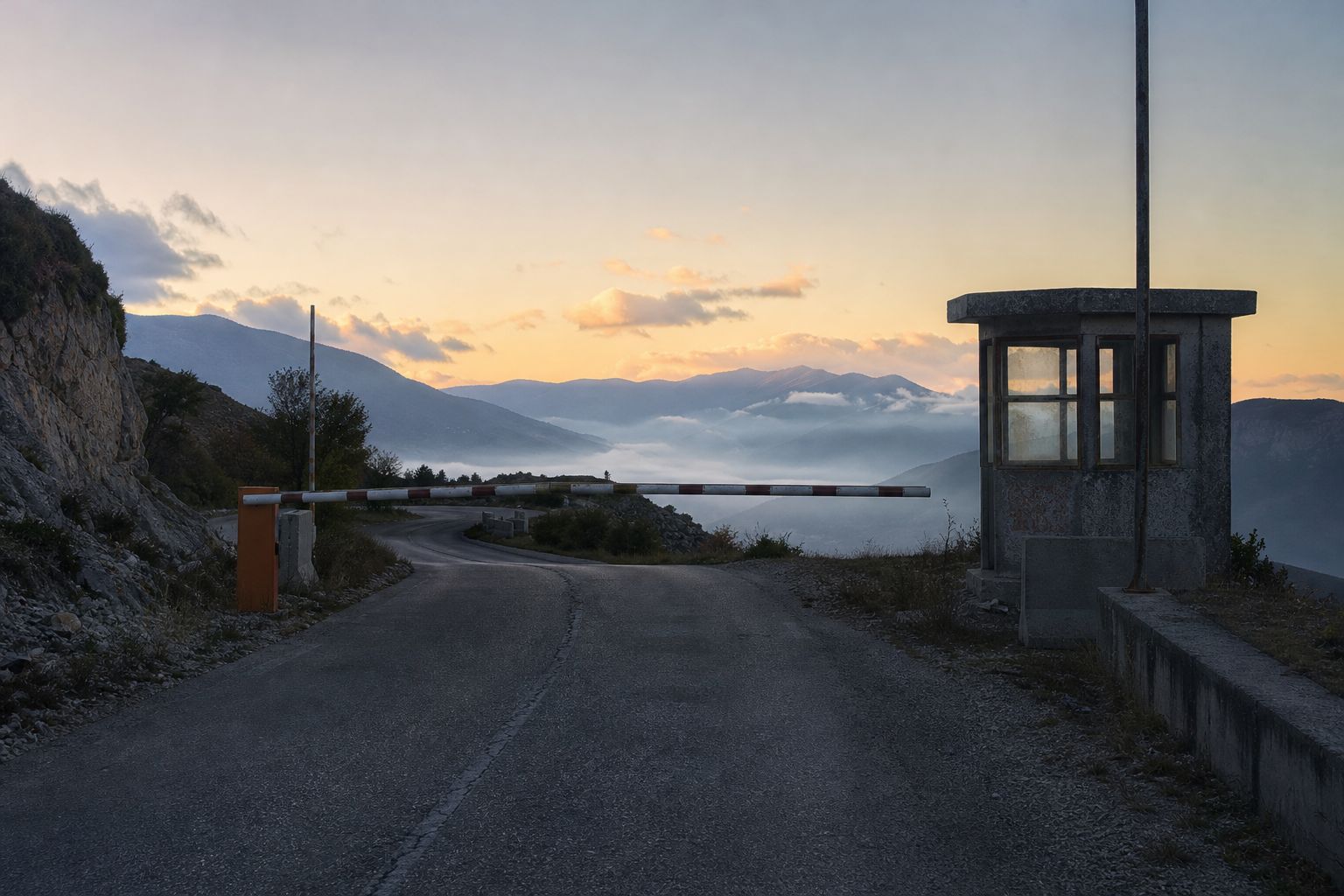
New borders A road barrier on a hill road: internal lines became international borders. AI-generated still.
  • *Bosnia: turnout 63.4%
  • Most Bosnian Serbs stayed away in protest
Footnote to the vote
Chapter V · The wars of the 1990s

The republics leave

Wikipedia, Breakup of Yugoslavia: multi-party elections were held in every republic in 1990. In Slovenia’s referendum of December 1990, 88.5% of all electors (94.8% of those voting) voted for independence; in Croatia’s of May 1991, 93.24%. Both declared independence on 25 June 1991, which the federal Constitutional Court declared unconstitutional. Macedonia voted 95.26% for independence on 8 September 1991 and declared it on 25 September. Slovenia and Croatia were recognised internationally on 15 January 1992. Bosnia and Herzegovina’s referendum of 29 February–1 March 1992 had 63.4% turnout and 99.7% in favour, largely boycotted by Bosnian Serbs; it declared independence on 3 March 1992. The Federal Republic of Yugoslavia, of Serbia and Montenegro, was constituted on 27 April 1992. ICTY: after Slovenia’s declaration the Yugoslav People’s Army intervened in a brief conflict, the Ten-Day War, and withdrew.

Try it: the buttons show who had declared or won independence by the end of each year (Kosovo’s status remains disputed).

Map: Natural Earth borders of today’s states, which follow the old republic borders closely; schematic, not a legal map.

Sources: Wikipedia: Breakup of Yugoslavia; ICTY legacy website (UN IRMCT): the conflicts

Croatia was home to a large Serb minority, who feared what a Croatian state would mean for them. Backed by the Yugoslav army and by Serbia, Croatian Serbs rebelled and took control of nearly a third of Croatia's territory.

Croats and other non-Serbs were driven out of those areas. In 1991 the town of Vukovar was besieged and destroyed, and the old city of Dubrovnik was shelled. A UN-monitored ceasefire began in early 1992.

In 1995, Croatian offensives took back most of the land, and many Serbs fled: the UN war-crimes tribunal's prosecutors spoke of nearly ninety thousand, Serb groups of two hundred and twenty thousand. In 2012 the tribunal acquitted two Croatian generals; Croatia celebrated, and Serbia protested.

~1/3
of Croatia held by Serb rebels
Croatia, 1991 (ICTY: the UN war-crimes court in The Hague, 1993–2017)
  1. 1991 Vukovar besieged and destroyed; Dubrovnik shelled
  2. early 1992 UN-monitored ceasefire
  3. 1995 Croatian offensives retake most land
  4. Jan 1998 Eastern Slavonia returns to Croatia
War in Croatia (ICTY)
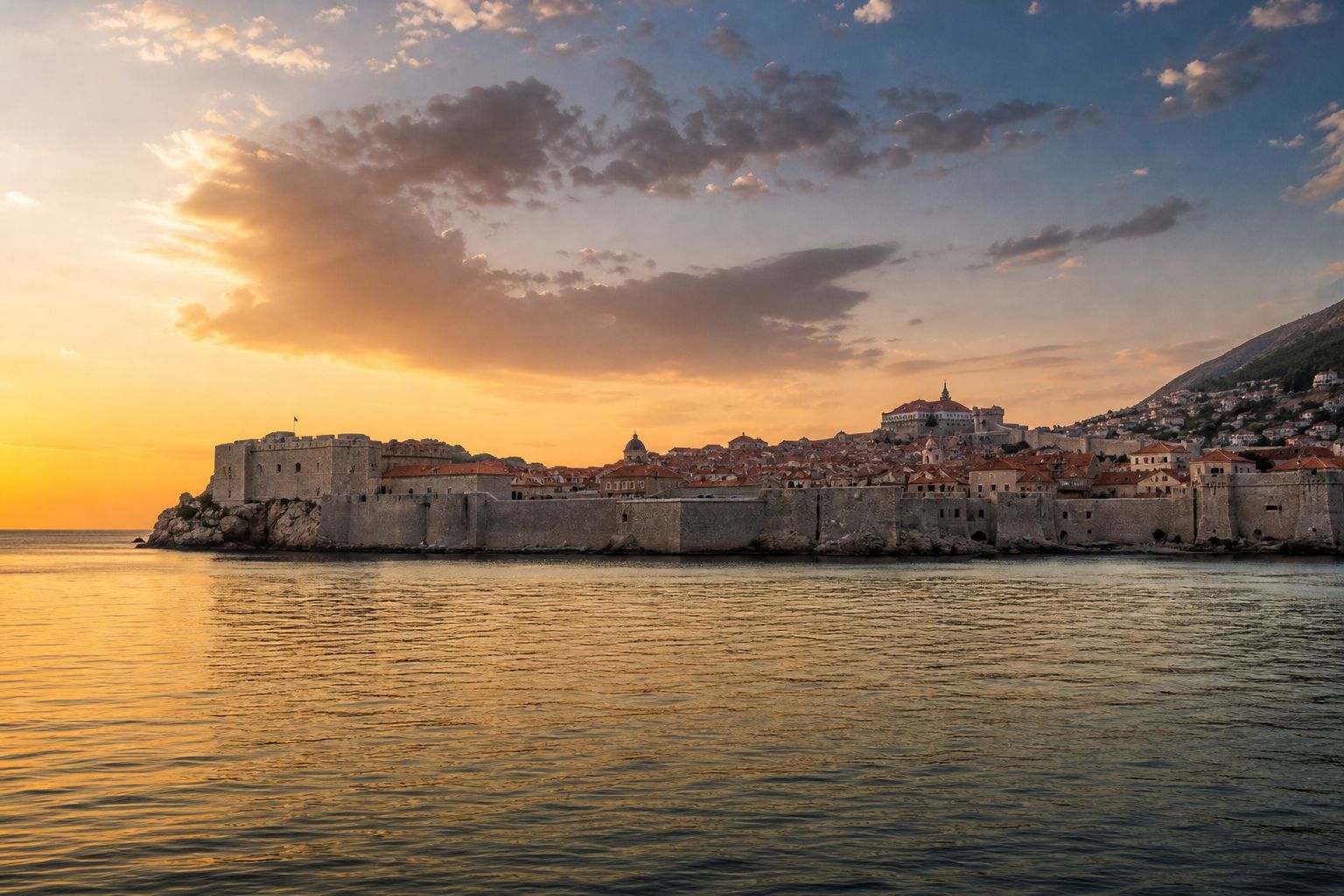
Dubrovnik The walled old town, shelled in 1991 and since restored. AI-generated still.
ICTY prosecution: “forcibly displaced”~90,000
Serb victims’ associations220,000
Serbs who left in Operation Storm, August 1995
2012
ICTY appeals judges acquit Croatian generals Gotovina and Markač
Operation Storm in court
Chapter V · The wars of the 1990s

The war in Croatia

ICTY: Croatia declared independence the same day as Slovenia. Croatian Serbs, backed by the Yugoslav army and Serbia, rebelled and claimed nearly a third of Croatia’s territory; Croats and other non-Serbs were expelled in a campaign of ethnic cleansing (forcing a people out of an area by violence). Dubrovnik was shelled and Vukovar besieged and destroyed in 1991. A UN-monitored ceasefire took effect in early 1992; Croatian offensives in summer 1995 regained most territory, and Eastern Slavonia returned to Croatian rule in January 1998. Wikipedia, Breakup of Yugoslavia, describes the Serbian leadership’s view that Serbs outside Serbia needed protection. Al Jazeera (2012): in Operation Storm, August 1995, the ICTY prosecution said close to 90,000 Serbs were forcibly displaced; Serb victims’ associations put it at 220,000. In 2012 the ICTY appeals chamber acquitted Croatian generals Ante Gotovina and Mladen Markač; Croatia celebrated, and Serbia’s official for cooperation with the tribunal protested that nobody had been sentenced for crimes in Operation Storm.

Casualty figures are estimates and are attributed; the parties to these wars still dispute much of their history.

Map: Natural Earth borders of today’s states, which follow the old republic borders closely; schematic, not a legal map.

Sources: ICTY legacy website (UN IRMCT): the conflicts; Wikipedia: Breakup of Yugoslavia; Al Jazeera (16 Nov 2012): court overturns convictions of Croat generals

Bosnia and Herzegovina was home to three large peoples: Bosniaks, who are mostly Muslim, Serbs, who are mostly Orthodox Christian, and Croats, who are mostly Catholic. When it declared independence, Bosnian Serb forces, backed by the Yugoslav army and Serbia, rebelled.

In April 1992 they began a siege of Sarajevo, the capital. Later, Bosnian Croats, backed by Croatia, declared their own republic, and the war became a three-sided one. All sides ran detention camps.

It was the deadliest of the Yugoslav wars. According to the UN tribunal, it killed more than a hundred thousand people and drove about two million from their homes.

  • Bosniaks: mostly Muslim
  • Serbs: mostly Orthodox Christian
  • Croats: mostly Catholic
Bosnia’s three largest peoples
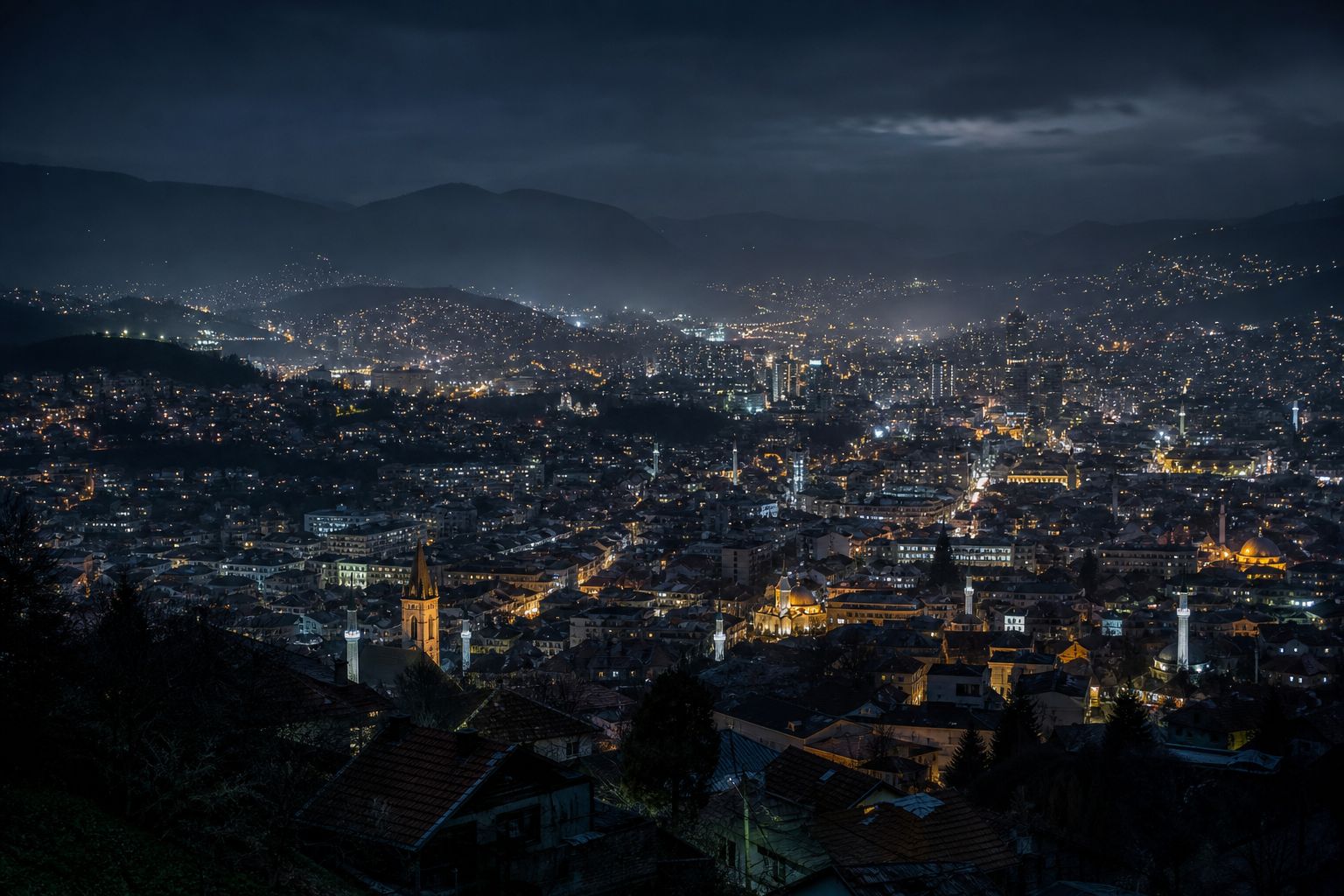
Sarajevo The capital in its valley; the siege began in April 1992. AI-generated still.
3
sides: Bosnian government, Bosnian Serb and Bosnian Croat forces
A three-sided war
> 100,000
killed
~2 million
displaced
The war in Bosnia (ICTY)
Chapter V · The wars of the 1990s

The war in Bosnia

ICTY: Bosnia and Herzegovina saw the deadliest of the Yugoslav conflicts. After the March 1992 referendum, boycotted by Bosnian Serbs, Bosnian Serbs rebelled in April 1992 with the support of the Yugoslav army and Serbia; Bosnian Croats later declared their own republic, backed by Croatia, making the war three-sided. It killed more than 100,000 people and displaced about two million. Thousands of women were raped, and detention camps were set up by all sides. Wikipedia, Breakup of Yugoslavia: Bosnia was recognised on 6 April 1992, when Serb forces began the siege of Sarajevo.

US State Department (2023): there is a strong correlation between ethnicity and religion; Bosniaks are predominantly Muslim, Serbs affiliate primarily with the Serbian Orthodox Church and Croats with the Catholic Church. Religion describes each community broadly, not every person in it.

Casualty figures are estimates and are attributed; the parties to these wars still dispute much of their history.

Map: Natural Earth borders of today’s states, which follow the old republic borders closely; schematic, not a legal map.

Sources: ICTY legacy website (UN IRMCT): the conflicts; Wikipedia: Breakup of Yugoslavia; US State Department via ecoi.net: 2023 Report on International Religious Freedom, Bosnia and Herzegovina

In July 1995, Bosnian Serb forces took Srebrenica, a town the United Nations had declared a safe area. They executed more than eight thousand Bosniak men and boys.

Both the UN war-crimes tribunal and the International Court of Justice, the UN's highest court for disputes between states, ruled that this was genocide: killing meant to destroy a people, in whole or in part. In 2007 the court found that Serbia had not committed it, but had failed to prevent it and to punish those responsible.

That autumn, the leaders of Bosnia, Croatia and Serbia met in Dayton, in the United States. The peace they agreed was signed in December 1995, and the war in Bosnia ended.

> 8,000
Bosniak men and boys executed
UN “safe area”
the town had been declared one by the UN
Srebrenica, July 1995 (ICTY)
  • Genocide was committed at Srebrenica
  • Serbia did not commit it, and was not complicit
  • Serbia failed to prevent it and to punish it
International Court of Justice, 26 Feb 2007
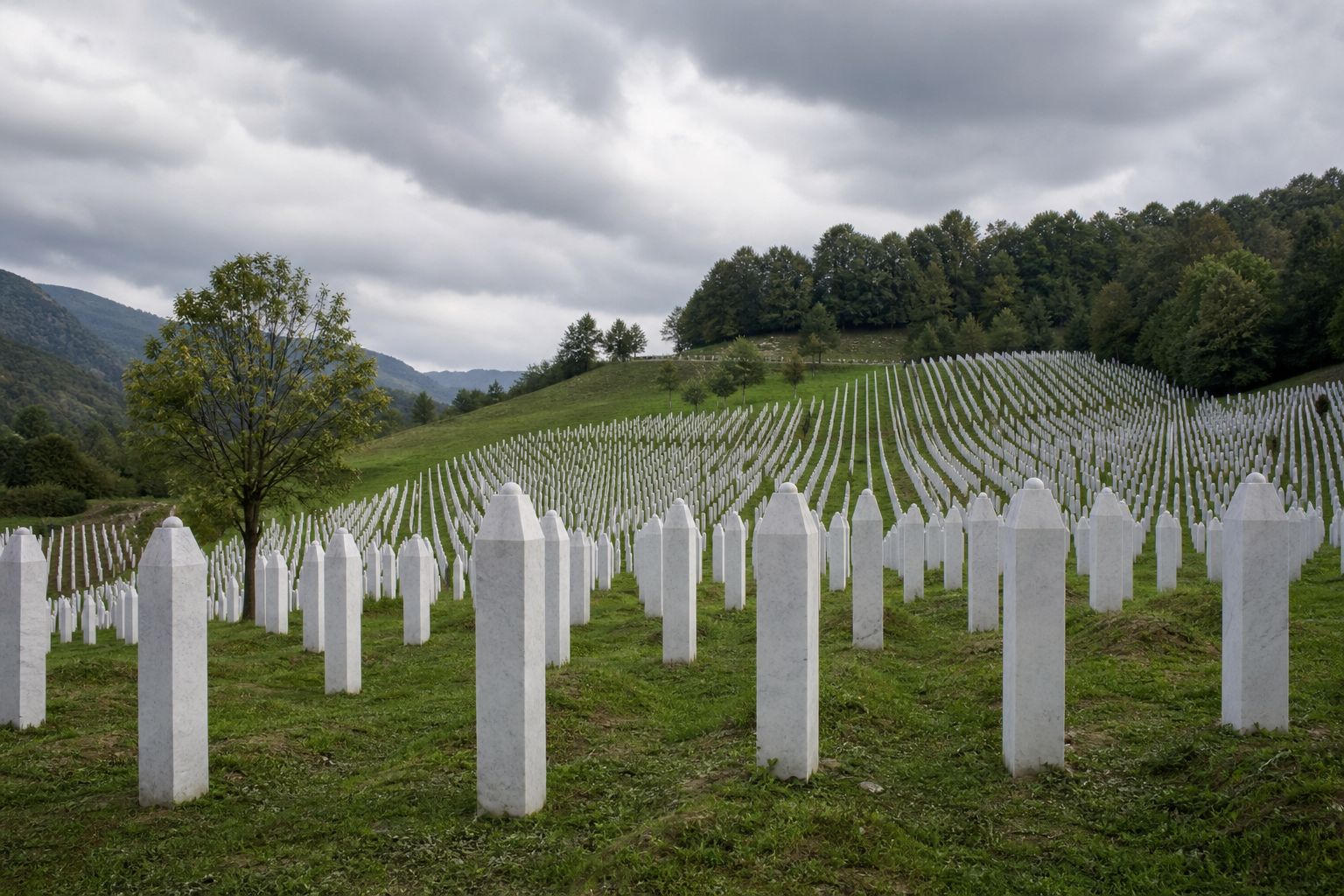
Remembrance A memorial cemetery of white headstones in the Bosnian hills. AI-generated still.
Nov 1995
agreement initialled in Dayton, Ohio
14 Dec 1995
signed
Dayton
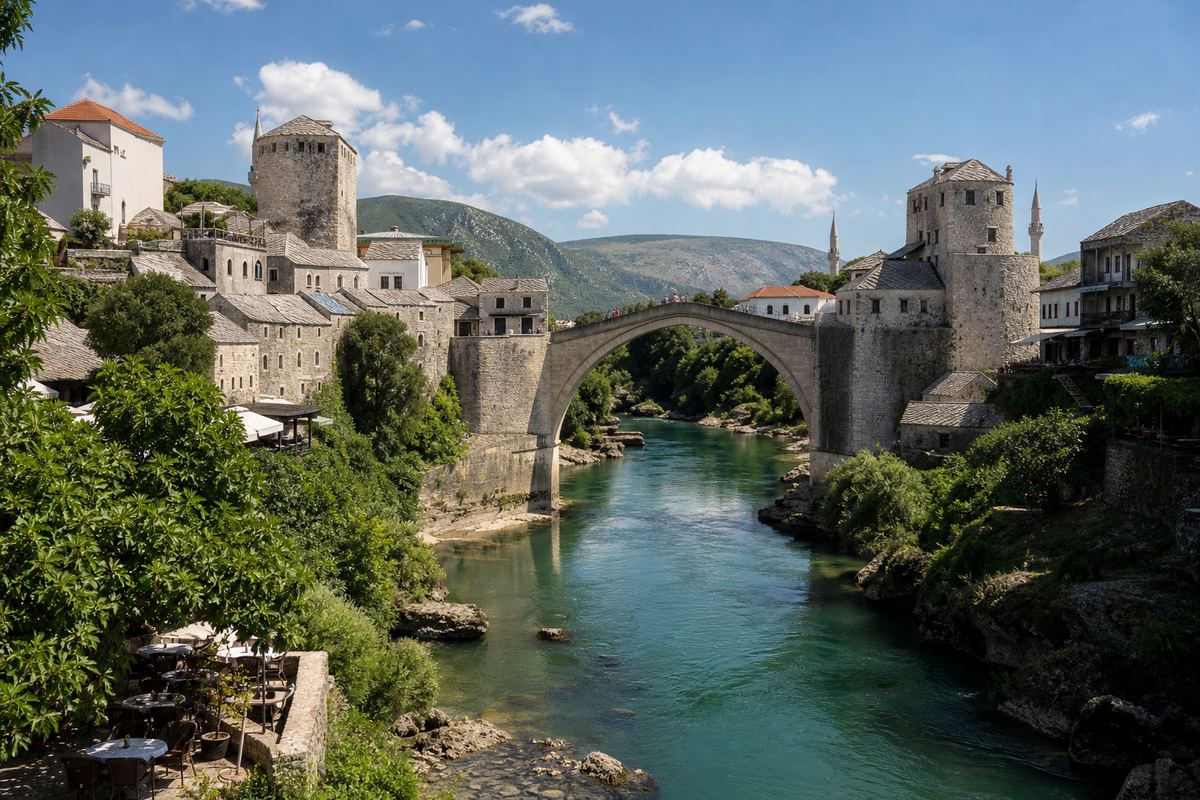
Rebuilding: Mostar’s bridge The 16th-century bridge in Bosnia fell on 9 November 1993 and reopened in 2004. AI-generated still.
Chapter V · The wars of the 1990s

Srebrenica and Dayton

ICTY: in July 1995 Bosnian Serb forces executed more than 8,000 Bosnian Muslim men and boys in Srebrenica, a UN-declared safe area; the tribunal’s account describes it as genocide. A peace deal was initialled at Dayton in November 1995. ASIL, on the International Court of Justice judgment of 26 February 2007: genocide was committed at Srebrenica in July 1995; Serbia was not responsible for committing it or for complicity, but violated its obligation to prevent it and failed to punish it, chiefly by not cooperating with the ICTY over General Ratko Mladić. Wikipedia, Breakup of Yugoslavia: the Dayton Agreement was signed on 14 December 1995. UN Office on Genocide Prevention: under the 1948 Genocide Convention, genocide means acts committed with intent to destroy, in whole or in part, a national, ethnical, racial or religious group.

Casualty figures are estimates and are attributed; the parties to these wars still dispute much of their history.

Map: Natural Earth borders of today’s states, which follow the old republic borders closely; schematic, not a legal map.

Sources: ICTY legacy website (UN IRMCT): the conflicts; American Society of International Law (2007): World Court finds Serbia responsible for breaches of the Genocide Convention, but not liable for committing genocide; United Nations Office on Genocide Prevention: definitions of genocide and related crimes; Wikipedia: Breakup of Yugoslavia; Wikipedia: Stari Most (the Old Bridge of Mostar)

Chapter VI · After Yugoslavia

Chapter VI

After Yugoslavia

Kosovo, Montenegro, and a name that disappears.

In 1998, the Kosovo Liberation Army, an armed Albanian group, rose up against Serbian rule. Serbian forces responded by targeting civilians and forcing hundreds of thousands of Albanians to flee.

In 1999 NATO bombed targets in Serbia and Kosovo for seventy-eight days; Human Rights Watch counted about five hundred civilians killed by the bombing. Milošević withdrew. About seven hundred and fifty thousand Albanian refugees went home, and about a hundred thousand Serbs fled.

Milošević was overthrown in 2000. In 2003 the name Yugoslavia gave way to Serbia and Montenegro; Montenegro voted to leave in 2006, and in 2008 Kosovo declared independence, which Serbia rejects. Step through the last changes.

78 days
of air strikes (ICTY)
~500
civilians killed by the bombing (Human Rights Watch)
NATO air campaign, 1999
Albanian refugees who returned~750,000
Serbs who fled~100,000
After the war in Kosovo (ICTY)
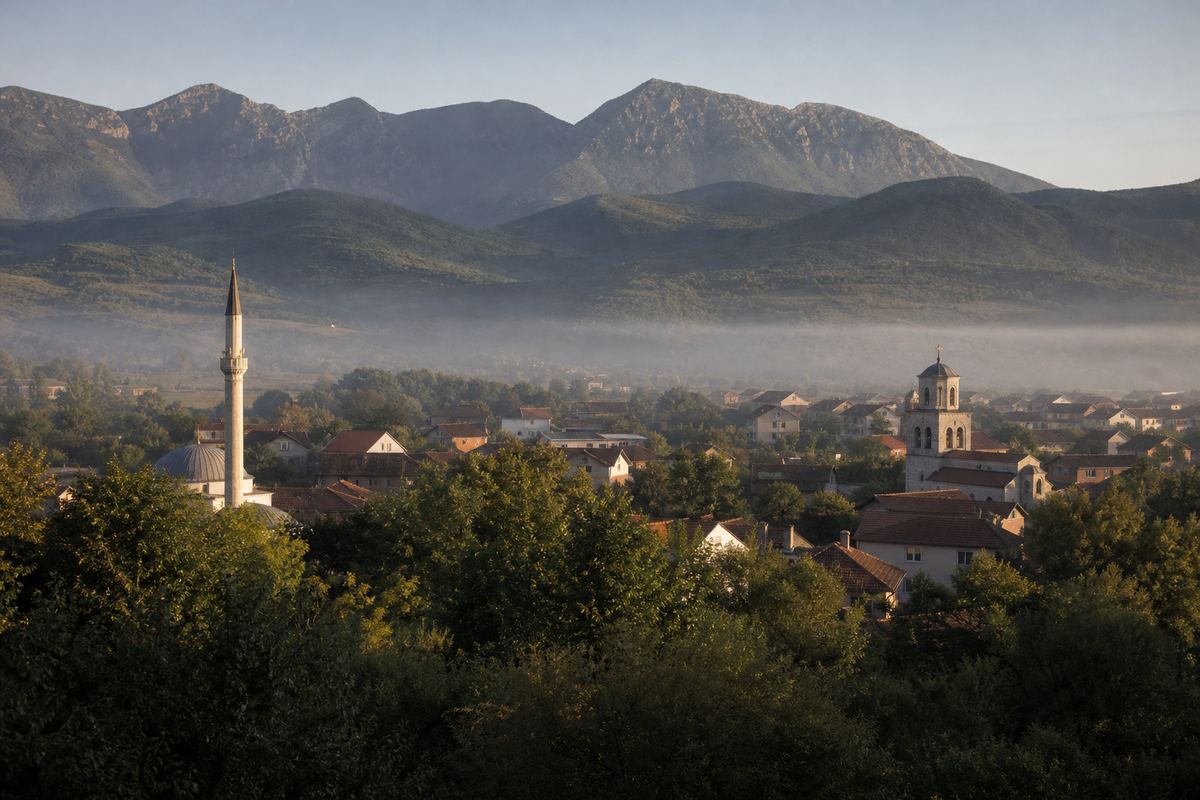
Kosovo A valley town: a minaret and an Orthodox bell tower, as in many places in Kosovo. AI-generated still.
  1. 5 Oct 2000 Milošević overthrown
  2. 4 Feb 2003 State Union of Serbia and Montenegro
  3. 21 May 2006 Montenegro votes 55.5% to leave
  4. 17 Feb 2008 Kosovo declares independence
  5. 22 Jul 2010 ICJ: the declaration broke no international law (10–4)
The last pieces
  • Declared independence in 2008
  • Serbia rejects it
  • Countries are divided on recognising it
Kosovo today
Chapter VI · After Yugoslavia

Kosovo and the end of the name

ICTY: violence in Kosovo began in 1998 when the Kosovo Liberation Army rebelled, and Serb forces responded by targeting civilians and forcing residents to flee. After peace talks at Rambouillet failed in early 1999, NATO conducted a 78-day air campaign against targets in Kosovo and Serbia; Milošević agreed to withdraw, about 750,000 Albanian refugees returned and around 100,000 Serbs fled. Human Rights Watch (2001): the bombing resulted in about 500 civilian deaths in ninety separate incidents. Wikipedia, Breakup of Yugoslavia: Milošević was overthrown on 5 October 2000; the Federal Republic became the State Union of Serbia and Montenegro on 4 February 2003; Montenegro voted 55.5% for independence on 21 May 2006; Kosovo declared independence on 17 February 2008. Wikipedia, ICJ advisory opinion: on 22 July 2010 the Court ruled 10–4 that the declaration did not breach international law; Serbia rejected the verdict and vowed never to recognise Kosovo.

Map: Natural Earth borders of today’s states, which follow the old republic borders closely; schematic, not a legal map.

Sources: ICTY legacy website (UN IRMCT): the conflicts; Human Rights Watch, World Report 2001: civilian deaths in the NATO air campaign; Wikipedia: Breakup of Yugoslavia; Wikipedia: advisory opinion on Kosovo’s declaration of independence
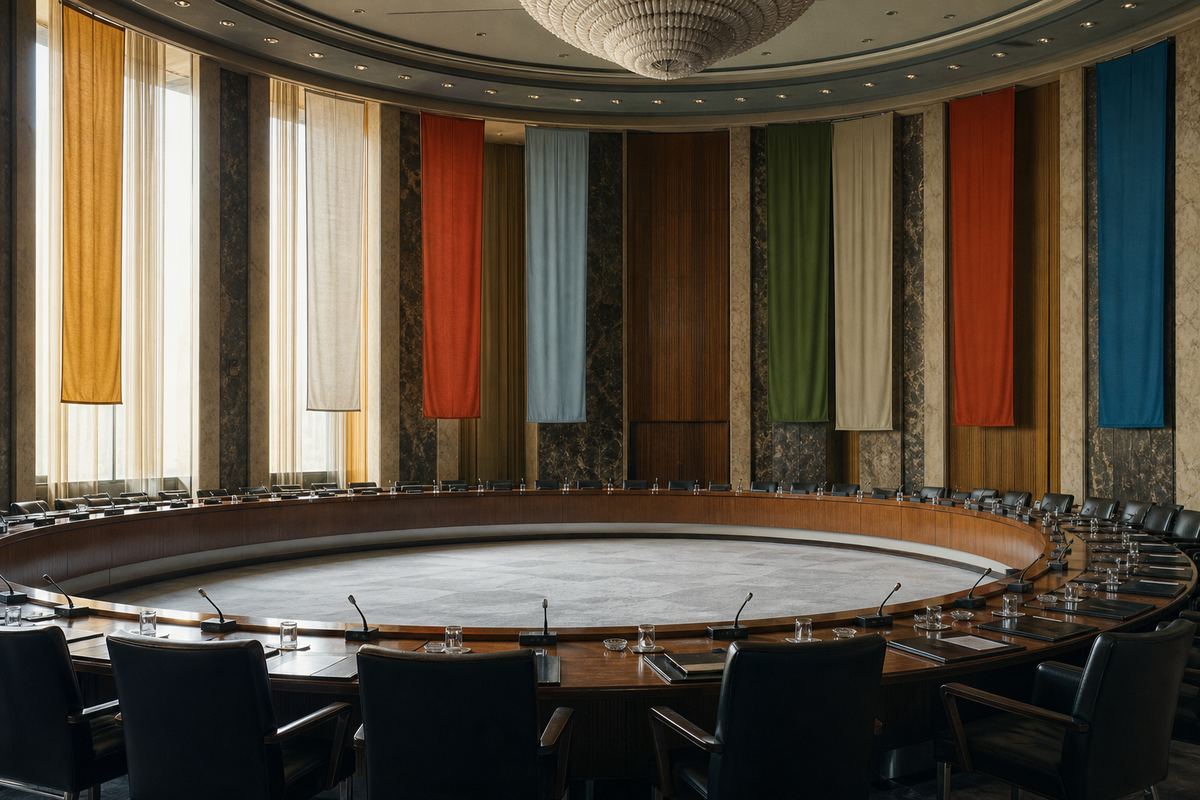
While the wars were still going on, in May 1993, the UN Security Council set up a war-crimes court in The Hague, the International Criminal Tribunal for the former Yugoslavia. It charged one hundred and sixty-one people and convicted ninety, among them, in 2017, the Bosnian Serb general Ratko Mladić.

Milošević was the first sitting head of state it charged with war crimes. About two thirds of those it charged were Serbs, and Serbian leaders called it biased; its defenders point to the crimes it proved in court.

25 May 1993
set up by UN Security Council Resolution 827
The Hague
seat
ICTY
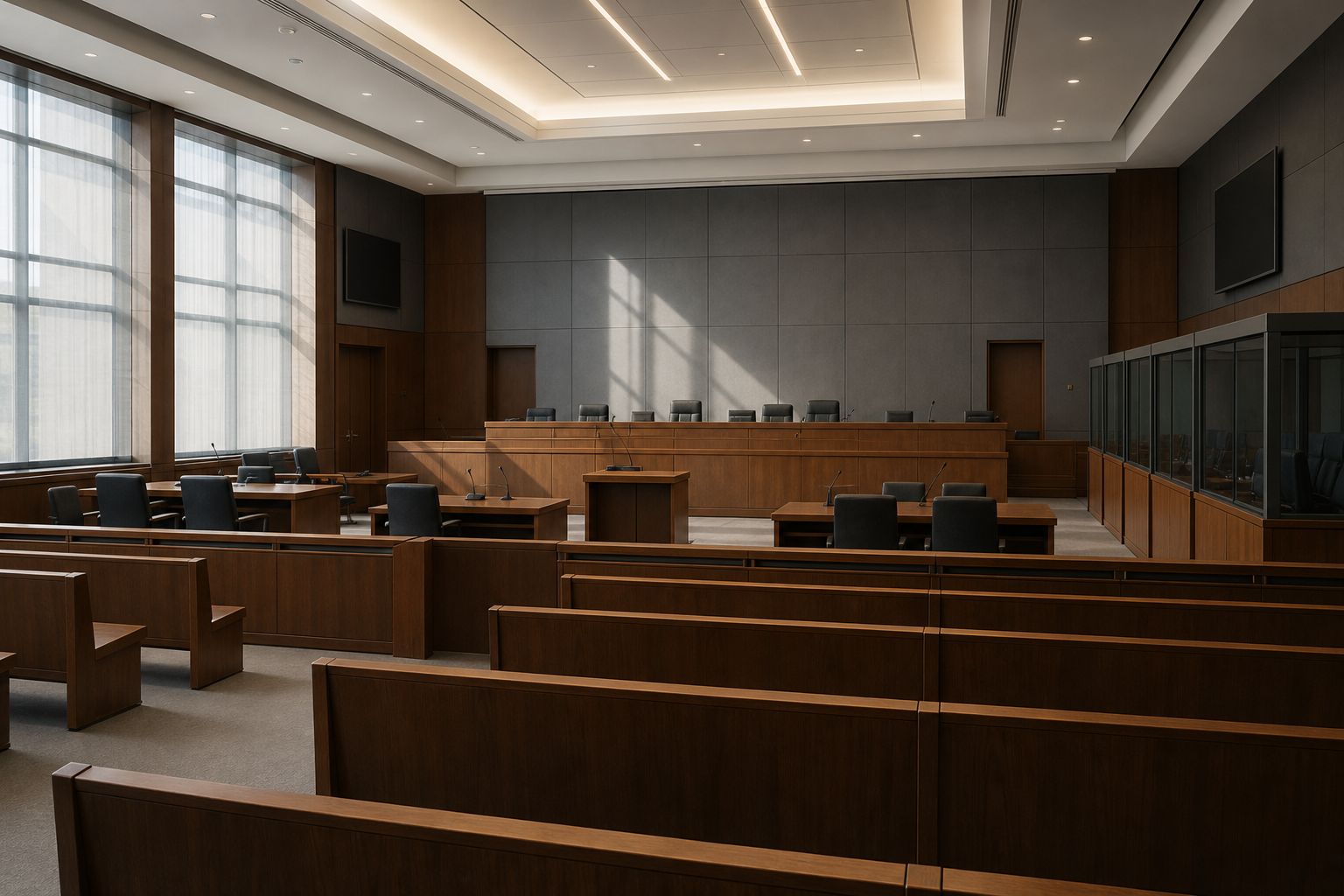
A courtroom An international courtroom of the kind used in The Hague. AI-generated still.
Convicted90 people
Acquitted21 people
Withdrawn or died37 people
Sent to national courts13 people
The ICTY’s 161 indictees
~68%
of indictees were Serbs
31 Dec 2017
the tribunal closed
A disputed record
Chapter VI · After Yugoslavia

The tribunal

Wikipedia, International Criminal Tribunal for the former Yugoslavia: established on 25 May 1993 by UN Security Council Resolution 827, seated in The Hague. It indicted 161 people; 90 were convicted and sentenced, 21 acquitted, 37 cases ended without a completed trial, mainly because indictments were withdrawn or the accused died, and 13 were transferred to courts in Bosnia and Herzegovina, Croatia and Serbia. It indicted Slobodan Milošević, the first sitting head of state indicted for war crimes, and in its last trial convicted Ratko Mladić on 22 November 2017. It closed on 31 December 2017. Serbian leaders argued it was biased: Serbs made up about 68% of indictees, and President Tomislav Nikolić said it hindered reconciliation; a 2024 study found Serbs more likely to be convicted and to receive longer sentences, though not conclusively.

Map: Natural Earth borders of today’s states, which follow the old republic borders closely; schematic, not a legal map.

Sources: Wikipedia: International Criminal Tribunal for the former Yugoslavia; ICTY legacy website (UN IRMCT): the conflicts

Epilogue

Yugoslavia was built twice, by a king and by a partisan, on one idea: that the South Slavs would be stronger together. It came apart when its people could no longer agree on what together meant.

Today Slovenia, Croatia, Montenegro and North Macedonia are in NATO. Serbia is not, and Kosovo's status is still disputed. On the twenty-fifth of October 2026, Serbians vote on who leads them next.

Was it money, leaders, or old memories of war that broke Yugoslavia apart? Historians still disagree, just as its peoples argued, from the very first day, over how to live together.

  1. 1918 Kingdom of Serbs, Croats and Slovenes
  2. 1941 Invasion, partition, civil war
  3. 1945 Tito’s federal republic
  4. 1980 Tito dies
  5. 1991–99 The Yugoslav wars
  6. 2003–08 The name dropped; Montenegro and Kosovo leave
Yugoslavia, 1918–2008
Slovenia2004
Croatia2009
Montenegro2017
North Macedonia2020
Joined NATO (Wikipedia)
  • Money: debt, falling wages, rich and poor republics
  • Leaders: nationalist politics after Tito
  • Memory: the unhealed wounds of 1941–45
Three explanations historians weigh
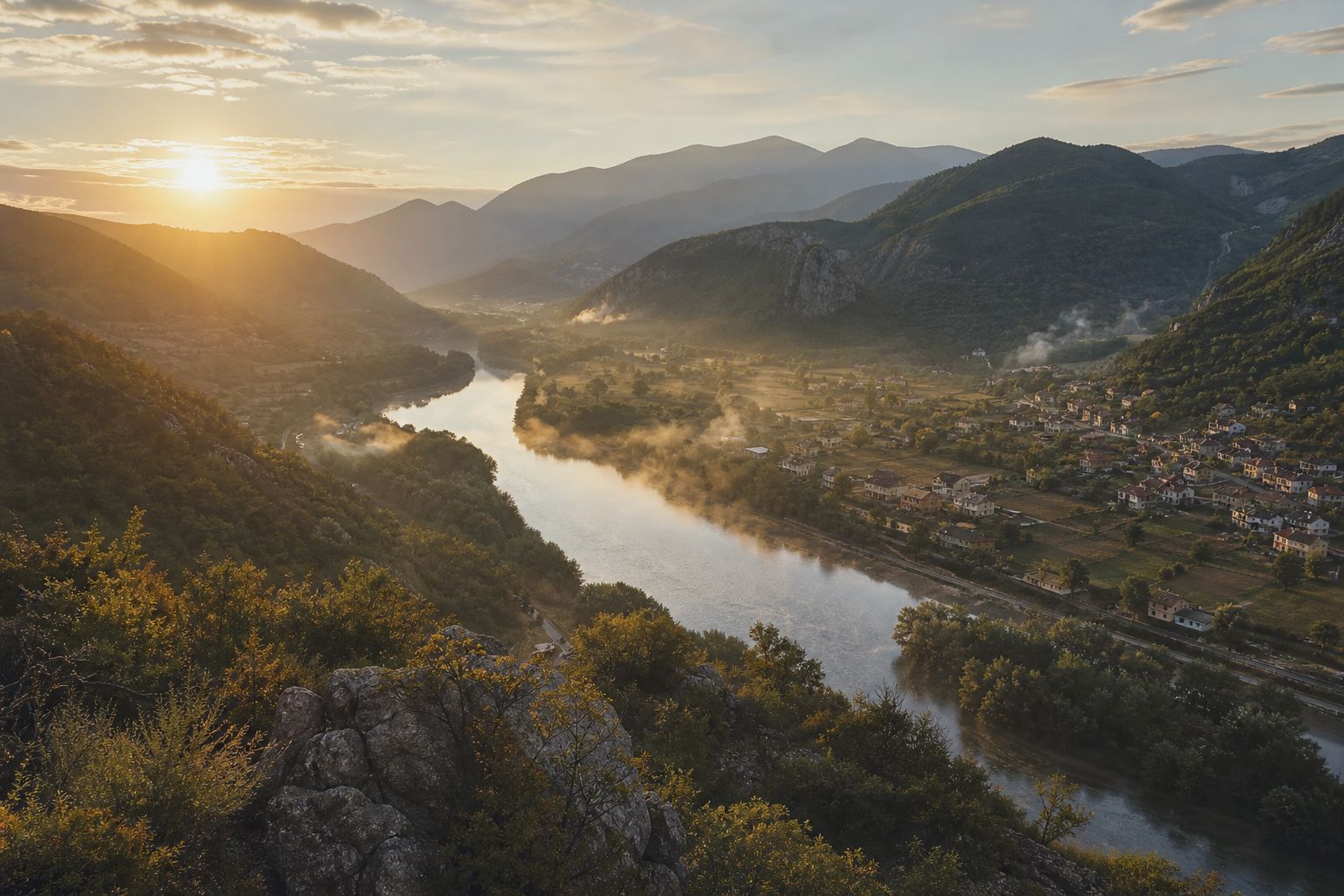
The Balkan mountains Dawn over a river valley. AI-generated still.
Epilogue · Sources

Sources

Every fact in this film comes from the sources below. Where the parties to these wars disagree, the film gives each account and says whose it is; casualty figures are estimates and are attributed. Wikipedia’s NATO members list gives Slovenia 2004, Croatia 2009, Montenegro 2017 and North Macedonia 2020. The chapter stills and pictures are AI-generated illustrations; the map uses Natural Earth borders of today’s states and is schematic.

Sources: Reuters via The Star (9 Sep 2026): Serbia to hold parliamentary vote on October 25, president says; The Rio Times (Oct 2026): Serbia final polls split before Sunday vote; Wikipedia: Novi Sad railway station canopy collapse; Wikipedia: Yugoslavia; Wikipedia: Breakup of Yugoslavia; United States Holocaust Memorial Museum, Holocaust Encyclopedia: Jasenovac; Wikipedia: Yugoslav Partisans; Wikipedia: Chetniks; GlobalSecurity.org: Socialist Yugoslavia, self-management; HISTORY.com: the Warsaw Pact is formed (14 May 1955); Wikipedia: member states of NATO; ICTY legacy website (UN IRMCT): the conflicts; Al Jazeera (16 Nov 2012): court overturns convictions of Croat generals; US State Department via ecoi.net: 2023 Report on International Religious Freedom, Bosnia and Herzegovina; American Society of International Law (2007): World Court finds Serbia responsible for breaches of the Genocide Convention, but not liable for committing genocide; United Nations Office on Genocide Prevention: definitions of genocide and related crimes; Human Rights Watch, World Report 2001: civilian deaths in the NATO air campaign; Wikipedia: advisory opinion on Kosovo’s declaration of independence; Wikipedia: Stari Most (the Old Bridge of Mostar); Wikipedia: International Criminal Tribunal for the former Yugoslavia