On 25 October 2026 Luiz Inácio Lula da Silva won Brazil's presidential runoff for a fourth term; his opponent, Senator Flávio Bolsonaro, did not concede and said he would seek to annul the result. This film tells how Brazil's democracy took the shape it has: the coup of 1964 against João Goulart and the 21 years of military rule that followed, the Institutional Act of 1968, the 'economic miracle' and the repression documented by the National Truth Commission, the slow opening and the 1979 amnesty, the Diretas Já movement and the amendment that failed in 1984, the indirect election of 1985, the 'Citizen Constitution' of 1988, the first direct election in 29 years, an impeachment, Lula's rise, conviction and annulment, the attack on Brasília in January 2023 and the conviction of Jair Bolsonaro in 2025, each side's account given in its own terms.
Interactive 3D film10 min1961 to 2026Published 27 October 2026
On 25 October 2026, Luiz Inácio Lula da Silva won Brazil's presidential runoff with 51.79 percent of the vote, according to the electoral court. It will be his fourth term.
His opponent, Senator Flávio Bolsonaro, did not concede. He called a two-hour extension of voting inexplicable, and said he would seek to annul the election.
His father, former president Jair Bolsonaro, was ordered in 2025 to begin a 27-year prison sentence for plotting a coup.
To understand why coups and elections weigh so heavily in Brazil, go back sixty years, to the night the army moved.
4th
term for Lula, first elected in 2002
51.79%
for Lula, announced by the electoral court (BBC)
Brazil’s 2026 runoff
Lula: a “historic victory”
Flávio Bolsonaro: the extra two hours were “inexplicable”; will seek annulment
BBC: both campaigns had asked for polls to stay open longer
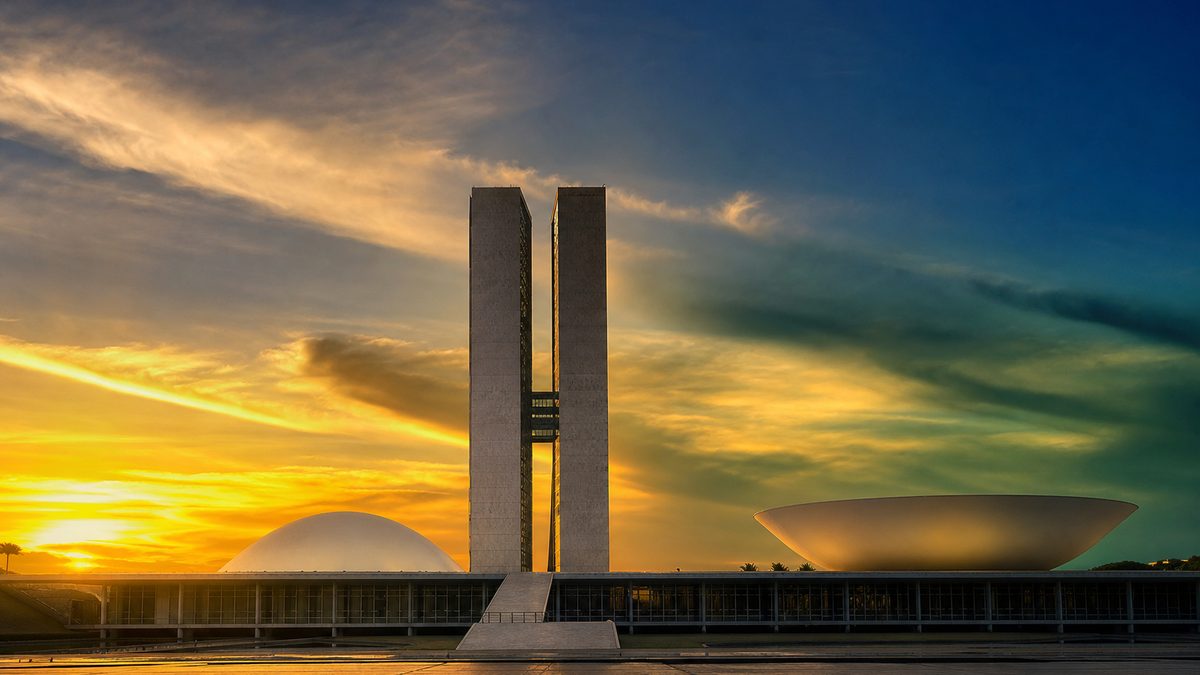
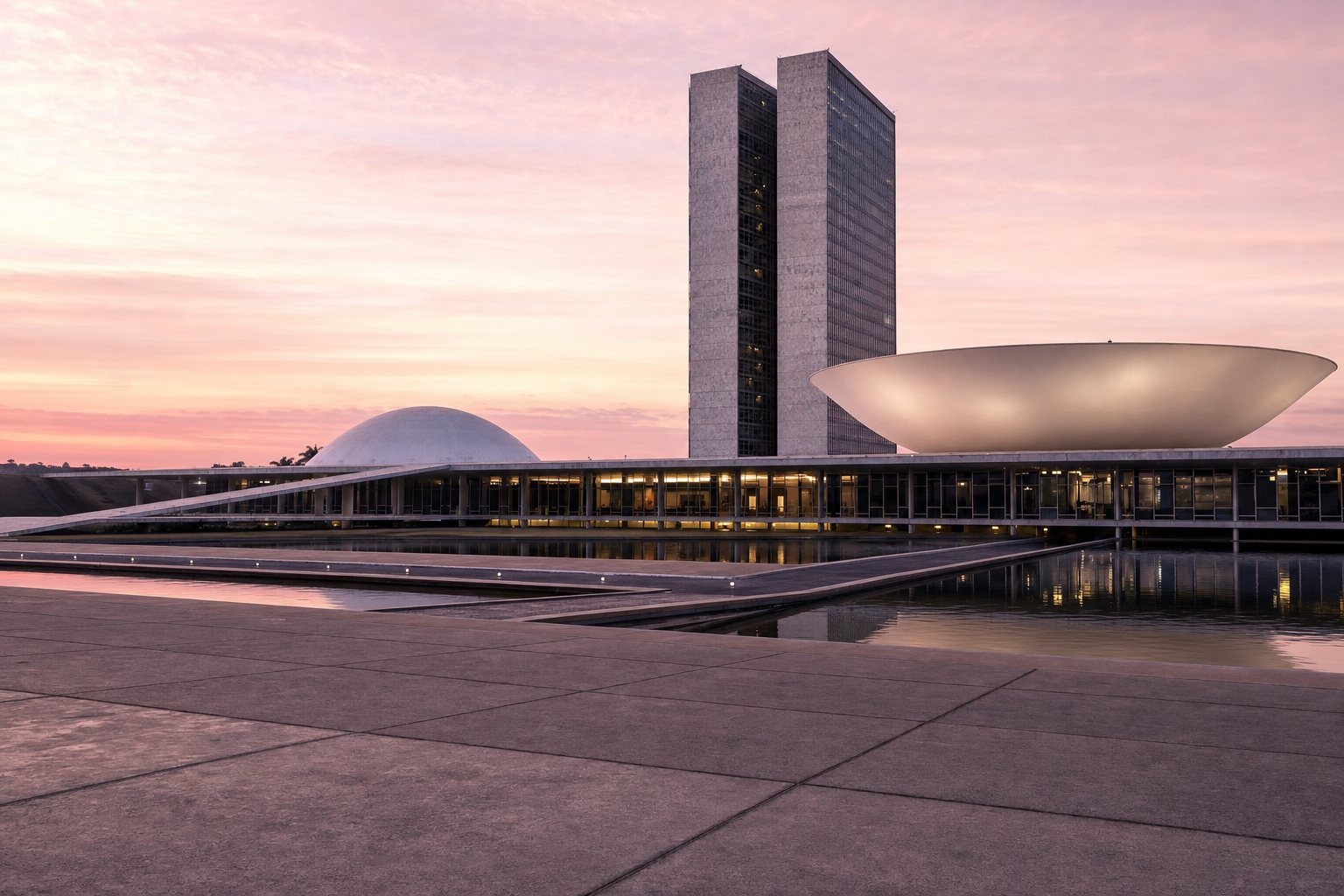
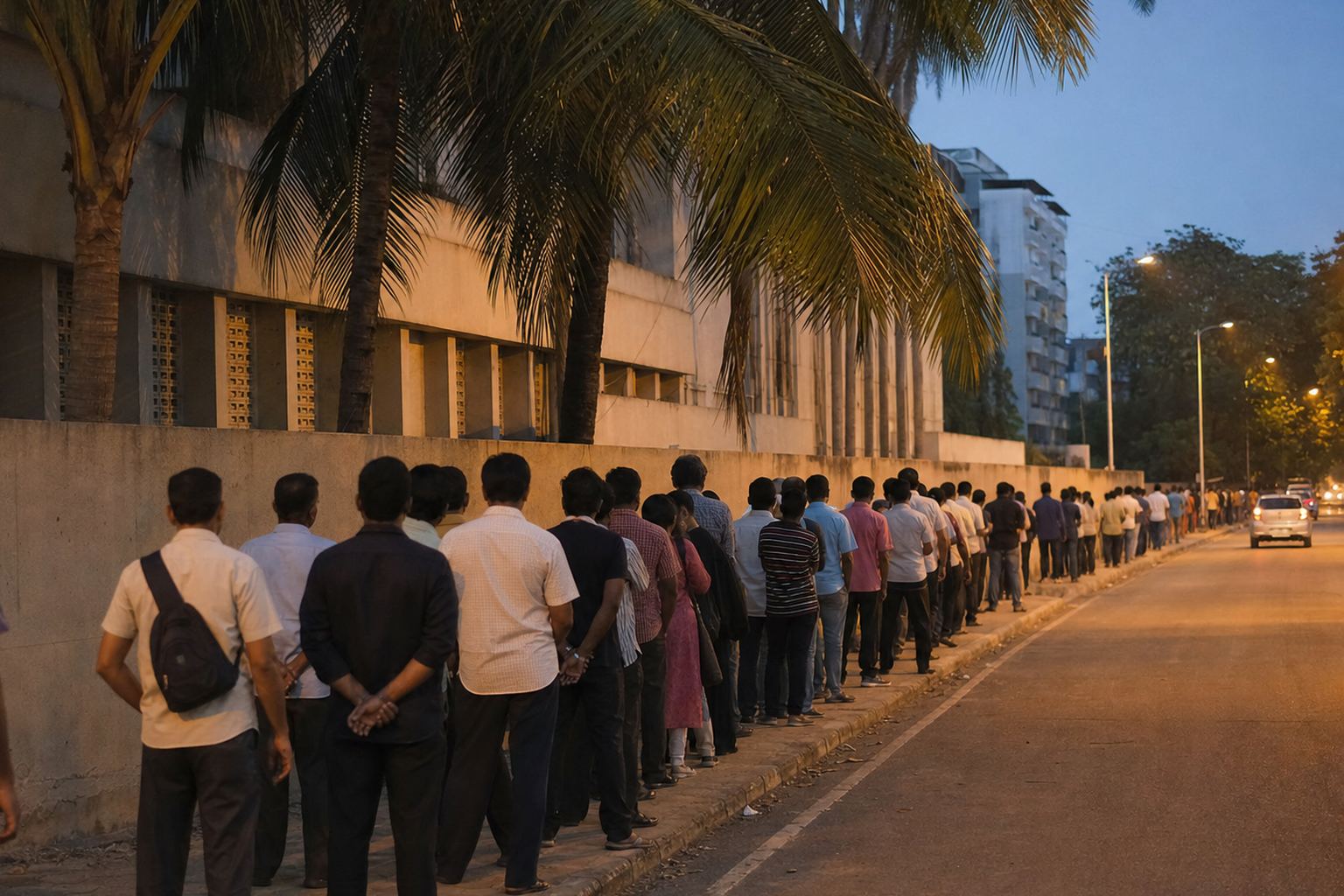
Two accounts after the voteThe capital at dawn Voting in Brazil is compulsory for citizens between eighteen and seventy. AI-generated illustration.
27 yrs 3 mo
sentence for the coup plot (2025)
Nov 2025
ordered to begin serving it
Jair Bolsonaro
The 1964 coup and 21 years of military rule
The fight for direct elections
The 1988 Constitution
Tests of the new democracy
In this film
Prologue
A fourth term, contested
Al Jazeera (25–26 Oct 2026): incumbent Lula beat his right-wing rival Flávio Bolsonaro, son of former president Jair Bolsonaro, in a heated, tight runoff. Just Security (26 Oct 2026), citing BBC News: Lula has been re-elected; Flávio Bolsonaro has not conceded and told supporters in Brasília that he would seek “the annulment of the election.” Wikipedia (2026 election): the first round was held on 4 October and the runoff on 25 October.
Al Jazeera (11 Sep 2025): a Supreme Court panel voted four to one to convict Jair Bolsonaro of trying to illegally keep power after his 2022 defeat and sentenced him to 27 years and 3 months; his lawyers called the sentence excessive and said they would appeal, and Flávio Bolsonaro called it “persecution.” Al Jazeera (25 Nov 2025): after his appeal was rejected, the Supreme Court ordered him to begin serving the sentence; he maintains his innocence. Just Security, citing BBC News: the Superior Electoral Court announced Lula had 51.79% of the vote; Flávio Bolsonaro called the two-hour extension of polling “inexplicable”, although both campaigns had asked for polling stations to stay open longer.
The timeline, chamber seats and globe are teaching graphics: each dot in the chamber is one vote as recorded in the sources; colours and positions are schematic.
In the early 1960s, President João Goulart pushed a package of 'base reforms': land reform, votes for the illiterate, more state control over strategic industries. Congress blocked most of them, and the country split.
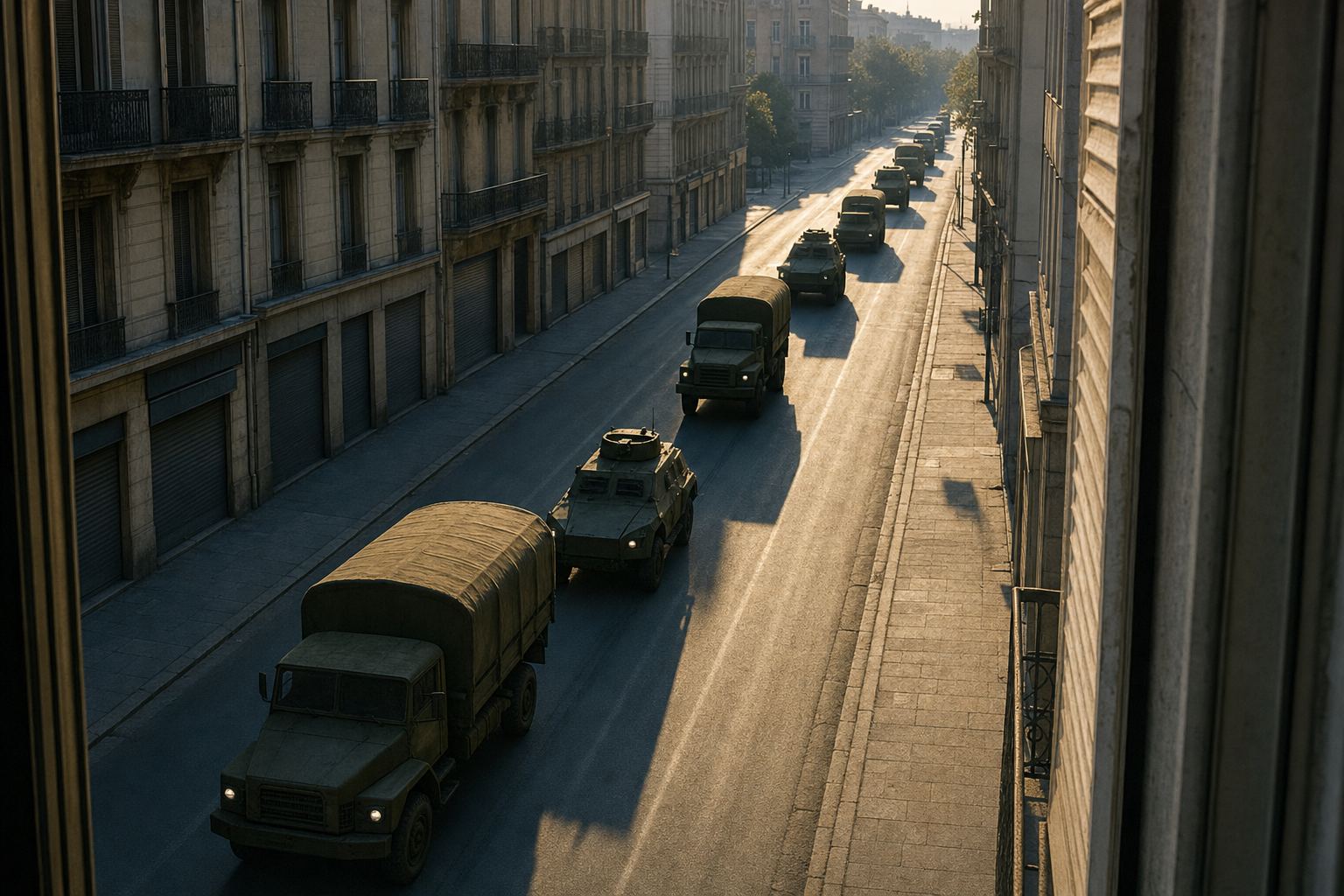
On 31 March 1964, troops marched from Minas Gerais. Within days Goulart fled into exile in Uruguay. Business groups, landowners, much of the press and the middle class backed the move. The United States supported it too; historians still debate how far.
Its leaders called it a revolution, against communism and corruption. Historians today generally call it a coup.
Military presidents would rule Brazil for the next 21 years.
Land reform
Votes for illiterate citizens
Banking, tax and university reform
State control of strategic sectors
Goulart’s “base reforms”Brazil divided Before the coup, large “Marches of the Family with God for Liberty” rallied against Goulart. AI-generated illustration.31 March 1964 Goulart never returned: he died in Argentina in 1976, still in exile. AI-generated illustration.
“Not a coup d’état, but a revolution.”Humberto Castelo Branco, as cited by Wikipedia
The new president’s view
Chapter I · The coup
31 March
Wikipedia, 1964 Brazilian coup: Goulart backed “base reforms” (banking, fiscal, administrative, urban, land and university), with supporters also seeking votes for illiterates and enlisted men and state control of strategic sectors; Congress defeated the land reform. The coup ran from 31 March to 1 April 1964, launched from Minas Gerais by Olímpio Mourão Filho; Congress declared the presidency vacant on 2 April, and Goulart was in exile in Uruguay by 4 April. Business groups, the urban middle class, landowners, parts of Congress and the mainstream press backed it, and the United States allied with the opposition and supported the coup.
How it is named: Castelo Branco called it “not a coup d’état, but a revolution,”; the regime justified its rule as defence against communism. Current historiography generally uses the term “coup”; historian Rodrigo Patto Sá Motta disputes that a communist threat existed in 1964 (Wikipedia, military dictatorship in Brazil). Historians differ on how far and how early the United States was involved (Wikipedia, 1964 coup).
The timeline, chamber seats and globe are teaching graphics: each dot in the chamber is one vote as recorded in the sources; colours and positions are schematic.
The generals kept the outward shape of a republic. Congress still met, and chose General Humberto Castelo Branco as president. But the real rules now came from 'institutional acts', decrees issued by the military government.
The old parties were dissolved. Only two were allowed: ARENA, which backed the government, and the MDB, a mild opposition. Presidents were picked by an electoral college of members of Congress and delegates from the states, not by voters.
On paper, the system still had elections and parties. In practice, the generals decided who would govern.
A Congress that still met Congress elected Castelo Branco president in April 1964. AI-generated illustration.
1964–67 Humberto Castelo Branco
1967–69 Artur da Costa e Silva
1969–74 Emílio Médici
1974–79 Ernesto Geisel
1979–85 João Figueiredo
The military presidentsRule by decree Seventeen institutional acts were issued between 1964 and 1969, and each one stood above the constitution. AI-generated illustration.
2
legal parties, 1965–1979
0
direct presidential elections, 1964–1985
Elections, controlled
Chapter I · The coup
Two parties, appointed presidents
Wikipedia, 1964 coup: Castelo Branco, one of the coup’s leaders, was elected president by Congress. Wikipedia, military dictatorship in Brazil: the First Institutional Act came on 9 April 1964 and the Second on 27 October 1965; ARENA (government-backed) and the MDB (mild opposition) were the only legal parties until November 1979; presidents were Castelo Branco (1964–67), Costa e Silva (1967–69), a military junta (1969), Médici (1969–74), Geisel (1974–79) and Figueiredo (1979–85), chosen indirectly.
The timeline, chamber seats and globe are teaching graphics: each dot in the chamber is one vote as recorded in the sources; colours and positions are schematic.
On 13 December 1968, President Artur da Costa e Silva issued the fifth institutional act, known by its Portuguese initials as AI-5. It let the president send Congress into recess, which he did at once.
It came after a year of student protests and mass marches, and after the Chamber of Deputies refused to let one of its members, who had criticised the army, be prosecuted.
It imposed censorship on newspapers, music, film and television, and suspended habeas corpus, the right to challenge an arrest in court, for political crimes.
It stayed in force for ten years, the harshest stretch of what Brazilians call the 'years of lead'.
Congress and state assemblies sent into recess
Federal takeover of states and cities
Censorship of press, music, film, TV
No habeas corpus for political crimes
What AI-5 allowedThe press under AI-5 Censors sat inside newsrooms; some papers filled the holes left by banned articles with recipes and old poems. AI-generated illustration.
Student protests and marches of up to 100,000
Deputy Márcio Moreira Alves criticises the army
The Chamber refuses to lift his immunity
1968: the run-up
Suspended
for political crimes, 1968–1979
Habeas corpus
13 Dec 1968 Issued
13 Oct 1978 Repeal passed by Congress
1 Jan 1979 Habeas corpus restored
AI-5’s lifespan
Chapter II · The years of lead
The fifth act
Wikipedia, Institutional Act Number Five: issued on 13 December 1968 by President Artur da Costa e Silva, it let the president order the National Congress and state legislatures into forced recess, which he used almost immediately; allowed federal interventions in states and municipalities; imposed censorship on the press, music, films, theatre and television; and suspended habeas corpus for “crimes of political motivation.” On 13 October 1978 President Ernesto Geisel allowed Congress to pass an amendment ending AI-5, which took effect on 1 January 1979.
“Years of lead” (anos de chumbo) is the common Brazilian name for the harshest period of the regime.
The timeline, chamber seats and globe are teaching graphics: each dot in the chamber is one vote as recorded in the sources; colours and positions are schematic.
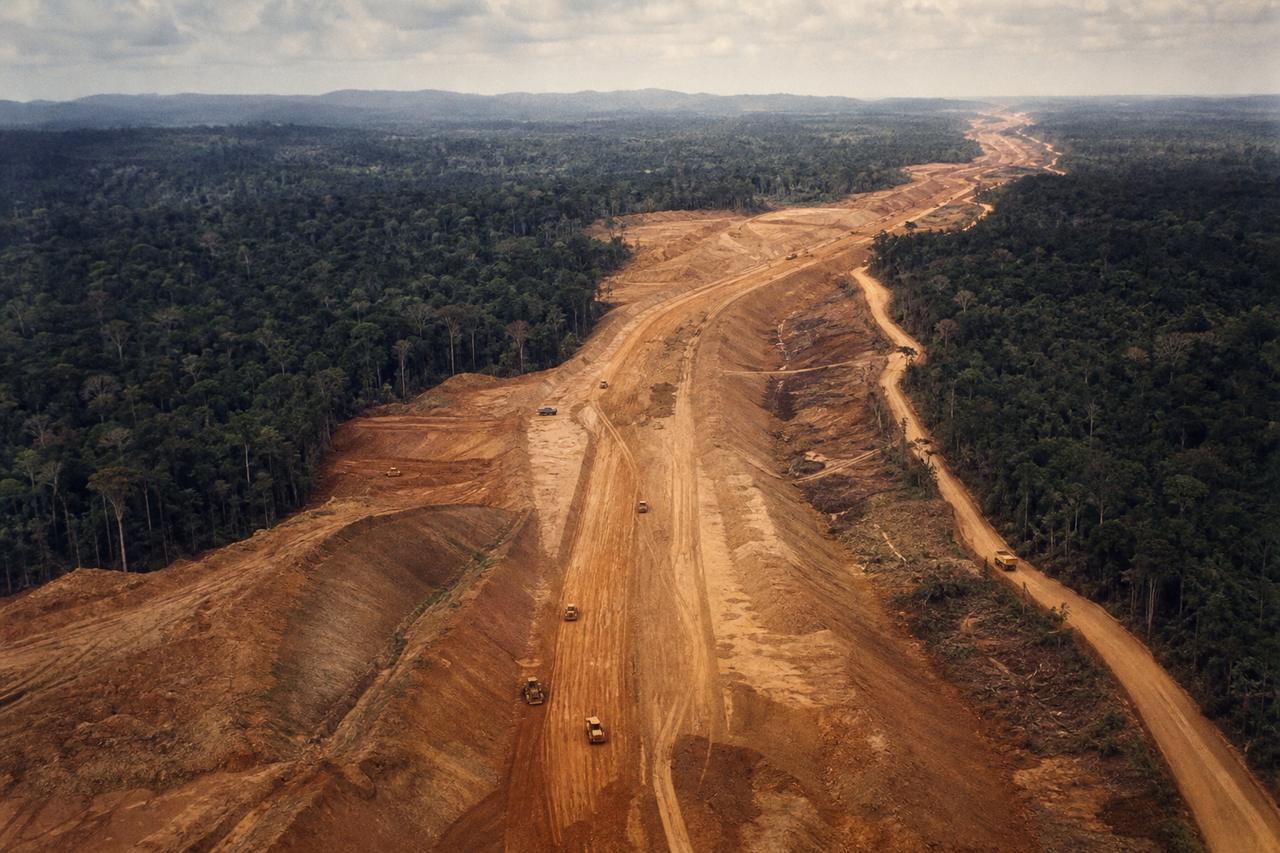
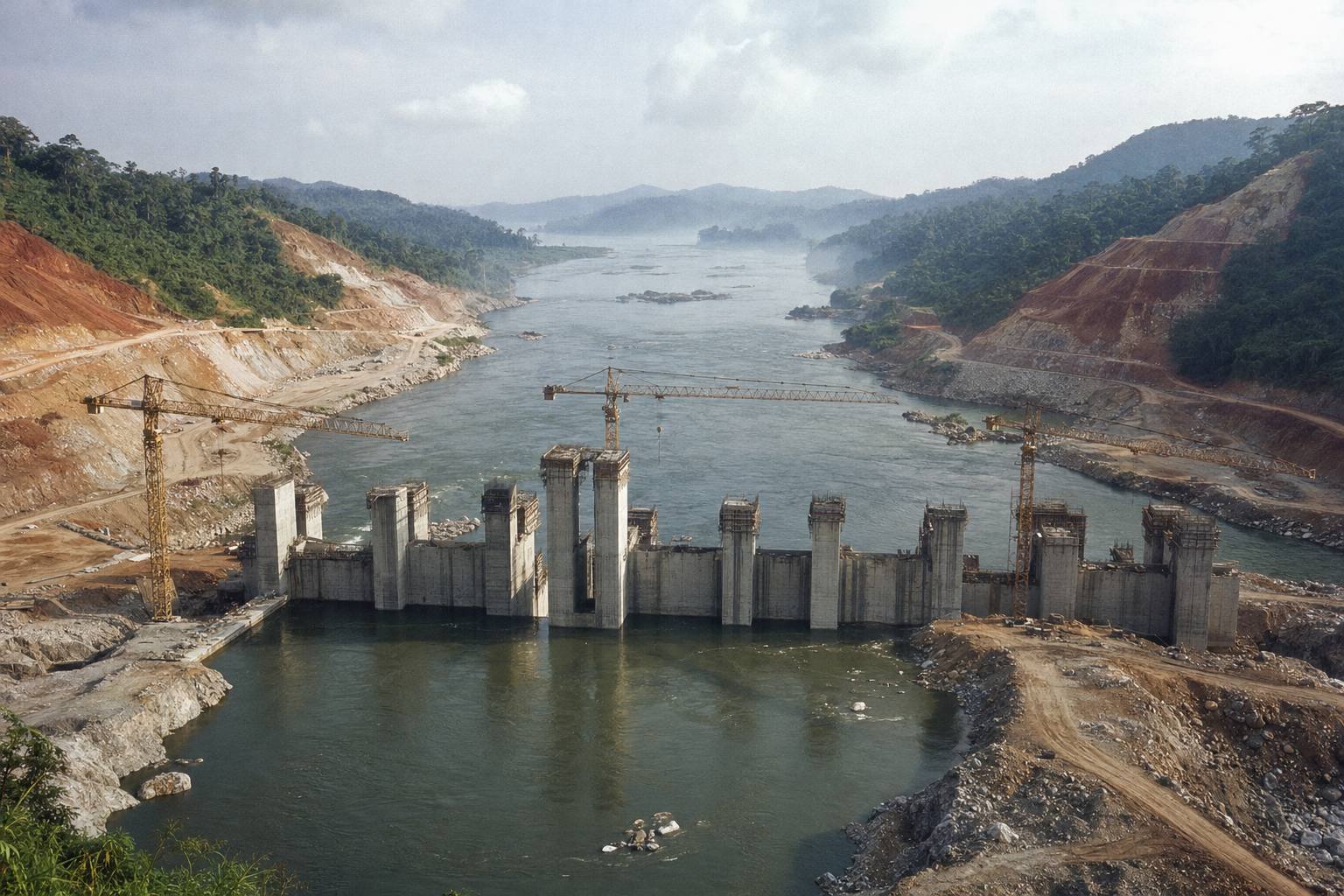
The same years brought the 'Brazilian miracle': fast growth, new industry and giant highways and dams. With the 1970 World Cup win, the regime was at the height of its popularity.
Not everyone shared in it. By 1970 the minimum wage bought roughly half of what it had in 1960.
And beneath it ran repression: censorship, exile, torture. In 2014, Brazil's National Truth Commission counted 434 people killed or disappeared by the regime, and more than 8,300 Indigenous people killed. It said the true toll is probably higher.
Estimates of the people tortured run to about twenty thousand.
The “miracle” Huge infrastructure projects cut roads through the Amazon in the 1970s. AI-generated illustration.
≈ ½
of its 1960 buying power: the minimum wage in 1970, for over a third of workers
Who gained?
434
killed or disappeared
>8,300
Indigenous people killed
National Truth Commission, 2014Built on borrowed money The works were paid for with heavy foreign borrowing, and the debt outlasted the government that took it on. AI-generated illustration.
≈20,000
people tortured: an estimate cited by historians, not a Commission count
Torture
Chapter II · The years of lead
Miracle and repression
Wikipedia, military dictatorship in Brazil: 1968–1973 was the period of the “Brazilian Miracle”, with high economic expansion, industrial growth and large infrastructure projects; the regime’s popularity peaked in the early 1970s with the miracle and the 1970 World Cup win. By 1970 the minimum wage’s purchasing power for over a third of the workforce was roughly half its 1960 level. Critics describe censorship, arrests, exile, institutionalised torture, killings and forced disappearances; estimates of victims vary, with about 20,000 tortured.
Wikipedia, National Truth Commission: established 18 November 2011; its final report, delivered on 10 December 2014, found 434 people killed or disappeared through the regime’s actions and counted more than 8,300 Indigenous people killed, saying the real figure is probably much higher.
The timeline, chamber seats and globe are teaching graphics: each dot in the chamber is one vote as recorded in the sources; colours and positions are schematic.
In 1974, President Ernesto Geisel began what he called a slow, gradual opening, the 'abertura'. That November, the opposition MDB won more votes than ever before.
In 1979, the two-party system ended, and new parties could form.
The same year, Geisel's successor, João Figueiredo, signed an amnesty law. Opponents of the regime got back their political rights. But the same law shielded the military agents who had arrested, tortured and killed.
Because of the amnesty, no military perpetrator has been tried and convicted for those crimes.
Geisel
starts the “abertura”, a slow opening
MDB
its best result yet in congressional elections
1974
ARENA and the MDB are dissolved
New parties may form
November 1979Amnesty, 1979 The amnesty covered political crimes from 2 September 1961 to 15 August 1979. AI-generated illustration.
Opponents’ political rights restored
Military agents shielded from prosecution
The 1979 Amnesty Law cut both ways
Chapter III · The slow opening
Opening, and forgetting
Wikipedia, military dictatorship in Brazil: Geisel began a gradual political opening in 1974, which he called “abertura” and “distensão”; in November 1974 the MDB won more votes than ever in congressional elections; Figueiredo continued the opening. Agência Brasil: Figueiredo signed the Amnesty Law in 1979, which restored political rights to regime opponents but shielded military agents from prosecution for arrests, killings and torture. Wikipedia, National Truth Commission: the law covered political crimes from 2 September 1961 to 15 August 1979, and because of it no military perpetrators have been tried and convicted.
Agência Brasil also notes right-wing hardliners responded to the opening with bomb attacks, including on newsstands and the Brazilian Bar Association. Under Geisel and Figueiredo, Brazil borrowed heavily and became the world’s largest debtor, owing about US$90 billion (Wikipedia).
The timeline, chamber seats and globe are teaching graphics: each dot in the chamber is one vote as recorded in the sources; colours and positions are schematic.
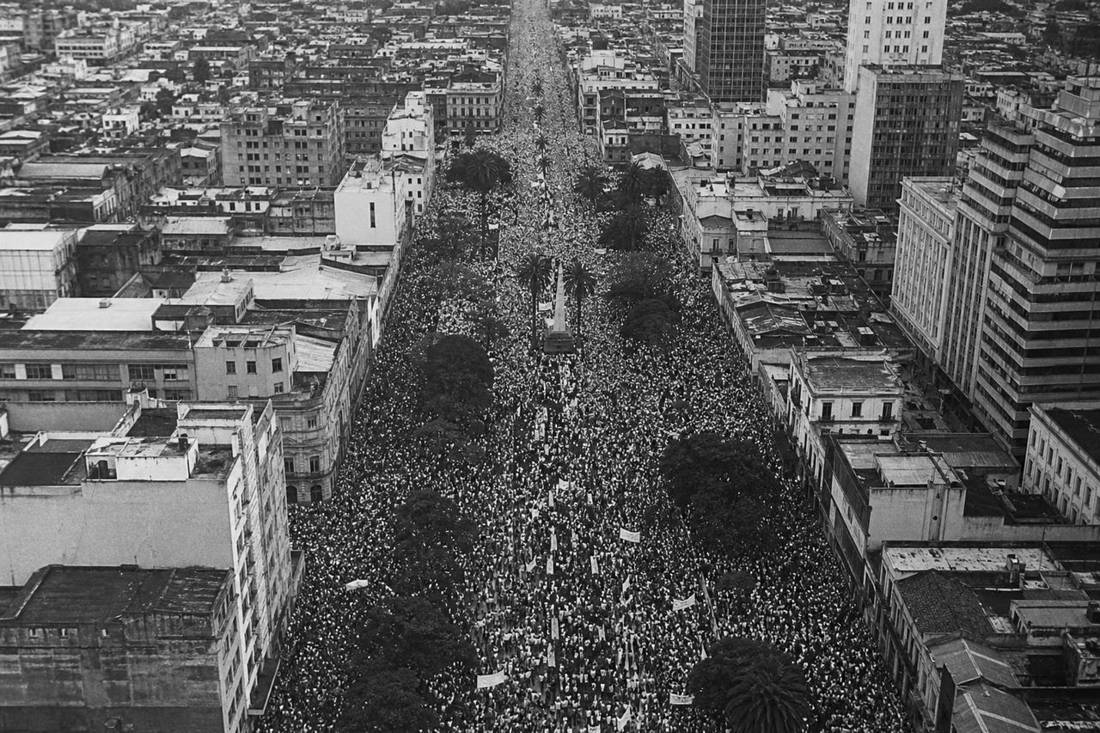
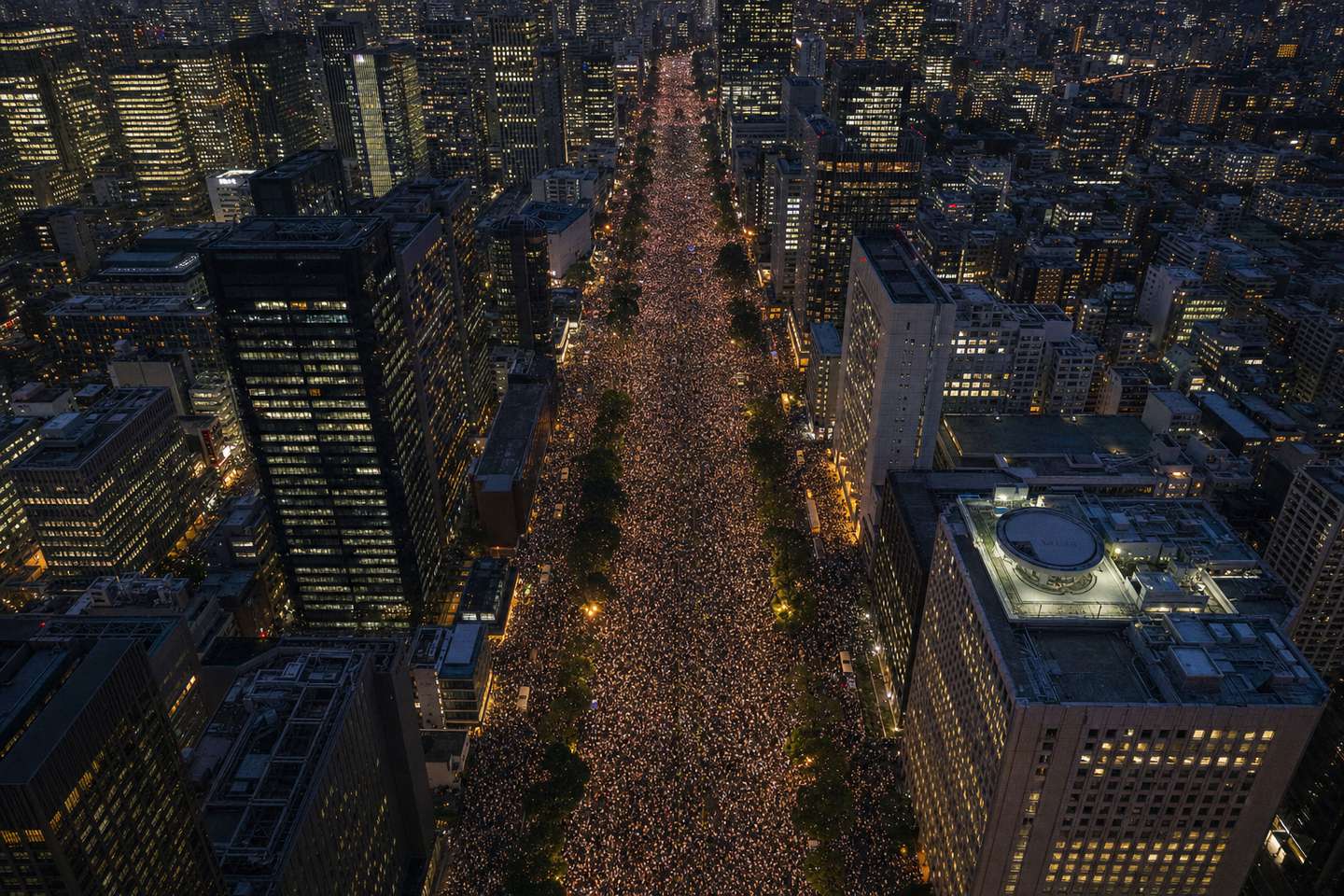
In 1984, millions filled the streets with one demand: 'Diretas Já!', direct elections now. On 16 April, about one and a half million people gathered in São Paulo, the largest political demonstration in Brazil's history until then.
Nine days later, the Chamber of Deputies voted on an amendment to restore direct presidential elections. It needed two-thirds of the 479 deputies: 320 votes.
It got 298. Sixty-five voted against, three abstained, and 113 deputies, nearly all from the government party, simply stayed away. Watch the count.
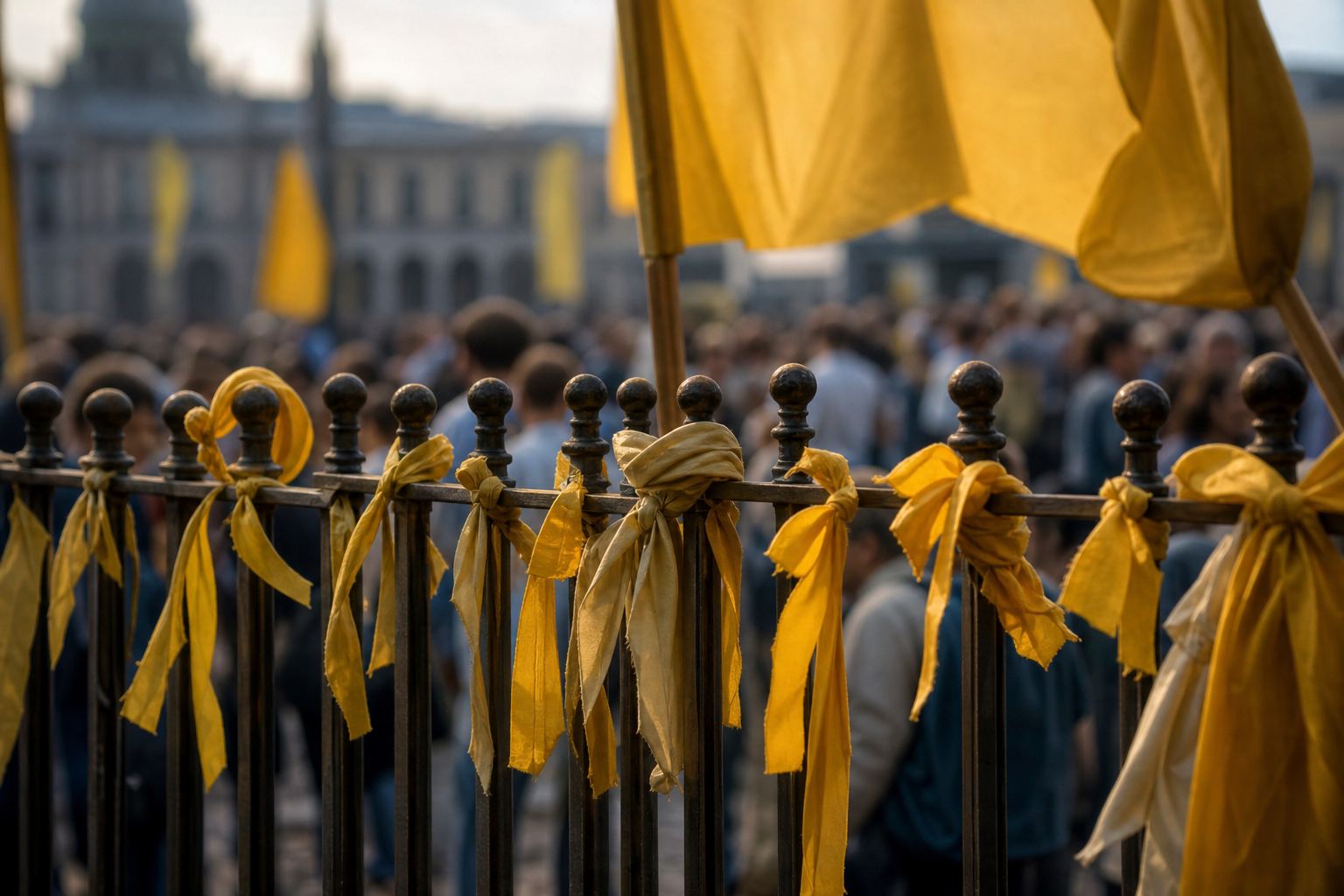
A sea of yellow Rallies began in 1983 with a few thousand people and grew to the millions within a year. AI-generated illustration.One and a half million people Brazil's largest broadcaster was widely criticised for giving the first of these rallies almost no airtime. AI-generated illustration.
São Paulo, 25 Jan
300,000
Rio, 10 Apr
1,000,000
São Paulo, 16 Apr
1,500,000
Diretas Já rallies, 1984
298
for (320 needed)
65
against
3
abstained
113
absent
25 April 1984, Chamber of Deputies
Chapter III · The slow opening
Twenty-two votes short
Wikipedia, Diretas Já: rallies grew from 5,000 in Goiânia (June 1983) to 300,000 in São Paulo (25 January 1984), about 1,000,000 in Rio de Janeiro (10 April) and about 1,500,000 in São Paulo’s Anhangabaú Valley (16 April 1984), the largest political demonstration in Brazil’s history up to that time. Wikipedia, Dante de Oliveira amendment: the proposal to restore direct presidential elections needed two-thirds of 479 deputies (320); on 25 April 1984 it received 298 votes in favour, 65 against, 3 abstentions and 113 absent (112 of them from the government PDS), and was rejected.
Rally sizes are those reported at the time and collected by Wikipedia; crowd counts are estimates. Try it: count the votes, or show the 320-vote line. Each dot is one deputy.
The timeline, chamber seats and globe are teaching graphics: each dot in the chamber is one vote as recorded in the sources; colours and positions are schematic.
So the next president was still chosen indirectly. But in January 1985, the electoral college picked the opposition's candidate, Tancredo Neves, by 480 votes to 180.
The night before his inauguration, Neves fell ill. He never took office, and died in April. His running mate, José Sarney, became Brazil's first civilian president in 21 years.
Military rule had ended, but by a vote of politicians, not of the people.
The crowds of 1984 had asked to choose the president themselves. They would have to wait five more years.
Tancredo Neves (opposition)
480
Paulo Maluf (government party)
180
Electoral college, 15 January 1985
14 Mar 1985 Neves falls ill
15 Mar 1985 Sarney takes office as acting president
21 Apr 1985 Neves dies; Sarney becomes president
A strange handoverAn inauguration that never happened It was the first time the electoral college, set up by the military, had chosen the opposition's candidate. AI-generated illustration.
21
years of military presidents end
15 March 1985
1988: a new constitution
1989: the first direct presidential vote since 1960
Still to come
Chapter IV · A new constitution
Democracy by electoral college
Wikipedia, 1985 election: on 15 January 1985 the electoral college chose Tancredo Neves (480 votes, 72.73%) over Paulo Maluf (180, 27.27%); Neves fell ill on 14 March 1985, the day before his inauguration, never took the oath and died on 21 April 1985; his running mate José Sarney took office as acting president on 15 March and succeeded him. Wikipedia, military dictatorship in Brazil: democracy was restored on 15 March 1985.
Try it: replay the electoral college count. Each dot is one elector’s vote for one of the two candidates.
The timeline, chamber seats and globe are teaching graphics: each dot in the chamber is one vote as recorded in the sources; colours and positions are schematic.
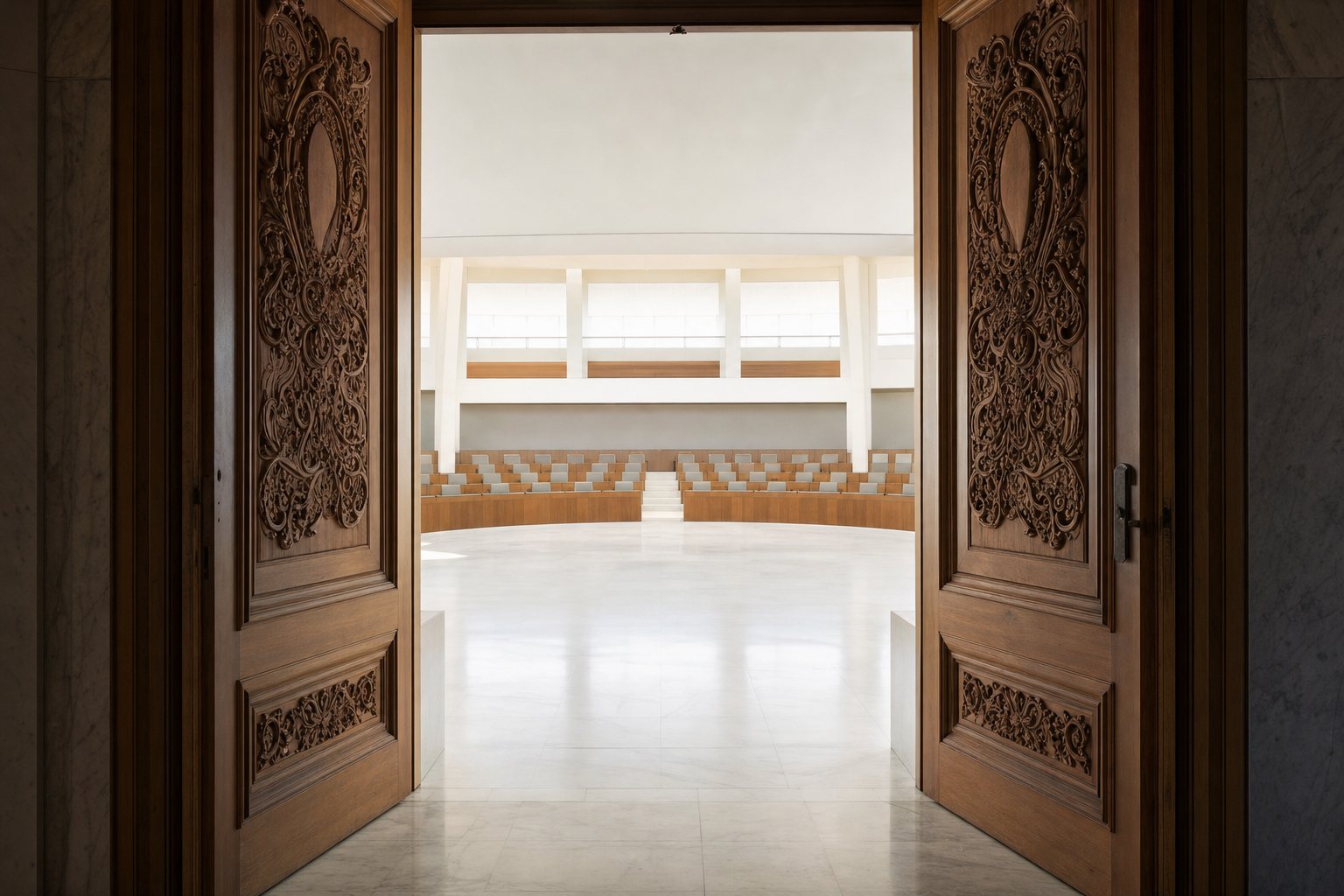
In February 1987, a Constituent Assembly met to write a new constitution. On 5 October 1988, its president, Ulysses Guimarães, held up the text and declared it promulgated.
Its 559 members were the members of Congress, most of them elected in 1986, and they worked on the text for about twenty months.
Brazilians call it the 'Citizen Constitution'. It set direct, secret voting, gave illiterate citizens the vote, made racism a crime with no bail, and recognised Indigenous peoples' right to the lands they occupy.
It is still Brazil's constitution today.
“The document of freedom, of dignity, of democracy and of social justice of Brazil.”Ulysses Guimarães, declaring the Constitution promulgated (National Geographic Brasil)
5 October 1988The Citizen Constitution With two hundred and fifty articles and a long set of transitional provisions, it is among the longest constitutions in force anywhere. AI-generated illustration.
Direct, secret voting
The vote for illiterate citizens
Racism: a crime without bail
Indigenous rights to the lands they occupy
The “Citizen Constitution”Twenty months of drafting The assembly accepted proposals from the public: popular amendments arrived backed by more than twelve million signatures. AI-generated illustration.
559
members wrote it
≈20 months
of work
In force
today, as amended
The 1988 Constitution
Chapter IV · A new constitution
The Citizen Constitution
Wikipedia, Brazilian Constituent Assembly: founded and took office on 1 February 1987, with Ulysses Guimarães (PMDB, São Paulo) as its president. National Geographic Brasil: the Constitution was promulgated on 5 October 1988 and became known as the “Constituição Cidadã” (Citizen Constitution) because it expanded rights; Guimarães declared it “the document of freedom, of dignity, of democracy and of social justice of Brazil”; it established direct and secret voting, gave illiterate citizens the vote, made racism a non-bailable crime and gave Indigenous peoples the right to the lands they occupy.
Agência Senado: the assembly’s 559 members were 487 deputies and 49 senators elected on 15 November 1986, plus 23 senators elected in 1982. National Geographic Brasil: the work took 20 months.
The quotation is translated from the Portuguese given by National Geographic Brasil. “Still in force” refers to the 1988 text as amended over the years.
The timeline, chamber seats and globe are teaching graphics: each dot in the chamber is one vote as recorded in the sources; colours and positions are schematic.
In December 1989, Brazilians chose their president directly for the first time since 1960. Fernando Collor beat a former metalworker and union leader, Lula, by 53 to 47 percent.
Less than three years later, Collor was accused of corruption. In September 1992 the Chamber of Deputies voted 441 to 38 to open impeachment. He resigned in December as his Senate trial began.
Vice-President Itamar Franco took over. In 1994 the Supreme Court acquitted Collor of corruption, for lack of evidence.
The new system had removed a president without a single tank.
Fernando Collor
53.03%
Lula
46.97%
Runoff, 17 December 1989
441
to open impeachment
38
against
29 September 1992, Chamber of Deputies
29 Dec 1992 Collor resigns; Itamar Franco takes over
1994 Supreme Court acquits Collor: lack of evidence
After the voteWatched at home Collor won 35 million votes in 1989; three years later he was gone, by the rules of the new constitution. AI-generated illustration.
Chapter V · Democracy tested
The first direct vote, the first impeachment
Wikipedia, 1989 election: the first direct presidential election since 1960, with rounds on 15 November and 17 December 1989; in the runoff Fernando Collor won 53.03% (35,090,206 votes) to Lula’s 46.97% (31,075,803), with 82,074,718 registered voters. Wikipedia, impeachment of Fernando Collor: on 29 September 1992 the Chamber of Deputies voted 441 to 38 to open impeachment proceedings over the PC Farias corruption scheme; Collor resigned on 29 December 1992 as the Senate trial began, and Vice-President Itamar Franco took over. The Supreme Court acquitted Collor of passive corruption in 1994 for lack of evidence.
Lula’s background as a metalworker and union leader is general knowledge reported in his biography (Wikipedia). Try it: replay the 1992 Chamber vote; each dot is one deputy.
The timeline, chamber seats and globe are teaching graphics: each dot in the chamber is one vote as recorded in the sources; colours and positions are schematic.
Lula won the presidency in 2002 and served two terms. In 2016 the Senate removed his successor, Dilma Rousseff, for breaking budget laws.
Rousseff called it a new type of coup. The Senate said the constitutional rules were strictly observed.
Lula himself was convicted of corruption and spent 580 days in prison. In 2021 the Supreme Court annulled his convictions, ruling that the trial court had no right to hear the case. It did not rule on his guilt.
In 2022 he beat the sitting president, Jair Bolsonaro, elected in 2018, with 50.9 percent of the vote: one of the closest results in Brazil's history.
1989 Loses to Collor
2003–10 Two terms as president
2016 Rousseff removed
2018–19 580 days in prison
2021 Convictions annulled
2022 Beats Bolsonaro
Lula’s path
61
to remove Rousseff
20
against
Senate, 31 August 2016
8–3
full court upholds the annulment
580
days Lula spent in prison, 2018–19
Supreme Court, 15 April 2021Back to the ballot A president may serve two terms in a row and then must stand down for one; Lula's terms are not consecutive. AI-generated illustration.
Lula
50.9%
Jair Bolsonaro
49.1%
Runoff, 30 October 2022
Chapter V · Democracy tested
Conviction, annulment, return
Wikipedia, Lula: president from 1 January 2003 to 1 January 2011; convicted of corruption and money laundering in July 2017 as part of Operation Car Wash, arrested in April 2018 and released in November 2019 after 580 days; barred from the 2018 race under the Ficha Limpa law. On 8 March 2021 Supreme Court Justice Edson Fachin annulled his convictions, ruling that the Curitiba court lacked jurisdiction, without ruling on guilt; the full court upheld this 8–3 on 15 April 2021. In 2022 he defeated incumbent Jair Bolsonaro in the runoff with 50.90% of the vote. He returned to office on 1 January 2023.
Wikipedia, impeachment of Dilma Rousseff: she was charged with breaking budget laws (“fiscal pedaling” and supplementary credits without Congress’s approval); the Senate voted 55–22 on 12 May 2016 to suspend her and 61–20 on 31 August 2016 to remove her, and Michel Temer became president. Rousseff called it “a new type of coup” and said she had committed no crime; Temer said the process showed “absolute respect for the constitutional order”, and the Senate told the OAS that “the constitutional rules were strictly observed.” The same article notes Jair Bolsonaro was elected president in 2018.
Lula’s supporters and opponents read these rulings very differently; the film reports the court decisions as recorded. “One of the closest” is a description of a 1.8-point margin, not a ranking from the source.
The timeline, chamber seats and globe are teaching graphics: each dot in the chamber is one vote as recorded in the sources; colours and positions are schematic.
A week after Lula took office, on 8 January 2023, supporters of Bolsonaro stormed the Congress, the Supreme Court and the presidential palace in Brasília. Many called for a military intervention. More than 1,400 people were arrested.
Bolsonaro was in the United States that day. In 2023, Brazil's electoral court, separate from the Supreme Court, barred him from office until 2030 for attacking the voting system. In September 2025, a Supreme Court panel voted four to one to sentence him to 27 years for plotting to stay in power.
His lawyers called the sentence excessive. After his appeal failed, the court ordered him in November 2025 to begin serving it.
He maintains he is innocent. His son Flávio calls the case political persecution.
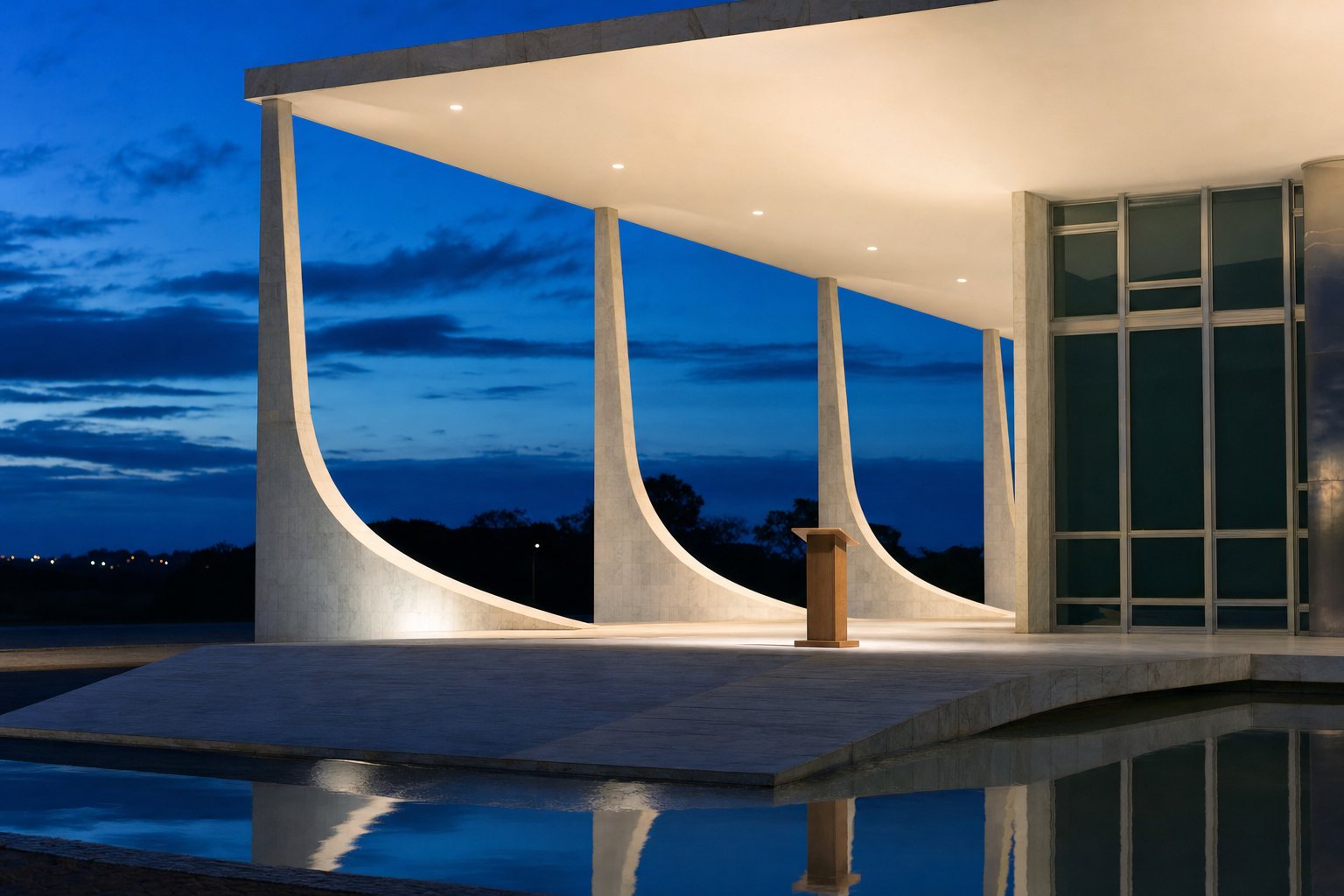
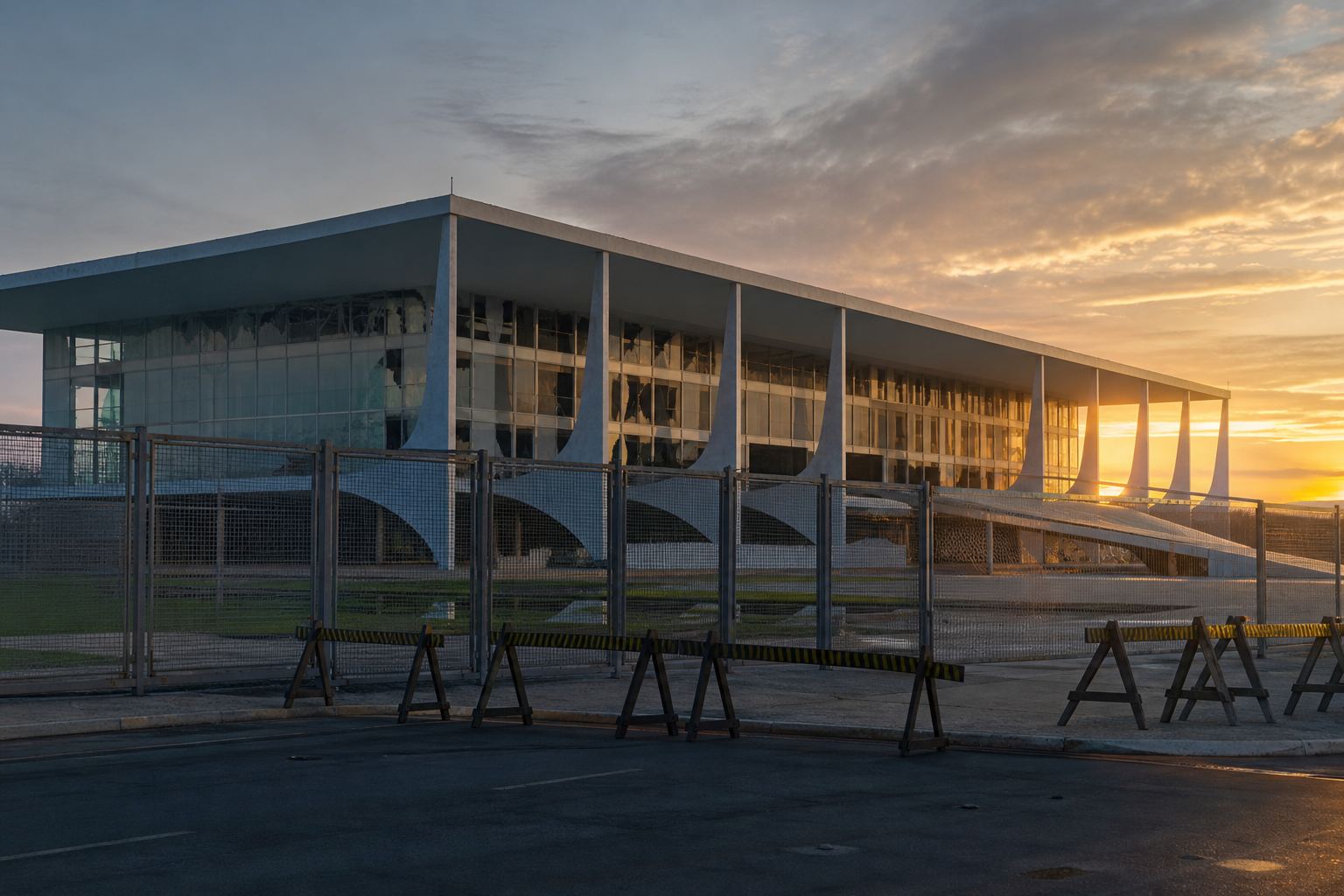
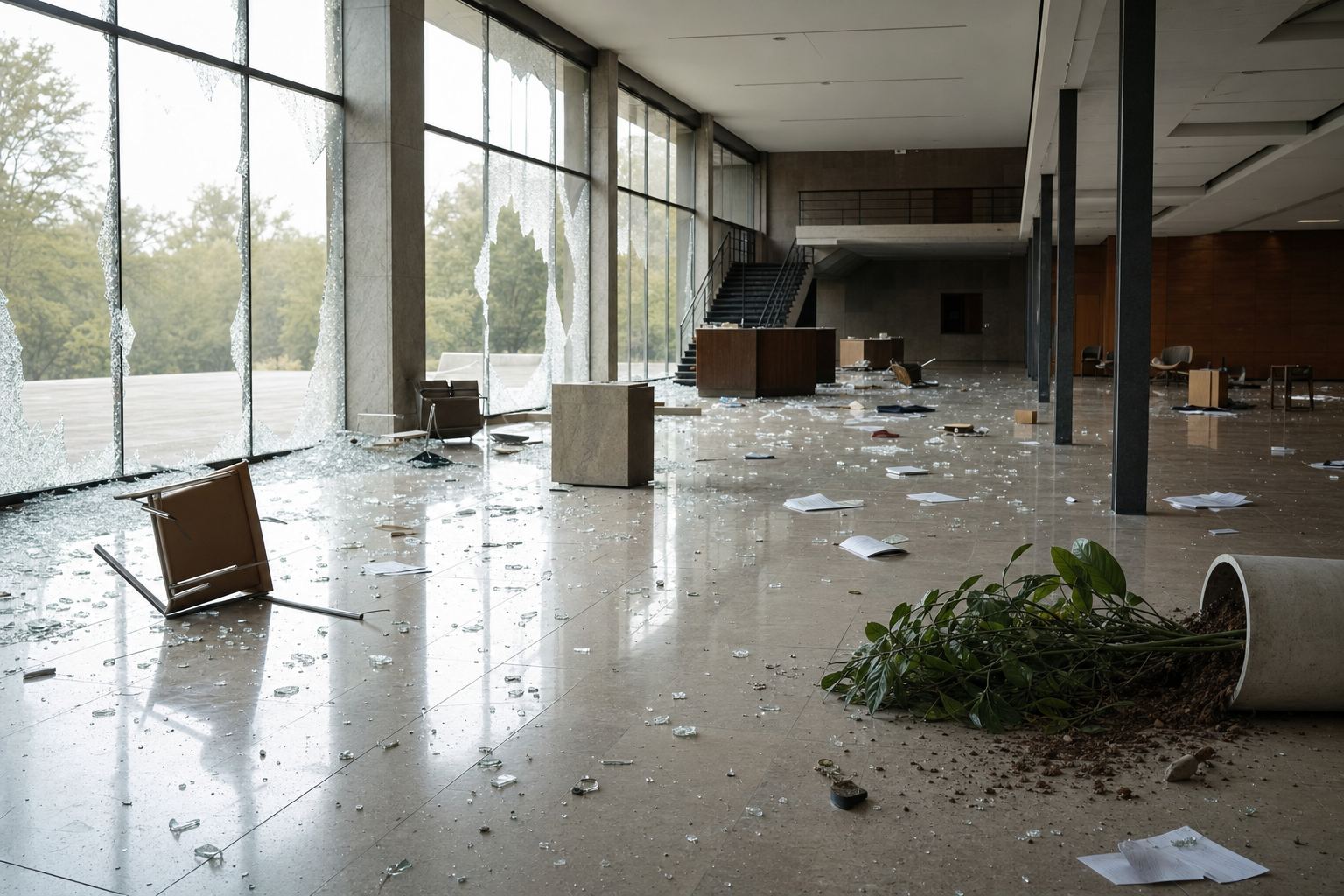
The Square of the Three Powers Security forces took more than five hours to clear the three buildings. AI-generated illustration.
Jun 2023: barred from office until 2030
Sep 2025: sentenced to 27 years 3 months
Panel vote: 4 to 1
Nov 2025: ordered to begin serving
After the 2022 electionThe morning after Congress, the Supreme Court and the presidential palace were all entered on the same afternoon. AI-generated illustration.
Court: guilty of a plot to overturn the result
His lawyers: the sentence is excessive
How each side sees it
He maintains his innocence; Flávio calls the case “persecution”.As reported by Al Jazeera, 2025
Jair and Flávio Bolsonaro
Chapter V · Democracy tested
8 January and its aftermath
Wikipedia, 8 January Brasília attacks: a week after Lula’s inauguration, supporters of Jair Bolsonaro attacked the Supreme Federal Court, the National Congress Palace and the Planalto Presidential Palace; many said they wanted a “military intervention”; security forces took more than five hours to clear the buildings; at least 1,430 people were arrested; Bolsonaro was in Orlando, Florida. Wikipedia, 2026 election: on 30 June 2023 Bolsonaro was declared ineligible until 2030 for abuse of political power and misuse of the media, over attacks on the electoral system at a meeting with foreign ambassadors.
Al Jazeera (11 Sep 2025): four of five justices found Bolsonaro guilty of trying to illegally keep power after his 2022 loss, on five charges including leading a criminal organisation; Justice Luiz Fux voted to acquit on all charges. His lawyers called the sentence excessive and disproportionate and said they would appeal; Flávio Bolsonaro called it “persecution”, and about 40,000 supporters rallied in Brasília backing his claim of being politically targeted. US President Donald Trump called the trial a “witch-hunt”. Al Jazeera (25 Nov 2025): the Supreme Court had rejected his appeal, his defence declined a second one, and the court ordered him to begin his sentence at Federal Police headquarters in Brasília; he maintains his innocence.
The timeline, chamber seats and globe are teaching graphics: each dot in the chamber is one vote as recorded in the sources; colours and positions are schematic.
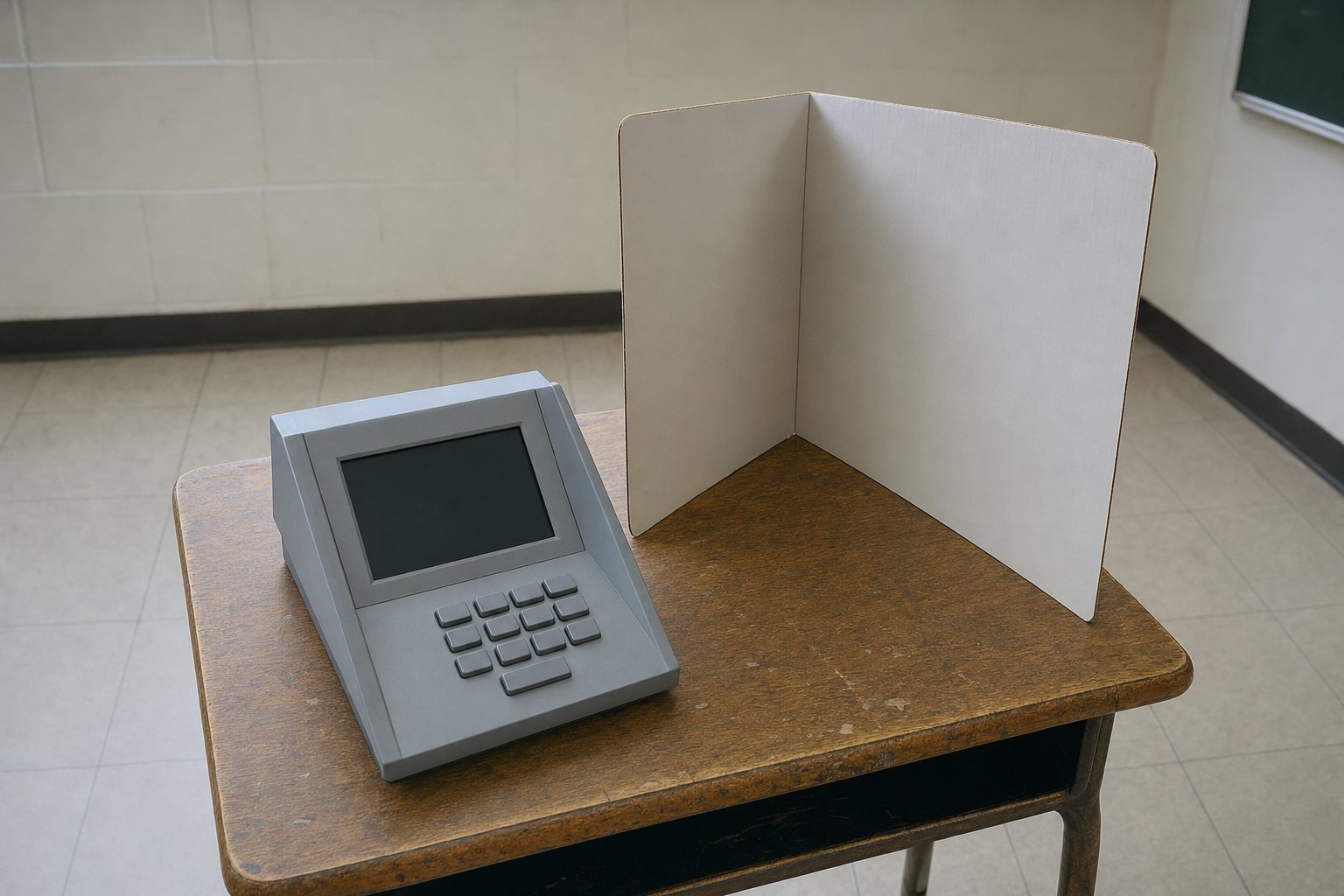
Today Brazilians vote on electronic machines, with no paper ballot. Critics say that makes the result hard to check. The electoral court says every vote is stored digitally and can be recounted, and each machine prints its totals.
Every presidential election since 1989 has been a direct vote.
Sixty-two years after the tanks rolled, the arguments are still about the vote itself: who counts it, who accepts it, and who decides when a loser has a case.
Brazil's democracy is younger than many of the people who vote in it.
The electronic ballot box Machines are tested before party observers. There is no paper ballot; the electoral court says votes can be recounted from each machine’s digital vote record. AI-generated illustration.The machine on the desk It runs on its own battery and is connected to no network while the polls are open. AI-generated illustration.
1964 Military coup
1968 AI-5
1979 Amnesty Law
1984 Diretas Já; amendment fails
1985 Civilian rule returns
1988 Citizen Constitution
1989 First direct vote since 1960
2026 Lula’s fourth term, result contested
Brazil’s road
Stills are AI-generated; no real people are shown
Contested events are attributed to each side
Chamber dots and timeline are schematic
About this film
Epilogue · Sources
Sources
Every fact in this film comes from the sources below. Wikipedia, 2026 election: voting is done on direct-recording electronic machines; voters enter a candidate’s number, check the name and photo and press green to confirm; machines are tested before parties, print their totals after voting, and results usually come within hours; there is no physical record of individual votes. Critics say this makes results hard to verify. The TSE lists, among its audit methods, a recount of votes through each machine’s Registro Digital do Voto (RDV) and a comparison with the printed boletim de urna. Every presidential election since 1989 has been direct; Itamar Franco (1992) and Michel Temer (2016) took office as vice-presidents. Contested events are told in each side’s own terms and attributed. The chapter stills and pictures are AI-generated illustrations and show no real, identifiable people; the timeline, chamber seats and globe are teaching graphics.