Every person in history has looked at the same face of the Moon. This film explains why: how the Moon spins exactly once per orbit, how the tides that lift our seas also braked the Moon's spin until it locked, why the Moon is slowly drifting away and our days are getting longer, how a wobble lets us see 59% of the surface, and why the far side, first photographed in 1959, looks so different. A new study of Chang'e-6 samples offers one more explanation for that difference. Turn off the Moon's spin, line up the Sun and Moon for a spring tide, and spin down a young Moon yourself.
Everyone who ever lived has seen the same side of the Moon.
Every person who has ever looked up has seen the same face of the Moon: the same dark patches, in the same places.
The dinosaurs saw it, the pharaohs saw it, and so do you. And in October 2026, scientists studying rocks that China's Chang'e-6 mission brought back from the hidden side proposed a new reason why the two sides look so different.
But first, a simpler question: why do we only ever see one side at all?
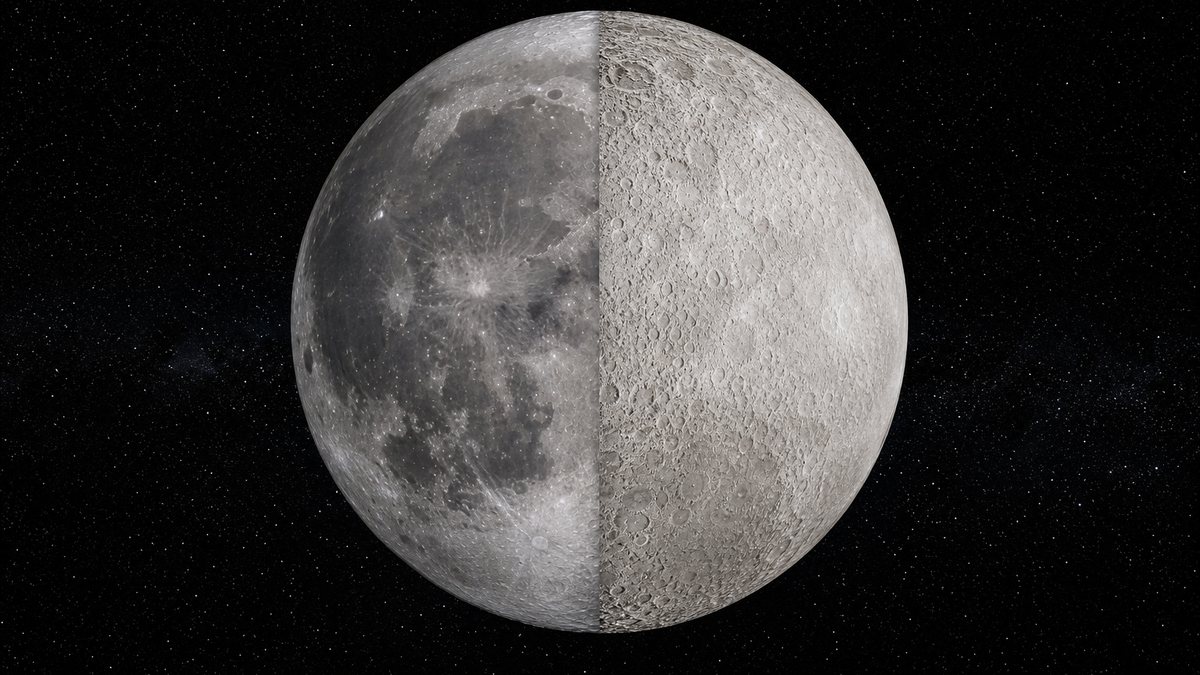
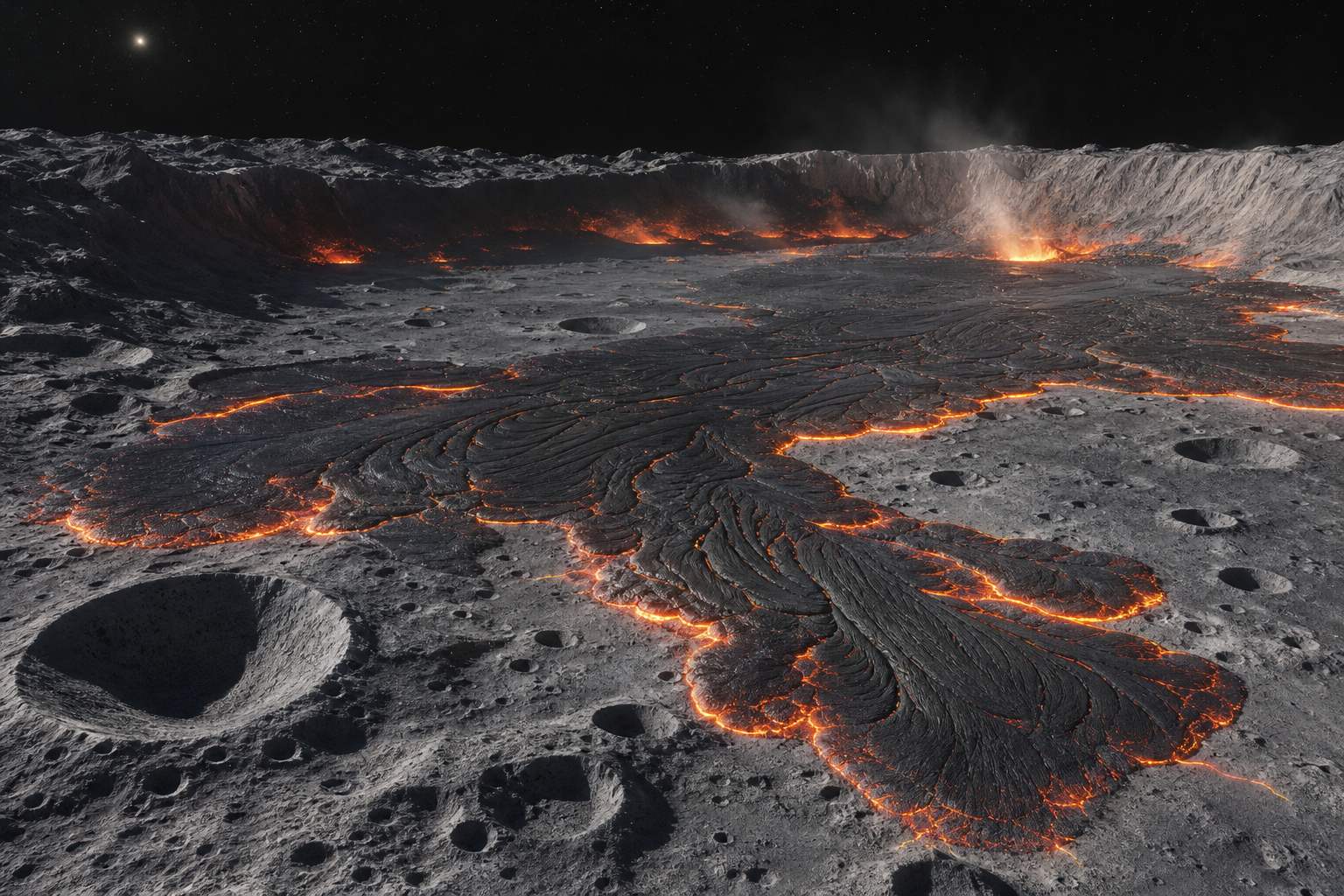
The near side The dark patches are plains of ancient lava, called maria, “seas”. AI-generated still.
Nanjing University, in National Science Review
compares far-side Chang’e-6 rocks with near-side samples
proposes a cause linked to tides; not yet established
The new study, in brief
100%
of people in history saw the same side
One face
Prologue · The news
The two faces of the Moon
A team led by Hejiu Hui of Nanjing University compared rocks returned by China’s Chang’e-6 mission, the first samples from the far side, with near-side samples from Apollo and Chang’e-5. In National Science Review they propose that after the Moon became tidally locked, uneven tidal heating drove circulation in its early magma ocean (the layer of molten rock that covered the young Moon) and built a thicker far-side crust.
The authors present this as a possible explanation; earlier explanations have not won universal acceptance either. This film explains the established part: tidal locking.
How to use: pick a chapter or press ← →; drag to rotate. Most steps have buttons you can press.
A common guess is that the Moon does not spin. It does. It turns once on its axis in about twenty-seven days, the same time it takes to go once around the Earth.
Watch what would happen if it did not spin at all. The red marker would point at Earth, then away, and over a month we would see every side.
Because spin and orbit match, the same side always faces us. Astronomers call this synchronous rotation, or tidal locking.
27.322 days
one orbit around Earth
27.3 days
one spin on its axis: the same
The Moon
no spin: every side faces Earth in turn
one spin per orbit: one side always faces Earth
Two ways to circle
1 : 1
spins per orbit
Synchronous rotation
Chapter I · The puzzle
Synchronous rotation
The Moon rotates on its axis in about 27 days, matching its 27.322-day orbit around Earth. This synchronous rotation keeps the same face toward us.
The 3D scenes are not to scale, and the Moon’s surface is drawn schematically.
The side we never see is often called the dark side. It is not dark. As the Moon orbits, sunlight sweeps over every part of it, which is why we see phases.
At new Moon, the Moon passes between Earth and the Sun. The side facing us is in shadow, so we see nothing, while the far side is in full daylight. Its proper name is simply the far side.
The far side gets as much sunlight as the side facing us.NASA StarChild
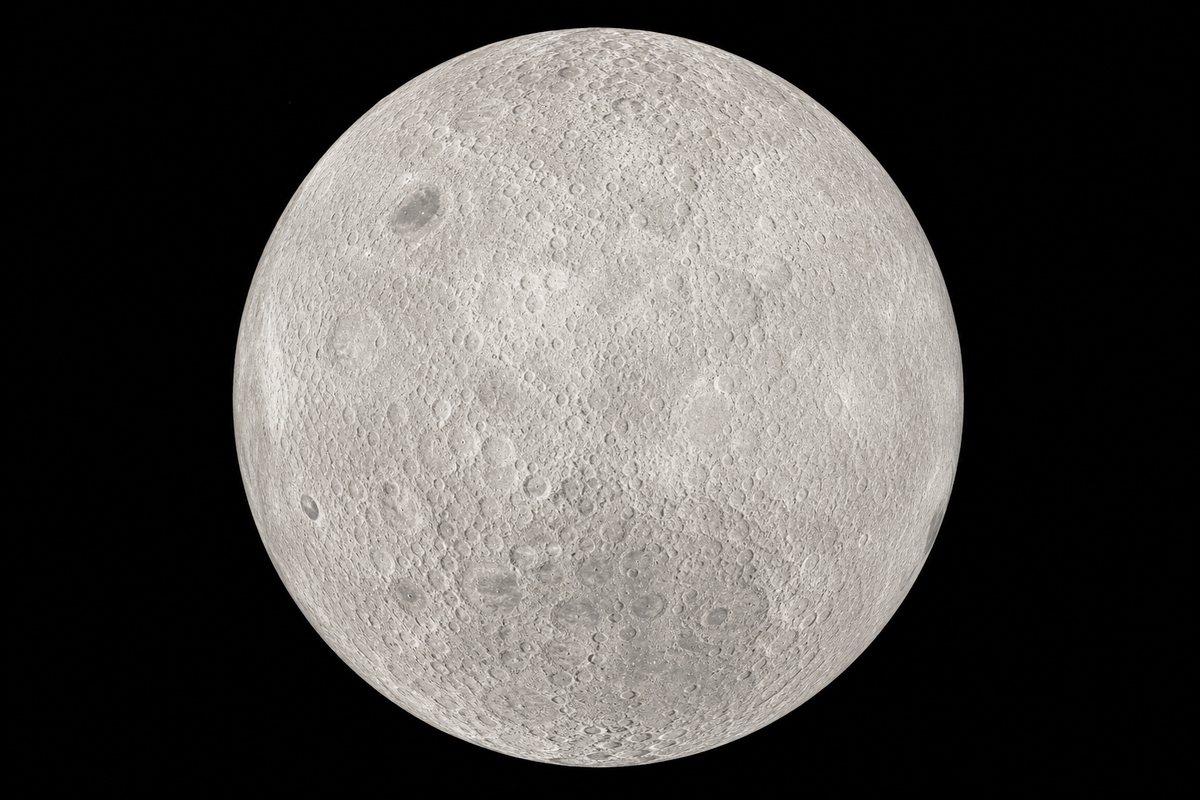
The far side, lit Bright, crater-crowded highlands with very few dark plains. AI-generated still.
Chapter I · The puzzle
Far side, not dark side
NASA notes that “dark side of the Moon” usually means the side we cannot see, more accurately called the far side. It receives as much sunlight as the near side; the only truly dark side at any moment is the one turned away from the Sun.
The 3D scenes are not to scale, and the Moon’s surface is drawn schematically.
To understand the lock, start with something familiar: the tides, and the tidal force that raises them. The Moon's gravity pulls on the whole Earth, but it pulls harder on the side nearest to it and more weakly on the far side.
That difference stretches the Earth into a slight oval, with a bulge of water toward the Moon and another on the opposite side.
Why a bulge on the far side too? There the Moon pulls less than it pulls on Earth's centre, so as the planet is drawn toward the Moon, that water is left behind.
As the Earth turns beneath the two bulges, most coasts get two high tides and two low tides a day. Watch the yellow coast.
near side: pulled hardest
centre: pulled a medium amount
far side: pulled least, so it lags behind
The tidal force
near side: pulled more than Earth’s centre
far side: pulled less, left behind
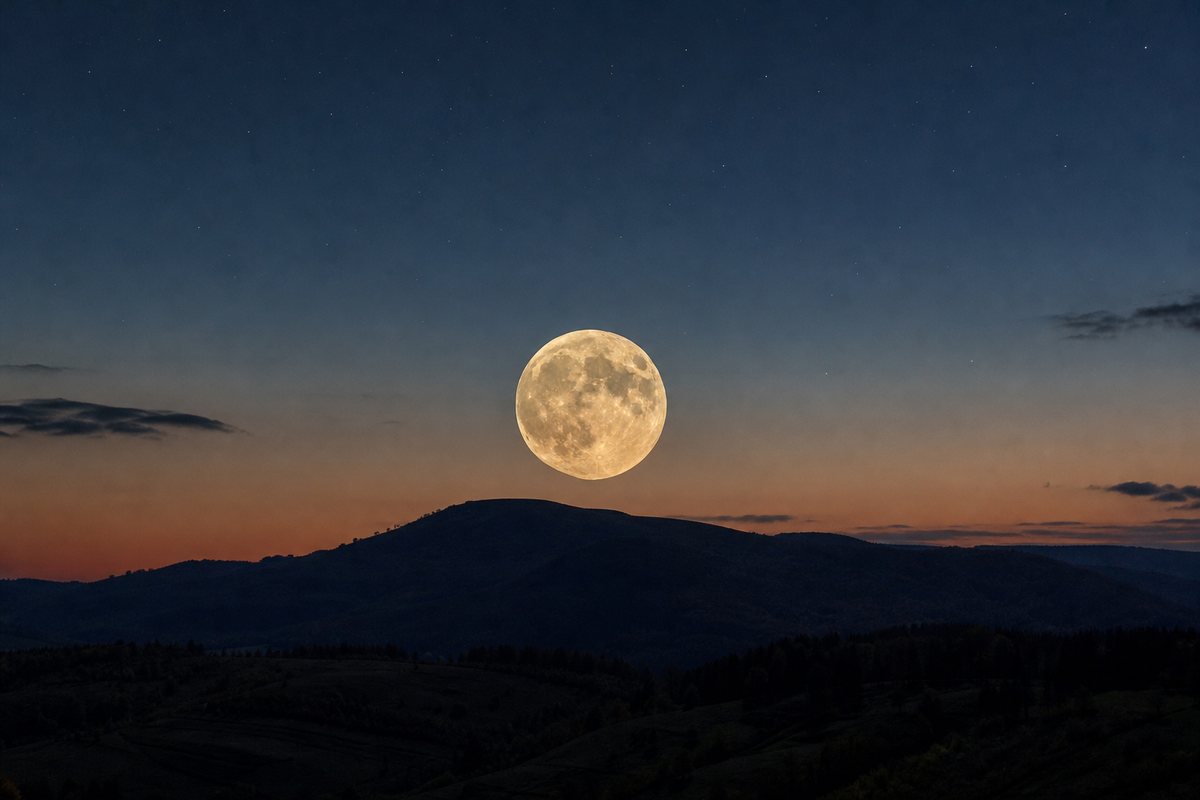
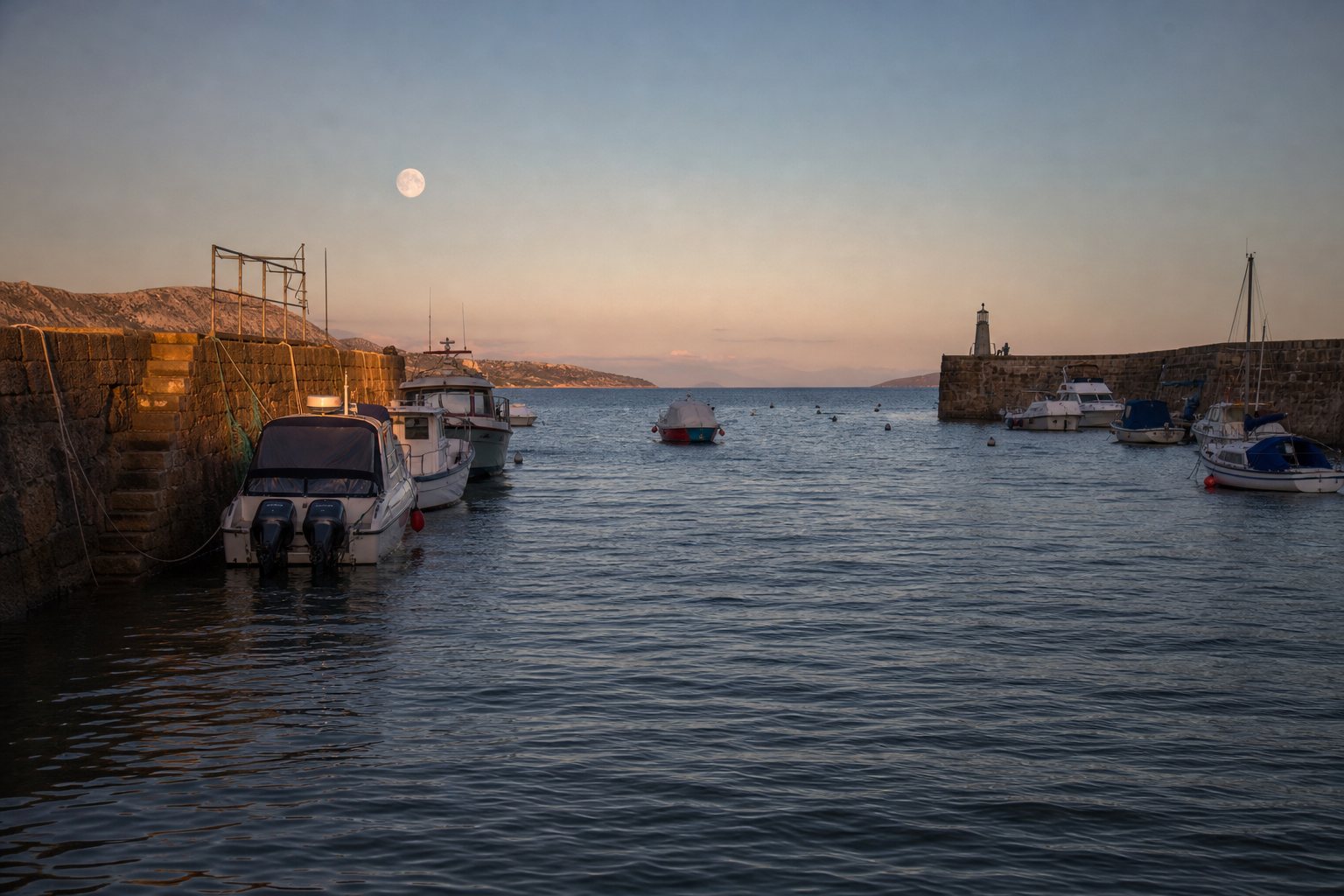
Two bulgesHigh tide Some places get one high tide a day, and some a mix of both patterns. AI-generated still.
Chapter II · Tides
Why two bulges
NOAA explains that the Moon pulls on the whole Earth, hardest on the near side and least on the far side; the planet stretches toward the Moon, and water on the far side lags behind, creating a second bulge of about the same height. Most places therefore get two high and two low tides a day.
The 3D scenes are not to scale, and the Moon’s surface is drawn schematically.
The Sun pulls on the Earth about 178 times harder than the Moon does. But tides depend on the difference in pull from one side of Earth to the other, and the Moon is so much closer that its tidal effect is more than twice the Sun's.
When the Sun and Moon line up, at new and full Moon, their bulges add: spring tides. At right angles they partly cancel: neap tides.
~178×
the Sun’s total pull on Earth, compared with the Moon’s
> 2×
the Moon’s tidal effect, compared with the Sun’s
Sun vs Moon
new and full Moon: spring tides, biggest range
about a week later: neap tides, smallest range
Through the month
spring tide: Sun and Moon in line, bigger range
neap tide: at right angles, smaller range
Two kinds of tide
Chapter II · Tides
Spring and neap tides
According to NOAA, the Sun pulls on Earth about 178 times more strongly than the Moon, but the Moon’s tidal pull is more than twice the Sun’s because it is much closer. Spring tides come around new and full Moon, when Earth, Moon and Sun line up; neap tides about seven days later, at right angles.
Tidal force falls with the cube of distance, which is why the nearby Moon wins; this rule is standard physics, not stated on the NOAA page.
The 3D scenes are not to scale, and the Moon’s surface is drawn schematically.
Earth raised tides in the Moon, and used them as a brake.
Now flip the picture. Earth is much heavier than the Moon, so Earth raised a tidal bulge in the Moon's own rock. Long ago the young Moon spun faster than it orbited.
Its spin kept dragging the bulge ahead of the line to Earth. Earth's gravity pulled back on that off-centre bulge, a twist working against the spin, while the rock flexed and rubbed, turning spin into heat. Bit by bit, the spin slowed.
It slowed until the bulge pointed straight at Earth and stayed there: one spin per orbit. Then there was nothing left to brake. The Moon was locked.
a heavy planet close by
a moon spinning faster than it orbits
rock that flexes and loses energy as heat
The ingredients
spin carries the bulge ahead
Earth pulls it back: a twist against the spin
flexing rock turns spin into heat
The brake
1 : 1
spins per orbit, ever since
Locked
Chapter III · The brake
Tidal locking
Earth’s gravity raises a tidal bulge in the Moon’s crust. While the Moon still spun faster than it orbited, its rotation carried the bulge off the Earth–Moon line; Earth’s pull on the displaced bulge created a torque, and friction slowed the spin until rotation matched the orbit.
How long the locking took is uncertain: estimates are very sensitive to the Moon’s early distance.
The 3D scenes are not to scale, and the Moon’s surface is drawn schematically.
The same braking is still happening on Earth. The Moon's pull on our ocean bulges slowly slows Earth's spin, lengthening the day by a little over two milliseconds per century.
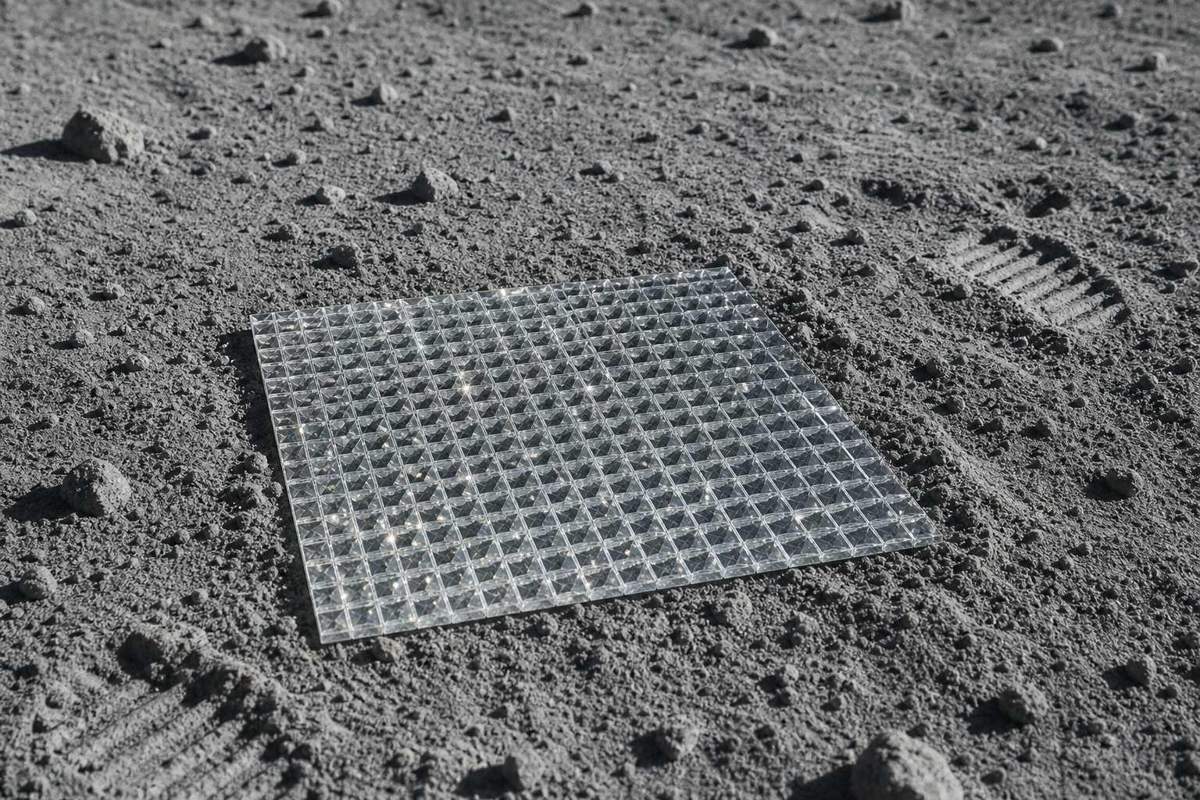
The spin Earth loses is not destroyed. Earth's turning carries the ocean bulges slightly ahead of the Moon, and their pull tugs the Moon forward, so it spirals slowly outward. Mirrors left by Apollo astronauts let scientists bounce lasers off the Moon, and they show it moving away by about 3.8 centimetres a year.
Back in the age of the dinosaurs, a day on Earth lasted only about twenty-three hours.
~2.3 ms
longer per century
Earth’s dayA mirror on the Moon Apollo 11 and 14 left arrays of 100 prisms each; Apollo 15 left 300. AI-generated still.
3.8 cm
farther each year
~3 mm
farther each month (3.8 cm ÷ 12)
Lunar laser ranging
~23 h
Earth’s rotation then
A day in the age of dinosaurs
Chapter III · The brake
Angular momentum moves outward
Earth’s two ocean bulges and the Moon pull on each other: this slows Earth’s rotation and moves the Moon forward in its orbit, so it spirals away by about 3 mm a month. Lunar laser ranging to the reflectors left by Apollo 11, 14 and 15 measures about 3.8 cm a year. Earth’s day currently lengthens by about 2.3 milliseconds per century. Angular momentum — the amount of turning, which can be passed between bodies but not lost — is what moves from Earth’s spin to the Moon’s orbit.
Space.com puts Earth’s rotation at about 23 hours in the time of the dinosaurs.
The 3D scenes are not to scale, and the Moon’s surface is drawn schematically.
Our Moon is not special. All the moons in the Solar System big enough to be round are tidally locked to their planets.
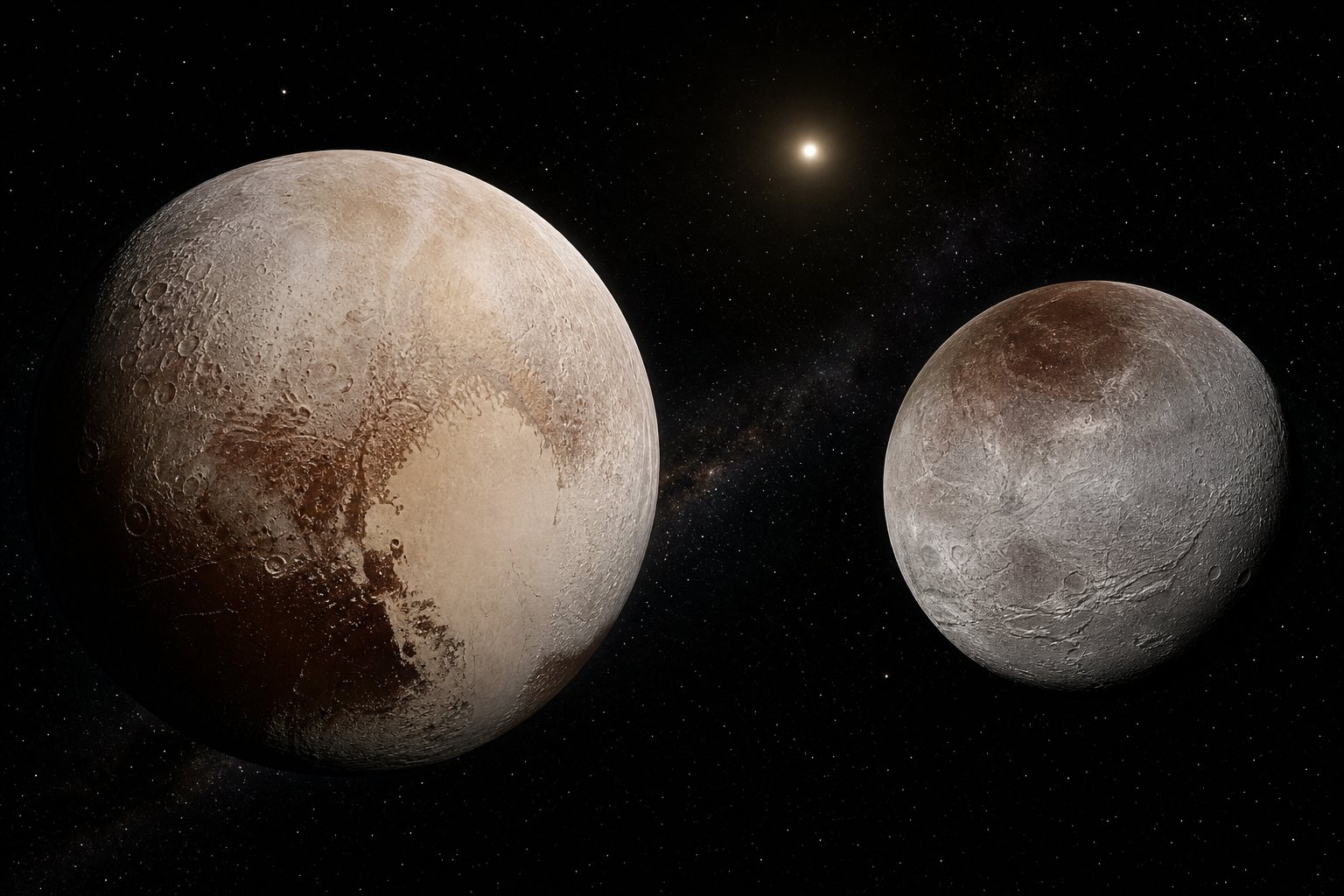
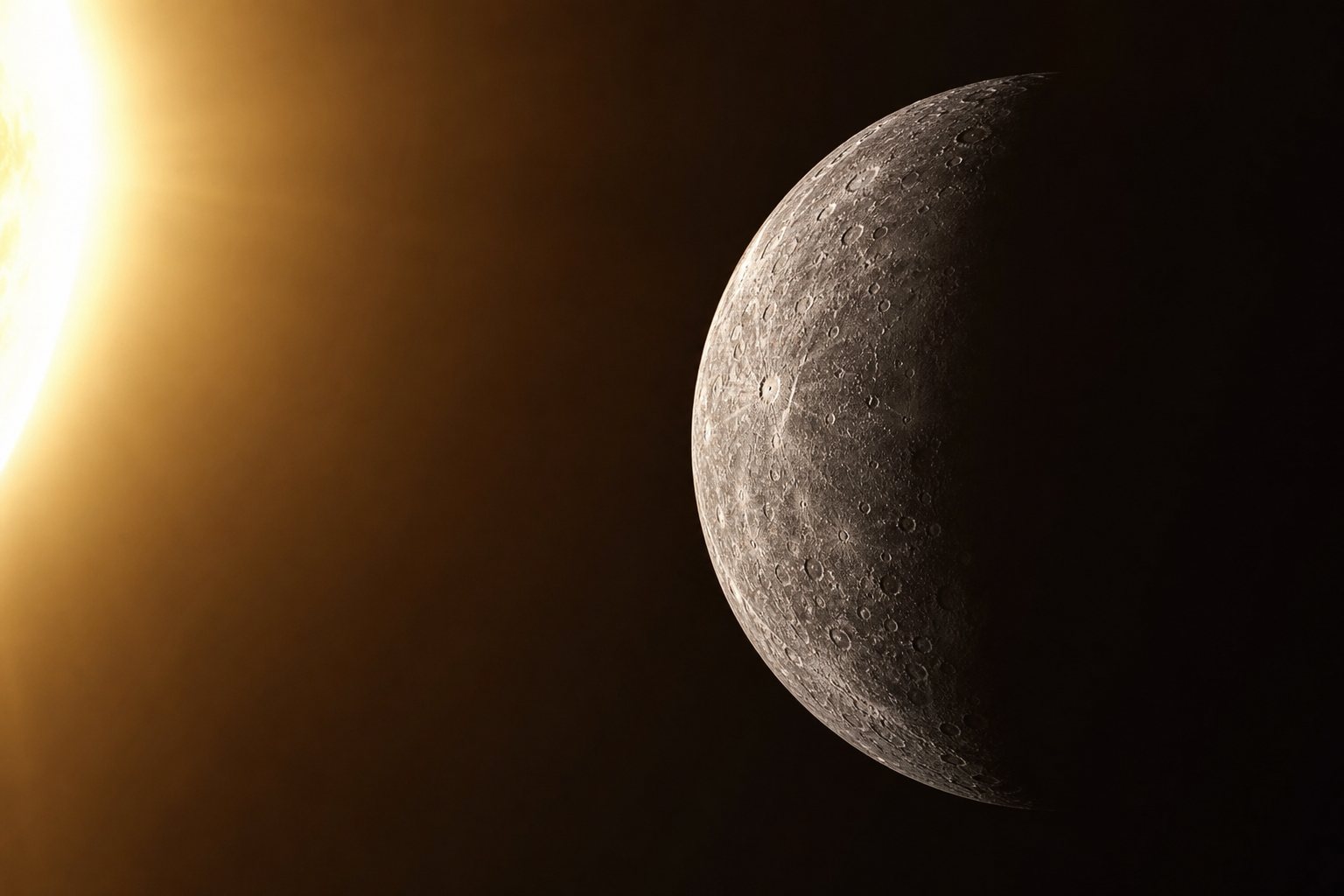
Pluto and its big moon Charon are locked to each other, so each shows only one face to the other. Mercury is locked to the Sun in a different rhythm: it spins three times for every two trips around it.
And Earth? Its day will keep lengthening, but it is not expected to lock to the Moon before the Sun swells into a red giant.
Pluto and Charon Charon is about half Pluto’s width, big enough to lock its planet too. AI-generated illustration.
Spin–orbit locksMercury Radar showed in 1965 that Mercury is not locked one-to-one, as had long been believed. AI-generated still.
Chapter III · The brake
Other locked worlds
All nineteen known moons large enough to be round are tidally locked; small, irregular Hyperion, a moon of Saturn, tumbles chaotically. Pluto and Charon are mutually locked. Mercury is in a 3:2 spin–orbit resonance, which radar observations revealed in 1965. Earth is not expected to become tidally locked to the Moon before the Sun becomes a red giant.
The lock is exact, but from Earth the Moon seems to rock gently over a month, side to side and up and down. This is called libration.
Its orbit is slightly oval, so it travels faster when closer and slower when farther, while its spin stays steady. And its orbit is tilted about five degrees, so we see a little over its top and bottom.
Add it all up, and from Earth we can see about fifty-nine per cent of the Moon's surface.
oval orbit: east–west rocking
5° tilted orbit: north–south rocking
where you stand on Earth: a small extra view
Why the Moon wobbles
~59%
of the surface, over time
~41%
never visible from Earth
Seen from Earth
Chapter IV · Peeking around
Libration
NASA explains that libration lets us see about 59% of the Moon. The orbit is slightly oval, so the Moon moves faster when nearer Earth and slower when farther (east–west libration); the orbit is tilted about 5 degrees (north–south libration); and observers at high latitudes see slightly farther north or south.
The 41% figure is simply 100% minus 59%. Strictly, the north–south rocking comes from the Moon’s axis being tilted relative to its orbit; NASA’s simplified explanation cites the 5° orbital tilt.
The 3D scenes are not to scale, and the Moon’s surface is drawn schematically.
For all of human history the far side was a mystery. Then, on the seventh of October 1959, the Soviet probe Luna 3 flew behind the Moon and took twenty-nine pictures, covering about seventy per cent of the far side.
Landing there is harder: the far side never faces Earth, so a lander cannot talk to us directly. China's Chang'e-4 made the first landing in January 2019, using a relay satellite.
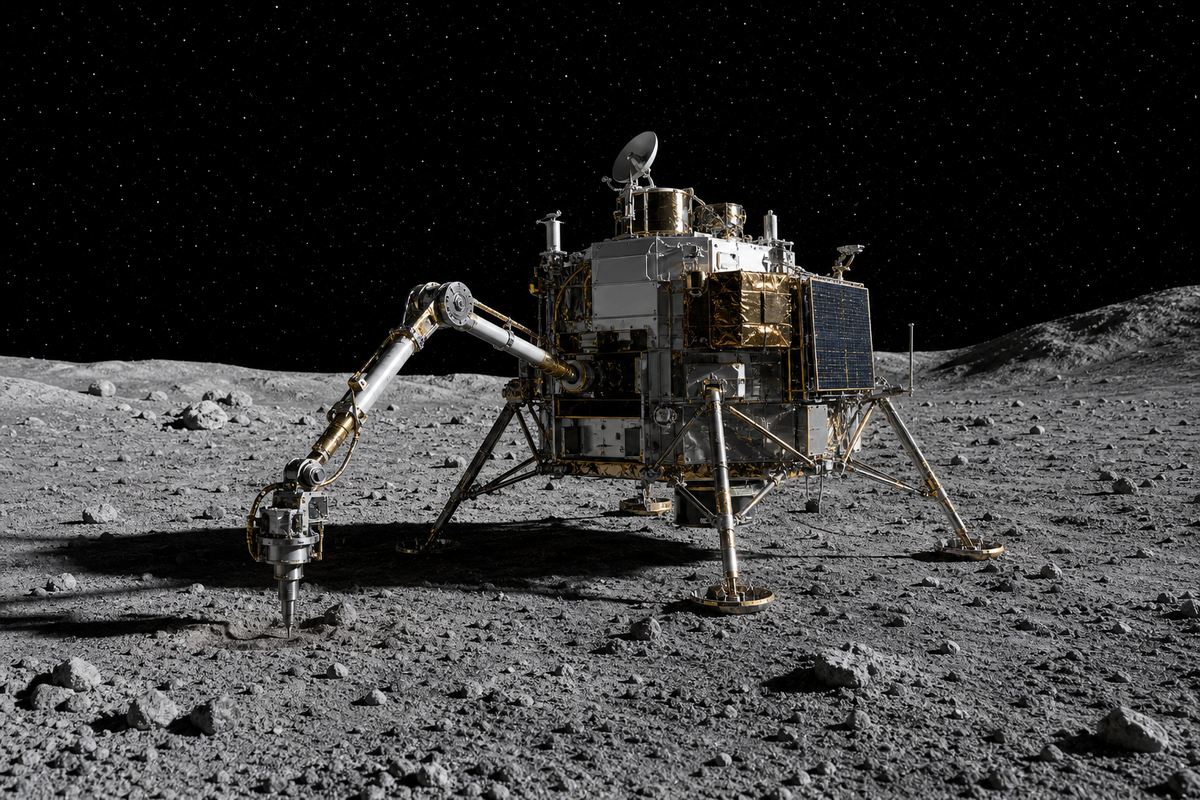
In 2024, Chang'e-6 returned with about two kilograms of far-side rock: the samples behind the new study.
7 Oct 1959 Luna 3: 29 photos taken, ~70% of the far side; about 17 reached Earth
Jan 2019 Chang’e-4: first far-side landing, with the Queqiao relay
2024 Chang’e-6: ~2 kg of far-side samples
Reaching the far sideSampling the far side Chang’e-6 landed in the Apollo crater, inside the vast South Pole–Aitken basin. AI-generated still.
Chapter IV · Peeking around
Visiting the far side
Luna 3 photographed the far side on 7 October 1959, returning 29 pictures covering about 70% of it. China’s Chang’e-4 made the first far-side landing in January 2019, relaying data through the Queqiao satellite. Chang’e-6, launched on 3 May 2024, landed in the Apollo crater inside the South Pole–Aitken basin and brought back roughly 2 kg of far-side material.
The 3D scenes are not to scale, and the Moon’s surface is drawn schematically.
What the pictures revealed was a surprise. The dark maria, plains of lava that flooded huge basins billions of years ago, cover about thirty-one per cent of the near side.
On the far side, they cover only about one per cent. It is a rugged, crater-crowded highland, and its crust is thicker than the crust on the near side.
Why should one Moon have two such different faces? Nobody knows for certain yet.
near side
~31%
far side
~1%
Surface covered by maria
How maria formed Most maria formed roughly 3.5 to 3 billion years ago, when lava filled old impact basins. AI-generated illustration.
bright, heavily cratered highlands
a thicker crust
holds the Moon’s lowest point, the vast South Pole–Aitken basin
The far side
same Moon, same age
two very different faces
Open question
Chapter V · Two faces
The lunar dichotomy
Dark basaltic maria cover about 31% of the near side but only about 1% of the far side; most formed roughly 3.5 to 3 billion years ago. The far-side crust is much thicker than the near side’s; for scale, GRAIL gravity data put the Moon’s average crust at 34–43 km. The lowest point on the Moon, the South Pole–Aitken basin, is on the far side.
The 3D scenes are not to scale, and the Moon’s surface is drawn schematically.
Why should the two halves differ so much? Scientists do not yet agree. One clue is that rocks rich in heat-producing radioactive elements lie mostly under the near side, which could have kept lava flowing there for longer.
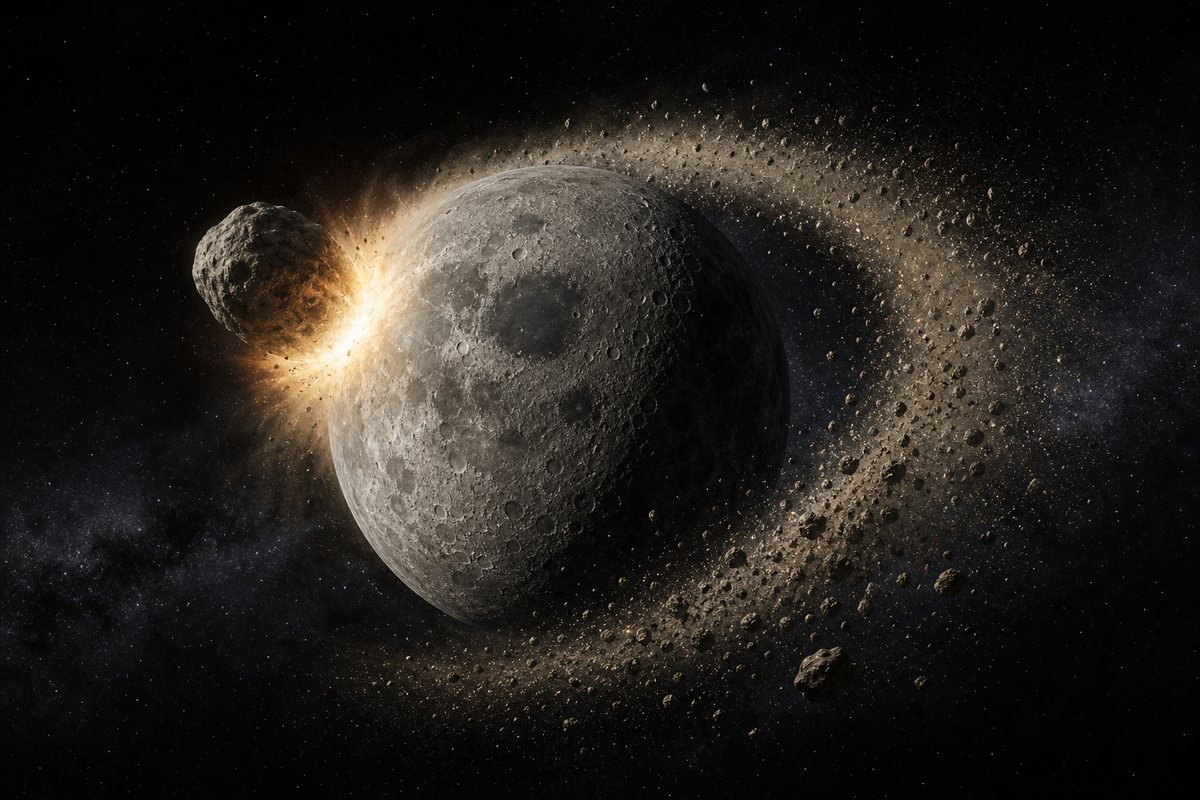
Another idea is a giant impact on the near side that spread a thick blanket of debris over the far side.
And the October 2026 study adds another idea, one that could also explain why those heat-producing rocks gathered under the near side, and it starts with the lock itself.
heat-producing rocks (KREEP) under the near side
a giant near-side impact blanketing the far side
uneven tidal heating after locking (2026), which may also explain the first
Three proposalsA giant impact? One proposal: debris from a huge impact piled up on the far side. Schematic, AI-generated illustration.
3+
competing ideas, none confirmed
Status
Chapter V · Two faces
Explaining the two faces
KREEP rocks — rich in potassium, rare earth elements and phosphorus — lie mostly under the near side, and their radioactive heat could have kept lava flowing. Simulations suggest an object about 480 miles (770 km) wide striking the near side could have spread a 3–6 mile debris layer over the far side; that idea is still being tested. The 2026 Chang’e-6 study proposes uneven tidal heating after locking; its authors describe it as a possible explanation.
These are hypotheses, and they are not all exclusive: the 2026 model also has late-stage melt moving toward the near side, leaving only a thin KREEP layer on the far side. This film does not rank them.
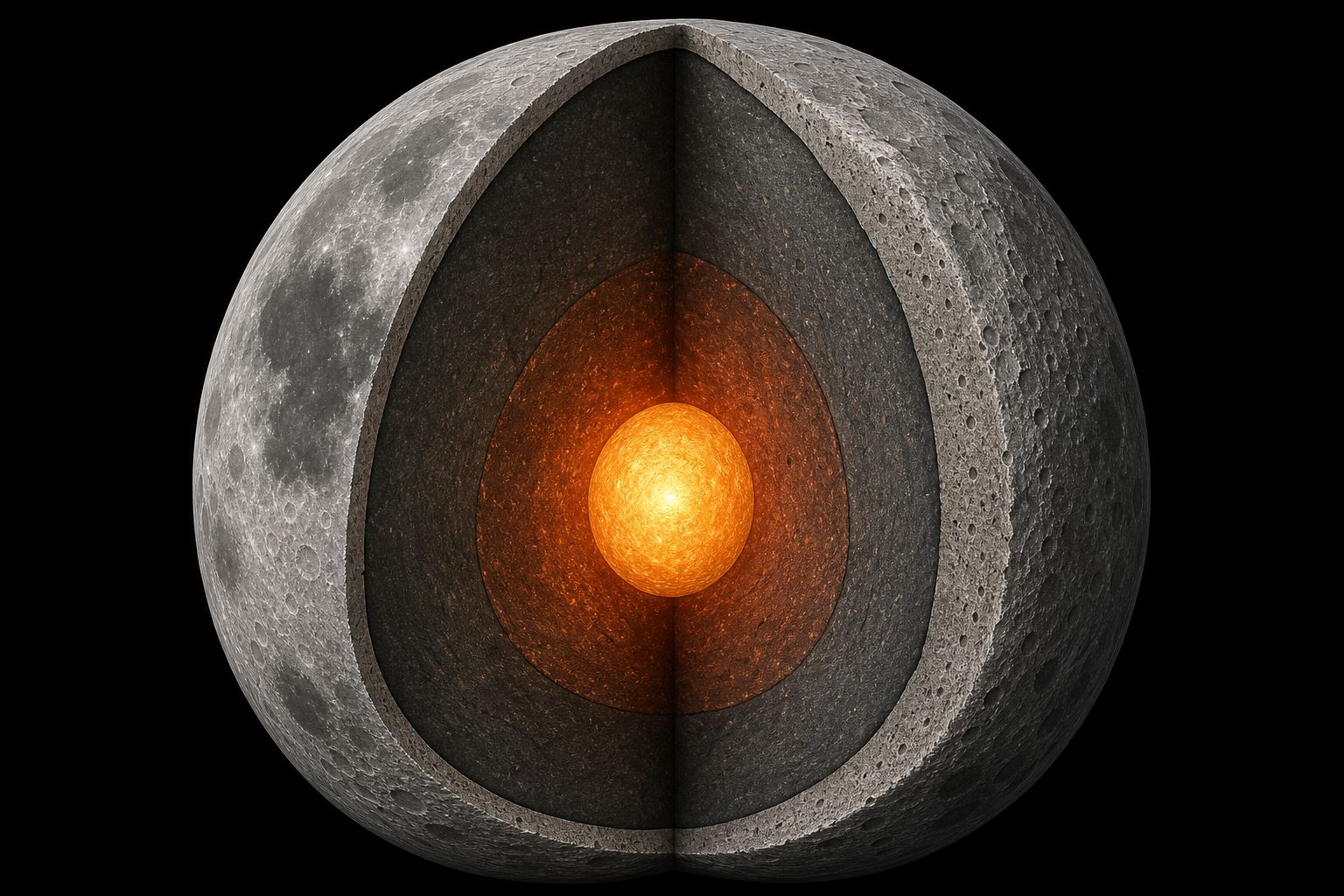
The Chang'e-6 rocks suggest that deep inside, both sides of the Moon are made of broadly similar material. It is the crust that differs.
The team's model goes like this. Once the young Moon was locked, one side always faced Earth, so the tides squeezed and heated it in a fixed pattern. That uneven heat could have stirred the molten rock beneath the surface, carrying material that builds crust toward the far side.
If it is right, the lock did not just hide one face. It shaped it. The authors present it as a possible explanation, to be tested.
mantle: broadly similar chemistry on both sides
crust: different, more magnesium-rich on the far side
What the samples show (paraphrased)A thicker far side Schematic cutaway, not to scale. AI-generated illustration.
lock: one face always toward Earth
tidal heating in a fixed, uneven pattern
circulation in the magma ocean
crust builds up on the far side
The proposed chain
1 study
a proposal, not yet tested by others
Status
Chapter V · Two faces
The 2026 tidal-heating proposal
According to the Science China Press summary, the team found that mantle-derived rocks on both sides share broadly similar chemistry while the crusts differ, and proposed that after tidal locking, uneven tidal heating drove large-scale circulation in the early magma ocean, moving magnesium-rich material to the far side and thickening its crust. The release says the model is a possible explanation and is not yet established.
The 3D scenes are not to scale, and the Moon’s surface is drawn schematically.
The Moon will keep drifting outward, a few centimetres a year, and our days will keep stretching, by milliseconds each century.
Every high tide on every beach is a small part of that same story: the force that locked the Moon's face toward us.
And the face that was locked toward us turned out to be different from the one turned away: a puzzle that rocks from the far side are only now starting to solve.
tides on the Moon braked its spin
one spin per orbit: one face toward Earth
tides on Earth: longer days, a retreating Moon
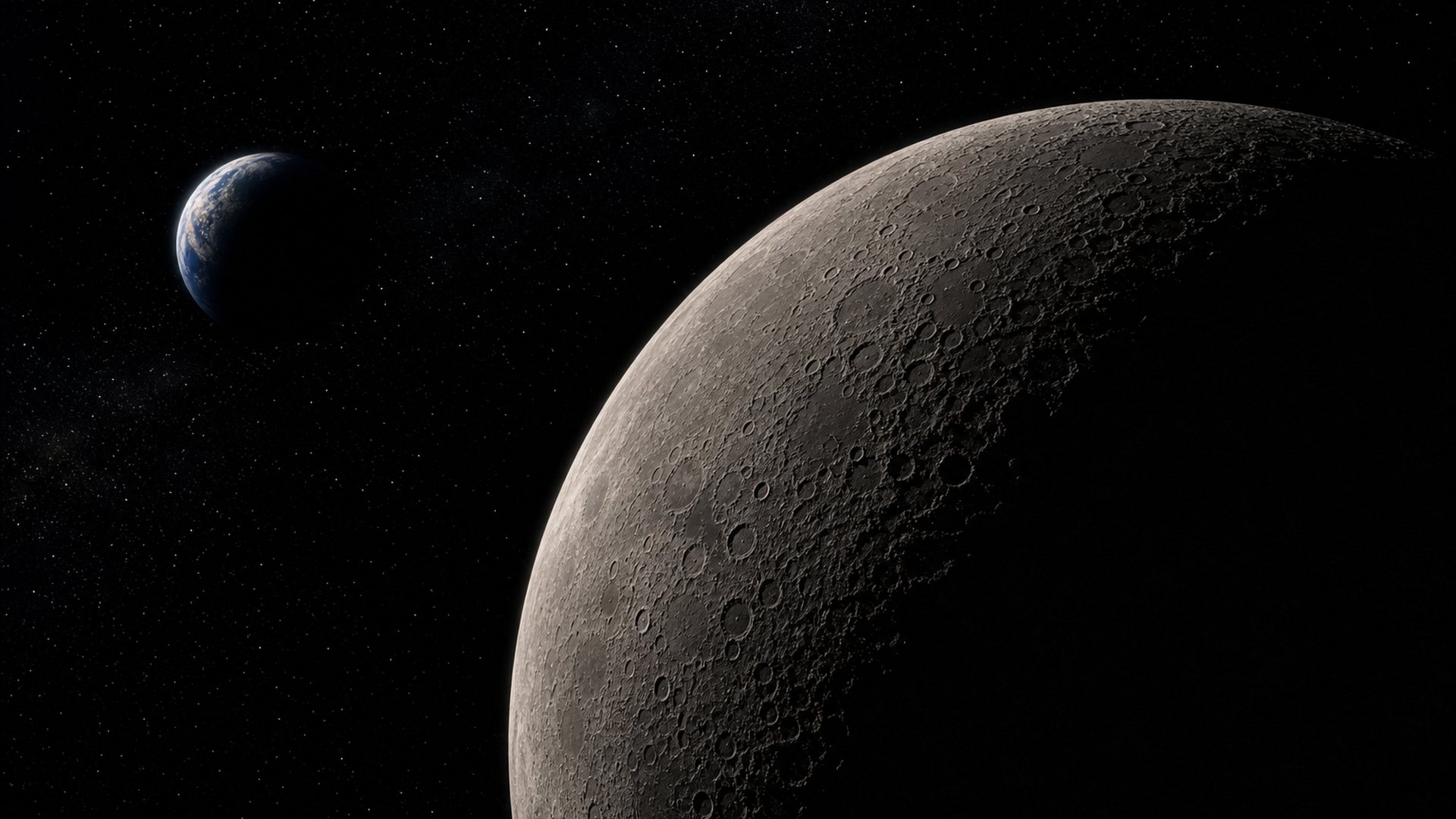
The chainEarth and Moon All stills and illustrations in this film are AI-generated.
27.3 d
spin = orbit
59%
visible from Earth
3.8 cm/yr
drifting away
In numbers
Epilogue · Sources
Why we only see one side of the Moon
Tidal locking is established physics, confirmed by the Moon’s synchronous rotation, by lunar laser ranging and by similar locks across the Solar System. Why the near and far sides differ remains an open question with several competing hypotheses.
The 3D scenes are schematic and not to scale; tidal bulges are hugely exaggerated, and the Moon’s surface is drawn roughly. All stills are AI-generated.