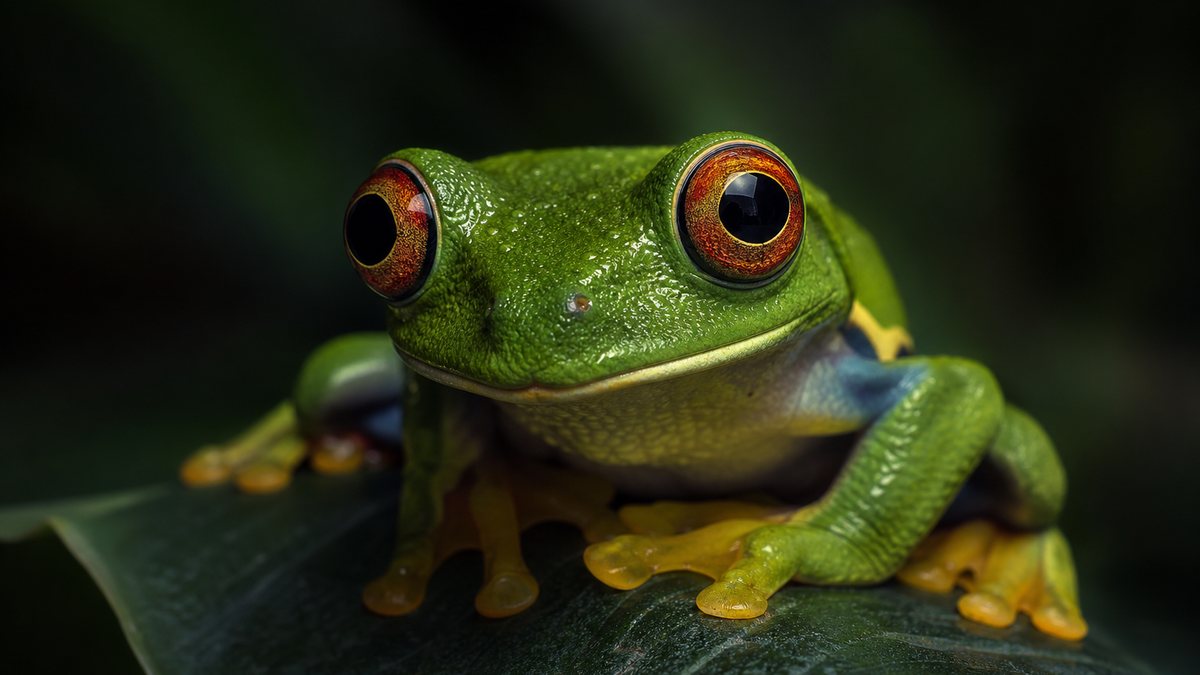
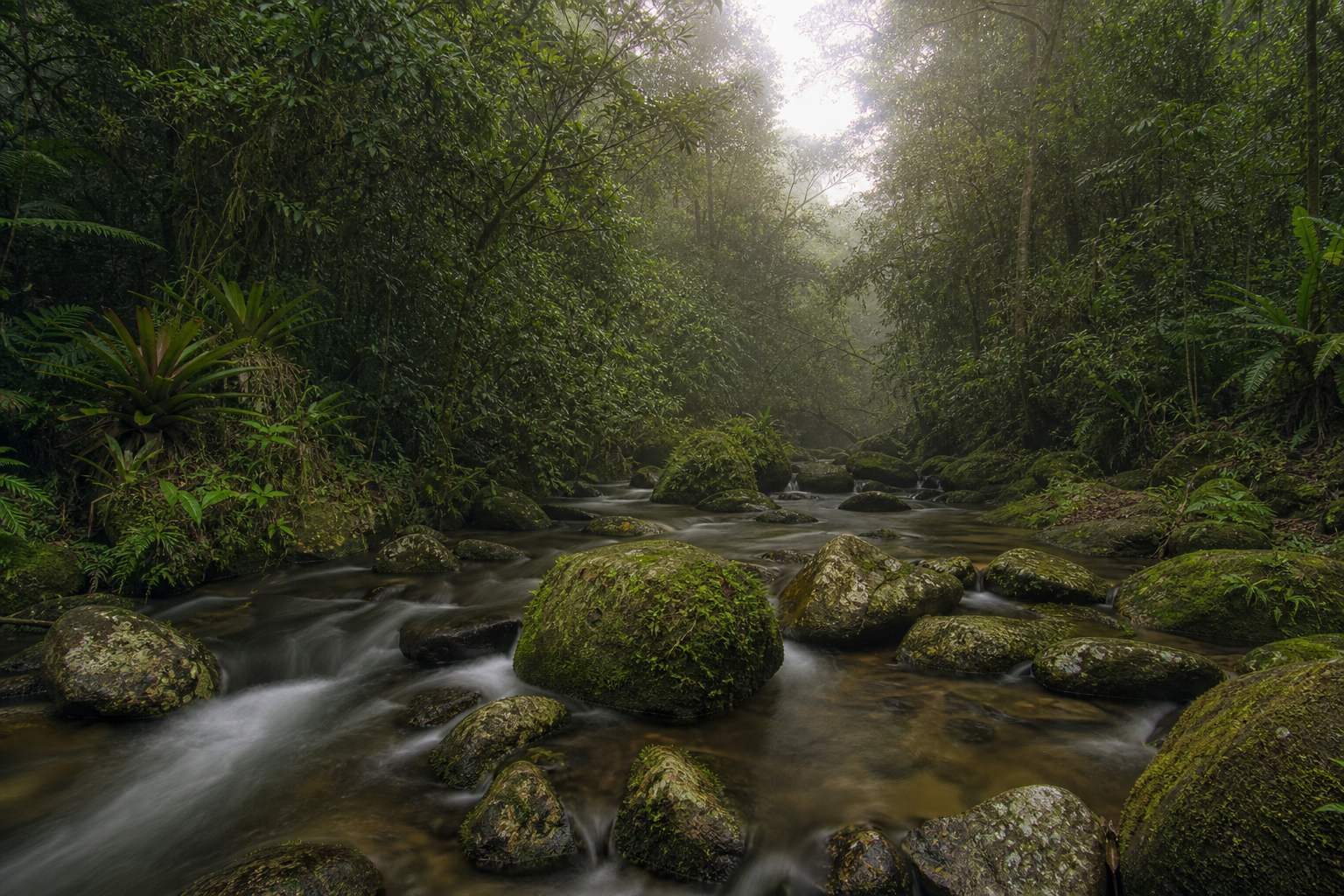
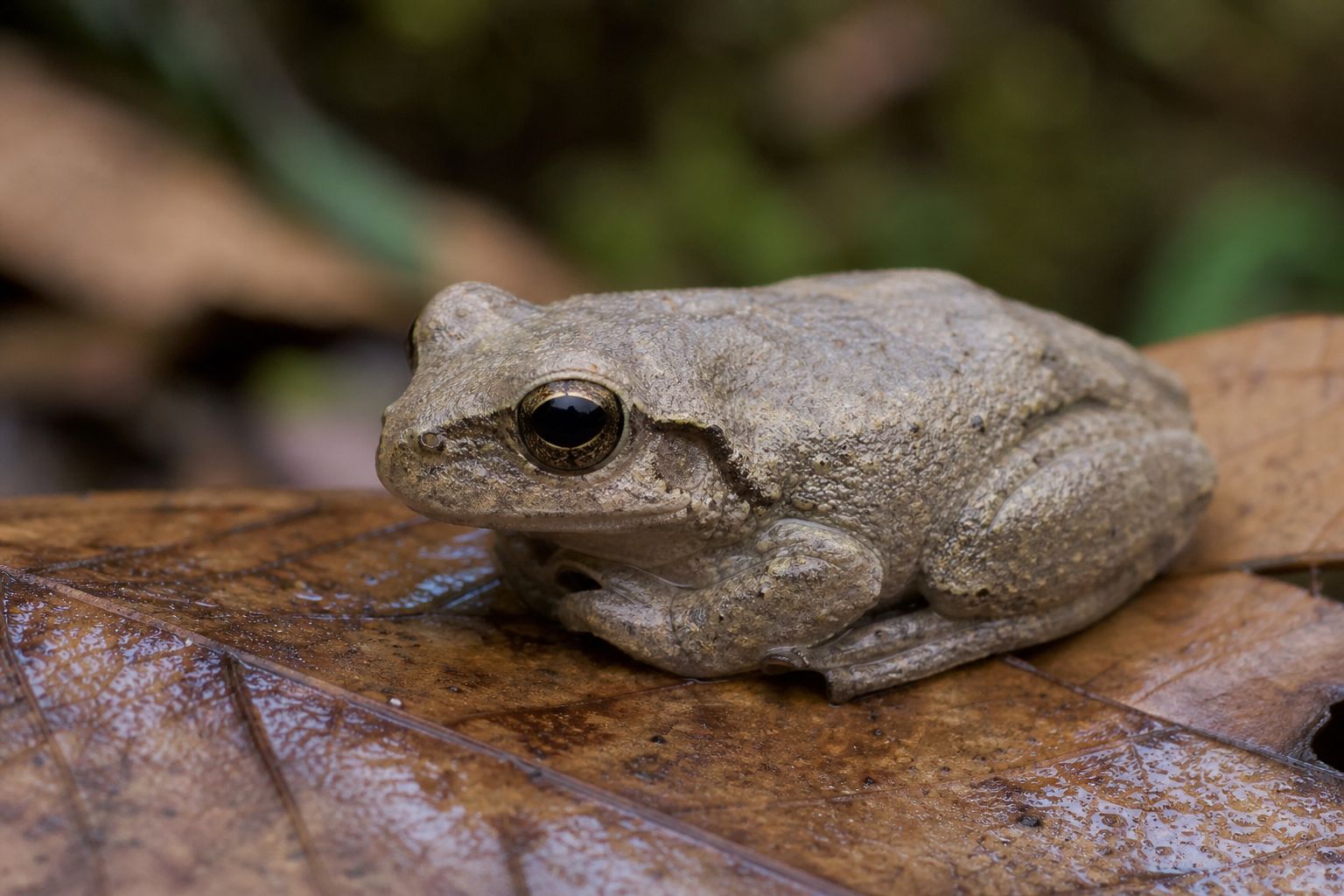
In November 2026, scientists from the Smithsonian, Penn State and the University of São Paulo reported that museum frogs collected at Boracéia in Brazil's Atlantic Forest link a chytrid fungus to a crash of frogs there between 1979 and 1982. This film explains the established biology behind that news: why amphibians live through their skin, how the fungus Batrachochytrium dendrobatidis swims, invades and kills, where it came from and how it spread, which species were lost, why some frogs are now recovering, what surveys found in Asia and Thailand, and what helps.
Interactive 3D film9 min1973 to 2026Published 8 November 2026
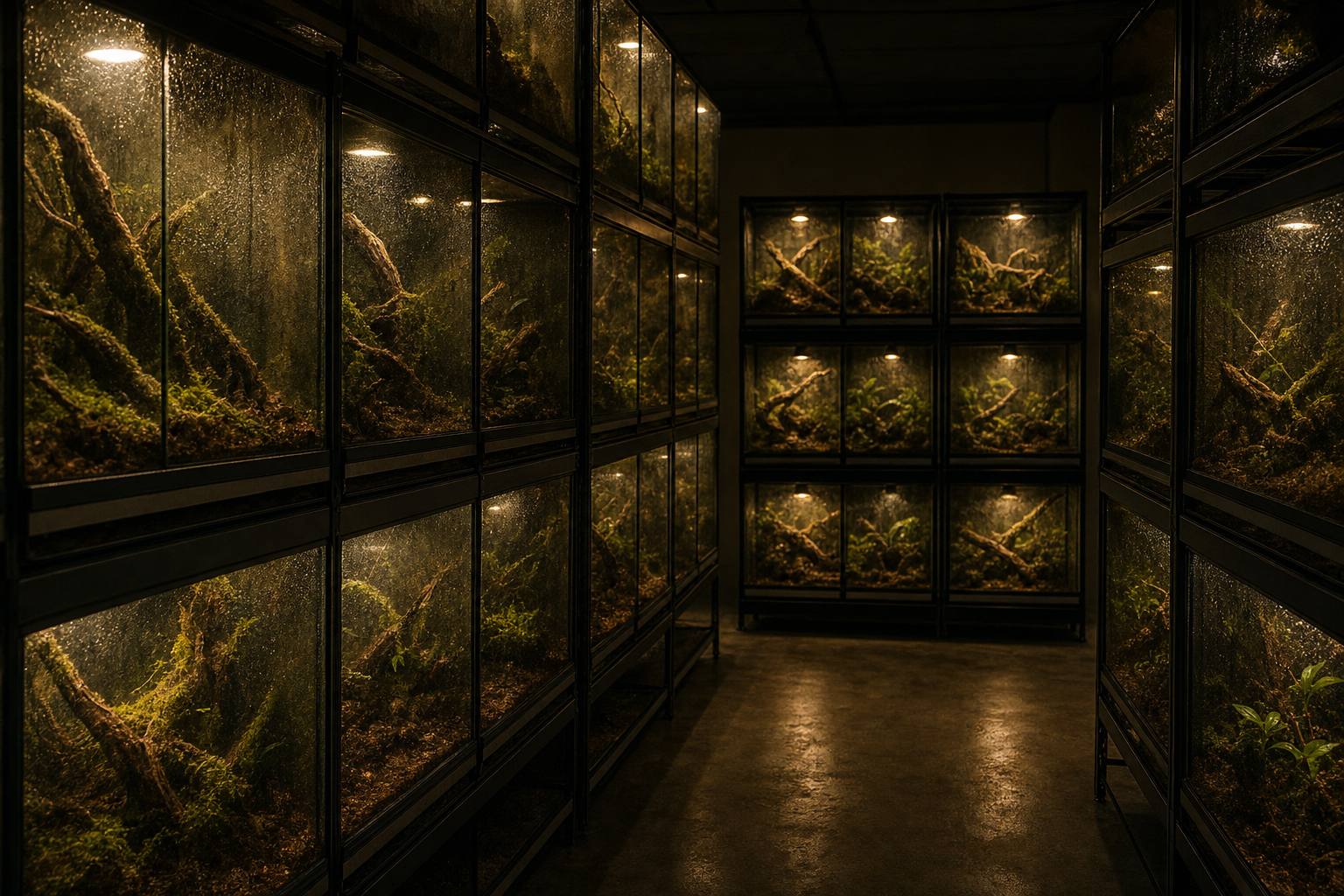
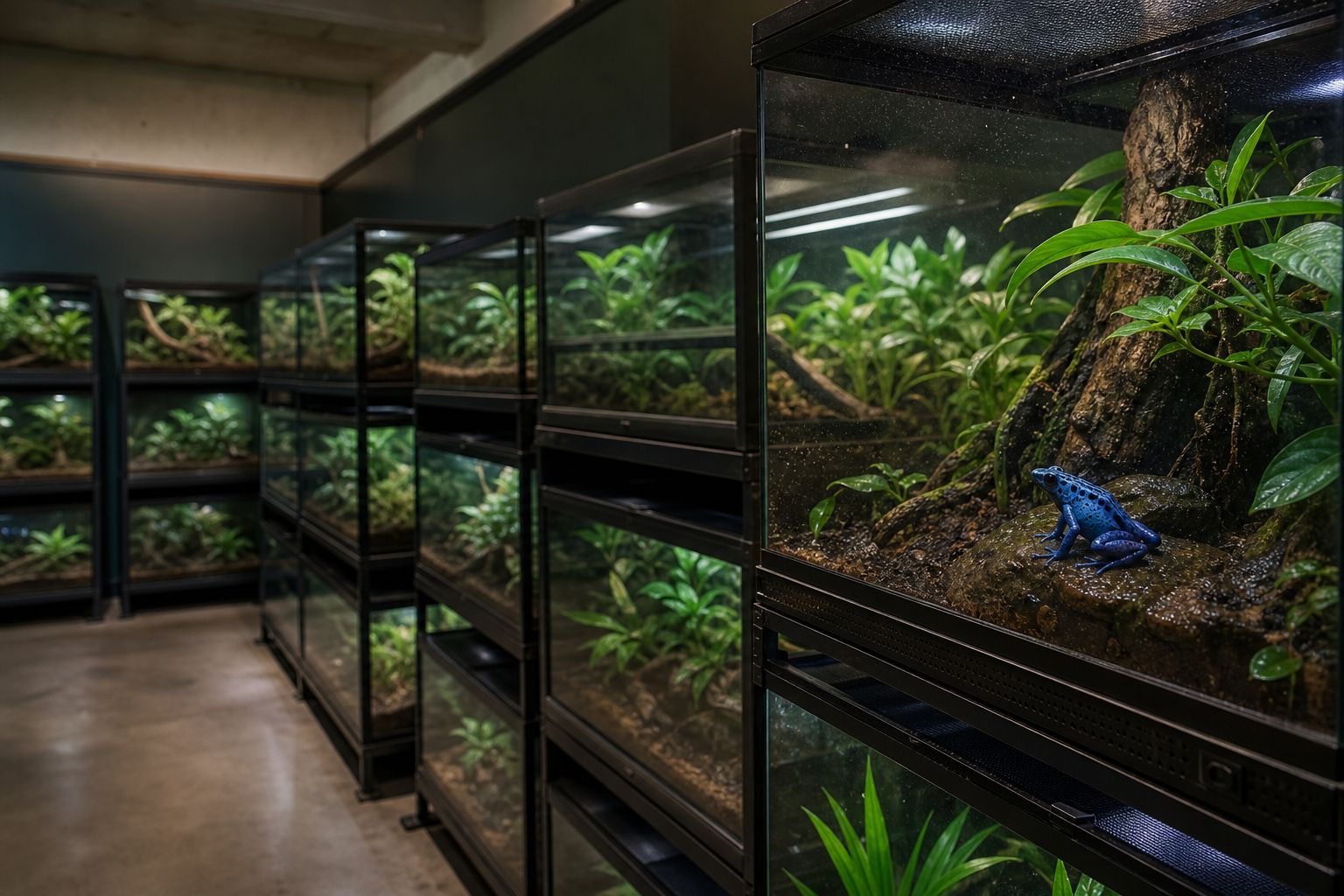
On a shelf in the Smithsonian’s collection, rows of glass jars hold frogs collected in the 1970s and 1980s at Boracéia, a research station in Brazil’s Atlantic Forest.
Between 1979 and 1982, the frogs at Boracéia crashed, and for decades nobody could say why.
This autumn, the Smithsonian announced that the old jars had finally given up their secret, and that the same culprit had struck frogs around the world.
To understand it, we start with the strangest thing about a frog: its skin.
W. Ronald Heyer
former Smithsonian curator of amphibians and reptiles
The collectorBoracéia Boracéia Biological Station lies in São Paulo state. AI-generated illustration.
3 teams
Smithsonian, Penn State and the University of São Paulo
Molecular Ecology, 2026
Prologue
The news
ScienceDaily (3 November 2026, from the Smithsonian): a study in Molecular Ecology (vol. 35, no. 19, 2026), led by Jack L. Boyette of the Smithsonian’s National Zoo and Conservation Biology Institute and Penn State, tested museum amphibians collected at Boracéia Biological Station in Brazil’s Atlantic Forest, where severe declines happened in 1979–1982. It links the declines to the arrival of the chytrid fungus Batrachochytrium dendrobatidis.
Bioengineer.org dates its report of the same study 17 October 2026; the press release came out on 3 November.
The 3D scenes are simplified teaching models: frog, skin, spores and map are not to scale, and the numbers in the pond and the jars are made up to show the idea.
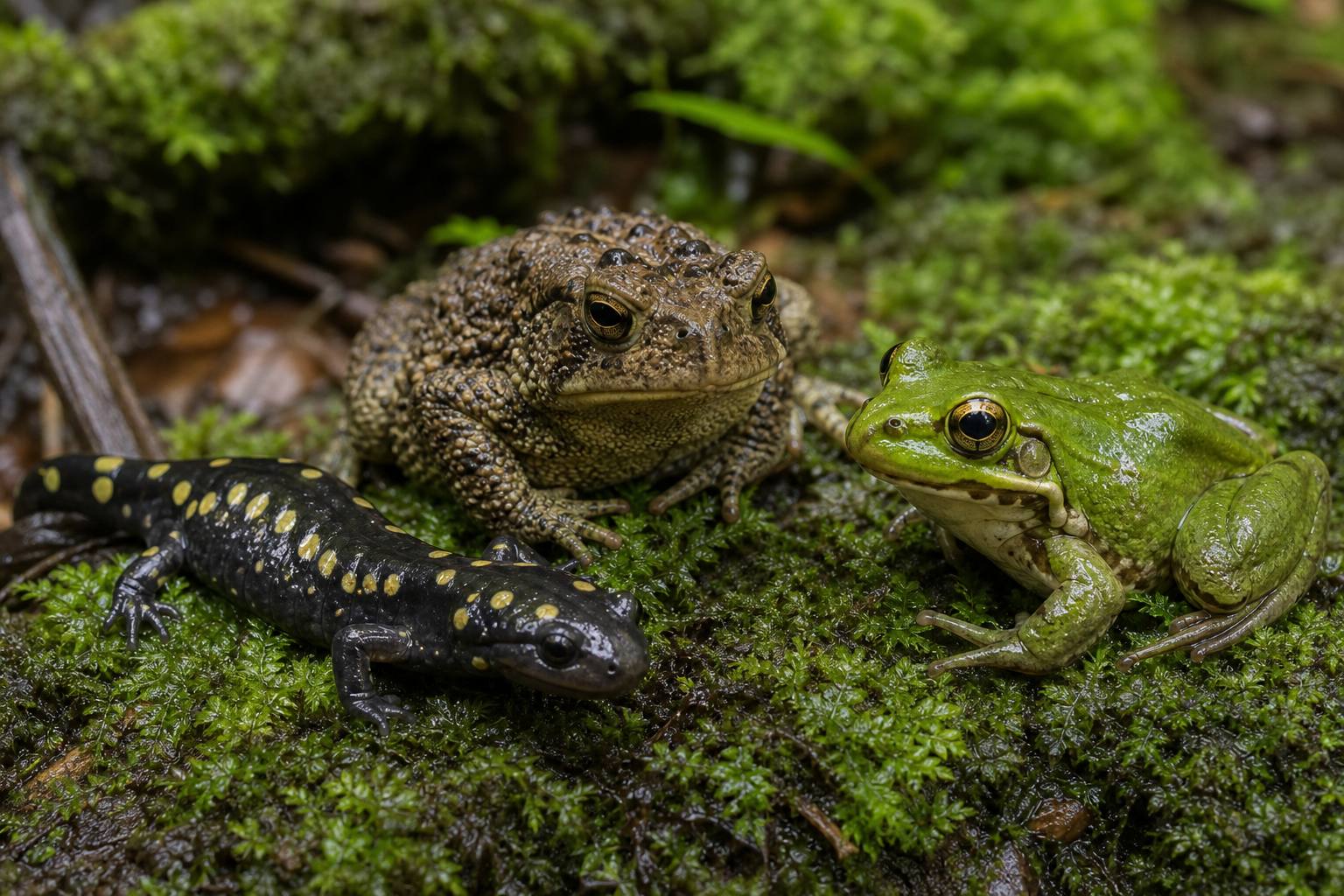
Frogs, toads and salamanders are amphibians: animals with thin, moist skin, most of which begin life in water.
Scientists know more than eight thousand six hundred species of them.
And every one of them depends on its skin far more than we do.
8,615
known amphibian species
Global Amphibian Assessment, 2023Three kinds A salamander, a toad and a frog: tails, warts and smooth skin, but all amphibians. AI-generated illustration.
Chapter I · Living through skin
Amphibians
Phys.org (October 2023), reporting the second Global Amphibian Assessment (Luedtke et al., Nature): about 8,615 amphibian species were known in 2023, and 8,011 were assessed for the IUCN Red List. Their skin is thin and moist, and lets water and oxygen in (Live Science).
The 3D scenes are simplified teaching models: frog, skin, spores and map are not to scale, and the numbers in the pond and the jars are made up to show the idea.
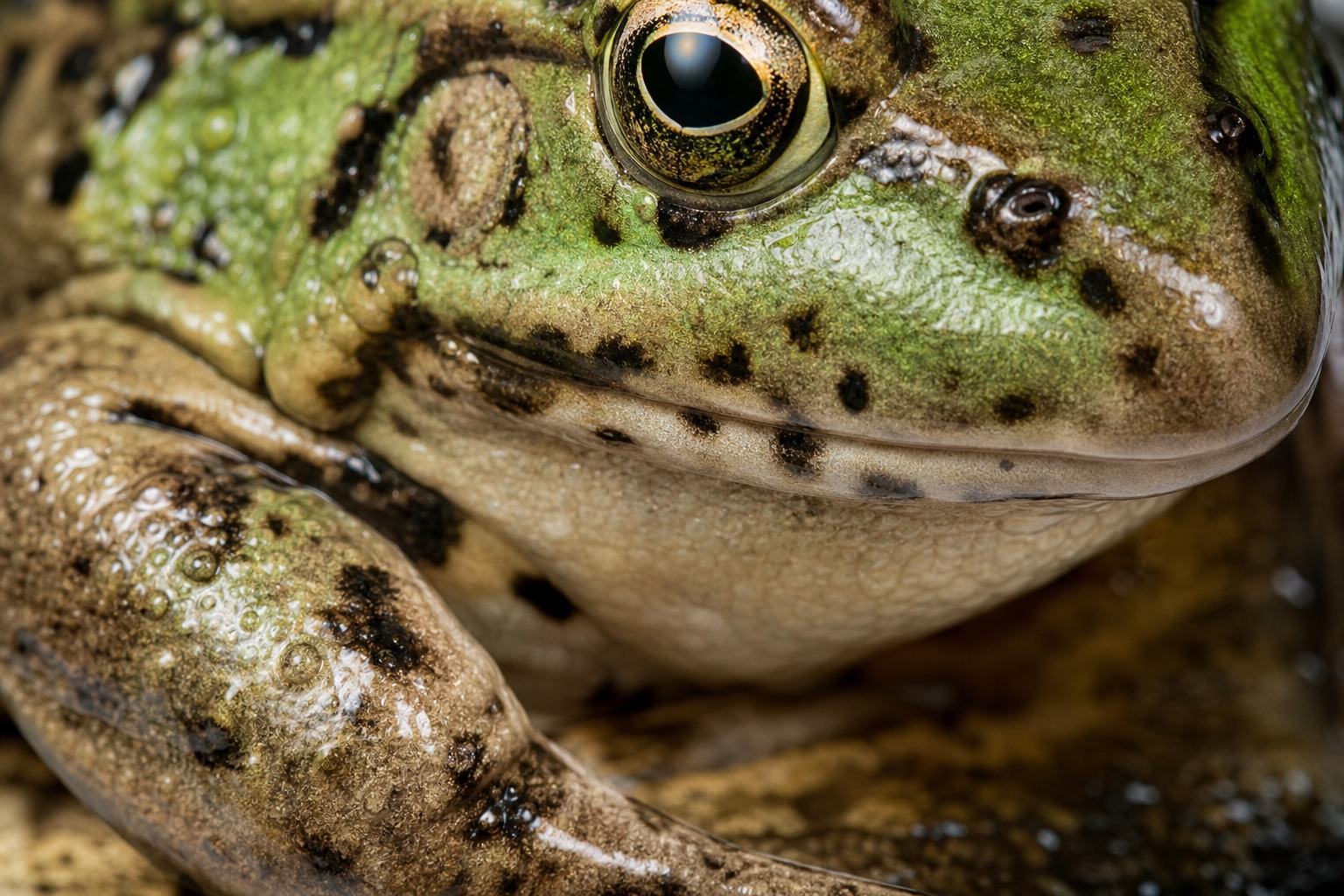
A frog breathes partly through its skin, taking in oxygen across a thin, moist surface.
It also drinks through its skin. Many frogs have a patch on the belly, rich in blood vessels, that soaks up water from wet ground.
So its skin is a lung, a mouth and a shield at once. Anything that damages it strikes at the frog’s life support.
Skin breathing Biologists call breathing through the skin cutaneous respiration. AI-generated illustration.
drinking patch
what biologists call the belly patch
Live Science
gas exchange: oxygen in, carbon dioxide out
water uptake
a barrier against the outside world
Frog skin does (Live Science, Broad Institute)
Chapter I · Living through skin
Skin that breathes and drinks
Live Science, quoting Christopher Raxworthy (American Museum of Natural History) and Kurt Schwenk (University of Connecticut): frogs exchange gases and absorb water through thin, moist skin, and many have a vascular “drinking patch” on the underside. The Broad Institute notes that amphibians “drink and breathe through their skin”, which is why a skin fungus can kill them.
The 3D scenes are simplified teaching models: frog, skin, spores and map are not to scale, and the numbers in the pond and the jars are made up to show the idea.
In 1998, scientists studying frog deaths in Australia and Central America found the cause in the frogs’ skin: a fungus. It had been killing frogs for years before anyone could name it.
Fungi are the kingdom of moulds, yeasts and mushrooms. Scientists named this one Batrachochytrium dendrobatidis, or Bd for short.
It is a chytrid, a kind of fungus whose spores can swim. Each zoospore, as these swimming spores are called, drives itself with a single whip-like tail.
First report The fungus was first reported as the killer by Berger and colleagues in the journal PNAS. AI-generated illustration.
Batracho-
from the Greek for frog
Bd for short
a zoospore swims to a frog
it settles in the skin and grows
it becomes a spore case (zoosporangium)
new zoospores pour out
Bd’s life cycle (Broad Institute)
Chapter II · A swimming fungus
Batrachochytrium dendrobatidis
Broad Institute: Bd was identified in 1998 (Berger et al., PNAS) as the cause of amphibian deaths in Australia and Central America. Chytrids are the only true fungi with motile, flagellated zoospores. The life cycle runs zoospore → thallus (the growing body) → zoosporangium (spore case) → new zoospores, and Bd invades the upper layers of the skin.
The 3D scenes are simplified teaching models: frog, skin, spores and map are not to scale, and the numbers in the pond and the jars are made up to show the idea.
Bd spreads through water. Its zoospores can survive for weeks in a pond or stream, swimming from one frog to the next.
It grows best in water that is cool for a fungus, though not for us: about seventeen to twenty-five degrees Celsius.
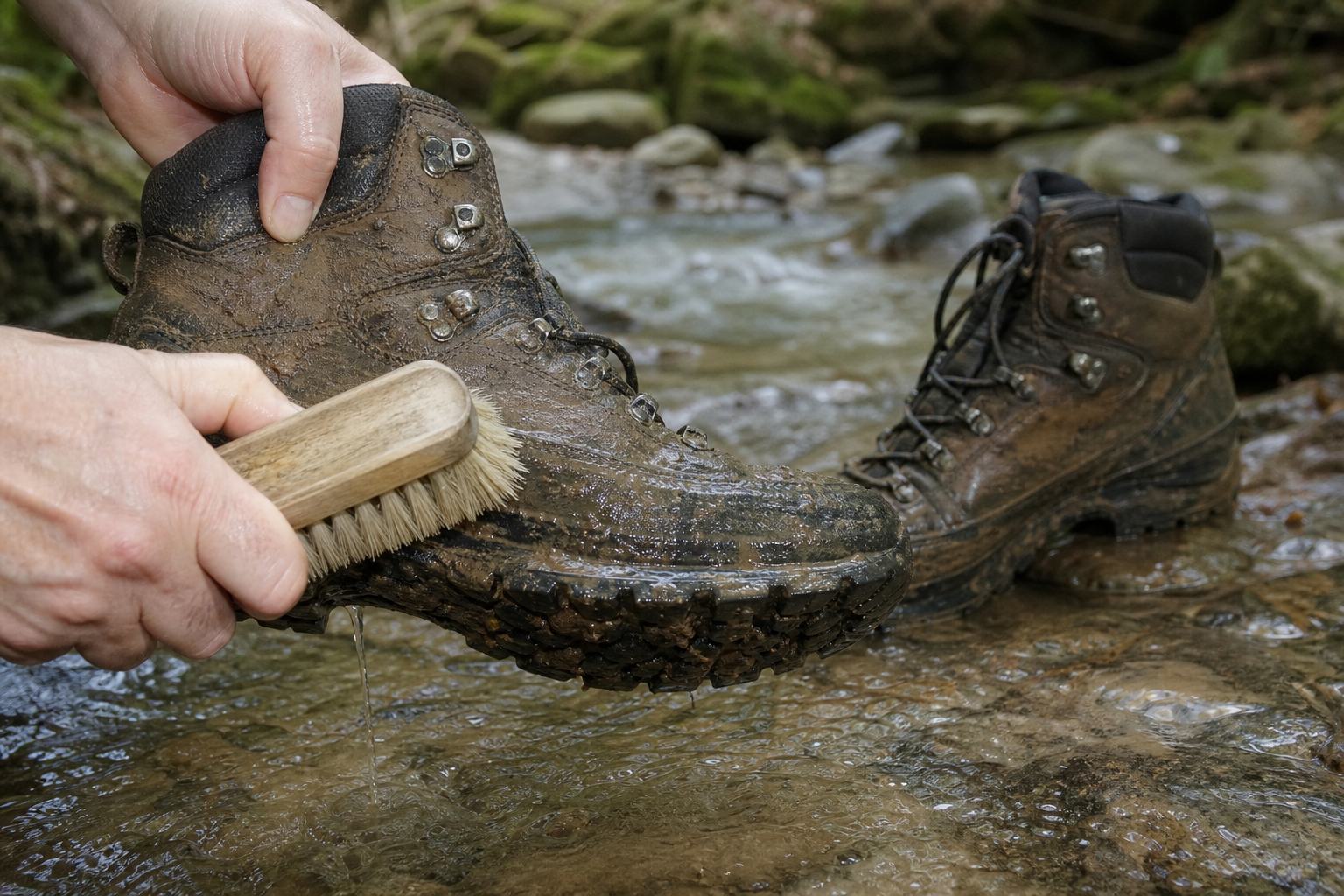
And it does not travel only with frogs: wet boots, nets and equipment can carry it from one stream to another.
weeks
zoospores can live in water
Bd in water (Mass. wildlife agency)
17–25 °C
Mass. wildlife agency
Best growthHitchhikers Signs in a sick frog include sluggishness and heavy shedding of grey-white skin. AI-generated illustration.
Chapter II · A swimming fungus
Waterborne
Massachusetts Division of Fisheries and Wildlife: Bd is waterborne; zoospores can live for weeks in water and grow best at 17–25 °C. People spread it on boots and gear. Signs include lethargy, excessive grey-white skin shedding, convulsions and loss of the righting reflex.
In the pond model, the fungus’s activity at each water temperature is illustrative, not measured.
The 3D scenes are simplified teaching models: frog, skin, spores and map are not to scale, and the numbers in the pond and the jars are made up to show the idea.
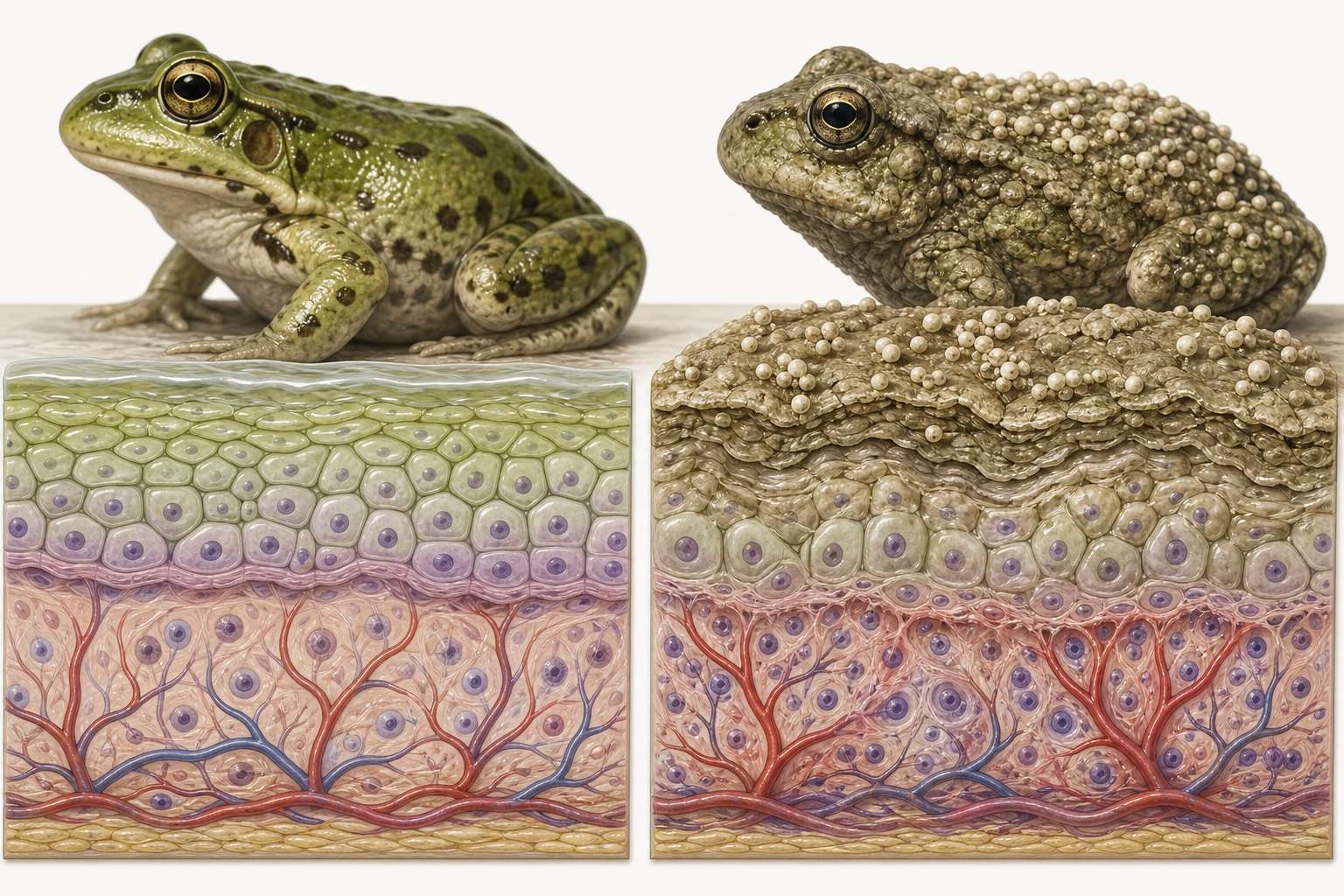
When a zoospore reaches a frog, it burrows into the outermost layers of skin. There it grows and makes new spores.
The skin’s outer layer of keratin, the tough protein also found in our nails and hair, grows thick.
In 2009, a study of green tree frogs showed what that does. Salts the body needs, called electrolytes, could no longer pass through the skin properly.
Sodium in the blood fell by a fifth and potassium by half. The heart needs these salts to beat, and in the end it failed.
invades the upper layers of skin
grows into a sporangium
releases new zoospores into the water
Bd in the skin (Broad Institute)Drinking through the skin A frog takes in water through its skin instead of drinking, and that same skin is what the fungus attacks. AI-generated illustration.Healthy and infected Cross-section: healthy skin (left), and infected skin with a thick, crusted outer layer (right). AI-generated illustration.
>50%
drop in salt transport across infected skin
Voyles et al., Science, 2009A sick frog In the study, frogs given extra electrolytes lived about 20 hours longer. AI-generated illustration.
Chapter II · A swimming fungus
Chytridiomycosis
Mongabay, reporting Voyles et al. (Science, vol. 326, 23 October 2009, James Cook University): in infected green tree frogs, electrolyte transport across the skin fell by more than 50%, blood sodium by about 20% and potassium by about 50%, ending in cardiac arrest. Frogs given electrolyte supplements lived about 20 hours longer. The Broad Institute: Bd thickens the keratinized outer layer of the skin.
The 3D scenes are simplified teaching models: frog, skin, spores and map are not to scale, and the numbers in the pond and the jars are made up to show the idea.
Where did Bd come from? In 2018, a team that read the genes of one hundred and seventy-seven samples from around the world traced it to the Korean peninsula.
The strain that went global seems to have emerged early in the twentieth century, then spread quietly for decades.
Its spread matches the growth of the global trade in live amphibians, sold as pets, as food and for medicine. By the 1980s, frogs were dying on several continents.
177
Bd samples sequenced
BdASIA-1
the Korean lineage, most like all the others
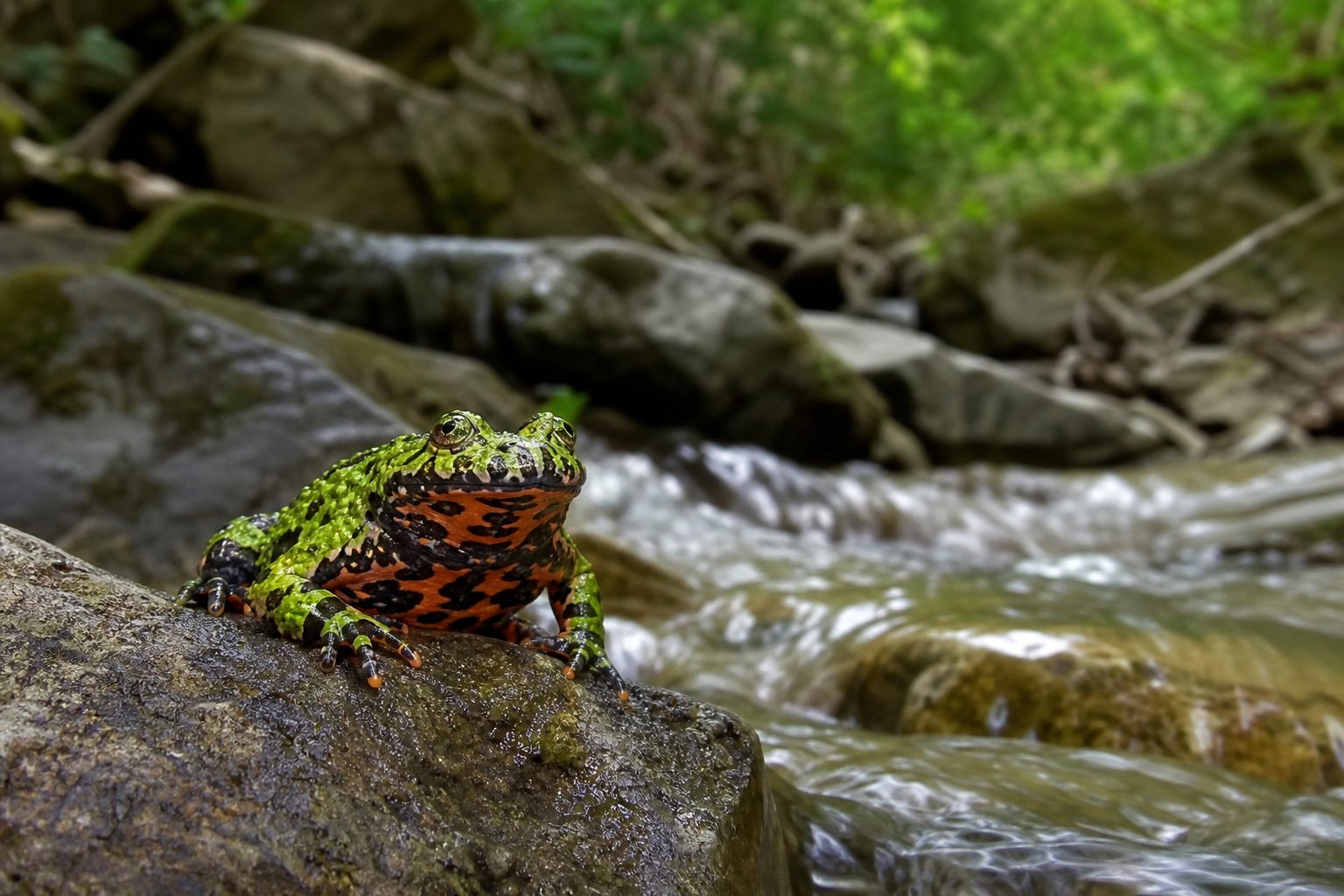
O’Hanlon et al., Science, 2018The Korean peninsula An oriental fire-bellied toad beside a mountain stream. AI-generated illustration.Carried, not crawled Researchers trace much of the spread to the trade in live amphibians, which crosses oceans in a day. AI-generated illustration.
Chapter III · Around the world
An Asian origin
EurekAlert, reporting O’Hanlon et al. (Science, 11 May 2018, Imperial College London): 177 Bd isolates were sequenced. The origin lies on the Korean peninsula, where the BdASIA-1 lineage was found; the pandemic strain emerged around the early 20th century, and its spread coincides with the global trade in amphibians for pets, medicine and food.
The routes drawn on the globe are schematic: they show the idea of trade, not real shipping lanes.
The 3D scenes are simplified teaching models: frog, skin, spores and map are not to scale, and the numbers in the pond and the jars are made up to show the idea.
As it spread, Bd caused what biologists call a panzootic: an epidemic among animals, across many species and continents. In 2013 a second chytrid turned up, one that kills salamanders.
A 2019 study by more than forty researchers estimated that chytrids had helped drive the decline of about five hundred amphibian species, including ninety presumed extinctions.
The worst losses were in Australia and in Central and South America, where Boracéia lies, and most declines peaked in the 1980s.
In 2020, other scientists challenged that count, saying the evidence for many species was too thin. The authors stood by it.
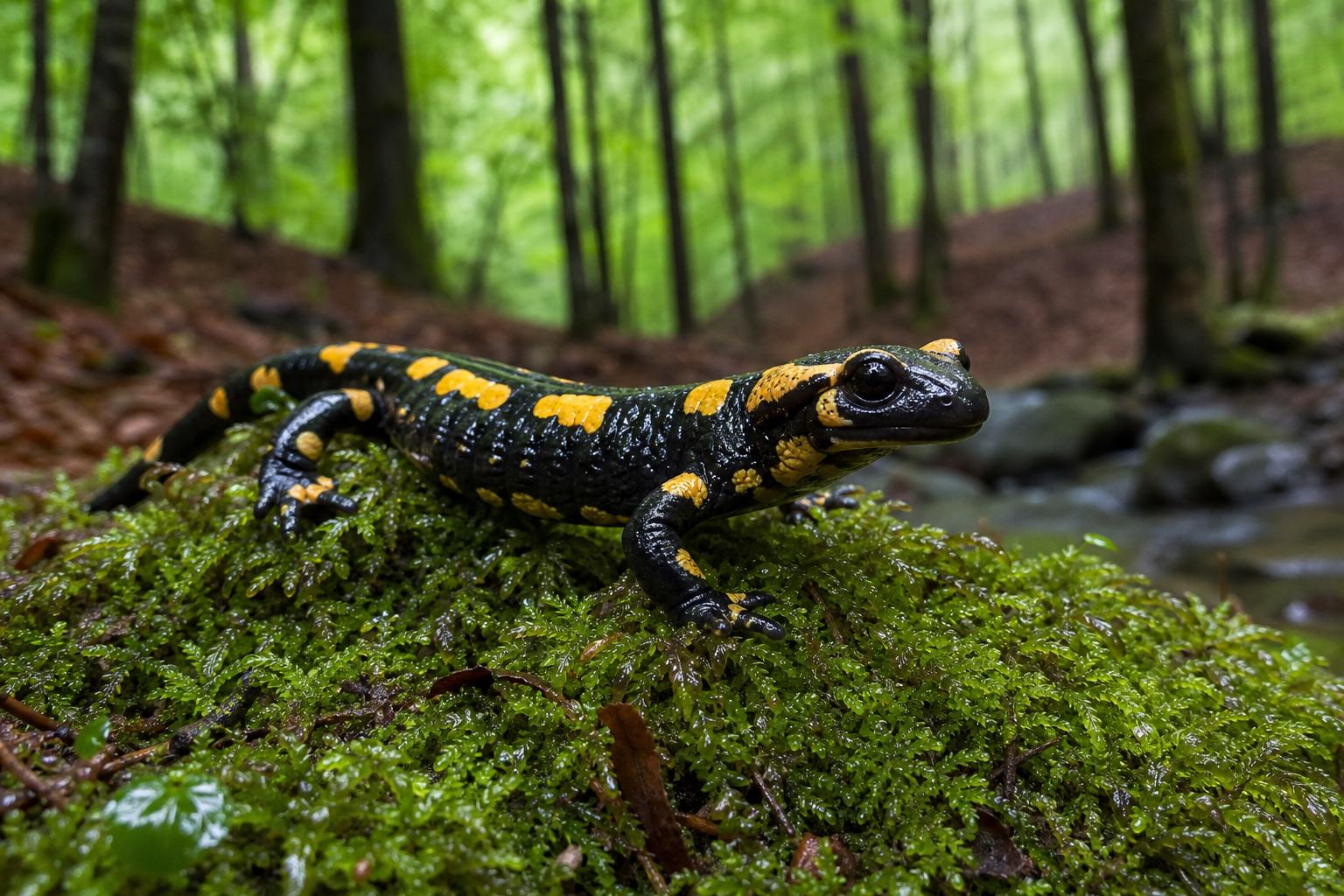
Bsal In the Netherlands, the salamander chytrid left about 10 fire salamanders, under 4% of the population. AI-generated illustration.
501
species declines: 500 linked to Bd, 1 to Bsal
90
presumed extinctions
Scheele et al., Science, 2019
40+
frog species declined
7
extinct
Australia (Scheele et al., 2019)
The data and methods are “deficient”.Lambert et al., comment in Science, March 2020
Chapter III · Around the world
The global toll, and a dispute
EurekAlert, reporting Scheele et al. (Science, 29 March 2019, more than 40 researchers): chytridiomycosis contributed to the decline of 501 species (500 to Bd, 1 to Bsal), including 90 presumed extinctions; declines peaked in the 1980s, 39% are still declining and 12% show some recovery; the worst losses were in Australia, Central and South America. Lambert et al. (Science, 20 March 2020) argued the data and methods linking Bd to 501 declines are deficient; Scheele et al. replied that they stand by the evidence.
ScienceDaily (2 September 2013), reporting Martel et al. (PNAS): Batrachochytrium salamandrivorans killed fire salamanders in the Netherlands from 2010, leaving about 10 animals, under 4% of the population.
The 3D scenes are simplified teaching models: frog, skin, spores and map are not to scale, and the numbers in the pond and the jars are made up to show the idea.
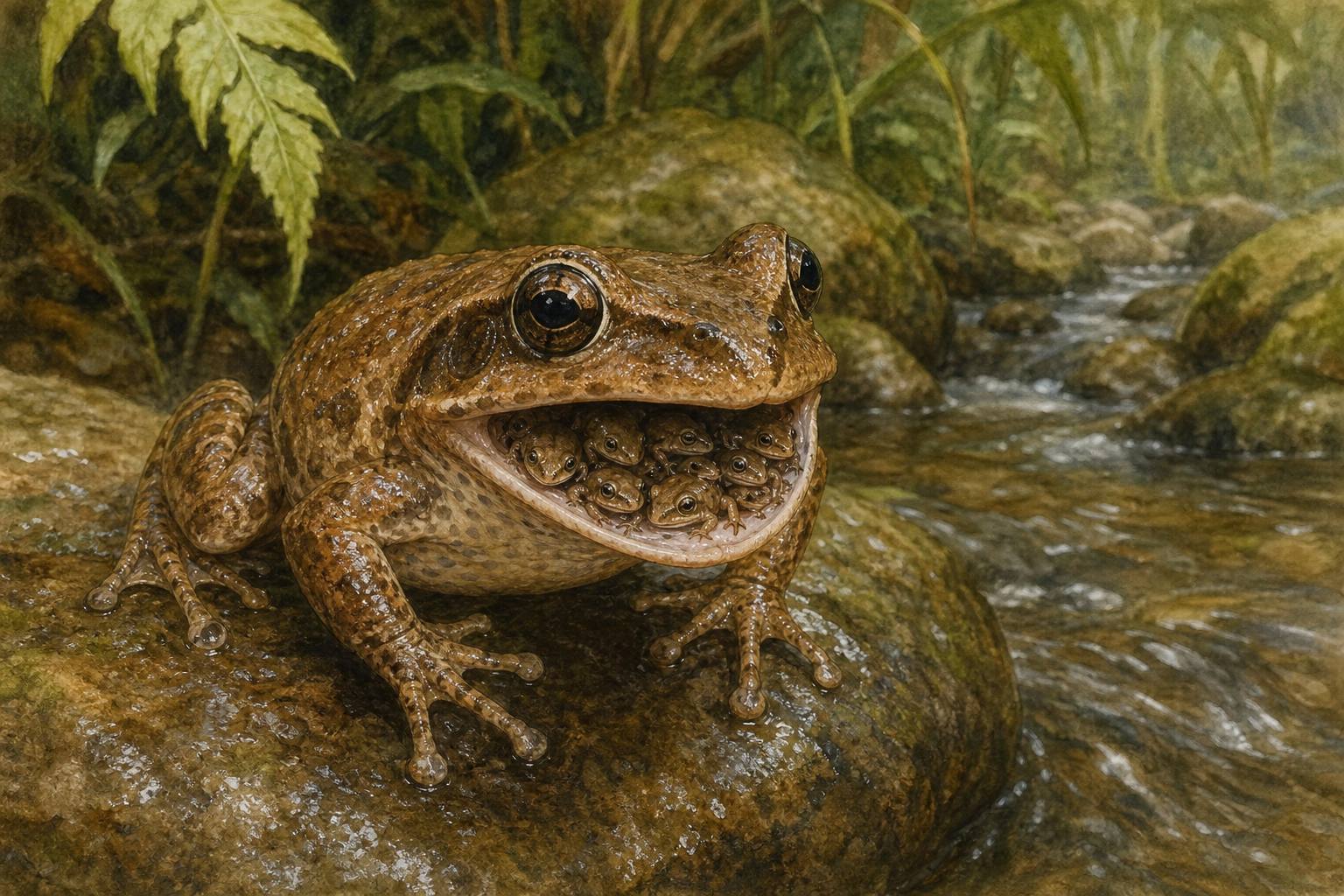
Some species were gone almost as soon as they were known. Australia’s gastric-brooding frogs swallowed their eggs and raised their young in the stomach.
One was described by scientists in 1973 and vanished from the wild by 1981. The Queensland Museum blames chytrid.
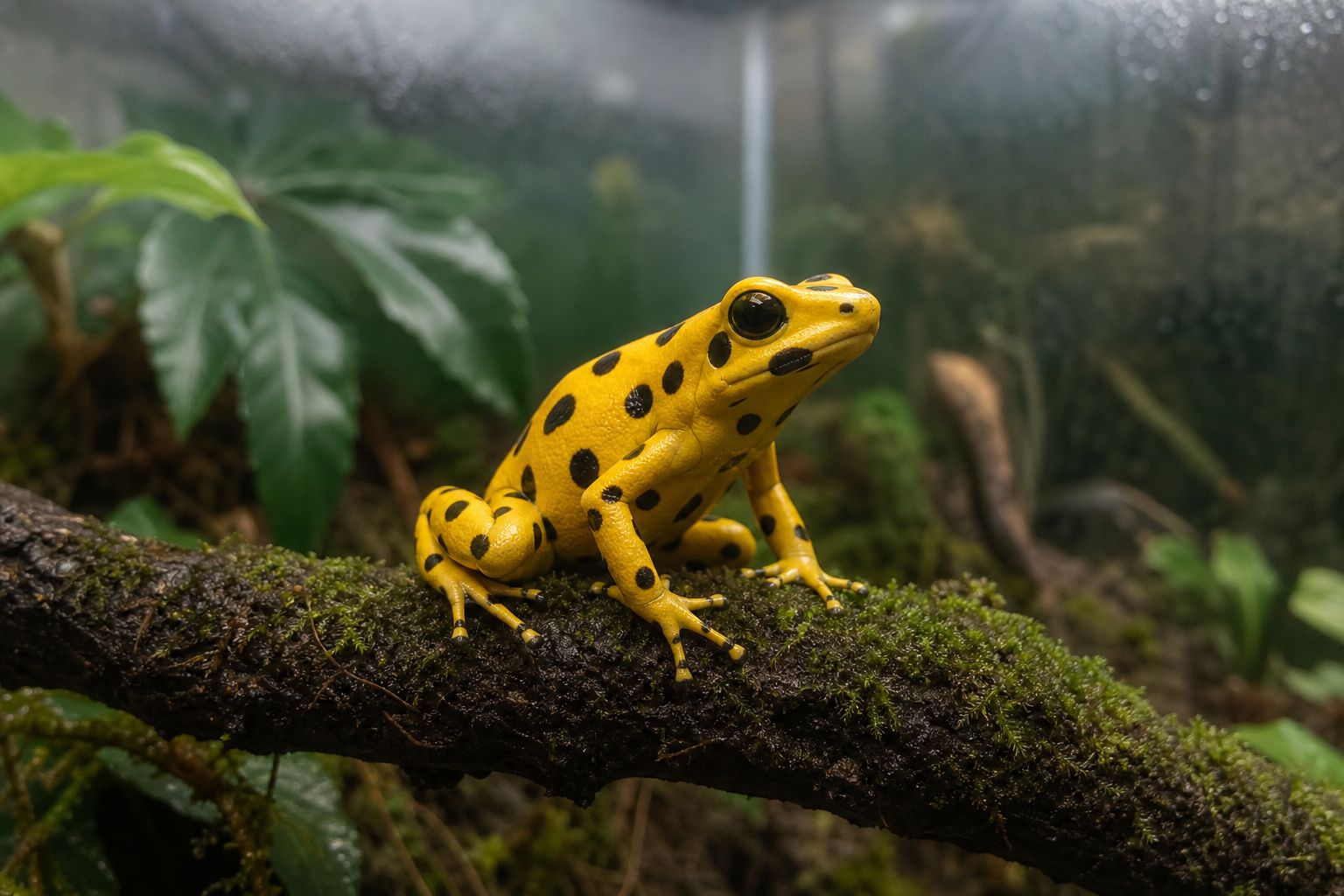
In Panama, the yellow-and-black golden frog has not been seen in the wild since 2009. It survives in captivity.
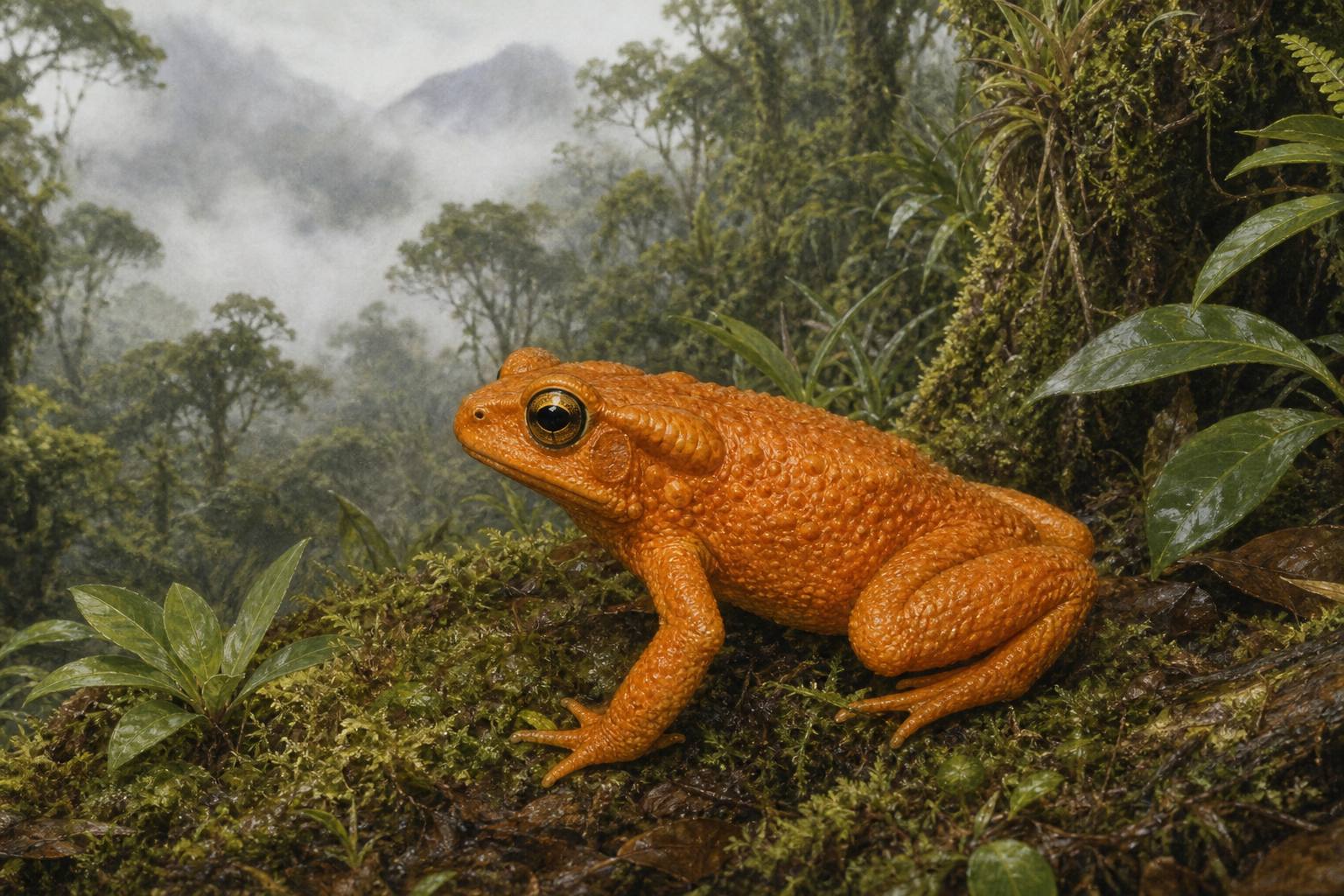
Next door in Costa Rica, the orange golden toad, last seen in 1989, is a famous loss whose cause is uncertain: drought is the main suspect, and chytrid a possible accomplice.
Gastric-brooding frog A second species, Rheobatrachus vitellinus, was described in 1984 and last seen in 1985. AI-generated illustration.
1973
described
1983
last captive animal died
Rheobatrachus silus (Queensland Museum)Panamanian golden frog In a recent pilot, about 70% of 100 captive-bred frogs placed in forest pens died of chytrid. AI-generated illustration.Golden toad More than 1,500 adults were seen at Monteverde in 1987; about ten in 1988. AI-generated illustration.
Chapter III · Around the world
Lost species
Queensland Museum: Rheobatrachus silus was described in 1973, gone from the wild by 1981, and the last captive animal died in 1983; R. vitellinus was described in 1984 and last seen in 1985; the females swallowed their eggs and brooded them in the stomach; the museum attributes the extinction to chytridiomycosis. The Wildlife Society: the Panamanian golden frog (Atelopus zeteki) is extinct in the wild, mainly from chytrid; last wild sighting 2009; in a recent pilot about 70% of 100 captive-bred frogs in forest pens died of chytrid. IFAW: the golden toad was last seen on 15 May 1989; drought and climate are the main suspects, chytrid a possible contributor.
The 3D scenes are simplified teaching models: frog, skin, spores and map are not to scale, and the numbers in the pond and the jars are made up to show the idea.
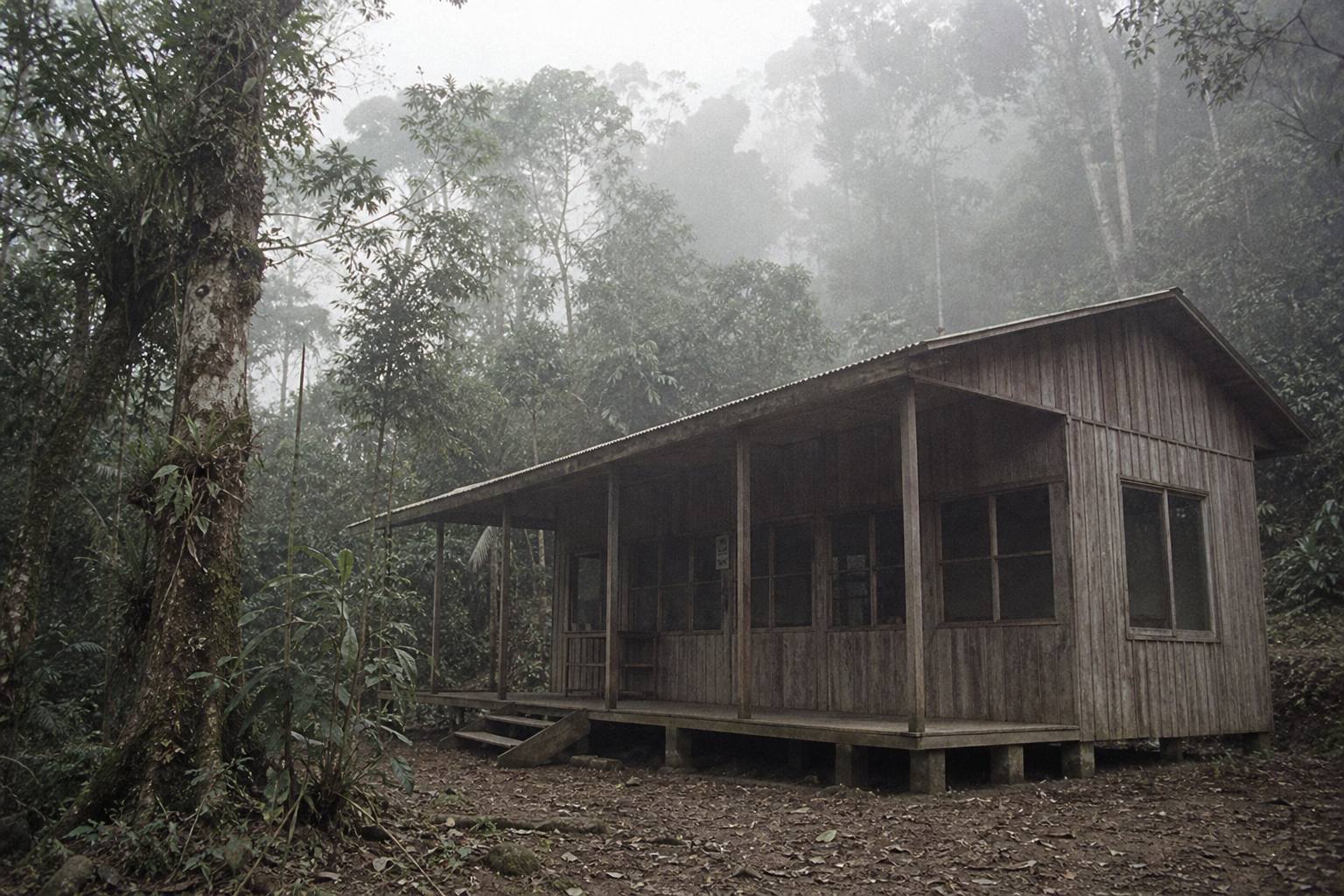
Back to Boracéia, in the Atlantic Forest of São Paulo state.
In the 1970s and 1980s, Ronald Heyer, a Smithsonian scientist who studied amphibians and reptiles, collected frogs there on five expeditions: two before the crash and three after.
His specimens waited in their jars. Decades later, a team tested more than three hundred and seventy of them, from seventeen species, for signs of Bd.
The field station The team also made six field visits between 2022 and 2024. AI-generated illustration.
1970s two expeditions
1979–1982 severe declines
1980s three expeditions
2022–2024 six field visits
2026 results published
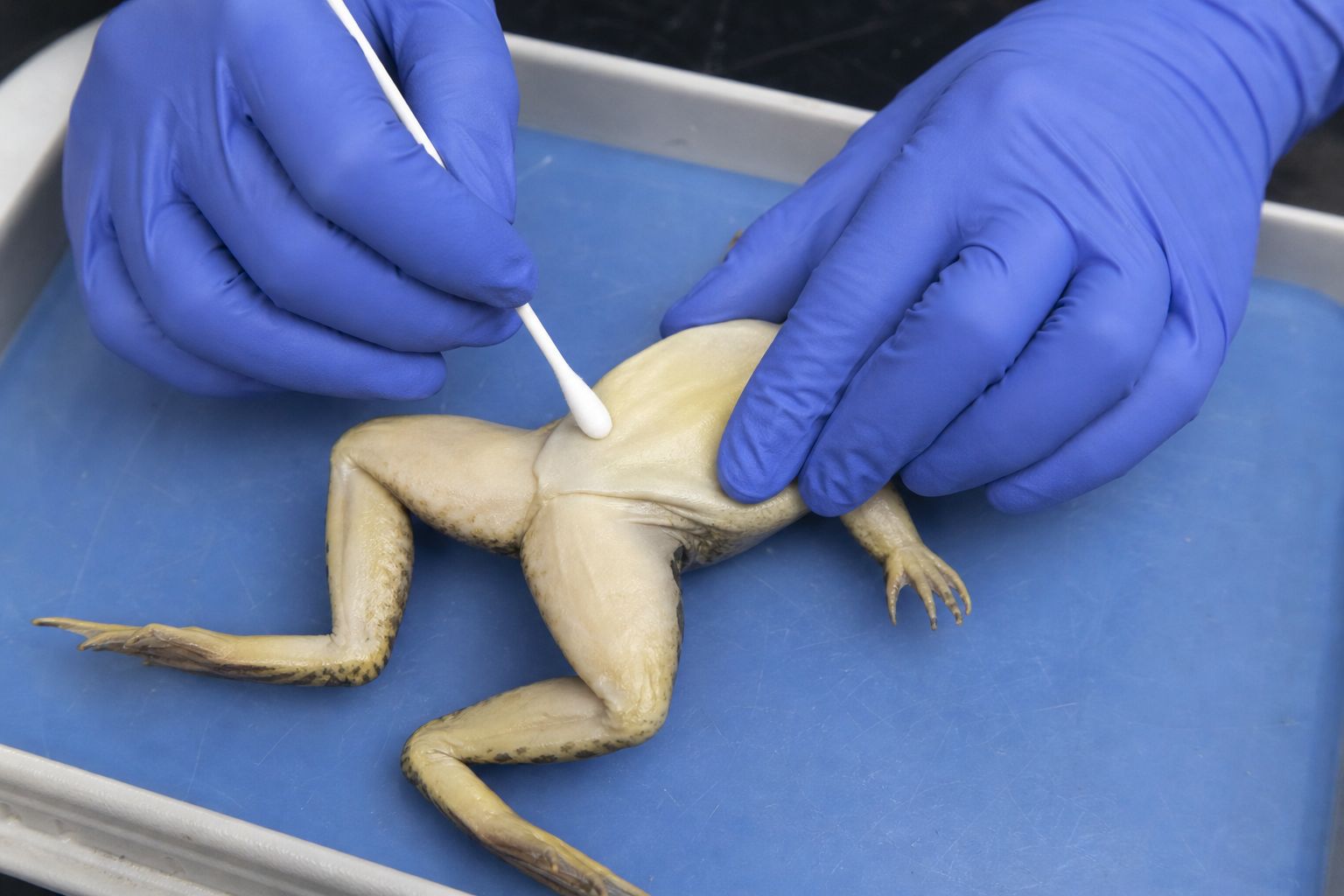
Boracéia, a timelineCool, wet and shaded The fungus likes the same places the frogs do: it grows fastest between about seventeen and twenty-five degrees. AI-generated illustration.Sampling a specimen Illustration of a preserved frog being sampled; the paper describes the lab method. Lead author: Jack Boyette. AI-generated illustration.
Chapter IV · The museum’s memory
Five expeditions
ScienceDaily and Bioengineer.org: W. Ronald Heyer, former curator of amphibians and reptiles at the Smithsonian National Museum of Natural History, collected at Boracéia on five expeditions, two in the 1970s (before the declines) and three in the 1980s (after). The team tested more than 370 preserved amphibians from 17 species for Bd infection over time, and made six field visits in 2022–2024. Fieldwork was with the University of São Paulo.
The 3D scenes are simplified teaching models: frog, skin, spores and map are not to scale, and the numbers in the pond and the jars are made up to show the idea.
The result was clear. Not one frog collected before 1979 carried the fungus.
In the 1980s, more than half did. The fungus had arrived just as the frogs crashed.
But there was a twist. Among the frogs collected after 1979, the hardest-hit species showed no infection, while species that stayed common often carried it.
The authors think the susceptible frogs died before they could be collected. Their study covers this one forest, and they say weather may have played a part too.
before 1979
0
1980s
>50%
Specimens carrying Bd (study summary)
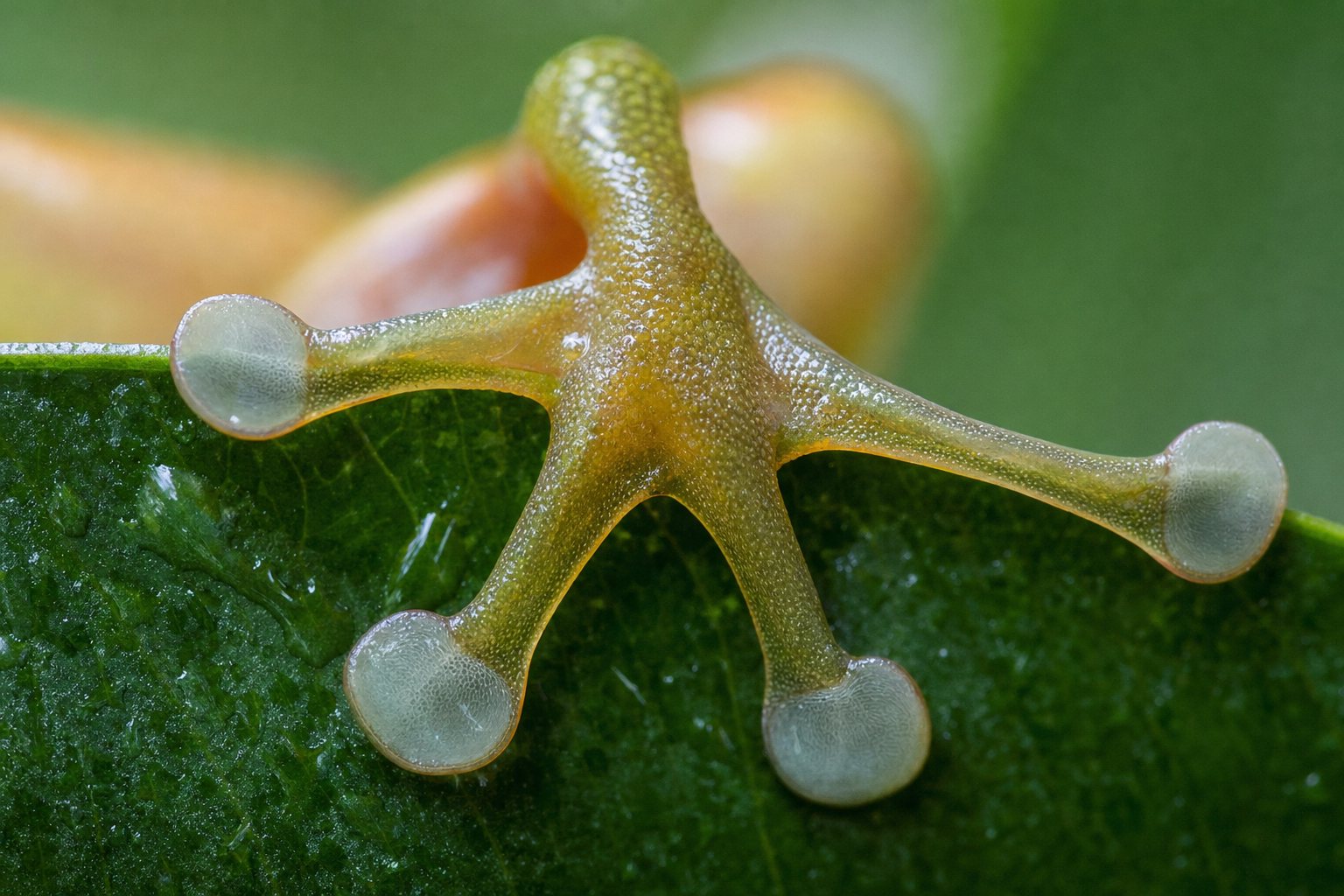
Pads that need to stay wet The pads hold on by the surface tension of a thin film of water, so a frog that dries out also loses its grip. AI-generated illustration.
“Our findings most directly implicate the chytrid fungus.”Jack Boyette, lead author
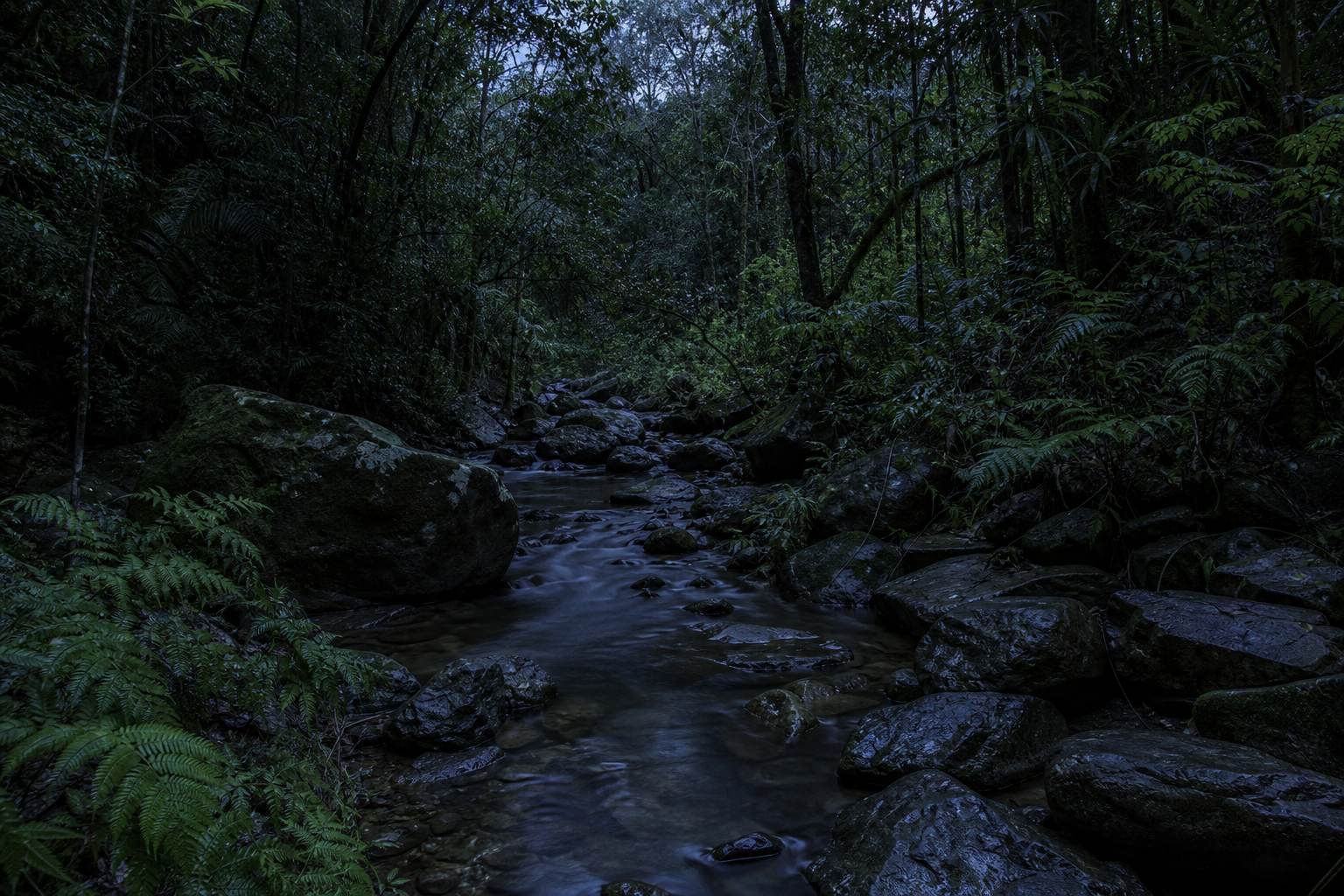
A silent stream The paper’s title speaks of a “detection lag”: the fungus spread for years before anyone could name it. AI-generated illustration.
Chapter IV · The museum’s memory
The result
ScienceDaily and Bioengineer.org: no specimen collected before 1979 tested positive, while more than half of the 1980s specimens did. The species that declined most showed no detectable infection, while stable species often carried the fungus; Boyette’s explanation is that the most susceptible frogs “died before Heyer could collect them”, which is the authors’ hypothesis. The authors say the result applies to Boracéia, and that climate or weather may have played some role. Paper: “Overcoming Detection Lag in a Cryptic Panzootic”, Molecular Ecology 35(19), 2026, doi 10.1111/mec.70573.
The bar for the 1980s is drawn at 55% only to show “more than half”; the study summary gives no exact figure.
The 3D scenes are simplified teaching models: frog, skin, spores and map are not to scale, and the numbers in the pond and the jars are made up to show the idea.
Today, twelve of the seventeen Boracéia species have been found again. Most have recovered, even though the fungus is still there.
Perhaps they have grown more tolerant over generations, though that is not yet proven.
Panama shows something similar. Bd reached three study sites there between 2004 and 2007, and five to thirteen years later, nine species showed some recovery.
The fungus had not grown weaker. The survivors’ skin secretions simply held it back better than before.
12 / 17
species found again
5
not found again; status uncertain
Boracéia today (field visits 2022–2024)
9
Panamanian species showing some recovery
3
sites studied
Voyles et al., Science, 2018Frogs return Bd reached El Copé in 2004, El Valle in 2006 and Campana in 2007. AI-generated illustration.
Chapter V · Survivors
Recovery
ScienceDaily and Bioengineer.org: at Boracéia, 12 of the 17 species were found again and 5 were not; most species have recovered while Bd persists, possibly through tolerance built up over generations (not confirmed). ScienceDaily (March 2018), reporting Voyles et al. (Science): Bd arrived at El Copé in 2004, El Valle in 2006 and Campana in 2007; five to thirteen years later, nine species showed some recovery; the fungus had not weakened, and survivors’ skin secretions inhibited it more.
The 3D scenes are simplified teaching models: frog, skin, spores and map are not to scale, and the numbers in the pond and the jars are made up to show the idea.
In Asia, where Bd seems to have come from, the picture is different.
A 2011 survey of more than three thousand amphibians in fifteen Asian countries found the fungus on about two in a hundred, and no proven declines caused by disease.
In Thailand, a survey from 2009 to 2012 found it only on dead frogs of two non-native species kept in a zoo. It was not found on any native Thai amphibian.
Thailand has around two hundred amphibian species, depending on the checklist. Keeping Bd out of the wild, with clean boots at streams and waterfalls, protects them.
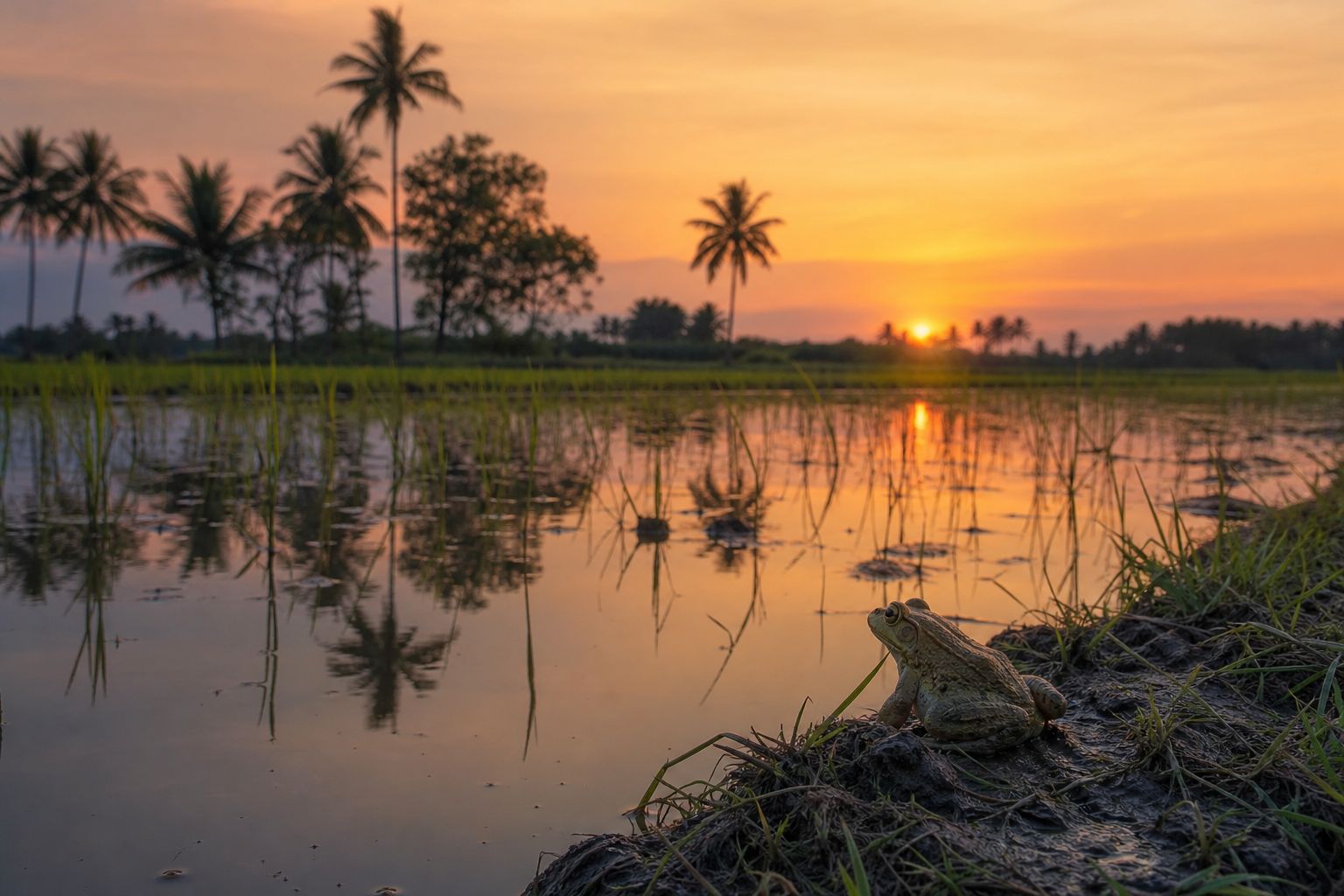
Thailand A flooded rice paddy at dusk: farmland is frog habitat too. AI-generated illustration.
3,000+
amphibians tested
15
Asian countries
Swei et al., PLoS ONE, 2011In a zoo only The positives were a poison dart frog and a tomato frog, neither native to Thailand. AI-generated illustration.
194
species (MDPI Diversity, 2023)
~217
species (Thai National Parks list)
Thai checklists
Chapter V · Survivors
Asia and Thailand
Swei et al. (PLoS ONE, 2011): more than 3,000 amphibians tested in 15 Asian countries showed 2.35% Bd prevalence and no substantiated disease-driven declines. Techangamsuwan et al. (Acta Veterinaria, 2017; sampling 2009–2012): 492 swabs from 5 zoos and 5 protected areas, 4.27% PCR-positive; all positives were dead non-native zoo frogs (a poison dart frog and a tomato frog); “chytridiomycosis has not currently been detected in native Thai amphibians.” Species count: a 2023 checklist in MDPI Diversity gives 194 species; Thai National Parks lists about 217 amphibians in all (about 204 frogs and toads, 6 caecilians and 7 newts; a non-peer-reviewed list).
The 2011 survey found no recorded mass die-offs in Asia; why Asian amphibians fare better is not settled by these sources.
The 3D scenes are simplified teaching models: frog, skin, spores and map are not to scale, and the numbers in the pond and the jars are made up to show the idea.
Chytrid is not the only threat. In 2023, the Red List, the world’s register of species at risk, rated about two in five amphibian species as threatened, the most of any group of vertebrates.
Habitat loss affects nine in ten of them, and climate change is a growing driver.
Some things help: cleaning boots and gear between streams, never releasing pet amphibians, and breeding the rarest species in safe colonies.
The open question is whether frogs like Boracéia’s survivors can adapt fast enough, before the fungus reaches places it has not yet found.
Still calling At least 37 amphibian species have gone extinct since 1980, the 2023 assessment found. AI-generated illustration.
41%
of species threatened
93%
of threatened species hit by habitat loss
Global Amphibian Assessment 2 (Nature, 2023)
clean boots, clothes and gear
never move wild amphibians or release pets
rescue colonies: Amphibian Ark set out in 2008 to save the 500 most threatened species
What helps (Mass. wildlife agency, Amphibian Ark)
1979–82 Boracéia frogs crash
1998 fungus identified
2009 golden frog gone from the wild
2013 salamander chytrid found
2018 origin traced to Korea
2019 global toll estimated
2026 museum jars solve Boracéia
The frog fungus: a timeline
Epilogue · Sources
Sources
Every fact in this film comes from the sources below. Estimates of how many species chytrid has hit are attributed, and one of them is disputed. The chapter stills and pictures are AI-generated illustrations and show no real people. The frog, the skin, the pond, the jars and the globe are simplified teaching models; their numbers are made up to show the idea. Advice on biosecurity follows the Massachusetts wildlife agency: clean boots, clothes and equipment, never move wild amphibians or release captive ones. Experimental treatments such as skin probiotics (Scientific American) are still research, not a cure.