In November 2026 a study in Science reported seeds and hair from a 2,800-year-old burial mound in Tuva, southern Siberia, as the oldest directly dated evidence of cannabis use. This film explains who built such mounds: the Scythians, Iranian-speaking nomads who rode the grasslands from the borders of China to the Black Sea from about the 9th to the 2nd century BC. It covers their horses, wagons and composite bows, their royal kurgans, the frozen tombs of Pazyryk with their tattooed dead, the gold of the animal style, what Herodotus wrote about them, Darius' failed invasion, and how they faded away.
Interactive 3D film9 minc. 900 BC to AD 2026Published 17 November 2026
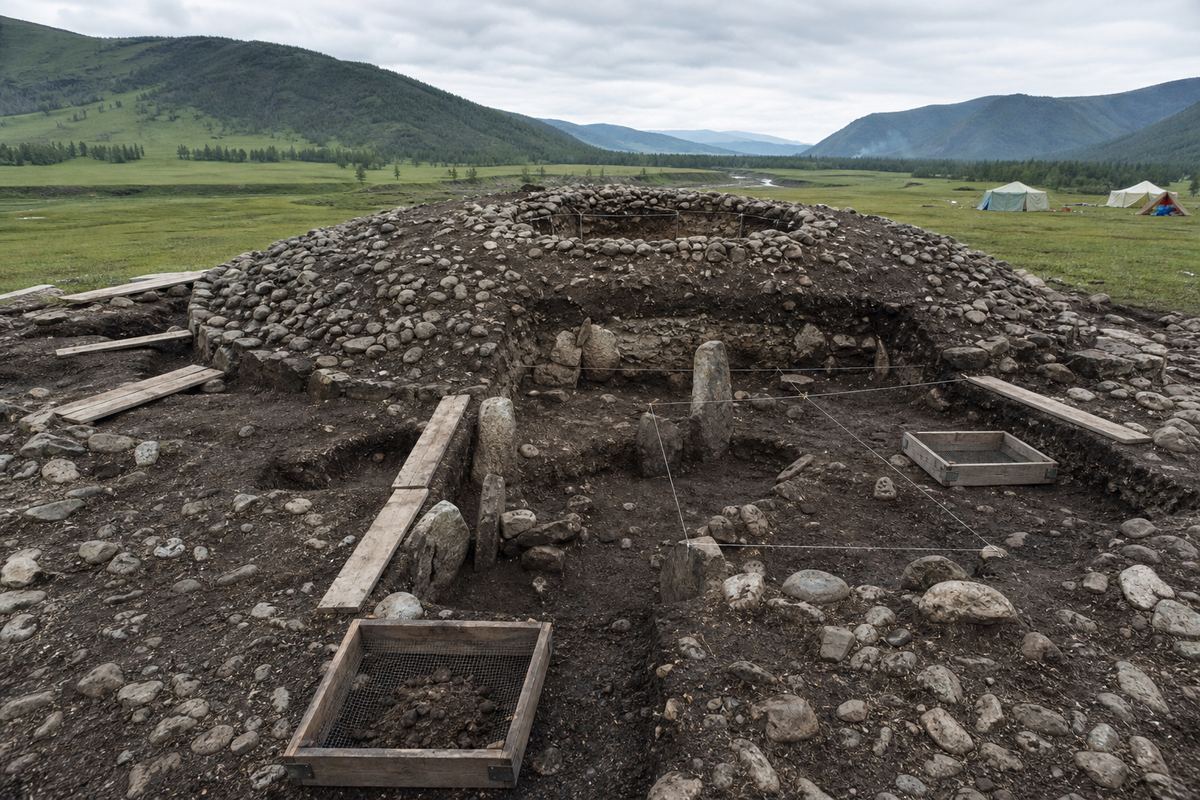
Inside a burial mound in Tuva, in southern Siberia, archaeologists found more than a thousand cannabis seeds, and hair from the people buried there.
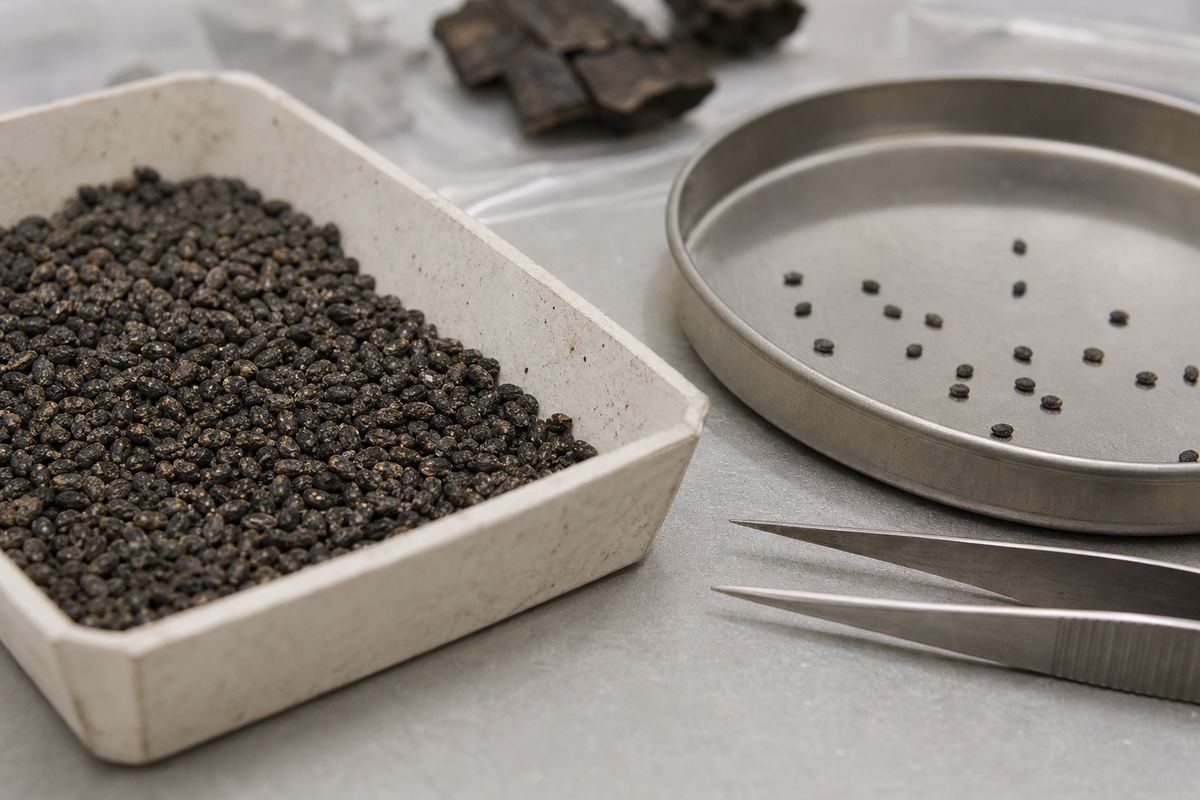
In November 2026, the team reported in the journal Science that radiocarbon dating puts the seeds at around 800 BC.
The team says chemical traces in the hair point to people using the plant for its effect: the oldest directly dated evidence of cannabis use.
Not everyone is convinced. But the bigger question is who built the mound. The answer takes us to a people of the grasslands: the Scythians.
Tunnug 1 Trenches and sieves across a stone-ringed mound in a green Siberian valley. AI-generated illustration.Charred seeds Seeds the size of a pinhead: about a thousand whole ones, and some five hundred broken. AI-generated illustration.
1,000+
whole cannabis seeds
c. 800 BC
radiocarbon date of the seeds
Science
journal, 5 November 2026
The 2026 study
nomads of a sea of grass
horse archers and their bows
royal mounds and frozen tombs
gold beasts, and a Persian king who turned back
In this film
Prologue
The news
Live Science and AP (5 November 2026) and the University of Bern via ScienceDaily: Gino Caspari and colleagues from Germany, Russia, Sweden and Switzerland published “Direct evidence for psychoactive cannabis use 2800 years ago” in Science. At the Tunnug 1 mound in the Uyuk valley, Tuva, they found more than 1,000 whole cannabis seeds and about 500 partial ones, probably from wild plants. Hair from the burial gave signals consistent with cannabinol (CBN), with weaker signals for THC.
This film is about the people, not the plant. It describes what archaeologists found; it is not advice about cannabis.
The 3D scenes are simplified teaching models: the map, the mound, the rider and the ornaments are drawn schematically and not to scale.
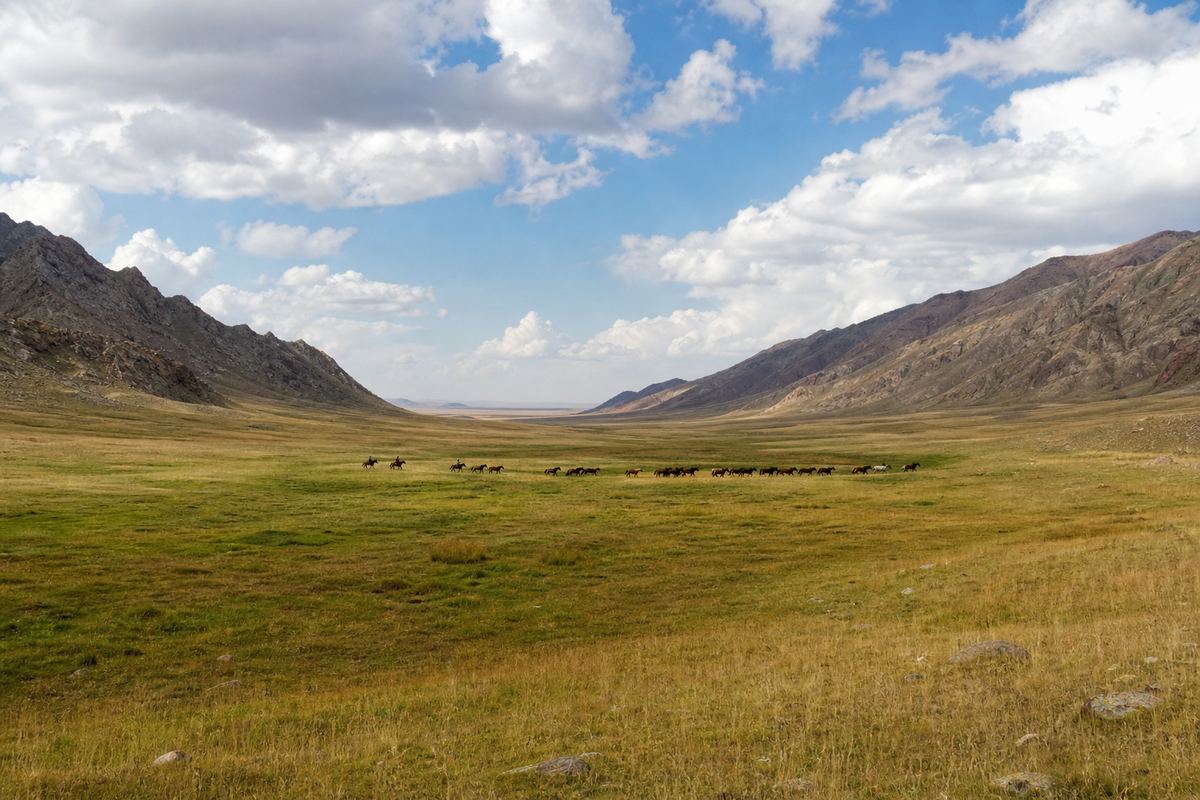
Their world was the steppe: a belt of grassland that runs across Eurasia.
Scythian peoples lived along it from the borders of northern China and Mongolia, through southern Siberia and Kazakhstan, to the northern shores of the Black Sea.
Archaeology points to southern Siberia as where their culture began. From around the ninth century BC it spread west, and reached the Black Sea by the seventh.
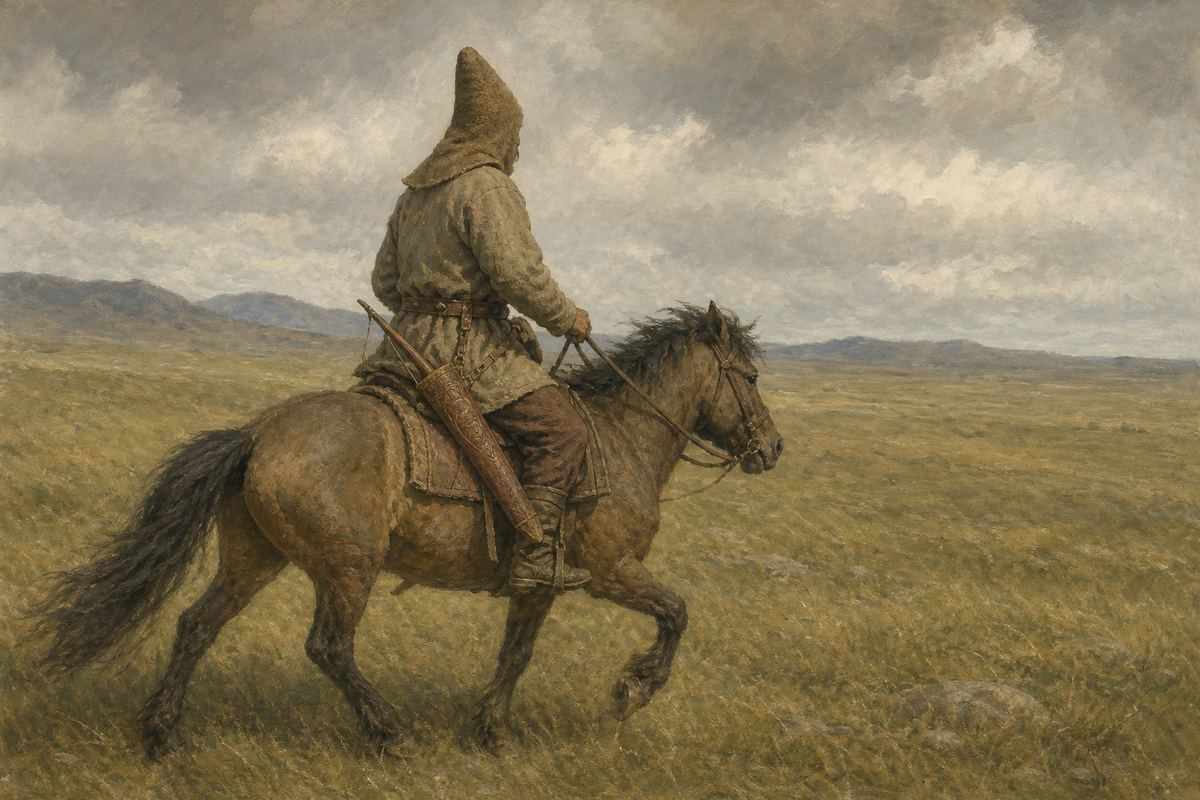
The steppe A grass corridor between low mountains: open pasture for thousands of kilometres. AI-generated illustration.A steppe horseman A tall pointed felt hood, trousers and a bow case at the hip. AI-generated illustration.
c. 900 BC animal style appears
8th c. BC royal mounds in Tuva
7th c. BC Scythians on the Black Sea coast
A culture moves west
Chapter I · A sea of grass
A belt of grass
Current World Archaeology: the Scythian world stretched from the borders of northern China and Mongolia, through southern Siberia and northern Kazakhstan, to the northern Black Sea. Archaeology points to southern Siberia as the origin; the culture spread along the grassland corridor and reached the northern Black Sea in the 7th century BC. Early gold finds near the Black Sea were long taken for the heartland, until earlier sites turned up in Tuva and the high Altai.
Press the dates to watch the culture travel west. The coloured area is schematic: no one drew borders on the steppe.
The 3D scenes are simplified teaching models: the map, the mound, the rider and the ornaments are drawn schematically and not to scale.
Scythian is the name the Greeks gave them; Assyrians and Persians called them Saka. They were many tribes, not one nation, and they left no writing of their own.
They spoke Iranian languages. Where they first came from is still debated: the Greek historian Herodotus wrote that they came from the east, pushed west by a hostile tribe.
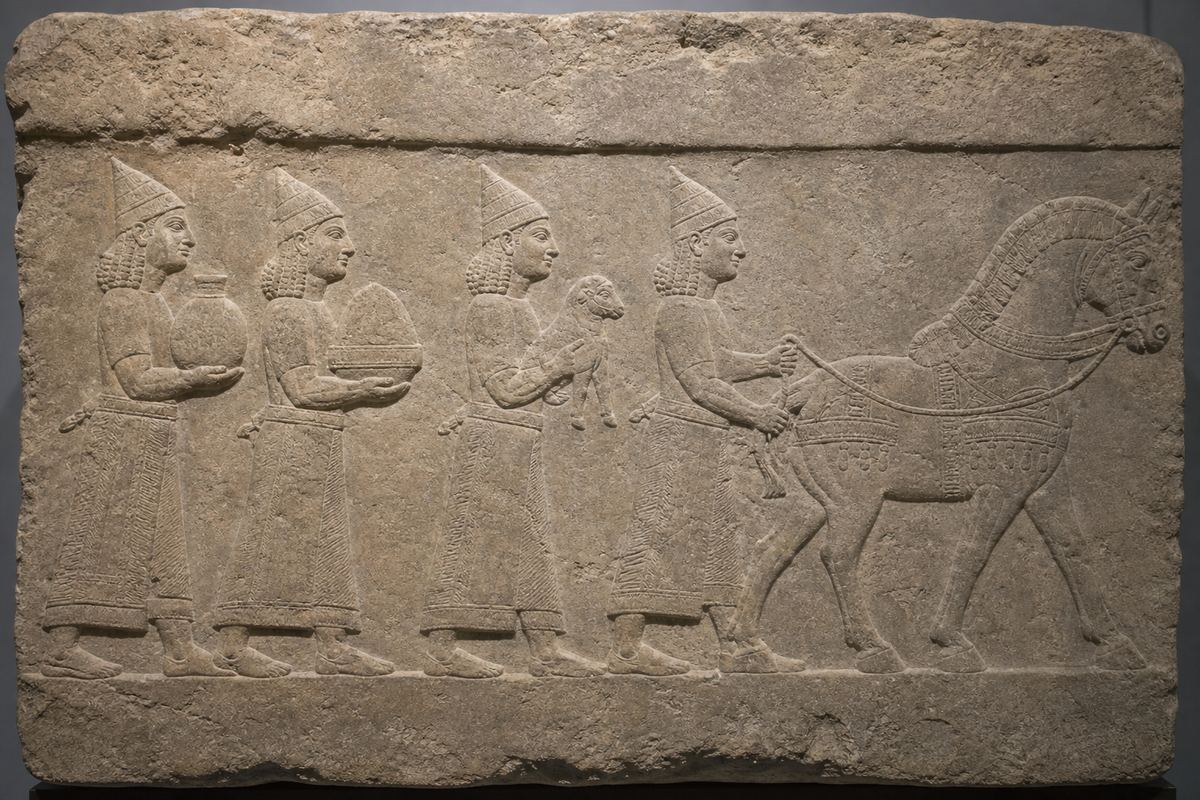
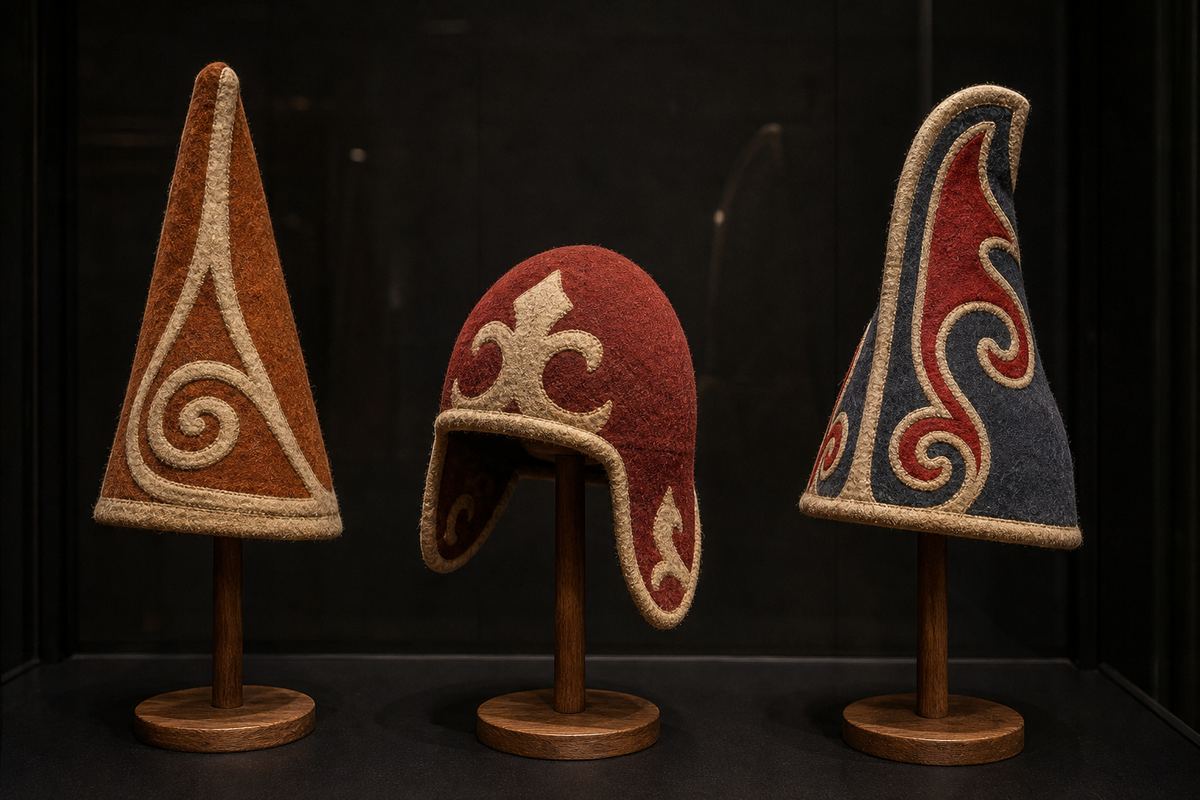
The Persians told the tribes apart by the shape of their hats, and by how they lived.
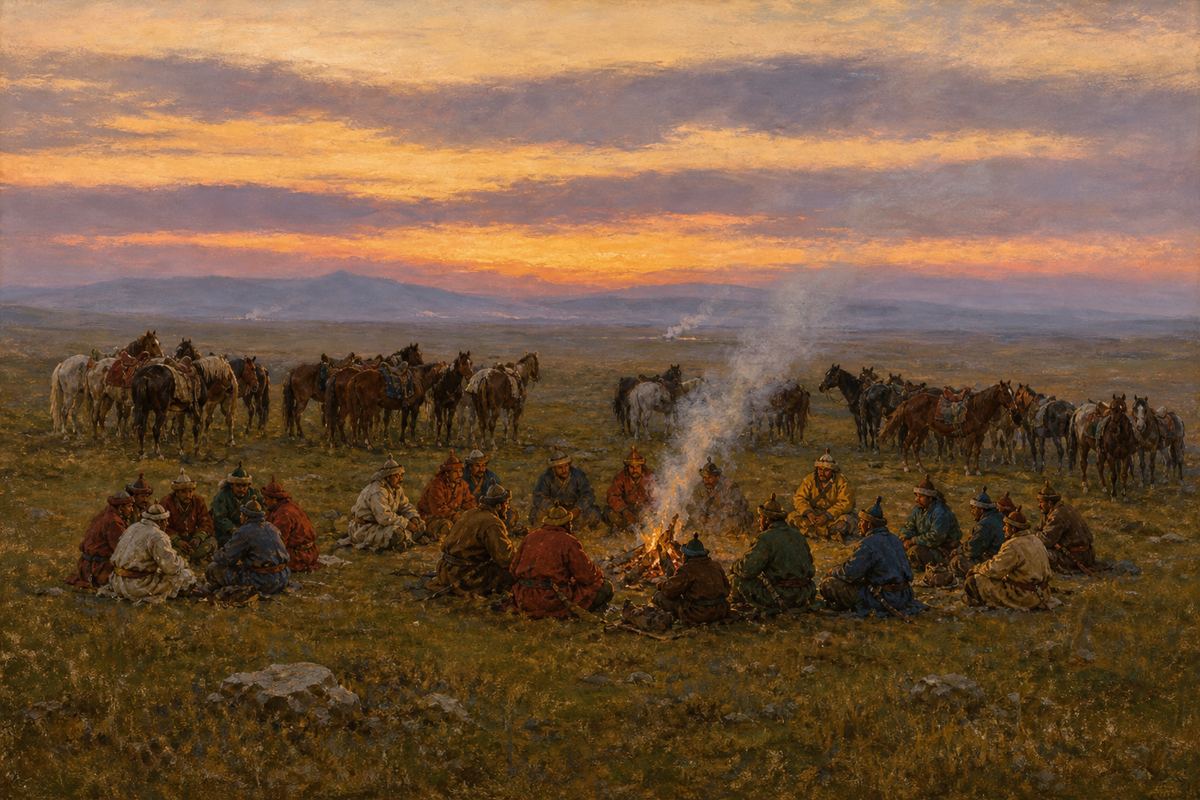
Sometimes tribes joined together in confederations, for war or for ritual, and later went their own ways again.
Scythians
in Greek writing
Saka
in Assyrian and Persian records
Iranian
their language group
Names and tonguesSeen by neighbours A carved relief in Near Eastern style: foreigners in pointed hats lead a horse as tribute. AI-generated illustration.Told apart by hats Pointed, rounded and crested felt hats, each in its own colours and appliqué. AI-generated illustration.A gathering Groups in differently coloured felt meet around a fire on the open grass. AI-generated illustration.
Chapter I · A sea of grass
Names, tribes and tongues
Live Science and Current World Archaeology: “Scythian” is the Greek name for many culturally related nomadic peoples of the steppe, whom Assyrian and Achaemenid Persian sources called Saka; they spoke Iranian languages, and the Persians distinguished tribes by the shape of their hats and their way of life. The Met: they left no written records, so what we know comes from Assyrian, Persian and Greek sources, from art and from burial mounds. Live Science: origins are debated — Herodotus said they came from the east, pushed west by a hostile tribe, while Diodorus said they came north from the south. Tribes were not politically united, but sometimes joined in confederations for war or ritual.
Press “Join” and “Split” to see tribes gather into a confederation and part again.
The 3D scenes are simplified teaching models: the map, the mound, the rider and the ornaments are drawn schematically and not to scale.
Most Scythians were herders, moving with their animals to fresh grass.
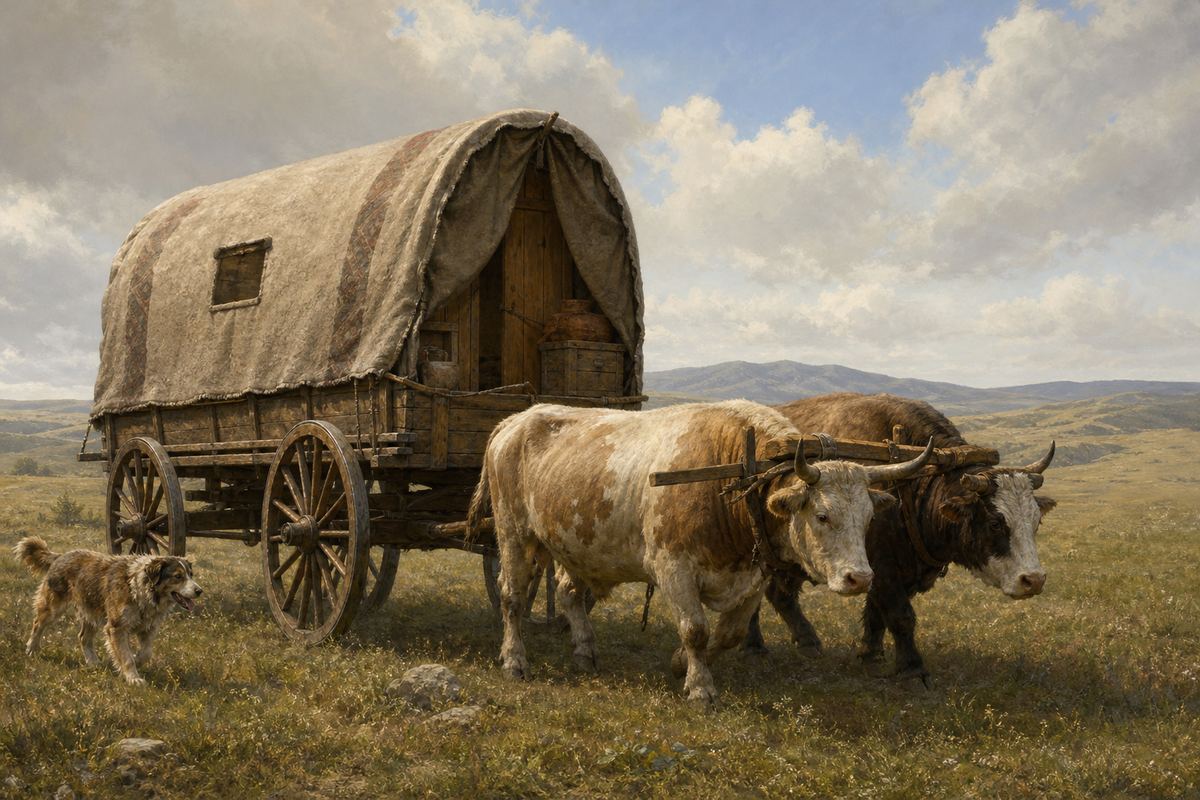
Families travelled in wagons pulled by oxen, and some wagons had several rooms.
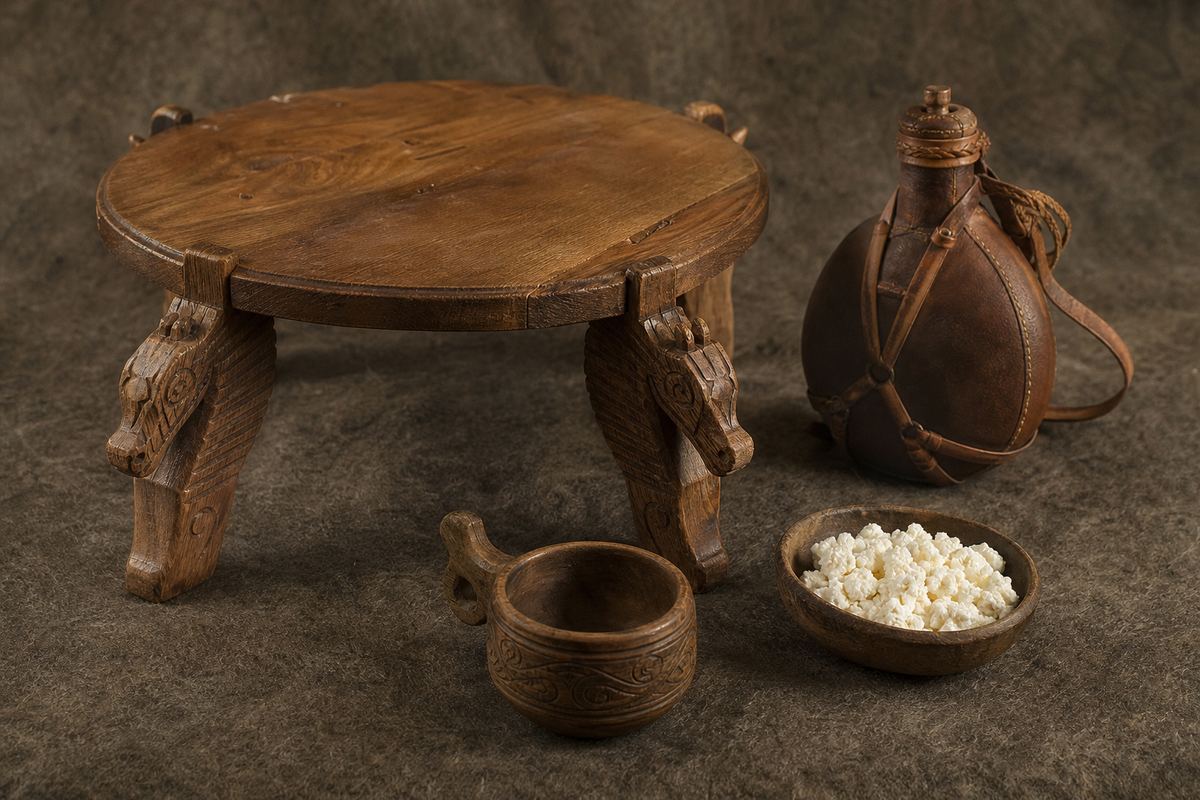
The Greeks called them milk-drinkers. They drank fermented mare's milk, and cheese has survived in one of their tombs.
Even their furniture was made to travel: small tables that could be taken apart and packed away.
A home on wheels Tall wheels and a felt roof; oxen set the pace. AI-generated illustration.
mare’s milk
drunk fermented
cheese
found in an Altai tomb
What they lived onMade to travel A low table with carved animal legs, a leather flask and a wooden cup. AI-generated illustration.
Chapter II · Life on horseback
Herders of the steppe
Live Science: Scythians were pastoral nomads who travelled in wagons pulled by oxen, some with several rooms. Current World Archaeology and Current Archaeology: they were known as milk-drinkers, drank fermented mare’s milk, and cheese survived in a Pazyryk tomb; collapsible tables and portable grave goods show a life on the move.
The 3D scenes are simplified teaching models: the map, the mound, the rider and the ornaments are drawn schematically and not to scale.
And they rode. Mounted archers of the steppe were admired and feared by Greeks, Persians and Chinese alike.
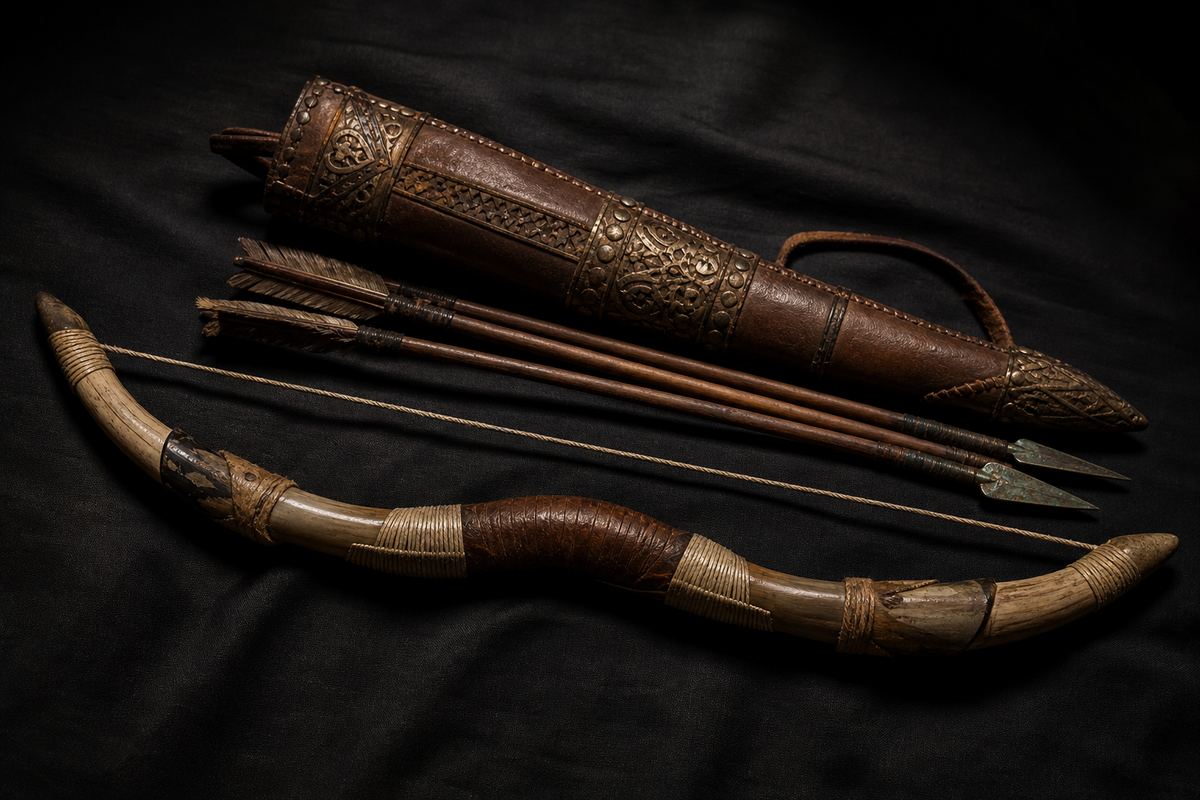
Their weapon was the composite bow: short and strongly curved, built from wood, horn and sinew, and small enough to shoot from horseback.
They rode without stirrups, gripping with their legs.
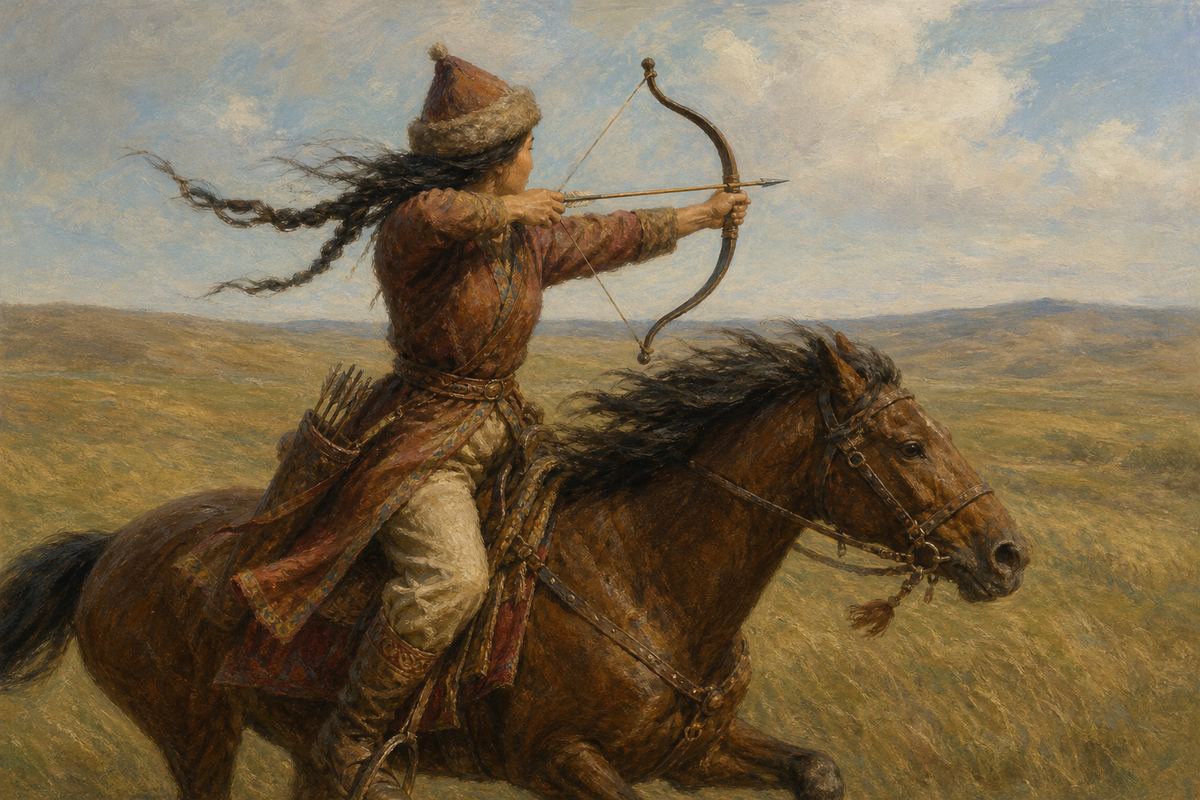
Women rode and fought too. More than three hundred women have been found buried with weapons and horses, according to the historian Adrienne Mayor.
The composite bow Bow and arrows carried together in one decorated case. AI-generated illustration.
composite bow and arrows
axes and swords
spears and maces
A rider’s weaponsWomen warriors A braided rider in trousers and a felt cap draws her bow at the gallop. AI-generated illustration.
300+
women found with weapons and horses
Buried armed
Chapter II · Life on horseback
Archers on horseback
Live Science: the Scythians’ composite bow was made of wood, horn and sinew; they also used axes, swords, spears and maces. Mounted archers, including women, were admired and feared by Greeks, Romans, Persians and Chinese. The folklorist and historian Adrienne Mayor counts over 300 women buried with weapons and horses. Live Science says they rode without stirrups.
Press “Draw” and “Loose” to see the short curved bow drawn and released. The arrow flies at nothing.
The 3D scenes are simplified teaching models: the map, the mound, the rider and the ornaments are drawn schematically and not to scale.
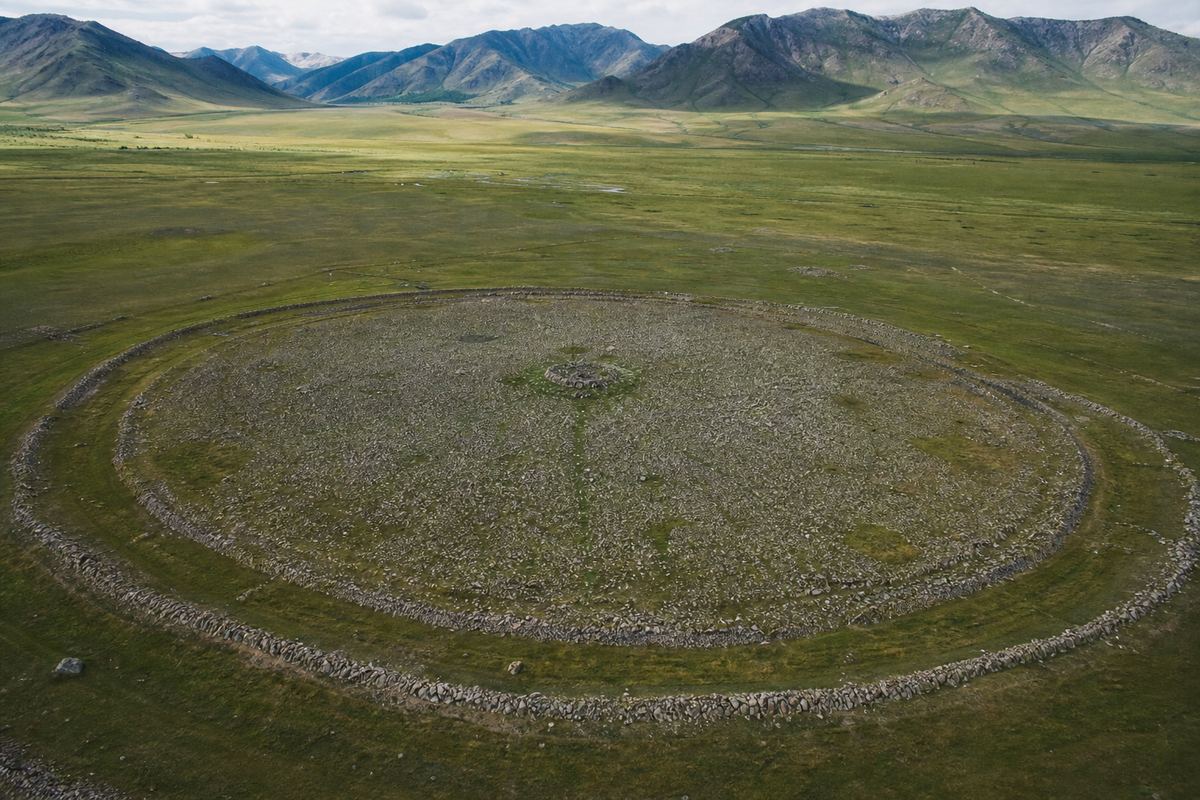
When a Scythian leader died, the people raised a kurgan: a great mound of earth and stone over a burial chamber.
Herodotus describes royal burials with attendants, horses and golden cups laid in the grave.
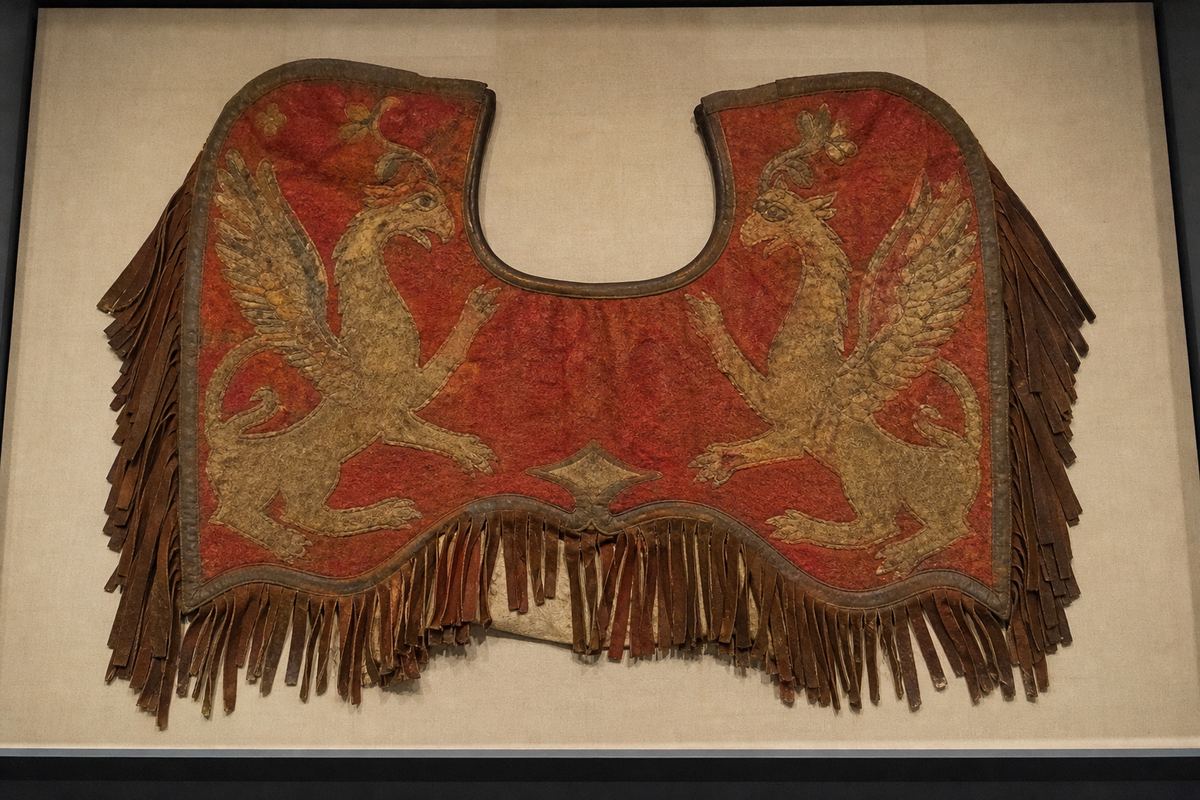
Favourite horses went into the ground in full dress, with decorated saddle covers and masks.
At a mound called Arzhan 2, in Tuva, scientists could even tell that the man buried as king, aged forty to fifty, had suffered from prostate cancer.
A royal mound Seen from above: a wide circle of stones and turf, ringed by smaller stone circles. AI-generated illustration.Dressed for the grave A felt saddle cover with appliqué griffins, like those found with horses in the frozen tombs. AI-generated illustration.
40–50
age of the man buried as king
cancer
of the prostate, Current World Archaeology reports
Arzhan 2, Tuva
Chapter III · Mounds of the dead
Kurgans
Live Science: royal tombs were kurgans; Herodotus describes royal burials with retainers, horses and golden cups. Current Archaeology: favourite horses were buried in elaborate dress, with griffin saddle covers, bridles and horse masks. Current World Archaeology: at Arzhan 2 in Tuva, the 40- to 50-year-old “king” had prostate cancer.
Press “Open the mound” to lift away the earth and see the chamber.
The 3D scenes are simplified teaching models: the map, the mound, the rider and the ornaments are drawn schematically and not to scale.
Tunnug 1, the mound in the 2026 study, lies in the Uyuk valley in Tuva.
Its builders sacrificed horses in great numbers: eighteen were found at first, then dozens more. The team thinks people were most likely sacrificed too.
Six of the cannabis seeds were radiocarbon dated, to the early eighth century BC: about three hundred years before the earliest evidence from China.
One outside expert called the hair analysis scientifically weak: traces might have entered the hair from the burial itself. Another said hair testing is an established method in archaeology.
18
horses found at first
dozens
more horses in later digs
Tunnug 1Dating the seeds Small samples of charred seed in vials, ready for the laboratory. AI-generated illustration.
China, c. 500 BC
~2,500
Tunnug 1, Tuva
~2,800
Oldest evidence of cannabis use
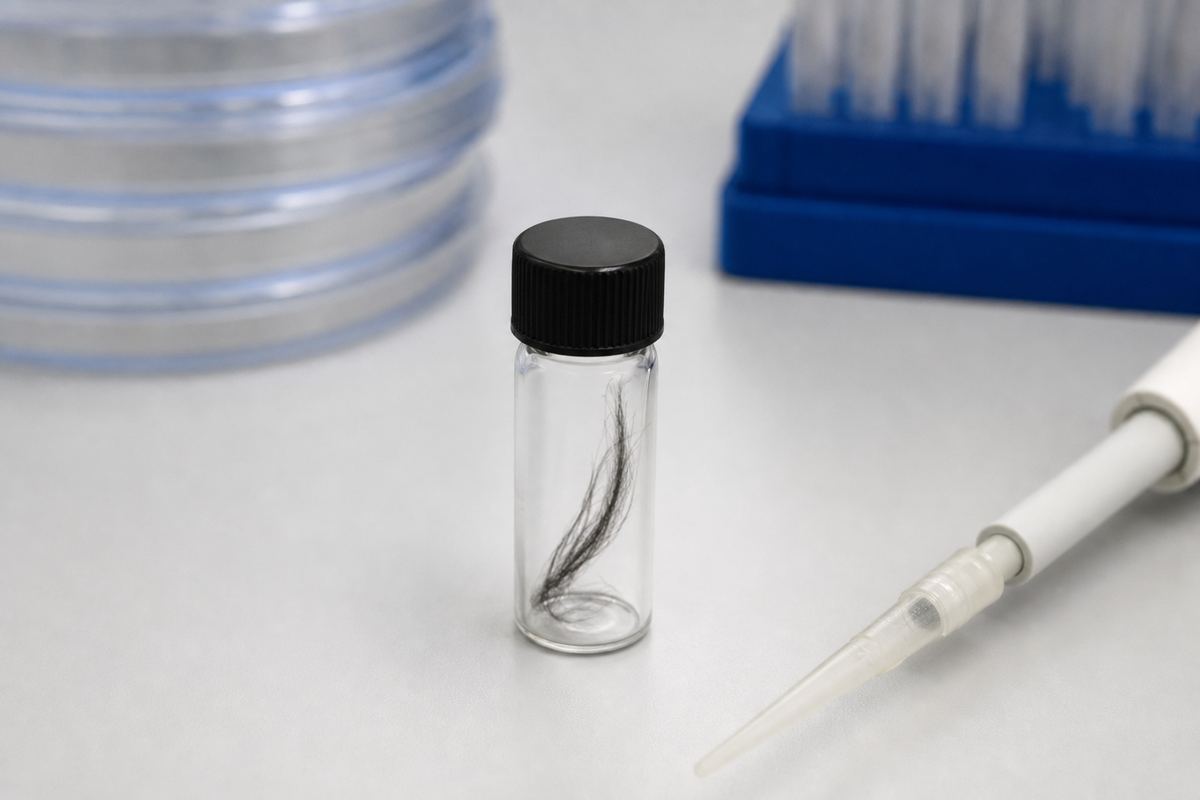
Hair under test Hair keeps chemical traces for a long time, but it can also pick them up from its surroundings. AI-generated illustration.
Chapter III · Mounds of the dead
Tunnug 1
University of Bern via ScienceDaily: six seeds were radiocarbon dated and, with other evidence, put the deposit in the early eighth century BC; Live Science gives 800–760 BC. Gino Caspari says the burials were accompanied by extensive horse sacrifices and, most likely, human sacrifices. Live Science and AP: about 300 years older than China’s roughly 500 BC evidence. Volker Auwärter (University of Freiburg, not in the study) called the hair analysis “scientifically weak”; Elisa Guerra Doce (University of Valladolid) said hair analysis is an established method.
This is one new study. The sacrifice of people is the team’s interpretation, and the hair result is debated.
The 3D scenes are simplified teaching models: the map, the mound, the rider and the ornaments are drawn schematically and not to scale.
High in the Altai mountains, the Scythian world left us something rarer than gold.
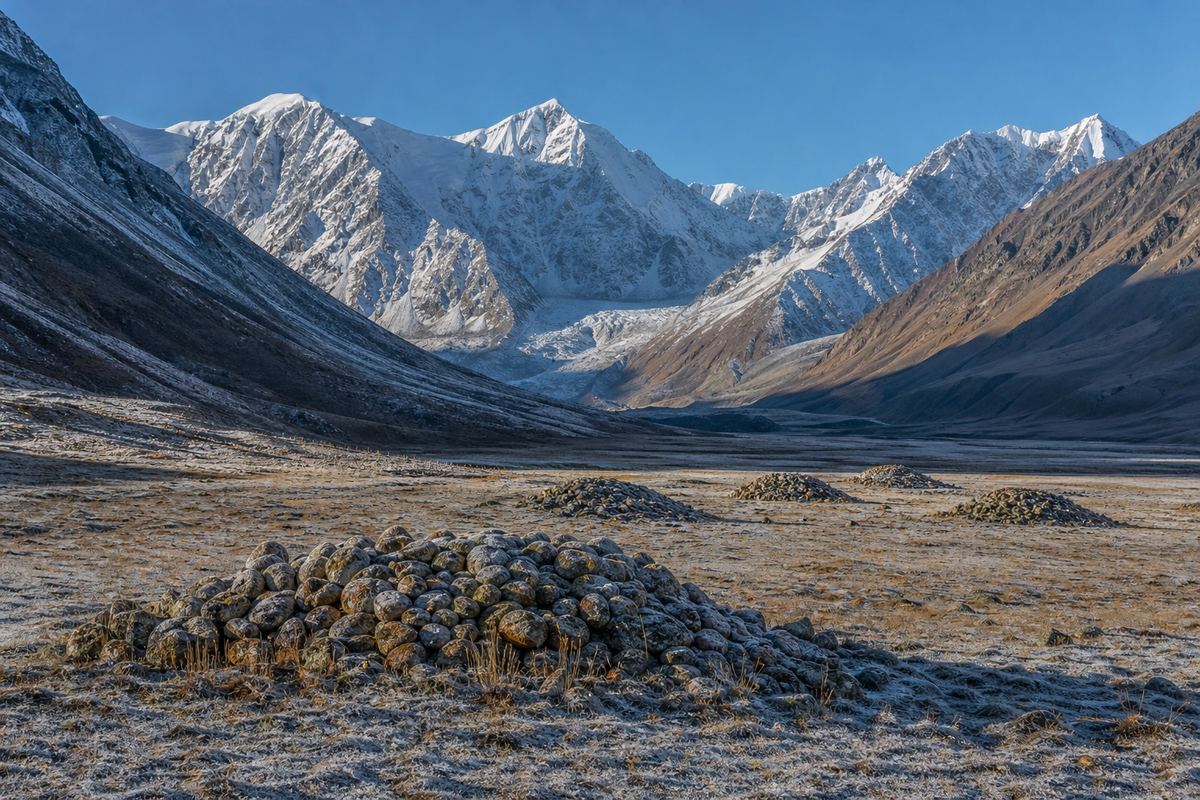
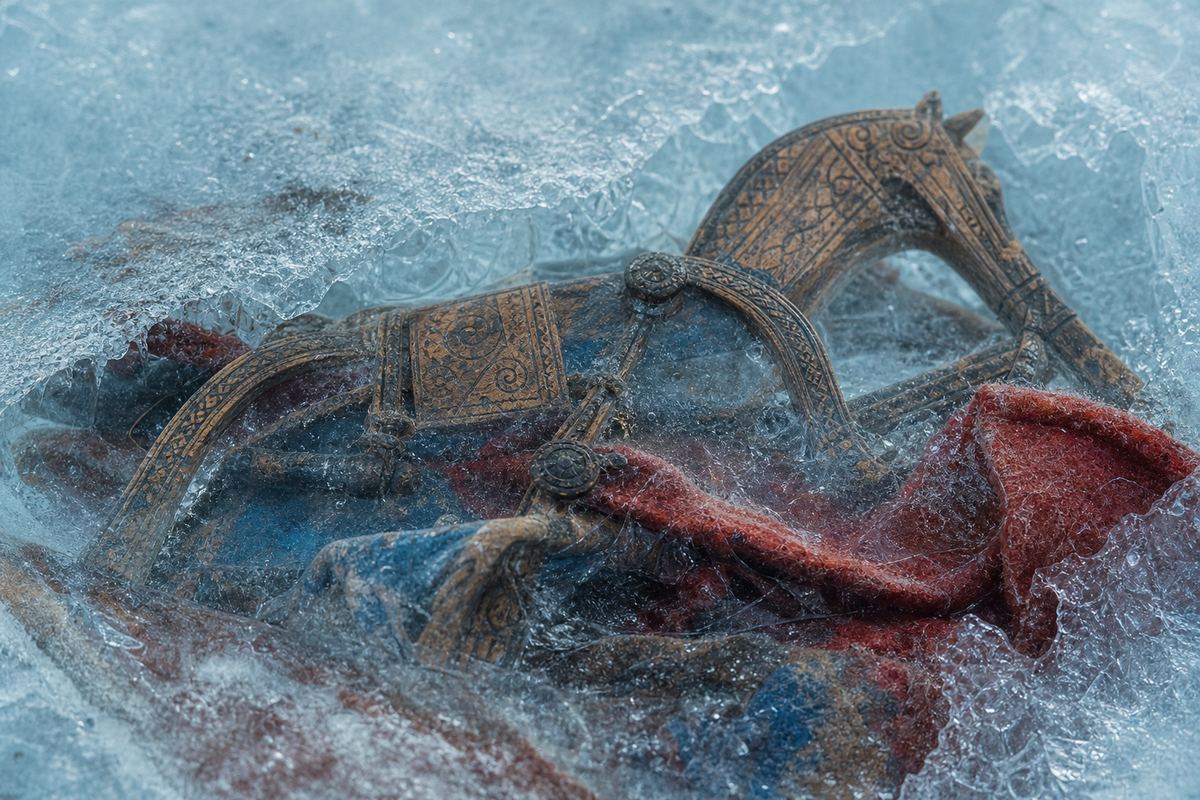
In the 1940s, Russian archaeologists opened five large mounds in a small valley called Pazyryk. The ground there never thawed, so the tombs stayed frozen.
Wood, felt and leather survived, and so did the bodies. Every frozen body examined was heavily tattooed, men and women alike.
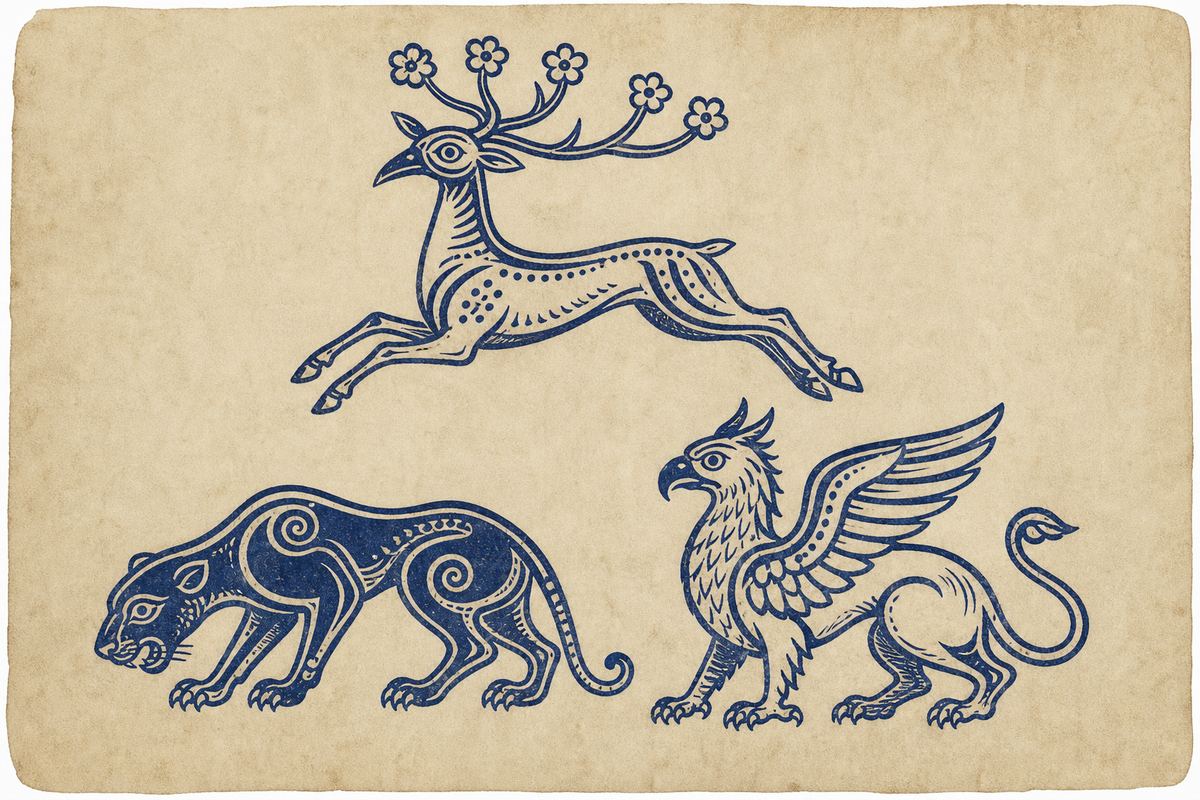
In 1993, a woman now called the Ukok Princess was found in the Altai, buried with six horses. Her tattoos show a deer and a griffin.
Pazyryk Stone-covered mounds on a frosted plateau below snowy peaks. AI-generated illustration.Locked in ice Red and blue felt and a carved harness ornament, seen through ice crystals. AI-generated illustration.Tattoos Designs in the animal style: a leaping deer with a beaked head, a crouching panther, a griffin. AI-generated illustration.
1993
year she was found
6
horses buried with her
5th c. BC
approximate date
The Ukok Princess
Chapter IV · Frozen in ice
Tombs of ice
Current World Archaeology: Russian excavations in the 1940s in a small Altai valley, Pazyryk, found five large mounds where the ground never thawed; the bodies were preserved, and all frozen bodies examined were heavily tattooed. Current Archaeology: men and women were tattooed. Live Science and The Met: the Ukok “Ice Maiden”, found in 1993, had tattoos of a deer and a griffin and was buried with six horses, around the 5th century BC.
Press “Freeze” to fill the chamber with ice, as permafrost did at Pazyryk.
The 3D scenes are simplified teaching models: the map, the mound, the rider and the ornaments are drawn schematically and not to scale.
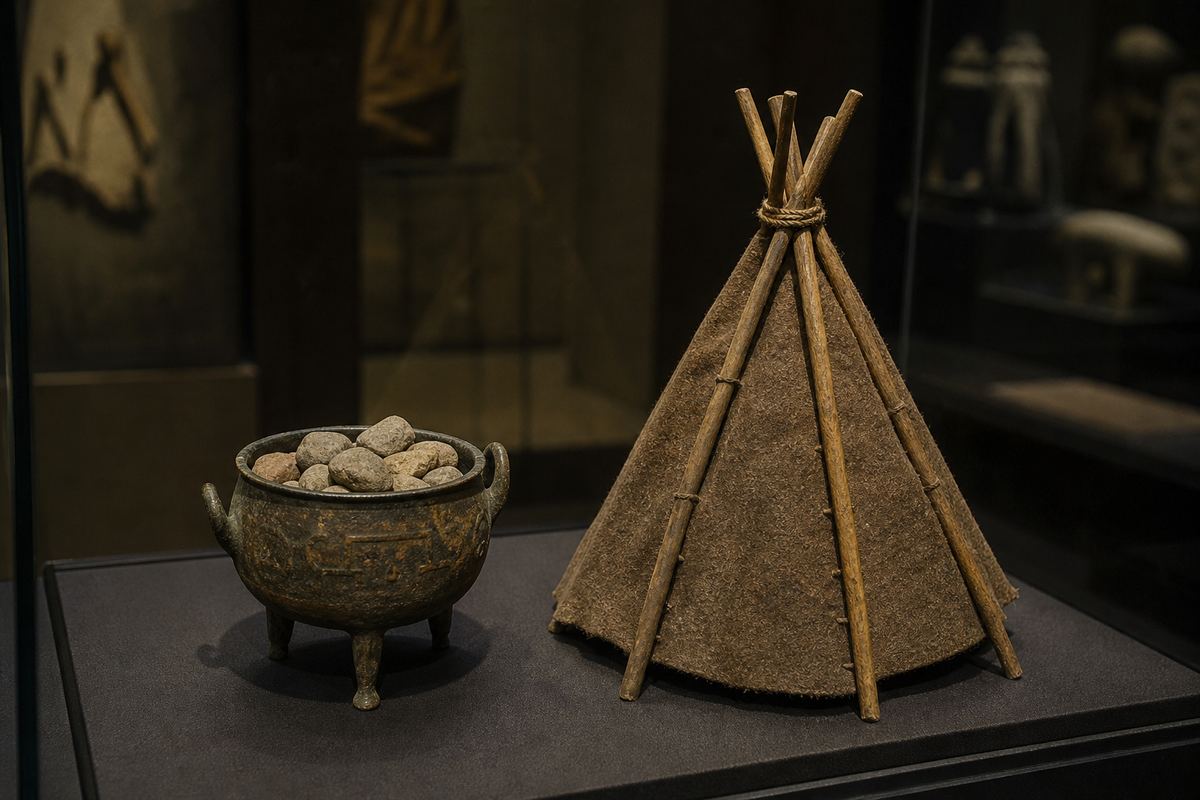
The Pazyryk chiefs were buried with braziers holding charred hemp seeds. Hemp and marijuana are the same plant, cannabis, in different varieties.
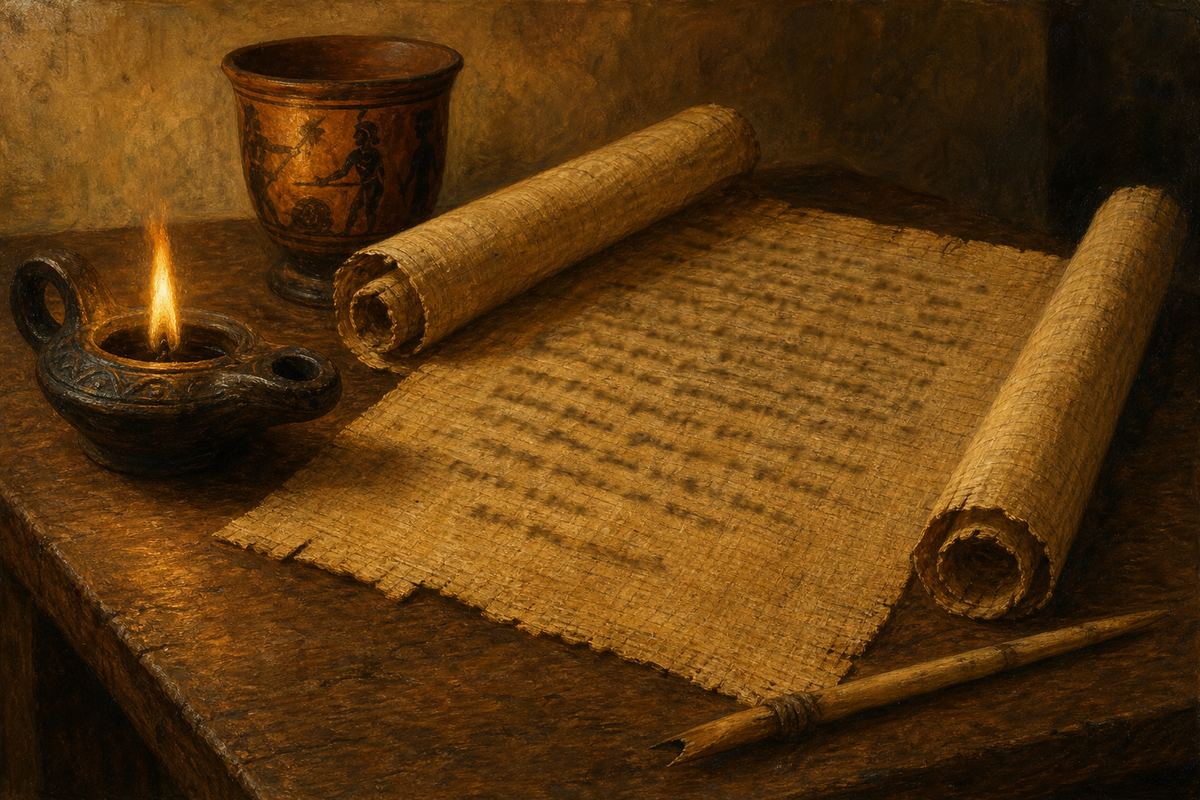
In the fifth century BC, Herodotus wrote that Scythians breathed the vapour of burning hemp seeds, and howled with pleasure.
For a long time, that was a story told by one Greek writer. The braziers of Pazyryk gave it physical evidence.
Why they used it is not known for sure. A British Museum curator, St John Simpson, has suggested it may have eased pain.
A smoking set A small bronze cauldron of stones beside a frame of six poles, the kind once covered with felt. AI-generated illustration.
howled with pleasureHerodotus on the Scythians and hemp vapour, as quoted by The Art Newspaper
One Greek writer A papyrus scroll by lamplight: for centuries the only account of Scythian hemp. AI-generated illustration.
ritual at funerals
easing pain (a curator’s suggestion)
no Scythian wrote down why
Possible uses, all unproven
Chapter IV · Frozen in ice
Smoke and stories
Current Archaeology: charred hemp seeds were found in braziers in the Pazyryk chiefs’ graves, with smoking sets. The Art Newspaper and Blue Guides: Herodotus wrote that the Scythians “howled with pleasure” at hemp vapour; a hemp-smoking set of seeds, brazier and felt was shown at the British Museum, where curator St John Simpson suggested it may have been used to relieve pain — an interpretation, not a certainty. Live Science dates Herodotus’ account to the fifth century BC.
This is history and archaeology, not a description of how to use any drug.
The 3D scenes are simplified teaching models: the map, the mound, the rider and the ornaments are drawn schematically and not to scale.
Today the Scythians are best known for their art, which is called the animal style.
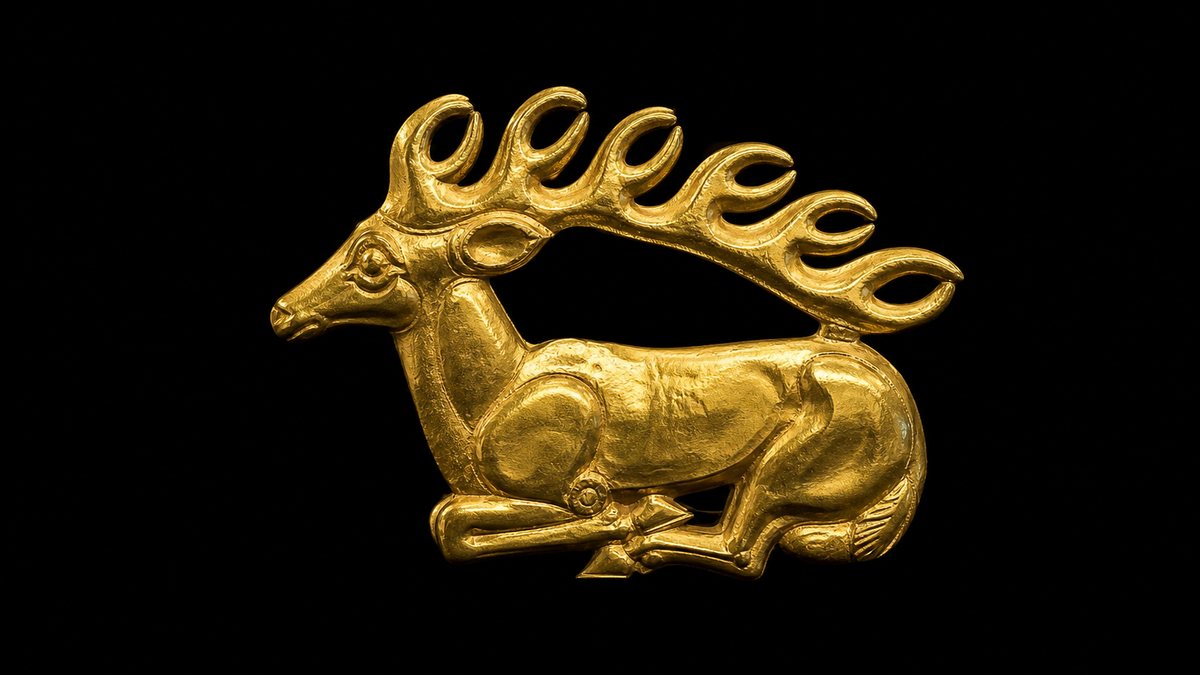
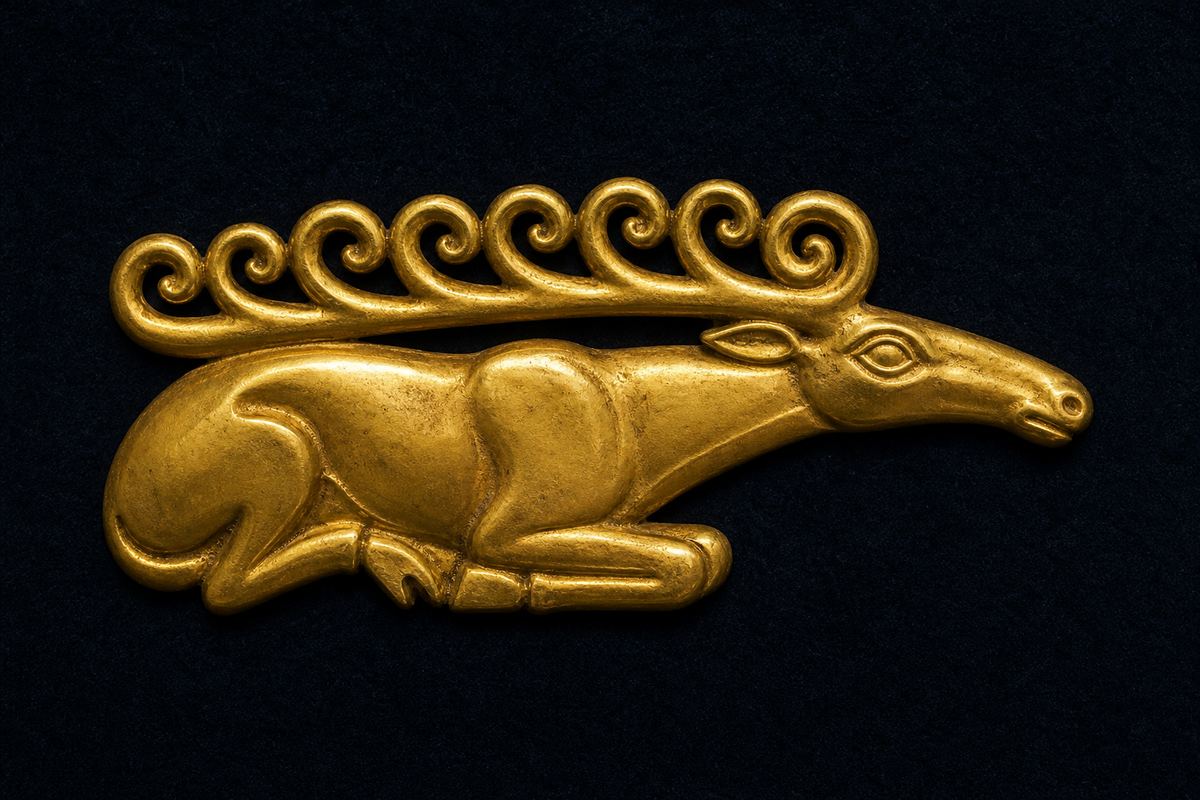
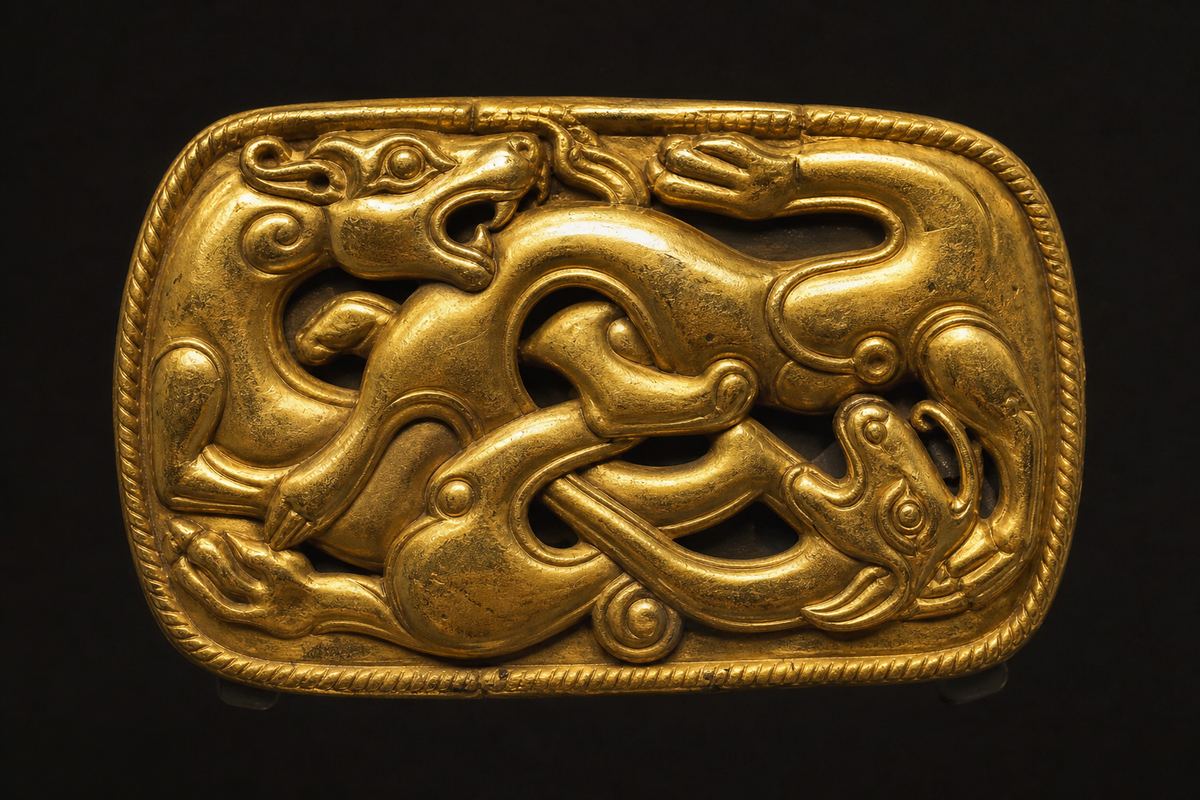
Stags with folded legs, curled panthers, birds of prey, and beasts locked in combat, twisted into tight shapes and often set with turquoise.
The style appeared on the steppe around 900 BC.
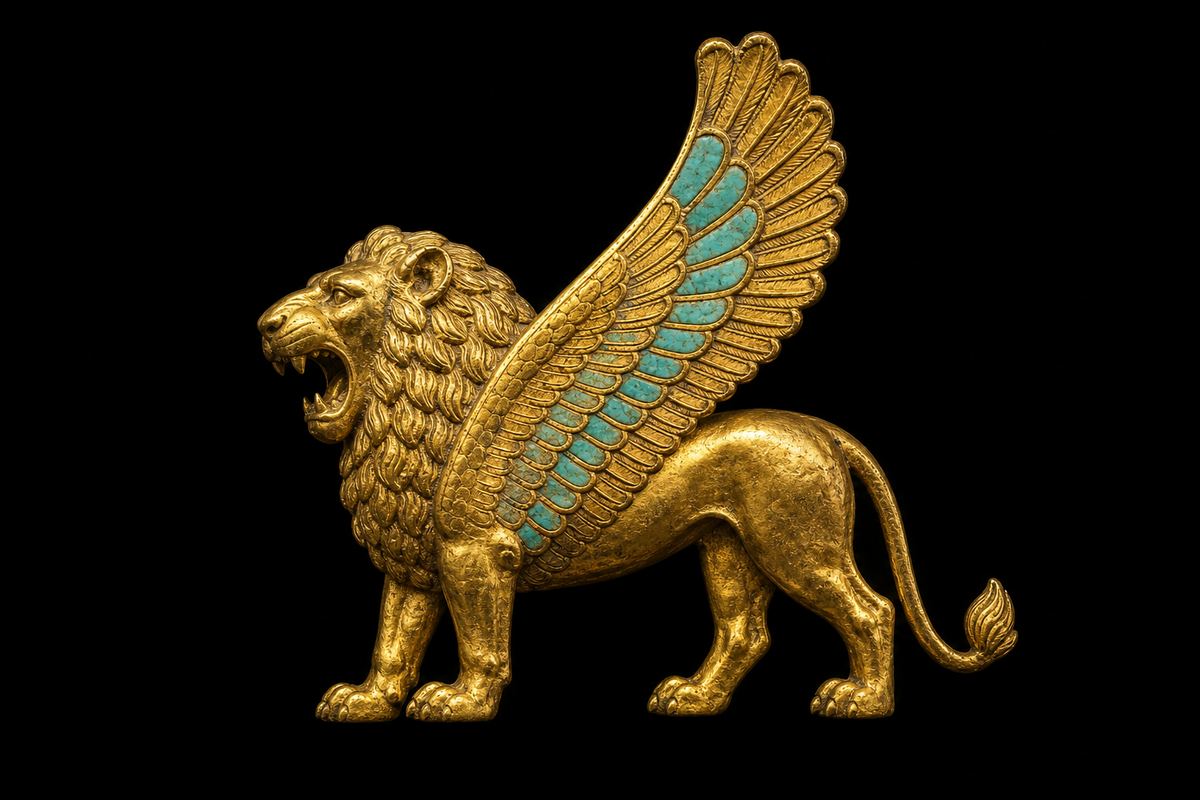
Some creatures came from elsewhere. A lion-headed griffin was probably borrowed from Mesopotamia, after Scythians campaigned in the Near East in the seventh century BC.
What the animals meant to them is still argued over.
A stag Legs folded under, head stretched forward, antlers as a row of curls along the back. AI-generated illustration.Locked in combat Two beasts twisted into one looping knot on a belt plaque. AI-generated illustration.A lion-headed griffin A winged beast with a lion’s head and body, turquoise set into the wing. Greek griffins usually have an eagle’s head instead. AI-generated illustration.
clan signs?
spirits or gods?
protection in battle?
no text survives to say
Open questions
Chapter V · Beasts of gold
The animal style
Current World Archaeology: the animal style — contorted beasts, often locked in combat — appears around 900 BC across the Scythian world. Blue Guides: stags, vultures and panthers, often inlaid with turquoise. The Met: Scythians probably adopted the lion-headed griffin (unlike the eagle-headed Greek form) from Mesopotamia after their conquests in the Near East in the 7th century BC; the meaning of the animal imagery is debated.
Press the buttons to turn each motif in the light. The open questions in the list are possibilities scholars discuss, not answers.
The 3D scenes are simplified teaching models: the map, the mound, the rider and the ornaments are drawn schematically and not to scale.
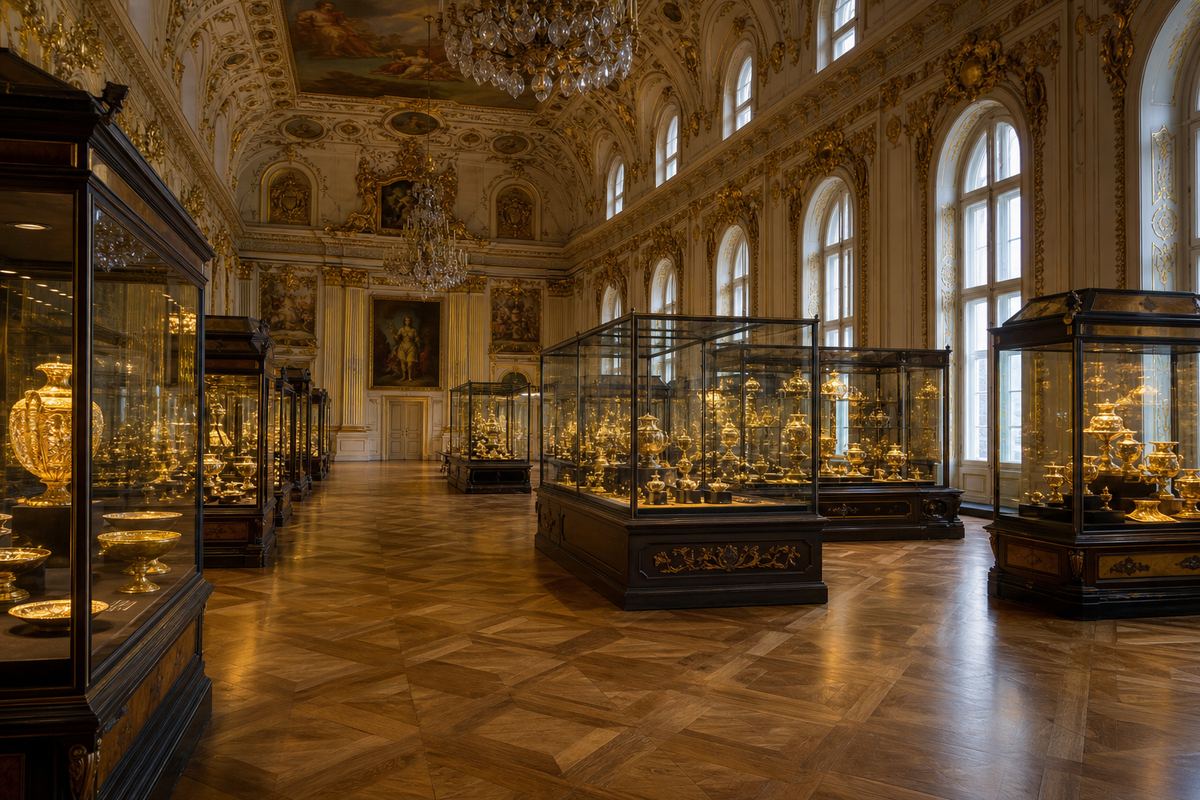
Much of this art is gold, and gold is what first made the Scythians famous in modern times.
Peter the Great of Russia ordered such finds to be sent to him. His collection passed to the Kunstkamera, and then, in 1851, to the Hermitage in Saint Petersburg.
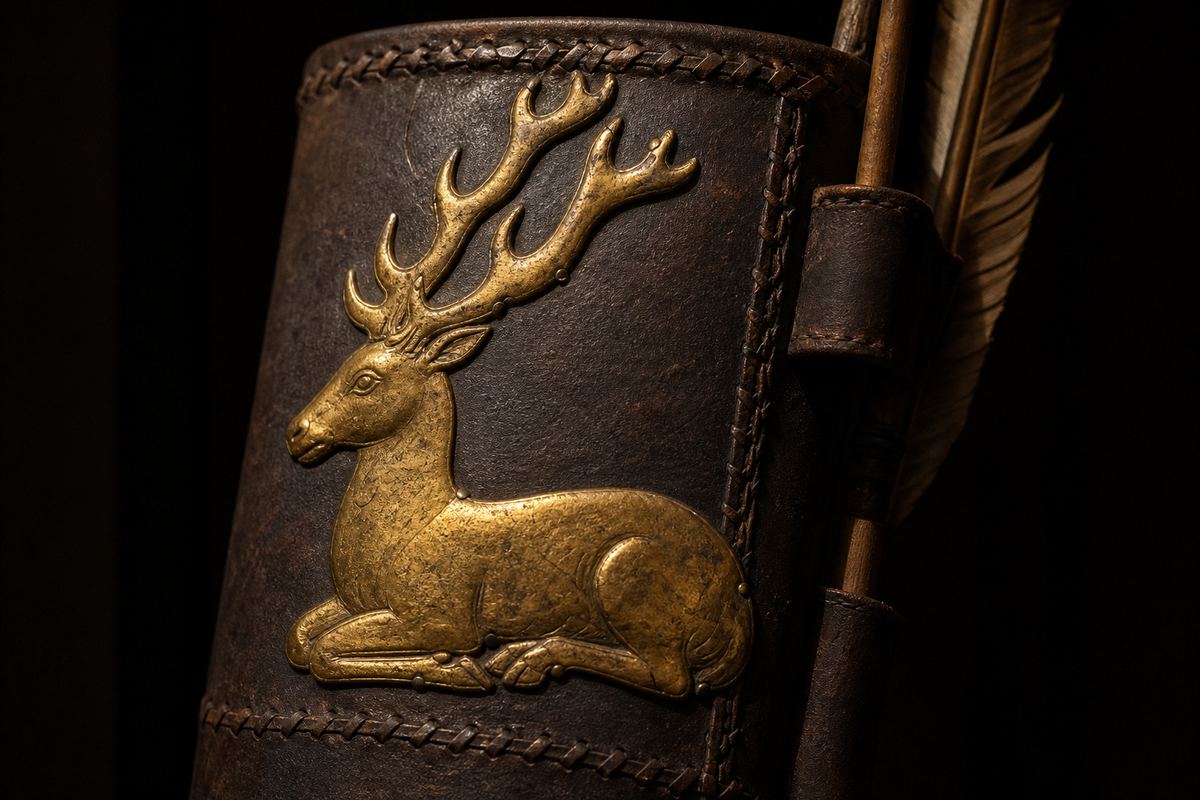
One gold stag, about thirty-two centimetres long and made in the late seventh century BC, once decorated a bow case.
Some of the finest pieces may have been made by Greek craftsmen.
A palace of gold Glass cases glowing in a long palace gallery. AI-generated illustration.
1700s Peter the Great collects the finds
Kunstkamera Russia’s first museum holds them
1851 moved to the Hermitage
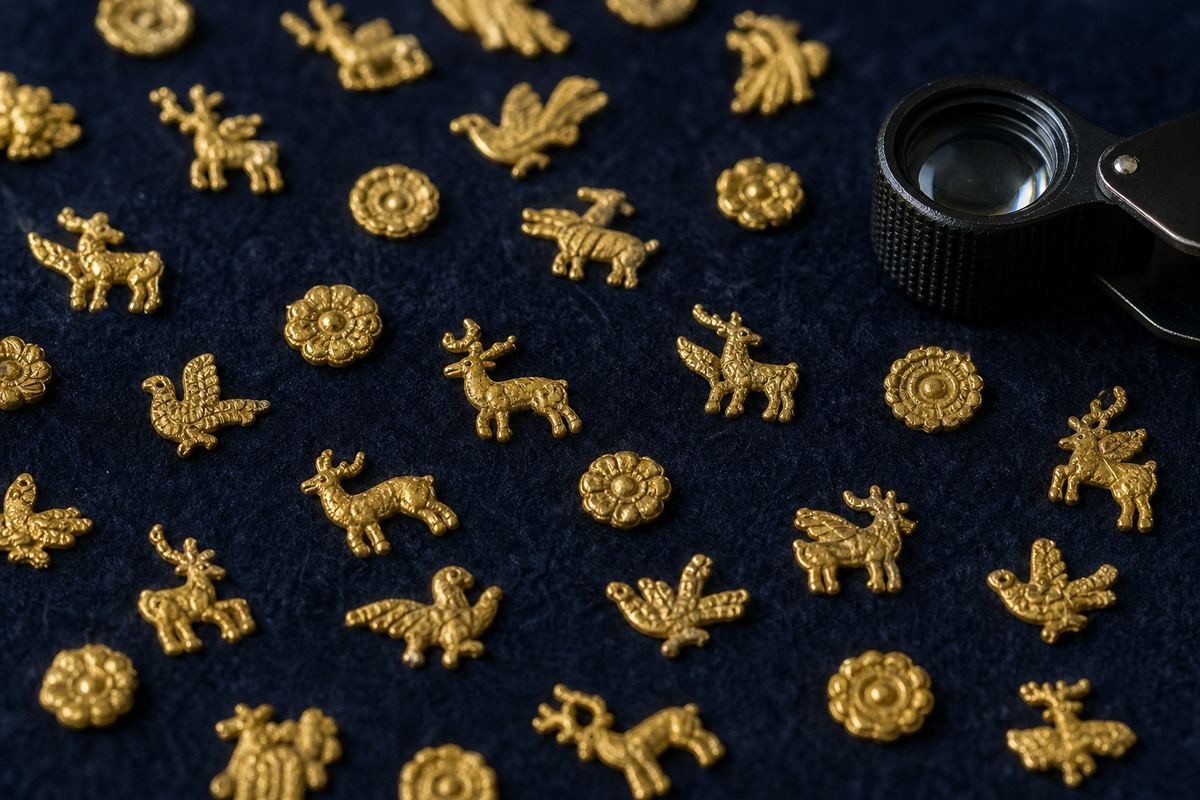
How the gold reached a museumA stag on a bow case About 31.7 cm of gold fixed to the leather of a bow-and-arrow case. AI-generated illustration.Made by Greeks? Dress ornaments of gold about one centimetre across, sewn onto clothing by the hundred. AI-generated illustration.
Chapter V · Beasts of gold
The tsar’s gold
Current World Archaeology and Current Archaeology: Peter the Great decreed that such finds be sent to him; the collection went to the Kunstkamera and in 1851 to the Hermitage. Current Archaeology: a 31.7 cm gold deer plaque of the late 7th century BC decorated a bow case, and some gold appliqués are only about 1 cm across. Live Science: some gold may have been made by Greek craftsmen.
The 3D scenes are simplified teaching models: the map, the mound, the rider and the ornaments are drawn schematically and not to scale.
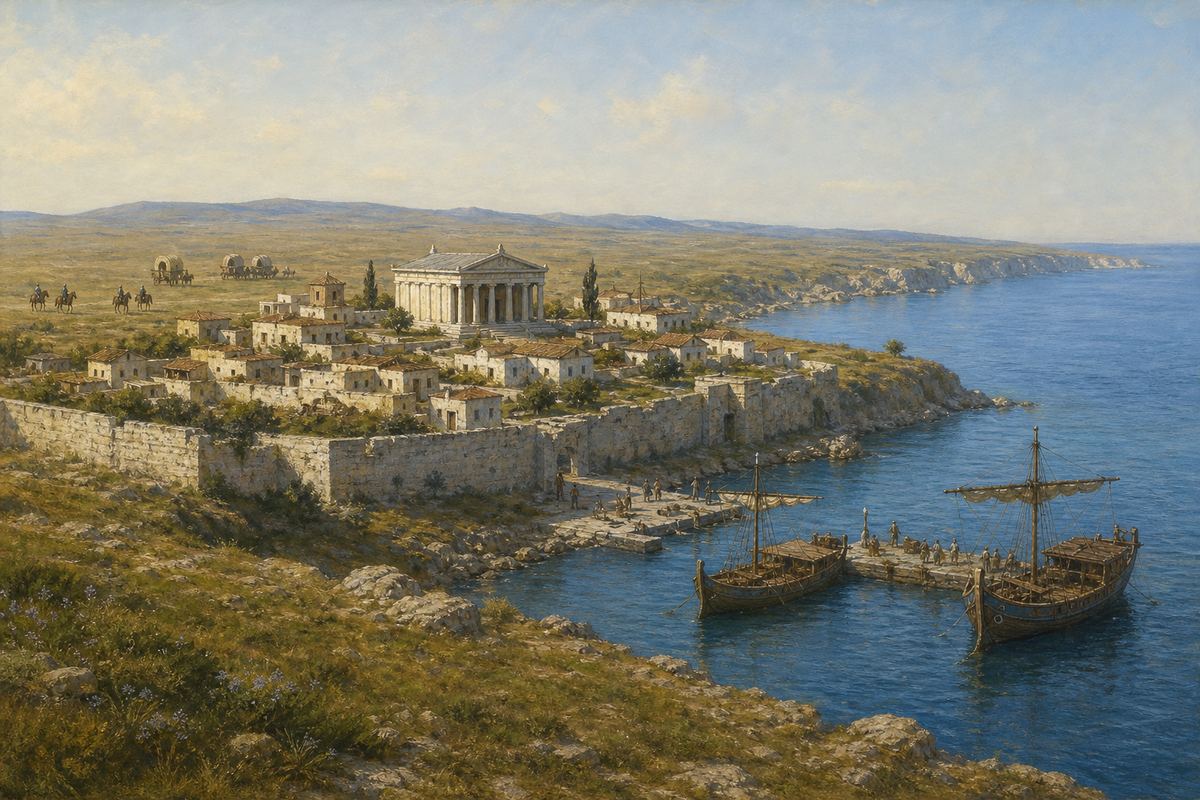
To the west, on the Black Sea, lived the Greeks. They met the Scythians in the seventh century BC, when they founded towns along its northern shore.
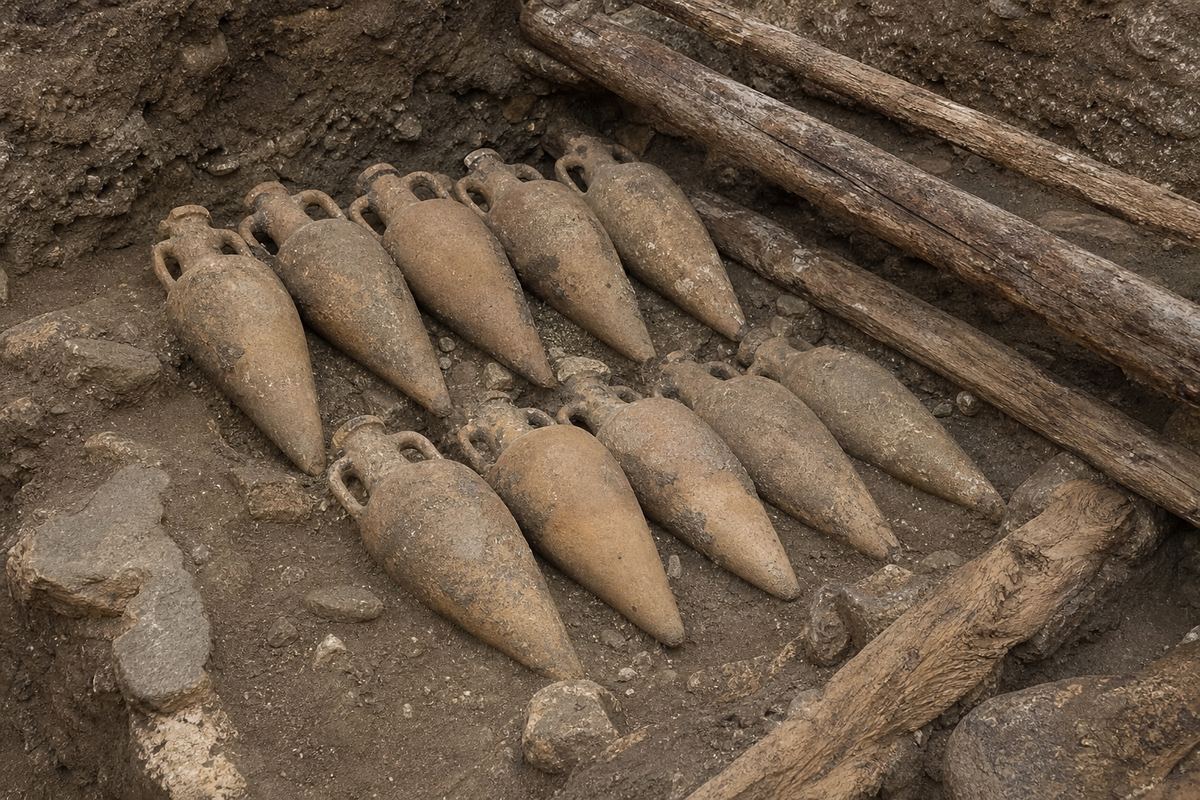
The two traded. Greek wine came north in clay jars called amphorae, which turn up in Scythian graves.
To the south were the Persians, who wrote of the Saka. Scythian soldiers served the Persian empire as mercenaries.
And Herodotus wrote about them at length, in the fourth book of his Histories.
A Greek colony A walled trading town above the sea, with riders and wagons approaching from the grassland. AI-generated illustration.Greek wine Pointed-based amphorae lying beside the beams of a burial chamber. AI-generated illustration.
Assyrian records
Persian inscriptions: the Saka
Greek histories: the Scythians
What neighbours wrote
Book IV
of the Histories
c. 430 BC
when it was written
Herodotus
Chapter VI · Neighbours and enemies
Neighbours
The Met: Greeks first met the Scythians in the 7th century BC as they settled the northern Black Sea coast; Herodotus’ Histories, Book IV, written around 430 BC, describes them. Current Archaeology: Greek wine was imported, and Greek amphorae appear in elite burials. Live Science: Scythian mercenaries served the Persian empire. Current World Archaeology: Assyrian and Achaemenid sources add references and depictions.
See also the World Empires episode on Persia.
The 3D scenes are simplified teaching models: the map, the mound, the rider and the ornaments are drawn schematically and not to scale.
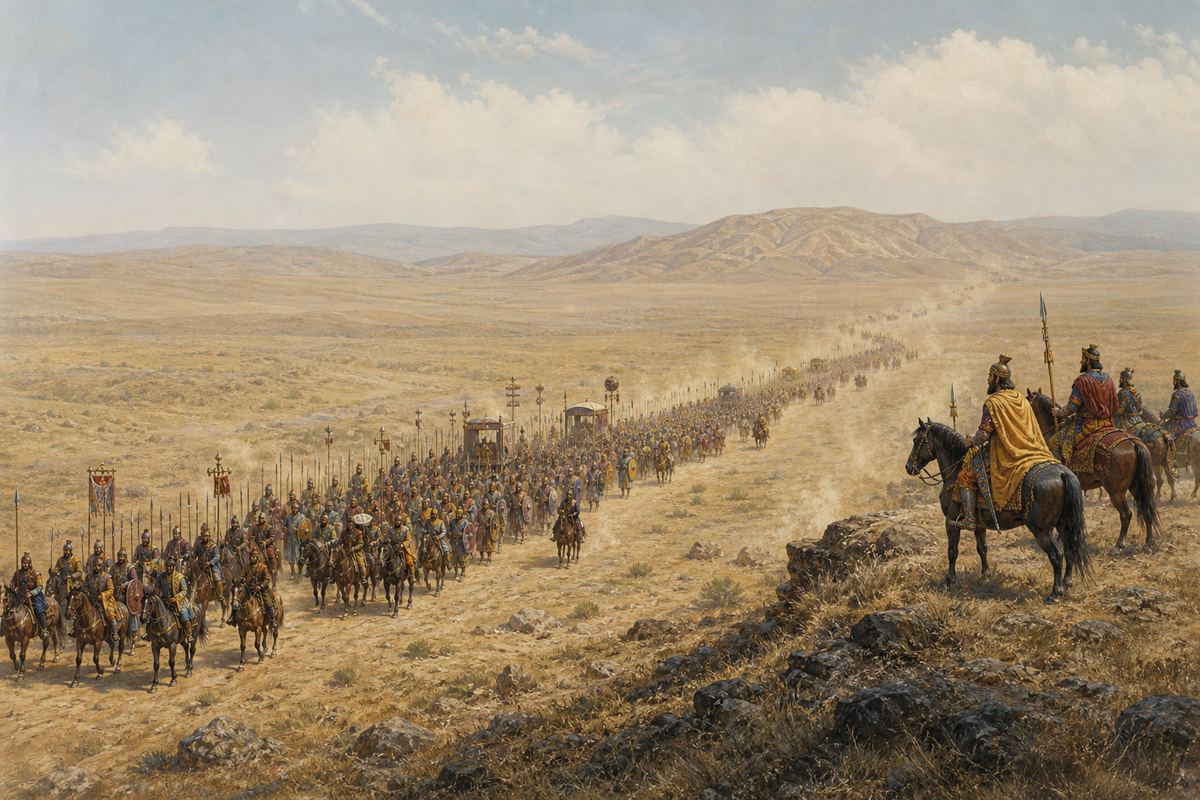
In 513 BC, Darius the First, king of Persia, marched a great army into Scythia to subdue it.
The Scythians did not stand and fight. Their horsemen harassed the Persians, and kept moving across the open grass.
In the end, Darius turned back. Herodotus called the Scythians invincible and unassailable.
His retreat left the Scythians free to push west, towards northern Greece and Thrace.
Persia marches north A long column crosses empty grassland while riders watch from a ridge. AI-generated illustration.
no pitched battle
cavalry raids on the column
always moving on
How the riders fought
invincible and unassailableHerodotus on the Scythians, quoted by Live Science
513 BC Darius turns back
after Scythians push towards Thrace and northern Greece
After the retreat
Chapter VI · Neighbours and enemies
Darius in Scythia
Live Science: Darius I of Persia invaded Scythia in 513 BC; Scythian cavalry harassed his army and it turned back, which let the Scythians expand towards northern Greece and Thrace. Herodotus described them as “invincible and unassailable”.
Press “March” and “Turn back”. The route is schematic: Herodotus’ account is the main source for the campaign.
The 3D scenes are simplified teaching models: the map, the mound, the rider and the ornaments are drawn schematically and not to scale.
Their power did not last. In 339 BC, Philip the Second of Macedon defeated the Scythians.
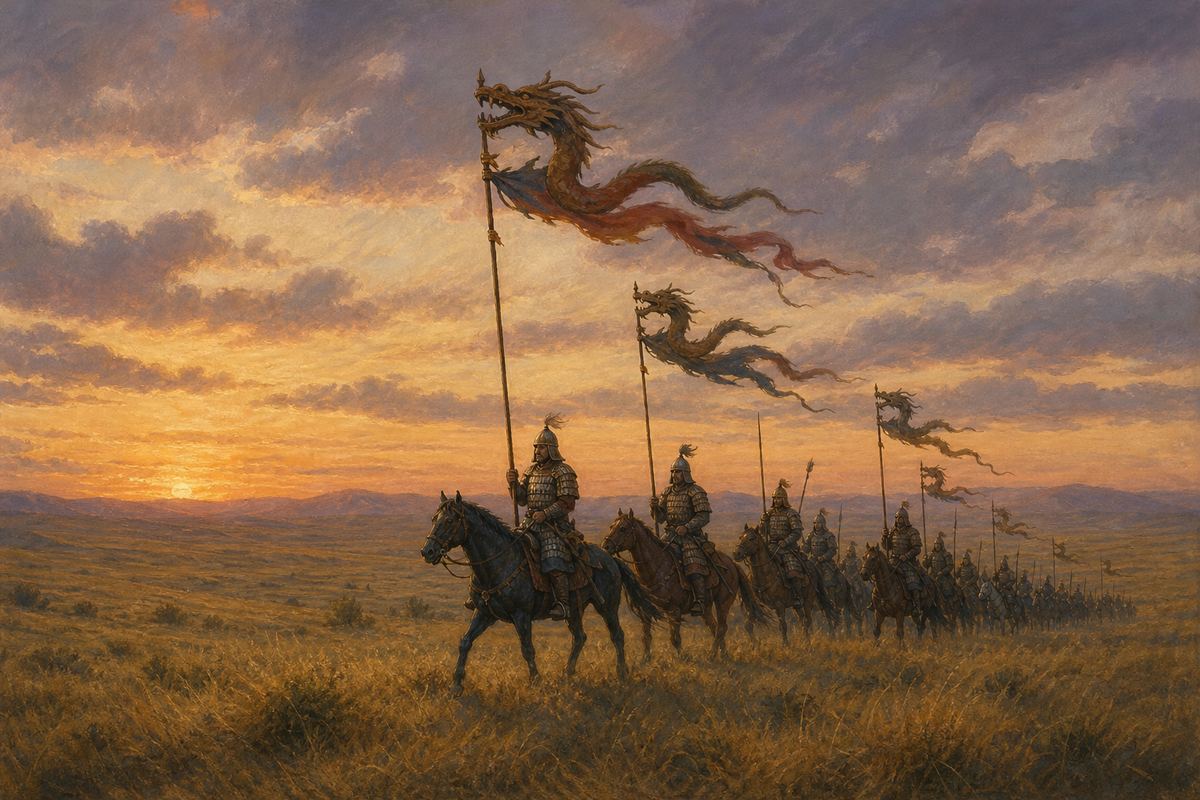
From the east came other steppe peoples, the Sarmatians. By the late second century BC, they had largely taken the Scythians' place.
By then, the Scythian age was over.
339 BC Philip II of Macedon defeats the Scythians
c. 200 BC Scythian power waning
late 2nd c. BC Sarmatians largely replace them
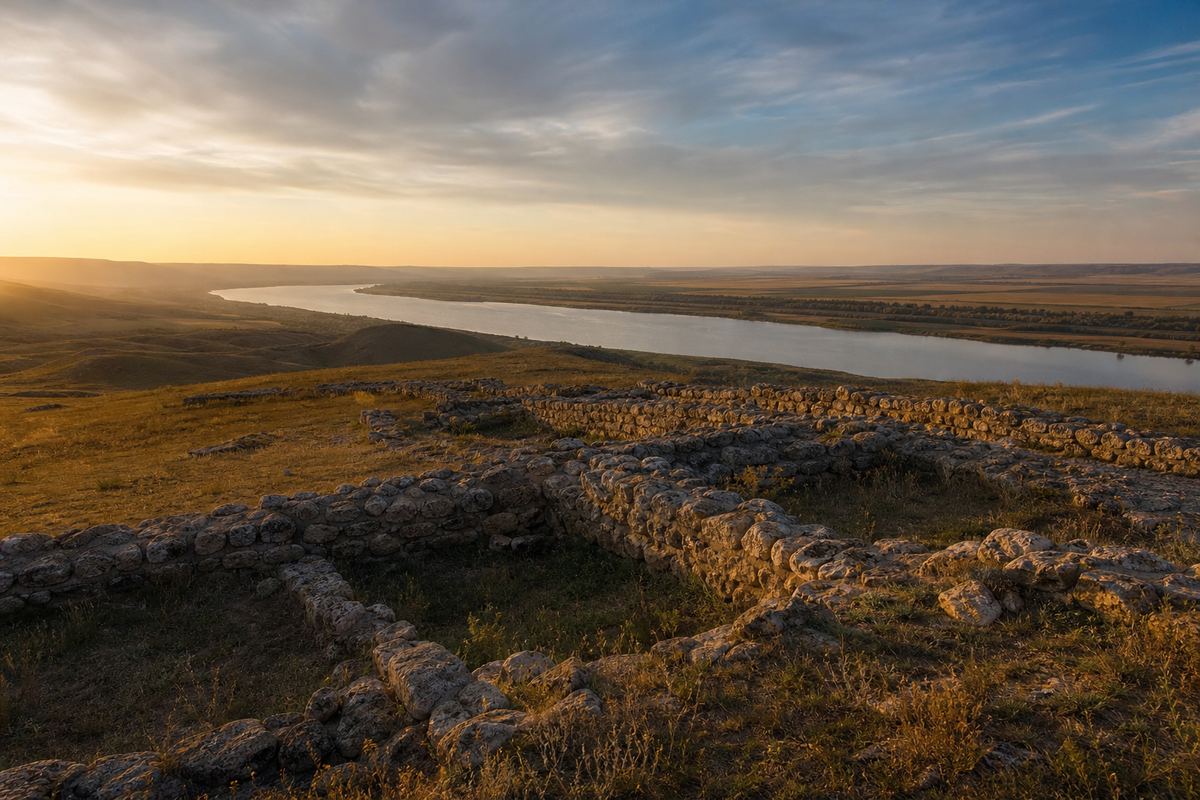
The end of an ageThe Sarmatians Riders in scale armour with long lances and dragon-shaped banners. AI-generated illustration.A quieter steppe Low walls of an old hill town above a steppe river. AI-generated illustration.
Chapter VI · Neighbours and enemies
Fading from the grass
Live Science: Philip II of Macedon defeated the Scythians in 339 BC; conflict with the Sarmatians ran from the 4th century BC onwards. The Met: the Sarmatians had largely replaced the Scythians by the late 2nd century BC. Blue Guides: Scythian power was waning by 200 BC.
The 3D scenes are simplified teaching models: the map, the mound, the rider and the ornaments are drawn schematically and not to scale.
For some seven hundred years they rode between Siberia and the Black Sea, and left no books behind.
Yet every mound that is opened adds a page they never wrote: a tattoo, a gold stag, a handful of seeds.
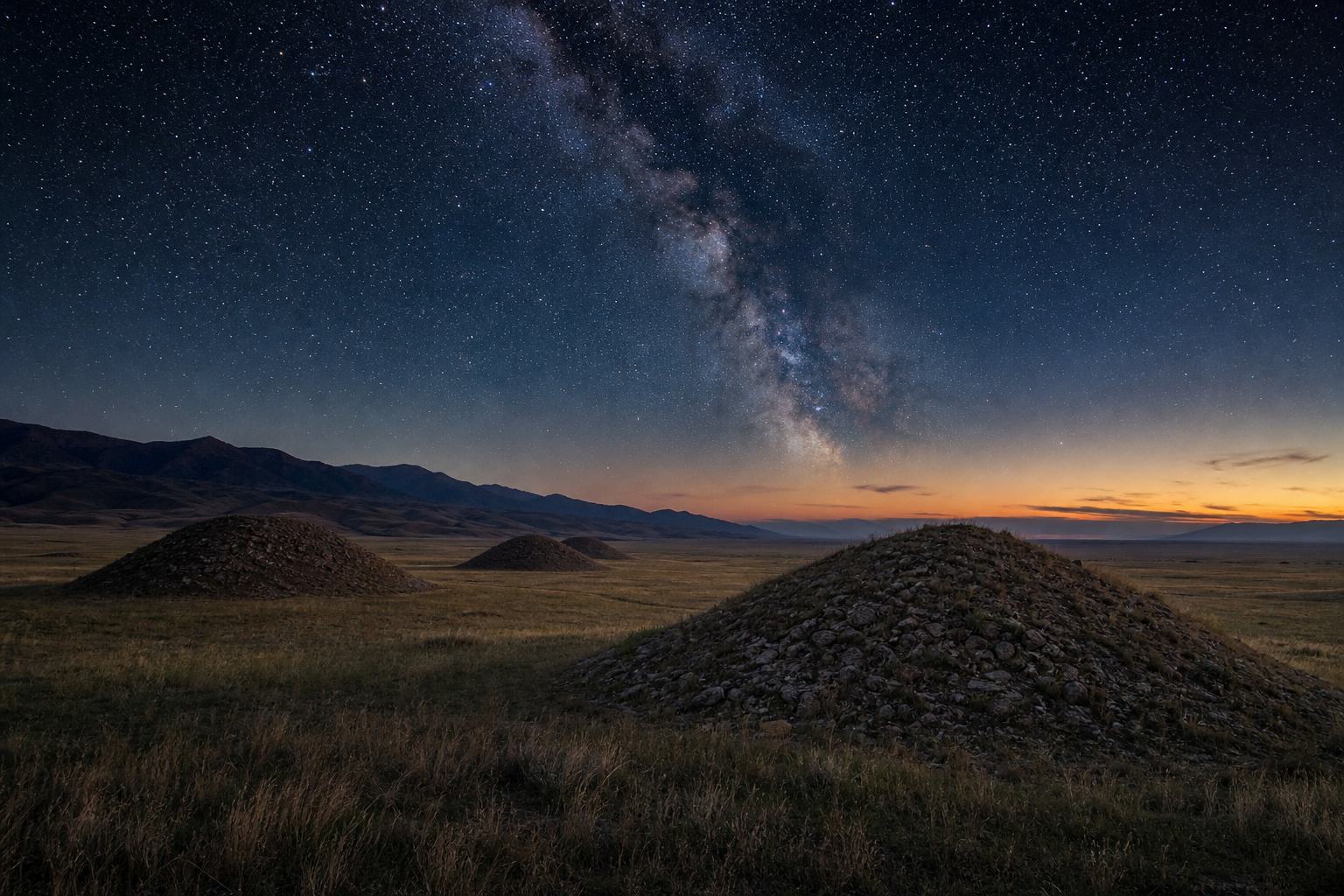
And across the steppe, many more mounds are still waiting under the grass.
c. 900 BC animal style appears
c. 800 BC Tunnug 1 in Tuva
7th c. BC Greeks meet them on the Black Sea
513 BC Darius turns back
c. 430 BC Herodotus, Book IV
late 2nd c. BC Sarmatians take their place
2026 the oldest dated cannabis evidence
The Scythians in seven datesStill waiting Mounds scattered across a steppe valley under the Milky Way. AI-generated illustration.Under the grass Grass bends in the wind over a low mound that no one has opened. AI-generated illustration.
Epilogue · Sources
Sources
Every fact in this film comes from the sources below. Where they differ, the film gives a range: Current World Archaeology puts the Scythian age at the 9th to 2nd century BC, and other sources give other spans, so “some seven hundred years” is approximate. The 2026 cannabis result comes from one new study, presented with the doubts of outside experts. The 3D scenes and maps are schematic. The chapter stills and pictures are AI-generated illustrations, not photographs of real objects, places or people.