Space · Physics
Round, orbiting, and not alone
A new world, and an old argument.
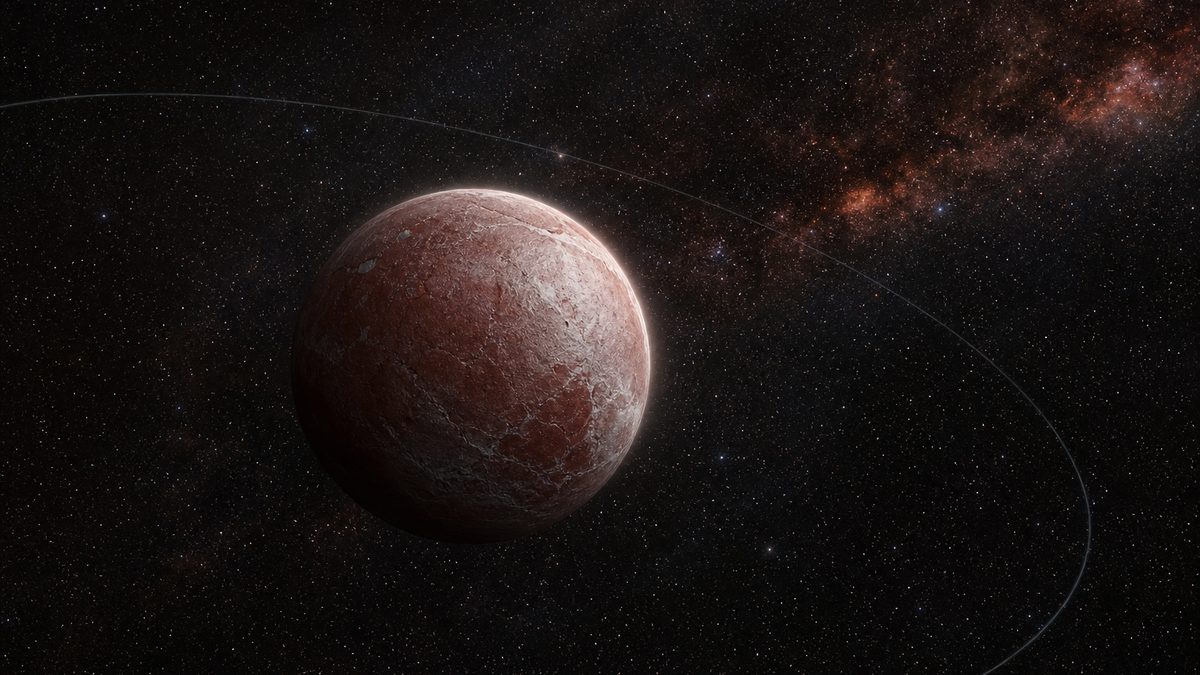
A faint dot crept across thirty pictures of the sky. On the twenty-seventh of October 2026, astronomers announced what it is: an icy world beyond Pluto, about forty-six times as far from the Sun as Earth is. It is called 2026 ED138.
It may be about a thousand kilometres across, among the largest and brightest bodies known out there, and it is the first possible dwarf planet found by the new Vera C. Rubin Observatory.
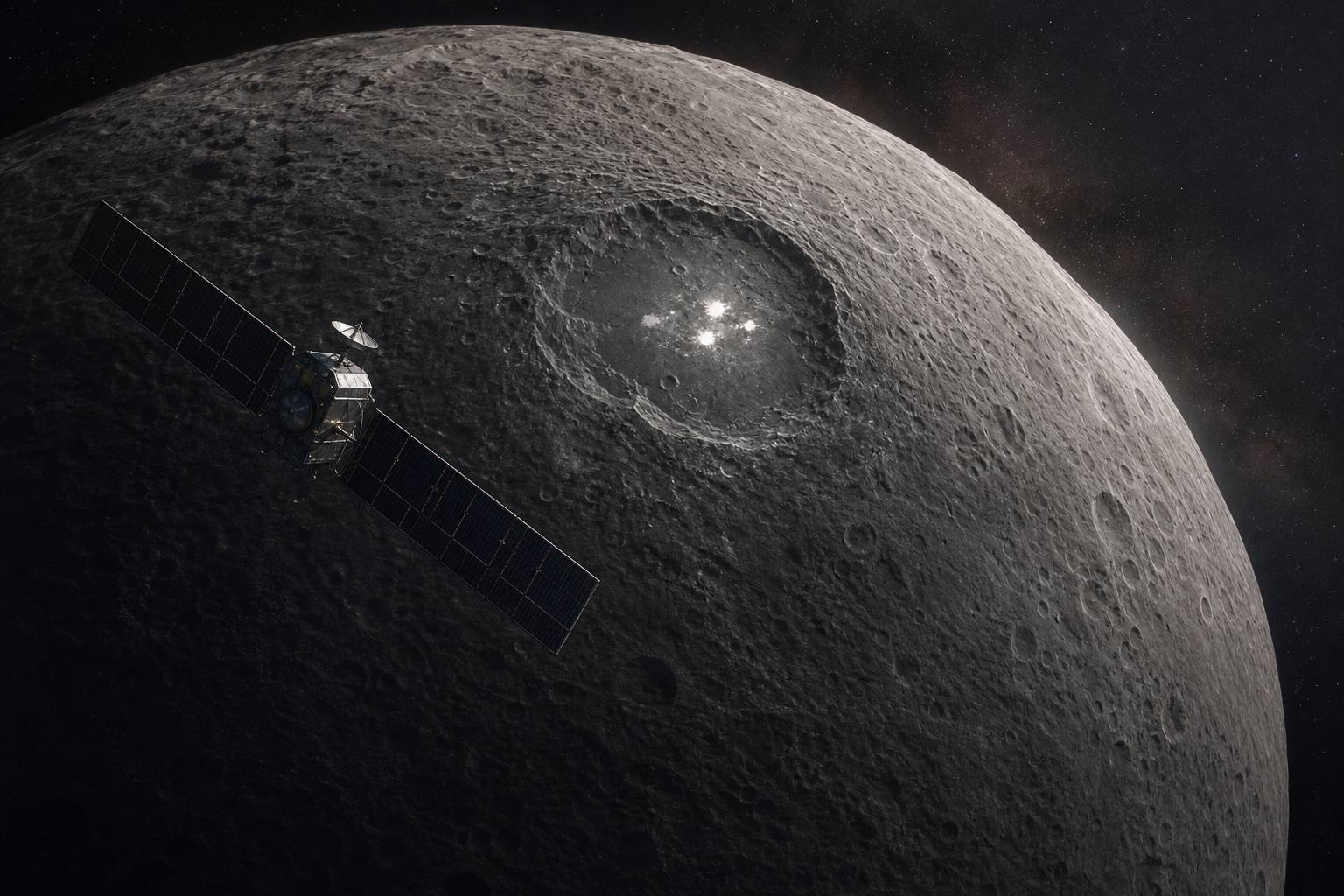
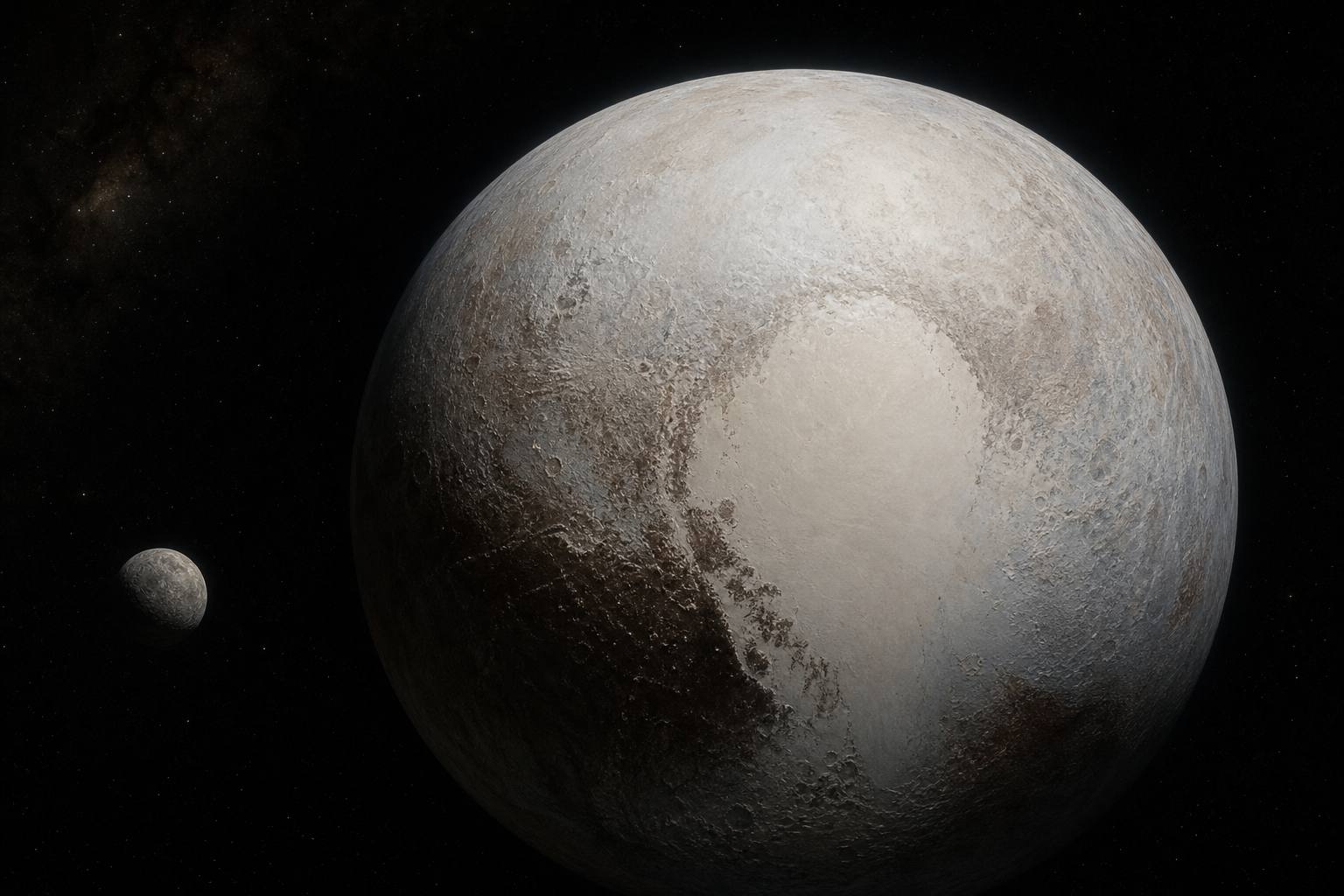
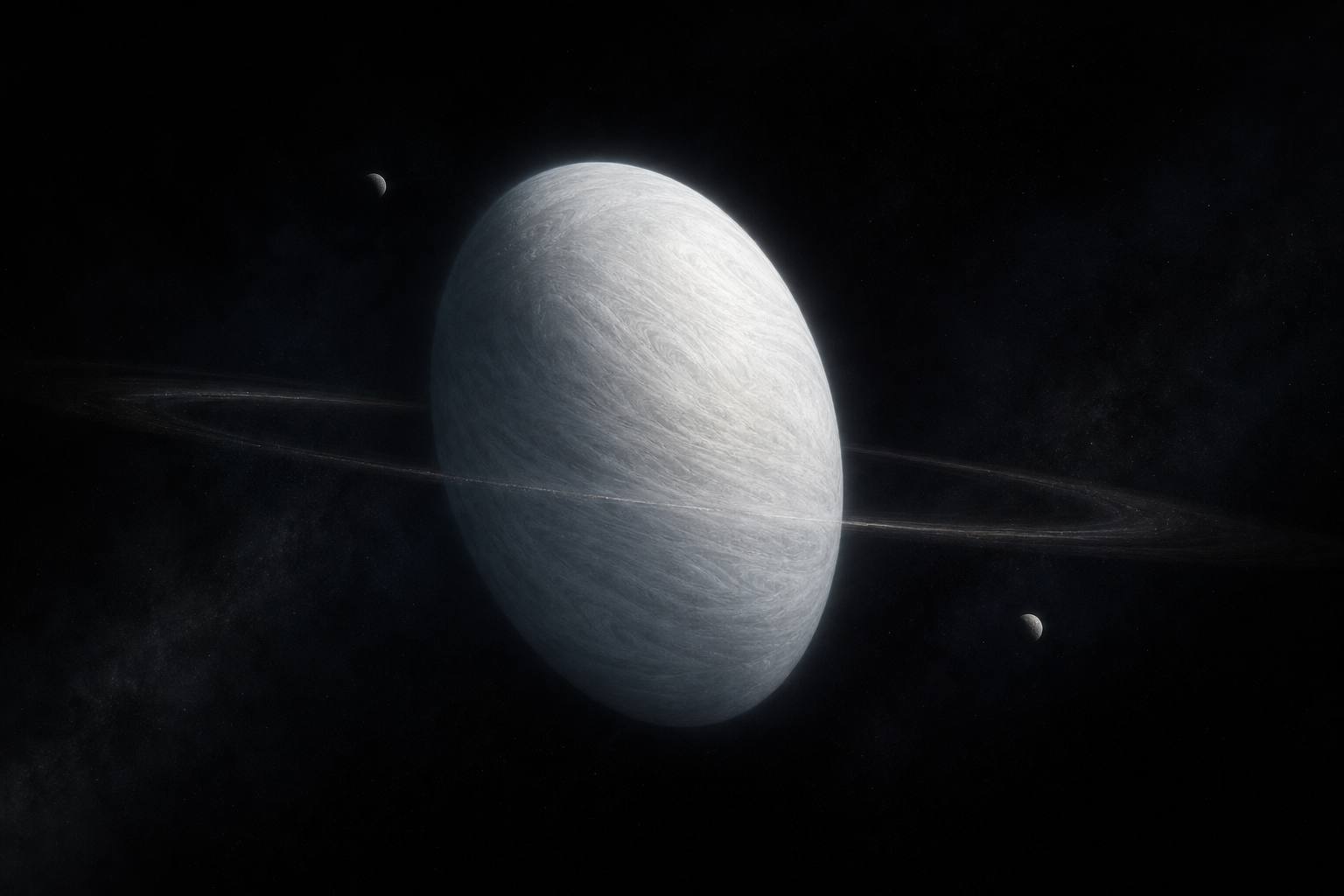
If it is confirmed, it would join Ceres, Pluto, Eris, Haumea and Makemake as the sixth recognised dwarf planet. So what exactly is a dwarf planet?
- ≈ 46 AU
- from the Sun; 1 AU = Earth–Sun distance
- 600–1,500 km
- estimated diameter
- 30
- Rubin sightings, March to July 2026

- How a moving dot is found
- The 2006 rules, and Pluto
- Why big bodies are round
- The five, and the Kuiper belt
A new candidate
SLAC and University of Washington (27 Oct 2026): 2026 ED138 is a trans-Neptunian object about 46 astronomical units (AU) from the Sun, against Pluto’s average of 40 AU; its size is estimated at 600 to 1,500 kilometres, “roughly 1,000 kilometers across” according to Mario Jurić; SLAC calls it among the largest and brightest bodies in this region, and GBH among the seven largest objects identified in the outer solar system. Its orbit is tilted almost 25 degrees. It was announced at the Division for Planetary Sciences meeting in Spokane, Washington, as the Rubin Observatory’s first dwarf planet candidate.
One astronomical unit (AU) is the average distance from Earth to the Sun.
2026 ED138 is a candidate: its size and shape are not yet confirmed, and the IAU has not classified it.
The solar-system map, the sky field and the bodies in the scenes are teaching models: distances are to scale only where stated, the bodies are enlarged, and colours are schematic.
Sources: SLAC National Accelerator Laboratory (27 Oct 2026): NSF–DOE Vera C. Rubin Observatory reveals its first dwarf planet candidate; University of Washington (27 Oct 2026): Rubin Observatory reveals its first dwarf planet candidate in our solar system; U.S. National Science Foundation (27 Oct 2026): New dwarf planet candidate discovered by NSF–DOE Rubin Observatory; GBH News (27 Oct 2026): Potential new dwarf planet found by Harvard astrophysicists