PlanetPast
EN

Sudan · 1821 to 2026

Sudan's War Explained

Where the Niles Meet

On 18 October 2026 a drone strike on a transport hub in a West Kordofan market town killed about 80 people, according to residents and medics. This film explains the war behind it, telling each side's account in its own terms: the Nile confluence at Khartoum, the Mahdist state and British rule, independence and two north–south wars, South Sudan's separation, Darfur and the rise of the Rapid Support Forces, the 2019 revolution, the 2021 coup and the war that began on 15 April 2023, the hunger and displacement it has caused, and the efforts to end it. Follow the rivers, split the map in 2011 and step through who held what.

Interactive 3D film10 min1821 to 2026Published 21 October 2026

Watch the interactive filmRead in ไทย

Prologue

A war told from every side

Where the Niles meet

How Sudan came to its war.

One Sunday evening this October, villagers in a market town in West Kordofan, Sudan, were waiting at a transport hub for rides home. Then a drone struck.

According to residents and medics quoted by AFP and Al Jazeera, about eighty people were killed. The town is held by the Rapid Support Forces, or RSF, a paramilitary force outside the regular army, whose administration blamed the army.

Sudan's army and the RSF, a force the state itself created, have been at war since April 2023. To see why, start where two rivers meet.
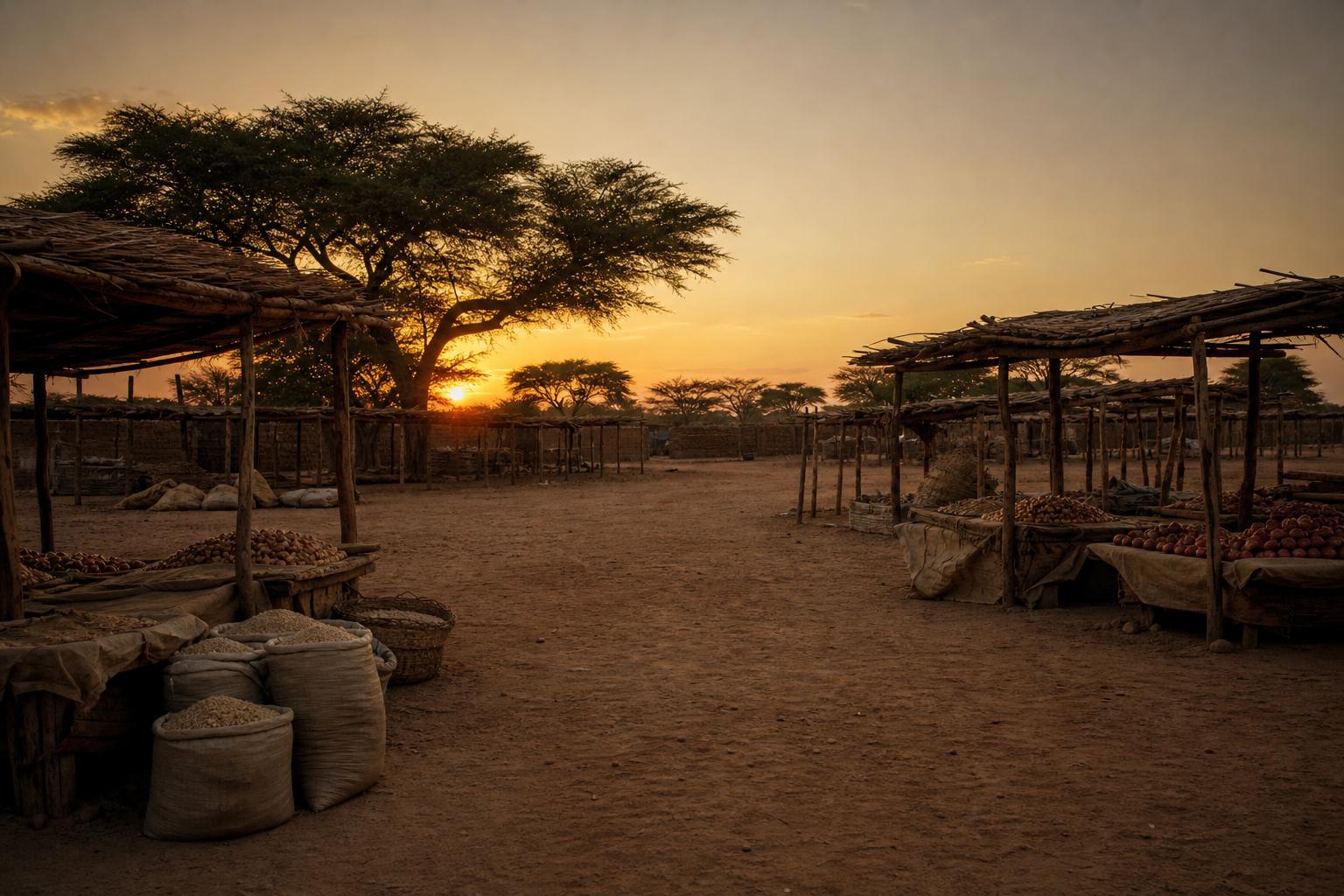
Market day In rural Kordofan, market days draw people in from villages across the plain. AI-generated still.
  • ~80 killed, according to residents and medics (AFP, Al Jazeera)
  • the RSF’s administration and the rights group Emergency Lawyers blamed the army
  • the reports carried no response from the army
Who says what, 19 October 2026
160+
reported killed in drone attacks in western regions since Friday, per medics and rights groups
The same weekend (Al Jazeera)
  • Sudanese Armed Forces (SAF), led by General Abdel Fattah al-Burhan
  • Rapid Support Forces (RSF), led by Mohamed Hamdan Dagalo, “Hemedti”
  • plus allied armed groups on both sides
Who is fighting
Prologue · The news

A strike in West Kordofan

On the evening of Sunday 18 October 2026 a drone hit a transport hub in an RSF-held town in West Kordofan, where villagers had gathered after a market day to find rides home. About 80 people were killed, according to residents and medical workers quoted by AFP and Al Jazeera. The RSF’s self-declared administration and the rights group Emergency Lawyers accused the army; the reports carried no response from the army. AFP spells the town Al-Dibab, Al Jazeera al-Dabba.

This film explains the history behind the war and gives each side’s account in its own terms; contested figures are attributed to their sources with their dates. No images show real events or people.

How to use: pick a chapter or press ← →; drag to rotate. Four steps have buttons you can press. A paramilitary is an armed force organised like an army but outside the regular armed forces.

Sources: Al Jazeera: drone attacks across Sudan escalate, 160 people reported killed (19 Oct 2026); IOL / AFP: 80 killed in drone strike on transport hub in southern Sudan (19 Oct 2026)
Chapter I · Where the Niles meet

Chapter I · Where the Niles meet

A country run from the river

Two rivers, a capital, and the plains far away.

Sudan is Africa's third-largest country. At Khartoum, the White Nile, flowing from Lake Victoria, meets the Blue Nile from the highlands of Ethiopia.

The Blue Nile brings almost seventy per cent of the floodwater. Press the buttons to follow each river.

West of the river lie Kordofan and Darfur: wide, dry plains of herders and farmers, far from the capital.

Khartoum was founded in 1821 by an army sent by Egypt's ruler to conquer the Nile valley. For most of the two centuries since, Sudan has been governed from here.

1.86 million km²
third in Africa, after Algeria and DR Congo
850,000 km²
Darfur and Kordofan together
Sudan
  • White Nile: from Lake Victoria in East Africa
  • Blue Nile: from Lake Tana in Ethiopia, about 1,460 km long
  • three cities on its banks: Khartoum, Omdurman, Khartoum North
Al-Mogran, “the confluence”
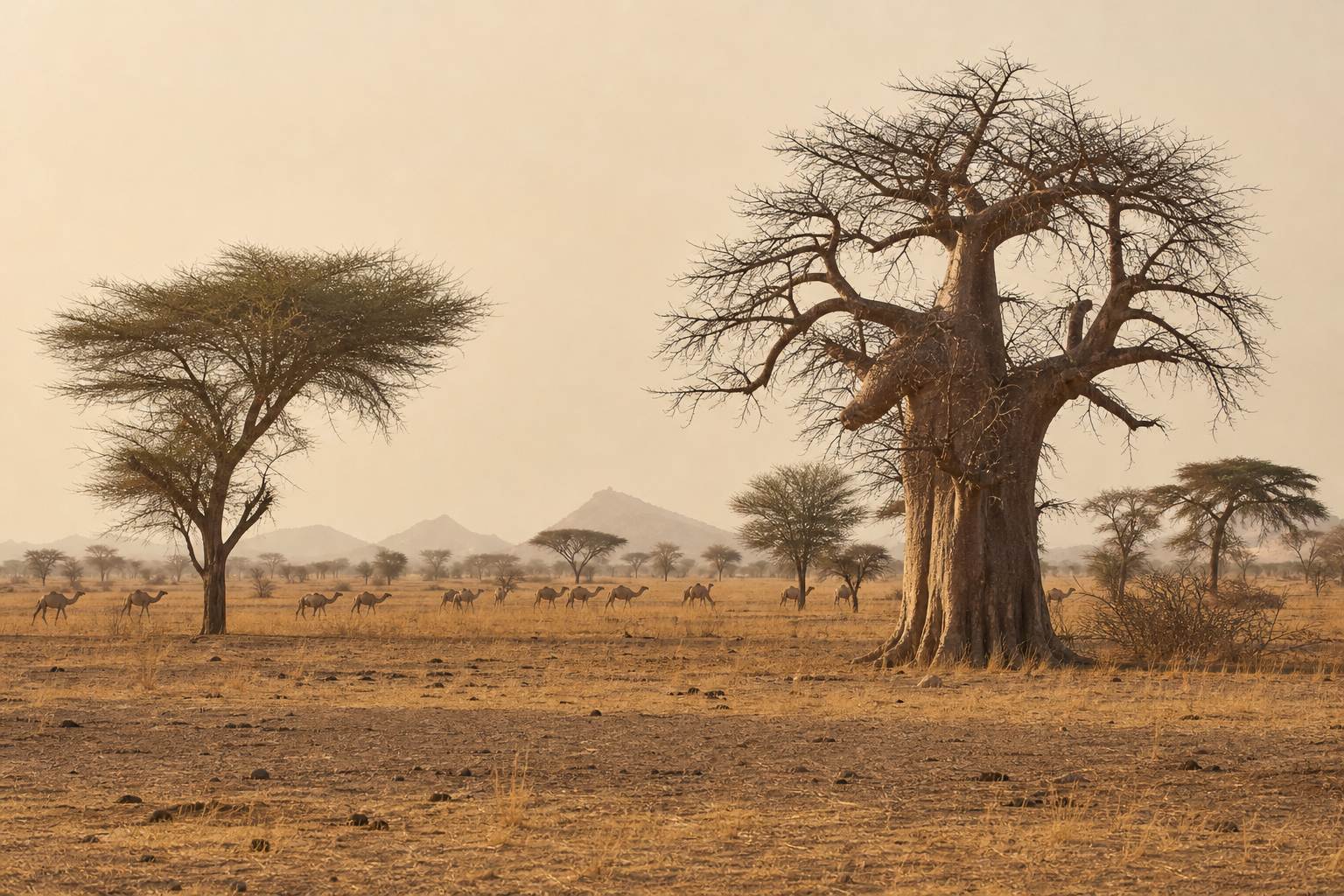
The Sahel of Kordofan Acacia and baobab savanna: grazing land in the wet season, dust in the dry. AI-generated still.
  1. 1820–21 Muhammad Ali’s Egypt conquers the Nile valley
  2. 1821 Khartoum founded at the confluence
  3. 1821–1885 Turco-Egyptian rule, called the Turkiyya
The Turkiyya
Chapter I · Where the Niles meet

The geography of Sudan

Sudan covers about 1.86 million km², the third-largest country in Africa after Algeria and the Democratic Republic of the Congo. The White Nile, from Lake Victoria, meets the Blue Nile, from Lake Tana in Ethiopia, at Khartoum; the meeting point is called al-Mogran. According to Britannica the Blue Nile supplies almost 70 per cent of the floodwater at Khartoum. Darfur and Kordofan in the west together cover about 850,000 km².

Khartoum was established in 1821 by forces of Muhammad Ali Pasha, ruler of Egypt, led by his son Isma’il. “Governed from here” is a summary: the Mahdist state ruled from Omdurman across the river, and during the current war the army-led government has worked from Port Sudan.

The 3D map is schematic: outlines, rivers, borders and areas of control are approximate.

Sources: Wikipedia: Geography of Sudan; Britannica: Blue Nile River; Wikipedia: Khartoum; Wikipedia: Mahdist State

Chapter II · Mahdi and empire

Chapter II · Mahdi and empire

The Mahdi

A religious revolt builds a state.

In 1881 a religious leader, Muhammad Ahmad, proclaimed himself the Mahdi, the redeemer expected in Islamic tradition, and rose against Egyptian rule.

Britain had controlled Egypt since 1882, and sent the general Charles Gordon to pull Egypt's garrisons out. In January 1885 the Mahdi's forces took Khartoum, and Gordon was killed.

The Mahdi died months later. His successor, the Khalifa Abdallahi, ruled from Omdurman until a British and Egyptian army defeated him there in September 1898.

  1. 1881 Muhammad Ahmad proclaims himself the Mahdi
  2. 26 Jan 1885 Khartoum falls; Gordon killed
  3. 22 Jun 1885 The Mahdi dies, probably of typhus
  4. 2 Sep 1898 Battle of Omdurman
The Mahdiyya
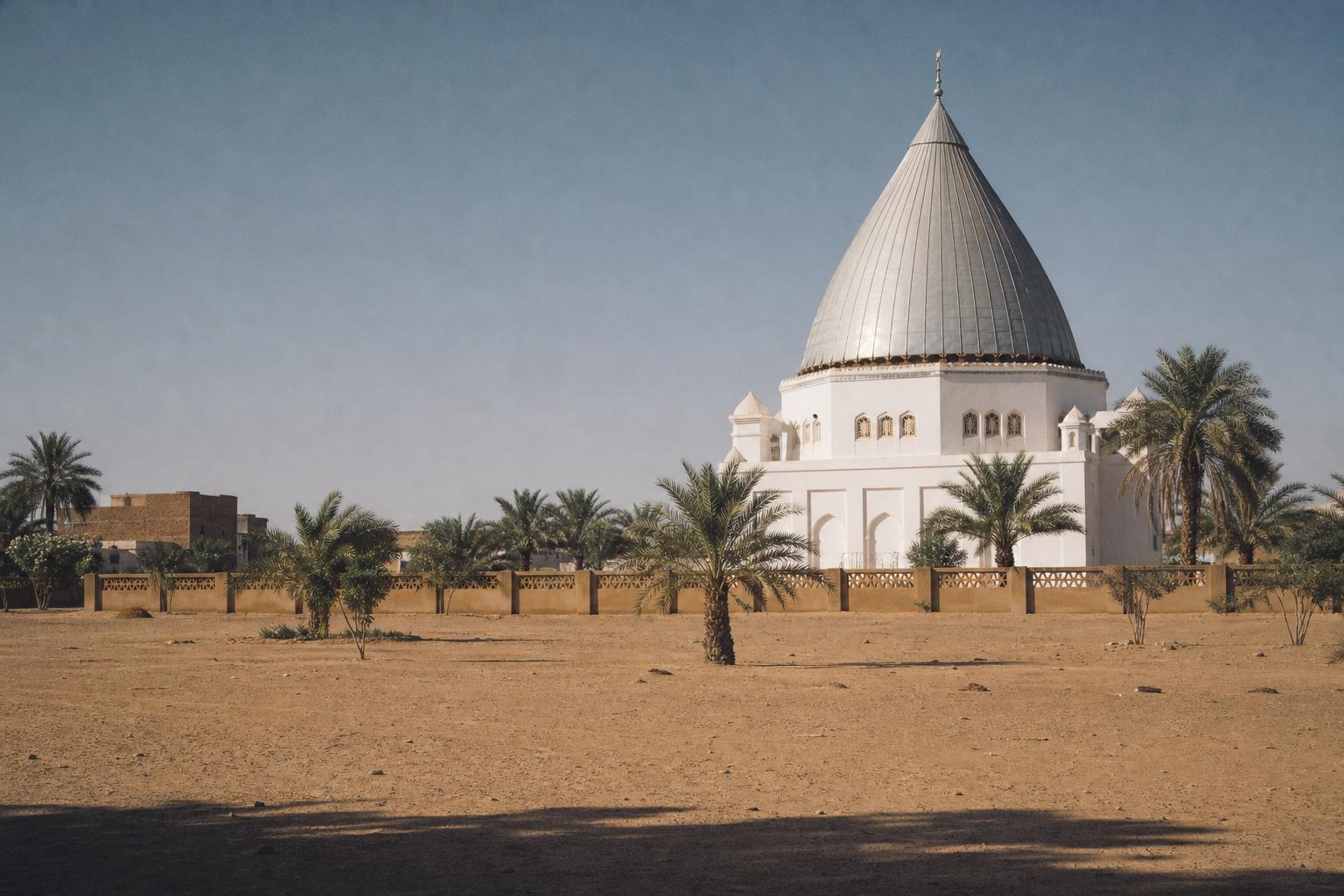
Omdurman The Mahdists built their capital across the White Nile from the ruined Khartoum. AI-generated still.
~52,000
men in the Khalifa’s army at Omdurman
1899
the Mahdist state effectively ends
2 September 1898
Chapter II · Mahdi and empire

The Mahdist state

Egyptian rule over Sudan, known locally as the Turkiyya, began in 1821. In 1881 Muhammad Ahmad proclaimed himself the Mahdi and rose against it. His forces captured Khartoum on 26 January 1885, killing Charles Gordon. The Mahdi died on 22 June 1885; the Khalifa Abdallahi consolidated the state and built a capital at Omdurman. His army of about 52,000 was defeated by an Anglo-Egyptian force at Omdurman on 2 September 1898.

Gordon was reappointed Governor-General by the British government with orders to evacuate Khartoum and the other Egyptian garrisons; he arrived in February 1884 and chose to fortify the city. The siege lasted from 13 March 1884 to 26 January 1885. The Mahdist regime is often described as the first Sudanese nationalist government.

Sources: Wikipedia: Mahdist State; Wikipedia: Siege of Khartoum; Wikipedia: Anglo-Egyptian Sudan

Chapter III · North and South

Chapter III · North and South

Fifty years of war

Independence came with a southern revolt.

Britain, which ruled Sudan with Egypt from 1899, ran the Muslim, Arabic-speaking north and the south almost as two countries. Sudan became independent on the first of January 1956; a southern revolt had already begun, and lasted until 1972, when a deal gave the south self-rule.

In 1983 President Jaafar Nimeiri abolished that autonomy and imposed Islamic law. War returned, with southern rebels led by John Garang.

In 1989 Omar al-Bashir seized power in a coup. Roughly two million people died from fighting, famine and disease before, in 2005, Bashir's government signed a peace deal promising the south a vote on independence.

The south From 1924, mission schools in the south taught in English, while the north ran in Arabic. AI-generated still.
  • north: Arabic, Islam, the seat of government
  • south: local languages, mission schools, English
  • 1947: the Juba Conference decides to merge the two
Two halves, two paths
  1. 1899 Anglo-Egyptian condominium begins
  2. from 1924 North and south run separately
  3. 1955–1972 First civil war, ended by the Addis Ababa Agreement
  4. 1 Jan 1956 Independence
  5. 5 Jun 1983 Southern autonomy abolished
  6. Sep 1983 “September Laws” impose sharia
  7. 30 Jun 1989 Coup brings Omar al-Bashir to power
  8. 9 Jan 2005 Comprehensive Peace Agreement, Nairobi
From condominium to peace deal
22 years
of war led by the Sudan People’s Liberation Army (SPLA)
4 million
southerners displaced at least once
Second civil war, 1983–2005
  • six years of southern self-rule
  • then a referendum on independence
  • oil revenue split evenly in the meantime
The 2005 peace deal
Chapter III · North and South

Two administrations, two civil wars

The Anglo-Egyptian Condominium agreements of 1899 set up joint British and Egyptian rule; Sudan was effectively administered as a British imperial possession. From 1924 the British divided the country into a mostly Muslim, Arabic-speaking north and a mostly animist and Christian south, where Christian missionaries encouraged English. The 1947 Juba Conference decided to merge the two administrations, and a 1953 agreement laid out steps to self-rule. Sudan became independent on 1 January 1956. The first civil war (1955–1972) ended with the Addis Ababa Agreement, which gave the south autonomy. The Southern Sudan Autonomous Region was abolished on 5 June 1983, and in September 1983 President Nimeiri introduced Islamic sharia laws, the “September Laws”. The second civil war (1983–2005), fought by the Sudan People’s Liberation Army (SPLA) under John Garang, left roughly two million dead from war, famine and disease and four million southerners displaced. Omar al-Bashir took power in a coup on 30 June 1989. The Comprehensive Peace Agreement was signed in Nairobi on 9 January 2005.

Sources weigh the causes of the second war differently: some stress the imposition of sharia law on non-Muslim southerners, others exploitative governance and oil. Estimates of the death toll vary; the Enough Project gives 2.5 million.

The 3D map is schematic: outlines, rivers, borders and areas of control are approximate.

Sources: Wikipedia: Anglo-Egyptian Sudan; Britannica: Anglo-Egyptian Condominium; Enough Project: Sudan, a brief history from 1956; Wikipedia: Addis Ababa Agreement (1972); Wikipedia: September Laws (Sudan); Wikipedia: Second Sudanese Civil War

Chapter III · North and South

Two Sudans

The south leaves, and takes most of the oil.

In January 2011 southerners voted, and nearly ninety-nine per cent chose to separate. On the ninth of July 2011, South Sudan became independent.

About three-quarters of the oil production went with it. Sudan's oil export earnings fell from almost eleven billion dollars in 2010 to under two billion in 2012.

Use the buttons to compare the map before and after. And in the west, another war had been burning for eight years.

98.83%
of southern voters chose to secede
1.17%
backed unity
Referendum, 9–15 January 2011
2010~11
2012<1.8
Sudan’s crude oil export revenue (US EIA)
Oil in the borderlands After 2011, oil was 98% of South Sudan’s government revenue, and 27% of Sudan’s in 2012. AI-generated still.
Chapter III · North and South

South Sudan’s independence

In a referendum held from 9 to 15 January 2011, 98.83 per cent of southern voters chose to secede; South Sudan became independent on 9 July 2011. According to the US Energy Information Administration, South Sudan gained about three-quarters of the oil production, and Sudan’s crude oil export revenues fell from almost $11 billion in 2010 to just under $1.8 billion in 2012.

Oil field markers on the map are schematic.

The 3D map is schematic: outlines, rivers, borders and areas of control are approximate.

Sources: Al Jazeera: South Sudan votes to secede (7 Feb 2011); US EIA: Sudan and South Sudan country analysis (2014)

Chapter IV · Darfur

Chapter IV · Darfur

War in the west

A rebellion, and the militias sent against it.

In 2003, rebels rooted in Darfur's non-Arab communities took up arms, demanding an end to what they called the marginalisation of their region.

The government responded by arming mostly Arab militias, known as the Janjaweed, which raided and burned villages. The government denied any link to them.

By early 2009 the UN estimated three hundred thousand deaths and 2.7 million people forced from their homes. Sudan's government put the toll at no more than ten thousand.

The International Criminal Court issued arrest warrants for President Bashir, for war crimes, crimes against humanity and genocide. A warrant is an accusation, not a verdict.

  • Sudan Liberation Army (SLA)
  • Justice and Equality Movement (JEM)
  • the government and the Janjaweed, a name built from Arabic words for outlaw, horse and gun
The sides in 2003
Widely reported to be government-supported, though the government continues to deny any relationship.PBS Wide Angle on the Janjaweed, 2008
300,000
deaths since 2003
2.7 million
people forced to flee
≤10,000
the government’s count, killed directly by fighting (2008)
UN estimate, January 2009
  1. 4 Mar 2009 First warrant: crimes against humanity, war crimes
  2. 12 Jul 2010 Second warrant: three counts of genocide against the Fur, Masalit and Zaghawa
  3. 2009 Bashir becomes the first sitting head of state with an ICC warrant
International Criminal Court
Chapter IV · Darfur

The war in Darfur

The Darfur conflict began in 2003, when the Sudan Liberation Army and the Justice and Equality Movement, rooted in Darfur’s non-Arab communities, rebelled, demanding an end to the social, economic and political marginalisation of their region. The government responded by arming the Janjaweed, a mostly Arab militia, which raided and burned villages; the government denied any relationship with them. In January 2009 the UN cited an estimated 300,000 deaths and 2.7 million people displaced since 2003.

The ICC issued a warrant for Omar al-Bashir on 4 March 2009 (five counts of crimes against humanity, two of war crimes) and a second on 12 July 2010 (three counts of genocide). The case remains at the pre-trial stage; he has not been tried. The International Criminal Court (ICC) tries individuals; it is different from the International Court of Justice, which settles disputes between states. In April 2008 Sudan’s government said the toll was no more than 10,000, counting only people killed directly by the fighting. In Darfur, who counts as “Arab” and who as “African” is, in historian Sean O’Fahey’s words, “ultimately a matter of self-ascription”, bound up with language and genealogy.

The 3D map is schematic: outlines, rivers, borders and areas of control are approximate.

Sources: PBS Wide Angle: Darfur factions guide (2008); UNAMID / UN News: Darfur, an estimated 300,000 deaths since 2003 (Jan 2009); Al Jazeera: Sudan says UN exaggerating Darfur toll (23 Apr 2008); ICC: second warrant of arrest against Omar Al Bashir, counts of genocide (12 Jul 2010); Coalition for the ICC: Omar al-Bashir; African Arguments: Sean O’Fahey, Ethnic identity in Darfur (7 Apr 2009)

Chapter IV · Darfur

The Rapid Support Forces

A militia becomes a second army.

One Janjaweed commander rose above the rest: Mohamed Hamdan Dagalo, known as Hemedti, from a camel-herding Rizeigat clan.

In 2013 the government reorganised his fighters as the Rapid Support Forces, a paramilitary under the security services, separate from the regular army.

The RSF grew large and rich. It sent tens of thousands of fighters to the war in Yemen, and in 2017 took over gold mines in Darfur.

Aug 2013
restructured as a paramilitary force
~40,000
RSF members in Yemen’s war, 2016–2017
The RSF
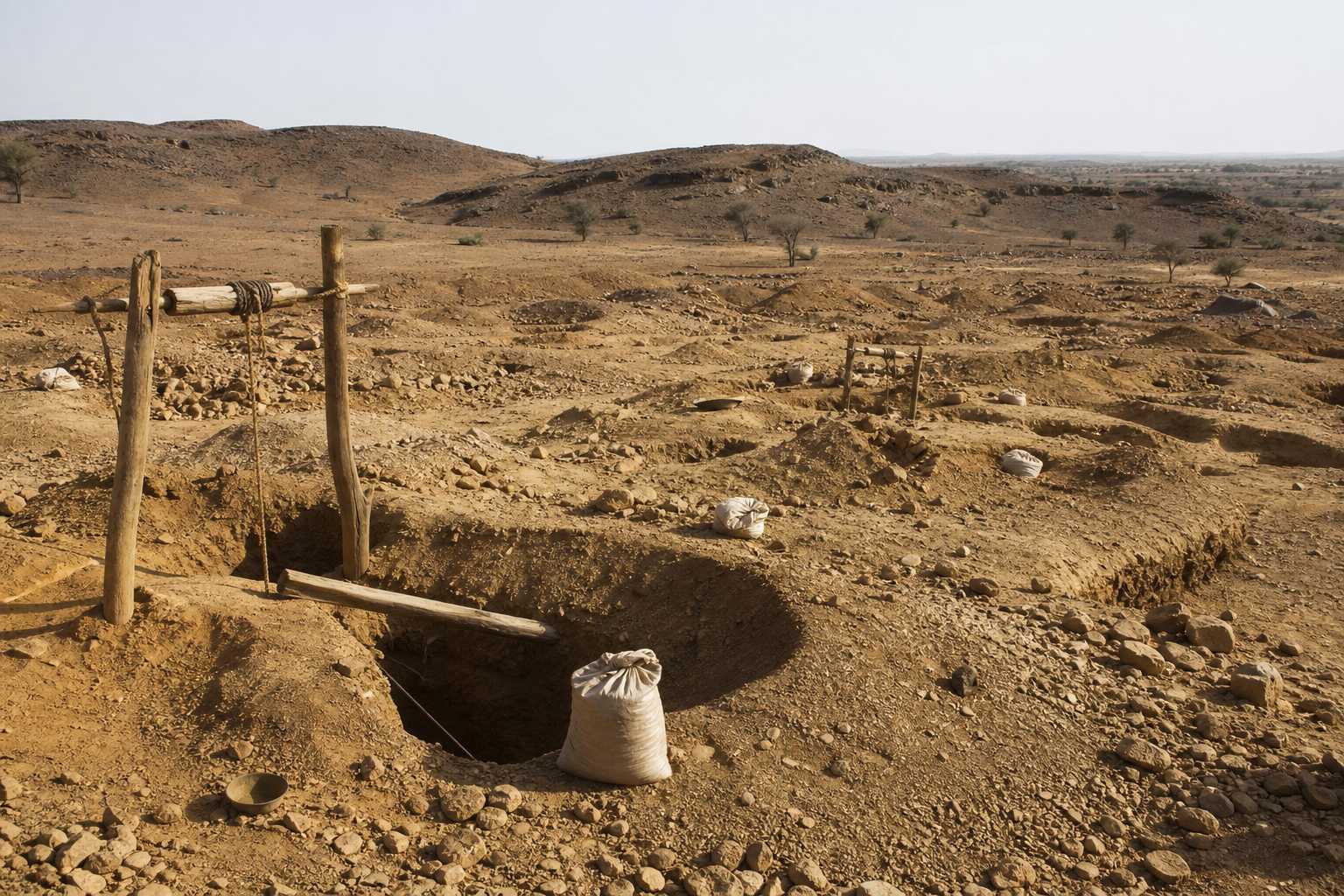
Gold Small hand-dug gold pits in Darfur. Through his family firm al-Junaid, Hemedti became a major gold trader. AI-generated still.
One of the richest men in Sudan.Alex de Waal on Hemedti (2019), as cited by Wikipedia
Chapter IV · Darfur

The rise of Hemedti

The Rapid Support Forces grew out of the Janjaweed militias. It was restructured as a paramilitary force in August 2013 under Mohamed Hamdan Dagalo, “Hemedti”, a Janjaweed leader from the Mahariya branch of the camel-herding Northern Rizeigat, and was attached to the National Intelligence and Security Service. About 40,000 RSF members took part in Yemen’s civil war in 2016–2017. In November 2017 Hemedti used the RSF to take control of gold mines in Darfur.

Human Rights Watch and others accuse Hemedti of involvement in Darfur atrocities; no response from him to these accusations was found in the sources used here. Accounts of his birth and early life differ.

The 3D map is schematic: outlines, rivers, borders and areas of control are approximate.

Sources: Wikipedia: Rapid Support Forces; Wikipedia: Hemedti

Chapter V · Revolution and coup

Chapter V · Revolution and coup

The fall of Bashir

Protest topples a ruler of thirty years.

In December 2018, protests against poverty, corruption and unemployment began in the town of Atbara and spread to Khartoum.

On the eleventh of April 2019, after months of protest, the army removed Bashir after nearly thirty years in power. General Abdel Fattah al-Burhan, who became head of the army the next day, and Hemedti rose to the top.

In June, armed men broke up the protest camp in Khartoum and dozens were killed. The attack was widely blamed on the RSF, which denied any involvement.

In August a deal set up a council of generals and civilians, with Abdalla Hamdok as prime minister, and elections planned for 2023.

Khartoum streets Security forces’ crackdown on the first weeks of protest killed dozens, Al Jazeera reported. AI-generated still.
  1. Dec 2018 Protests begin in Atbara
  2. 11 Apr 2019 Army removes Bashir
  3. 3 Jun 2019 Sit-in broken up; dozens killed
  4. 17 Aug 2019 Constitutional declaration signed
The revolution
108
killed, per the Central Committee of Sudan Doctors
Khartoum
sit-in outside army headquarters
3 June 2019
  • Sovereignty Council: chaired by Burhan, Hemedti his deputy
  • civilian cabinet under Prime Minister Abdalla Hamdok
  • a three-year transition toward elections
The 2019 transition
Chapter V · Revolution and coup

The Sudanese revolution

Protests against poverty, corruption and unemployment erupted in Atbara in December 2018 and spread to Khartoum. On 11 April 2019 the military removed Omar al-Bashir after nearly 30 years in power. On 3 June armed men moved on the protest camp and dozens were killed. A constitutional declaration was signed on 17 August; a sovereign council of military and civilian figures followed, with a cabinet under Prime Minister Abdalla Hamdok and elections scheduled for 2023.

Burhan has chaired the Transitional Sovereignty Council since 21 August 2019, with Hemedti as deputy chairman. The Central Committee of Sudan Doctors put the toll of the 3 June 2019 crackdown at 108. The RSF was blamed for the violence and rejects the allegations. Bashir was convicted of corruption on 14 December 2019, and in July 2020 went on trial over the 1989 coup.

Sources: Al Jazeera: timeline, Sudan since the fall of Omar al-Bashir (25 Oct 2021); Africanews: Sudan, June 3 death toll passes 100 (6 Jun 2019); Wikipedia: Abdel Fattah al-Burhan; Wikipedia: Hemedti; Wikipedia: Rapid Support Forces

Chapter V · Revolution and coup

Two generals, one question

Who would command the guns?

On the twenty-fifth of October 2021, Burhan, with Hemedti's backing, dissolved the civilian government and detained the prime minister. Burhan said the army had acted to prevent civil war.

In December 2022 the generals signed a framework deal with civilian groups for a return to civilian rule. Then one question split them: how fast the RSF would join the regular army.

The army wanted two years, the RSF ten. On the fifteenth of April 2023, fighting broke out in Khartoum and spread across the country.

  1. 25 Oct 2021 Coup; Hamdok detained
  2. 21 Nov 2021 Hamdok reinstated under a deal with Burhan
  3. 2 Jan 2022 Hamdok resigns
  4. 5 Dec 2022 Framework deal signed
The broken transition
2 years
the army’s timetable
10 years
the RSF’s timetable
RSF integration, spring 2023
15 April 2023 The fighting began in the capital itself, around the airport and army bases. AI-generated still.
Chapter V · Revolution and coup

The coup and the split

On 25 October 2021 General al-Burhan declared a state of emergency and dissolved the government; Prime Minister Hamdok was detained. Hemedti took part in the coup, and RSF units were on Khartoum’s streets. Burhan said the army acted to prevent a civil war and denied it was a coup. Hamdok was reinstated on 21 November 2021 and resigned on 2 January 2022. A framework deal signed on 5 December 2022 set a path to elections, but talks on a final deal stalled over integrating the RSF: the army wanted two years, the RSF ten. War began on 15 April 2023.

In February 2023 Hemedti called the 2021 coup a “mistake”. Other points of dispute included the future status of RSF officers and whom the RSF would answer to.

Sources: Wikipedia: 2021 Sudanese coup d’état; Africanews: disagreements between paramilitary and military delay signing of political deal (2 Apr 2023); Wikipedia: Sudanese civil war (2023–present); Wikipedia: Hemedti

Chapter VI · The war

Chapter VI · The war

A war that moved

From the capital to the west, and back.

In the first months the RSF seized much of Khartoum and most of Darfur. In August 2023 Burhan left the besieged army headquarters for Port Sudan, on the Red Sea, and in December the RSF took Wad Madani, south of the capital.

Then the army struck back. It retook Wad Madani in January 2025, and in March the presidential palace; on the twenty-sixth, Burhan declared Khartoum free. Use the buttons to see how control has shifted.

In the west, the RSF besieged El Fasher, the army's last stronghold in Darfur, for eighteen months, and took it in late October 2025. The UN raised alarm over reports of atrocities; the RSF denied killing civilians.

Now the front runs through Kordofan.

  1. 15 Apr 2023 Fighting erupts in Khartoum
  2. Aug 2023 Burhan leaves army HQ for Port Sudan
The first months
  1. 26 Oct 2023 RSF captures Nyala, in South Darfur
  2. Dec 2023 RSF takes Wad Madani, south of Khartoum
The RSF advances
  1. 11 Jan 2025 Army retakes Wad Madani
  2. 21 Mar 2025 Presidential palace retaken
  3. 26 Mar 2025 “Khartoum is free; it’s done.”
The army’s counter-offensive
18 months
under siege
5 of 5
Darfur state capitals now held by the RSF
El Fasher, October 2025
  • Babanusa falls to the RSF, December 2025
  • El Obeid, army-held, hit by repeated drone strikes
  • Kadugli re-encircled by the RSF and the Dilling road cut, early 2026
Kordofan, 2026
Chapter VI · The war

The course of the war

The RSF captured Nyala on 26 October 2023 and Wad Madani in December 2023. Burhan was pinned down at army headquarters until August 2023 and has since been based in Port Sudan. The army retook Wad Madani on 11 January 2025 and the presidential palace on 21 March 2025; on 26 March Burhan declared from the palace, “Khartoum is free; it’s done.” After an 18-month siege, El Fasher, the army’s last foothold in Darfur, fell to the RSF in late October 2025, giving it all five Darfur state capitals. The UN raised alarm over reports of ethnically motivated atrocities; the RSF denied killing civilians, and Hemedti later acknowledged “violations” and announced an investigation committee. Babanusa in West Kordofan fell to the RSF on 1–2 December 2025.

The control map is approximate and schematic, drawn from reporting by Al Jazeera, AFP, ORSAM (December 2025) and Wikipedia’s war timelines (to mid-2026). Front lines in Kordofan and Blue Nile change often; other armed groups, such as the Sudan People’s Liberation Movement–North (SPLM-N), hold parts of South Kordofan and Blue Nile.

Sources: Wikipedia: Sudanese civil war (2023–present); Wikipedia: Abdel Fattah al-Burhan; Al-Monitor: “Khartoum is free,” Sudan’s Burhan declares from presidential palace (26 Mar 2025); The Namibian / AFP: Sudan’s army loses El Fasher to the RSF after 18-month siege (28 Oct 2025); Africanews: RSF commander admits “violations” in El Fasher (30 Oct 2025); ORSAM: the course of the war in Sudan, December 2025; Wikipedia: Timeline of the Sudanese civil war (2026)

Chapter VI · The war

Each side’s account

Two stories about the same war.

Each side tells this war in its own terms. Days after the fighting began, the army declared the RSF a rebel force fighting the state and ordered it dissolved.

Hemedti says the RSF is fighting Islamists from Bashir's old regime who surround Burhan, not the army itself, and calls the war the price of democracy.

In August 2025 the RSF-led alliance announced that Hemedti had been sworn in at Nyala as head of a rival government. The army-led government works from Port Sudan.

Sudan's government accuses the United Arab Emirates of arming the RSF; the UAE denies any involvement. In 2025 the International Court of Justice, which settles disputes between states, dismissed Sudan's case, saying it lacked jurisdiction.

  • Burhan declared the RSF a rebel entity fighting the state
  • and ordered the RSF dissolved
  • as announced by Sudan’s foreign ministry
The army’s position, 17 April 2023 (Al Jazeera)
The fight that we are waging now is the price of democracy.Hemedti, 17 April 2023
  • Port Sudan: the army-led government under Burhan
  • Nyala: the RSF-led rival government; Hemedti sworn in 30 August 2025, per its announcement
  • Reuters called it a step toward de facto partition
Two seats of power
14–2
judges’ vote rejecting emergency measures
no ruling
on the merits of Sudan’s claims
Sudan v. UAE, 5 May 2025
Chapter VI · The war

Each side in its own terms

On 17 April 2023, Al Jazeera reported, Sudan’s foreign ministry said Burhan had declared the RSF a rebel entity fighting the state and ordered its dissolution. Hemedti called Burhan a radical Islamist, said the RSF was fighting “El Burhan and his Islamist gang within the SAF, not the army itself”, and said, “The fight that we are waging now is the price of democracy.” Critics call this framing hypocritical, since the RSF was set up under al-Bashir. Islamists here means supporters of political movements that seek to base the state and its laws on Islam. On 30 August 2025 the RSF-led government announced that Hemedti had been sworn in at Nyala as head of its presidential council; Reuters could not confirm his location.

Sudan accused the UAE before the International Court of Justice of breaching the Genocide Convention by arming and funding the RSF. On 5 May 2025 the court said it manifestly lacked jurisdiction because of a UAE reservation to the treaty, and took no position on the merits. The ICJ settles disputes between states; the ICC tries individuals. The UAE called the case baseless and says it is not involved in the war. Other foreign states have been named in reporting as supporting one side or the other; this film reports only claims with a documented response.

The 3D map is schematic: outlines, rivers, borders and areas of control are approximate.

Sources: Al Jazeera: Sudan army declares RSF a rebel group, orders dissolution (17 Apr 2023); Dabanga: Hemedti manoeuvres to brand war against Sudan army as fight against former regime Islamists (17 Apr 2023); Al Arabiya / Reuters: RSF’s Hemedti sworn in as head of parallel Sudanese government (30 Aug 2025); Wikipedia: Hemedti; Al Jazeera: ICJ dismisses Sudan’s genocide case alleging UAE backing of RSF (5 May 2025)

Chapter VII · Hunger and talks

Chapter VII · Hunger and talks

A nation on the move

Millions displaced, and famine in the besieged cities.

The war has driven about thirteen million people from their homes, inside and outside Sudan, according to the UN. Inside the country, the number displaced, including people uprooted by earlier conflicts, peaked at almost 11.6 million in January 2025.

Since then millions have gone home, mostly to Gezira, Khartoum and Sennar, as the front moved away. Press the button to add those who fled abroad.

Hunger followed the sieges. In November 2025 the IPC, the system UN agencies and aid groups use to measure hunger, confirmed famine, the worst of its five levels, in El Fasher and in Kadugli.

No one knows how many have died. The monitor ACLED has recorded at least fifty-nine thousand killed; aid groups say the true toll is likely higher.

~13 million
forced from their homes, inside Sudan and abroad
33.7 million
need food support this year
UN and aid figures, reported 19 October 2026
9.04 million
still displaced inside Sudan
3.86 million
people recorded as having returned
4.28 million
crossed into neighbouring countries (to July 2025)
International Organization for Migration (IOM), 19 March 2026
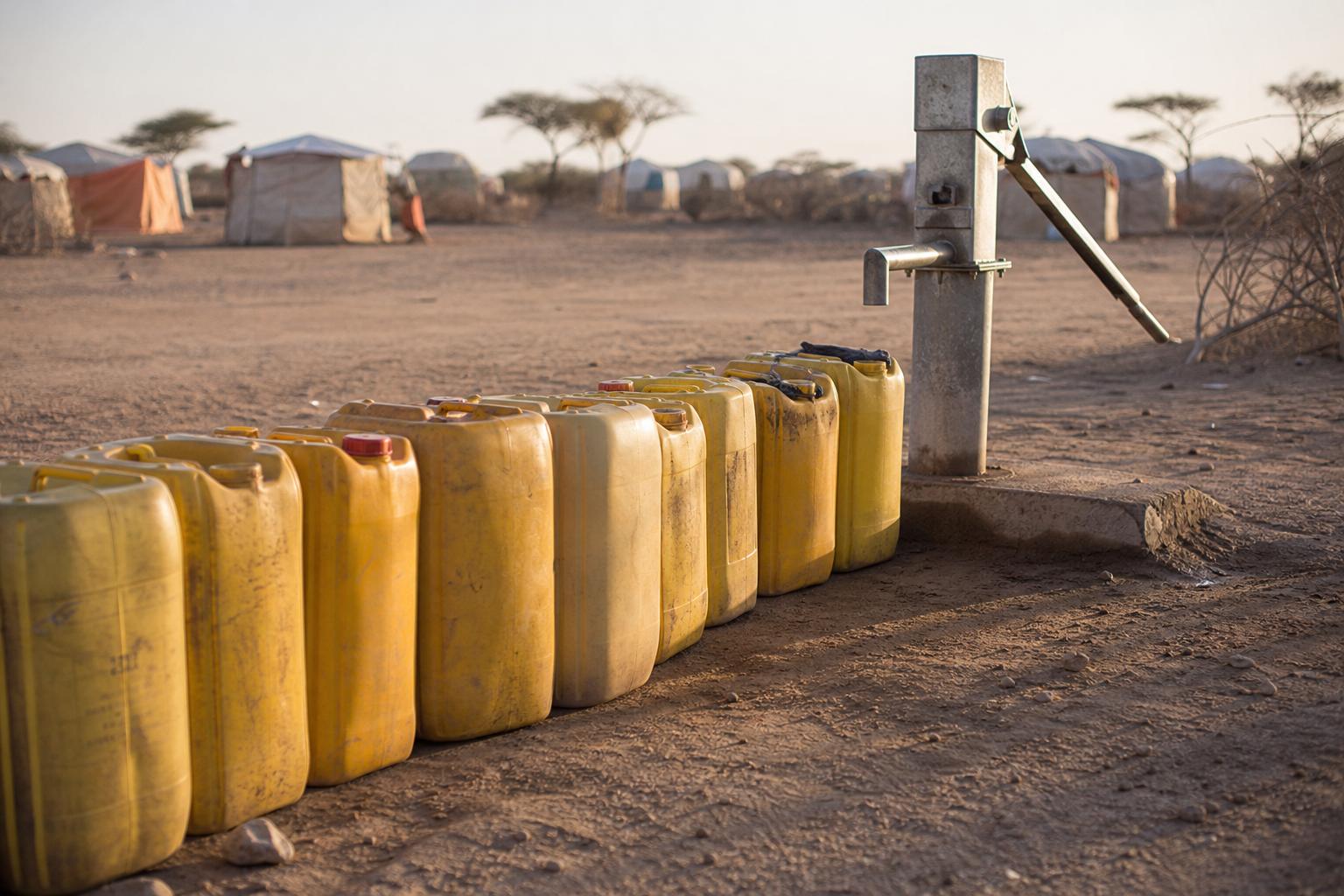
Famine, IPC Phase 5 Screening in El Fasher found acute malnutrition rates of 38–75%, and 29% in Kadugli (Nov 2025). AI-generated still.
  • Phase 3: crisis
  • Phase 4: emergency (El Fasher and Kadugli in 2024)
  • Phase 5: famine (El Fasher and Kadugli, November 2025)
  • 21.2 million people at Phase 3 or worse, September 2025
The IPC scale, worst last
825,000
children facing severe acute malnutrition this year
17.3 million
children among those needing food support
Children, UN, October 2026
Chapter VII · Hunger and talks

The human cost

The International Organization for Migration (IOM) counted nearly 7.1 million internally displaced people in September 2023 (including people displaced before the war), 9.05 million at the end of 2023, 11.53 million in December 2024 and a peak of 11.59 million in January 2025. By 29 July 2025 the figure was 9.94 million, mainly because of returns to Sennar, Gezira and Khartoum, and by 19 March 2026 about 9.04 million, with 3.86 million people recorded as having returned. 4.28 million people had crossed into neighbouring countries by July 2025. On 4 November 2025 the IPC confirmed famine (Phase 5) in El Fasher and Kadugli; 21.2 million people faced acute food insecurity in September 2025.

ACLED’s figure of at least 59,000 killed and the UN figures of about 13 million displaced and 33.7 million needing food support are as reported by Al Jazeera on 19 October 2026. Other estimates of the death toll are much higher and highly uncertain.

Sources: AllAfrica / UN News: fighting doubles numbers of displaced people, to seven million (6 Sep 2023); EMPHNET: a year in review, displacement in Sudan 2024 (IOM DTM figures); Dabanga: IOM, more than two million displaced Sudanese returned in nine months (26 Aug 2025); IOM DTM via ReliefWeb: Sudan displacement and return snapshot, update 3 (19 Mar 2026); FAO, UNICEF and WFP via UN Sudan: famine conditions confirmed in El Fasher and Kadugli (4 Nov 2025); Al Jazeera: drone attacks across Sudan escalate, 160 people reported killed (19 Oct 2026)

Chapter VII · Hunger and talks

Talks without a truce

Promises on paper, fighting on the ground.

There have been many attempts at peace. In May 2023, in Jeddah, both sides signed a declaration promising to protect civilians and let aid through. It was not a ceasefire, and the fighting went on.

In September 2025, the United States, Saudi Arabia, the United Arab Emirates and Egypt proposed a roadmap: a three-month humanitarian truce, then a ceasefire and a civilian-led transition.

In November the RSF said it accepted the truce, and later declared one of its own. Burhan rejected the plan, saying it would leave the RSF where it is, and called the mediators biased because the UAE, which his government accuses of arming the RSF, is among them. The UAE denies arming the RSF.

The fighting has not stopped, and the United States is still urging the UN Security Council to push for a truce.

  • let humanitarian aid reach civilians safely
  • withdraw forces from hospitals and clinics
  • restore basic services
  • talks on a short ceasefire to follow
Jeddah, 11 May 2023
  1. 12 Sep 2025 US, Saudi Arabia, UAE and Egypt propose it
  2. 6 Nov 2025 RSF says it accepts the humanitarian truce
  3. 23–24 Nov 2025 Burhan rejects the plan as biased; RSF declares a three-month truce of its own
  4. Oct 2026 US urges the Security Council to push for a truce
The Quartet roadmap
An empty table Sudan’s government suspended its membership of the East African bloc IGAD in January 2024, after it invited Hemedti to a summit, and rejoined in February 2026. AI-generated still.
  • RSF: accepts, it says, so that the war’s humanitarian consequences are addressed
  • Burhan: the plan would keep the RSF where it is
  • Burhan: any deal must make the RSF withdraw from captured territory
How each side responded, November 2025
US
asks for a truce and a wider arms embargo
China, Russia
oppose widening the embargo
UN Security Council, October 2026
Chapter VII · Hunger and talks

Peace efforts

On 11 May 2023 representatives of the SAF and the RSF signed the Jeddah Declaration of Commitment to Protect the Civilians of Sudan, committing to let aid reach civilians safely, restore services and withdraw from medical facilities; it did not establish a ceasefire. On 12 September 2025 the United States, Saudi Arabia, the UAE and Egypt outlined a roadmap beginning with a humanitarian pause, followed by a ceasefire and a transition to civilian-led government. On 6 November 2025 the RSF said it accepted. On 23 November Burhan rejected the US proposal, saying it would eliminate the armed forces and keep the RSF where it is, called the mediators biased while the UAE is a member, and said any deal must require the RSF to withdraw from captured territory; on 24 November the RSF declared a unilateral three-month truce. In October 2026 the US urged the UN Security Council to push for a humanitarian truce and to expand the arms embargo; China and Russia opposed widening the embargo.

The UAE is one of the four mediators, while Sudan’s government accuses it of arming the RSF, which the UAE denies (see the previous step).

Sources: US State Department via GlobalSecurity: Jeddah Declaration of Commitment to Protect the Civilians of Sudan (11 May 2023); AllAfrica: RSF accepts Quartet ceasefire terms as Sudan’s army digs in (Nov 2025); Al-Monitor: Sudan’s RSF declares truce after army rejects US plan (Nov 2025); Al Jazeera: drone attacks across Sudan escalate, 160 people reported killed (19 Oct 2026); Al Jazeera: Sudan suspends membership in IGAD regional bloc (20 Jan 2024); Radio Tamazuj: Sudan rejoins East African bloc IGAD after two-year suspension (Feb 2026)

Epilogue

Epilogue

Where the Niles meet

Old divisions, a new war, and people in between.

Sudan's war lays new lines over old ones: a capital on the river and vast regions far from it, and a force the state built but never folded into its army.

Each side says it is fighting for Sudan. For millions of Sudanese, the questions are simpler: whether the roads are safe, whether food can reach them, and when they can go home.

  1. 1821 Khartoum founded under Egyptian rule
  2. 1885–1898 The Mahdist state
  3. 1956 Independence
  4. 2011 South Sudan separates
  5. 2013 Rapid Support Forces formed
  6. 2019 / 2021 Revolution, then coup
  7. 2023–2026 Army and RSF at war
Two centuries in one view
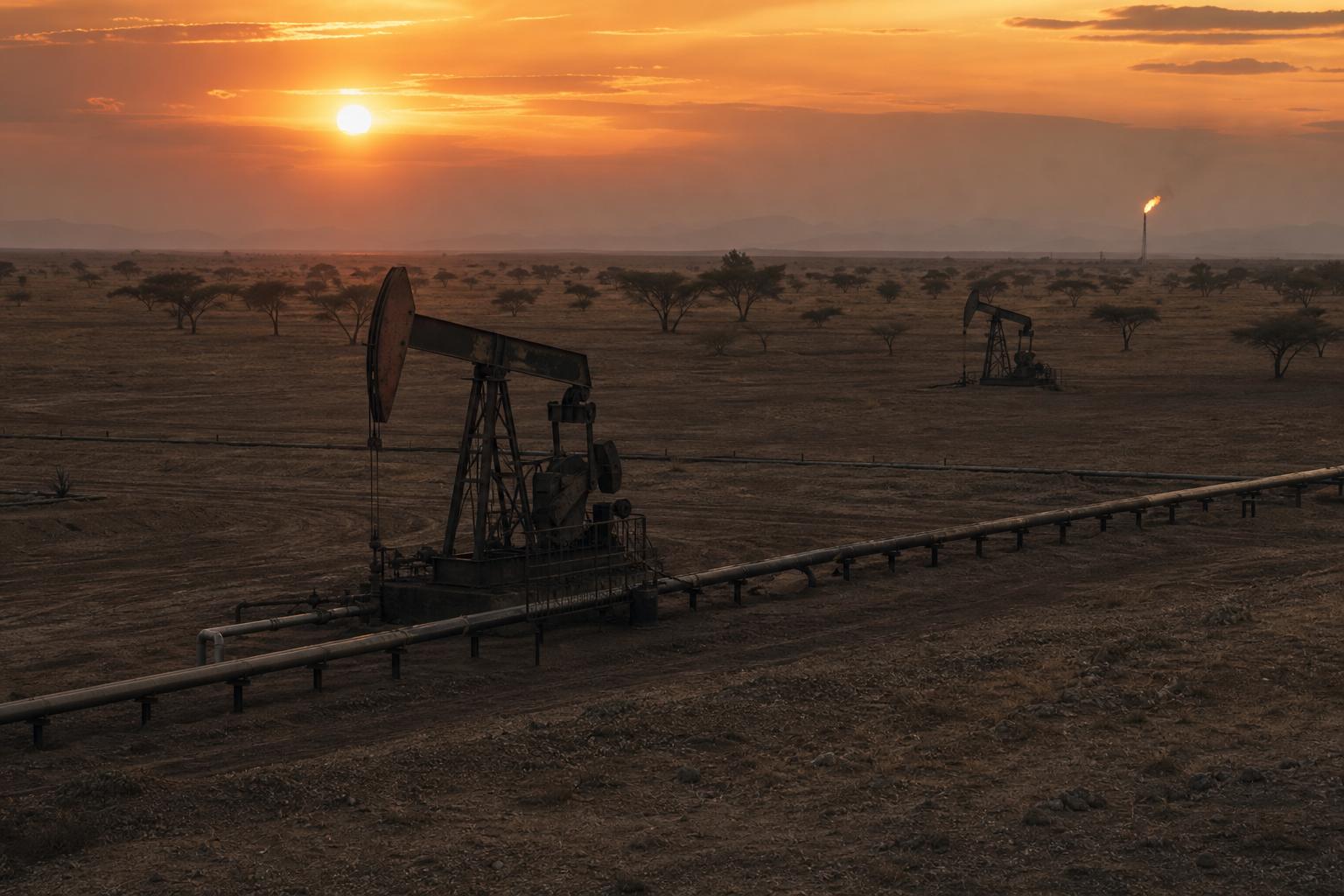
Sorghum country All stills in this film are AI-generated; none shows a real event or person.
3½ years
of war since 15 April 2023
9 million+
still displaced inside Sudan (IOM, March 2026)
October 2026
Epilogue · Sources

Sudan’s war explained

This film summarises a contested history. It presents each party’s account in its own terms, attributes casualty and humanitarian figures to their sources with their dates, and does not take sides.

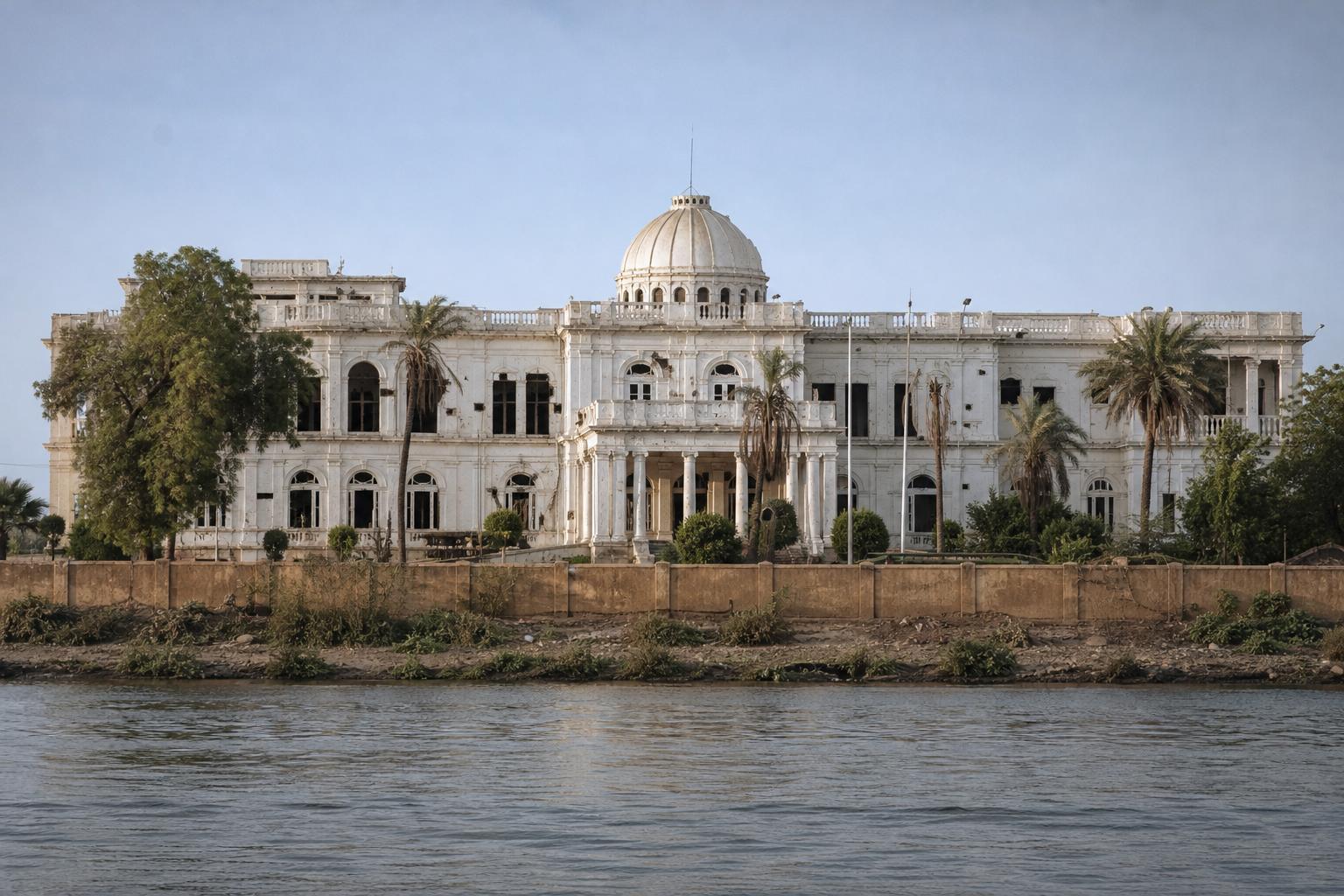
The 3D map is schematic; borders, rivers and areas of control are approximate and change often. All images are AI-generated and show no real people or events. Figures for 2026 are as reported up to October 2026.

Sources: Al Jazeera: drone attacks across Sudan escalate, 160 people reported killed (19 Oct 2026); IOL / AFP: 80 killed in drone strike on transport hub in southern Sudan (19 Oct 2026); Wikipedia: Geography of Sudan; Britannica: Blue Nile River; Wikipedia: Khartoum; Wikipedia: Mahdist State; Wikipedia: Anglo-Egyptian Sudan; Britannica: Anglo-Egyptian Condominium; Enough Project: Sudan, a brief history from 1956; Wikipedia: Addis Ababa Agreement (1972); Wikipedia: Second Sudanese Civil War; Al Jazeera: South Sudan votes to secede (7 Feb 2011); US EIA: Sudan and South Sudan country analysis (2014); PBS Wide Angle: Darfur factions guide (2008); UNAMID / UN News: Darfur, an estimated 300,000 deaths since 2003 (Jan 2009); ICC: second warrant of arrest against Omar Al Bashir, counts of genocide (12 Jul 2010); Coalition for the ICC: Omar al-Bashir; Wikipedia: Rapid Support Forces; Wikipedia: Hemedti; Al Jazeera: timeline, Sudan since the fall of Omar al-Bashir (25 Oct 2021); Wikipedia: 2021 Sudanese coup d’état; Wikipedia: Abdel Fattah al-Burhan; Africanews: disagreements between paramilitary and military delay signing of political deal (2 Apr 2023); Wikipedia: Sudanese civil war (2023–present); Al Jazeera: Sudan army declares RSF a rebel group, orders dissolution (17 Apr 2023); Dabanga: Hemedti manoeuvres to brand war against Sudan army as fight against former regime Islamists (17 Apr 2023); Al-Monitor: “Khartoum is free,” Sudan’s Burhan declares from presidential palace (26 Mar 2025); The Namibian / AFP: Sudan’s army loses El Fasher to the RSF after 18-month siege (28 Oct 2025); ORSAM: the course of the war in Sudan, December 2025; Wikipedia: Timeline of the Sudanese civil war (2026); Al Arabiya / Reuters: RSF’s Hemedti sworn in as head of parallel Sudanese government (30 Aug 2025); Al Jazeera: ICJ dismisses Sudan’s genocide case alleging UAE backing of RSF (5 May 2025); AllAfrica / UN News: fighting doubles numbers of displaced people, to seven million (6 Sep 2023); EMPHNET: a year in review, displacement in Sudan 2024 (IOM DTM figures); Dabanga: IOM, more than two million displaced Sudanese returned in nine months (26 Aug 2025); IOM DTM via ReliefWeb: Sudan displacement and return snapshot, update 3 (19 Mar 2026); FAO, UNICEF and WFP via UN Sudan: famine conditions confirmed in El Fasher and Kadugli (4 Nov 2025); US State Department via GlobalSecurity: Jeddah Declaration of Commitment to Protect the Civilians of Sudan (11 May 2023); Al Jazeera: Sudan suspends membership in IGAD regional bloc (20 Jan 2024); Radio Tamazuj: Sudan rejoins East African bloc IGAD after two-year suspension (Feb 2026); Al-Monitor: Sudan’s RSF declares truce after army rejects US plan (Nov 2025); Wikipedia: September Laws (Sudan); Wikipedia: Siege of Khartoum; Al Jazeera: Sudan says UN exaggerating Darfur toll (23 Apr 2008); African Arguments: Sean O’Fahey, Ethnic identity in Darfur (7 Apr 2009); Africanews: Sudan, June 3 death toll passes 100 (6 Jun 2019); Africanews: RSF commander admits “violations” in El Fasher (30 Oct 2025); AllAfrica: RSF accepts Quartet ceasefire terms as Sudan’s army digs in (Nov 2025)