In November 2026 Pakistan counted its eighth wild polio case of the year, and two police officers guarding a vaccination team were killed in Khyber Pakhtunkhwa. This film explains the established science behind that news: what poliovirus is, how it spreads mostly unseen and why about one infection in two hundred causes paralysis, how the Salk and Sabin vaccines work, how vaccination protects even people who are not vaccinated, how a global campaign cut cases by more than 99 percent since 1988, why vaccine-derived polio appears where coverage is low, and why the last chains of wild transmission are in Pakistan and Afghanistan. It is education, not medical advice.
Interactive 3D film8 min1952 to 2026Published 5 November 2026
Why one of the oldest diseases is so hard to finish off.
In early November 2026, Pakistan began a new polio vaccination drive aimed at nearly twenty-four million children.
That weekend, it confirmed its eighth case of wild polio this year: a thirteen-month-old girl in Khyber district.
On the third of November, in Mohmand district, gunmen killed two police officers on their way to guard a vaccination team. No group claimed the attack.
Polio once paralysed children around the world. Now wild polio survives in just two countries: Pakistan, and Afghanistan, which has had five times as many cases this year. How did the world get this close, and why is the last mile so hard?
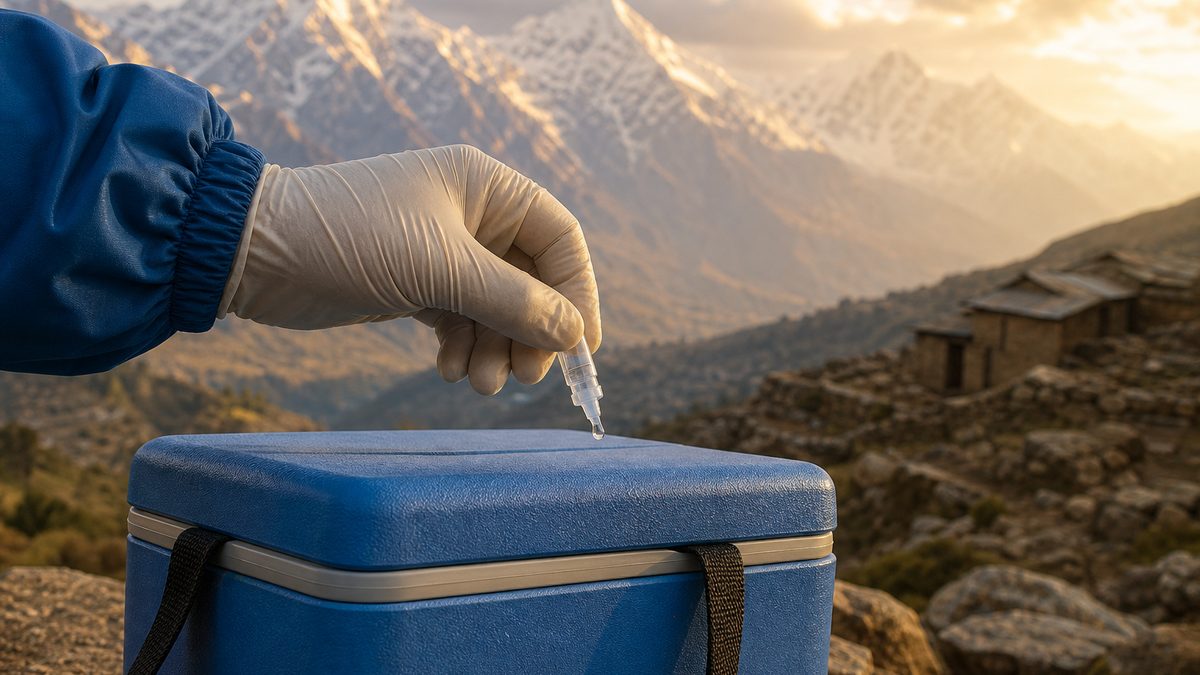
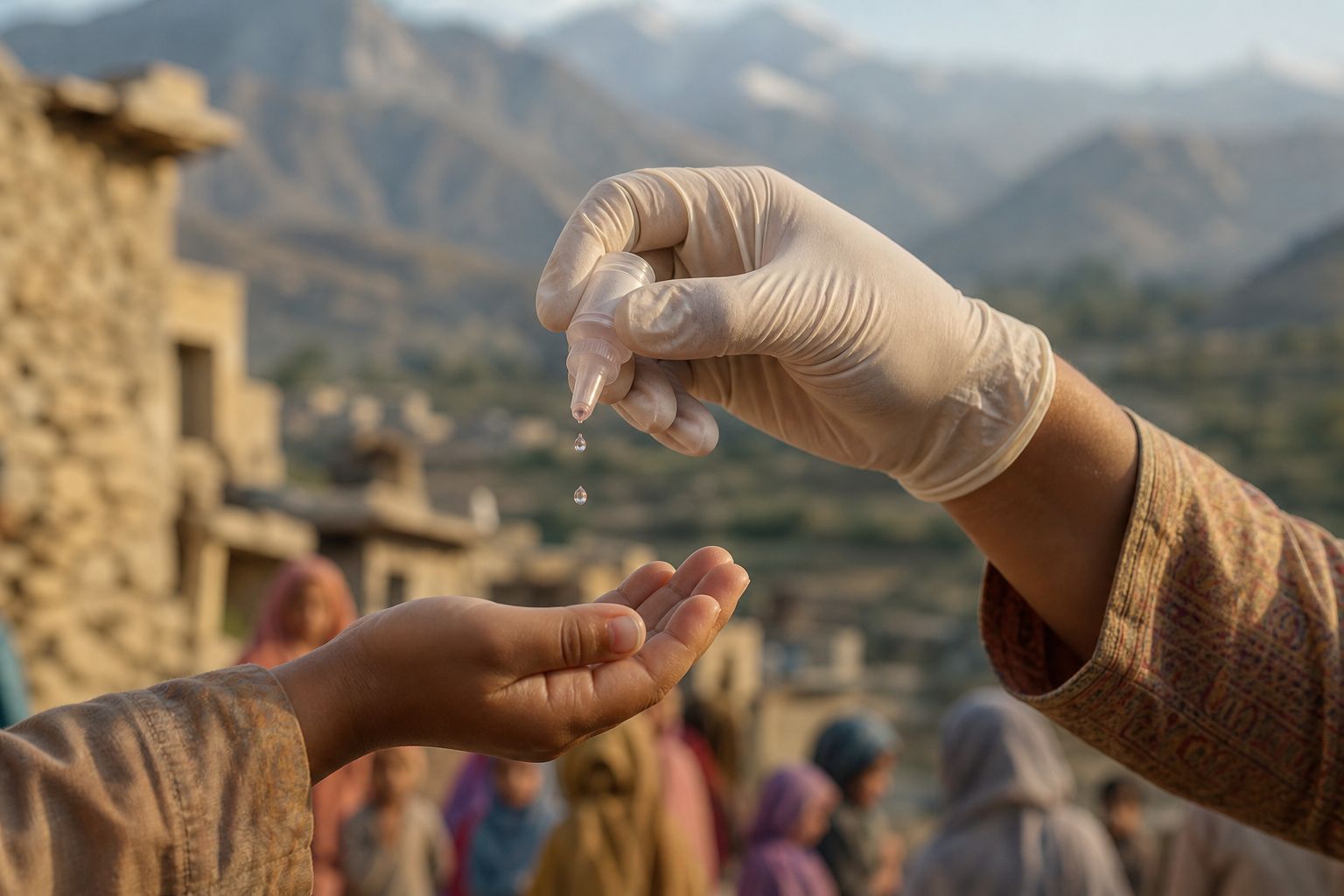
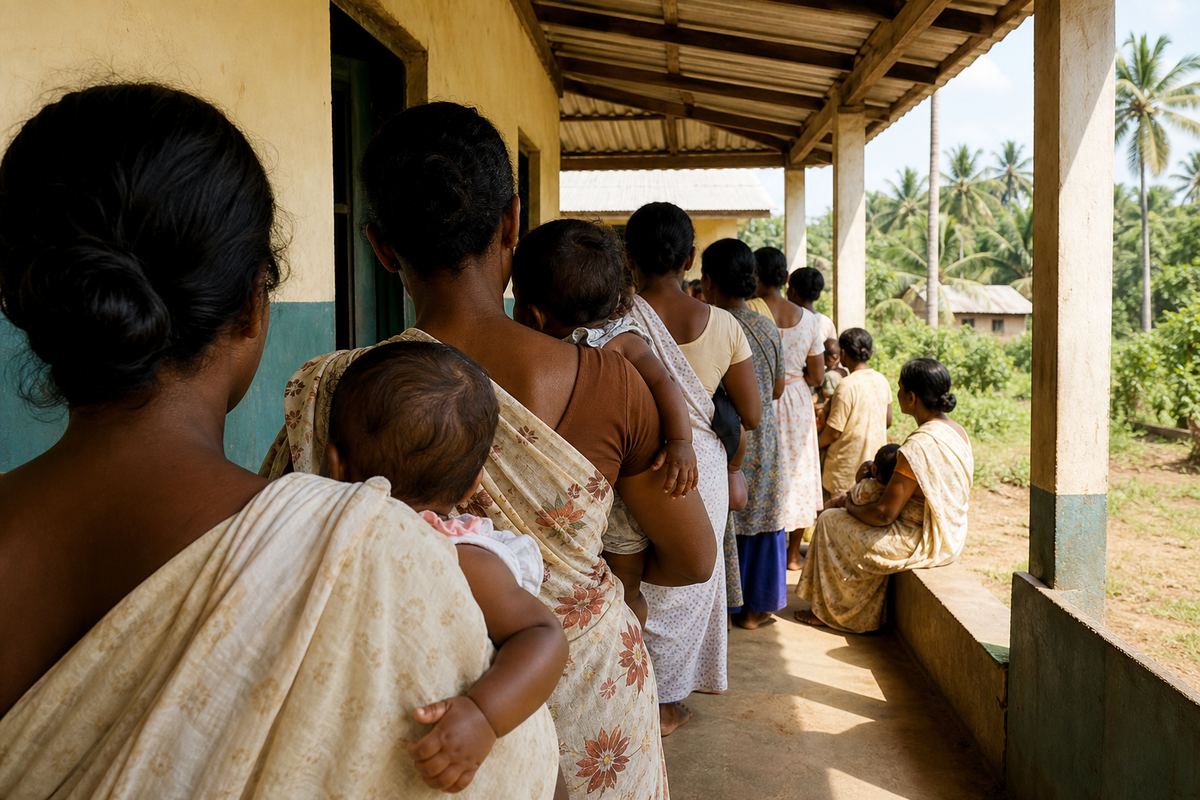
Two drops Oral polio vaccine is given as drops by mouth. AI-generated illustration.
8
wild polio cases to 2 November: 6 in Khyber Pakhtunkhwa, 2 in Sindh
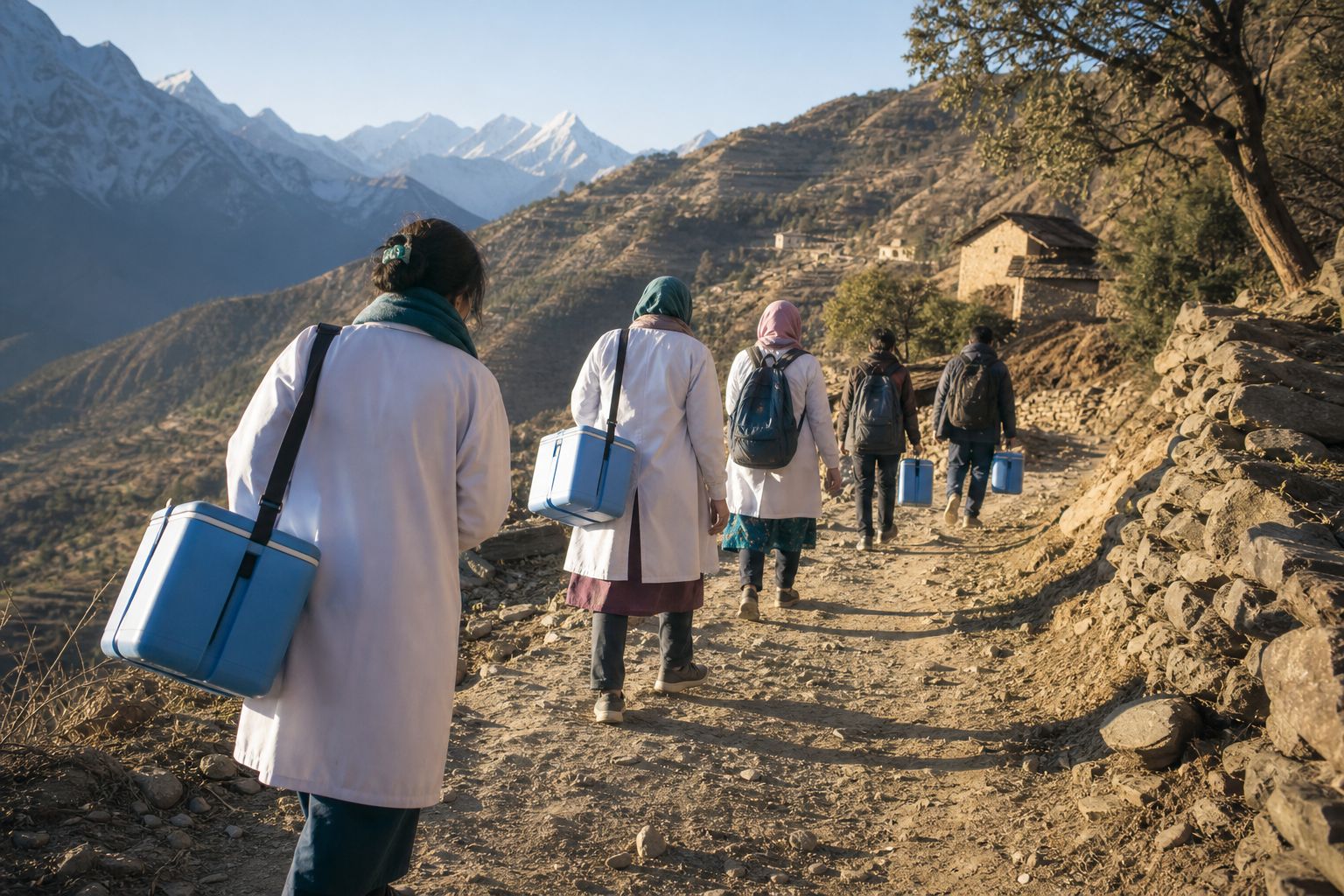
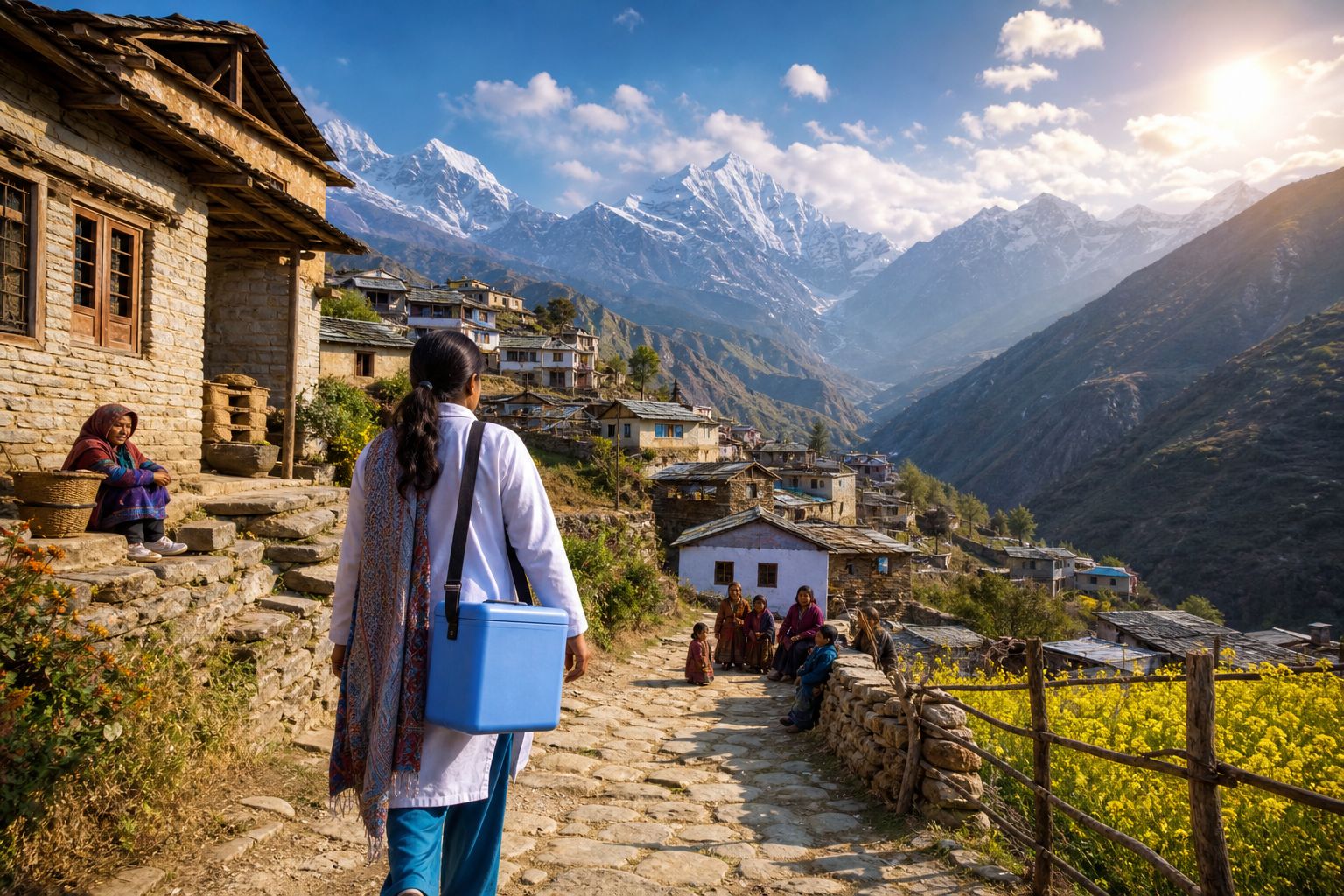
Pakistan, 2026 (NEOC)On foot Health workers carry vaccine cool boxes from house to house. AI-generated illustration.
42
Afghanistan (WHO, to 18 October)
8
Pakistan (NEOC, to 2 November)
Wild polio cases in 2026
Prologue
The news
The Nation (2 November 2026), citing Pakistan’s National Emergency Operations Centre: an eighth wild polio case of 2026, a 13-month-old girl from Bara tehsil, Khyber district; six cases in Khyber Pakhtunkhwa and two in Sindh; 31 cases in 2025. Dawn: a sub-national campaign began on 1 November targeting nearly 24 million children in 97 high-risk districts; on 3 November two constables were killed and one injured near the Hashim Kor checkpost in Mohmand district while travelling to guard a polio team. AP: no group claimed responsibility.
Afghanistan: 42 wild polio cases in 2026 to 18 October (WHO EMRO via Amu TV; also reported by Xinhua citing GPEI), against 21 in 2025. Counts change every week.
This film is education, not medical advice. For vaccination, follow your national schedule and talk to a doctor or health worker.
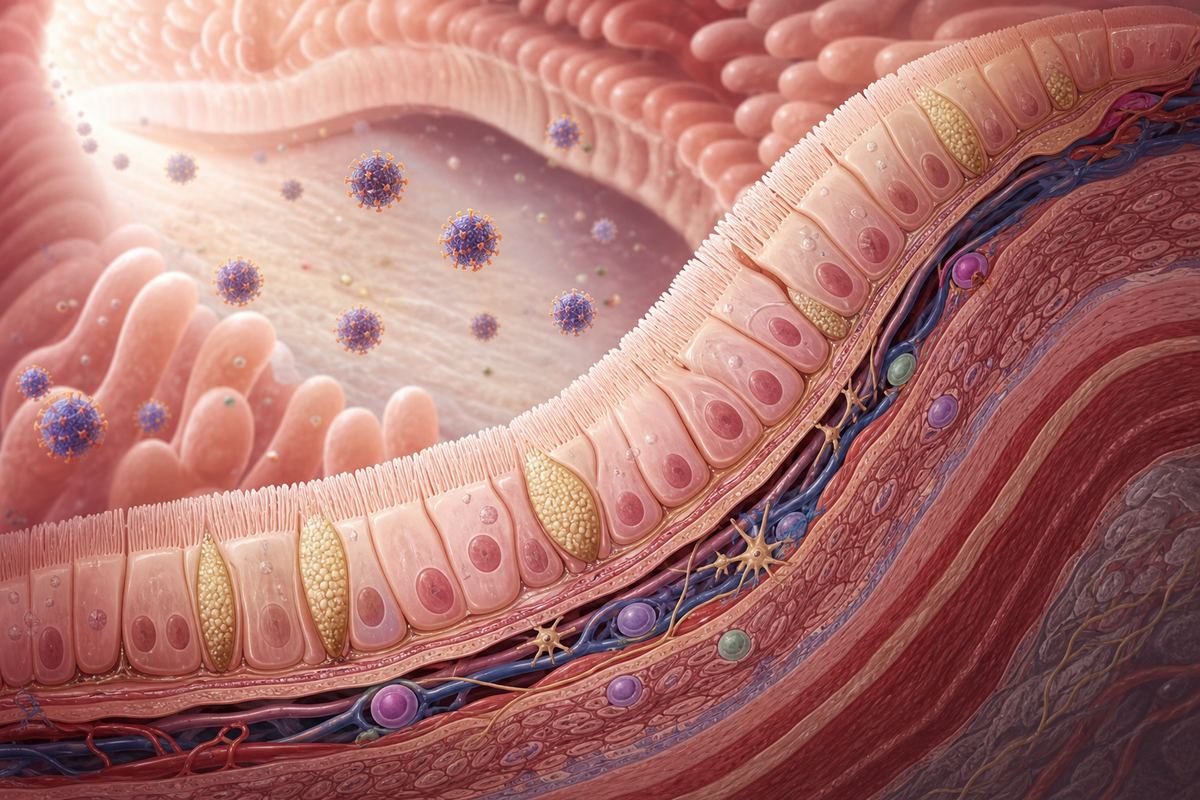
Polio is caused by a virus: poliovirus, one of the enteroviruses, which live and multiply in the gut.
It spreads mainly by the faecal-oral route: virus passed out in one person’s stool finds its way into another person’s mouth.
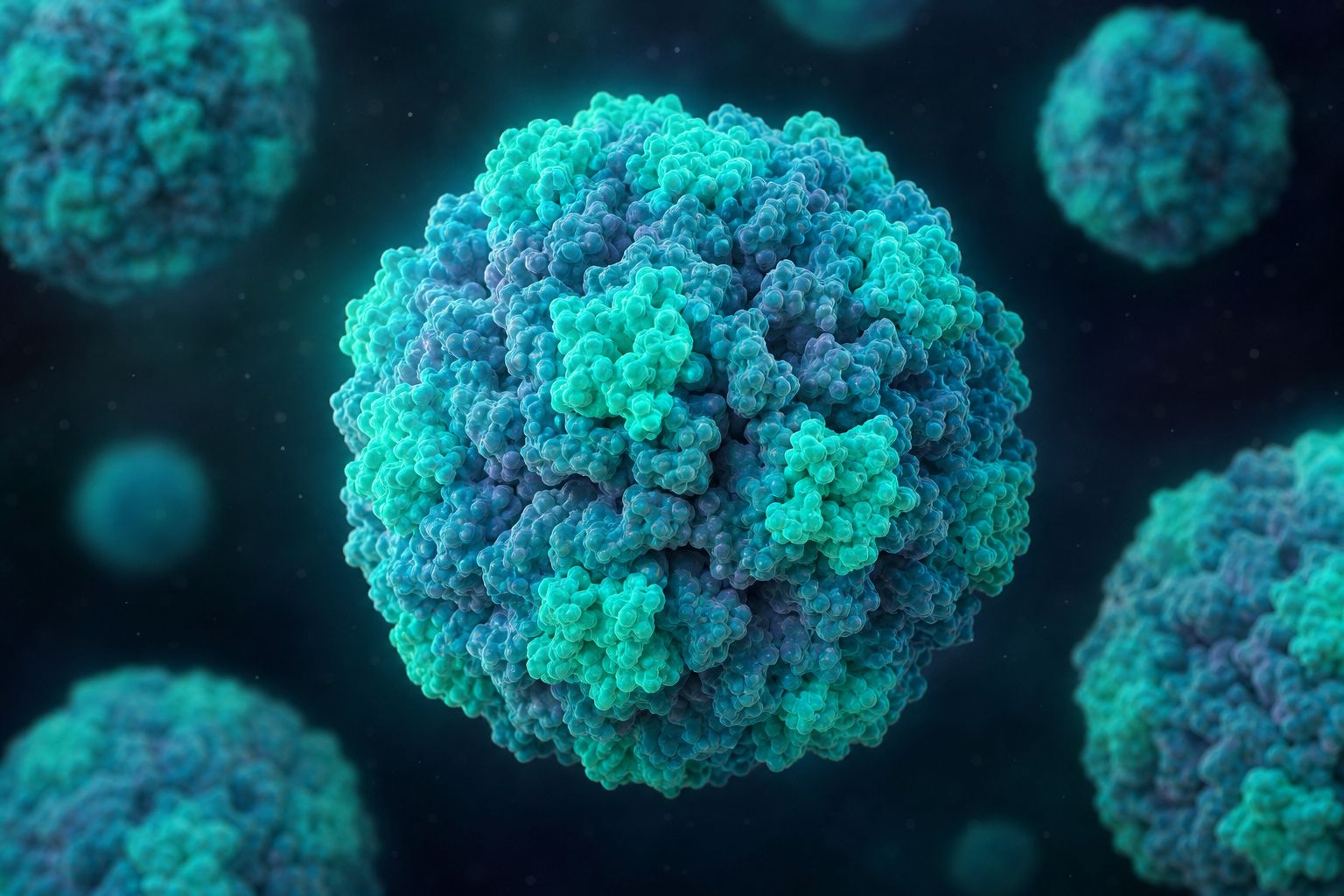
Inside is a short set of genes, written in RNA, wrapped in a protein shell. There are three wild types: wild meaning the virus found in nature, not the weakened one in vaccines.
There is still no cure for polio. It can only be prevented.
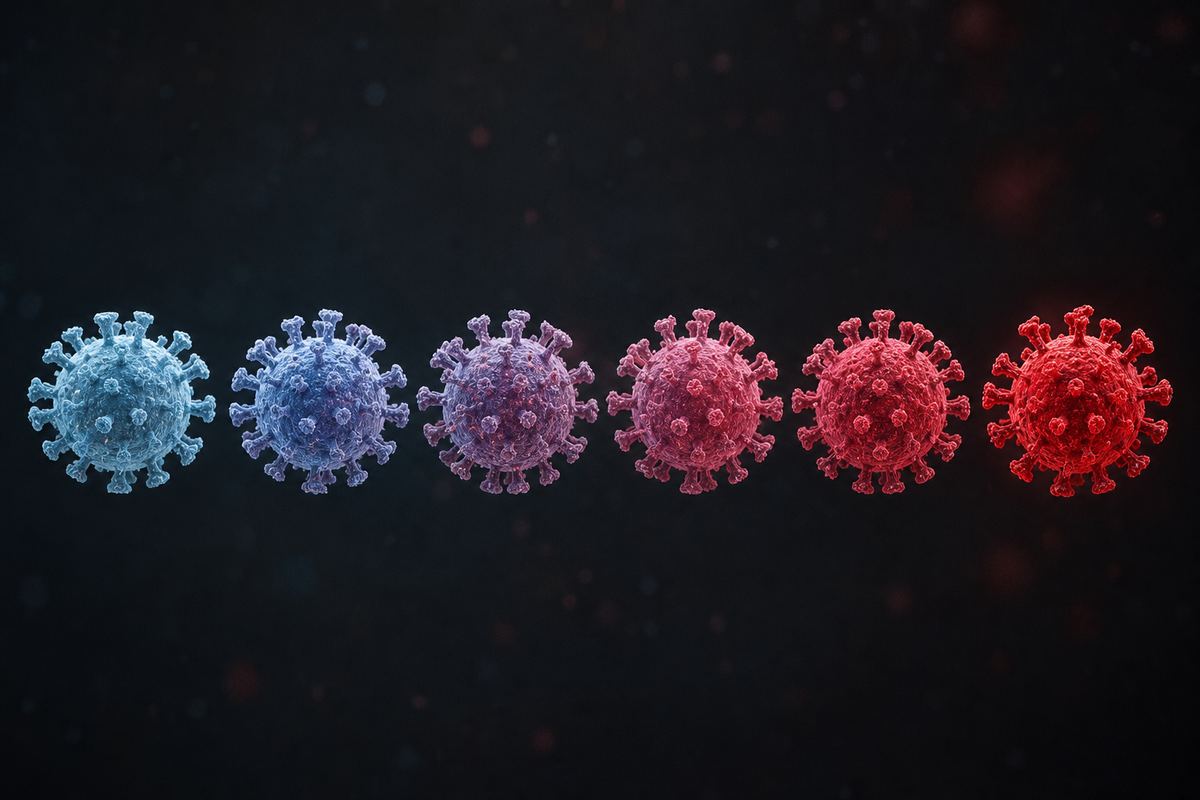
Poliovirus An artist’s impression of virus particles; real ones are far too small to see with light. AI-generated illustration.In the gut An illustrated cutaway of the gut lining, where the virus multiplies. AI-generated illustration.
an enterovirus, family Picornaviridae
three serotypes: types 1, 2 and 3
spread mainly faecal–oral
Poliovirus (CDC)
no cure
polio can only be prevented
Treatment (WHO)
Chapter I · A silent virus
Poliovirus
WHO: polio is caused by a virus spread mainly by the faecal–oral route; there is no cure, and it can only be prevented. CDC (Pink Book): poliovirus is an enterovirus of the family Picornaviridae, with three serotypes.
Try Look inside in the scene.
The 3D scenes are simplified teaching models: the virus is not to scale, and the town is a toy model with made-up numbers.
Why most infections go unnoticed, and a few do not.
What makes polio so hard to stop is that most infections are silent.
In children, about seventy percent of infections cause no symptoms at all, and about a quarter cause a mild illness that passes.
But about one infection in two hundred leads to paralysis that cannot be undone, usually in the legs. The red figures in the town are those cases.
Among people who are paralysed, five to ten percent die when the virus stops the muscles they breathe with.
no symptoms
~70%
minor illness
~24%
paralysis
<1%
What infection does, in children (CDC)
Nerves to muscles A diagram of the spinal cord and the nerves that work the leg muscles. AI-generated illustration.
1 in 200
infections: irreversible paralysis
WHO
5–10%
of those paralysed die when breathing muscles stop
WHO
Chapter I · A silent virus
Mostly silent
CDC (Pink Book): in children, about 70% of poliovirus infections are without symptoms, about 24% cause a minor illness, and less than 1% cause flaccid paralysis. WHO: one in 200 infections leads to irreversible paralysis, usually in the legs; among those paralysed, 5–10% die when their breathing muscles become immobilised.
In the toy model, faint orange people are silent infections; one in every 200 cases turns red.
This film is education, not medical advice. For vaccination, follow your national schedule and talk to a doctor or health worker.
The 3D scenes are simplified teaching models: the virus is not to scale, and the town is a toy model with made-up numbers.
In the mid-twentieth century, polio epidemics terrified rich countries. In the United States, 1952 was the worst year, with more than twenty-one thousand cases of paralysis.
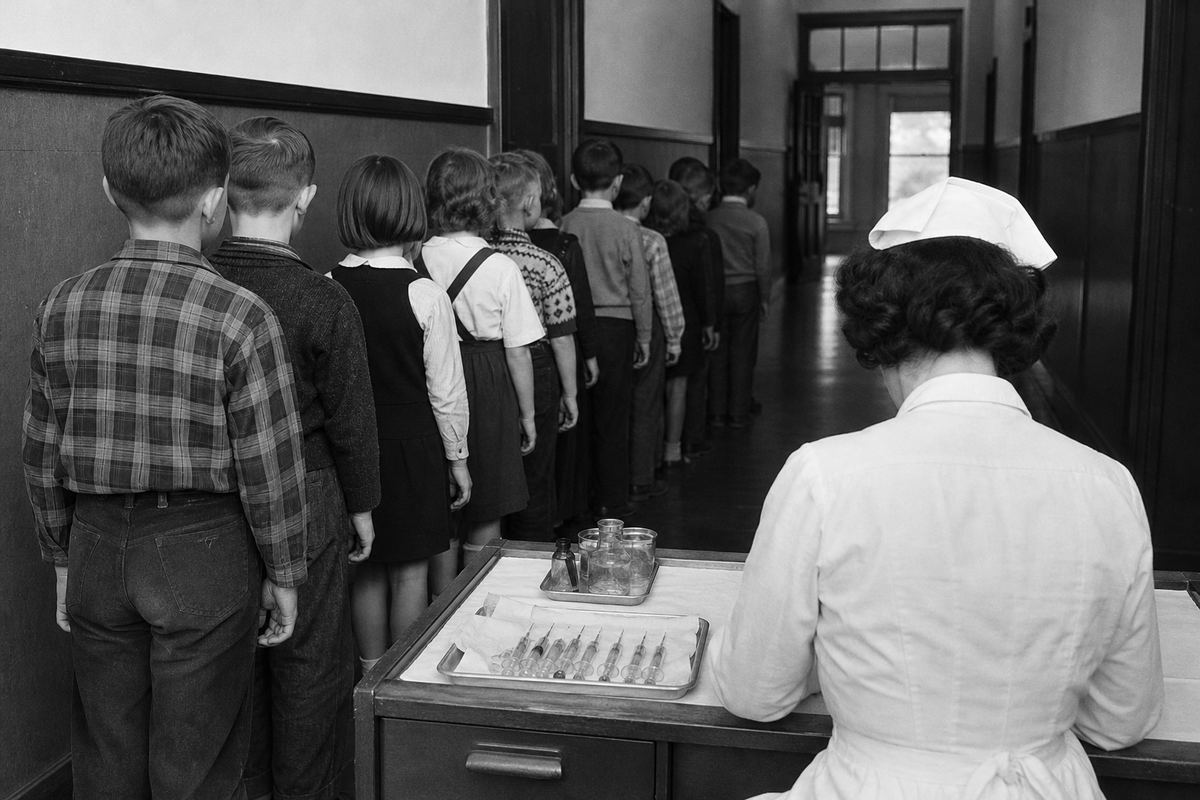
Jonas Salk made a vaccine from virus that had been killed. After a trial involving about one point eight million children, its success was announced on the twelfth of April 1955.
This inactivated vaccine, given by injection, teaches the blood to make antibodies that stop the virus reaching the nerves.
The epidemic years A 1950s hospital ward. AI-generated illustration.
>21,000
cases of paralytic polio
United States, 1952 (CDC)The 1954 field trial Schoolchildren queuing for a shot, in the style of the period. AI-generated illustration.
injected
killed virus: antibodies in the blood
IPV (CDC)
Chapter II · Two vaccines
The inactivated vaccine
CDC (Pink Book): the inactivated polio vaccine (IPV) developed by Jonas Salk was licensed in 1955; in 1952, the worst US epidemic year, more than 21,000 paralytic cases were reported. NPR: the vaccine’s success was announced on 12 April 1955 after a trial of about 1.8 million children in the US, Canada and Finland. CDC: IPV produces antibodies in the blood but less immunity in the gut than the oral vaccine.
This film is education, not medical advice. For vaccination, follow your national schedule and talk to a doctor or health worker.
In the early 1960s came a second vaccine, developed by Albert Sabin: a live but weakened virus, given as drops by mouth.
Because it multiplies in the gut, the oral vaccine builds immunity right where the virus lives. A vaccinated child sheds far less virus if exposed later.
It is cheap, needs no needle, and the weakened virus can even pass from the child to the people around them.
Remember that last part. It matters later.
By mouth A 1960s-style still life of a dose by mouth. AI-generated illustration.
IPV (Salk): killed, injected, blood antibodies
OPV (Sabin): weakened, by mouth, gut immunity
Two vaccines (CDC)Kept cold Vaccine vials in cold storage. AI-generated illustration.
1961
Sabin’s oral vaccine arrives
OPV (GPEI, CDC)
Chapter II · Two vaccines
The oral vaccine
GPEI (history of polio): Albert Sabin’s oral polio vaccine (OPV) became available in 1961 (CDC: monovalent types licensed in the US in 1961, trivalent in 1963). CDC (Pink Book): OPV produces immunity in the gut that reduces shedding of the virus on later infection; the vaccine virus is shed and may spread from the recipient to contacts.
This film is education, not medical advice. For vaccination, follow your national schedule and talk to a doctor or health worker.
The 3D scenes are simplified teaching models: the virus is not to scale, and the town is a toy model with made-up numbers.
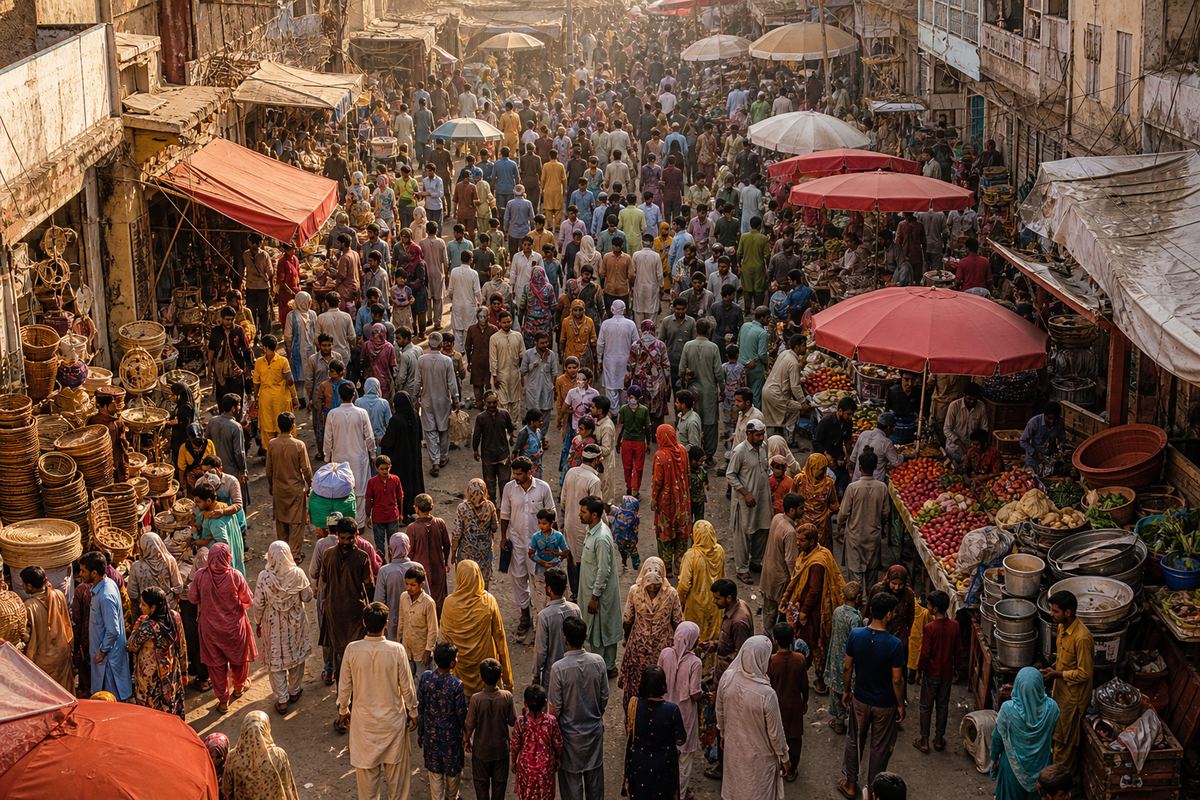
A virus survives only by jumping from person to person. In a town where nobody is protected, one case can reach almost everyone.
When most people are immune, each chain of infection runs into protected people and dies out. Even those who were not vaccinated are shielded.
Try the buttons: zero, fifty, eighty and ninety-five percent. The model is a toy, but the lesson is real: gaps are where the virus hides.
Person to person Where people live close together, a virus has many chances to jump. AI-generated illustration.
blue: vaccinated
orange: infected
red: paralysed (1 in 200 cases)
brown: recovered
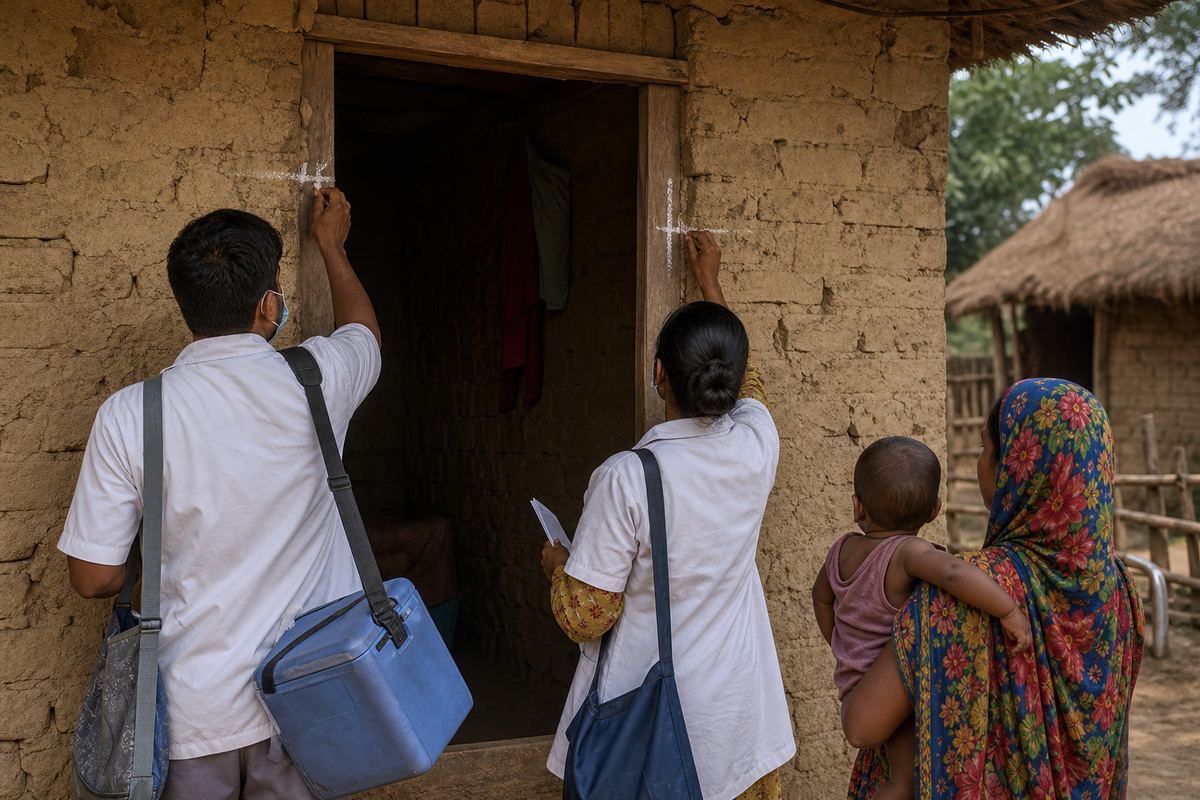
In the toy townEvery house A vaccination team marks a door after a visit. AI-generated illustration.
Chapter II · Two vaccines
Protecting the unvaccinated
The town in this step is a toy model: each infected person passes the virus to some neighbours by chance, with made-up numbers chosen only to show the idea that chains of infection die out when most people are immune. CDC (Pink Book): with the oral vaccine, vaccine virus may also spread from the vaccinated child to contacts. GPEI calls house-to-house vaccination “the gold standard for eradication”.
This film is education, not medical advice. For vaccination, follow your national schedule and talk to a doctor or health worker.
The 3D scenes are simplified teaching models: the virus is not to scale, and the town is a toy model with made-up numbers.
In 1988 the Global Polio Eradication Initiative was launched, led by the World Health Organization and its partners.
At the time there were an estimated three hundred and fifty thousand cases a year, in more than one hundred and twenty-five countries. Polio was paralysing more than a thousand children every day.
Since then, cases caused by the wild virus have fallen by more than ninety-nine percent.
1988
the Global Polio Eradication Initiative begins
GPEI
~350,000
cases a year, estimated
125+
endemic countries
>1,000
children paralysed every day
In 1988 (WHO, GPEI)The 1980s Mothers and babies waiting at a rural clinic. AI-generated illustration.
Chapter III · Cornering the virus
The eradication campaign
WHO: when the Global Polio Eradication Initiative was established in 1988, there were an estimated 350,000 cases in more than 125 endemic countries; wild poliovirus cases have since decreased by over 99%. GPEI (history): in 1988 polio paralysed more than 1,000 children worldwide every day.
The 3D scenes are simplified teaching models: the virus is not to scale, and the town is a toy model with made-up numbers.
One by one, whole regions of the world were certified free of wild polio: the Americas in 1994, the Western Pacific in 2000 and Europe in 2002.
India, once one of the hardest places, recorded its last wild case in 2011, and South-East Asia was certified in 2014. Thailand reported its last polio case in 1997.
Africa followed in August 2020. Five of the World Health Organization’s six regions, home to more than nine in ten people, are now free of wild polio.
1994 the Americas
2000 Western Pacific
2002 Europe
2014 South-East Asia
2020 Africa
Certified free of wild polio (GPEI, WHO)The hardest places Reaching every child can mean walking for hours. AI-generated illustration.
5 / 6
WHO regions free of wild polio
>90%
of the world’s people live in them
WHO, 2020
1997
last reported polio case, April; a single vaccine-derived case followed in 2003
Thailand (CDC EID)
Chapter III · Cornering the virus
Certification
GPEI (history): the Americas were certified polio-free in 1994, the Western Pacific in 2000, Europe in 2002 and South-East Asia in 2014; India’s last wild case was in 2011. WHO (25 August 2020): the African Region was certified free of wild polio after four years without a case, leaving five of six WHO regions, home to over 90% of the world’s population, free of wild poliovirus. CDC Emerging Infectious Diseases (2005): Thailand’s last reported polio case was in April 1997; in 2003 a vaccine-derived type 2 case was found in an 18-month-old boy with immune deficiency in Loei.
Use the year buttons to watch the regions turn green.
The 3D scenes are simplified teaching models: the virus is not to scale, and the town is a toy model with made-up numbers.
Of the three wild types of poliovirus, two are already gone.
Wild type two was last detected in India in 1999 and declared eradicated in 2015.
Wild type three was last detected in November 2012, and declared eradicated in 2019.
Only wild type one is left, and it survives only in parts of Pakistan and Afghanistan.
1999 type 2 last seen, India
Nov 2012 type 3 last seen
Sep 2015 type 2 declared eradicated
Oct 2019 type 3 declared eradicated
The wild types (CDC)Confirming the virus Laboratories test samples to tell which type, and which strain, is present. AI-generated illustration.
type 1
the only wild poliovirus left
2026
Chapter III · Cornering the virus
Types 2 and 3
CDC (poliovirus containment): wild poliovirus type 2 was last detected in India in 1999 and declared eradicated in September 2015; wild type 3 was last detected in November 2012 and declared eradicated in October 2019. WHO: endemic transmission of wild poliovirus continues only in areas of Afghanistan and Pakistan.
The 3D scenes are simplified teaching models: the virus is not to scale, and the town is a toy model with made-up numbers.
Remember that the weakened virus in the oral vaccine can pass from child to child. Where many children are not vaccinated, it can keep circulating for a long time.
Over that time it can change back into a form that paralyses. This is called circulating vaccine-derived poliovirus. It is a sign of too little vaccination, not too much.
These variants come from the vaccine strains, not from the wild types that are gone. In 2024, type two variants paralysed four hundred and forty-eight children in eighteen countries. Africa is free of wild polio, yet in 2026 the Democratic Republic of the Congo alone has reported eighty-four vaccine-derived cases.
A newer oral vaccine, novel OPV2, is more genetically stable. More than two billion doses have been given in over forty countries.
weakened vaccine virus passes between children
immunity in the community is low
after long circulation it can regain the power to paralyse
How vaccine-derived polio arises (GPEI)Slow change An illustration of a virus changing, generation after generation. AI-generated illustration.
DR Congo, type 2
84 cases
Nigeria, type 2
36 cases
Nigeria, type 3
15 cases
Somalia, type 2
6 cases
Vaccine-derived polio cases, 2026 (GPEI, to 28 Oct)
448
children paralysed
18
countries
Type 2 variants, 2024 (GPEI)
>2 bn
doses given in over 40 countries, by Nov 2025
nOPV2 (GPEI)
Chapter IV · The last mile
Vaccine-derived poliovirus
GPEI (nOPV2 factsheet): in places with low immunity, the weakened virus in the oral vaccine can, after circulating for a long time, revert to a form that can cause paralysis; in 2024, 448 children in 18 countries were paralysed by type 2 variant poliovirus. nOPV2 is more genetically stable; it received WHO Emergency Use Listing in November 2020, was rolled out from March 2021, was prequalified in December 2023, and more than 2 billion doses had been given in over 40 countries by November 2025. GPEI “Polio this week” (to 28 October 2026): DR Congo 84 cVDPV2 cases; Nigeria 36 cVDPV2 and 15 cVDPV3; Somalia 6 cVDPV2.
This film is education, not medical advice. For vaccination, follow your national schedule and talk to a doctor or health worker.
The 3D scenes are simplified teaching models: the virus is not to scale, and the town is a toy model with made-up numbers.
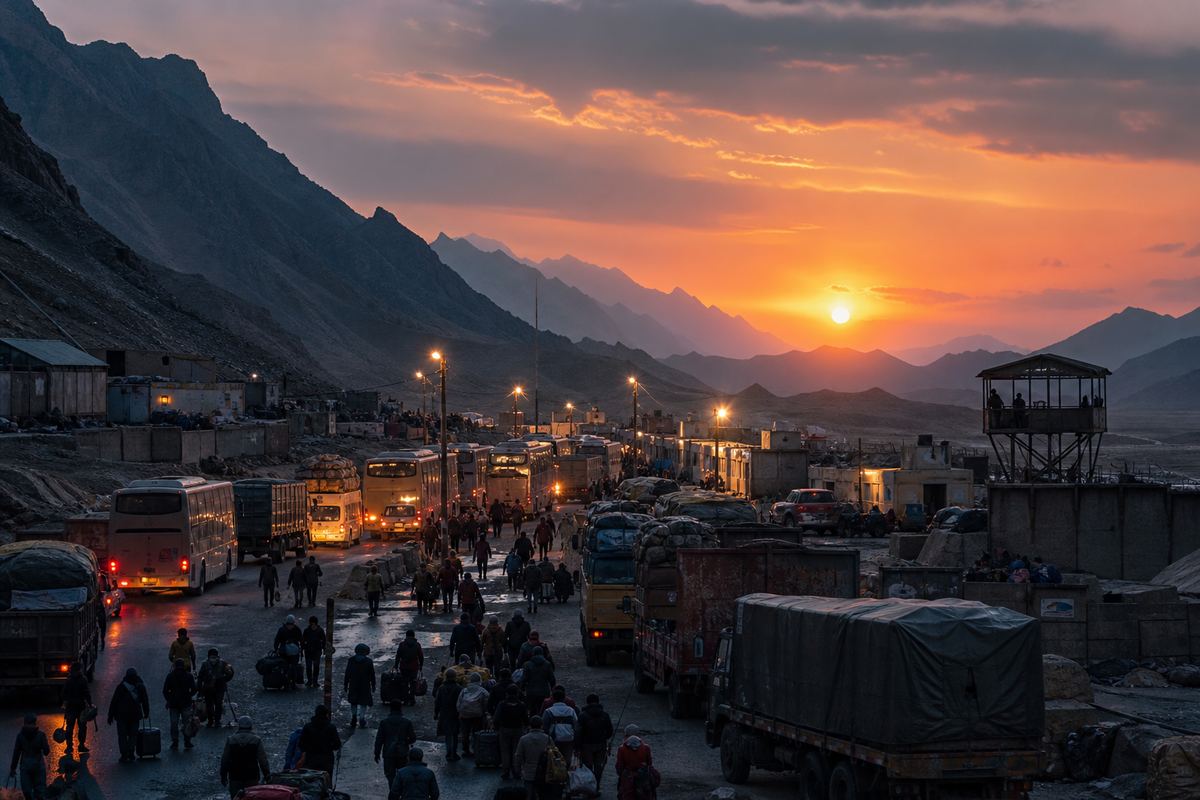
Wild polio now spreads only in parts of Pakistan and Afghanistan, two neighbours with a long, busy border.
The eradication initiative lists the main obstacles as population movement, insecurity, misinformation and operational problems.
Vaccination teams and the police who guard them have repeatedly been attacked. Some militants falsely claim that the vaccine is a plot to sterilise children.
The initiative’s technical advisers say the answer is trust and access: reaching every child, house by house, again and again.
On the move Buses and trucks on a mountain road between two countries. AI-generated illustration.
population movement
insecurity
misinformation
operational challenges
The obstacles, in GPEI’s words
…falsely claiming that polio vaccination campaigns are part of a Western conspiracy to sterilize children.Associated Press, describing militant claims
AP, 3 November 2026House by house A team marks a doorway once the children inside are vaccinated. AI-generated illustration.
Chapter IV · The last mile
Pakistan and Afghanistan
WHO: endemic transmission of wild poliovirus continues only in areas of Afghanistan and Pakistan. GPEI Technical Advisory Group (June 2026): obstacles include “population movement, insecurity, misinformation and operational challenges”; it cites access problems in southern Khyber Pakhtunkhwa and the need to build trust in Afghanistan’s South Region, and calls house-to-house vaccination “the gold standard”. AP (3 November 2026): no group claimed the Mohmand attack; AP reports that militants regularly target vaccination drives, falsely claiming they are part of a Western conspiracy to sterilise children. Pakistan’s interior minister called the attack “intolerable”.
This film is education, not medical advice. For vaccination, follow your national schedule and talk to a doctor or health worker.
The 3D scenes are simplified teaching models: the virus is not to scale, and the town is a toy model with made-up numbers.
Because most infections are silent, counting paralysed children shows only the tip of the problem.
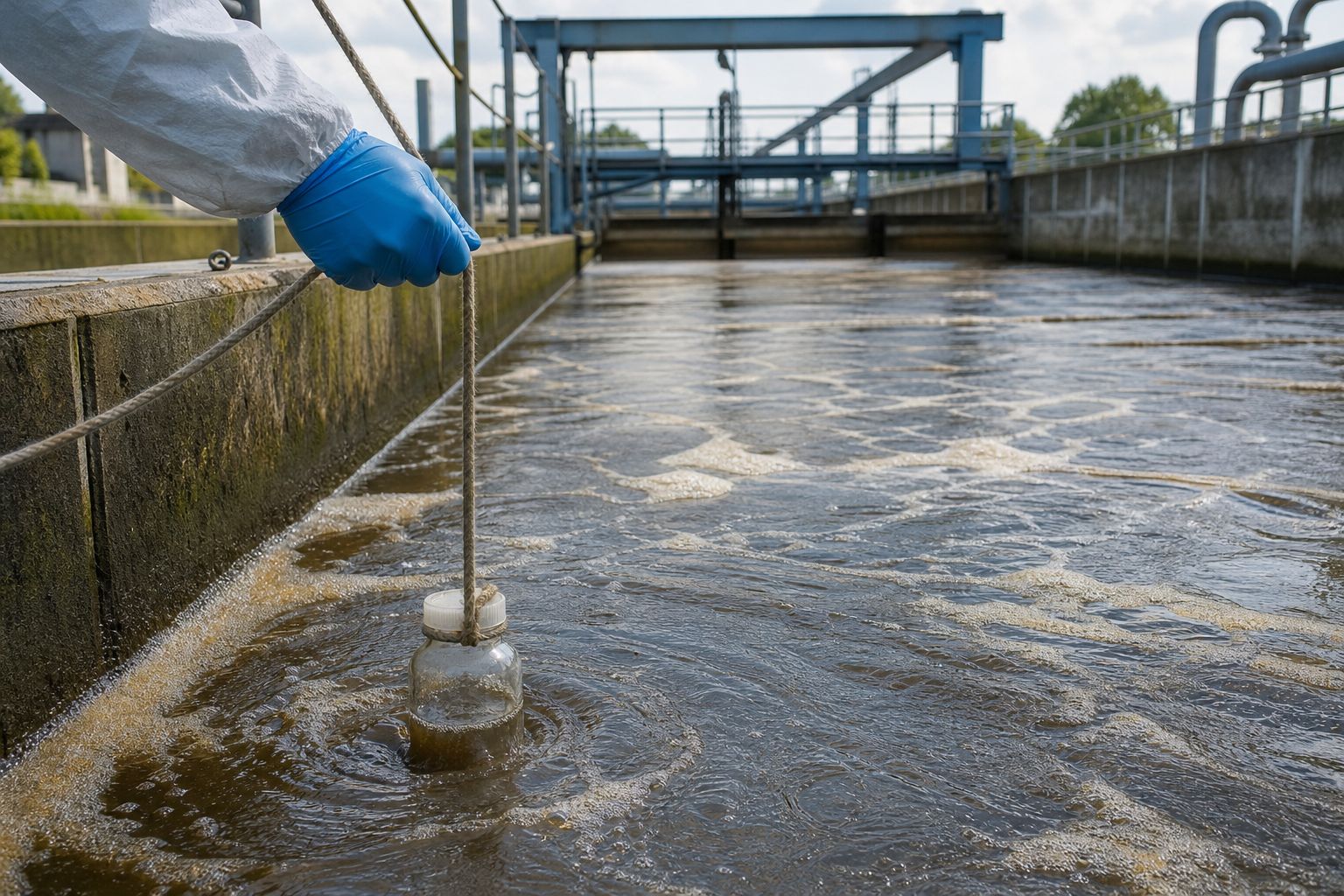
So health teams also test sewage. People who are infected pass the virus in their stool, and it turns up in the sewers even when nobody is sick.
This kind of environmental surveillance works alongside the search for children with sudden weakness in their limbs.
In 2026, environmental samples from the Peshawar area have tested positive.
A sample A sample bottle lowered into a wastewater channel. AI-generated illustration.
cases: children with acute flaccid paralysis
sewage: virus shed by people with or without symptoms
Two ways to look (CDC)
Peshawar
positive sewage samples reported
The Nation, Nov 2026
Chapter IV · The last mile
Environmental surveillance
CDC (Journal of Infectious Diseases, 2014): environmental surveillance detects poliovirus in sewage and complements surveillance for acute flaccid paralysis (AFP). The Nation (2 November 2026): positive sewage samples have come from the Peshawar block.
The 3D scenes are simplified teaching models: the virus is not to scale, and the town is a toy model with made-up numbers.
Eradication means zero, everywhere, for good. Only one human disease has ever been eradicated: smallpox.
Its last natural case was in Somalia in 1977, and the World Health Assembly declared it eradicated on the eighth of May 1980.
Polio would be the second. The last chains of wild transmission are short, but they are in the hardest places to reach.
Smallpox, the first A museum-style still life of a field vaccination kit. AI-generated illustration.
1977 last natural smallpox case, Somalia
8 May 1980 smallpox declared eradicated
2011 rinderpest, a cattle disease, follows
Eradicated (Origins, OSU)
1 type
of wild poliovirus
2 countries
Pakistan and Afghanistan
What is left
Chapter IV · The last mile
Eradication
Origins (Ohio State University): smallpox was declared eradicated on 8 May 1980, the only human disease eradicated so far; its last natural case was in Somalia in 1977. Rinderpest, a disease of cattle, was declared eradicated in 2011.
The 3D scenes are simplified teaching models: the virus is not to scale, and the town is a toy model with made-up numbers.
This month, health workers in Pakistan set out once more to reach nearly twenty-four million children. Wild polio is cornered in two countries, and two of its three wild types are gone.
The last mile is walked on foot, house by house, by health workers and the people who protect them.
Until it reaches zero, every child, everywhere, still needs protecting.
1952 worst US epidemic year
1955 Salk’s injected vaccine
1961 Sabin’s oral vaccine
1988 global eradication initiative
2015, 2019 wild types 2 and 3 eradicated
2020 Africa certified
2026 wild type 1 in two countries
Polio: a timelineTwo drops Each dose is one more chain of infection that cannot start. AI-generated illustration.
most infections are silent; 1 in 200 paralyse
no cure: prevention only
gaps in coverage let polio return
Remember
Epilogue · Sources
Sources
Every fact in this film comes from the sources below. Case counts are given with their source and date because they change every week. The chapter stills and pictures are AI-generated illustrations and show no real people. The virus, the globe and the town are simplified teaching models; the town uses made-up numbers. This film is education, not medical advice: for vaccination, follow your national schedule and talk to a doctor or health worker.