PlanetPast
EN

Religion · History · Society

The Origins of Loy Krathong

Lights on the Water

On the full moon of 24 November 2026 Thailand floats its krathong. This film explains what a krathong is and why the date follows the Moon; the meanings people give the festival, from thanks and apology to the water goddess Phra Mae Khongkha to the Buddha’s footprint and hair relic; the older Brahmin rites, the Bayon reliefs and the royal lantern ceremony of Chong Priang; the floating lanterns a French envoy saw at Ayutthaya in 1687; the legend of Nang Noppamas and why historians date her book to the reign of Rama III; Yi Peng and the sky lanterns of Chiang Mai; the water-and-light festivals of Cambodia, Myanmar and Laos; and the song of 1949 and Bangkok’s falling krathong count.

Interactive 3D film9 minc. 1200 to 2026Published 15 November 2026

Watch the interactive filmRead in ไทย

Prologue

Religion · History

The origins of Loy Krathong

Where Thailand’s festival of floating lights comes from.

Last November, Bangkok’s city workers fished almost four hundred thousand little floats out of the city’s waters.

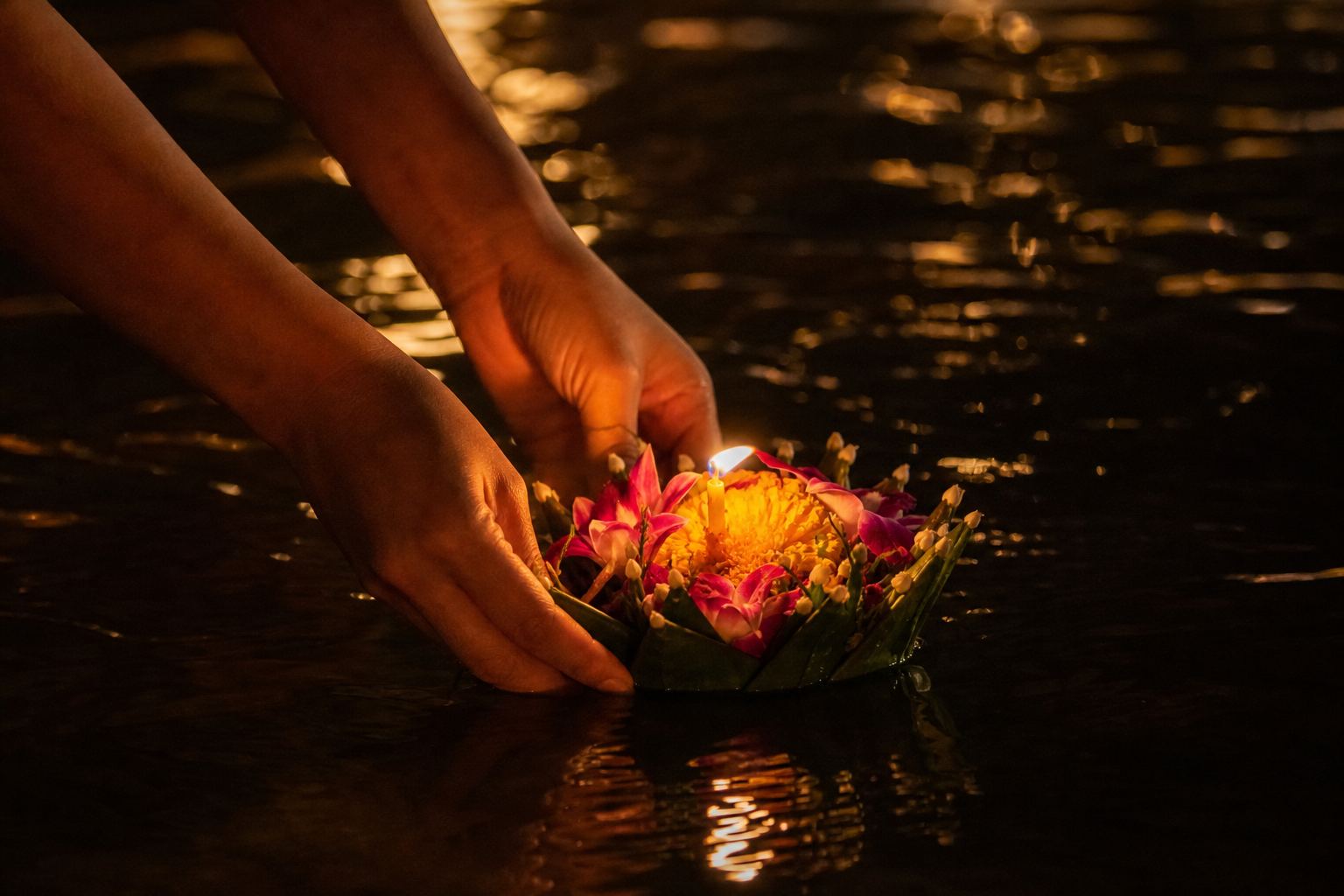
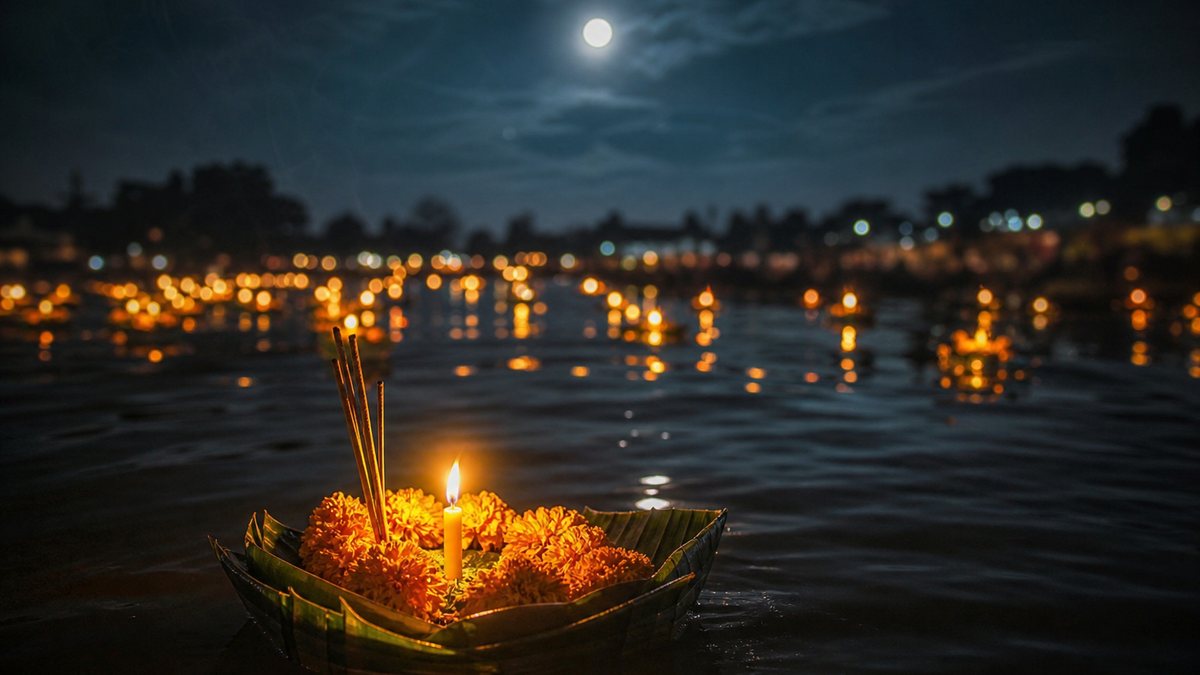
Each one was a krathong, a small boat of banana leaves and flowers carrying a candle and incense. The festival is Loy Krathong: simply, floating a krathong.

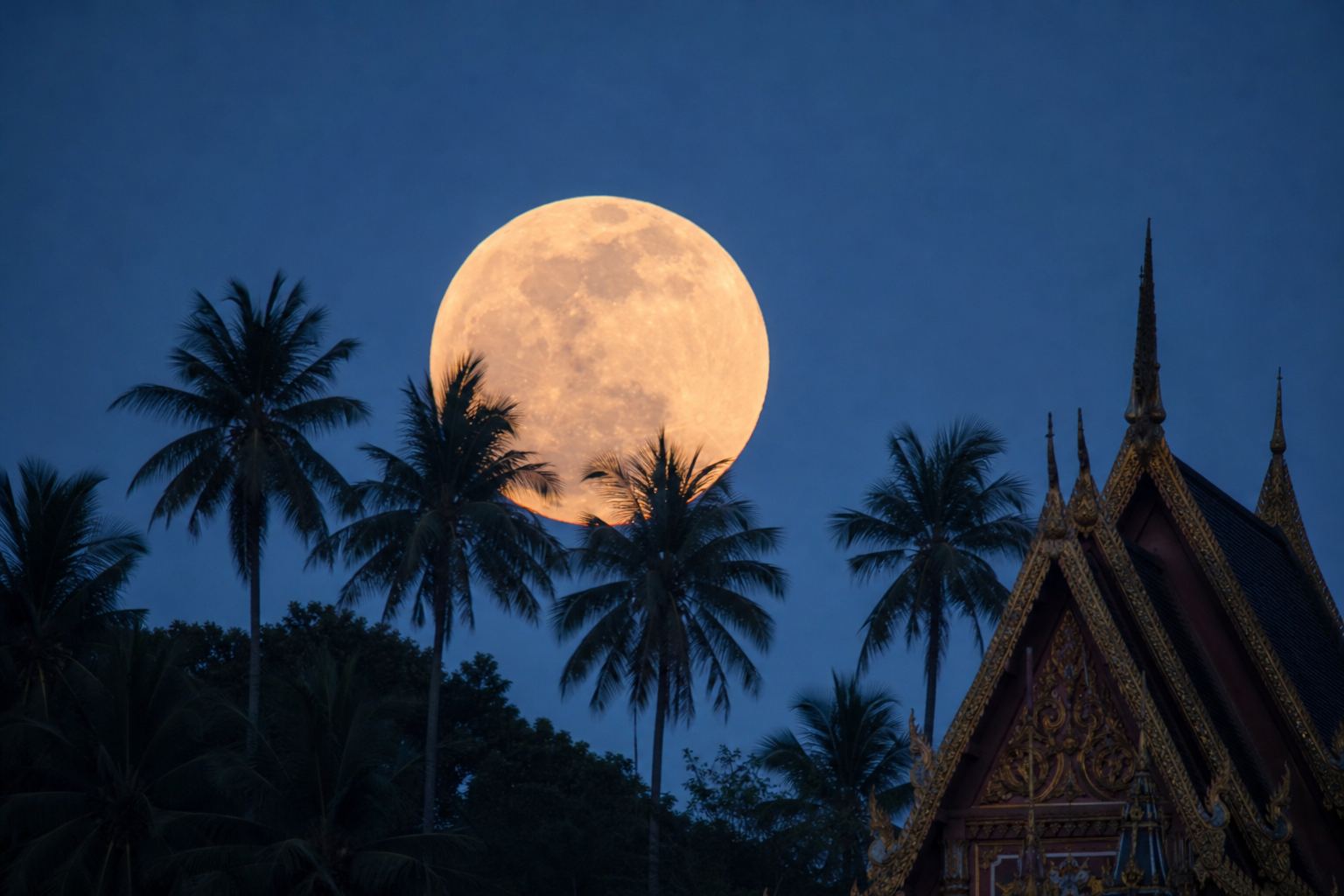
This year it falls on the full moon of the twenty-fourth of November, 2026, all over Thailand.

But where does the festival come from? The honest answer is more interesting than the legend.
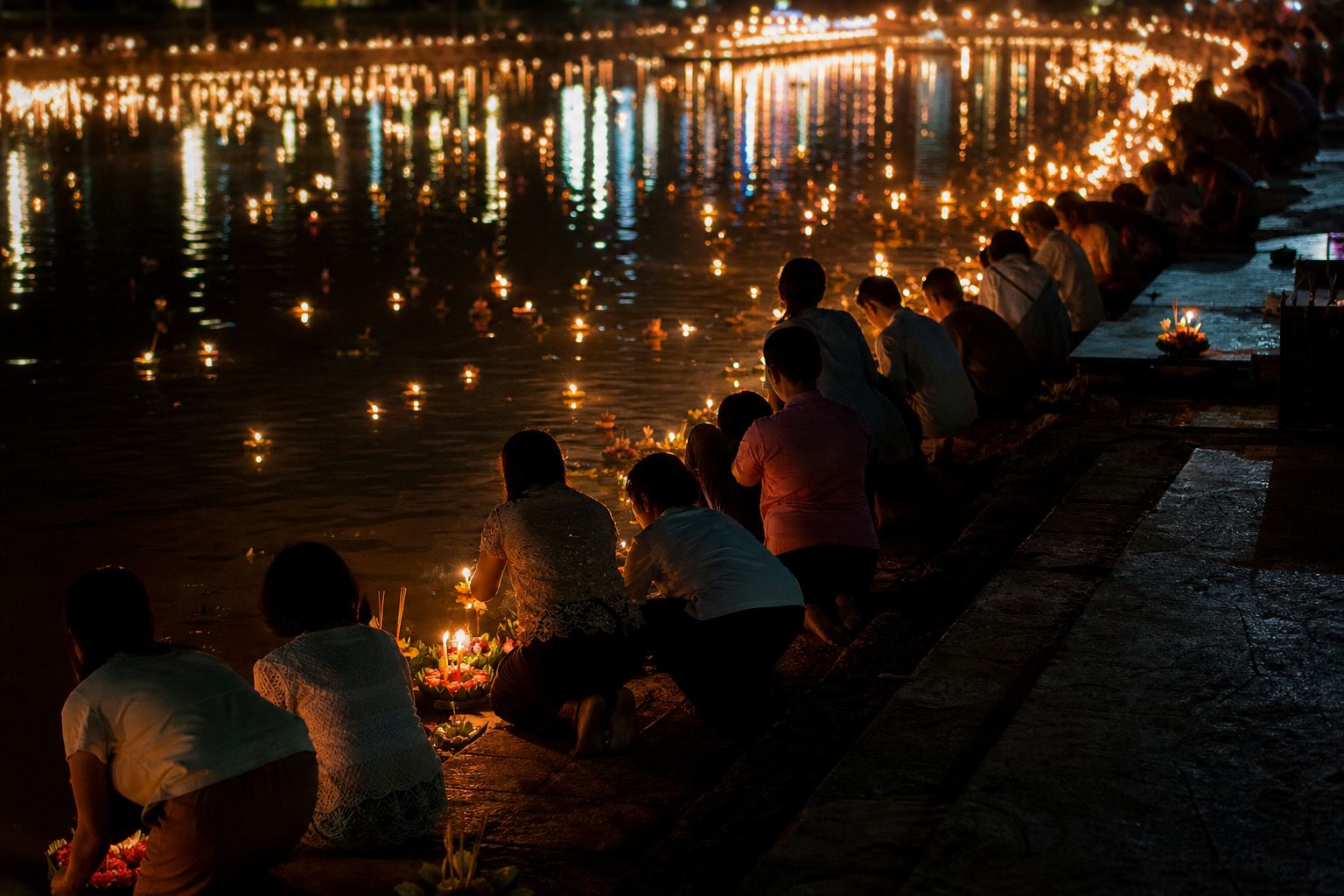
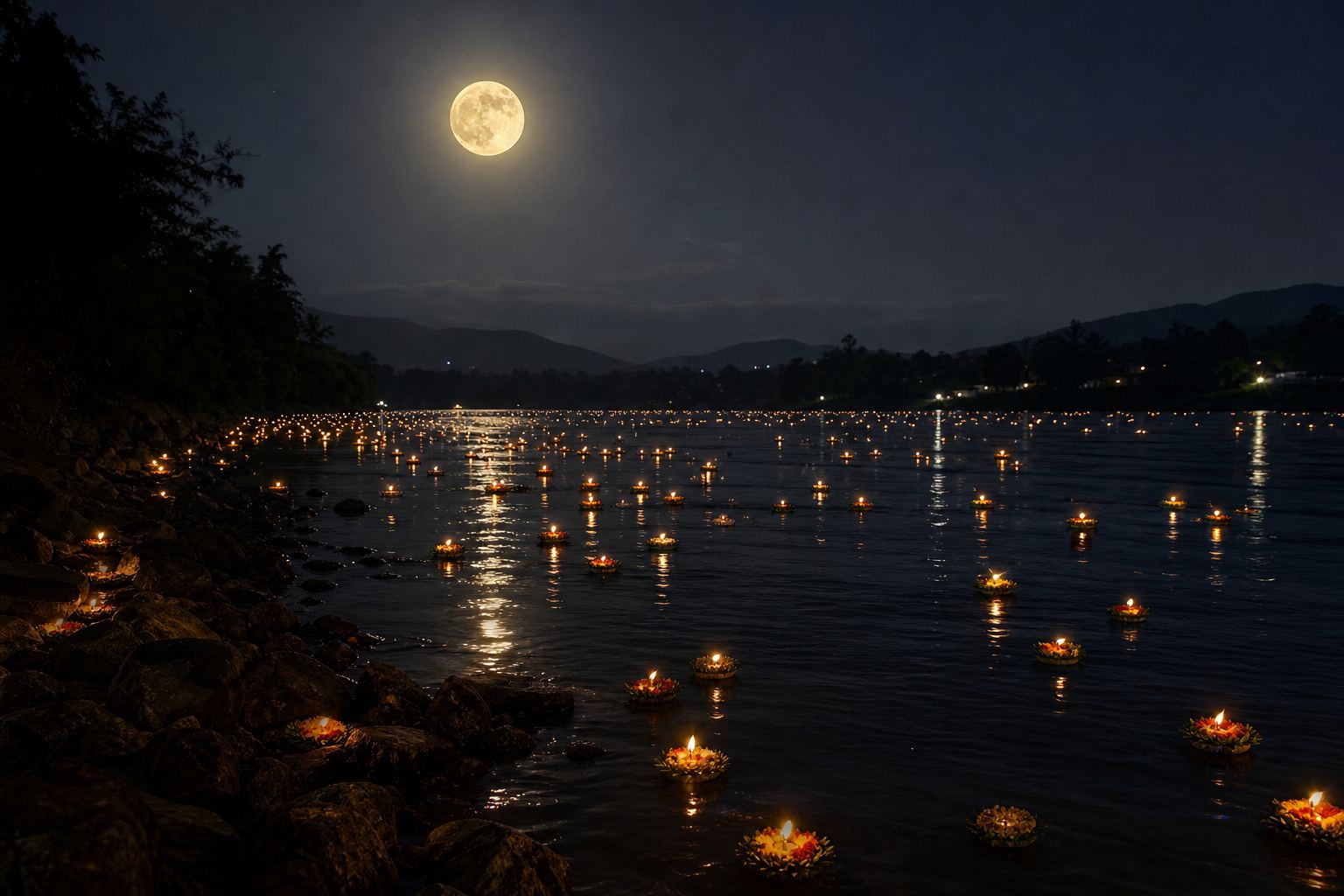
Full-moon night People kneel on the riverside steps to set their floats on the water; the candles are lit just before letting go. AI-generated illustration.
24 Nov
full moon of the 12th lunar month
391,027
krathong collected in Bangkok, 2025
Loy Krathong 2026
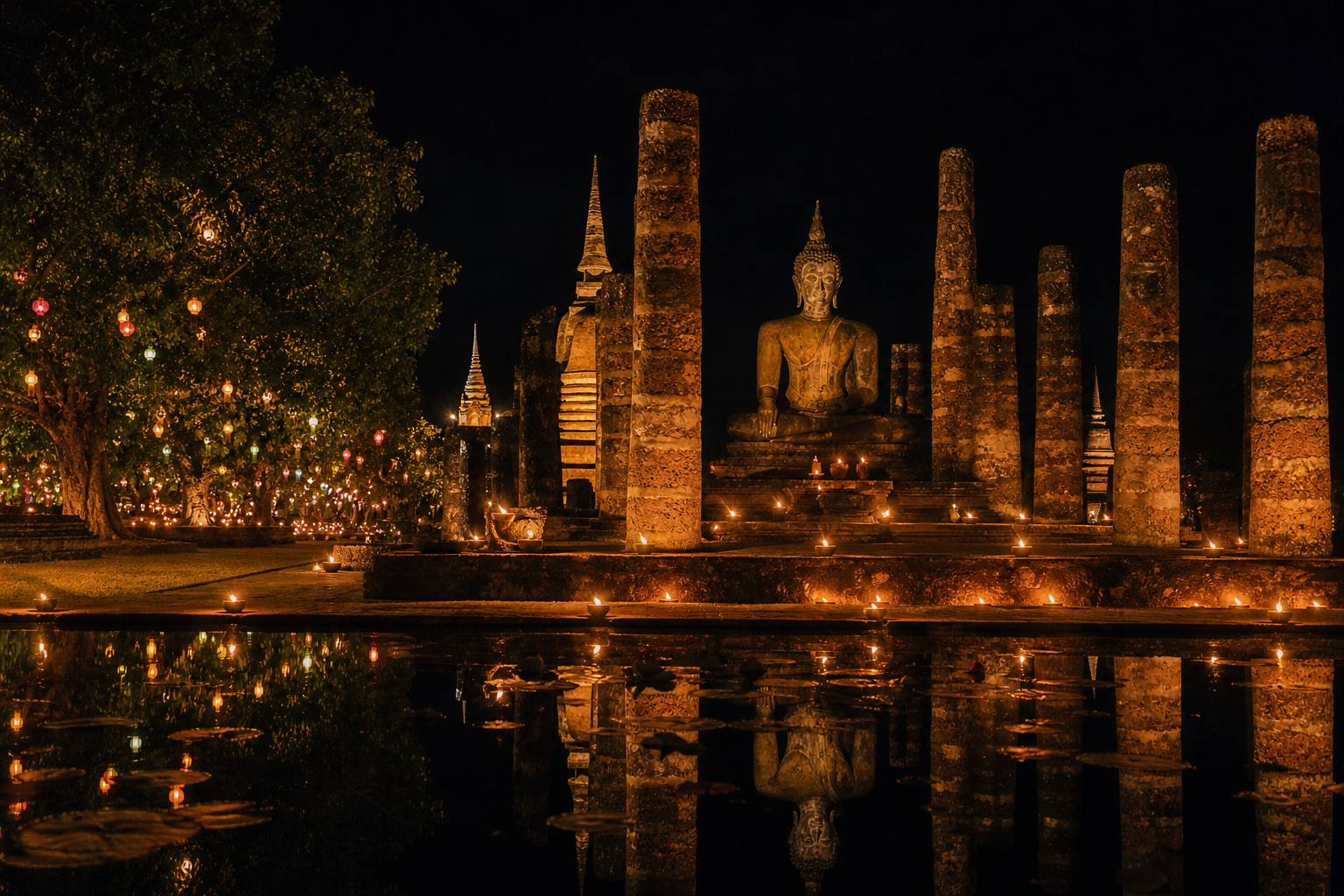
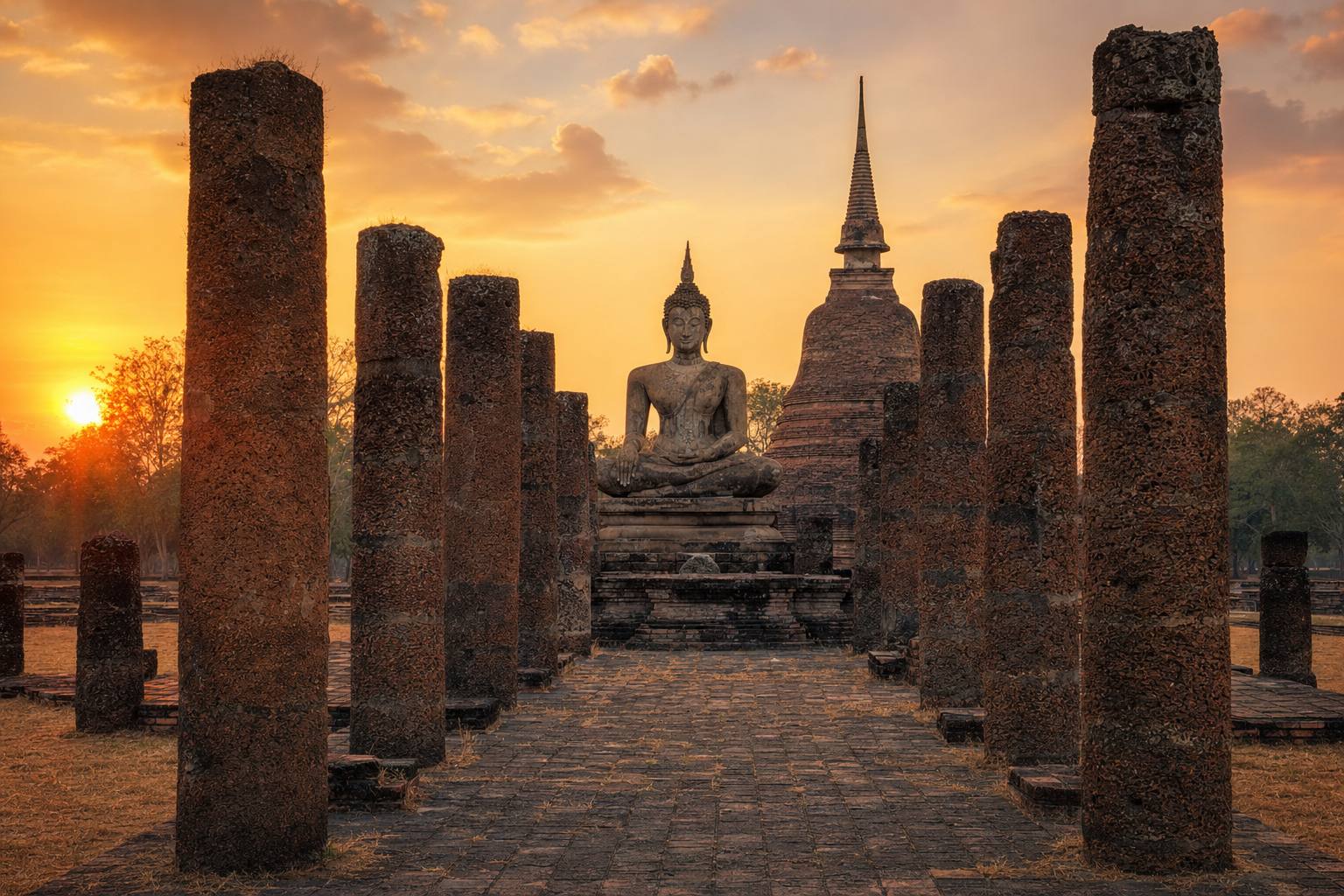
Sukhothai, 15–24 November Candles among the ruins: Sukhothai celebrates for ten nights, in the historical park itself, and Chiang Mai is re-timing flights for its lantern night. AI-generated illustration.
  • what a krathong is, and why the date moves
  • the water goddess and the Buddha
  • royal lanterns and a French envoy
  • Nang Noppamas: legend or history?
In this film
Prologue

The festival in 2026

TAT News (November 2026): Loy Krathong falls on 24 November 2026, the full moon of the twelfth lunar month, with festivals around the country from 15 to 29 November. Thailand.go.th: the Sukhothai festival, “Loy Krathong, Burning Candles and Playing with Fire”, runs from 15 to 24 November 2026 in the Sukhothai Historical Park (TAT calls it the Candlelight and Fireworks Festival). The Star / The Nation (3 November 2026): Chiang Mai airport is cancelling, re-timing and adding flights between 21 and 28 November for the lantern festival. PPTV: Bangkok collected 391,027 krathong in 2025.

Press the button to float a krathong of your own on the model river.

The 3D scenes are simplified, schematic models for teaching, not reconstructions of real places.

Sources: TAT News (Nov 2026): Loi Krathong 2026 lights up Thailand’s rivers and historic cities; Thailand.go.th: Loy Krathong, Burning Candles and Playing with Fire Festival in Sukhothai 2026; The Star / The Nation (3 Nov 2026): Chiang Mai airport cuts flight hours for the lantern festival; PPTV (Nov 2025): Bangkok collects 391,027 krathong, 82.76% natural materials
Chapter I · A boat of leaves

Chapter I · A boat of leaves

A boat of leaves

Banana trunk, banana leaf, flowers and fire.

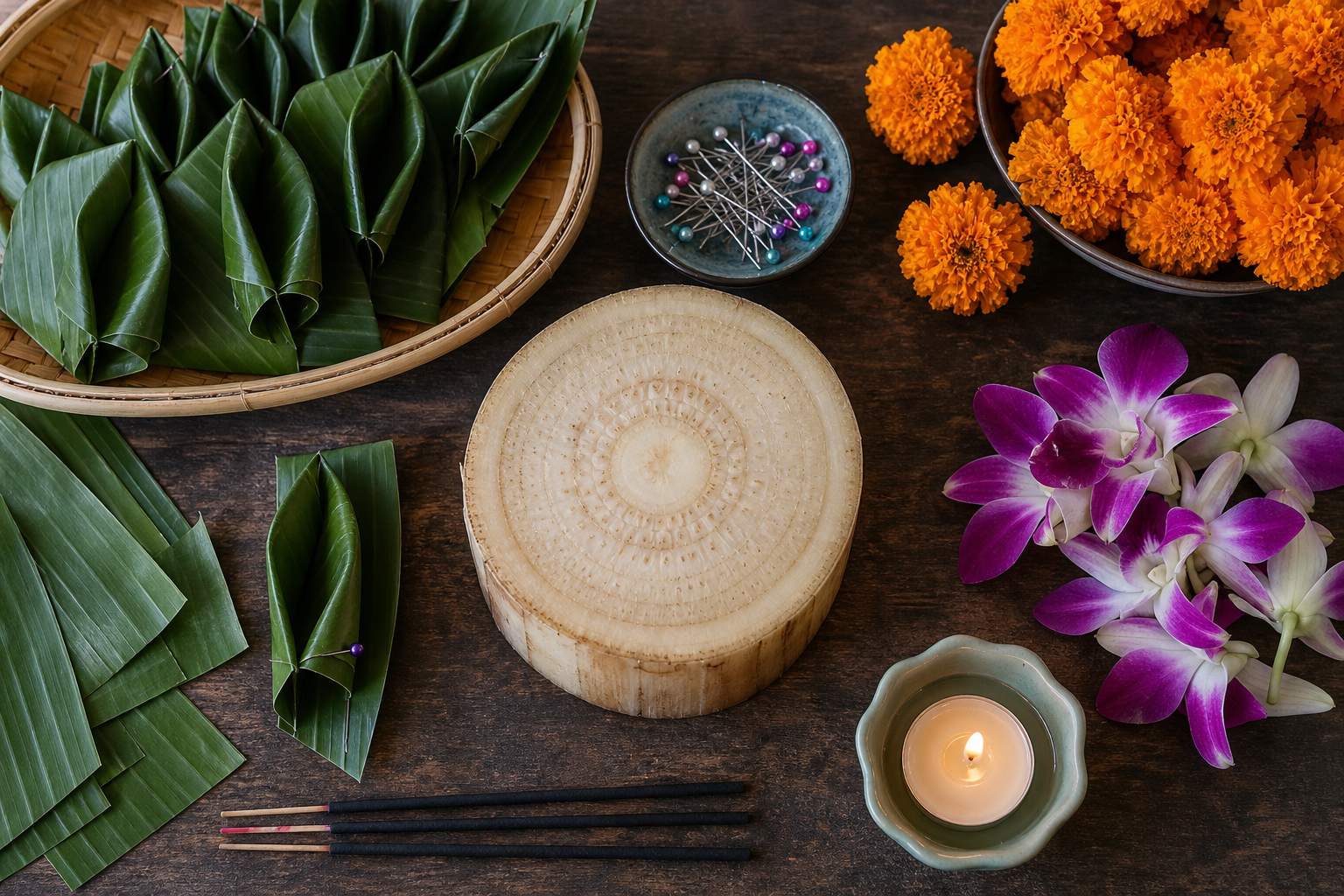
A krathong starts with something that floats. The traditional base is a round slice of banana trunk, soft and full of air.

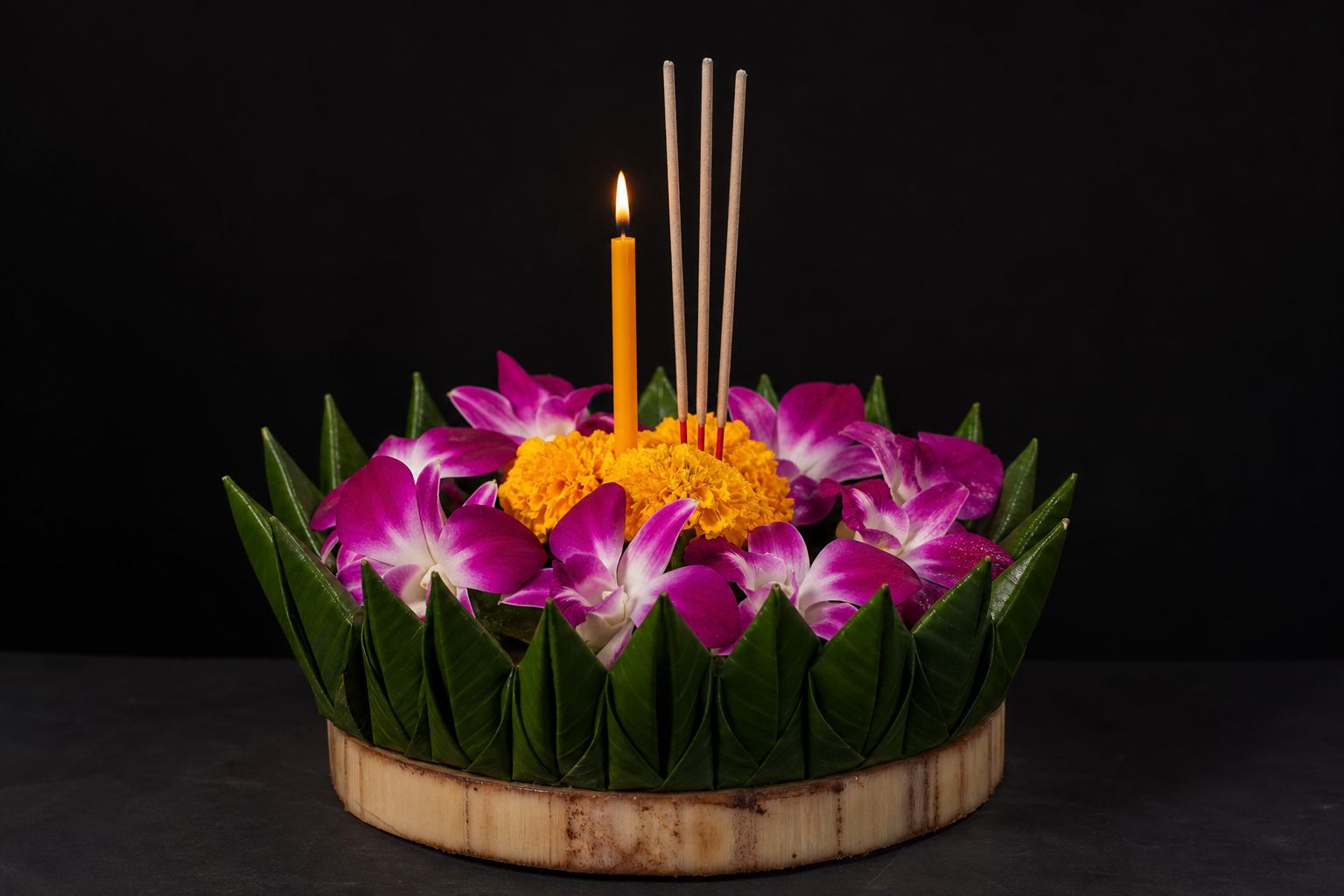
Around it go banana leaves, folded into points like the petals of a lotus. On top come flowers, a candle and incense.

Some people tuck in a coin, or a pinch of rice, salt or chili.

Older floats were made from whatever the river towns had to hand: banana stems, bamboo tubes, even coconut shells.

Everything on the table A slice of banana trunk, folded leaf petals, pins, marigolds and orchids, a candle and incense, ready to assemble. AI-generated illustration.
The finished float Rows of folded petals hide the trunk; the candle sits in the middle so the float stays balanced. AI-generated illustration.
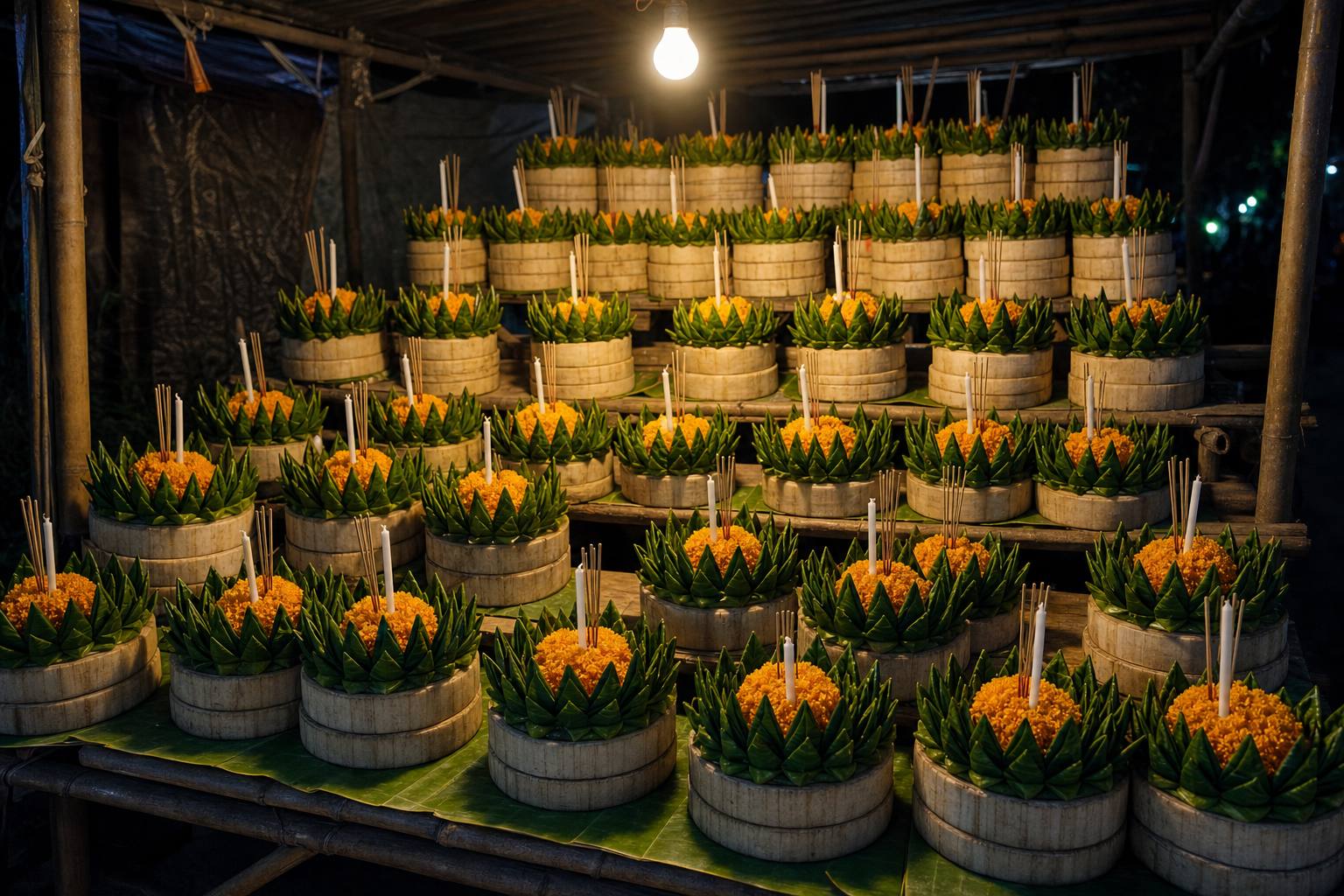
Bought, not always made A banana trunk floats because the stem is packed with air-filled tissue, not because it is light wood. AI-generated illustration.
  • banana stem
  • banana leaf
  • bamboo tubes
  • coconut shells
Floats before foam
Chapter I · A boat of leaves

What goes into a krathong

The Ministry of Foreign Affairs booklet Loy Kratong Tradition: krathong are often made of cut banana stems and leaf, and carry flowers, candles and joss sticks. The Ministry of Culture booklet ลอยกระทง รักษ์น้ำ รักวัฒนธรรม: traditional krathong were made of banana leaf, and older floats used banana stem, bamboo tubes or coconut shells. Walailak University’s cultural centre: some people add rice, chili, salt or coins.

Press “Add the next layer” to build the krathong yourself, or “Start again”.

The 3D scenes are simplified, schematic models for teaching, not reconstructions of real places.

Sources: Ministry of Foreign Affairs of Thailand: Loy Kratong Tradition (booklet); Department of Cultural Promotion, Ministry of Culture: ลอยกระทง รักษ์น้ำ รักวัฒนธรรม (booklet); Walailak University Cultural Center: Loy Krathong

Chapter I · A boat of leaves

Set by the Moon

Why the date moves every year.

Why does the date change every year? Because the festival follows the Moon, not the everyday calendar. It falls on the full moon of the twelfth month of the Thai lunar calendar.

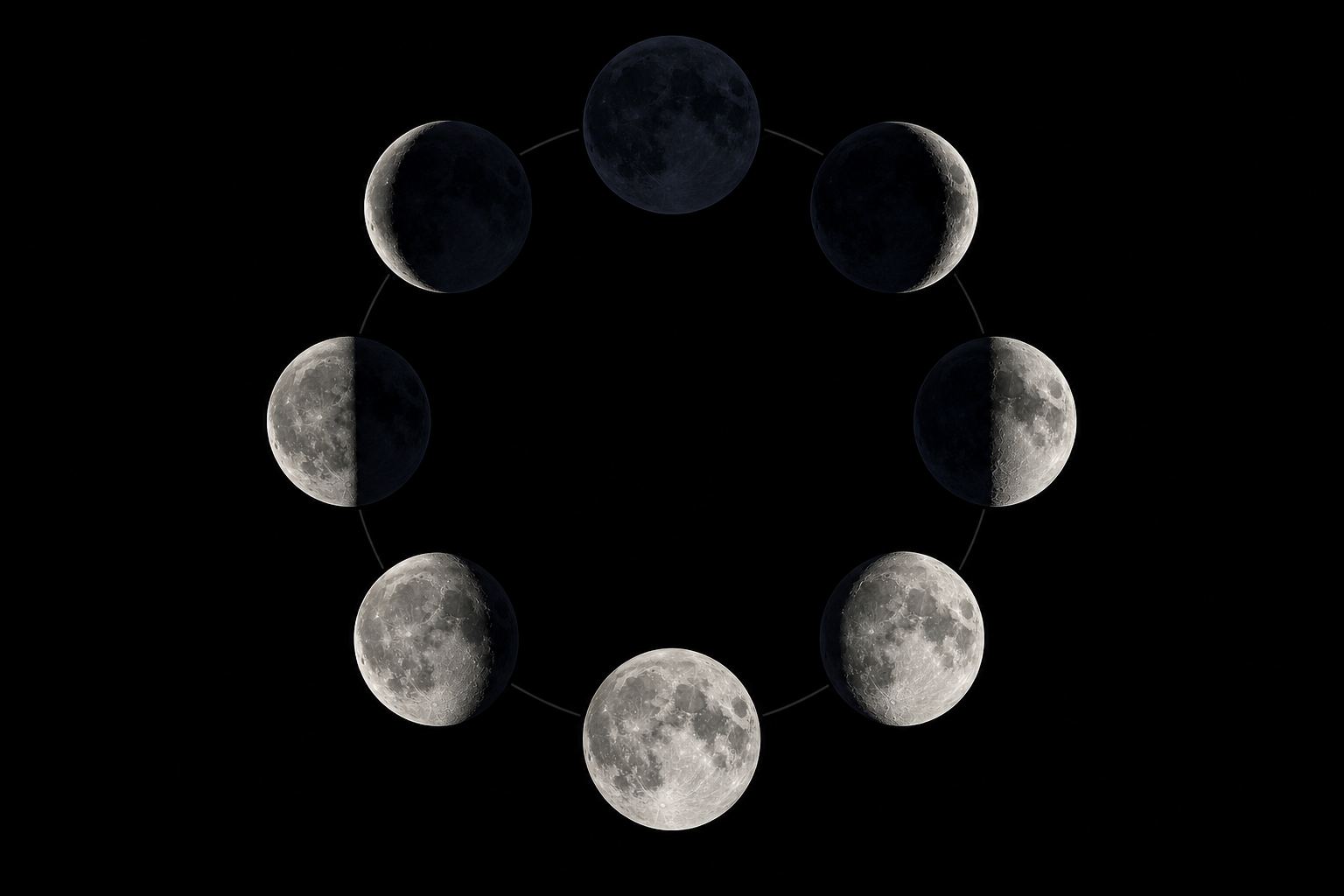
The Moon runs through its phases in about twenty-nine and a half days. Twelve of those months make about 354 days, eleven short of a solar year.

So the full moon of the twelfth month lands on a different day each year: the fifteenth of November in 2024, the fifth in 2025, and the twenty-fourth this year.

Wan Phen, the full-moon day A full moon rises in the east at sunset, opposite the Sun; it is up all night, which is why the festival is at night. AI-generated illustration.
One lunar month New moon, waxing, full, waning: the Thai calendar counts the waxing days (khuen) and the waning days (raem). AI-generated illustration.
15 Nov
2024
5 Nov
2025
24 Nov
2026
Loy Krathong on the calendar
Chapter I · A boat of leaves

A lunar date

The Nation: Loy Krathong is held on the full moon of the twelfth month of the lunar calendar. NASA: the Moon’s cycle of phases repeats about every 29.5 days. TAT News: Loy Krathong fell on 15 November in 2024 and falls on 24 November in 2026; Khaosod English gives 5 November for 2025. The 354 days and the eleven-day difference are the film’s own arithmetic (12 × 29.5 = 354; 365 − 354 = 11).

Press “Next full moon” to run the Moon around the Earth and count the days; the sunlit half always faces the Sun.

The 3D scenes are simplified, schematic models for teaching, not reconstructions of real places.

Sources: The Nation: Loy Krathong, the full moon of the twelfth lunar month; NASA Science: Moon phases (a cycle of about 29.5 days); TAT News (Nov 2024): Loi Krathong Festival 2024; TAT News (Nov 2026): Loi Krathong 2026 lights up Thailand’s rivers and historic cities; Khaosod English (30 Oct 2025): Thailand proceeds with Loy Krathong 2025 on 5 November

Chapter II · Who the lights are for

Chapter II · Who the lights are for

Thanks to the water

The goddess of the river.

Who is the krathong for? The answer most often given is the goddess of water, Phra Mae Khongkha, whose name comes from Ganga, the Ganges.

People float a krathong to thank her for the water that grows the rice, and to ask her forgiveness for having used it and made it dirty.

And as the candle drifts away, many believe it carries their bad luck with it, and leaves room for good fortune.

Letting go The candle is lit, a wish is made, and the float is pushed gently away from the bank. AI-generated illustration.
“to thank Mae Khongkha, the Mother of Water, for the water, or to ask forgiveness for polluting it”Ministry of Foreign Affairs of Thailand, Loy Kratong Tradition (paraphrased)
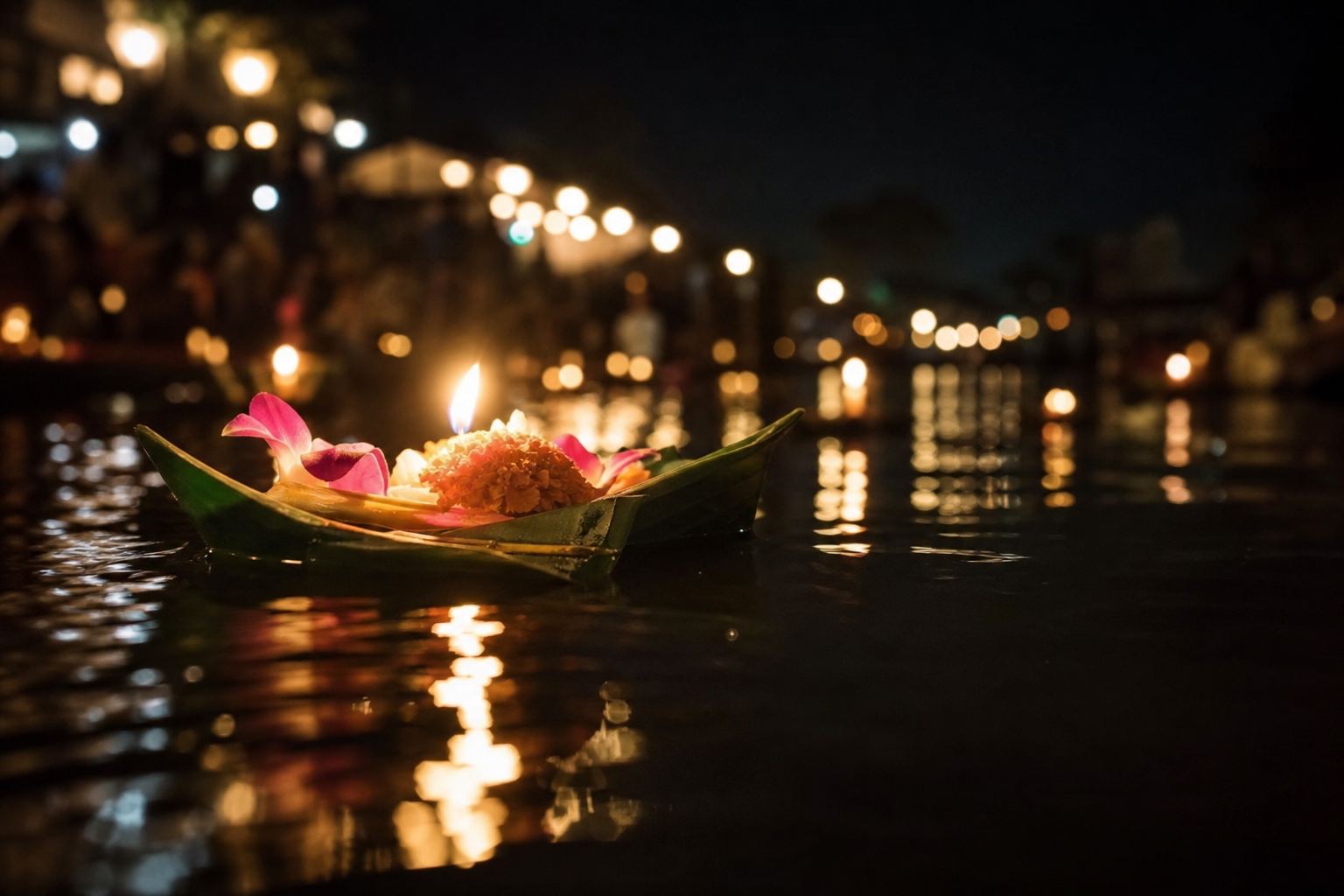
Floating misfortune away Seen from the water: the light shrinks into the dark as the current takes it. AI-generated illustration.
Chapter II · Who the lights are for

The water goddess

Ministry of Foreign Affairs booklet: people honour Mae Khongkha, “the Mother of Water”, to thank her for water or to ask forgiveness for polluting it. The Ministry of Culture booklet gives the wording “ขอขมาแม่พระคงคาและแม่พระธรณี”, asking forgiveness of the mother of water and the mother of earth. Walailak University names her Phra Mae Ganga. TAT News: floating the krathong is “believed to release misfortune and invite good fortune”.

The quotation in English is the film’s paraphrase of the MFA booklet; the Thai is the Ministry of Culture’s wording.

The 3D scenes are simplified, schematic models for teaching, not reconstructions of real places.

Sources: Ministry of Foreign Affairs of Thailand: Loy Kratong Tradition (booklet); Department of Cultural Promotion, Ministry of Culture: ลอยกระทง รักษ์น้ำ รักวัฒนธรรม (booklet); Walailak University Cultural Center: Loy Krathong; TAT News (Nov 2024): Loi Krathong Festival 2024

Chapter II · Who the lights are for

A footprint and a relic

Meanings gathered over time.

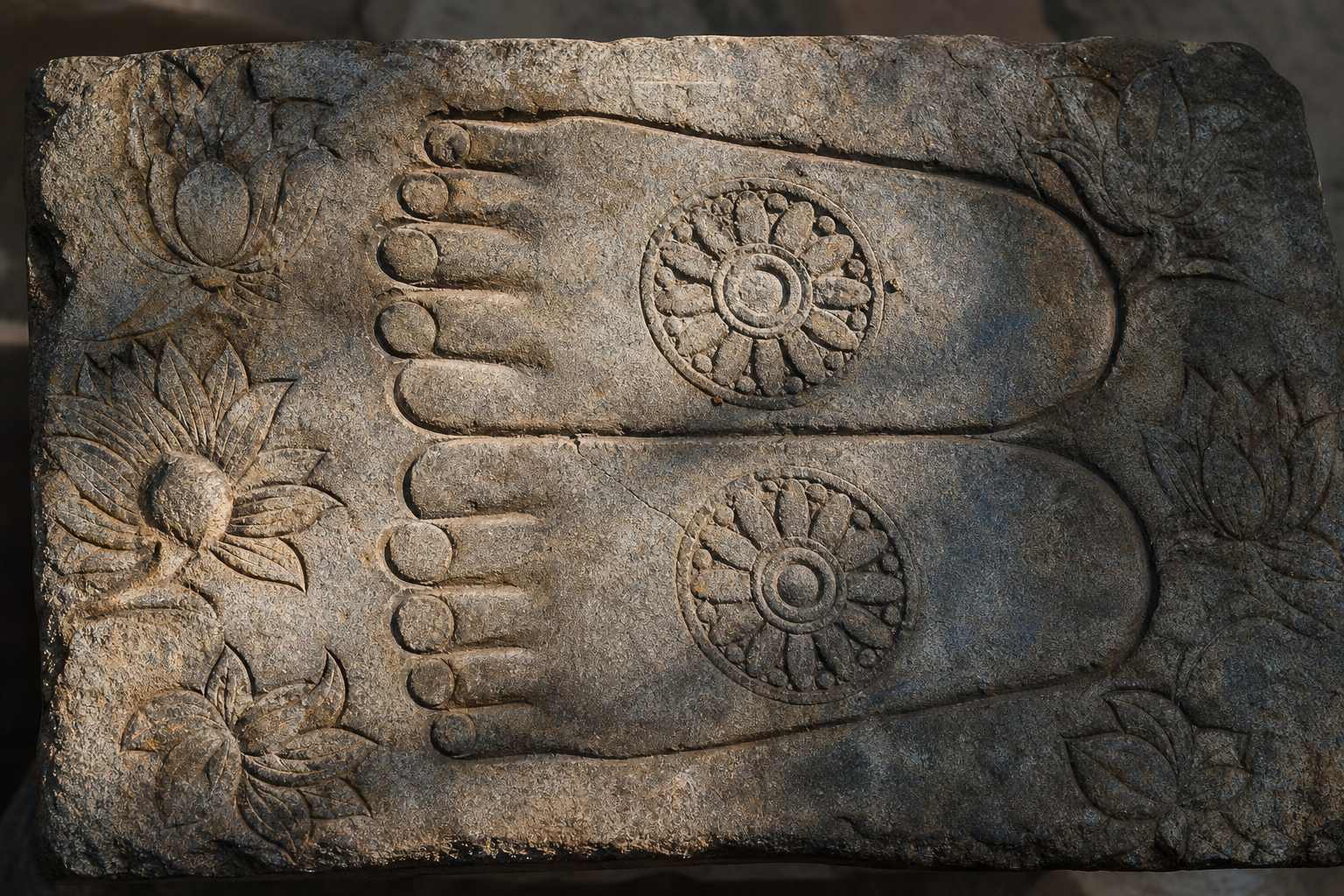
There are Buddhist meanings too, and the Ministry of Culture lists two. One is to honour a footprint the Buddha is said to have left on the bank of the Narmada river in India, the Nammathanathi in Thai.

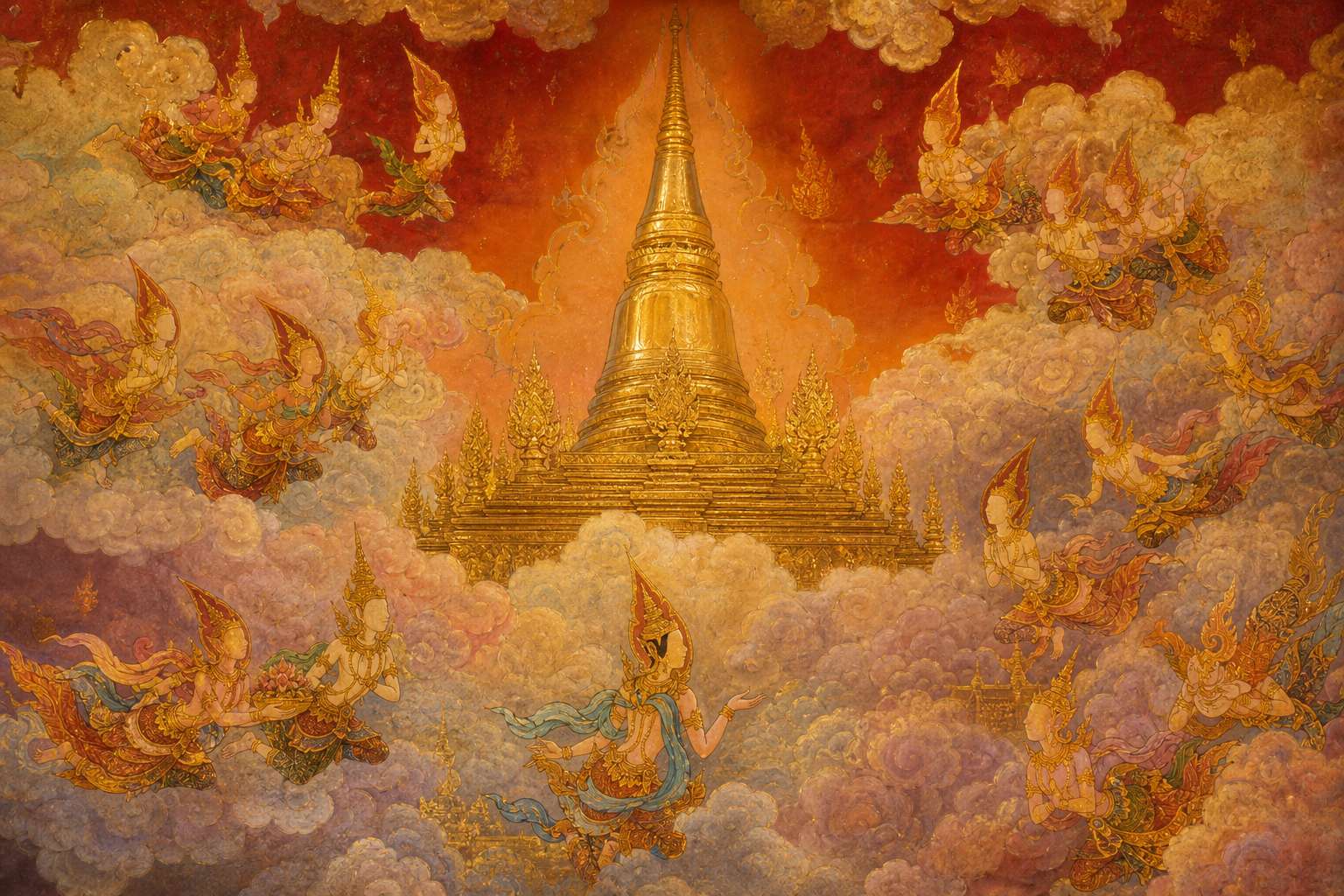
The other is to honour the Chulamani chedi in Tavatimsa heaven, where, in Buddhist tradition, a lock of the Buddha’s hair is kept.

Scholars note that the footprint story is not found in the Pali scriptures. Like many festivals, Loy Krathong gathered its meanings over time.

A carved footprint Buddha footprints are carved with auspicious marks such as the wheel and the lotus. AI-generated illustration.
The Chulamani chedi In the style of a Thai temple mural: a golden chedi among the clouds of a heaven. AI-generated illustration.
  • thanks and apology to the water
  • the footprint by the Narmada
  • the hair relic in Tavatimsa
  • floating bad luck away
One float, several meanings
Chapter II · Who the lights are for

The Buddhist reading

Ministry of Culture booklet: the festival is “อุทิศสักการบูชาพระพุทธบาทนัมมทานที” (to honour the Buddha’s footprint at the Narmada) and “เพื่อบูชาพระเกศแก้วจุฬามณีบนสวรรค์ชั้นดาวดึงส์” (to honour the hair relic at Chulamani in Tavatimsa heaven). The MFA booklet also mentions “the Lord Buddha’s foot print on the bank of the Nammatha River in India”. The Standard: Phraya Anuman Rajadhon cited Pali experts who said the footprint story is found nowhere in the scriptures.

In the scene, one light drifts downstream for the footprint and one rises for the relic: a picture of the two meanings, not of a real rite.

The 3D scenes are simplified, schematic models for teaching, not reconstructions of real places.

Sources: Department of Cultural Promotion, Ministry of Culture: ลอยกระทง รักษ์น้ำ รักวัฒนธรรม (booklet); Ministry of Foreign Affairs of Thailand: Loy Kratong Tradition (booklet); The Standard (Pipat Krajaejun): Where did Loy Krathong come from?

Chapter III · A lady of Sukhothai

Chapter III · A lady of Sukhothai

Nang Noppamas

The story most Thais know.

Ask how it all began, and many Thais will tell you about a woman named Nang Noppamas.

In the story she is the daughter of a Brahmin priest at the court of King Phra Ruang of Sukhothai. She makes a float in the shape of a lotus for the festival, and so, the story goes, the krathong was born.

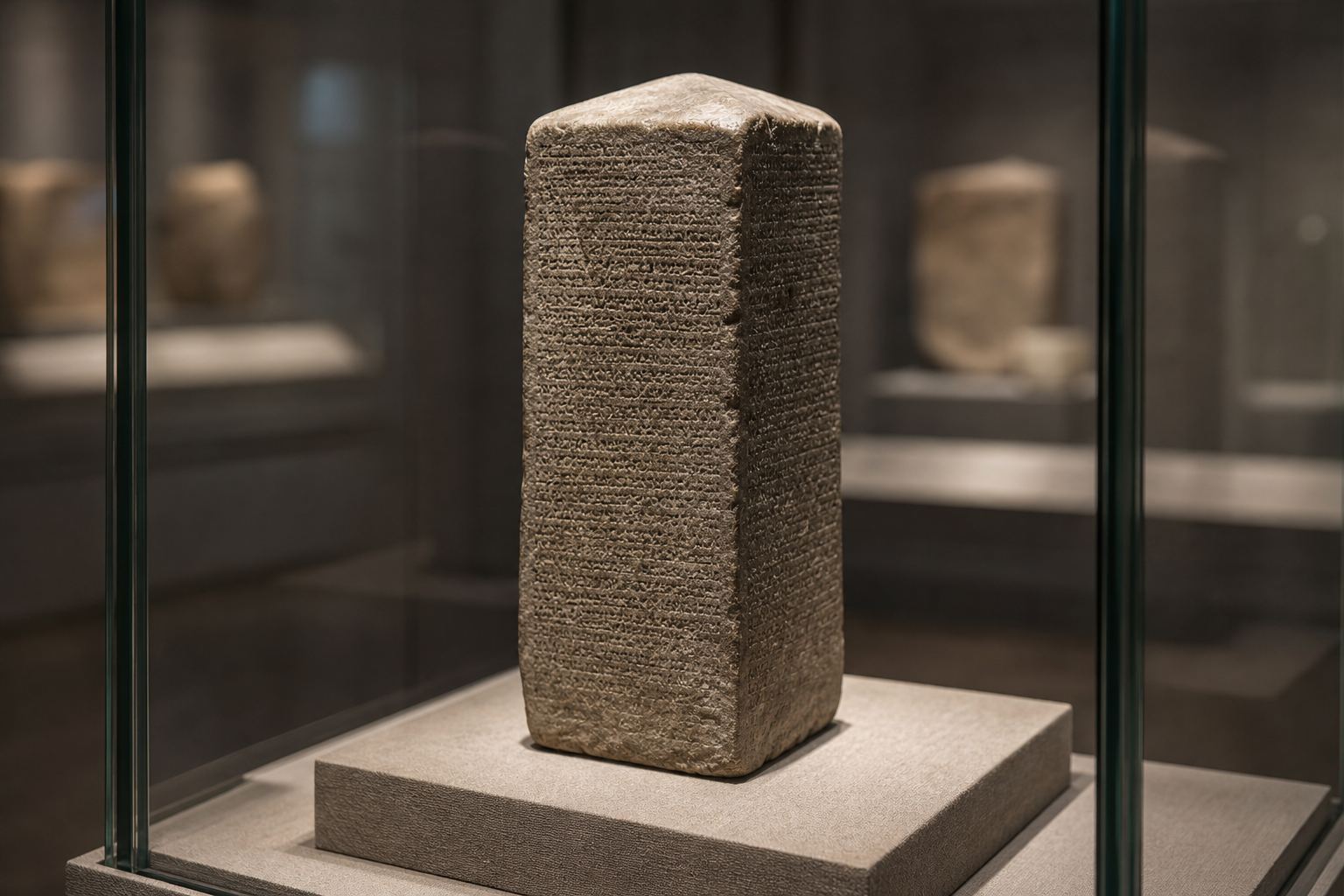
Sukhothai’s festival today takes its name from the kingdom’s famous stone inscription of King Ramkhamhaeng, traditionally dated 1292, which speaks of people coming to watch the king burn candles and play with fire.

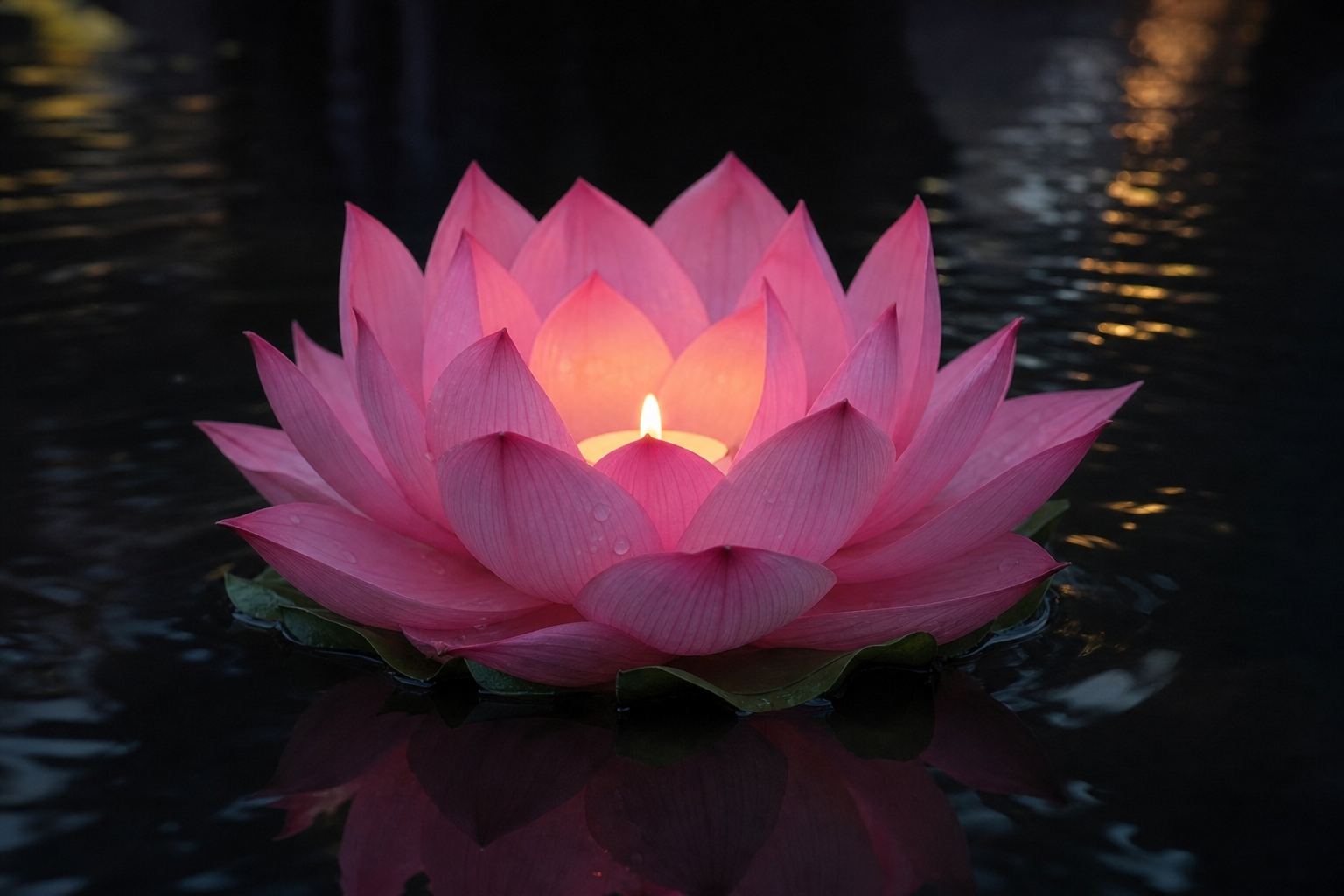
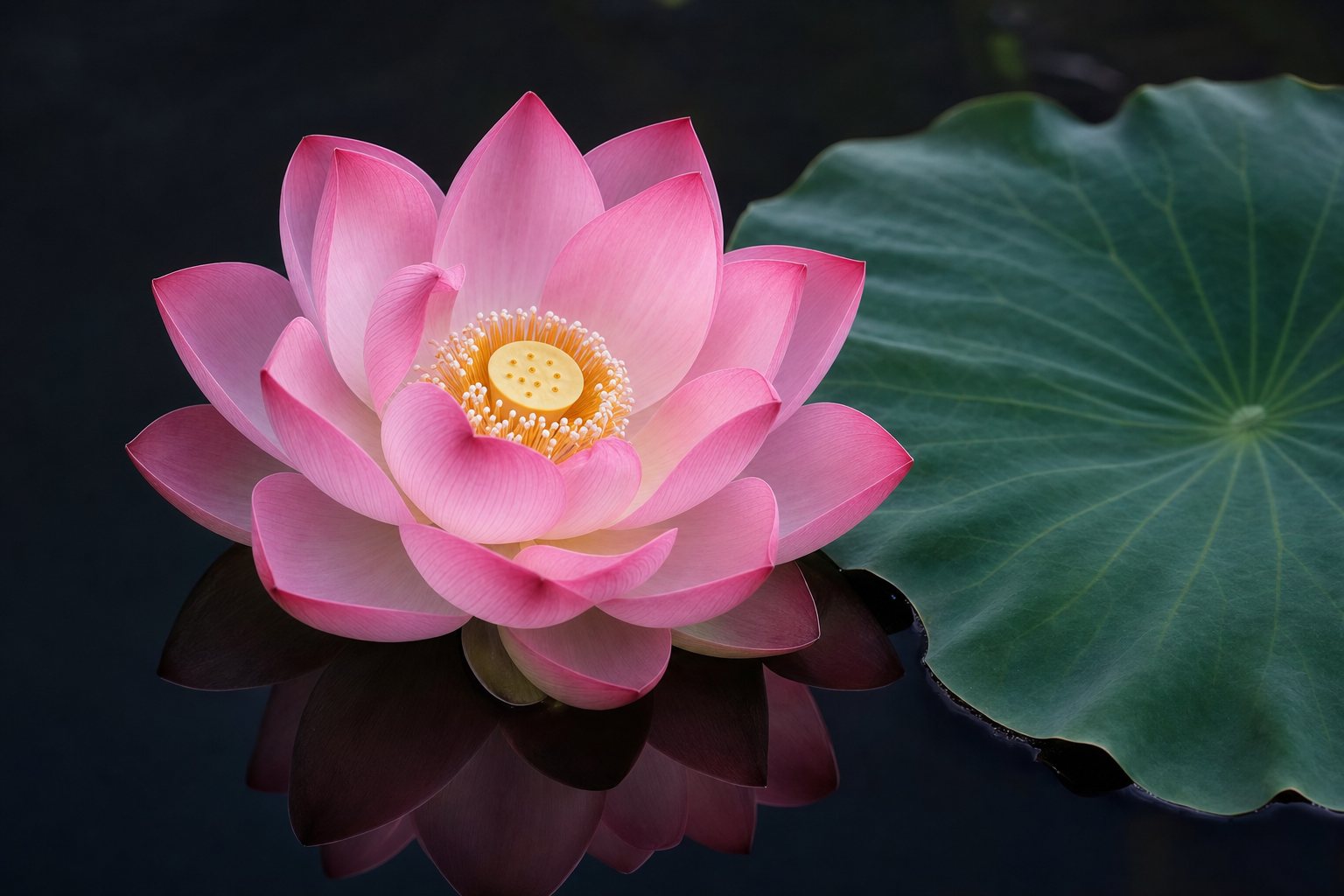
A lotus float Real lotus petals around a candle: the shape the legend gives to the first krathong. AI-generated illustration.
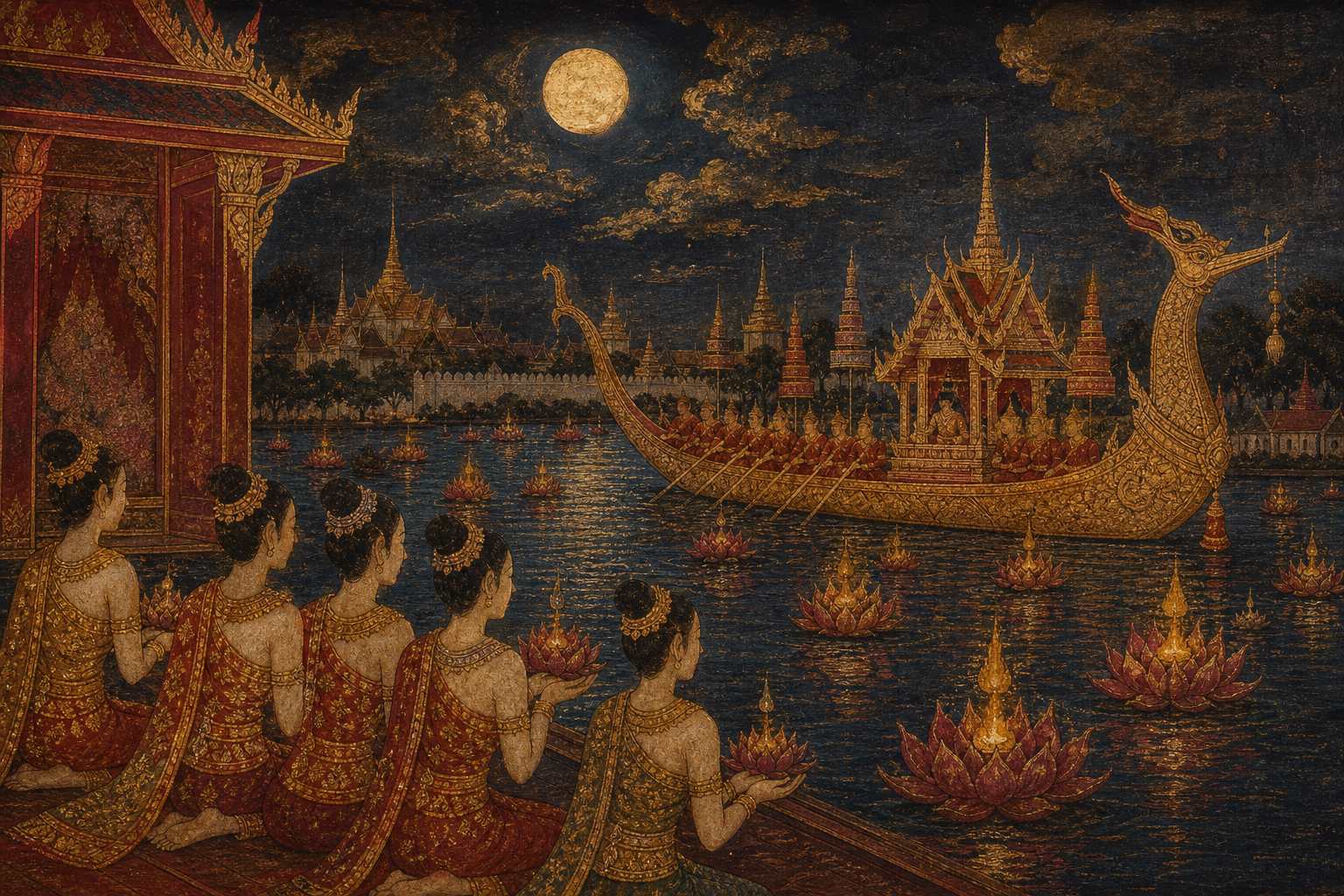
A court by the river In the manner of a temple mural: court ladies and a royal barge on a full-moon night, the scene the legend imagines. AI-generated illustration.
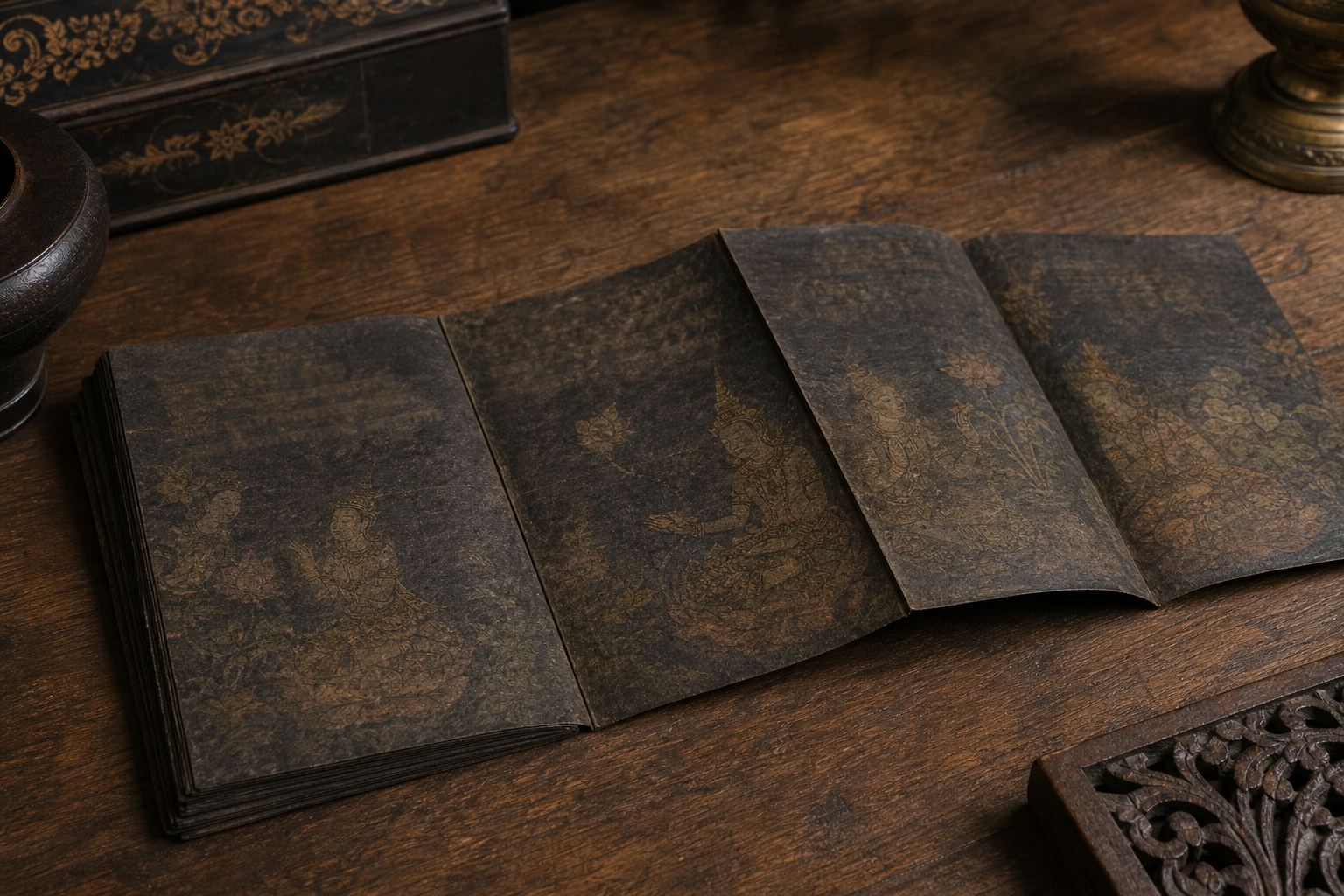
Where the story is written A traditional Thai folding book: the Noppamas story survives in a text of this kind, known as Tamra Thao Si Chulalak. AI-generated illustration.
“…to see him burn candles, to see him play with fire within this city of Sukhothai.”Ramkhamhaeng inscription, tr. C. B. Bradley (1909)
Why a lotus The lotus roots in mud and opens clean above it, which is why the same plant carries the same idea across Asia. AI-generated illustration.
Chapter III · A lady of Sukhothai

The legend

MFA booklet: Nang Noppamas, daughter of a Brahman priest at the court of King Phra Ruang of Sukhothai, made a lotus-shaped float. The Sukhothai festival is called “Loy Krathong, Burning Candles and Playing with Fire”. C. B. Bradley’s translation of the Ramkhamhaeng inscription (Siam Society, 1909), lines 56–57: people come “to see him burn candles, to see him play with fire within this city of Sukhothai”. Wikipedia: the inscription is dated to 1292; Bradley dated it 1293. UNESCO added it to the Memory of the World Register in 2003 (Bangkok Post).

The Thai wording of the quotation is the film’s rendering of Bradley’s English, not a transcription of the stone.

The 3D scenes are simplified, schematic models for teaching, not reconstructions of real places.

Sources: Ministry of Foreign Affairs of Thailand: Loy Kratong Tradition (booklet); Thailand.go.th: Loy Krathong, Burning Candles and Playing with Fire Festival in Sukhothai 2026; The Siam Society: C. B. Bradley’s translation of the Ramkhamhaeng inscription (1909); Wikipedia: Ram Khamhaeng Inscription (dating, citing Griswold and Prasert 1971); Bangkok Post: Decoding the past (Ramkhamhaeng inscription, UNESCO Memory of the World 2003)

Chapter IV · What the record shows

Chapter IV · What the record shows

Lamps for the gods

A Brahmin rite, and a carving at Angkor.

Look past the legend, and the record goes further back. Many writers, including Thailand’s own ministries, trace the festival to Brahmin rites that came from India and honoured the river and the gods.

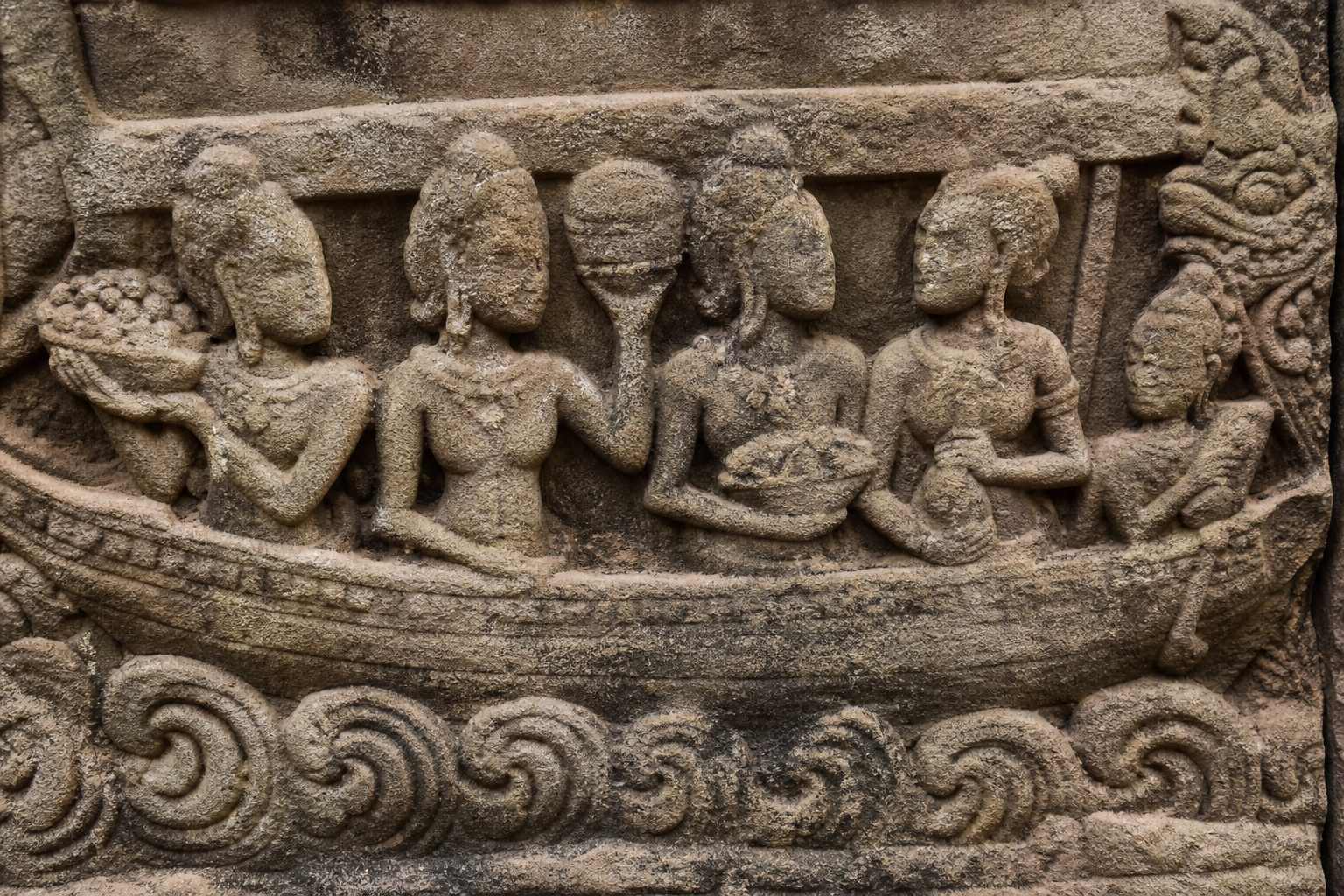
On the Bayon temple at Angkor, built around the year 1200, the historian Pipat Krajaejun points to carvings of court women holding krathong-like vessels, and a king in a boat.

A carving is not a caption, though. It shows something like the festival, not proof that it began there.

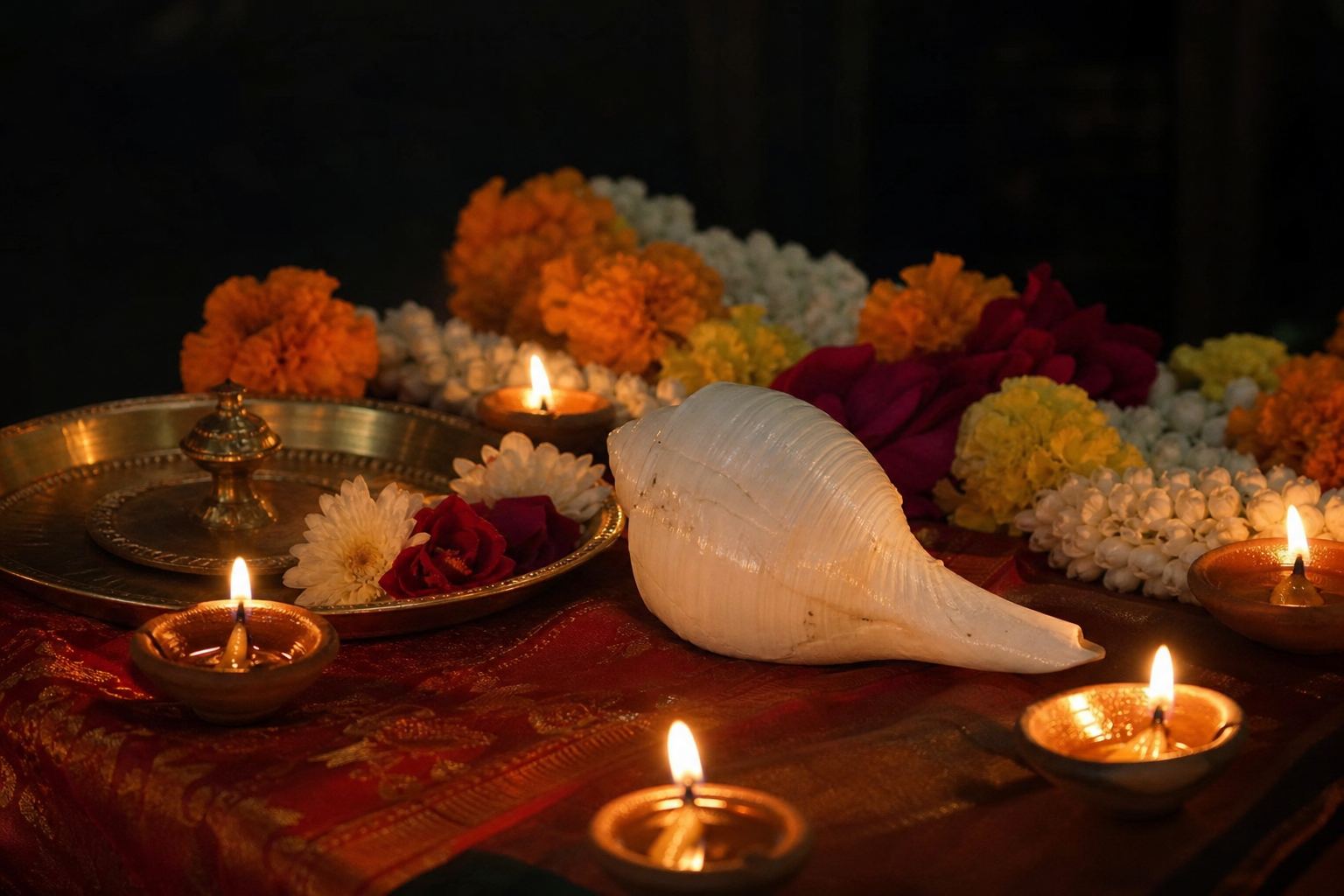
Brahmin ritual objects A conch shell and oil lamps: the instruments of the court’s Brahmin rites. AI-generated illustration.
A relief of the Bayon kind Women in a boat holding bowls above carved waves, in the style of the Bayon’s galleries; not a copy of a real panel. AI-generated illustration.
  1. c. 1200 Bayon reliefs, Angkor
  2. 1292 Sukhothai inscription: candles and fire
  3. 1687 La Loubère: lanterns on the river
  4. 1824–51 the Noppamas book, by most accounts
Lights on the water, in the record
Chapter IV · What the record shows

Brahmin roots and the Bayon

The MFA booklet links the festival to a Brahmin “sin floating rite”; Walailak University says it is “presumed to have come from India”, honouring the Ganges. Britannica: the Bayon was “constructed c. 1200 at the behest of Jayavarman VII”. The Standard (Pipat Krajaejun): reliefs on the Bayon show court women with krathong-like vessels and a king in a boat; the article concludes that no one can pinpoint where or when the festival began, and discusses water spirits, Khmer customs and Chinese lanterns as possible sources.

Press the button to set a ring of lamps on the river.

The 3D scenes are simplified, schematic models for teaching, not reconstructions of real places.

Sources: Ministry of Foreign Affairs of Thailand: Loy Kratong Tradition (booklet); Walailak University Cultural Center: Loy Krathong; Encyclopaedia Britannica: The Bayon, built c. 1200 under Jayavarman VII; The Standard (Pipat Krajaejun): Where did Loy Krathong come from?

Chapter IV · What the record shows

Lanterns at court

The royal rite of Chong Priang.

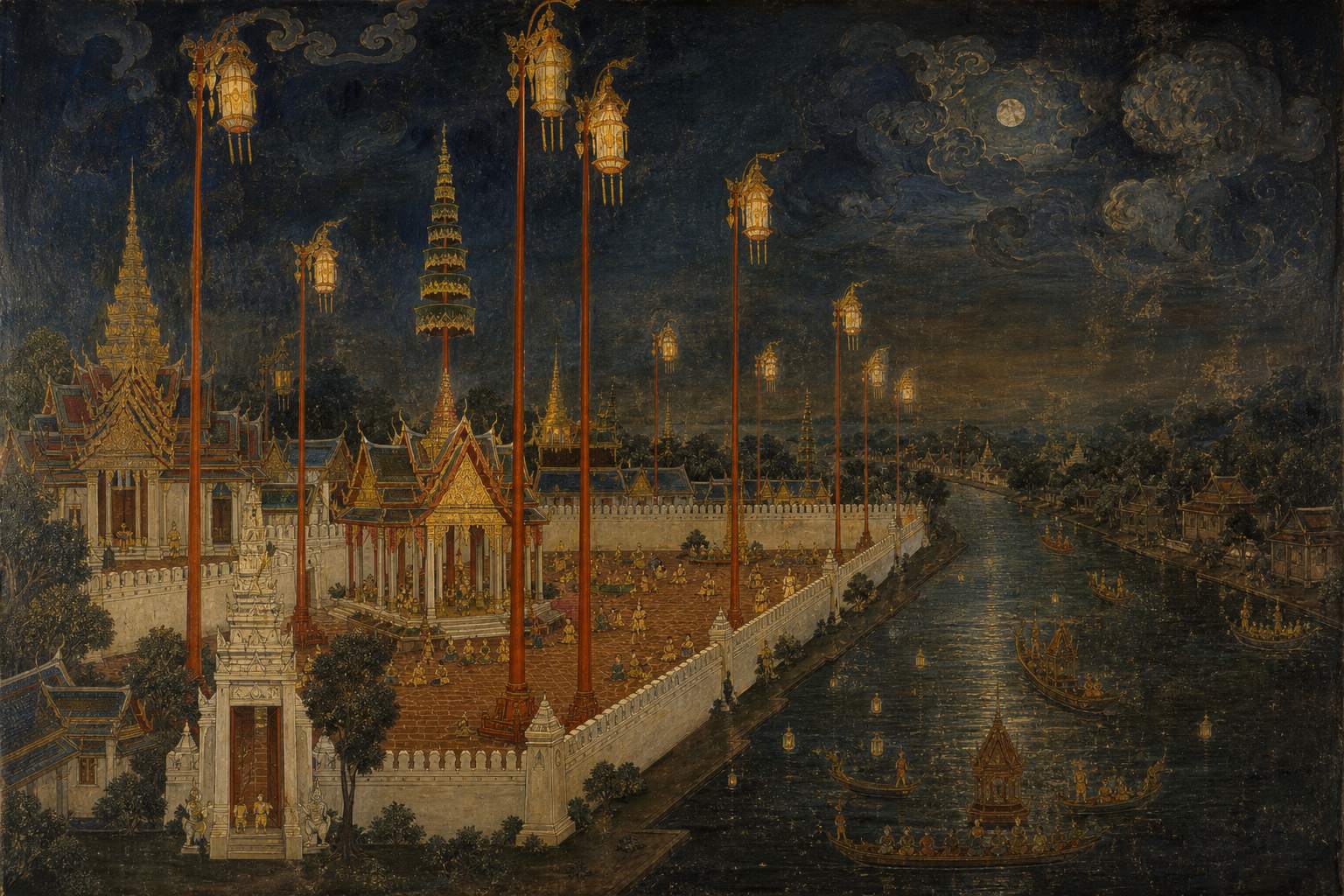
At the Siamese court, the twelfth-month full moon belonged to a royal rite called Chong Priang. Lanterns were raised on tall poles across the capital, and Brahmin priests blew conch shells to begin it.

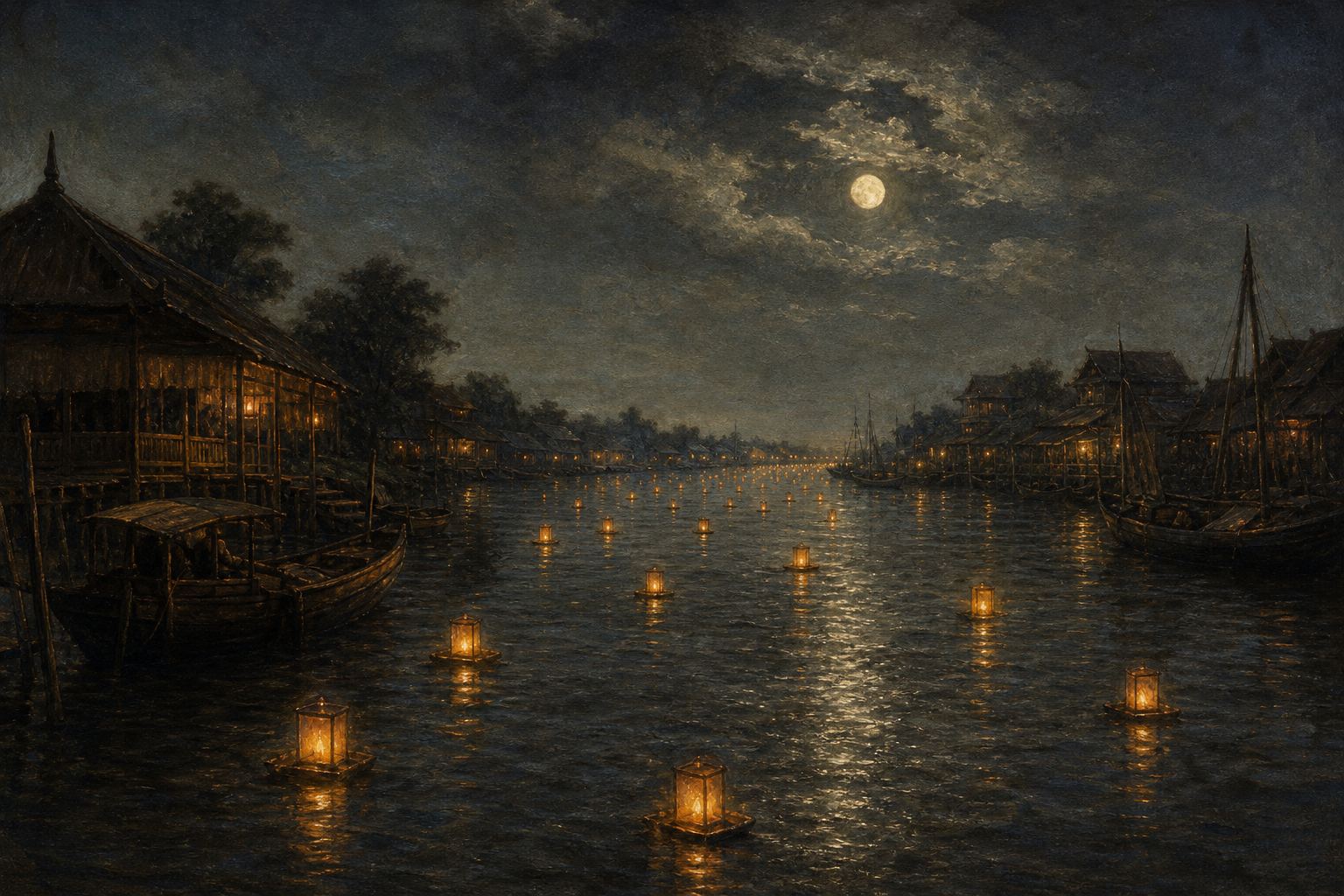
Lights went onto the water too. A French envoy, Simon de La Loubère, came to the court of Ayutthaya in 1687. He wrote that when the waters begin to fall, people thank them for several nights with a great illumination.

“The whole river is then seen covered with floating lanterns,” he wrote, “which pass with it.”

Chong Priang In the manner of an old Siamese mural: tall poles carry lanterns above a palace courtyard by the river. AI-generated illustration.
What La Loubère saw A river at night covered with small floating lights, with wooden houses and boats on the banks. AI-generated illustration.
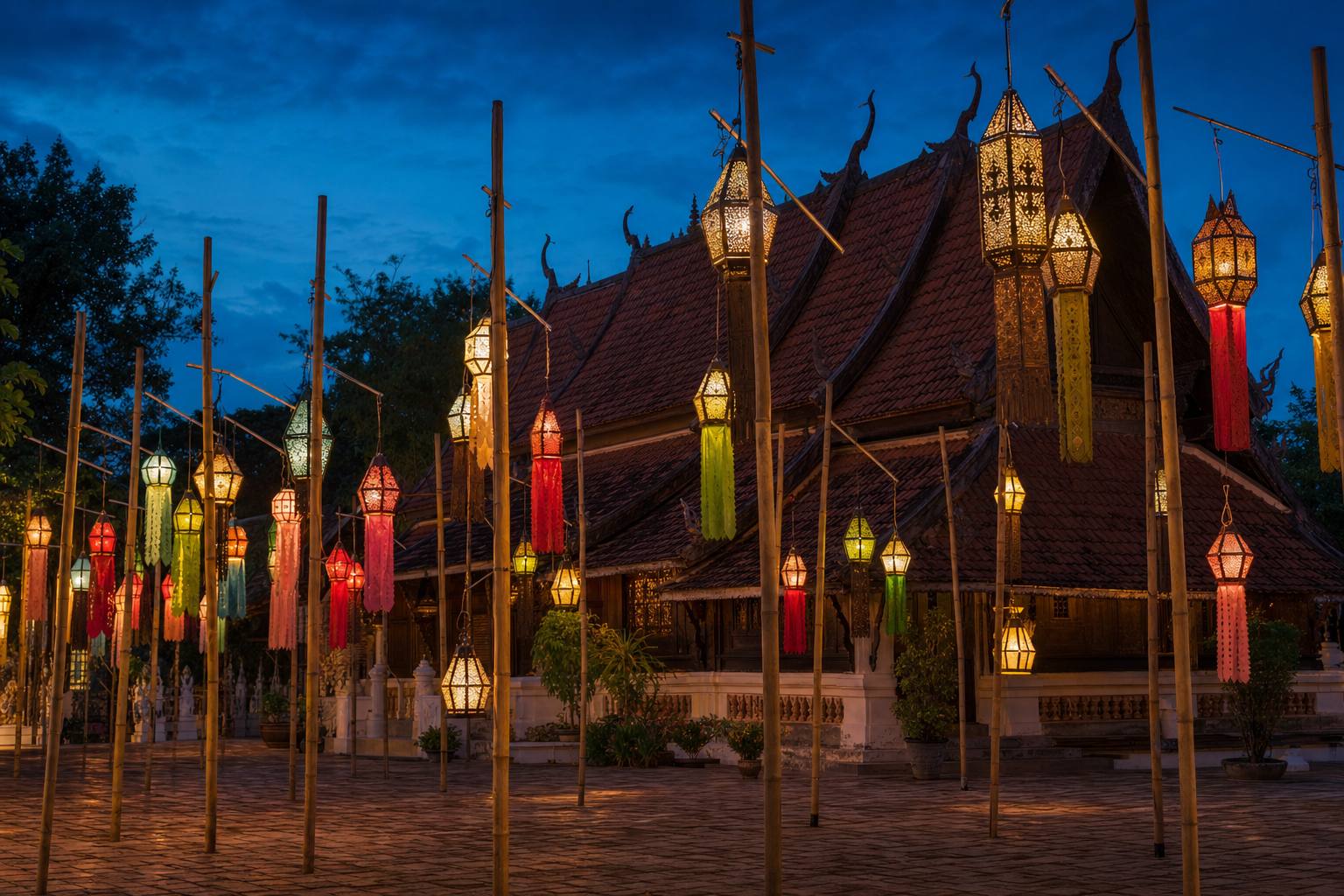
Lanterns on poles Lantern poles raised outside a temple are an offering in themselves, quite apart from anything set on the water. AI-generated illustration.
“The whole River is then seen cover’d with floating Lanthorns, which pass with it.”Simon de La Loubère, A New Historical Relation of the Kingdom of Siam (English edition, 1693)
Chapter IV · What the record shows

From poles to the river

Ramathibodi Hospital column (Mahidol University): Chong Priang, the ancestor of Loy Krathong, was a royal rite on the full moon of the twelfth month in which lanterns were raised in lines across the capital and Brahmins blew conch shells to begin. Walailak University gives the sequence Chong Priang, then floating royal lanterns (loi phra prathip), then Loy Krathong. Matichon (Sujit Wongthes): in the Ayutthaya period, floating offerings gave way to floating paper lanterns. La Loubère’s account (English edition 1693) describes a festival “when the Waters begin to retreat”, with several nights of illumination; it gives no name for the festival.

Press “Raise the lanterns” and “Float the lanterns” to see the two forms of the rite.

The 3D scenes are simplified, schematic models for teaching, not reconstructions of real places.

Sources: Ramathibodi Hospital, Mahidol University (column): Chong Priang, the royal lantern rite; Walailak University Cultural Center: Loy Krathong; Matichon (Sujit Wongthes): Nang Noppamas was written under Rama III; Simon de La Loubère, A New Historical Relation of the Kingdom of Siam (English edition, 1693), Oxford Text Archive

Chapter IV · What the record shows

What historians say

A book written five centuries later.

So what about Nang Noppamas? Historians tell it differently. The book with her story was written, in the view of Prince Damrong, in the reign of King Rama III, between 1824 and 1851: more than five centuries after the inscription.

The Ministry of Culture’s own booklet calls her a character of literature who never lived. The writer Sujit Wongthes adds that Sukhothai was a dry city, which lived on reservoirs.

And the inscription speaks of candles and fire, but never of a krathong. Where and when the festival began, no one can say for sure.

  1. 1292 inscription: candles and fire, no krathong
  2. Sukhothai where the legend places Noppamas
  3. 1824–51 reign of Rama III: the book written, by most accounts
Two dates, five centuries apart
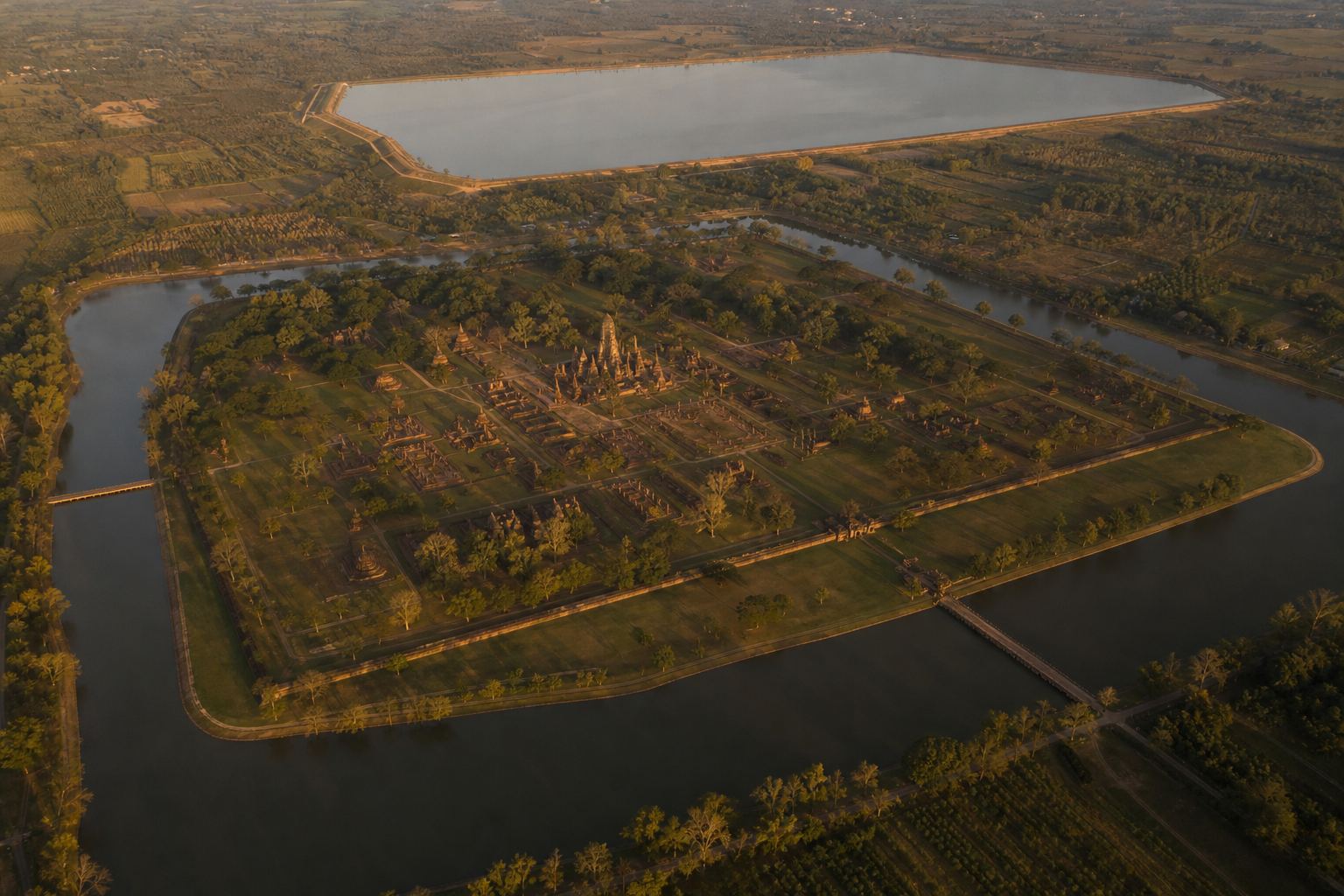
The old capital Sukhothai was the capital for about a hundred and forty years before Ayutthaya took that place. AI-generated illustration.
A city of reservoirs An old walled city on a dry plain, with moats and an earthen reservoir: the setting Sujit Wongthes describes. AI-generated illustration.
Inscription No. 1 A four-sided stone pillar of the inscription’s kind; the real one is in the National Museum, Bangkok. AI-generated illustration.
Chapter IV · What the record shows

Legend or history?

Ministry of Culture booklet: “นางนพมาศจึงเป็นเพียง ‘นางในวรรณคดี’ มิได้มีตัวตนอยู่จริง”, and Prince Damrong believed the text was composed by King Rama III. Britannica: Rama III reigned 1824–51. The Standard (Pipat Krajaejun): Damrong dated the Noppamas text to the reign of Rama III; Sujit Wongthes argues that Sukhothai was a dry city relying on reservoirs and places the custom in the Chao Phraya basin; no inscription mentions Loy Krathong. Matichon (Sujit): the book cannot be used as evidence for the Sukhothai period. Baker and Phongpaichit (A History of Ayutthaya, 2017, cited by Wikipedia) describe Noppamas as a Bangkok-period fiction. Popular sources and TAT still present the Sukhothai legend as the beginning; the film tells both.

Switch between “The legend says” and “Historians say” to move the krathong along the time line.

The 3D scenes are simplified, schematic models for teaching, not reconstructions of real places.

Sources: Department of Cultural Promotion, Ministry of Culture: ลอยกระทง รักษ์น้ำ รักวัฒนธรรม (booklet); Encyclopaedia Britannica: Rama III, king of Siam 1824–51; The Standard (Pipat Krajaejun): Where did Loy Krathong come from?; Matichon (Sujit Wongthes): Nang Noppamas was written under Rama III; Wikipedia: Loy Krathong (citing Baker and Phongpaichit, A History of Ayutthaya, 2017); TAT News (Nov 2024): Loi Krathong Festival 2024

Chapter V · One moon, many lights

Chapter V · One moon, many lights

Yi Peng

Lanterns that fly.

In the north, the same night has another name. The old Lanna calendar of the north starts counting its months earlier, so the twelfth month there is the second: this full moon is Yi Peng, the full moon of the second month.

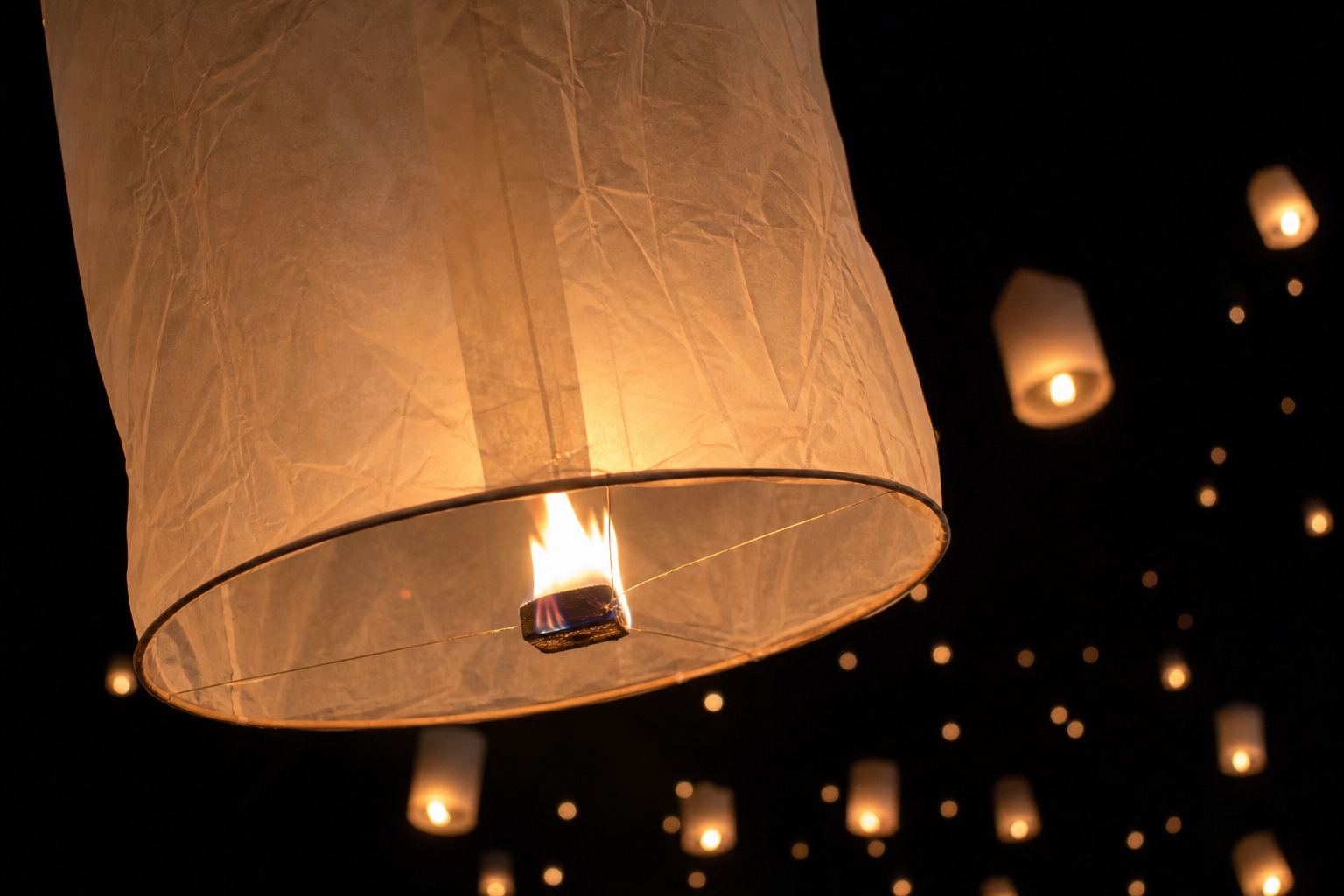
Here people also launch khom loi, lanterns of thin paper on a light frame. A small fire heats the air inside; warm air is less dense than the cool air around it, so the lantern rises.

Lanterns and aircraft do not mix. For 2026, Chiang Mai has cancelled 108 flights between the twenty-first and the twenty-eighth, and lanterns are banned in red zones under the flight paths.

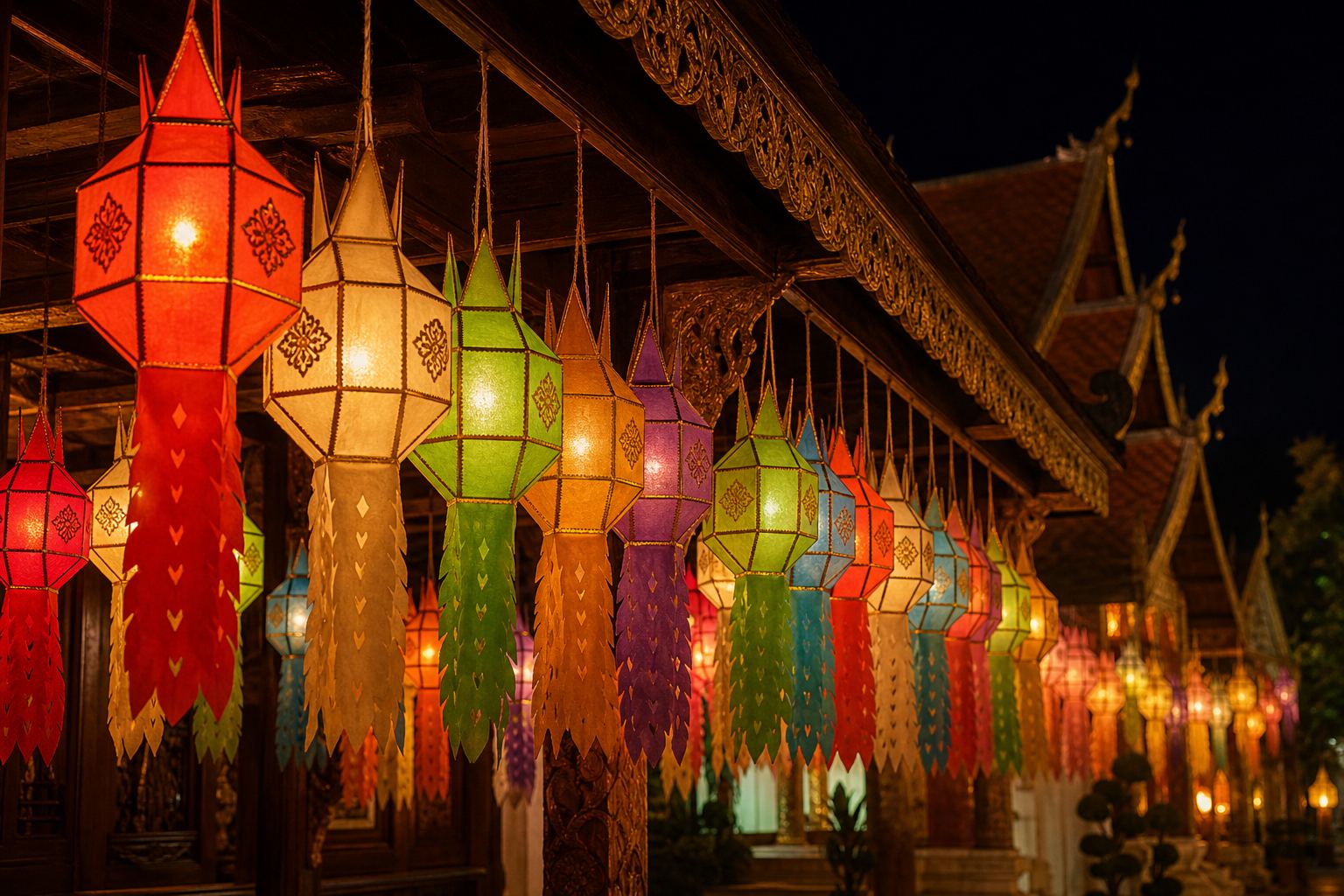
Khom fai Hanging paper lanterns under temple eaves: Yi Peng decorates with lanterns as well as launching them. AI-generated illustration.
Khom loi A paper lantern on a bamboo ring the moment it lifts; the burner hangs at the open bottom. AI-generated illustration.
108
flights cancelled
80
flights re-timed
200,000+
lanterns expected in the safety zone
Chiang Mai airport, 21–28 Nov 2026
Chapter V · One moon, many lights

Yi Peng and the sky lanterns

Ministry of Culture booklet: the Lanna month count differs from the central one, so the twelfth month is called เดือนยี่ (the second month), and its full moon ยี่เป็ง. UC Santa Barbara ScienceLine: heated air expands and becomes less dense than the air around it, so it is pushed up. The Star / The Nation (3 November 2026): for Yi Peng on 24–25 November, Chiang Mai airport is cancelling 108 flights, re-timing 80 and adding 105 between 21 and 28 November; more than 200,000 lanterns are expected in the airport safety zone, and releases are banned in “red zones” under take-off and landing paths.

Press “Release a lantern”; then show the red zone. Lanterns released inside it are marked.

The 3D scenes are simplified, schematic models for teaching, not reconstructions of real places.

Sources: Department of Cultural Promotion, Ministry of Culture: ลอยกระทง รักษ์น้ำ รักวัฒนธรรม (booklet); UC Santa Barbara ScienceLine: Why does hot air rise?; The Star / The Nation (3 Nov 2026): Chiang Mai airport cuts flight hours for the lantern festival

Chapter V · One moon, many lights

Under the same moon

Water and light across the region.

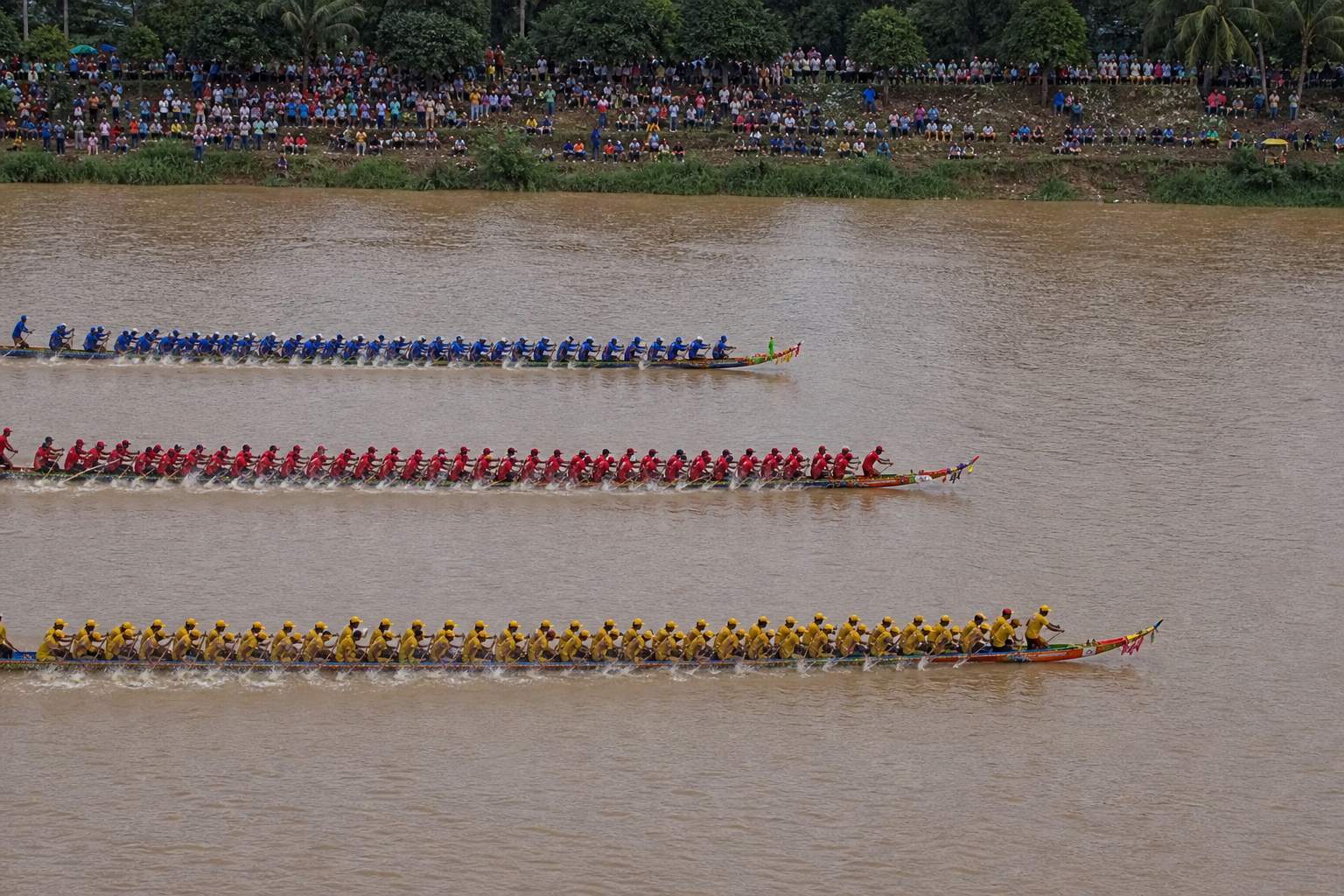
Thailand is not alone. In Cambodia, Bon Om Touk marks the time when the Tonle Sap river reverses its flow, with boat races, glowing floats, and a salute to the full moon at midnight.

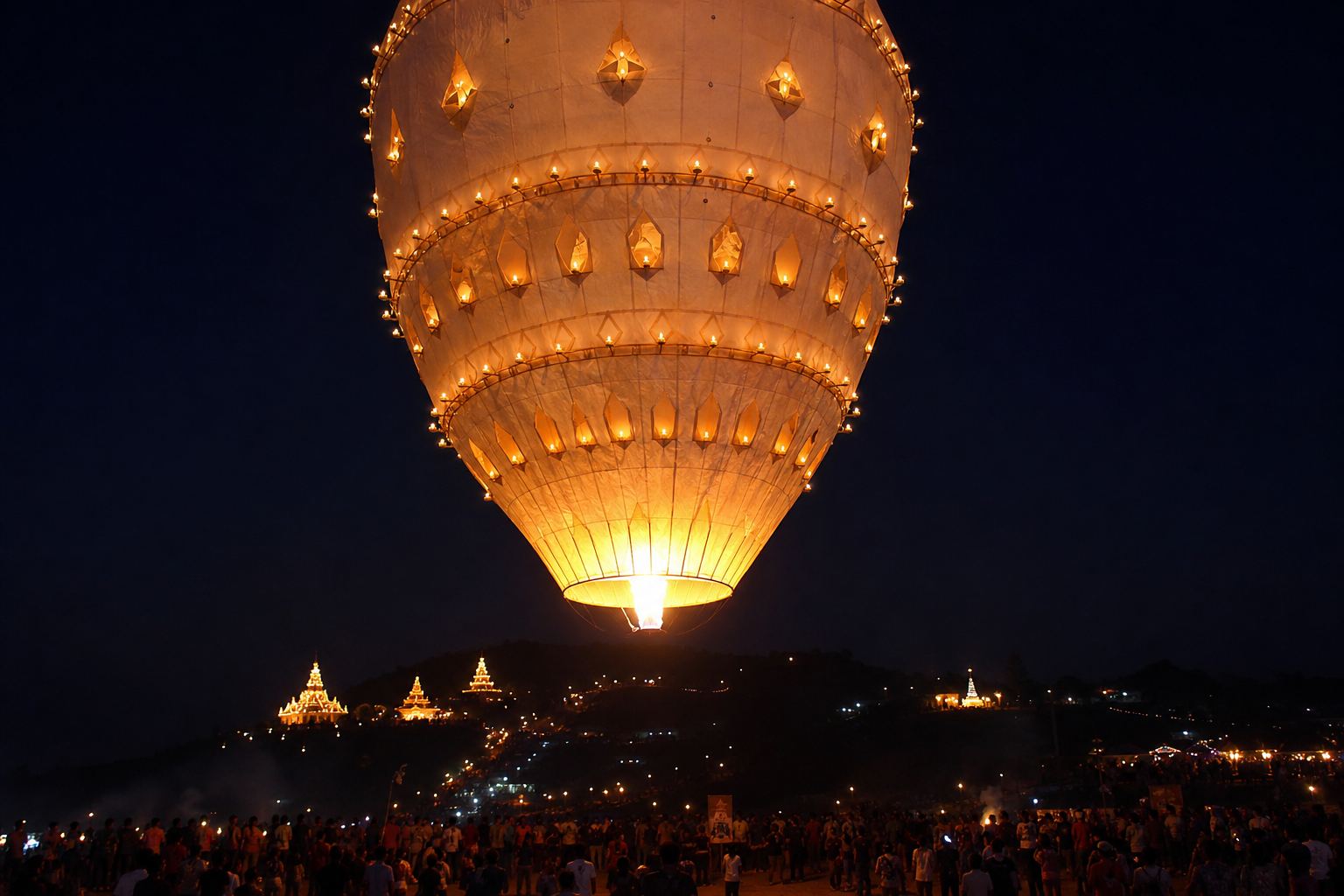
In Myanmar, Tazaungdaing fills its own November full moon with lights, and in Taunggyi, with hot-air balloons.

And in Laos, Luang Prabang floats boats of light about a month earlier, at the end of Buddhist Lent. Across the region, water, light and the moon go together.

Bon Om Touk, Cambodia Long racing boats on a wide river; the races commemorate a naval victory carved on the Bayon. AI-generated illustration.
Tazaungdaing, Myanmar A paper hot-air balloon hung with small lanterns rises over the Shan hills. AI-generated illustration.
  • Thailand: Loy Krathong and Yi Peng, 12th-month full moon
  • Cambodia: Bon Om Touk, month of Kadek
  • Myanmar: Tazaungdaing, month of Tazaungmon
  • Laos: Lai Heua Fai, end of Lent (a month earlier)
Water-and-light festivals
Chapter V · One moon, many lights

Neighbouring festivals

Into Cambodia: Bon Om Touk lasts three days around the full moon of Kadek; it marks the reversal of the Tonle Sap’s flow, with boat races, Bandaet Protip (illuminated floats) and Sampeah Preah Khae, a salute to the moon at midnight; the races commemorate Jayavarman VII’s naval victory over the Cham, carved on the Bayon. Myanmar Ministry of Hotels and Tourism: Tazaungdaing is held on the full moon of Tazaungmon, usually in November, with lights and Taunggyi’s hot-air balloon festival. Lao Tourism: Luang Prabang’s boat-of-lights festival is held at the end of Buddhist Lent (Ork Phansa), in the eleventh month (17 October in 2024).

Press a country on the schematic map to read about its festival.

The 3D scenes are simplified, schematic models for teaching, not reconstructions of real places.

Sources: Into Cambodia: Water and Moon Festival, Bon Om Tuk, Bandaet Protip, Sampeah Preah Khae; Myanmar Ministry of Hotels and Tourism: Tazaungdaing Festival; Lao Tourism: End of Buddhist Lent and the boat of lights festival in Luang Prabang

Chapter VI · The morning after

Chapter VI · The morning after

The morning after

A song, and a river to clean.

Many Thais first learn the festival through a song. Ram Wong Loy Krathong was written in 1949 for a festival night at Thammasat University, beside the Chao Phraya.

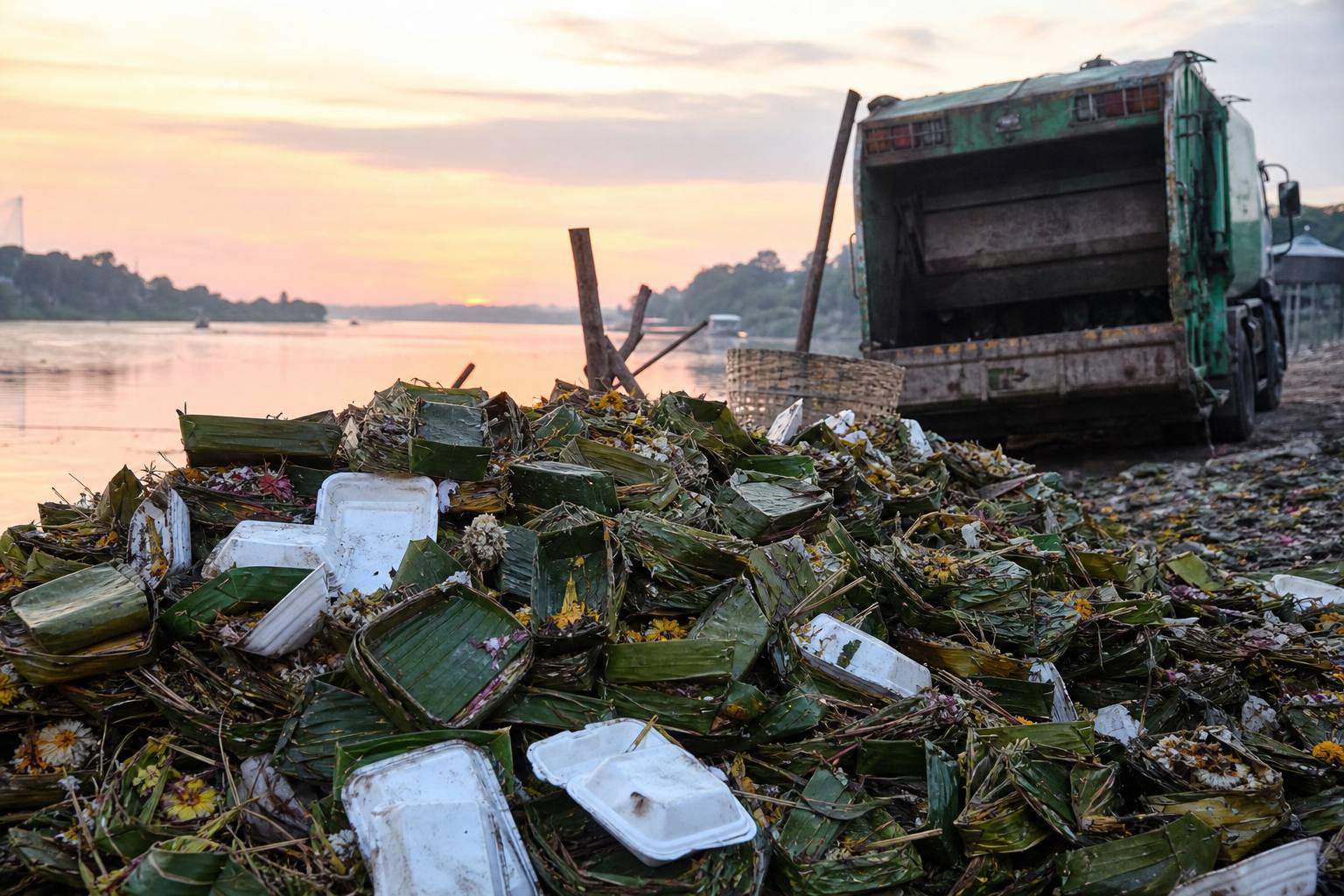
And every year, the floats have to be cleared. Bangkok collected 639,828 krathong in 2023, 514,590 in 2024, and 391,027 in 2025.

In 2025, almost eighty-three percent were natural materials such as banana leaf. About seven percent were foam, which does not rot, and ten percent were bread.

A festival that began as an apology to the water still left 28,298 pieces of foam in it.

The clean-up Collected floats heaped on a bank at dawn, waiting to be sorted and trucked away. AI-generated illustration.
2023639,828
2024514,590
2025391,027
Krathong collected in Bangkok
What comes back out Bangkok collected more than six hundred thousand floats in a single night in 2023. AI-generated illustration.
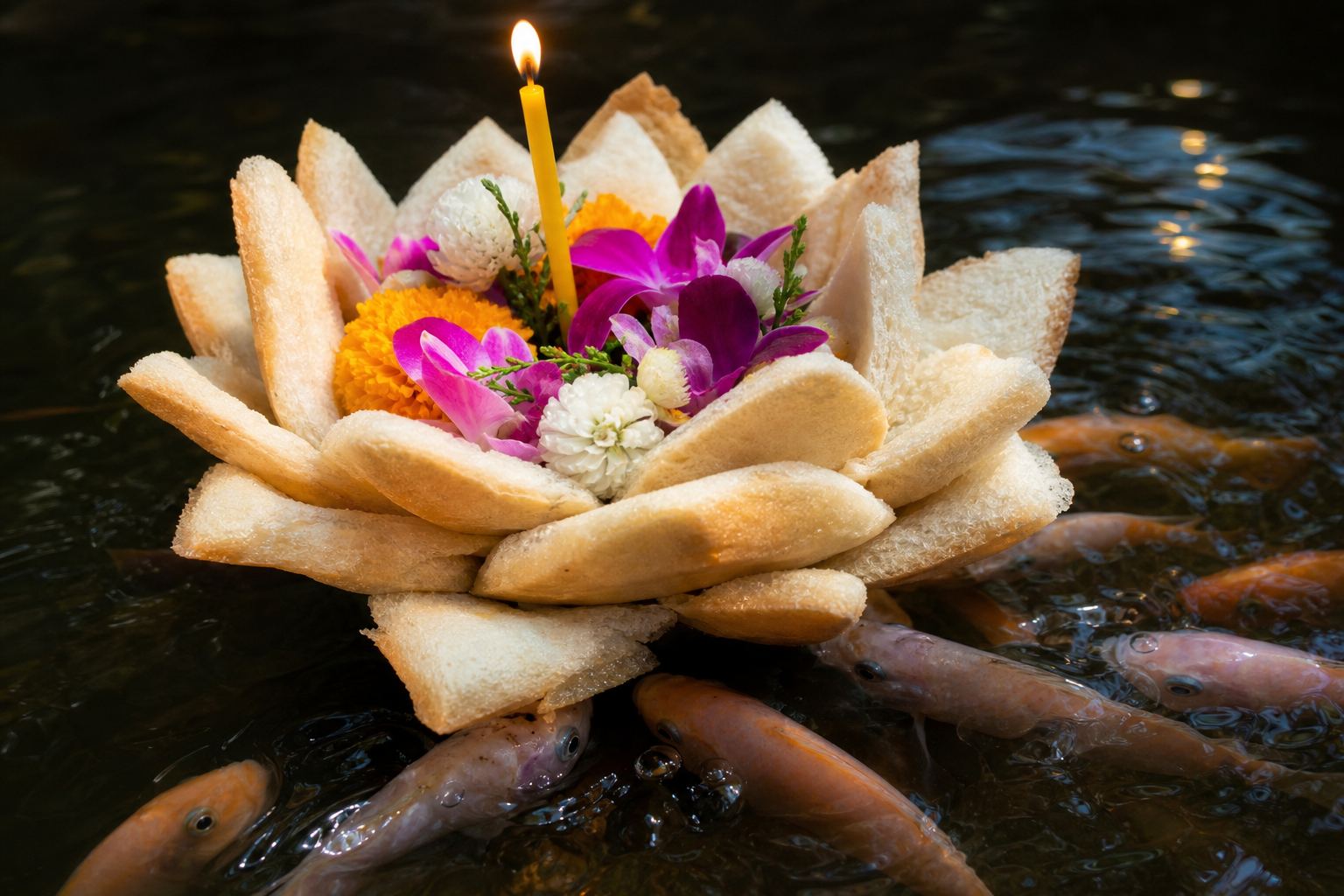
A bread krathong Bread shaped like a lotus: one in ten Bangkok krathong in 2025 was bread, 39,103 in all. AI-generated illustration.
82.76%
natural materials
10.01%
bread
28,298
foam krathong (7.23%)
Bangkok, 2025
Chapter VI · The morning after

A song and a count

Bangkok Biz News: “รำวงลอยกระทง”, lyrics by Kaew Atchariyakul and melody by Eua Sunthornsanan, was written in 1949 (พ.ศ. 2492) for Thammasat University’s Loy Krathong night on the Chao Phraya and first sung there. PPTV, citing the Bangkok Metropolitan Administration: krathong collected were 639,828 in 2023 (96.74% natural materials), 514,590 in 2024 (98.39%) and 391,027 in 2025, of which 323,626 (82.76%) natural materials, 39,103 (10.01%) bread and 28,298 (7.23%) foam. The earlier years’ shares probably count bread as natural, so they are not compared here.

Press a year to raise its stack; “What they were made of” splits 2025 by material. One block stands for 10,000 krathong.

The 3D scenes are simplified, schematic models for teaching, not reconstructions of real places.

Sources: Bangkok Biz News: The song Ram Wong Loy Krathong, written in 1949 for Thammasat University; PPTV (Nov 2025): Bangkok collects 391,027 krathong, 82.76% natural materials
Epilogue

Epilogue

Many streams, one river

A timeline, and the sources.

A rite with Brahmin roots, a royal lantern ceremony, a legend written down in the eighteen-hundreds, and a song from 1949 have all flowed into one night.

Whatever its beginnings, the idea is simple: thank the water, let something go, and watch a small light travel on.

On the twenty-fourth, look up at the moon, and then down at the river.

  1. c. 1200 Bayon reliefs of vessels and boats
  2. 1292 inscription: burning candles, playing with fire
  3. 1687 La Loubère sees lanterns on the river
  4. 1824–51 the Noppamas book, by most accounts
  5. 1949 the song Ram Wong Loy Krathong
  6. 2026 24 November, full moon
How the festival gathered
Up, then down The full moon over a river of small lights: the two halves of the festival in one frame. AI-generated illustration.
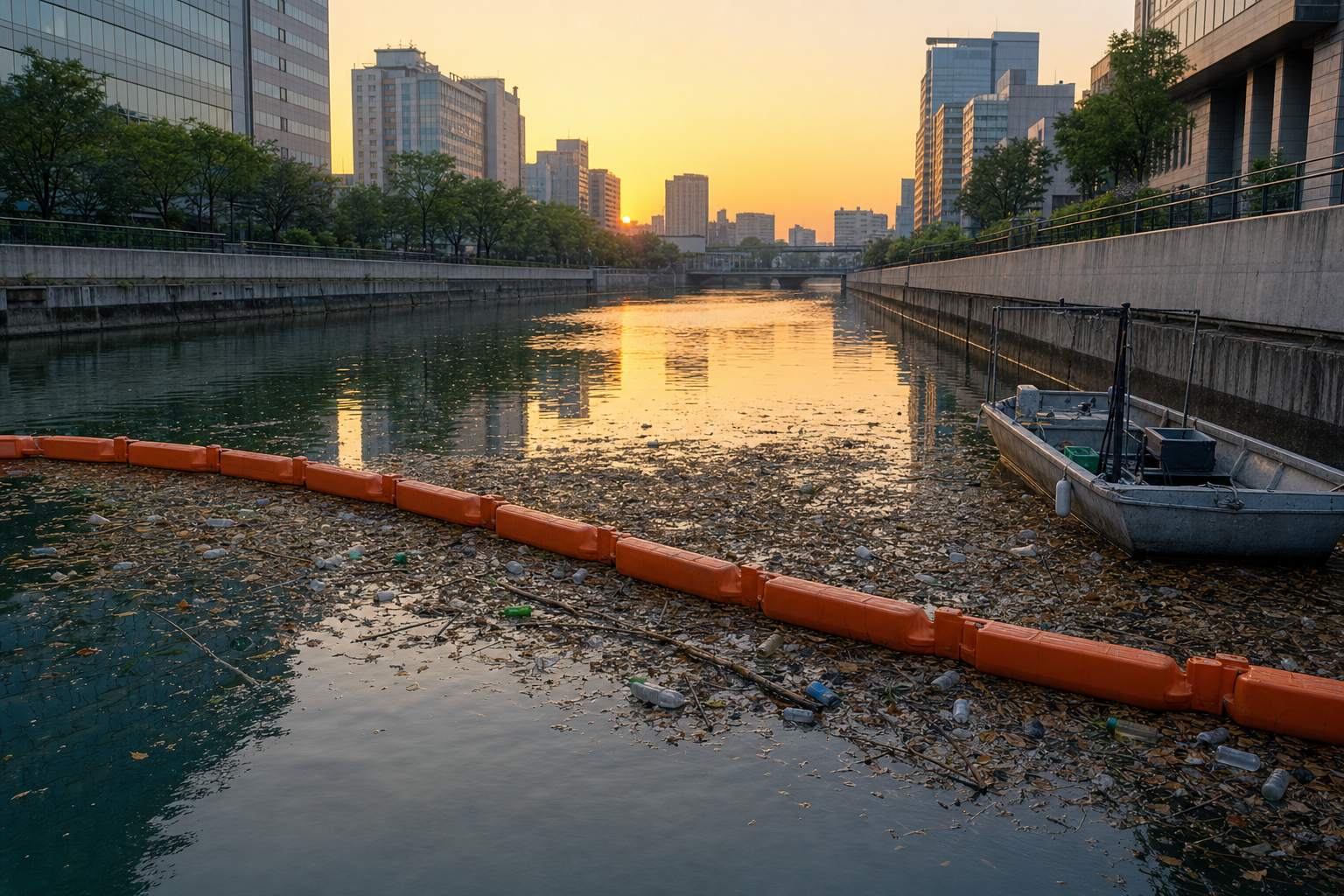
The morning after The clean-up starts before first light, and the city publishes the count of what it collected the next day. AI-generated illustration.
Epilogue · Sources

Sources

Every fact in this film comes from the sources below. Where they disagree, above all on whether Loy Krathong began in Sukhothai, the film gives each view and says whose it is. The 354-day sum is the film’s own arithmetic. The 3D scenes are schematic. The chapter stills and pictures are AI-generated illustrations, not photographs of real people, places or events.

Sources: TAT News (Nov 2026): Loi Krathong 2026 lights up Thailand’s rivers and historic cities; TAT News (Nov 2024): Loi Krathong Festival 2024; The Nation: Loy Krathong, the full moon of the twelfth lunar month; Thailand.go.th: Loy Krathong, Burning Candles and Playing with Fire Festival in Sukhothai 2026; The Star / The Nation (3 Nov 2026): Chiang Mai airport cuts flight hours for the lantern festival; Ministry of Foreign Affairs of Thailand: Loy Kratong Tradition (booklet); Department of Cultural Promotion, Ministry of Culture: ลอยกระทง รักษ์น้ำ รักวัฒนธรรม (booklet); Walailak University Cultural Center: Loy Krathong; NASA Science: Moon phases (a cycle of about 29.5 days); The Standard (Pipat Krajaejun): Where did Loy Krathong come from?; Encyclopaedia Britannica: The Bayon, built c. 1200 under Jayavarman VII; Ramathibodi Hospital, Mahidol University (column): Chong Priang, the royal lantern rite; Matichon (Sujit Wongthes): Nang Noppamas was written under Rama III; Simon de La Loubère, A New Historical Relation of the Kingdom of Siam (English edition, 1693), Oxford Text Archive; The Siam Society: C. B. Bradley’s translation of the Ramkhamhaeng inscription (1909); Wikipedia: Ram Khamhaeng Inscription (dating, citing Griswold and Prasert 1971); Bangkok Post: Decoding the past (Ramkhamhaeng inscription, UNESCO Memory of the World 2003); Encyclopaedia Britannica: Rama III, king of Siam 1824–51; Wikipedia: Loy Krathong (citing Baker and Phongpaichit, A History of Ayutthaya, 2017); UC Santa Barbara ScienceLine: Why does hot air rise?; Into Cambodia: Water and Moon Festival, Bon Om Tuk, Bandaet Protip, Sampeah Preah Khae; Myanmar Ministry of Hotels and Tourism: Tazaungdaing Festival; Lao Tourism: End of Buddhist Lent and the boat of lights festival in Luang Prabang; Bangkok Biz News: The song Ram Wong Loy Krathong, written in 1949 for Thammasat University; PPTV (Nov 2025): Bangkok collects 391,027 krathong, 82.76% natural materials