In October 2026, the US ambassador to the United Nations was reported as saying the war with Iran could last another year. This film tells how two countries that were once close allies became enemies: the 1953 coup over oil, the 1979 revolution and the hostage crisis, the 1980s war in the Gulf and the downing of Iran Air Flight 655, the nuclear question and what uranium enrichment means, the 2015 deal and its collapse, the strikes of 2025 and the war that began in February 2026, with each side's account in its own terms.
Interactive 3D film11 min1953 to 2026Published 24 October 2026
American warships are blockading Iran's ports, tankers are being hit in the Strait of Hormuz, and the price of oil has passed a hundred and seventeen dollars a barrel.
On the twenty-third of October 2026, American news outlets reported, from an interview the US ambassador to the United Nations, Mike Waltz, gave the Financial Times, that the war with Iran could still be going a year from now. Waltz himself would not put out hypotheticals.
Yet these two countries were once close allies. How did they get here?
> $117
Brent crude, a barrel; under $97 at the start of October
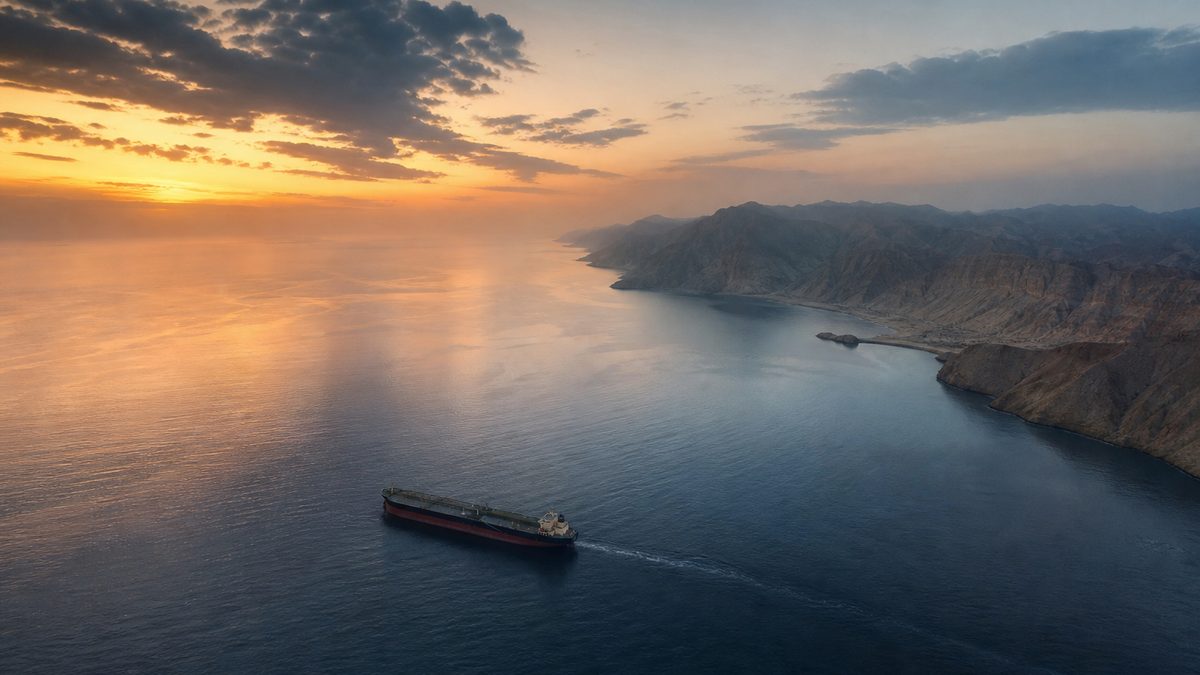
23 October 2026 (AP, via CBS News)The Strait of Hormuz A tanker at dusk, a warship on the horizon. AI-generated still.
One would hope that they’ll come to the table in a meaningful way before that.Mike Waltz, US ambassador to the UN, to the Financial Times (via CBS News)
since July
reimposed after Iran attacked commercial ships in Hormuz
US blockade (AP, 14 Jul 2026)
1953 Coup in Tehran
1979 Revolution; embassy seized
2015 Nuclear deal
2026 War
Allies, then enemies
Prologue
October 2026
CBS News (23 October 2026), citing the Financial Times: US ambassador to the UN Mike Waltz said the war could last another year, that “the president and the U.S. Navy can maintain this blockade [on Iranian ports] for the foreseeable future” (while saying “I’m not going to put out hypotheticals”), and that the US goals require Iran to dispose of its highly enriched uranium and accept “a meaningful agreement on their domestic enrichment.” Iranian state TV, citing a source linked to the Revolutionary Guards, said the movement of “non-compliant” vessels through Hormuz had been “completely halted.” Brent crude briefly topped $117 a barrel, up from under $97 at the start of October (AP). Iranian state TV, citing a source close to the Revolutionary Guards, made the shipping claim; none of the ship-attack claims had been corroborated. Salon: Israel and the US launched the war on 28 February 2026.
Where the two governments disagree, the film gives each account in its own terms and attributes it.
The map uses Natural Earth borders; markers, routes and the 3D timeline are schematic.
In the early 1950s, Iran's oil was pumped and sold by a British firm, the Anglo-Iranian Oil Company, the company that later became BP. Iran's elected prime minister, Mohammad Mosaddegh, moved to take it over.
Britain saw the oil as vital to its economy. In August 1953, with American and British intelligence behind them, Iranian army officers overthrew Mosaddegh, and the Shah, Iran's king, returned to power.
Sixty years later, in 2013, a declassified CIA history admitted the coup was carried out under CIA direction.
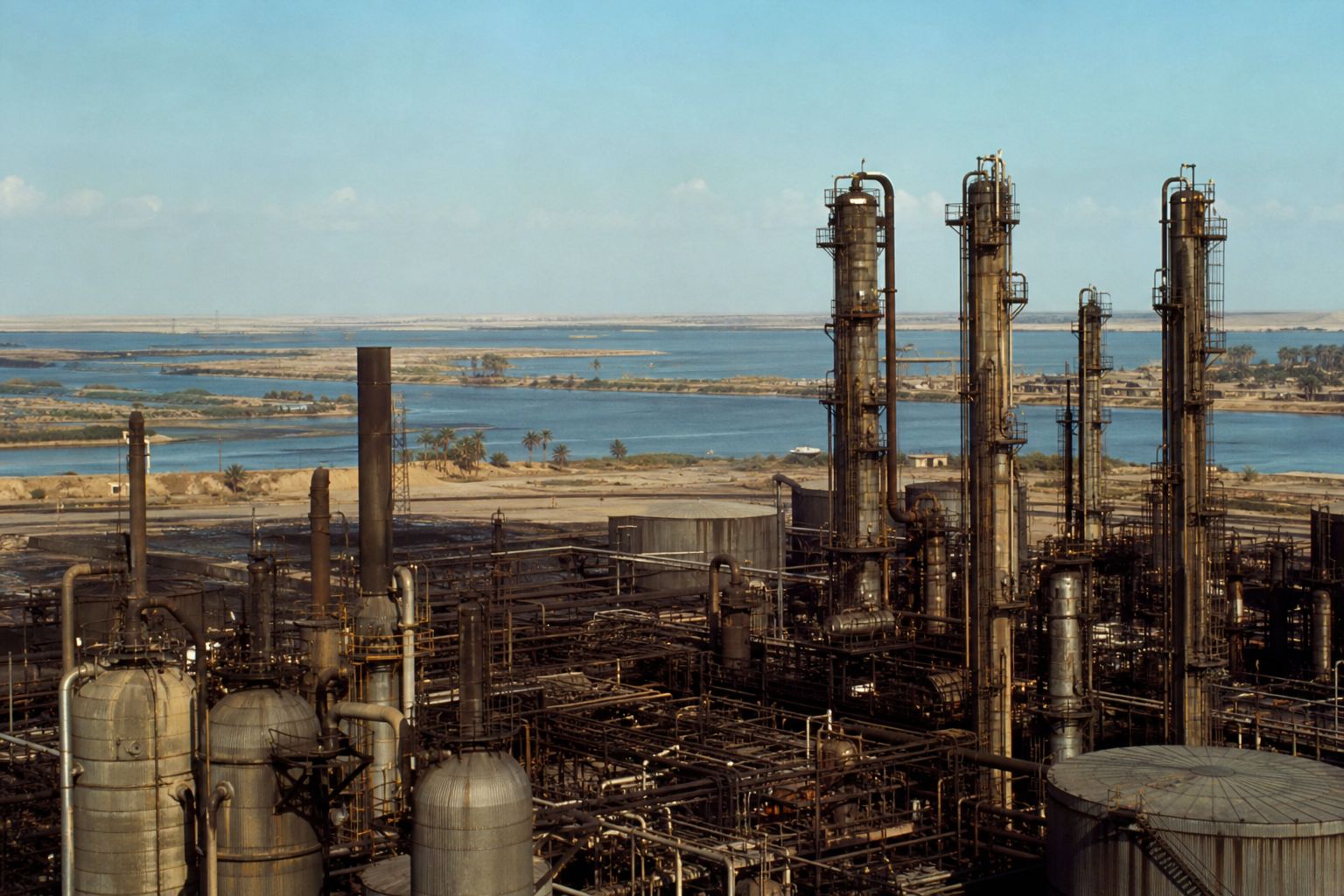
Oil country A 1950s refinery on the Gulf coast, of the kind built by the Anglo-Iranian Oil Company. AI-generated still.
Mosaddegh overthrown, 19 August
US and British intelligence helped
The Shah restored to power
August 1953 (CFR, Al Jazeera)
$5 million
arranged by the CIA for the new government
Days after the coup (Al Jazeera)
…carried out under CIA direction as an act of U.S. foreign policy…Internal CIA history, declassified in 2013 (via Al Jazeera)
Chapter I · Oil and a coup
The 1953 coup
Al Jazeera (20 August 2013): a declassified internal CIA history, obtained by the National Security Archive at George Washington University, says the coup that overthrew Mohammad Mosaddegh “was carried out under CIA direction as an act of U.S. foreign policy.” Mosaddegh had moved to nationalise the Anglo-Iranian Oil Company, BP’s predecessor, angering Britain, which saw Iranian oil as vital to its post-war economy; within days the CIA arranged $5 million for the new government of General Fazlollah Zahedi. CFR: on 19 August 1953, US and British intelligence helped Iranian military elements overthrow Mosaddegh, restoring the Western-friendly Shah.
The map uses Natural Earth borders; markers, routes and the 3D timeline are schematic.
For the next quarter of a century, the Shah was one of America's closest partners in the region.
In 1957 the two countries signed a civilian nuclear agreement under President Eisenhower's Atoms for Peace programme, and a decade later the United States supplied Iran with a research reactor and uranium fuel.
That reactor is where Iran's nuclear story begins.
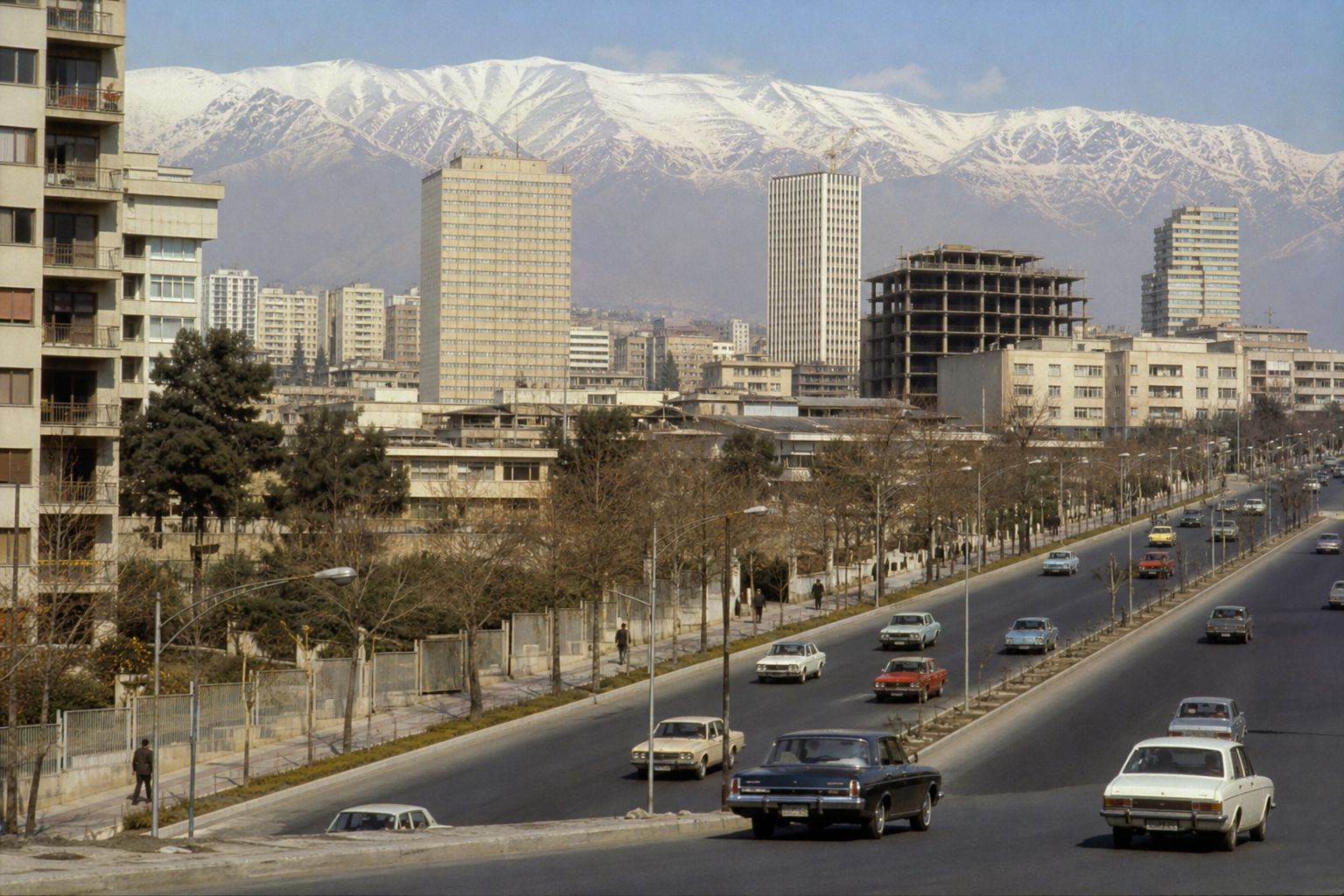
Tehran, 1970s A fast-growing capital under the Shah. AI-generated still.
5 Mar 1957
US–Iran civil nuclear agreement
Atoms for Peace (CFR, Al Jazeera)
1960
Iran a founding member of OPEC
Oil (CFR)
A US-supplied research reactor
Uranium fuel, also from the US
Roots of the nuclear question
Chapter I · Oil and a coup
The Shah’s years
CFR: on 5 March 1957 the US and Iran signed a civil nuclear cooperation agreement under Eisenhower’s “Atoms for Peace” initiative; in September 1960 Iran was a founding member of OPEC. Al Jazeera (2025): a decade after the 1957 agreement the US provided Iran with a nuclear reactor and uranium fuel, which forms the basis of the current nuclear question.
The map uses Natural Earth borders; markers, routes and the 3D timeline are schematic.
In January 1979, after months of protests, the Shah fled. The senior cleric Ayatollah Ruhollah Khomeini returned from exile, and Iran became an Islamic republic, hostile to the West.
Later that year the United States let the ailing Shah in for medical treatment. On the fourth of November, students in Tehran seized the American embassy in protest, and held fifty-two Americans for four hundred and forty-four days.
Washington cut diplomatic ties, banned Iranian oil and froze Iranian assets. The hostages were freed in January 1981. Relations have never recovered.
Jan The Shah flees
Feb Khomeini returns from exile
Dec Khomeini supreme leader (CFR)
1979An embassy wall An old compound gate on a Tehran street. AI-generated still.
52
Americans held
444
days, Nov 1979 – Jan 1981
The hostage crisis (USIP)
Diplomatic ties cut
Iranian oil imports sanctioned
Iranian assets frozen in the US
US response (CFR)
freed
the hostages, under the Algiers Accords
January 1981 (CFR)
Chapter II · Revolution
Revolution and hostages
CFR: in 1979 the Shah fled amid unrest; Khomeini returned and took power as supreme leader in December, turning Iran into an anti-Western Islamic republic. From November 1979 to January 1981, Iranian students held 52 Americans at the US embassy in Tehran for 444 days; Washington cut ties, sanctioned Iranian oil imports and froze assets; the hostages were released under the Algiers Accords. The Iran Primer (USIP): students seized the embassy on 4 November 1979 to protest the Carter administration’s decision to admit the ailing former Shah for medical treatment; student leaders later said they had meant to hold it for only a few days; relations “have never recovered from the crisis.”
Try it: the buttons show how each side has described the crisis.
Where the two governments disagree, the film gives each account in its own terms and attributes it.
In 1980, Iraq's leader Saddam Hussein invaded Iran. The war lasted eight years, and Iraq used chemical weapons against Iran. The United States sided with Iraq.
In 1983, a bombing of a barracks in Beirut, Lebanon, killed two hundred and forty-one American service members. It was widely attributed to Hezbollah, a group backed by Iran. In 1984, the United States named Iran a state sponsor of terrorism.
Yet from 1985 to 1987, American officials secretly sold arms to Iran, partly to win the release of American hostages held in Lebanon, in what became the Iran-Contra scandal.
1980–88
Iraq invaded; chemical weapons used against Iran
Iran–Iraq War (Al Jazeera)
241
US service members killed; widely attributed to Hezbollah
Beirut, 23 Oct 1983 (CFR)Navies in the Gulf A frigate on patrol in the heat haze. AI-generated still.
1984 Iran designated a state sponsor of terrorism
1985–87 Secret US arms sales to Iran (Iran-Contra)
Mixed signals (CFR)
arms for hostages
secret sales, partly to free US hostages held by Hezbollah
Iran-Contra (Al Jazeera)
Chapter III · War in the Gulf
The 1980s
Al Jazeera (2025): the US sided with Iraq after Saddam Hussein invaded Iran in a war that lasted from 1980 to 1988 and killed thousands on both sides; Iraq used chemical weapons on Iran. CFR: on 23 October 1983 a Beirut barracks bombing, widely attributed to Hezbollah, killed 241 US service members; in 1984 the State Department designated Iran a state sponsor of terrorism; from 1985 to 1987 the Iran-Contra affair involved secret US arms sales to Iran. Al Jazeera (2025): Reagan worked with Iran secretly to free hostages held by Hezbollah.
The map uses Natural Earth borders; markers, routes and the 3D timeline are schematic.
By 1988 the war had spread to the sea. In April, after an Iranian mine nearly sank an American frigate, the US Navy struck back at Iranian forces in the Gulf.
On the third of July, the cruiser USS Vincennes fired two missiles at an Iran Air passenger jet flying from Bandar Abbas to Dubai. All two hundred and ninety people on board were killed.
The United States said its crew mistook the airliner for an attacking fighter jet. Iran called the downing deliberate. In 1996 the US agreed to pay a hundred and thirty-one point eight million dollars, without admitting liability. Compare the two accounts.
Praying Mantis
US strikes after a mine nearly sank a US frigate
18 Apr 1988 (CFR)
290
killed: 274 passengers, 16 crew
65
of the passengers were children
Iran Air Flight 655Near Qeshm Island Calm water near where the airliner came down. AI-generated still.
US: the crew mistook it for an attacking F-14
Iran: deliberate and unlawful
Two accounts
$131.8 m
incl. $61.8 m for families; no admission of liability
1996 settlement at the ICJ
Chapter III · War in the Gulf
Flight 655
CFR: on 18 April 1988 the US Navy launched Operation Praying Mantis after an Iranian mine nearly sank a US frigate; in July 1988 a US Navy ship shot down an Iranian passenger jet, killing all 290 people aboard. Iran Air Flight 655 (Wikipedia, citing official records): on 3 July 1988 the Airbus A300, flying from Tehran via Bandar Abbas to Dubai, was hit by two missiles from USS Vincennes over Iranian waters near Qeshm Island; 274 passengers (65 of them children) and 16 crew died. The US said the crew misidentified the aircraft as an attacking Iranian F-14; Iran called the downing intentional and unlawful. In 1996 the US agreed at the International Court of Justice to pay US$131.8 million, including US$61.8 million for the families of 248 Iranian victims, without admitting liability; President Reagan expressed regret.
Try it: the buttons give each government’s account; the flight path is schematic.
Where the two governments disagree, the film gives each account in its own terms and attributes it.
To understand the fight that followed, you need one idea: enrichment. Natural uranium is only seven tenths of a percent uranium-235, the kind that splits easily.
Spinning uranium gas in centrifuges raises that share. Power-reactor fuel needs three to five percent. A bomb needs about ninety. The same machines can do both: the difference is how long and how far you go.
Iran says its programme is peaceful and that it has a right to enrich. Israel says Iran is determined to build a nuclear weapon. In 2025, US intelligence assessed that Iran had not begun a weapons programme, but had positioned itself to build one if it chose. Step through the levels.
Natural uranium
0.7
Power-reactor fuel
3–5
Weapons
≥ 90
Uranium-235 share (World Nuclear Association)
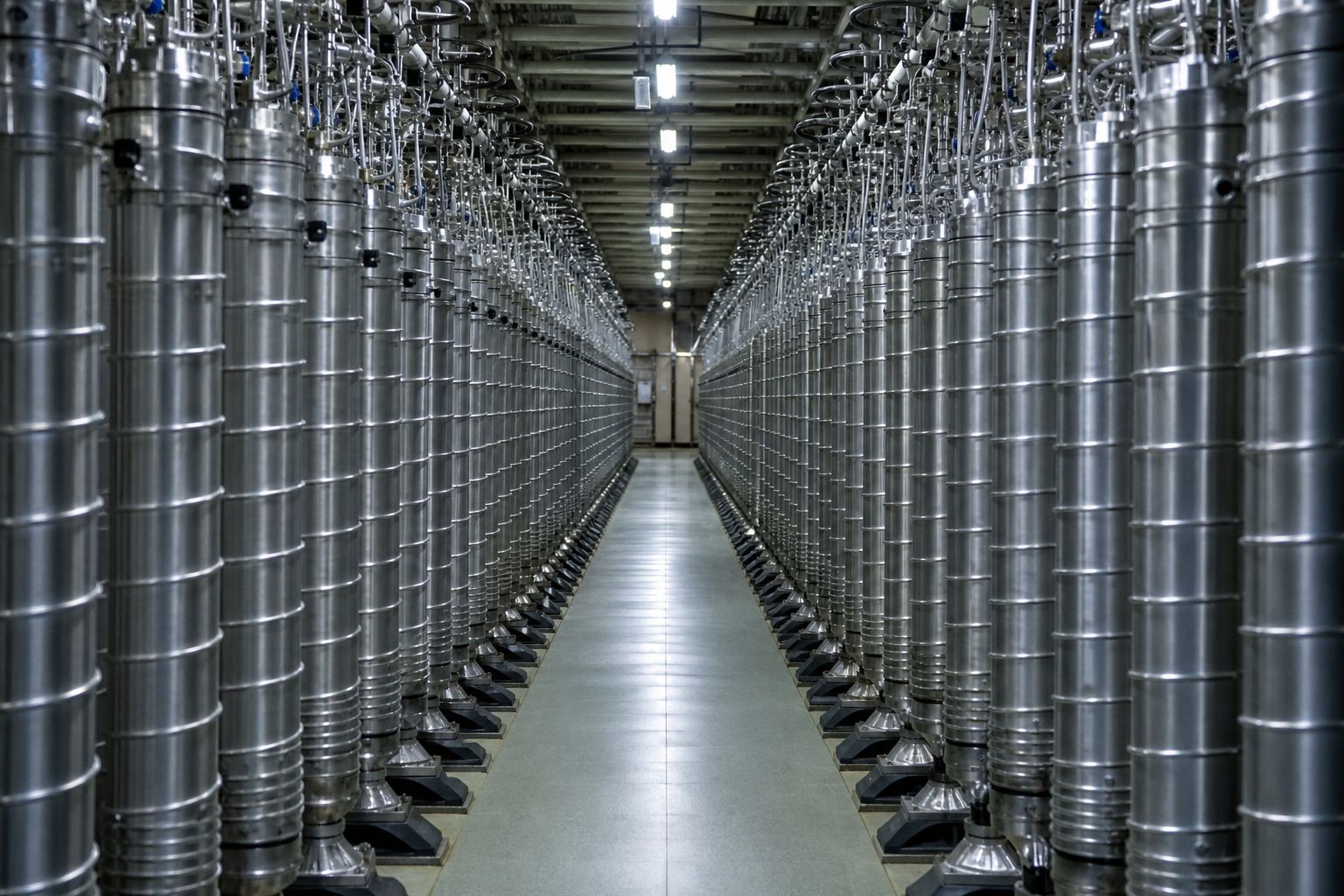
A centrifuge hall Cascades of centrifuges, each enriching the gas a little further. AI-generated still.
Uranium gas (UF₆) spun at high speed
Heavier U-238 drifts outward
Lighter U-235-rich gas drawn off, stage after stage
How a centrifuge works (WNA)
Iran: peaceful; a legal right to enrich (AP, 2025)
Iran cites a religious decree against nuclear weapons
Israel: Iran is determined to build a weapon (AP, 2025)
US intelligence, 2025: no weapons programme begun
Two positions
not begun
a weapons programme; but “better positioned” to build a device
US intelligence, 2025 (via AP)
Chapter IV · The nuclear question
Enrichment
World Nuclear Association: natural uranium contains 0.7% of the U-235 isotope; light-water power reactors need fuel enriched to 3–5% U-235; weapons uranium is made in plants specially designed to produce at least 90% U-235. In a centrifuge, uranium hexafluoride gas is spun at very high speed; the heavier U-238 concentrates towards the outer edge, and the U-235-enriched gas is drawn off and passed on through many stages. AP (31 May 2025): Iran’s foreign ministry and atomic energy organisation say its programme is peaceful and that under international law it has a right to enrichment; Iran says Supreme Leader Khamenei issued a religious decree barring nuclear weapons. Netanyahu’s office said Iran “is totally determined to complete its nuclear weapons program.” US intelligence agencies assessed that Iran had “yet to begin a weapons program” but had “undertaken activities that better position it to produce a nuclear device, if it chooses to do so.”
Try it: the column shows the share of U-235 at each level; the centrifuge is a teaching model.
Where the two governments disagree, the film gives each account in its own terms and attributes it.
In 2002, President George W. Bush named Iran part of an axis of evil. Sanctions mounted. Then, in July 2015, after two years of talks, Iran and six world powers agreed the Joint Comprehensive Plan of Action.
Iran capped enrichment at three point six seven percent and accepted other limits for years; in return, sanctions were eased.
In May 2018, President Trump pulled the United States out and launched maximum pressure sanctions. Iran answered by enriching beyond the limits.
In January 2020, an American drone strike in Baghdad killed the Iranian general Qasem Soleimani, and Iran fired missiles at US bases in Iraq.
JCPOA
Iran with China, France, Germany, Russia, the UK, the US and the EU
14 July 2015 (CFR, Al Jazeera)At the table Years of talks before the deal. AI-generated still.
Enrichment capped at 3.67%
Limits for at least 15 years
Aim: a “breakout time” of at least a year
The deal (Al Jazeera, CFR)
May 2018 US withdraws; “maximum pressure”
2019 IRGC listed as a terrorist organisation
Unravelling (CFR)
Soleimani
Quds Force commander, killed by a US drone in Baghdad
3 January 2020 (CFR)
Chapter IV · The nuclear question
The deal and its end
CFR: on 29 January 2002 President Bush described Iran as part of an “axis of evil.” On 14 July 2015 the JCPOA was agreed; Iran accepted limits including restricting enrichment for at least fifteen years, aiming to extend its “breakout time” to at least one year. On 8 May 2018 Trump withdrew the US and launched a “maximum pressure” sanctions campaign; Iran responded by boosting enrichment. In April 2019 the US designated the Revolutionary Guards (IRGC) a Foreign Terrorist Organization. On 3 January 2020 the US killed Quds Force commander Qasem Soleimani in a drone strike in Baghdad; Iran later struck US bases in Iraq. Al Jazeera (2025): the deal capped enrichment at 3.67%; talks began under Obama in 2013; the other parties were China, Russia, France, Germany, the UK and the EU.
Try it: the buttons show the limits in force under the deal, and after the US withdrawal.
The map uses Natural Earth borders; markers, routes and the 3D timeline are schematic.
By May 2025, the UN's nuclear watchdog, the IAEA, reported that Iran held more than four hundred kilograms of uranium enriched to sixty percent, a short technical step from the ninety percent of weapons grade. The two governments were talking again.
On the thirteenth of June, Israel struck Iran's nuclear sites. A week later, the United States bombed three of them, Fordow, Natanz and Isfahan: the first direct American strikes on Iranian soil. A ceasefire followed within days.
President Trump said the sites were obliterated. Tehran warned of retaliation.
Feb 2025
274.8
May 2025
408.6
Iran’s 60% uranium (IAEA, via AP)
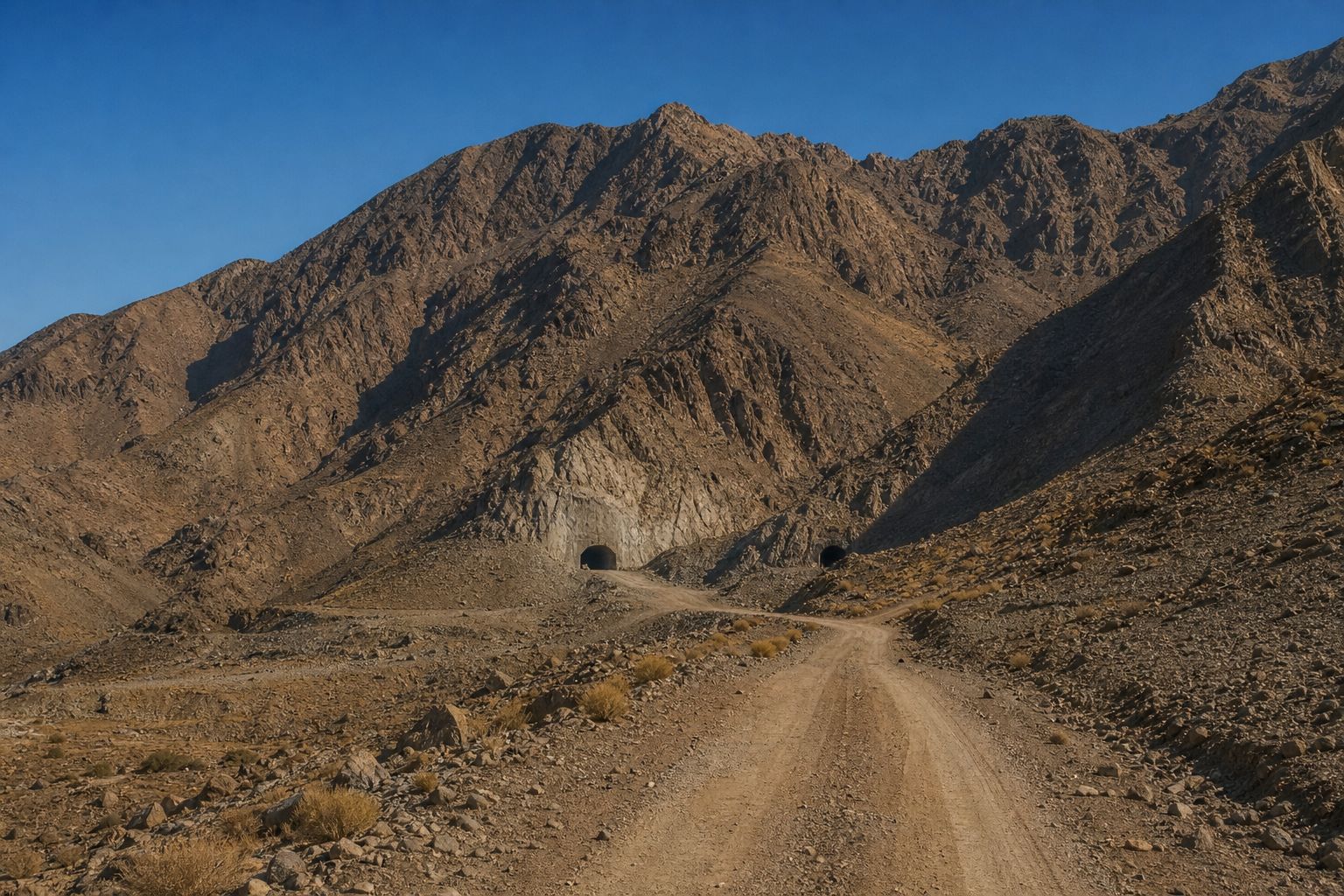
Under the mountains Arid mountains of central Iran, where Fordow was built into the rock. AI-generated still.
13 Jun Israel strikes Iran’s nuclear sites
21–22 Jun US strikes Fordow, Natanz, Isfahan
days later Ceasefire ends the “Twelve-Day War”
June 2025 (CFR)
direct US strikes
on Iranian territory
A first (CFR)
Trump: sites “obliterated”
Washington: “devastated”
Tehran: warned of retaliation
Two descriptions (Al Jazeera)
Chapter IV · The nuclear question
June 2025
AP (31 May 2025), on an IAEA report: Iran held 408.6 kg of uranium enriched up to 60% as of 17 May 2025, up 133.8 kg since February; 60% is a short technical step from weapons-grade levels of 90%. CFR: in April 2025 US envoy Steve Witkoff and Iran’s foreign minister Abbas Araghchi held direct nuclear talks; on 13 June Israel struck Iran’s nuclear facilities; on 21 June (US time) the US struck Fordow, Natanz and Isfahan, the first direct US strikes on Iranian territory. Al Jazeera (23 June 2025): more than 125 aircraft were used; Trump said the sites were “obliterated” and Washington said “devastated”, and Tehran warned of retaliation. Wikipedia (2026 Iran war): a ceasefire ended the “Twelve-Day War”.
The map uses Natural Earth borders; markers, routes and the 3D timeline are schematic.
Protests that began in late December 2025, over a collapsing currency, spread across Iran; in the crackdown that followed, thousands were reported killed or detained. Talks over the nuclear programme went on, with Oman as a go-between.
On the twenty-eighth of February, the United States and Israel launched a large-scale attack on Iran. The strikes killed the Supreme Leader, Ayatollah Ali Khamenei. President Trump said the goal was regime change.
Iran answered with missiles and drones against Israel and American bases across the Gulf, and blocked the Strait of Hormuz. Israel called its strikes pre-emptive; Iran called its own retaliation.
thousands
of deaths and detentions as protests were crushed
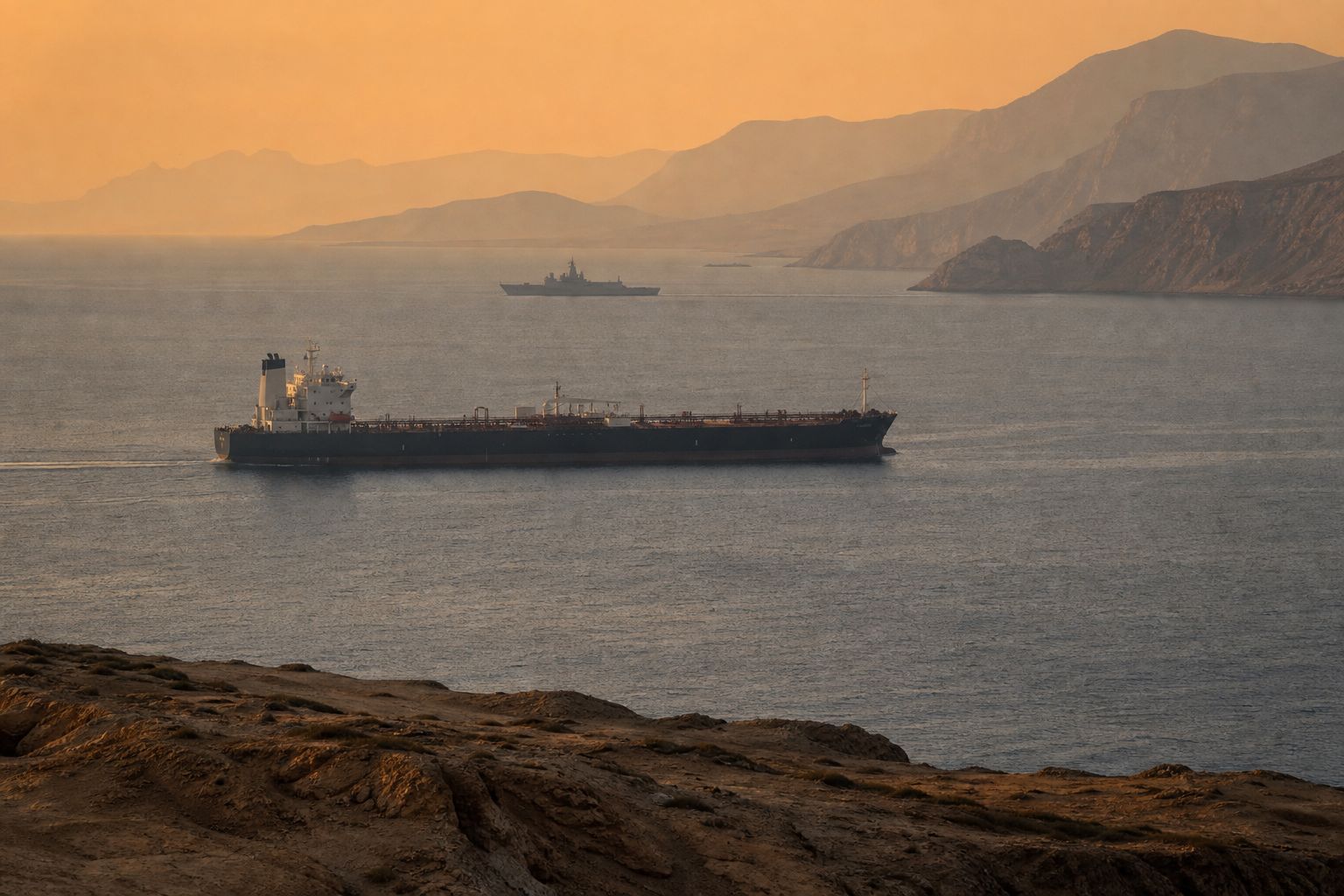
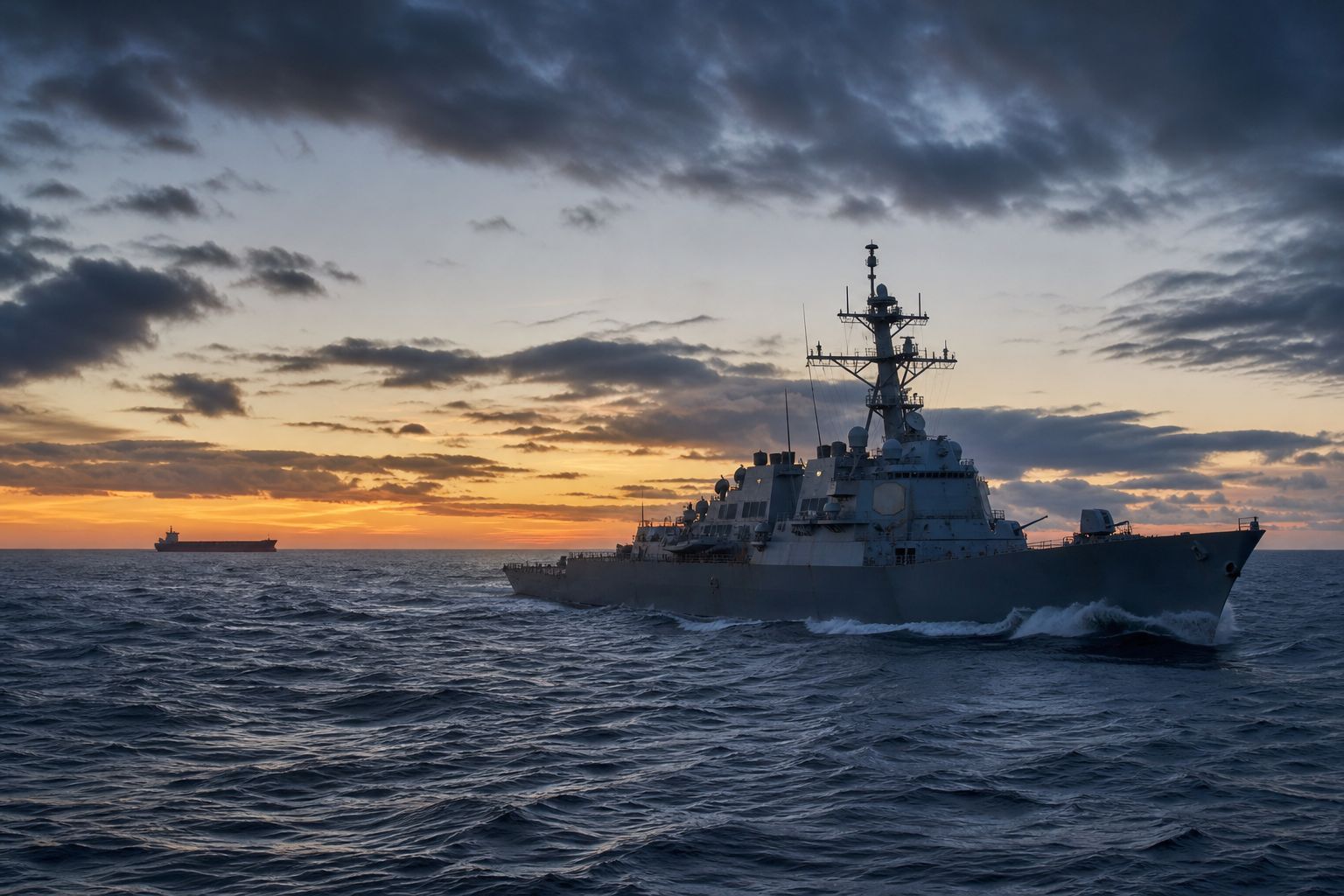
Dec 2025 – Jan 2026 (CFR)At sea A warship on patrol at dusk. AI-generated still.
US and Israel strike Iran
Khamenei killed; Iranian state TV confirms on 1 March
Trump: the goal is regime change
28 February 2026 (AFP via Al-Monitor)
Israel: a pre-emptive attack to remove threats
Iran: retaliation; state media call it the “Third Imposed War”
In each side’s words (Wikipedia, AFP)
Mojtaba Khamenei
designated Iran’s new supreme leader
8 March 2026 (Wikipedia)
Chapter V · War
The war begins
CFR: protests erupted in late December 2025 over Iran’s collapsed currency, leading to a days-long internet blackout and thousands of deaths and detentions over roughly two weeks; Wikipedia: Iranian security forces killed anti-government protesters; on 28 February the US and Israel launched a large-scale military campaign against Iran; Iran retaliated against Israel and US facilities in several Gulf states and took control of the Strait of Hormuz. AFP via Al-Monitor (28 February 2026): Oman had been mediating, and US envoys had held talks with Iran’s foreign minister in Geneva days earlier; Trump said the goal was regime change, not a nuclear deal; Iranian state TV confirmed Khamenei’s death early on 1 March; the Revolutionary Guards vowed the “most ferocious” operation in their history. Wikipedia (2026 Iran war): Israel’s defence minister described the strikes as pre-emptive; Iran denied intending to attack the US and called its strikes retaliation, its state media calling the conflict the “Third Imposed War”; critics argued the attack was a war of aggression; Mojtaba Khamenei was designated supreme leader on 8 March.
Try it: the buttons give each side’s stated reasons; arcs on the map are schematic, not individual strikes.
Where the two governments disagree, the film gives each account in its own terms and attributes it.
In April, Pakistan brokered a two-week ceasefire. Talks in Islamabad failed after about twenty-one hours, and the United States began a naval blockade of Iran's ports.
In June, the two presidents signed a memorandum to end the war and negotiate a final deal, and both blockades were lifted. In July the ceasefire collapsed: Iran attacked commercial ships in the Strait of Hormuz, and the United States reimposed its blockade.
Thousands have been killed, most of them in Iran. The figures given by each side, and by independent monitors, differ widely.
8 Apr Two-week ceasefire, mediated by Pakistan
12 Apr Islamabad talks fail
13 Apr US naval blockade of Iranian ports
2026 (Wikipedia, ceasefire)
17 Jun Islamabad Memorandum signed
8 Jul Ceasefire collapses
14 Jul US reimposes blockade (AP)
Summer 2026 (Wikipedia; AP)Shipping under fire Tankers still cross the strait, escorted or alone. AI-generated still.
Iranian government: 3,528
HRANA (rights group): 3,684
US and Israel claim: 6,000+ Iranian military dead
UN OCHA: 3,400+ civilians
Deaths in Iran, by source (Wikipedia, mid-2026)
19
soldiers and one contractor killed
US losses (US figures, via Wikipedia)
Chapter V · War
Ceasefires and a blockade
Wikipedia (2026 Iran war ceasefire): on 7–8 April the US and Iran agreed a two-week ceasefire mediated by Pakistan; the Islamabad Talks, led by US Vice-President JD Vance and Iran’s foreign minister Abbas Araghchi and parliament speaker Mohammad Bagher Ghalibaf, failed on 12 April after about 21 hours; Trump then announced a naval blockade of vessels entering or leaving Iranian ports; on 17 June the two presidents signed the Islamabad Memorandum to end the war and negotiate final terms; on 8 July the ceasefire collapsed. Wikipedia (2026 Iran war), casualty figures by source as compiled there: Iran’s government reported 3,528 killed in Iran; the rights group HRANA reported 3,684; the US and Israel claimed more than 6,000 Iranian military personnel killed; the UN humanitarian office (OCHA) reported more than 3,400 civilians killed in Iran; the US reported 19 soldiers and one contractor killed. AP (14 July 2026): the US reimposed its blockade after Iran attacked commercial vessels in the Strait of Hormuz; the Islamabad Memorandum had lifted both sides’ blockades. These figures are each side’s or each monitor’s own and cannot be independently confirmed here.
The blockade ring on the map is schematic.
Where the two governments disagree, the film gives each account in its own terms and attributes it.
Which brings us back to October. Ambassador Waltz said America's aims would not be met until Iran gives up its highly enriched uranium and accepts a meaningful deal on enrichment at home.
Iran's leaders have long said enrichment is their right. Its foreign minister called the relationship between America and Israel parasitic.
The two positions remain far apart.
Iran disposes of its highly enriched uranium
A “meaningful agreement” on domestic enrichment
Blockade can continue “for the foreseeable future”
US position (Waltz, via CBS News)
> $117
Brent, a barrel, the war’s highest
Oil, 23 October (AP via CBS News)
Enrichment is a legal right; the programme is peaceful
Araghchi: the US–Israel relationship is “parasitic”
Iranian state TV: “non-compliant” ships halted
Iranian positions (AP 2025; CBS News 2026)
Further escalation would leave no winners.Jean-Noël Barrot, French foreign minister (Reuters, via CBS News)
no embassies
diplomatic ties cut during the hostage crisis
Since 1980
Chapter V · War
Positions in October 2026
CBS News (23 October 2026), citing the Financial Times: Waltz said the US will not achieve its key goals until Iran disposes of its highly enriched uranium and accepts “a meaningful agreement on their domestic enrichment”. Iran’s foreign minister Abbas Araghchi called the US–Israel relationship “parasitic”; Iranian state TV said “non-compliant” vessels had been halted in Hormuz. France’s foreign minister said further escalation “would leave no winners.” AP (2025): Iran says its programme is peaceful and that it has a right to enrichment under international law. CFR: Washington cut ties during the 1979–81 hostage crisis.
Try it: the buttons show each government’s stated position.
Where the two governments disagree, the film gives each account in its own terms and attributes it.
A coup over oil, a revolution, an embassy, an airliner, a deal, and a war. Each side remembers some of these events more than others.
Whether the next chapter is written at a negotiating table or at sea is a question that, in October 2026, nobody could answer.
1953 Coup
1979 Revolution; hostages
1988 Flight 655
2015 JCPOA
2018 US withdraws
2026 War
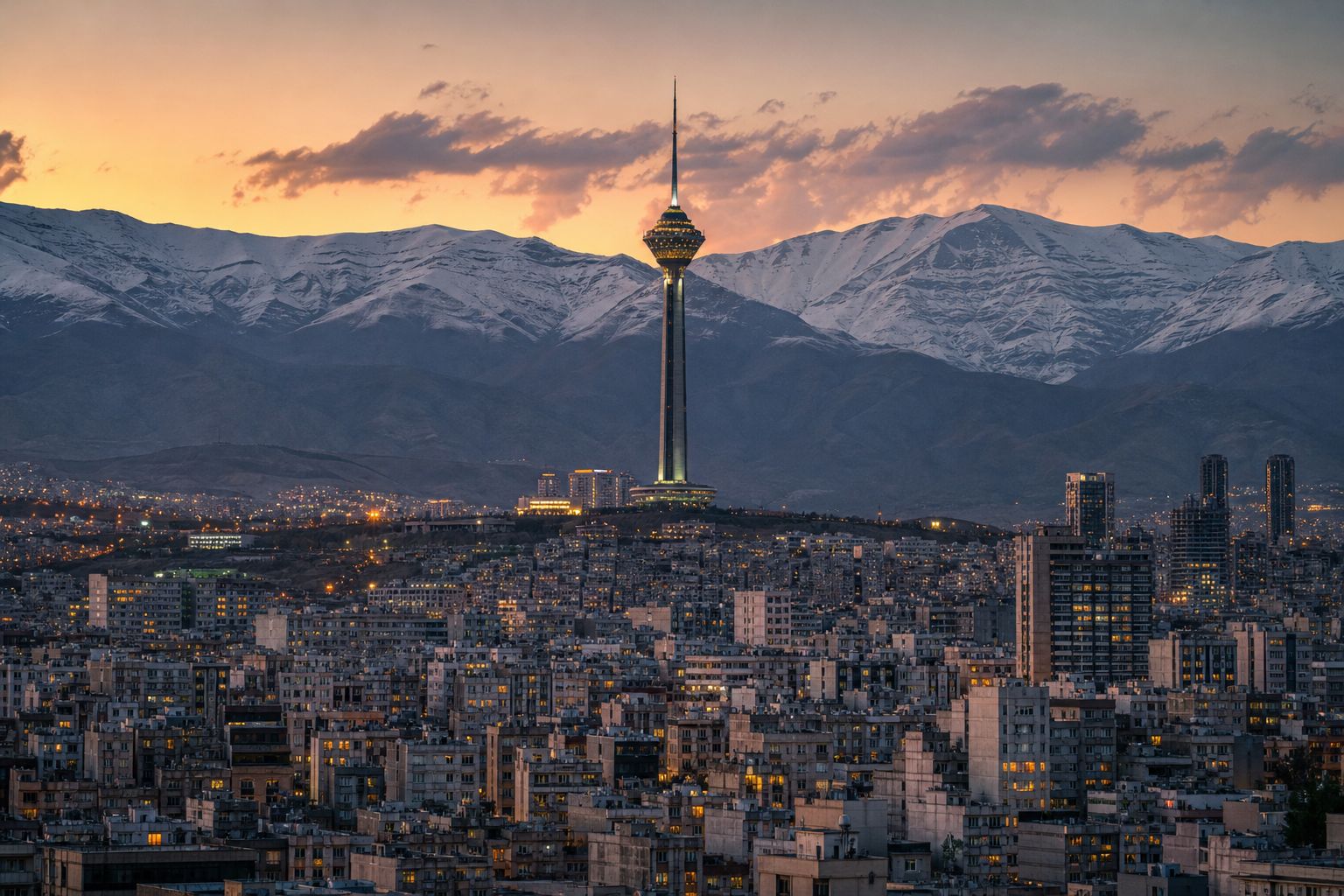
Iran and the United StatesTehran at dusk The capital under the Alborz mountains. AI-generated still.
Each side’s account is attributed
Casualty figures differ by source
Stills are AI-generated
About this film
Epilogue · Sources
Sources
Every fact in this film comes from the sources below. Where the governments disagree, each account is given in its own terms and attributed; figures from a war still under way are each source’s own. Events after 23 October 2026 are not covered. The chapter stills and pictures are AI-generated illustrations; the map uses Natural Earth borders, and markers, routes and the timeline are schematic.