Chemistry · Earth · History
How the ozone layer works
A thin shield, a hole, and a repair.
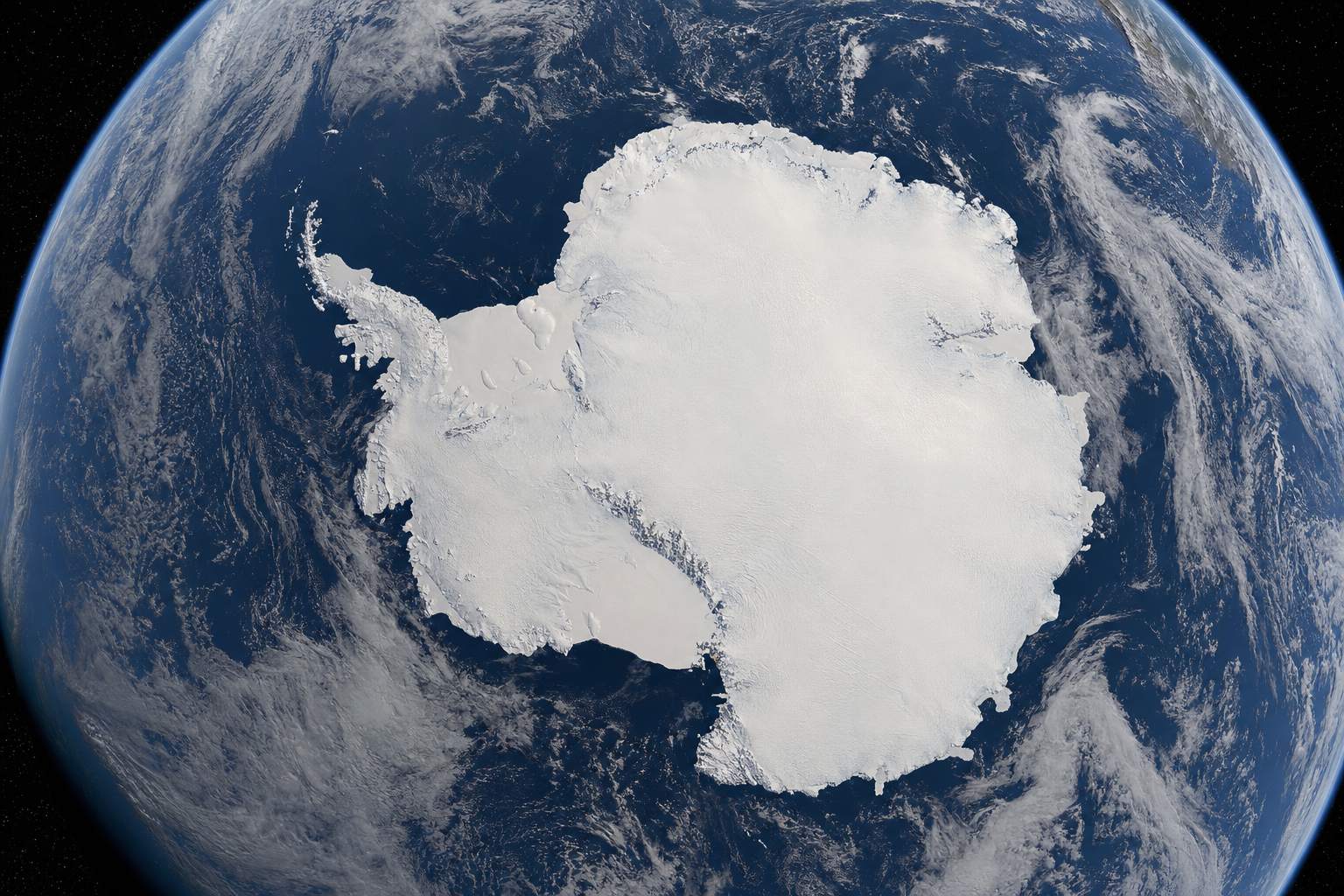
In late August 2026, a hole over Antarctica grew larger than Antarctica itself: fifteen million square kilometres. It is not a hole in the air, but in a thin layer of a gas called ozone, high above the ice.
By 12 September it had reached about twenty-five million square kilometres, some five million above the average for that date, according to the European Union's Copernicus service. Other measures, such as how low the ozone fell, stayed close to average. So this year's hole was unusually wide, but not unusually deep.
The hole comes back every southern spring. To see why, and why scientists still expect it to heal, we start with what ozone is, and what it does for us.
- 15 million km²
- the hole
- 14.2 million km²
- Antarctica itself
| 2026 | ~25 |
|---|---|
| Average for the date | ~20 |
| Record, 9 Sep 2006 | 29.6 |
…can vary considerably from year to year.Laurence Rouil, Director of the Copernicus Atmosphere Monitoring Service, on the hole’s development
- A shield three millimetres thick
- How sunlight makes ozone
- How chlorine destroys it
- The hole, and the treaty that is closing it
The 2026 ozone hole
Copernicus Atmosphere Monitoring Service (CAMS), as reported by Down To Earth and MercoPress: the 2026 Antarctic ozone hole reached 15 million km² by the end of August, slightly earlier than average and slightly larger than Antarctica’s 14.2 million km². It grew sharply in early September to an estimated 25 million km² on 12 September, about 5 million km² above the average for that date. The ozone column minimum and the ozone mass deficit stayed close to historical averages. The record remains 29.6 million km², on 9 September 2006.
The average bar is the 2026 figure minus the reported 5 million km² difference.
The 3D scene is a teaching model: the atmosphere is drawn far thicker than life, molecules are enlarged and colours stand for wavelengths of light that the eye cannot see.
Sources: Down To Earth (16 Sep 2026): ozone hole reaches notable threshold early again as area increases above average in 2026, Copernicus; MercoPress (21 Oct 2026): the area of the Antarctic ozone hole during September reached 15 million km², says Copernicus