In late October 2026 garment workers in Bangladesh protested for a higher minimum wage, factories closed and the government formed a wage board. This film explains the supply chain behind that news: how fibres become yarn, fabric and finally garments, why the Industrial Revolution mechanised spinning and weaving but sewing is still done by people, how the end of trade quotas in 2005 reshaped where clothes are made, why Bangladesh depends on garments, what the Rana Plaza collapse changed, the industry's environmental footprint, and what workers and factory owners each say about wages.
Interactive 3D film10 min1769 to 2026Published 5 November 2026
Why a wage protest in Dhaka is about everyone’s clothes.
On the last day of October 2026, garment workers in and around Dhaka, Bangladesh’s capital, walked out and blocked roads.
They want the minimum wage raised from twelve thousand five hundred taka a month to thirty thousand. Al Jazeera reported about five hundred factories temporarily shut.
On the first of November, the government set up a wage board to decide.
Why does a protest in Bangladesh matter to people who buy clothes everywhere? To see, follow a shirt from the field to the shop.
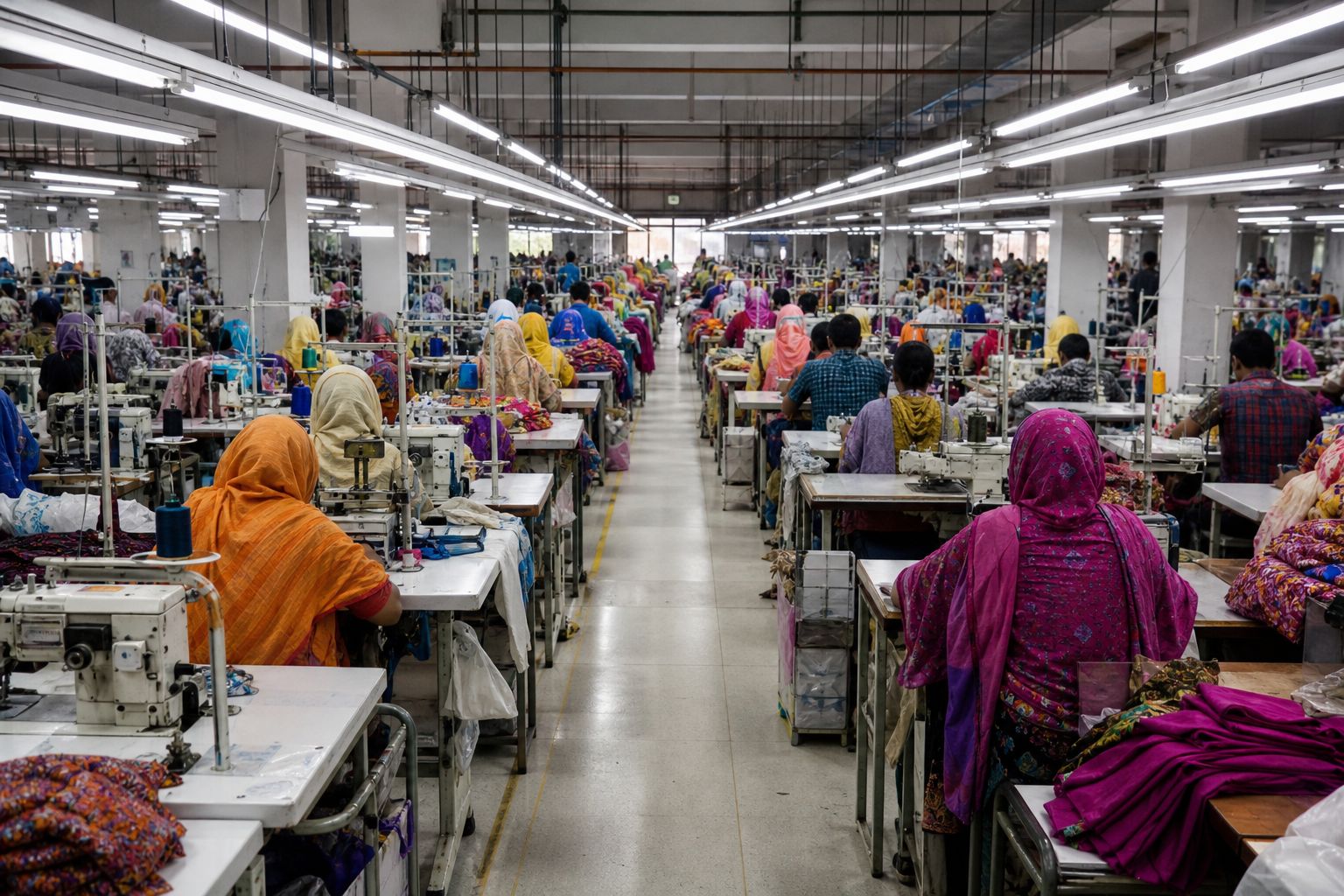
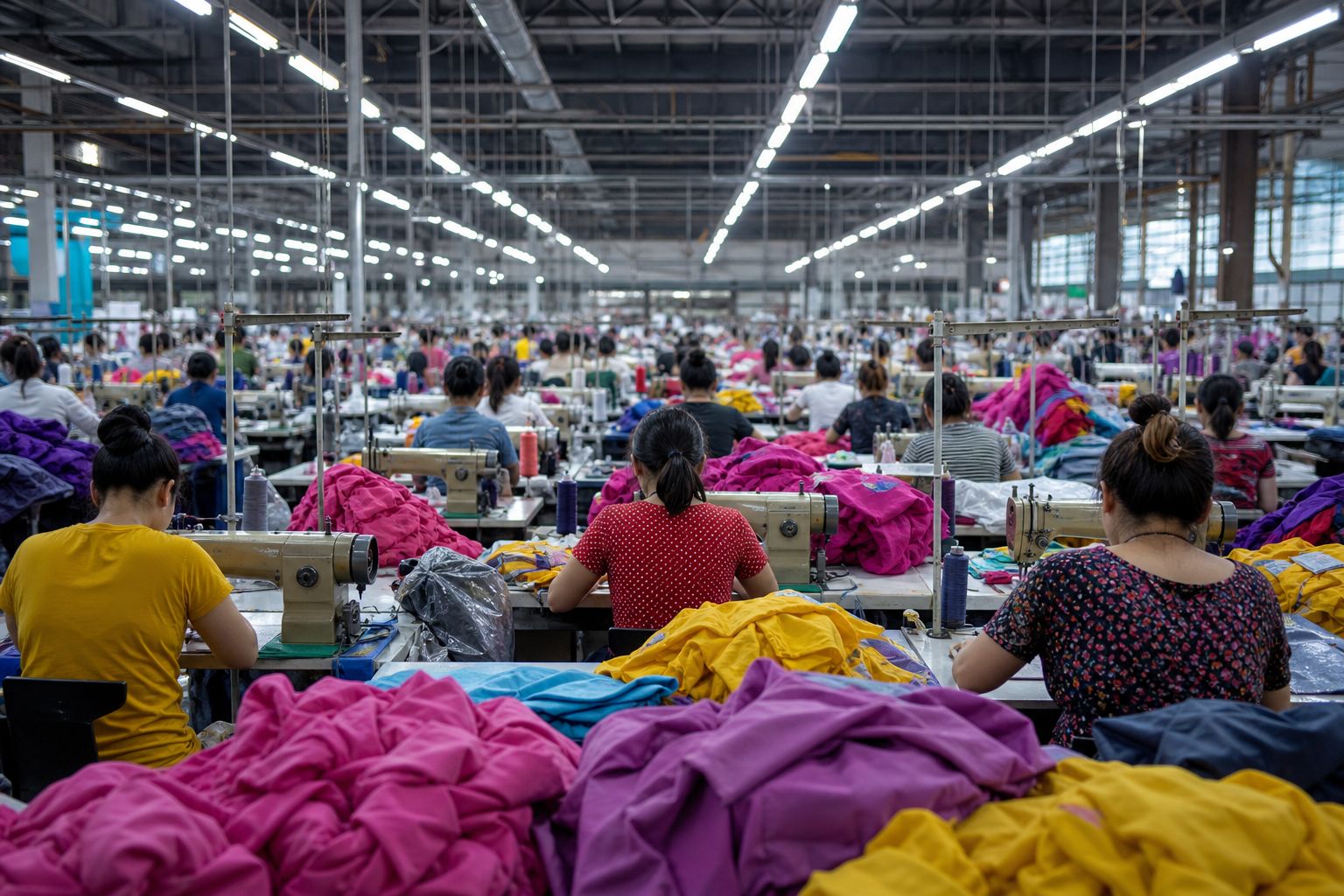
A factory floor Rows of sewing machines in a large garment factory. AI-generated illustration.
Tk 12,500
minimum wage now, about $101 a month
Tk 30,000
what protesters ask, about $242
The demand (Al Jazeera)
31 Oct protests begin in Mirpur, Savar, Ashulia, Gazipur
1 Nov government forms a wage board
2 Nov third day of disruption
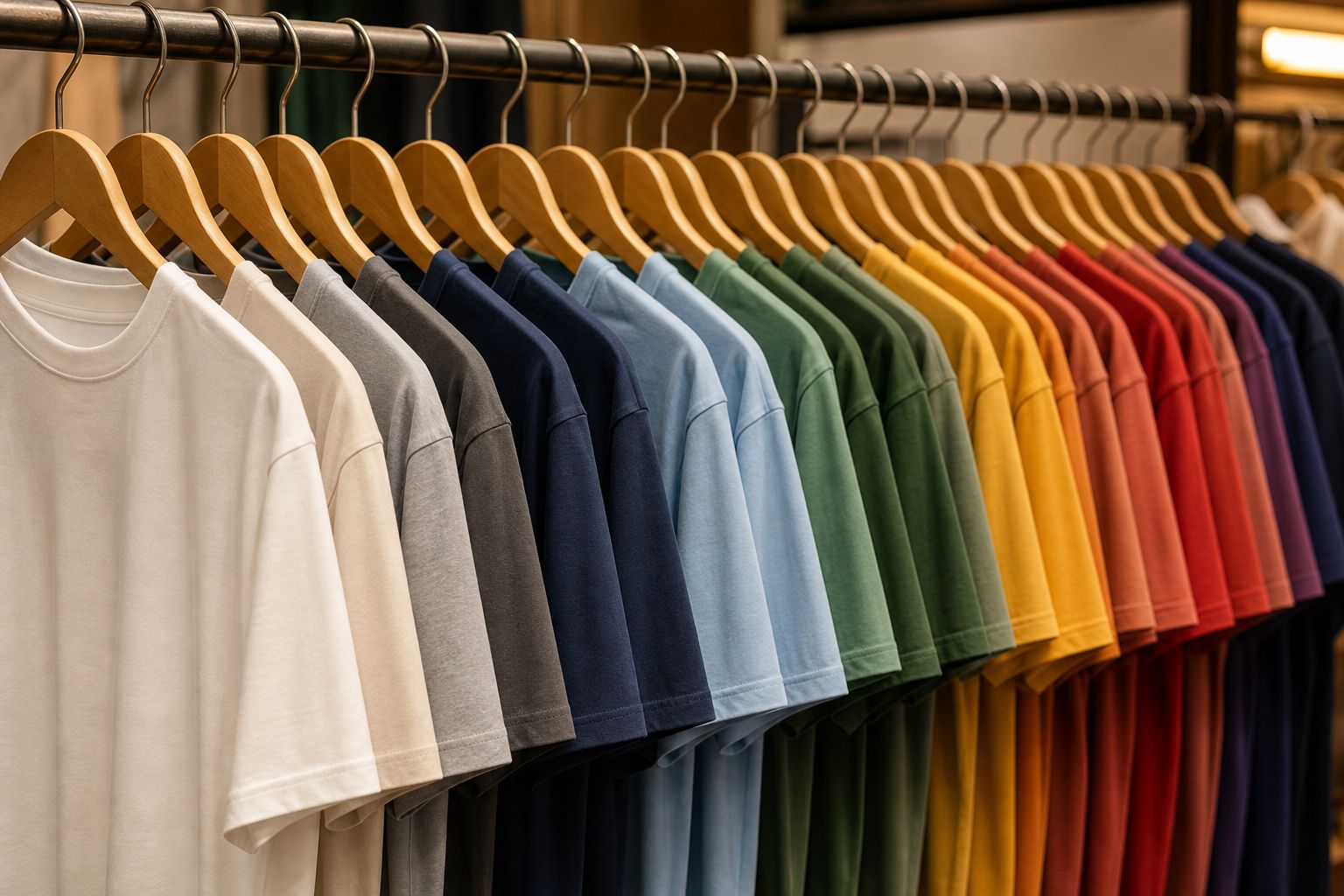
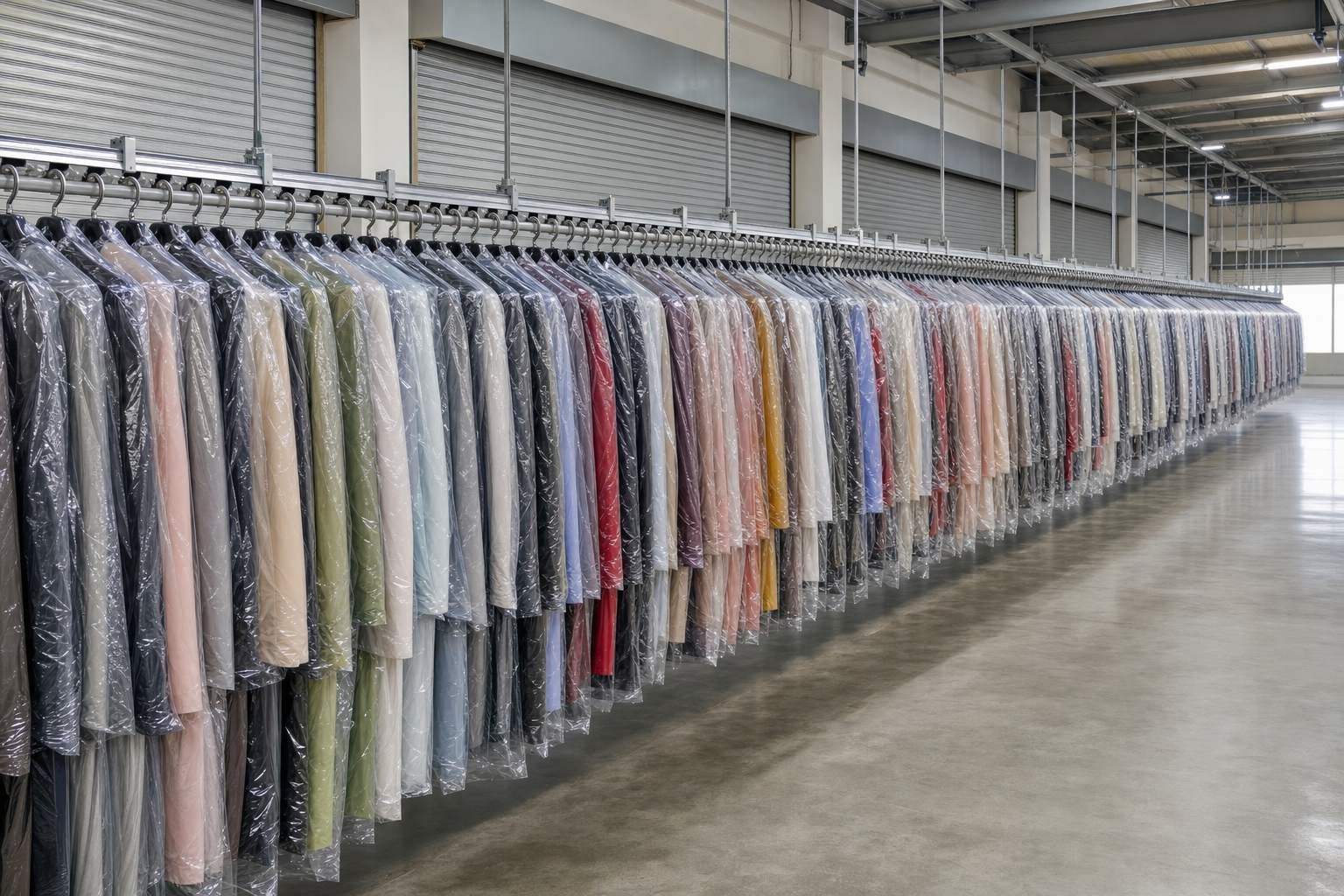
Late 2026The other end T-shirts on a shop rail, thousands of kilometres away. AI-generated illustration.
Prologue
The protests
Al Jazeera (2 November 2026): protests began on Saturday 31 October in Mirpur (Dhaka), Savar, Ashulia and Gazipur; workers demand a monthly minimum wage of Tk 30,000 (about $242), against the current Tk 12,500 (about $101); about 500 factories temporarily shut; the government formed a wage board on Sunday 1 November. The Indian Awaaz (31 October), citing Ashulia industrial police, put the factories shut there at about 30 that day. Figures differ by place and day.
The 3D scenes are simplified teaching models, not to scale.
A garment is the end of a long chain, and each link is often in a different place.
First comes the fibre: grown in a field, like cotton, which must have its seeds removed, or made from chemicals, like polyester.
Fibres are spun into yarn. Yarn is woven or knitted into fabric, which is dyed and finished.
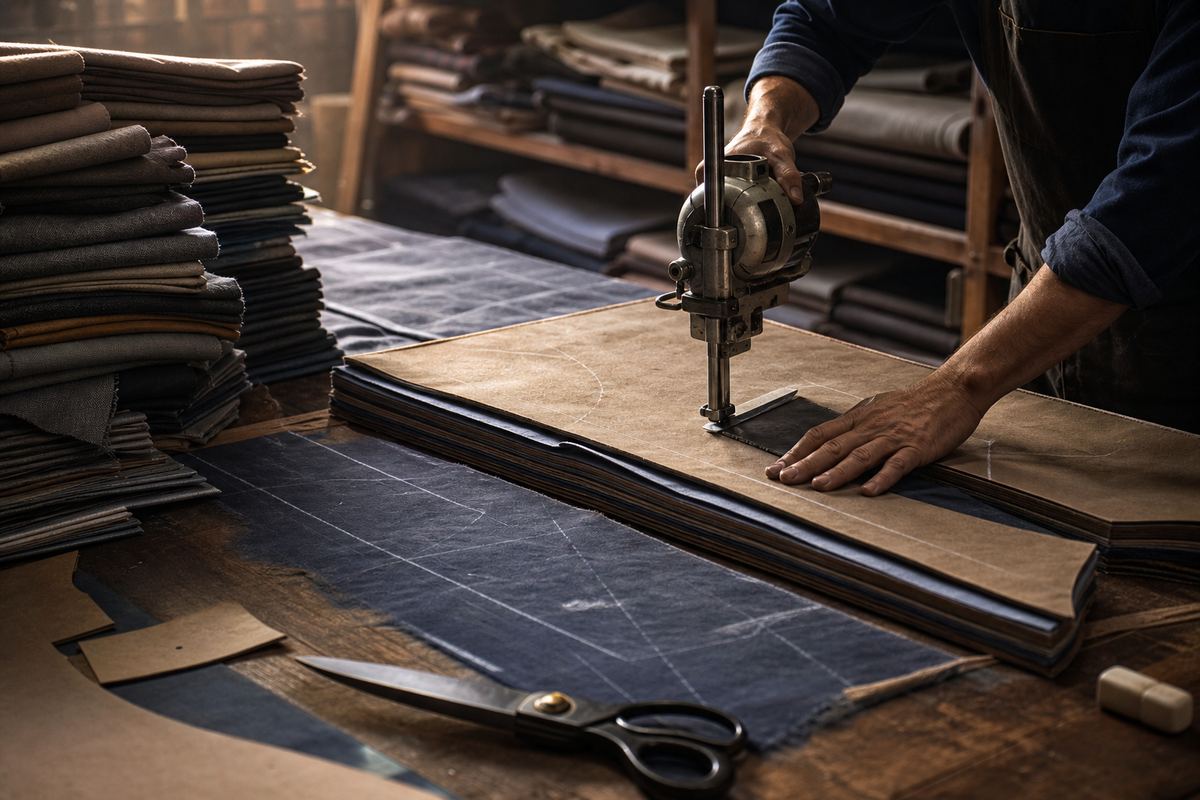
Then the fabric is cut into pieces and sewn: cut, make and trim, the industry calls it. Finally the clothes are shipped, mostly by sea, and sold.
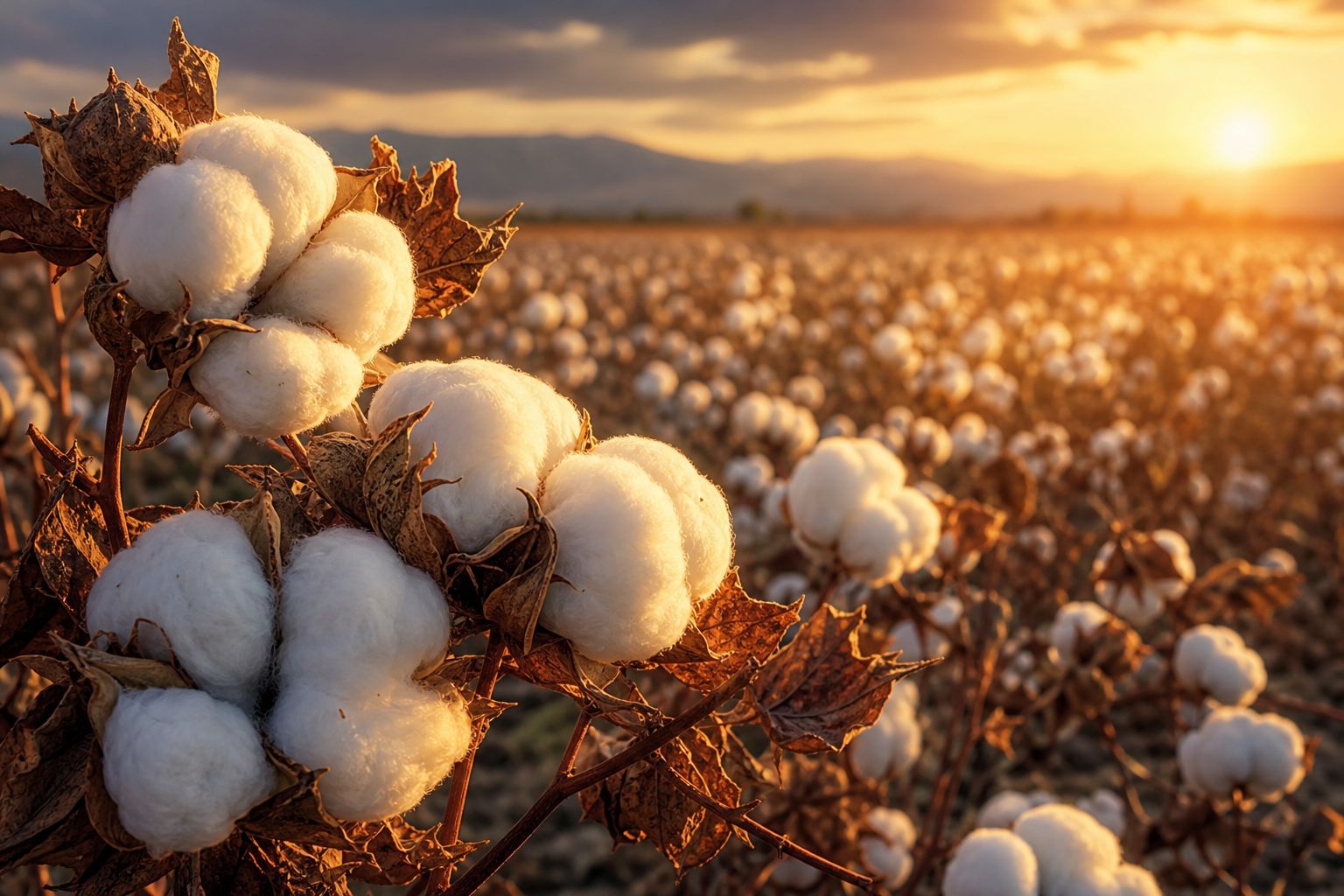
Where it starts Ripe cotton bolls at harvest time. AI-generated illustration.
fibre → yarn
yarn → fabric
fabric → dyed and finished
cut, make, trim → garment
ship → shop
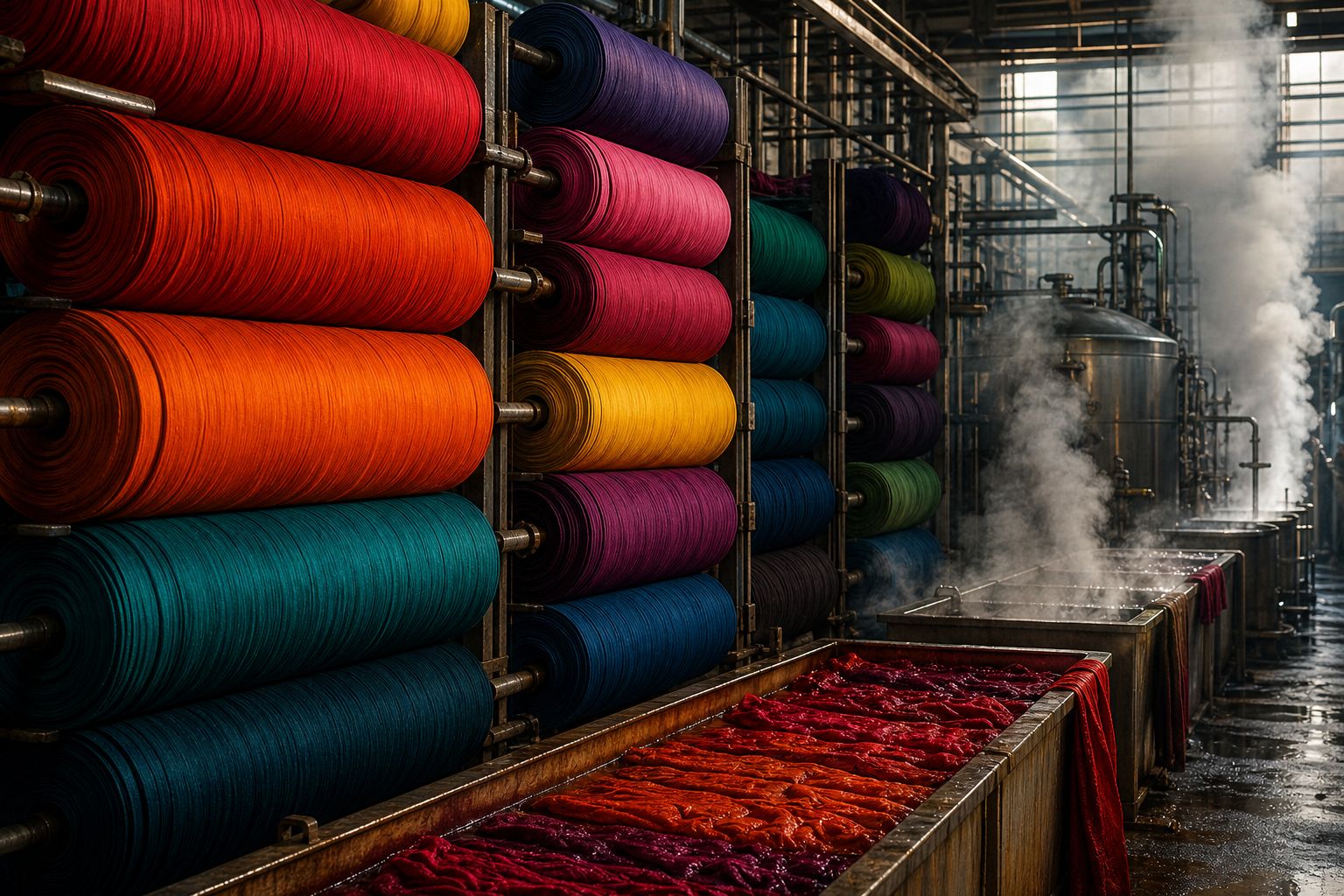
The chainDyed and ready Rolls of dyed fabric waiting to be cut. AI-generated illustration.
Chapter I · From fibre to fabric
The supply chain
The stages shown are a simplified outline: fibre (cotton, which is ginned to remove its seeds, or synthetic fibres such as polyester), spinning into yarn, weaving or knitting into fabric, dyeing and finishing, cutting and sewing, shipping and retail. UNCTAD: around 80% of the volume of international trade in goods is carried by sea.
Use ◀ ▶ or Play to move the parcel along the chain.
The 3D scenes are simplified teaching models, not to scale.
In 2024 the world produced about one hundred and thirty-two million tonnes of fibre.
Cotton made up about a fifth of it. The biggest share, fifty-nine percent, was polyester.
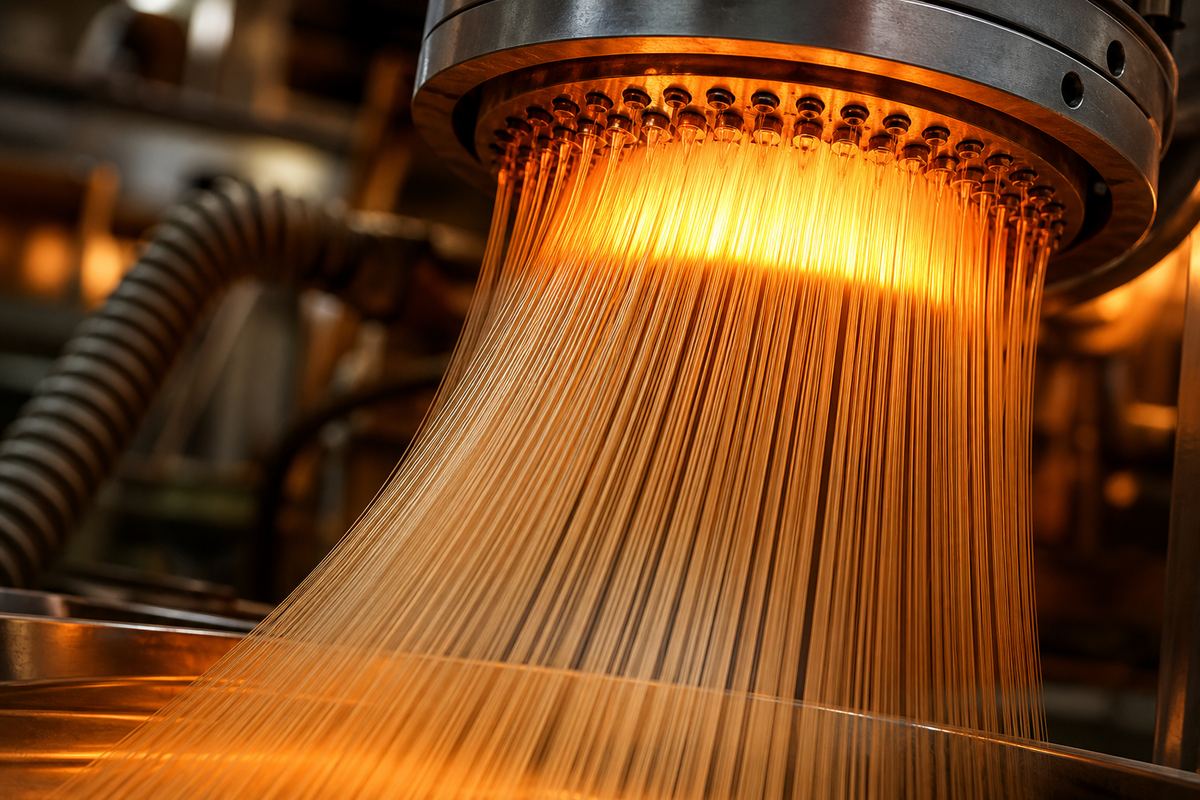
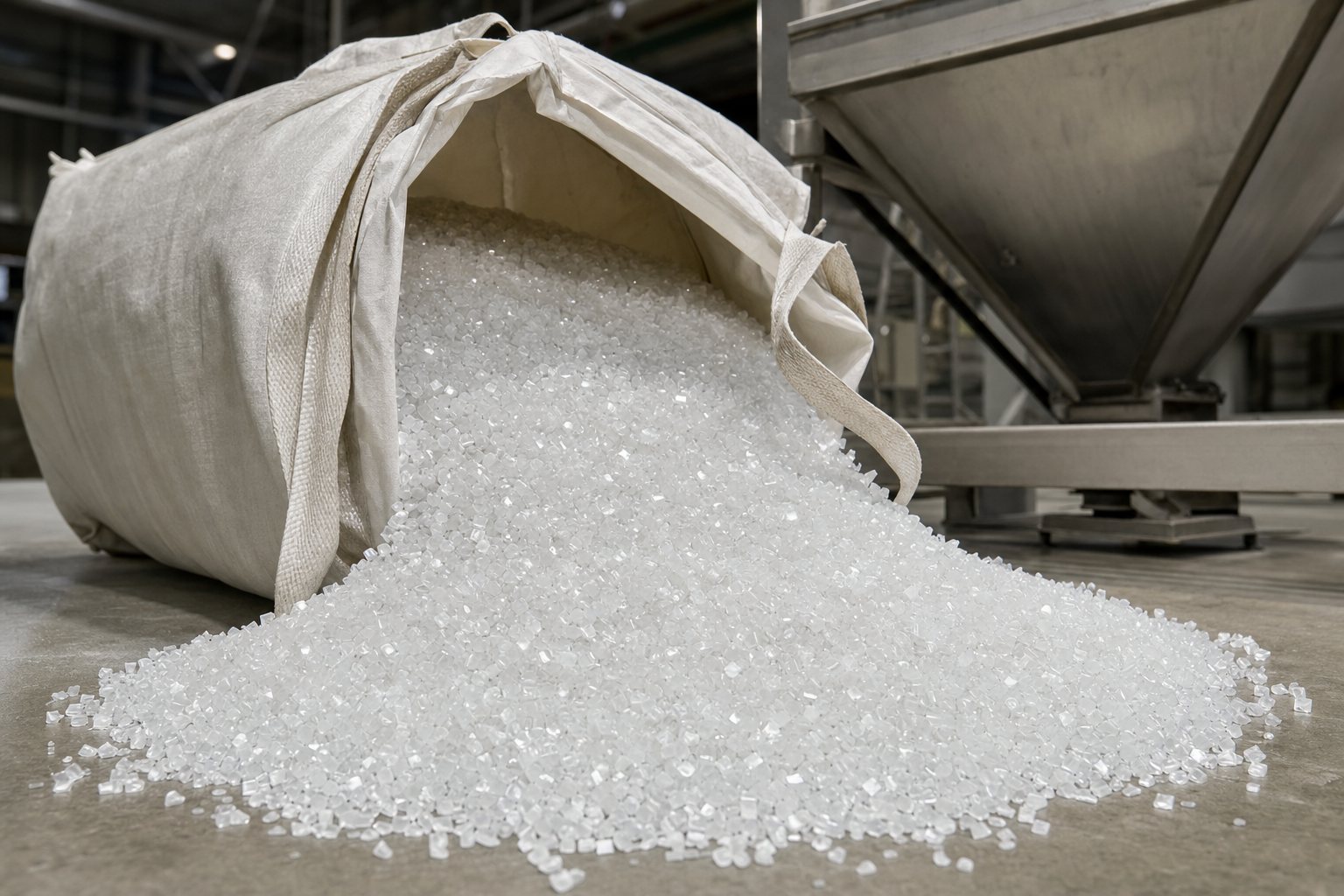
Polyester is a plastic. It is made by joining two chemicals, ethylene glycol and terephthalic acid, into long chains. The molten plastic is pushed through tiny holes and pulled into fibres.
It is the same material as many drinks bottles.
polyester
59%
cotton
19%
recycled fibre
7.6%
World fibre production, 2024 (Textile Exchange)
Melt spinning Molten polyester drawn into fine filaments. AI-generated illustration.It starts as plastic chips Polyester now accounts for more than half of all the fibre the world makes. AI-generated illustration.
PET
polyethylene terephthalate: fibres such as Dacron and Terylene, and bottles
PET (Britannica)
Chapter I · From fibre to fabric
Fibres
Textile Exchange (Materials Market Report 2025): world fibre production reached about 132 million tonnes in 2024; polyester had a 59% share, cotton 19%, and recycled fibres 7.6%. Britannica: polyethylene terephthalate (PET) is made by polymerising ethylene glycol and terephthalic acid; the molten polymer is extruded through a spinneret and drawn into fibre, sold under names such as Dacron and Terylene; PET is also used for bottles.
The 3D scenes are simplified teaching models, not to scale.
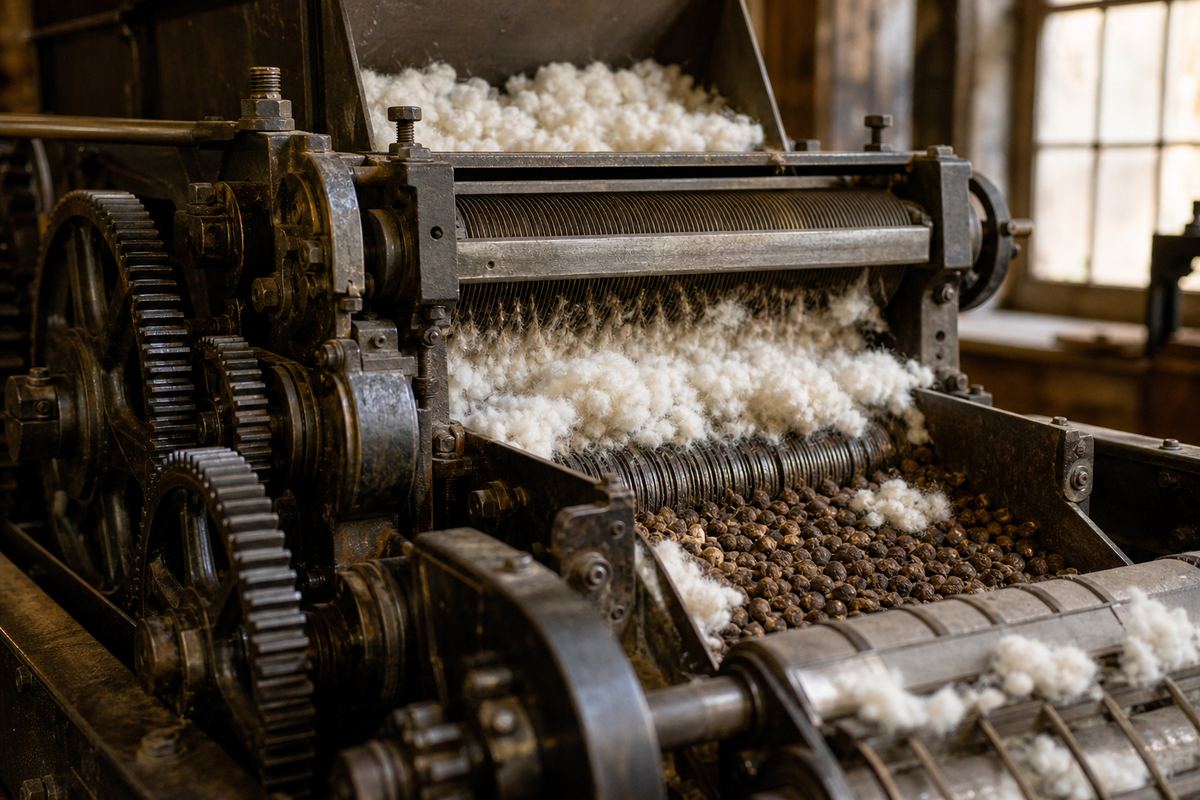
Raw cotton is full of seeds. Picking them out by hand was slow work.
In 1793, the American inventor Eli Whitney built the cotton gin, a machine that combs the fibre away from the seeds.
Ginning is still the first factory step for every cotton shirt.
Fibre from seed A gin separating white fibre from cottonseed. AI-generated illustration.
1793
Eli Whitney’s cotton gin
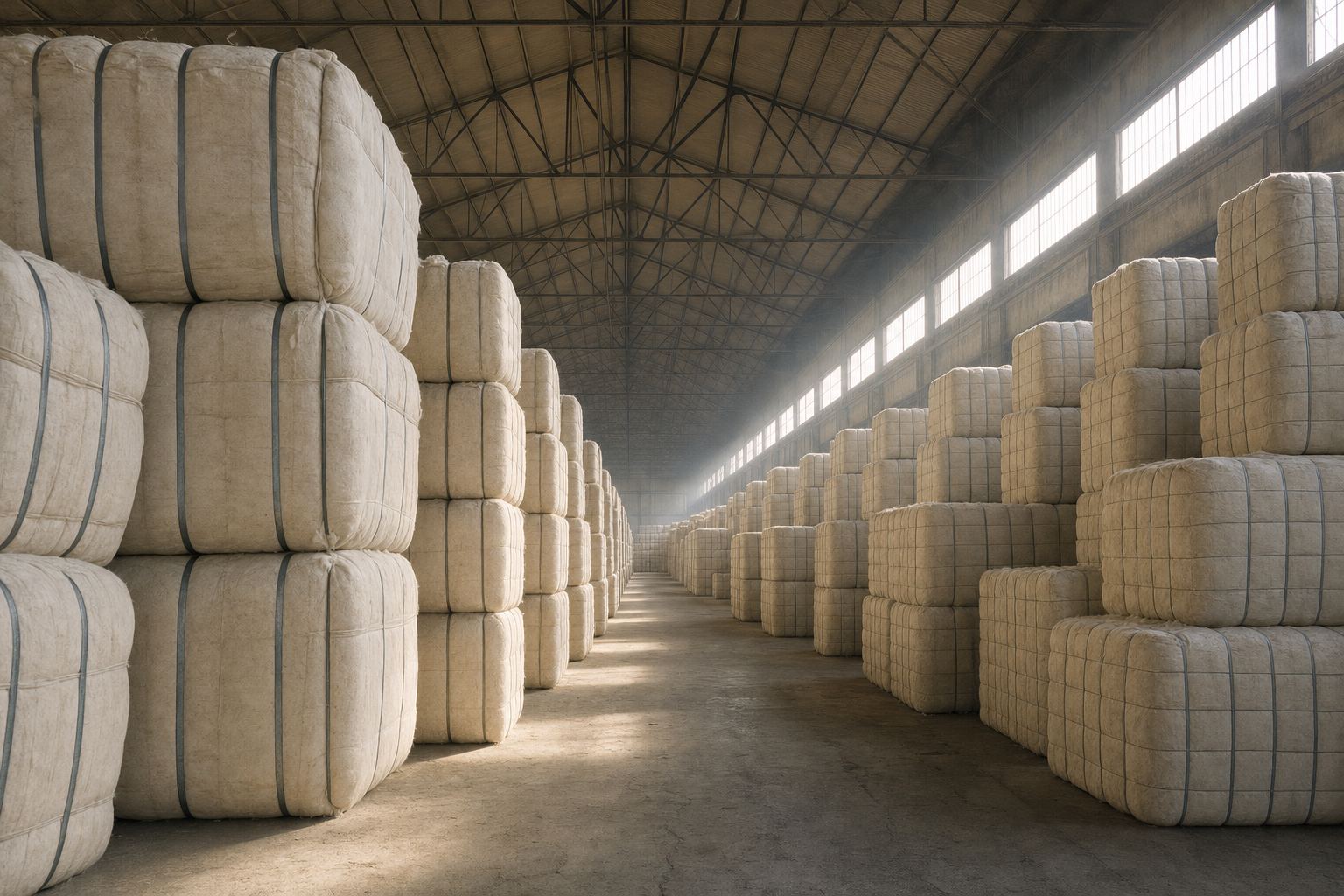
BritannicaBaled and shipped A standard bale weighs about two hundred and eighteen kilograms, enough for roughly twelve hundred T-shirts. AI-generated illustration.
lint: the fibre, baled for the mill
seed: left behind
After ginning
Chapter I · From fibre to fabric
The cotton gin
Britannica: the cotton gin is a machine for separating cotton fibre from its seeds; Eli Whitney’s gin of 1793 made the process much faster than cleaning by hand.
The 3D scenes are simplified teaching models, not to scale.
Spinning and weaving in the Industrial Revolution.
Spinning twists short fibres into a long, strong thread. For thousands of years it was done by hand.
In eighteenth-century Britain, machines took over. Richard Arkwright patented his water-powered spinning frame in 1769, and James Hargreaves patented the hand-driven spinning jenny in 1770.
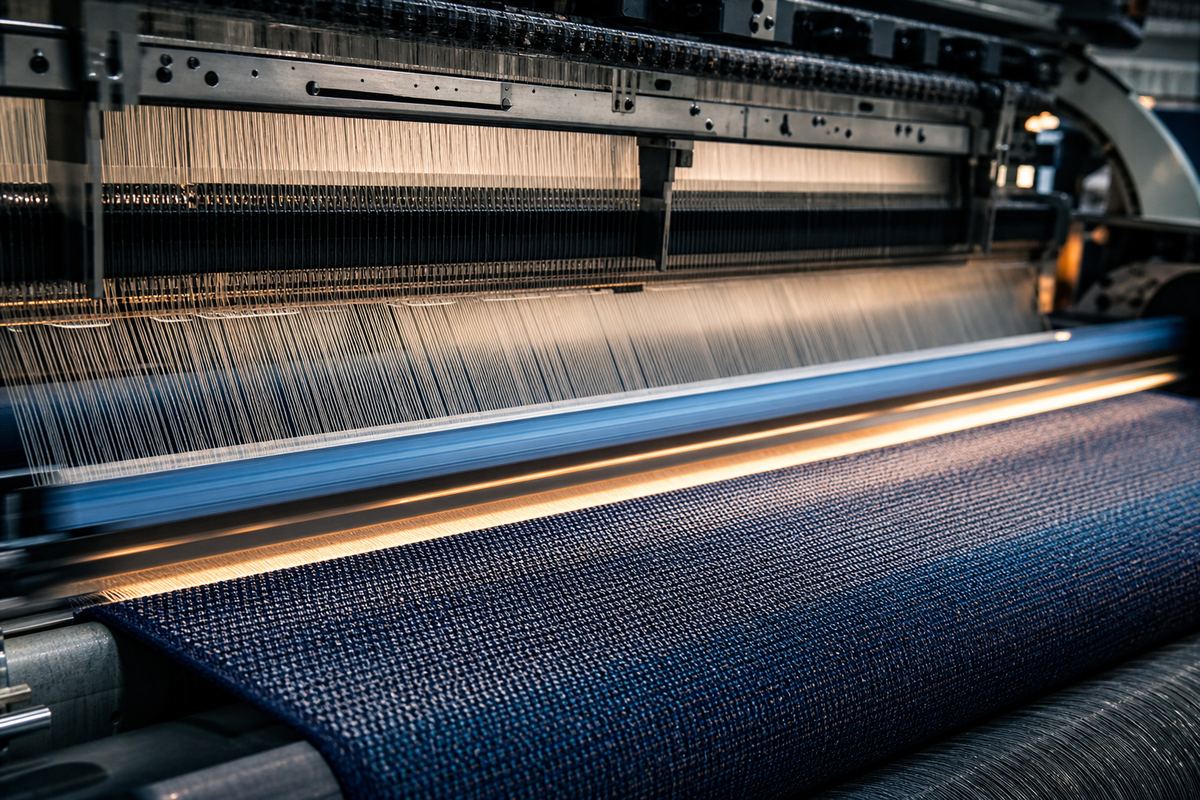
Weaving crosses two sets of threads: the warp, held tight on the loom, and the weft, passed across it. The warp takes the strain, and Arkwright’s yarn was strong enough for it.
In 1785 Edmund Cartwright patented a power loom. Spinning and weaving became factory work.
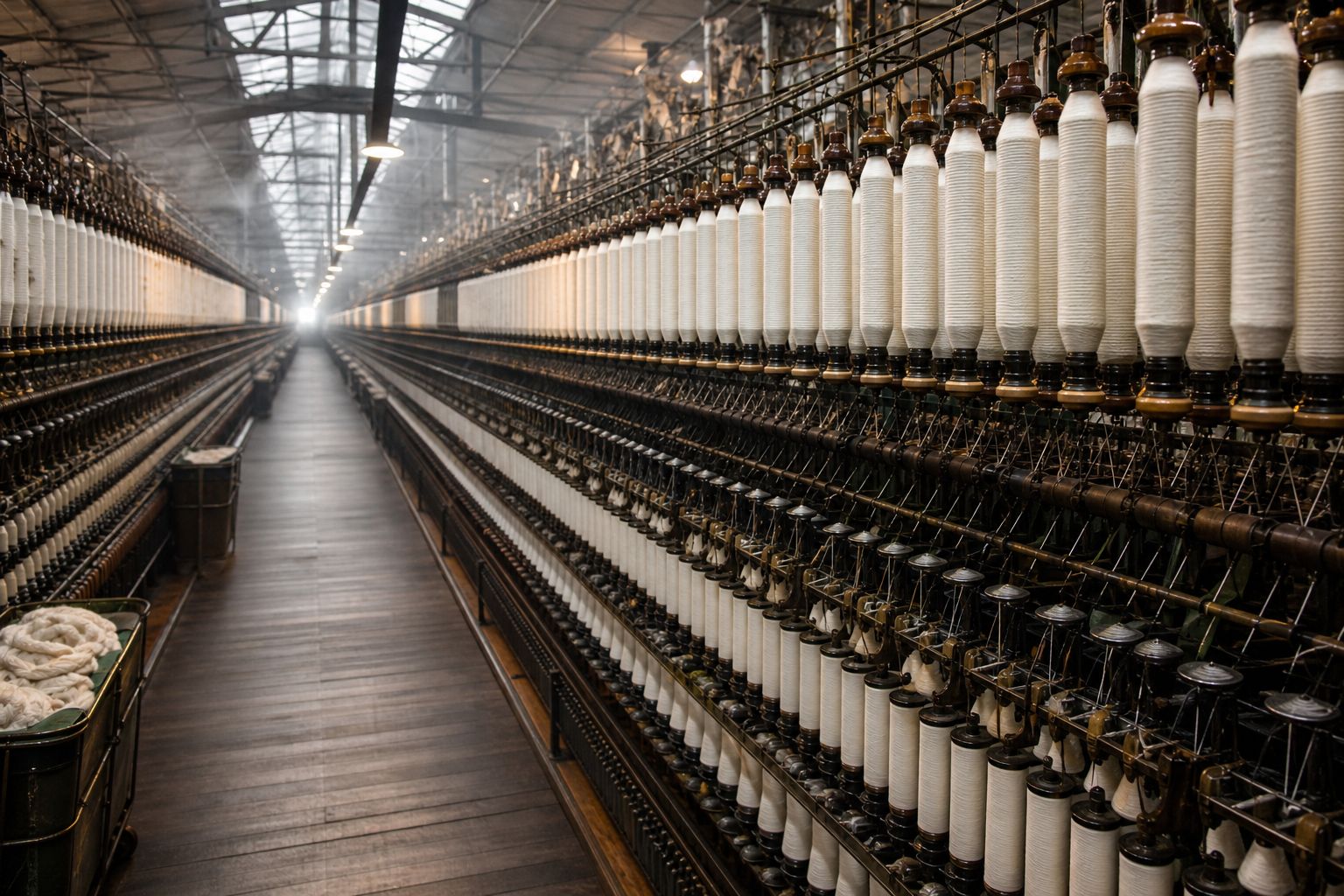
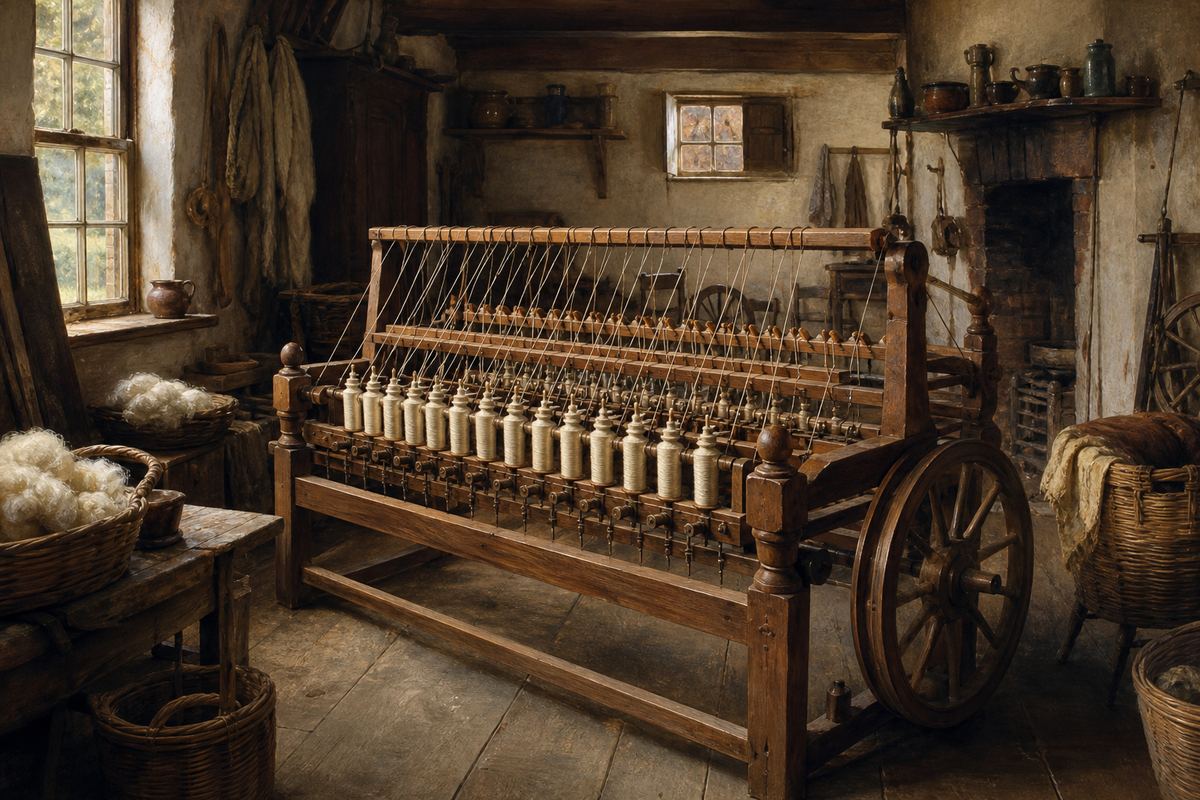
Spinning today Thousands of bobbins in a modern spinning mill. AI-generated illustration.The spinning jenny A many-spindled jenny of the kind Hargreaves built. AI-generated illustration.Warp and weft Fabric forming on a modern loom. AI-generated illustration.
1769 Arkwright’s water frame
1770 Hargreaves’s spinning jenny
1785 Cartwright’s power loom
Patents (Britannica)
Chapter II · Machines and hands
Spinning and weaving mechanised
Britannica: Richard Arkwright patented the water frame in 1769; it was water-powered and produced yarn strong enough for warp, James Hargreaves patented the hand-powered, multi-spindle spinning jenny in 1770. Edmund Cartwright first patented a power loom in 1785, after visiting Arkwright’s Cromford mills in 1784.
The 3D scenes are simplified teaching models, not to scale.
Two hundred and fifty years later, spinning and weaving are run by machines. Sewing mostly is not.
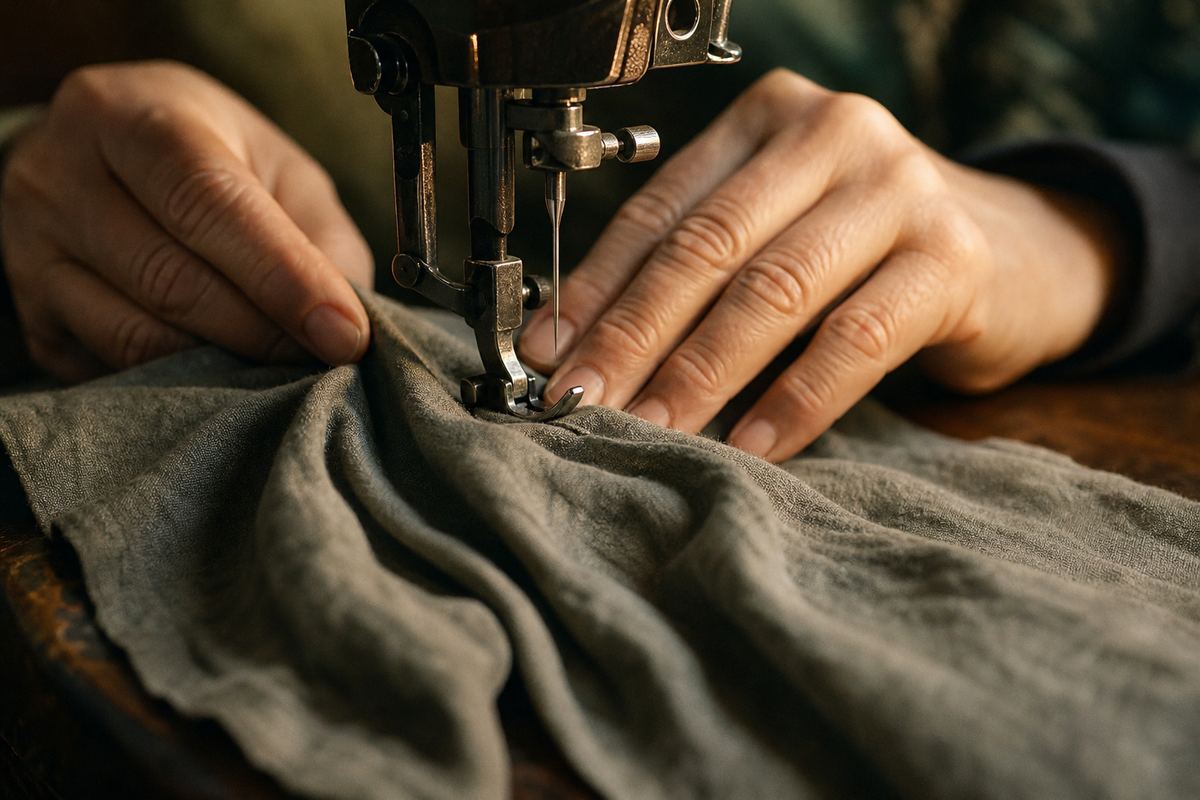
The problem is the fabric itself. It is flexible and limp: it bends, slips and wrinkles as soon as you move it.
A robot can handle a stiff sheet easily. Guiding soft cloth along a seam is much harder, and researchers say most robot systems for it are still prototypes.
So the industry still relies on human hands, millions of them, and the cost of that labour matters a great deal.
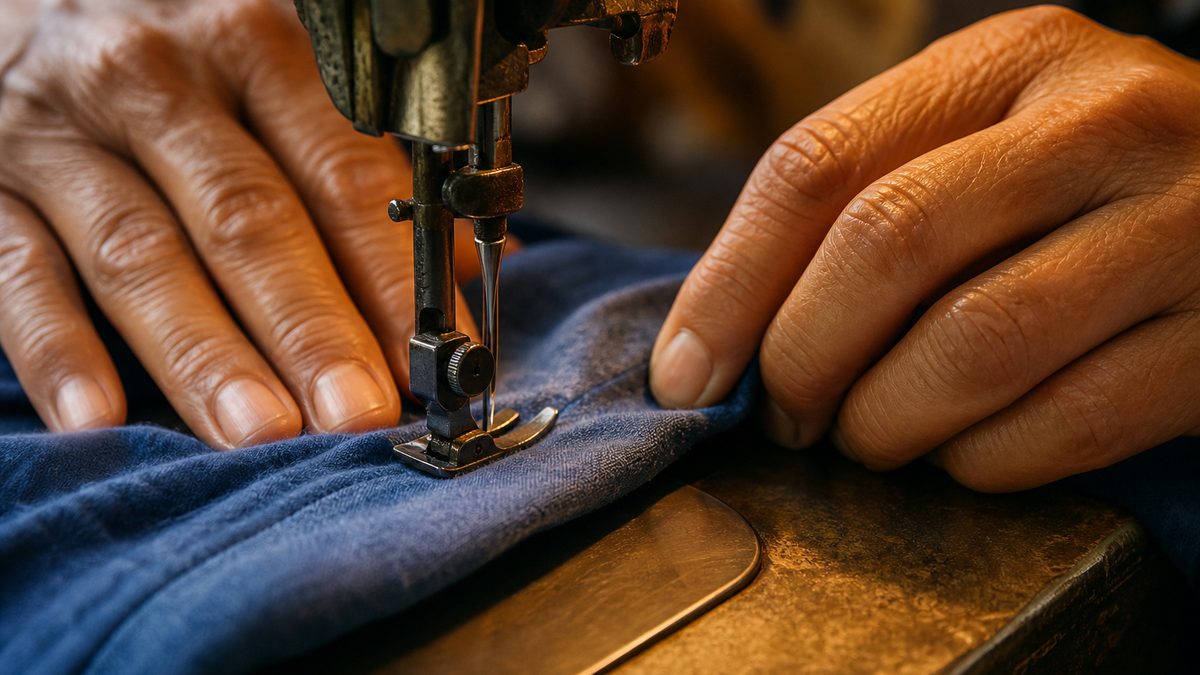
Limp cloth Hands keeping a floppy piece of fabric in line under the needle. AI-generated illustration.
…the industry largely relies on human workers.arXiv 2503.00249, on robotic handling of textiles
Robotics review, 2025Cut, make, trim Layers of fabric cut to a pattern before sewing. AI-generated illustration.
Chapter II · Machines and hands
Why sewing resists automation
A 2025 review of robotic textile handling (arXiv 2503.00249): robots are little used in apparel production because of the flexible and limp nature of textiles, which wrinkle and slip; no fabric-handling strategy has yet moved beyond the prototype stage, and the industry largely relies on human workers.
Switch between Fabric and Stiff sheet in the scene.
The 3D scenes are simplified teaching models, not to scale.
For about thirty years, trade rules limited how much clothing each country could sell to rich markets. From 1974 those quotas were set under the Multi Fibre Arrangement.
From 1995 they were phased out in stages, and on the first of January 2005 they ended.
Production rushed to where it was cheapest. In the first nine months of 2005, US imports of Chinese cotton trousers rose more than tenfold.
Bangladesh had built its industry while the quotas still held. After 2005 it had to compete in the open, and its share of world exports kept growing.
1974 Multi Fibre Arrangement: quotas
1995 Agreement on Textiles and Clothing: phase-out begins
1 Jan 2005 quotas end
Trade rules (WTO)
4
stages, from 1995 to 2005
Phase-out (WTO)
+1,094%
US imports of Chinese cotton trousers, Jan–Sep 2005
~25%
China’s share of world textile and clothing exports, 2004
USDA, 2006Competing in the open After 2005, buyers could order from whichever country offered the best deal. AI-generated illustration.
Chapter III · Where clothes are made
The end of the quotas
WTO: textile and clothing quotas negotiated under the Multifibre Arrangement from 1974 were replaced in 1995 by the Agreement on Textiles and Clothing, which phased them out in four stages; on 1 January 2005 the sector returned fully to normal GATT rules and the quotas ended. USDA Economic Research Service (2006): in the first nine months of 2005, US imports of cotton trousers from China rose by 1,094%; China held about 25% of world textile and clothing exports in 2004; economists estimated the quotas had worked like a 20–30% tariff on Chinese goods.
The 3D scenes are simplified teaching models, not to scale.
In 2024, world trade in clothing was worth more than half a trillion dollars, according to World Trade Organization figures.
China sold almost thirty percent of it. Bangladesh was second, with about seven percent, just ahead of Vietnam.
Then come Türkiye, India and Cambodia.
In 1990, Bangladesh had well under one percent of world clothing exports. By 2011 it had almost five.
China
165.2
Bangladesh
38.5
Vietnam
33.9
Türkiye
17.9
India
16.4
Cambodia
9.9
Clothing exports, 2024 (WTO, via Fibre2Fashion)
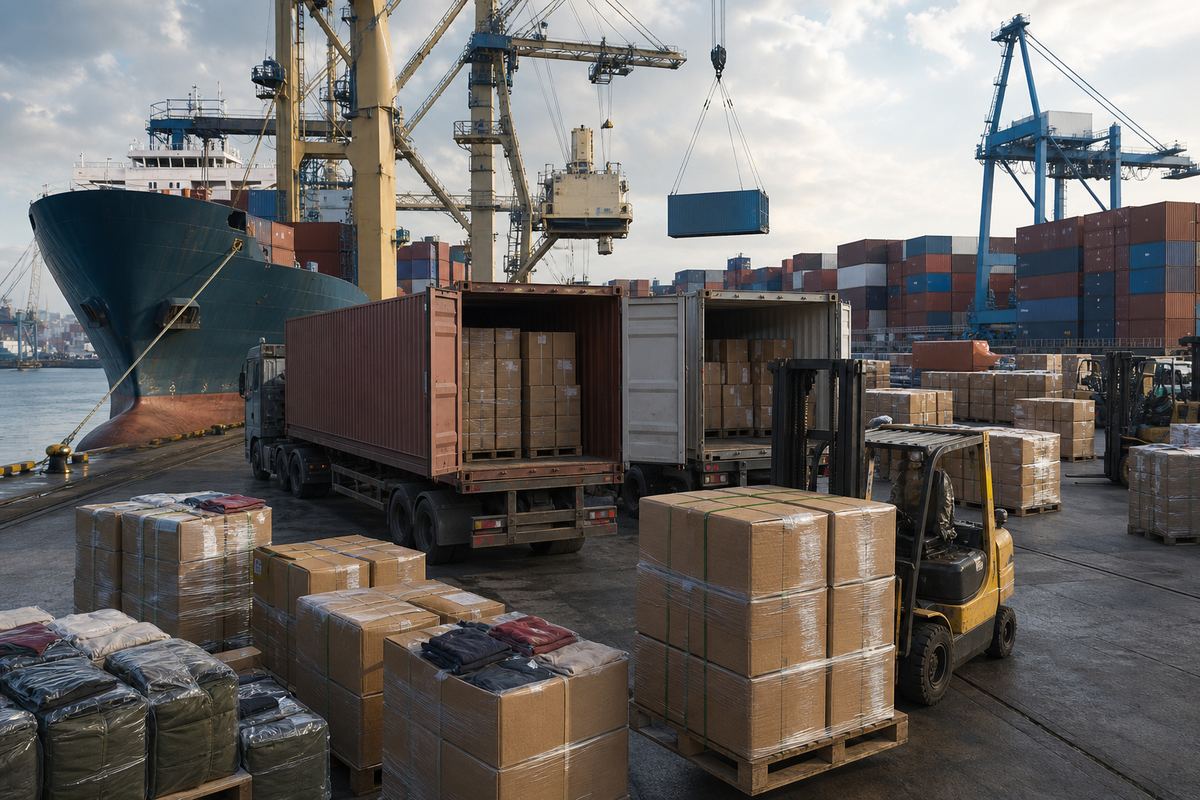
Bound for Europe and the US Cartons of clothes loaded for export. AI-generated illustration.
0.6%
1990
4.8%
2011
6.9%
2024 (WTO)
Bangladesh’s share of world clothing exports (ILO)
Chapter III · Where clothes are made
Where clothes are made
Fibre2Fashion and Prothom Alo, citing WTO data: world clothing trade in 2024 was $557.5 billion; China $165.24 billion (29.64%), Bangladesh $38.48 billion (6.90%), Vietnam $33.94 billion (6.09%), Türkiye $17.91 billion, India $16.36 billion, Cambodia $9.89 billion. Fibre2Fashion calls the total the global apparel market; the shares are worked out from it. The Daily Star, reporting an ILO study: Bangladesh’s share of world apparel exports rose from 0.6% in 1990 to 4.8% in 2011.
Switch between US$ billions and share of world in the scene. Arcs to Europe and the US are schematic.
The 3D scenes are simplified teaching models, not to scale.
For Bangladesh, garments are not just one industry. They bring in more than eighty percent of the country’s export earnings.
More than four million people work in the factories, and about six in ten of them are women, according to the International Labour Organization’s Better Work programme.
In the year to June 2025, ready-made garment exports earned about thirty-nine billion dollars. About half went to the European Union, and a fifth to the United States.
Millions at work Seen from behind: rows of sewing machine operators. AI-generated illustration.
>80%
of export earnings
>4 million
workers
~60%
of them women
Bangladesh garments (ILO Better Work, 2025)
European Union
50.1%
United States
19.2%
rest of the world
30.7%
Where Bangladesh’s garments went, FY2025 (EPB)
Finished and bagged The factory is paid per garment, at a price agreed before the first stitch is sewn. AI-generated illustration.
Chapter III · Where clothes are made
Bangladesh and garments
ILO Better Work (September 2025): the garment sector accounts for more than 80% of Bangladesh’s export earnings and employs over 4 million workers, about 60% of them women. World Bank (2017): apparel was 83% of exports, with about 4 million workers in about 5,000 factories. BSS, citing the Export Promotion Bureau: ready-made garment exports in FY2025 (July 2024 to June 2025) were $39.35 billion, up 8.84%; the EU took 50.1% and the US 19.18%.
The 3D scenes are simplified teaching models, not to scale.
On the twenty-fourth of April 2013, the Rana Plaza building in Savar, near Dhaka, collapsed. It housed five garment factories.
At least one thousand one hundred and thirty-four people were killed and more than two thousand five hundred injured, according to the International Labour Organization.
Within weeks, it led to a new kind of agreement on factory safety.
Remembering Flowers and candles on a wall. AI-generated illustration.
1,134
people killed, at least
>2,500
injured
ILOWhere the building stood Cracks had been found the day before, and the building was briefly cleared before people were told to go back in. AI-generated illustration.
a compensation fund for victims and families
building, fire and electrical inspections
brands made answerable for their suppliers
After the collapse (ILO)
Chapter IV · The costs
Rana Plaza
ILO (Rana Plaza Compensation Arrangement): the Rana Plaza building in Savar collapsed on 24 April 2013, killing at least 1,134 people and injuring more than 2,500; compensation was paid through the Rana Plaza Arrangement. Wikipedia: the building housed five garment factories.
The 3D scenes are simplified teaching models, not to scale.
Three weeks later, on the fifteenth of May 2013, brands and unions signed the Accord on Fire and Building Safety in Bangladesh.
It was the first legally binding agreement of its kind. More than two hundred brands joined, and factories were inspected for building, fire and electrical safety.
In 2021 it became an international accord, and from 2023 it was extended to Pakistan.
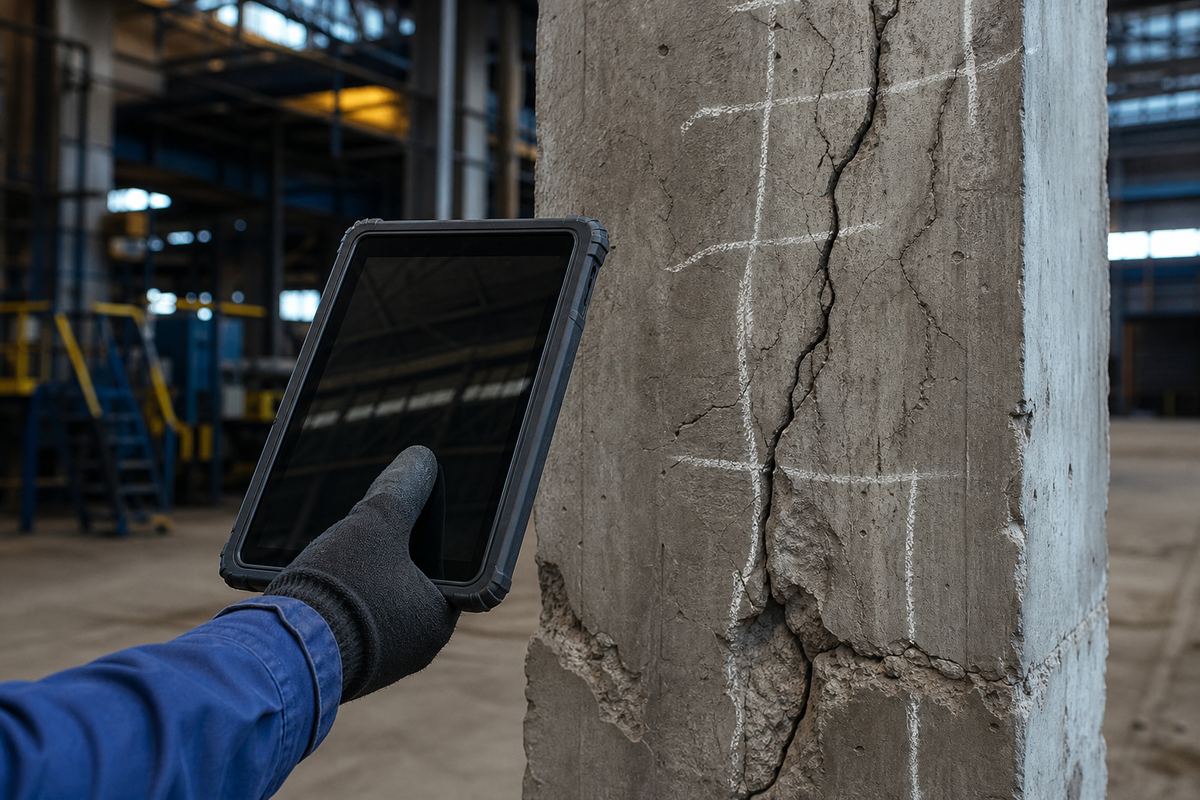
Inspection An engineer checks a cracked concrete column. AI-generated illustration.
15 May 2013 Accord signed: 200+ brands, IndustriALL and UNI unions
2017 extended
Aug 2021 International Accord
2023 Pakistan Accord
The Accord (ILO)
legally binding
brands answerable for supplier safety
A first
Chapter IV · The costs
The Accord
ILO (CBSD): the Accord on Fire and Building Safety in Bangladesh was signed on 15 May 2013 by more than 200 brands with the global unions IndustriALL and UNI, the first legally binding agreement of its kind; it was extended in 2017, became the International Accord for Health and Safety in the Textile and Garment Industry in August 2021, and a Pakistan Accord followed from 2023.
The 3D scenes are simplified teaching models, not to scale.
Clothes also have a cost for the environment, though the numbers are estimates and argued over.
A widely cited estimate says one cotton T-shirt takes about two thousand seven hundred litres of water to make. Cotton is a very thirsty crop.
In 2019 the United Nations said the fashion industry uses about ninety-three billion cubic metres of water a year, and a UN Environment Programme official put the share of clothing and footwear in global greenhouse gas emissions at about eight percent.
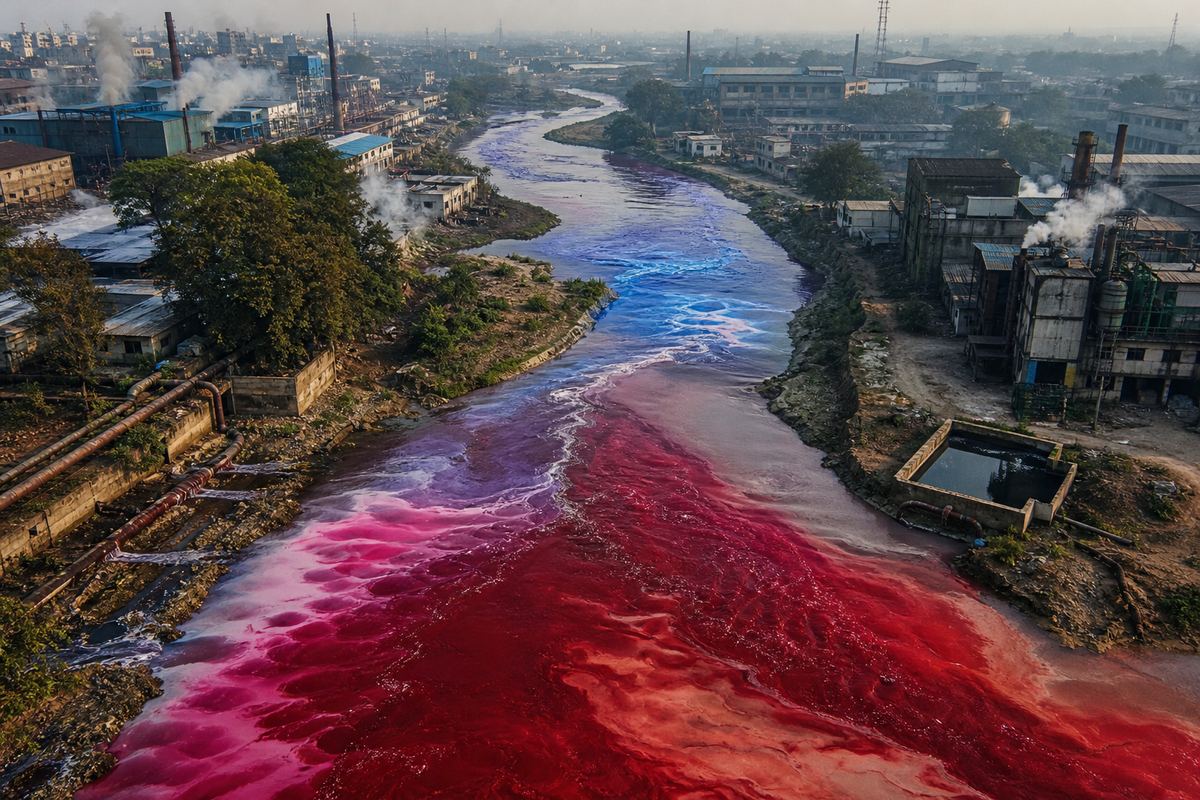
Dye works Coloured water near textile plants. AI-generated illustration.
~2,700 L
of water for one cotton T-shirt
A widely cited estimate
93 bn m³
water a year (UNCTAD)
~8%
of global emissions: clothing and footwear (UNEP official)
UN News, March 2019Colour Dyeing and finishing use water and energy too. AI-generated illustration.
Chapter IV · The costs
Environmental footprint
TriplePundit (2013), linking to WWF: it takes about 2,700 litres of water to make one cotton T-shirt, enough drinking water for one person for 900 days; it cites Waterfootprint.org for cotton being used in about 40% of clothing. The figure is an estimate and is debated. UN News (March 2019): the fashion industry uses about 93 billion cubic metres of water a year (UNCTAD); Elisa Tonda of UNEP said clothing and footwear production causes about 8% of global greenhouse gas emissions.
The 3D scenes are simplified teaching models, not to scale.
Bangladesh last raised its garment minimum wage in late 2023, from eight thousand to twelve thousand five hundred taka a month, after protests in which two workers were killed.
Workers’ leaders say that is not enough to live on. Babul Akhter, a union leader on the new wage board, calls it among the lowest garment wages in the world, and says owners should get better prices from the brands that buy.
Factory owners point to higher costs, uncertain energy supplies and slowing demand. The head of the manufacturers’ association says the wage board is already the answer, and warned of no work, no pay if protests continue.
2019 Tk 8,000
Dec 2023 Tk 12,500 (+56%)
Nov 2026 wage board formed; workers ask Tk 30,000
Minimum wage, garment sector
Tk 30,000 a month
unpaid wages paid
no arbitrary dismissals or blacklists
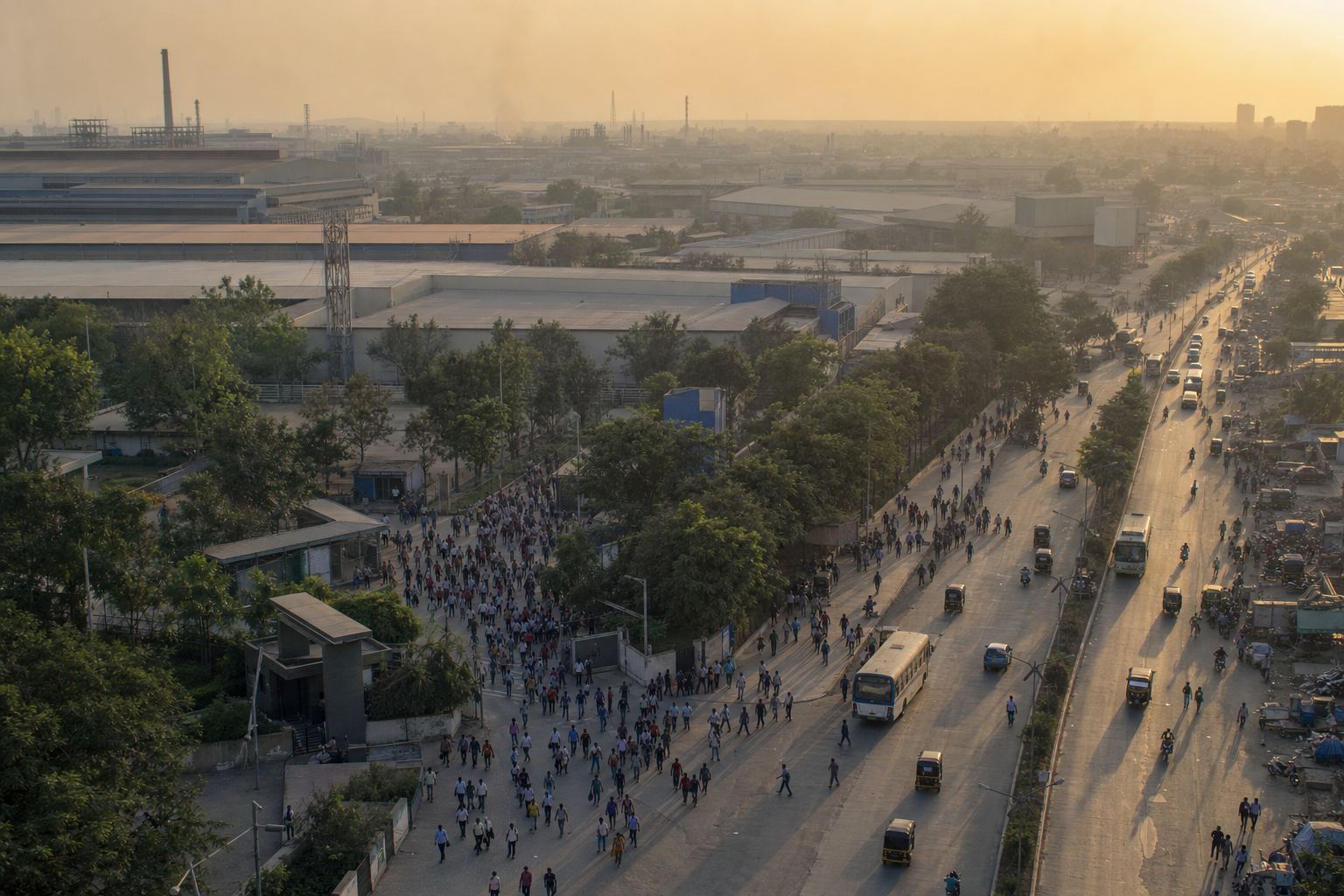
Workers’ side (Al Jazeera, Indian Awaaz)End of the shift Most of the workforce in Bangladesh's garment factories is women. AI-generated illustration.
higher costs
uncertain energy supplies
slowing demand
let the wage board work
Owners’ side (Al Jazeera)Undecided The board has not yet set a new figure. AI-generated illustration.
Chapter V · The wage question
The wage debate
Business & Human Rights Resource Centre (2023): a minimum wage of Tk 12,500 was announced in November 2023, effective 1 December, up 56.25% from Tk 8,000 set in 2019; two workers were killed in the 2023 clashes. Al Jazeera (2 November 2026): Babul Akhter, general secretary of the Bangladesh Garment and Industrial Workers Federation and the workers’ representative on the wage board, said Bangladesh has “among the lowest garment wages in the world” and that owners should get better prices from buyers; BGMEA president Mahmud Hasan Khan said the government “has already taken a step by forming the wage board” and warned of “no work, no pay”; owners cite higher costs, energy uncertainty and slowing demand. bdnews24: the labour minister alleged that organised outside groups were provoking workers; that claim is his and is unverified.
The 3D scenes are simplified teaching models, not to scale.
Machines spin and weave. Ships carry. But the step in the middle, sewing, is still done by people, and millions of them are in Bangladesh.
What they are paid is now being decided by a wage board in Dhaka.
Next time you buy a shirt, look at the label. It is the last line of a very long journey.
1769–85 spinning and weaving mechanised in Britain
1793 cotton gin
1974 trade quotas begin
2005 quotas end
2013 Rana Plaza; the Accord
2026 wage board formed
The garment chain: a timelineThe last line Plain shirts on a rail. AI-generated illustration.
most fibre is now polyester
limp fabric keeps sewing manual
quotas ended in 2005
Remember
Epilogue · Sources
Sources
Every fact in this film comes from the sources below; figures about the 2026 protests and wages are attributed to the outlet or side that gave them. The chapter stills and pictures are AI-generated illustrations and show no real people, factories or brands. The chain, the sewing machine and the globe are simplified teaching models. Thai readers: Thailand does not appear in the WTO top-exporter figures used here, so it is not discussed.