On 4 November 2026 the US Treasury sanctioned a network it says sold fake ship registrations to tankers carrying Iranian oil. This film explains the established system behind that news: why every ship on the high seas must have one nationality under the 1982 law of the sea, what a flag state must do, how Panama and Liberia began registering foreign-owned ships, why about seventy percent of the world fleet now sails under foreign flags, how port state control and its white, grey and black lists check flags, how IMO numbers and AIS give ships an identity, and how false flags and ageing shadow fleets slip through the gaps.
Interactive 3D film9 min1915 to 2026Published 8 November 2026
Picture an oil tanker in the middle of the ocean. Its owner lives in one country, its crew comes from others, and the flag at its stern belongs to yet another.
That flag says whose laws the ship carries, wherever it sails.
On the fourth of November 2026, the US Treasury sanctioned a network that, it says, sold fake flags to tankers carrying Iranian oil, using registries in the names of countries that never authorised them.
Some ships even claim the flag of a country with no sea. So how does a ship get a flag, and how can a flag be fake?
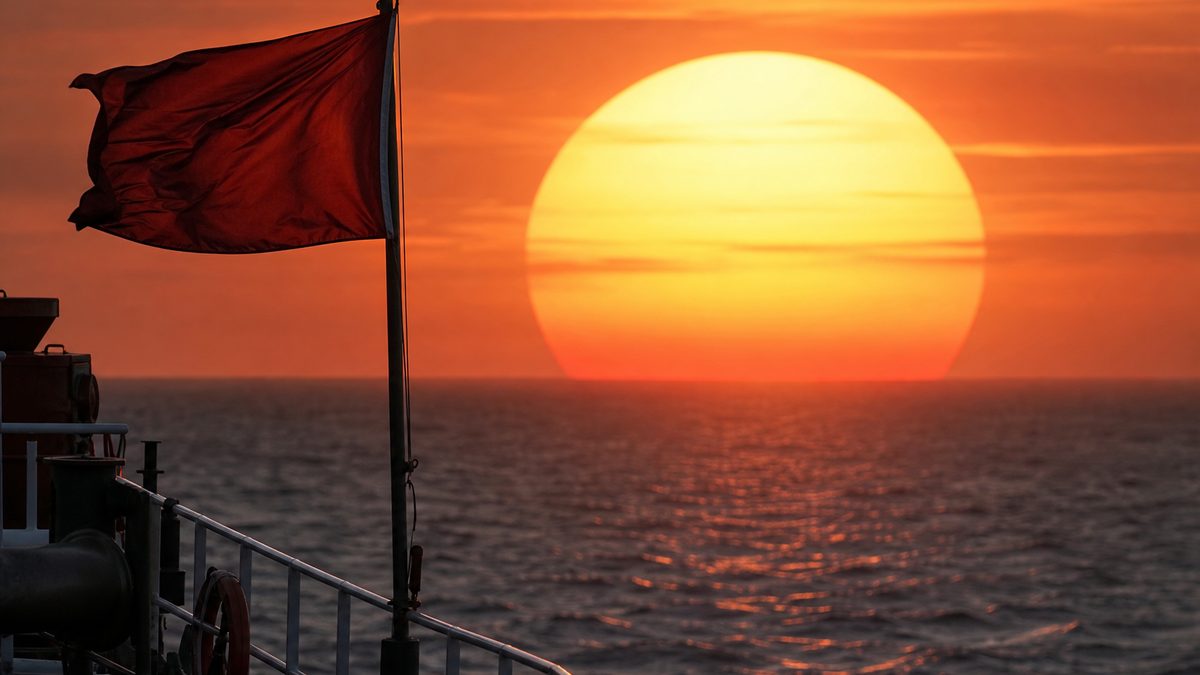
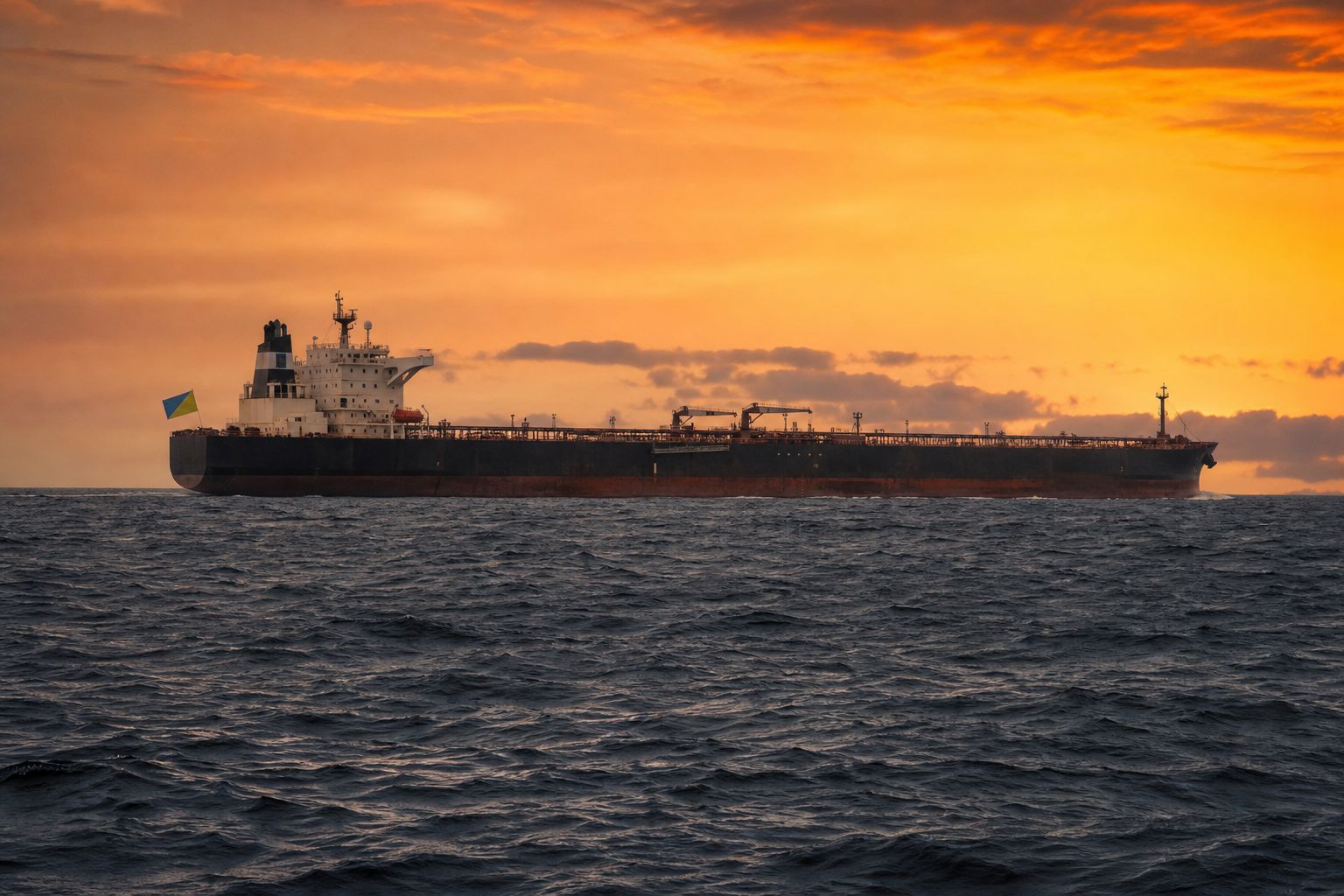
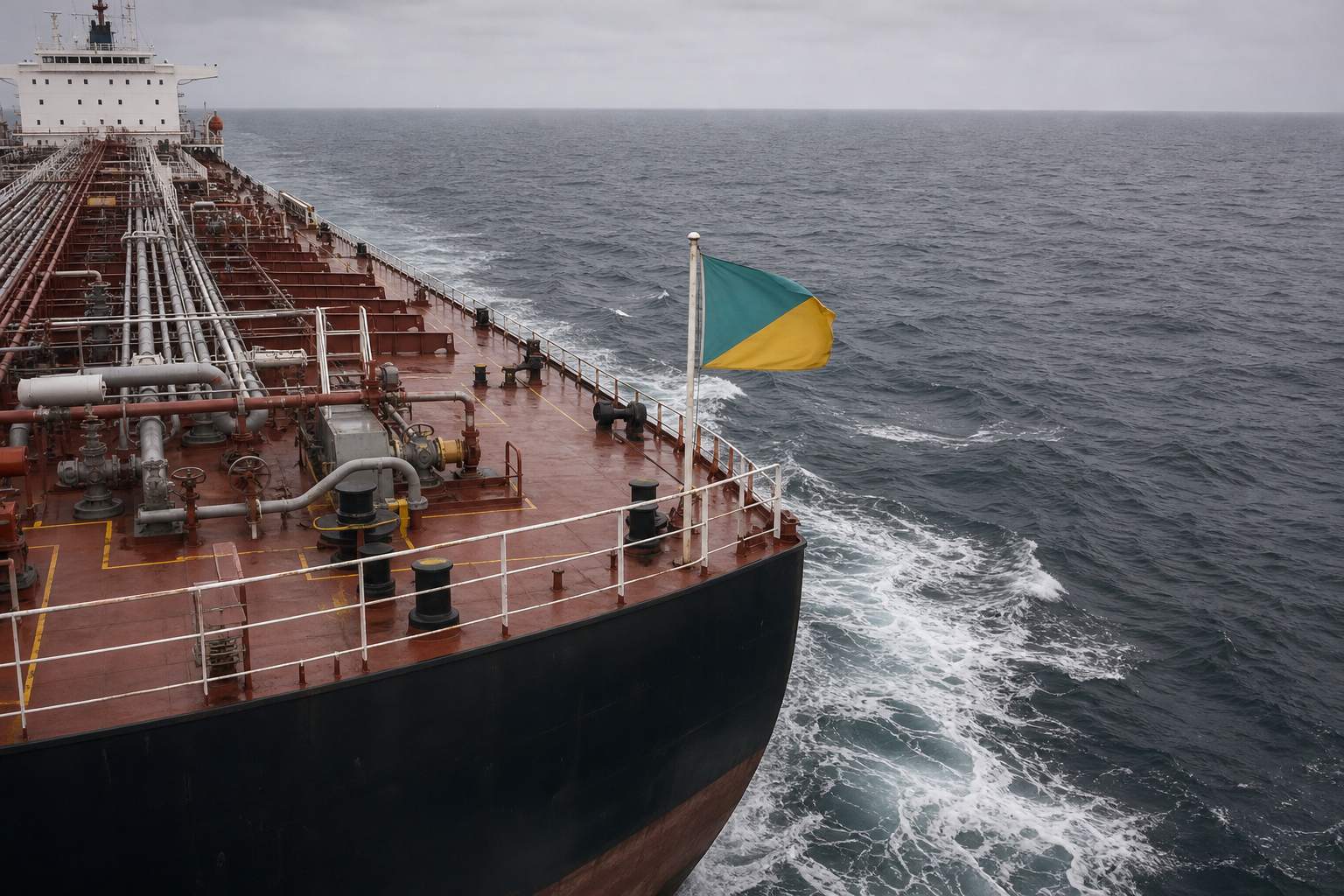
Mid-ocean A loaded tanker sits low in the water; its flag flies from the stern. AI-generated illustration.The ensign A ship’s national flag is called its ensign; this one is invented. AI-generated illustration.
4
people designated
9
companies designated
11
flag registries Treasury says it impersonated or tried to
US Treasury, 4 Nov 2026
~70%
of the world fleet sails under a foreign flag (UNCTAD data to 2021)
Flags at sea
Prologue
The news
US Treasury (4 November 2026): OFAC designated an India-based network — Suniel Kumar Sharma, Jaspreet Preeti Shahid, two nominal directors and nine entities — which, Treasury says, provided false flags and certifications to sanctioned vessels, running websites that offered ship registration, seafarer training and classification for countries that had not authorised it. The State Department counts 13 individuals and companies. gCaptain and Gulf News also reported it.
The 3D scenes are simplified teaching models: the ship, the globe markers and the flags are schematic, not real vessels or exact positions.
Out on the high seas, beyond every country’s coastal waters, a ship answers to one country only: the one whose flag it flies.
The rules are in the UN Convention on the Law of the Sea, from 1982. Each country sets its own conditions for giving ships its nationality, but there must be a genuine link: a real tie between the country and the ship.
And, as a rule, a ship flies one flag only. One that switches flags as it suits can be treated as a ship with no nationality at all.
The high seas Far from shore, the flag decides whose law applies on board. AI-generated illustration.UNCLOS, Article 91 The convention also obliges the flag state to issue the ship’s documents. AI-generated illustration.
“Ships shall sail under the flag of one State only.”UNCLOS, Article 92: no change of flag during a voyage or in port, save a real transfer of ownership or change of registry
Chapter I · A nation for every ship
Nationality at sea
UNCLOS (1982), Article 91: every state fixes the conditions for granting its nationality to ships; there must exist a genuine link between the state and the ship, and the state issues the documents. Article 92: ships sail under the flag of one state only, save in exceptional cases expressly provided for, and may not change flag during a voyage or while in a port of call, save in a real transfer of ownership or change of registry; a ship that sails under two or more flags, using them according to convenience, may be treated as a ship without nationality.
The genuine-link rule first appeared in the 1958 Geneva Convention on the High Seas. A 1986 UNCTAD convention on ship registration never entered into force (Wikipedia, secondary).
The 3D scenes are simplified teaching models: the ship, the globe markers and the flags are schematic, not real vessels or exact positions.
That country is the ship’s flag state, and the list where it records its ships is its registry.
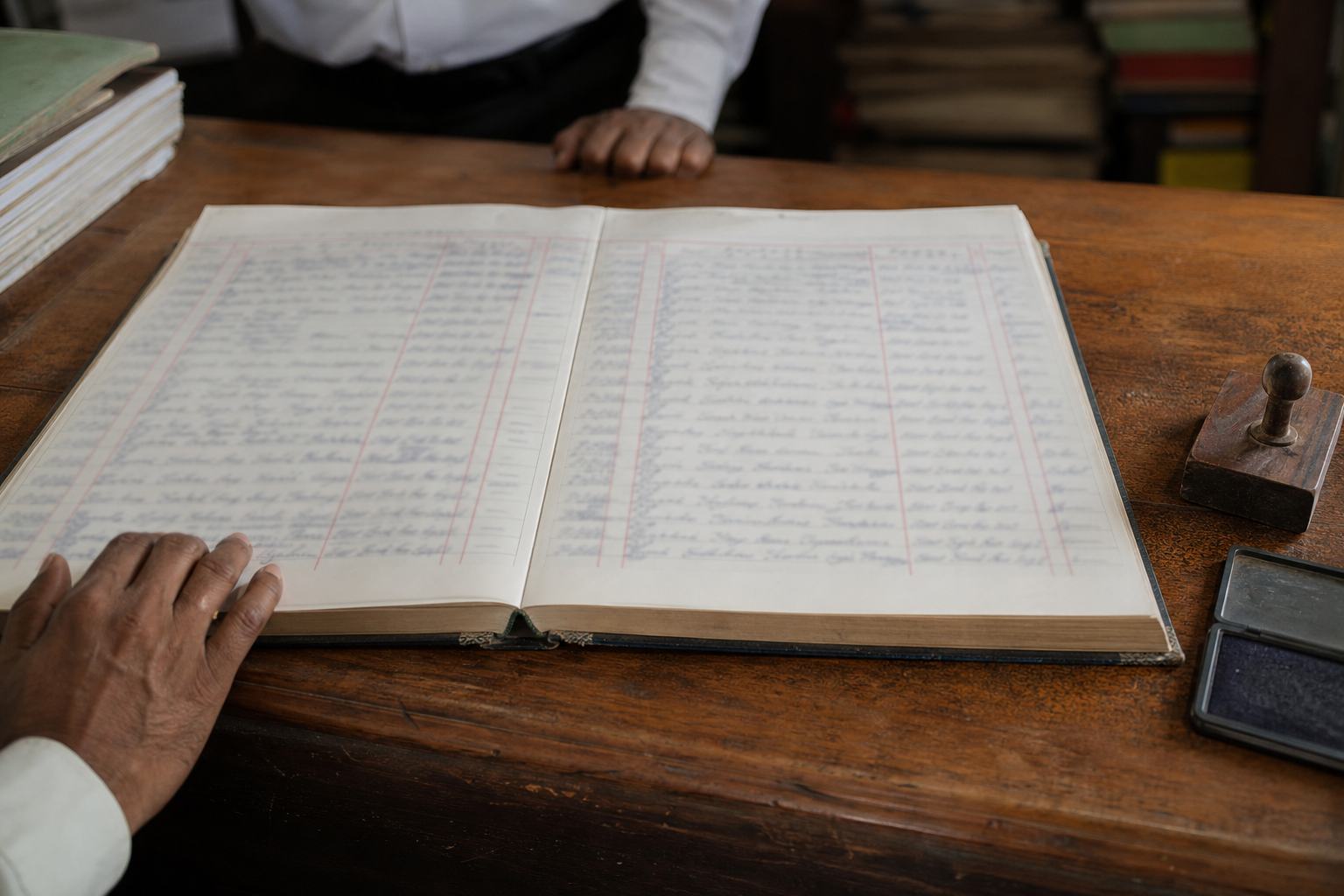
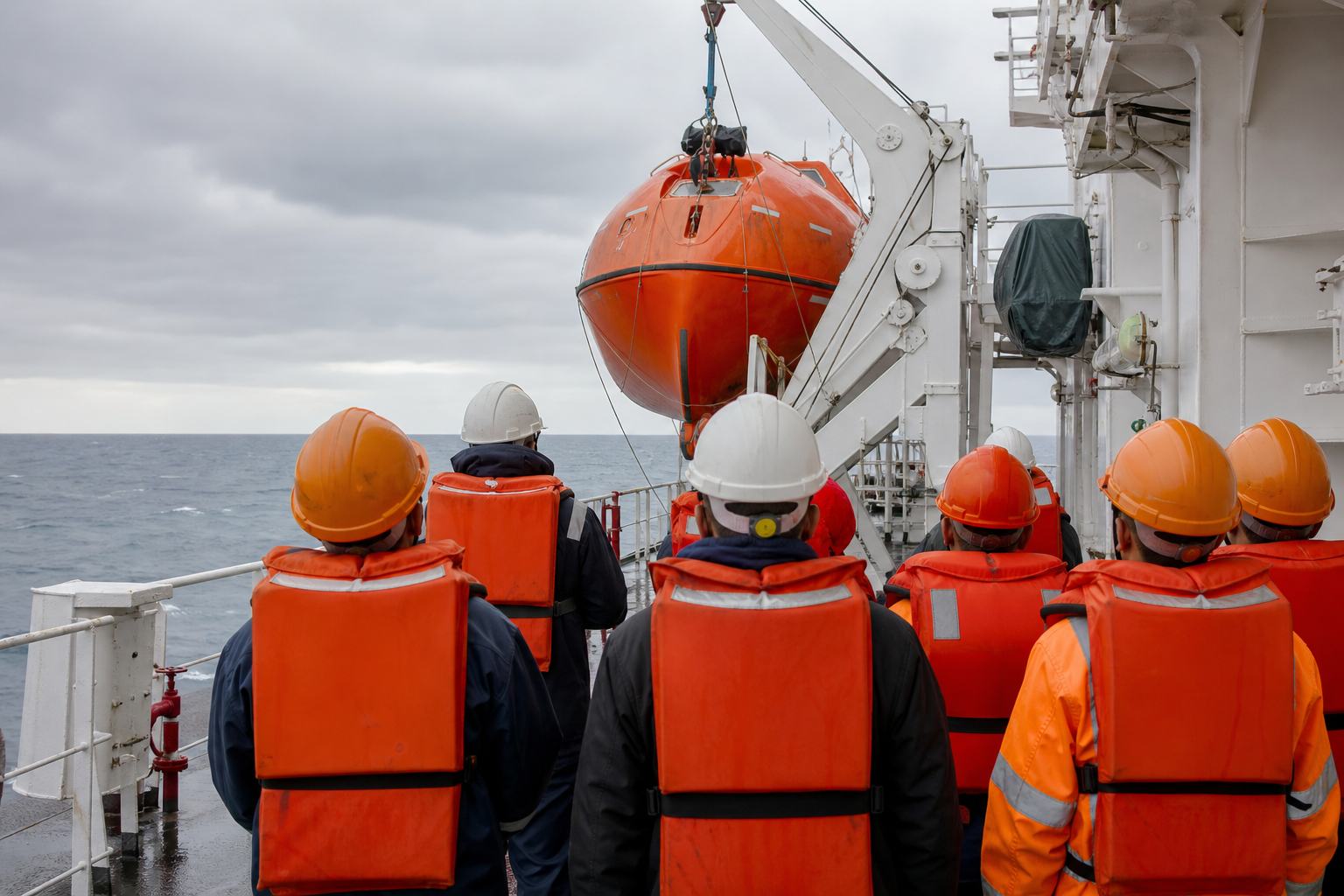
Under Article 94, the flag state must really control its ships: how they are built and equipped, whether they are fit for sea, who crews them, their working conditions and their training.
On paper, the flag is a promise that someone checks.
The register Article 94 obliges every flag state to keep a register of the ships flying its flag. AI-generated illustration.
construction, equipment and seaworthiness
manning, labour conditions and training
signals and the prevention of collisions
Article 94: the flag state ensures…A safety drill Lifeboat drills and crew training are among the duties a flag state oversees. AI-generated illustration.
Chapter I · A nation for every ship
Flag state duties
UNCLOS Article 94: every state shall effectively exercise its jurisdiction and control in administrative, technical and social matters over ships flying its flag. It maintains a register of ships and takes measures for construction, equipment and seaworthiness; manning, labour conditions and training of crews; and the use of signals and the prevention of collisions.
The 3D scenes are simplified teaching models: the ship, the globe markers and the flags are schematic, not real vessels or exact positions.
In August 1919, a ship called the Belen Quezada became the first foreign-owned ship known to switch to Panama’s flag.
It carried alcohol between Canada and the United States, where Prohibition had begun. Under Panama’s flag, it was no longer an American ship.
At the same time, American laws from 1915 to 1922, such as the Seamen’s Act, made ships under the US flag more expensive to run. Another country’s flag could be cheaper.
Prohibition cargo Wartime prohibition began in July 1919; national Prohibition ran from 1920 to 1933. AI-generated illustration.
1915 Seamen’s Act
1915–1922 US laws raise the cost of US-flag ships
Aug 1919 Belen Quezada moves to Panama’s flag
Leaving the US flag
Chapter II · Flags for hire
The first flag for hire
Wikipedia (citing DeSombre 2006): the first foreign ship moved to Panama’s registry was the Belen Quezada, in August 1919, used to carry alcohol between Canada and the United States during Prohibition. US laws of 1915–1922, including the Seamen’s Act of 1915, made US-flagged ships more expensive to operate. Wikipedia (Prohibition in the United States): wartime prohibition took effect in July 1919, and national Prohibition lasted from 1920 to 1933.
The 3D scenes are simplified teaching models: the ship, the globe markers and the flags are schematic, not real vessels or exact positions.
After the Second World War, according to a 1980 history of Liberia’s flag, owners grew unhappy with Panama, where officials were demanding improper payments.
A company formed by Edward Stettinius, a former US Secretary of State, offered a new flag: Liberia’s. Its registry began in 1948.
Its first ship, World Peace, was registered in March 1949 for the shipowner Stavros Niarchos. By 1968, Liberia had overtaken Britain as the largest register in the world.
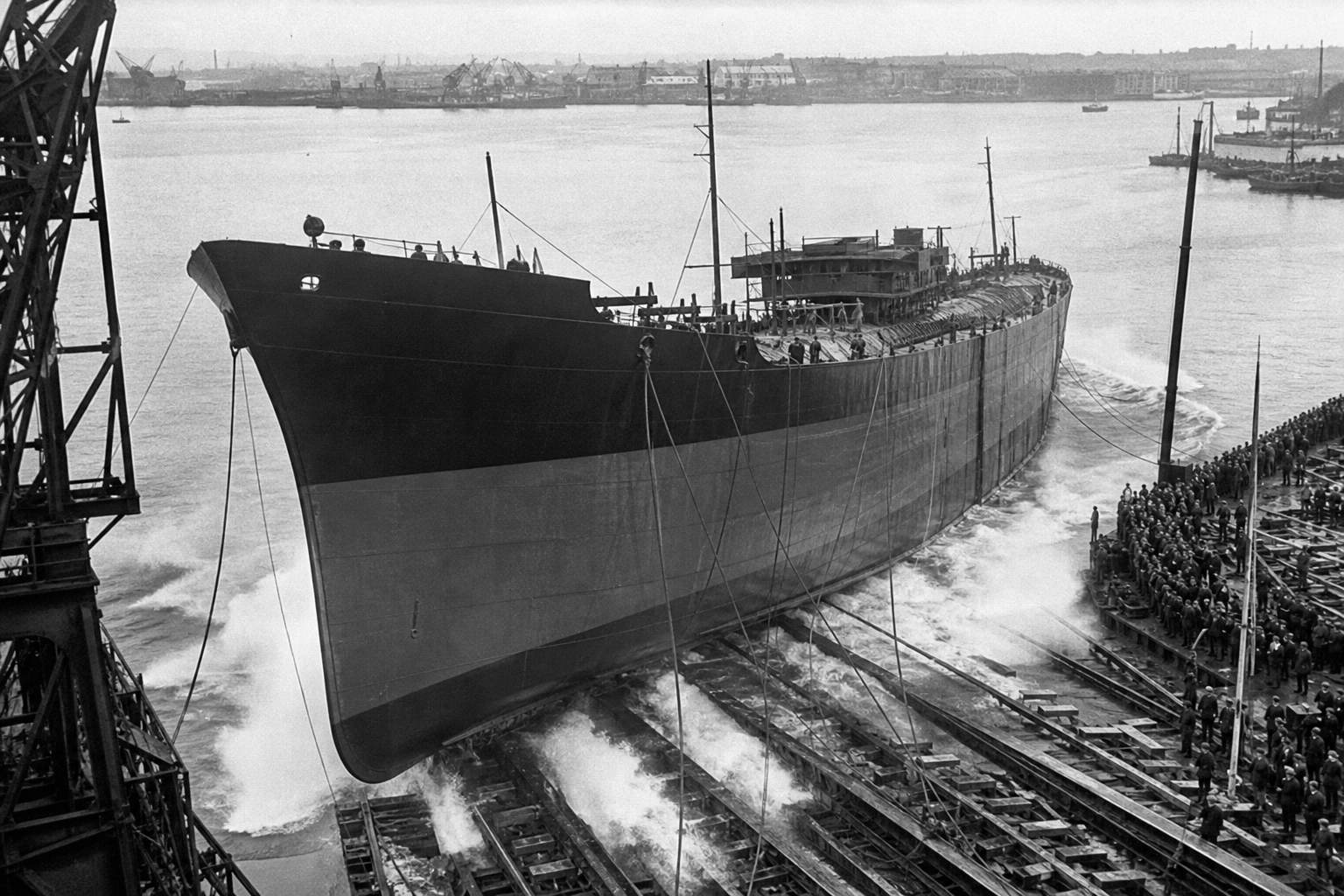
The post-war boom New tankers were launched by the hundred after the war. AI-generated illustration.
1948
registry set up under President William Tubman
Liberia, 1948 (GlobalSecurity)
1919 first foreign ship to Panama’s flag
1948 Liberia’s registry opens
11 Mar 1949 first ship: World Peace
1968 passes the UK as largest register
From Panama to Liberia
Chapter II · Flags for hire
Liberia
Carlisle (Business History Review, 1980): by the end of the Second World War, Panamanian officials were demanding improper payments; Liberia’s flag became the replacement, offered through a development company formed by former US Secretary of State Edward R. Stettinius Jr in the late 1940s. GlobalSecurity: the registry began in 1948 under President Tubman; the first ship, World Peace, was registered on 11 March 1949, owned by interests controlled by Stavros Niarchos. Wikipedia: Liberia passed the UK as the largest register in 1968.
The 3D scenes are simplified teaching models: the ship, the globe markers and the flags are schematic, not real vessels or exact positions.
Today the three biggest flags at sea are those of Liberia, Panama and the Marshall Islands.
Measured by how much cargo the ships can carry, they held almost half the world fleet at the start of 2025, according to the UN trade agency UNCTAD.
The biggest owners are elsewhere: China, Greece and Japan.
Press the buttons to move a ship between registries: its owner and crew stay the same. Only the flag changes.
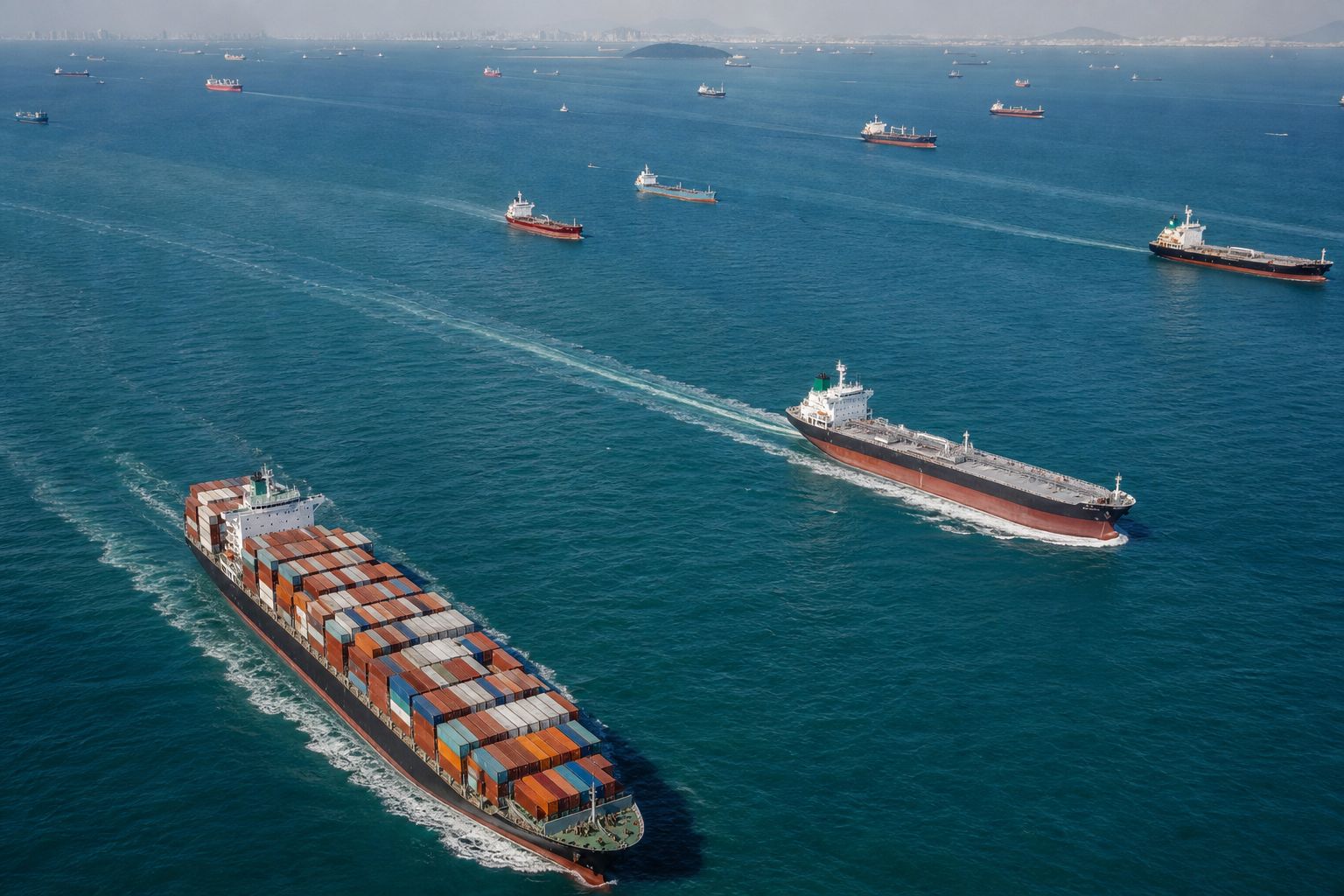
A busy sea lane The top ten flags together carry 76.7% of the world’s capacity. AI-generated illustration.
Liberia
17.4%
Panama
15.2%
Marshall Islands
12.5%
Share of world deadweight tonnage, 1 Jan 2025 (UNCTAD)
20.2%
China, including Hong Kong
16.4%
Greece
9.9%
Japan
Who owns the ships (UNCTAD, 2025)
Chapter III · Who flags the world
The biggest registries
UNCTAD, via IAPH World Ports: share of world deadweight tonnage on 1 January 2025 — Liberia 17.4%, Panama 15.2%, Marshall Islands 12.5%; the top three hold 46.5% and the top ten 76.7%. By owner nationality: China (including Hong Kong) 20.2%, Greece 16.4%, Japan 9.9%. Deadweight tonnage measures how much a ship can carry. The re-flagging demo is simplified: in reality a change of registry also means new papers and a new flag-state authority.
The 3D scenes are simplified teaching models: the ship, the globe markers and the flags are schematic, not real vessels or exact positions.
This is lawful: the law of the sea lets each country set its own conditions. But the International Transport Workers’ Federation, a global union, calls these flags of convenience: a ship flying the flag of a country other than its owner’s.
In the union’s view, owners get cheap registration, low taxes and freedom to hire cheaper crews, which drives down seafarers’ pay. Others prefer the neutral term open registry.
Either way, foreign flags are now normal. Thailand has a merchant fleet of its own: about eight hundred and forty ships flew the Thai flag in 2020.
The crew The ITF has campaigned against flags of convenience for more than seven decades. AI-generated illustration.
~36%
of the world fleet they control
16%
sails under European flags
European owners (ISL)
48
registries it declared flags of convenience in 2025 (42 in March 2024)
By the ITF’s count
~70%
of the world fleet foreign-flagged (UNCTAD data to 2021)
UNCLOS Article 91 leaves the conditions for granting nationality to each state. ITF: a flag of convenience ship is one that flies the flag of a country other than the country of ownership; in the ITF’s view this brings cheap registration fees, low or no taxes and freedom to employ cheap labour, and drives down wages and conditions. The ITF declared 48 FOC registries in 2025; the Nautilus Federation gives 42 in March 2024 and says the campaign has run for more than seven decades. Wikipedia: such registries are also called open registries. ISL: European owners control about 36% of the fleet but only 16% sails under European flags.
The Geography of Transport Systems, using UNCTAD data: about 70% of the world fleet is foreign-flagged. IndexMundi (CIA World Factbook data): Thailand’s merchant marine in 2020 was 840 ships, including 257 oil tankers.
The 3D scenes are simplified teaching models: the ship, the globe markers and the flags are schematic, not real vessels or exact positions.
So how would anyone spot a fake flag? There are three tools. The first: a flag state may be far away, so the countries where ships call check them too. This is called port state control.
In Europe, fourteen countries set up the Paris Memorandum in 1982. Asia and the Pacific followed with the Tokyo Memorandum, in force from 1994.
When inspectors find serious faults, they can detain the ship until they are fixed. And papers that cannot be verified are one of the warning signs US officials list for a false flag.
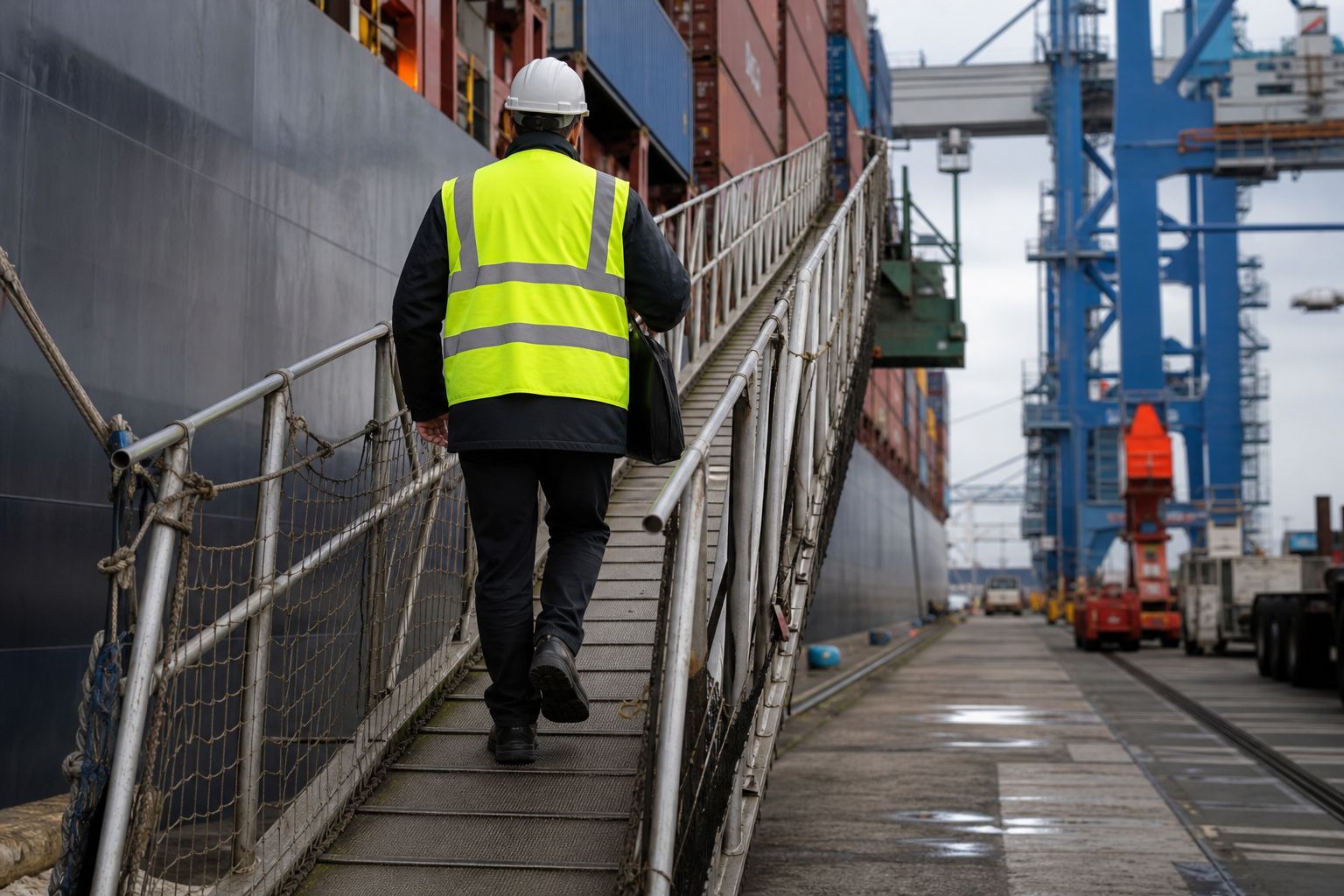
Up the gangway Inspectors board foreign ships in their own ports. AI-generated illustration.
27
member countries of the Paris MoU today
22
member authorities of the Tokyo MOU (signed 1 Dec 1993)
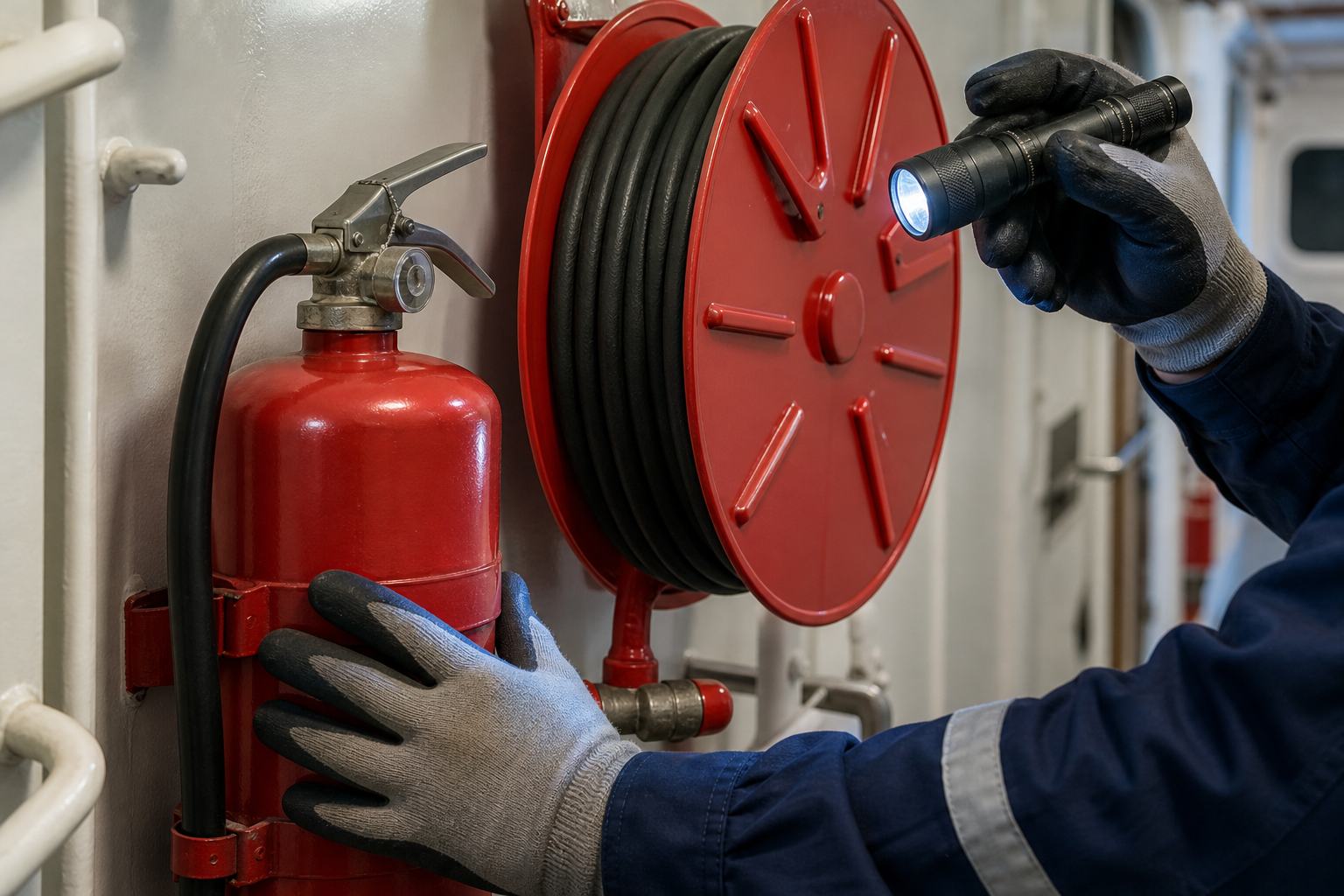
Two regional agreementsFire safety Equipment is one of the things Article 94 makes the flag state answer for. AI-generated illustration.
4.18%
of inspections ended in detention (4.03% in 2024)
19
ships banned from its ports
Paris MoU, 2025
Chapter IV · Checking at the dock
Port state control
Paris MoU: founded in 1982 by 14 European countries, now 27 member countries; the detention rate was 4.18% of inspections in 2025 (4.03% in 2024), and 19 port bans were issued in 2025. Tokyo MOU: the Asia-Pacific memorandum was signed on 1 December 1993 and came into force on 1 April 1994; it has 22 member authorities and 17 observers. OFAC lists documents that cannot be verified among its red flags for a false flag.
The 3D scenes are simplified teaching models: the ship, the globe markers and the flags are schematic, not real vessels or exact positions.
The Paris group also ranks the flags themselves, by their ships’ inspections and detentions over the past three years.
Flags with good records go on a white list, middling ones on a grey list, poor ones on a black list.
A fake flag has no record at all, and an unknown flag is itself a warning sign.
a rolling three-year record
flags ranked white, grey or black
How the list works (Paris MoU)
30
inspections at least, over the three years
To be rankedHeld in port OFAC’s warning signs include “no flag or an unknown flag” in maritime databases. AI-generated illustration.
Chapter IV · Checking at the dock
White, grey and black
Paris MoU: the White, Grey and Black list ranks flag states by the inspection and detention record of their ships over a rolling three-year period; a flag needs at least 30 inspections in that period to be included. OFAC: a flag that is missing or unknown in maritime databases is a red flag for a false flag. The flags in the 3D scene are made up.
The 3D scenes are simplified teaching models: the ship, the globe markers and the flags are schematic, not real vessels or exact positions.
The second tool: what stays when everything else changes.
The second tool is a number. Names and flags can change, so every big ship also gets a permanent identity from the International Maritime Organization, the UN body for shipping: an IMO number.
Created in 1987 and compulsory since 1996, it is the letters IMO and seven digits; the last digit checks the others.
Whoever owns it, whatever its name or flag, the number stays with the ship for life. Rename this ship, and see. That is why US sanctions list tankers by their IMO numbers.
Steel and paint A hull can be repainted many times over its working life. AI-generated illustration.A new name A tanker the US seized in April 2026, now MAJESTIC X, once sailed as PHONIX; Treasury lists one IMO number for it. AI-generated illustration.9×7+2×6+3×5+1×4+9×3+0×2=121
1
the last digit of 121 is the check digit: IMO 9231901
The check digit (one of the sanctioned tankers) Weights 7 down to 2 on the first six digits; the sum’s last digit must equal the seventh.
Chapter V · An identity at sea
The IMO number
Wikipedia (IMO number): introduced in 1987 by IMO Resolution A.600(15) and made mandatory by SOLAS regulation XI-1/3 from 1 January 1996; it is “IMO” followed by seven digits, the last a check digit, and stays with the ship for life regardless of owner, flag or name. The check digit: multiply the first six digits by 7, 6, 5, 4, 3 and 2, add them up, and the last digit of the sum is the seventh digit. US Treasury: MAJESTIC X, formerly PHONIX (IMO 9198317), was seized by US forces on 22 April 2026 while flying a false Guyana flag; PING SHUN is IMO 9231901. Treasury lists designated vessels by IMO number.
The 3D scenes are simplified teaching models: the ship, the globe markers and the flags are schematic, not real vessels or exact positions.
The third tool is a radio voice: the Automatic Identification System, or AIS. It broadcasts who a ship is, where it is, its course and its speed.
By the end of 2004, ships of three hundred gross tonnage or more on international voyages had to carry it.
Its radio identity number, the MMSI, begins with digits for the flag country. To US sanctions officials, a ship whose code does not match the flag it claims is a red flag.
But a transponder can be switched off. A ship that goes dark vanishes from the map.
On the bridge AIS targets appear beside radar echoes on a ship’s screens. AI-generated illustration.
300 gross tonnage and over, international voyages
cargo ships of 500 gross tonnage and over, domestic voyages
all passenger ships
Who must carry AIS (SOLAS V/19)
no flag, or an unknown flag, in maritime databases
an MMSI country prefix that does not match the flag
a country with no known ship registry
documents that cannot be verified
OFAC red flags for a false flag
AIS off
one of the traits of shadow fleets listed by MarineLink, with hidden owners and little insurance
Going dark
Chapter V · An identity at sea
AIS
Steamship Mutual: under SOLAS regulation V/19, AIS is required on ships of 300 gross tonnage and upwards on international voyages, cargo ships of 500 gross tonnage and upwards on domestic voyages, and all passenger ships; older cargo ships had to fit it by 31 December 2004 at the latest. AIS broadcasts identity, type, position, course, speed and navigational status. Gross tonnage is an index of a ship’s size (its enclosed volume), not its weight. OFAC’s red flags for false flags include an MMSI (the radio identity number) whose country prefix does not match the stated flag.
The 3D scenes are simplified teaching models: the ship, the globe markers and the flags are schematic, not real vessels or exact positions.
A false flag, as US sanctions officials define it, comes from a registry the country never authorised, or is claimed with no papers behind it.
The IMO’s database listed one hundred and ten falsely flagged ships in March 2023, and two hundred and twenty-three by January 2025, mostly tankers and cargo ships.
Seventeen ships were found broadcasting the details of Botswana, a landlocked country with no ship registry at all.
In April 2026, the IMO approved its first international guidelines on ship registration.
Running dark Falsely flagged ships carry no valid P&I insurance, the US Treasury says. AI-generated illustration.
Mar 2023 (IMO database)
110
Jan 2025 (IMO database)
223
identified by IMO before its April 2026 legal committee
529
Ships listed as falsely flagged
Far from the sea Botswana is landlocked, in southern Africa (Britannica). Counts differ by source and date. AI-generated illustration.
~40
member states whose flags were used without their knowledge
IMO Legal Committee, April 2026
Chapter VI · False flags
False flags
OFAC: a false flag is (1) a flag issued by a fraudulent registry the country has not authorised, or (2) a flag a vessel claims without supporting registration documents. Lloyd’s List: ships listed as falsely flagged in the IMO’s GISIS database rose from 110 in March 2023 to 223 on 9 January 2025, mostly tankers and general cargo ships. Marine Insight: 529 false-flagged ships were identified ahead of the IMO Legal Committee’s 113th session (LEG 113, 13–17 April 2026), 356 with no classification society; 17 ships were broadcasting Botswana’s details although it runs no registry. Britannica: Botswana is a landlocked country of southern Africa. Hellenic Shipping News: LEG 113 approved the first international guidelines on ship registration; nearly 40 member states had their flags used fraudulently without their knowledge. Counts differ by source and method.
The 3D scenes are simplified teaching models: the ship, the globe markers and the flags are schematic, not real vessels or exact positions.
According to the US Treasury, the network it sanctioned offered registration in the names of countries including Guyana, Mali, Malawi and Eswatini. The State Department says most of those governments have disowned them.
Such ships, Treasury adds, carry no valid protection and indemnity insurance, the cover that pays for damage a ship does to others.
In 2025, Iran called earlier US sanctions on such tankers economic terrorism.
A registry online Treasury says the network registered web domains and built sites for registries it was never authorised to run. AI-generated illustration.
kept flagging
ships even after Eswatini disavowed the registry
Eswatini (US Treasury)
“economic terrorism”Iran’s foreign ministry spokesman Esmail Baghaei, on earlier US shadow-fleet sanctions, August 2025
Chapter VI · False flags
The impersonated registries
US Treasury: the network impersonated the registries of Dominica (attempted from 2014), Aruba, Guyana, Mali, Mozambique, Malawi, Sint Maarten, Timor-Leste, Nicaragua, Laos (closed after press coverage) and Eswatini (it kept flagging ships after Eswatini disavowed it); falsely flagged vessels carry no valid protection and indemnity insurance. The State Department says most of these governments have publicly disavowed the fraudulent registries.
Iran’s position: in August 2025 foreign ministry spokesman Esmail Baghaei called earlier US sanctions on the shadow fleet “economic terrorism” in breach of international law (Asharq Al-Awsat). No Iranian response to the November 2026 action was found in the sources used.
The 3D scenes are simplified teaching models: the ship, the globe markers and the flags are schematic, not real vessels or exact positions.
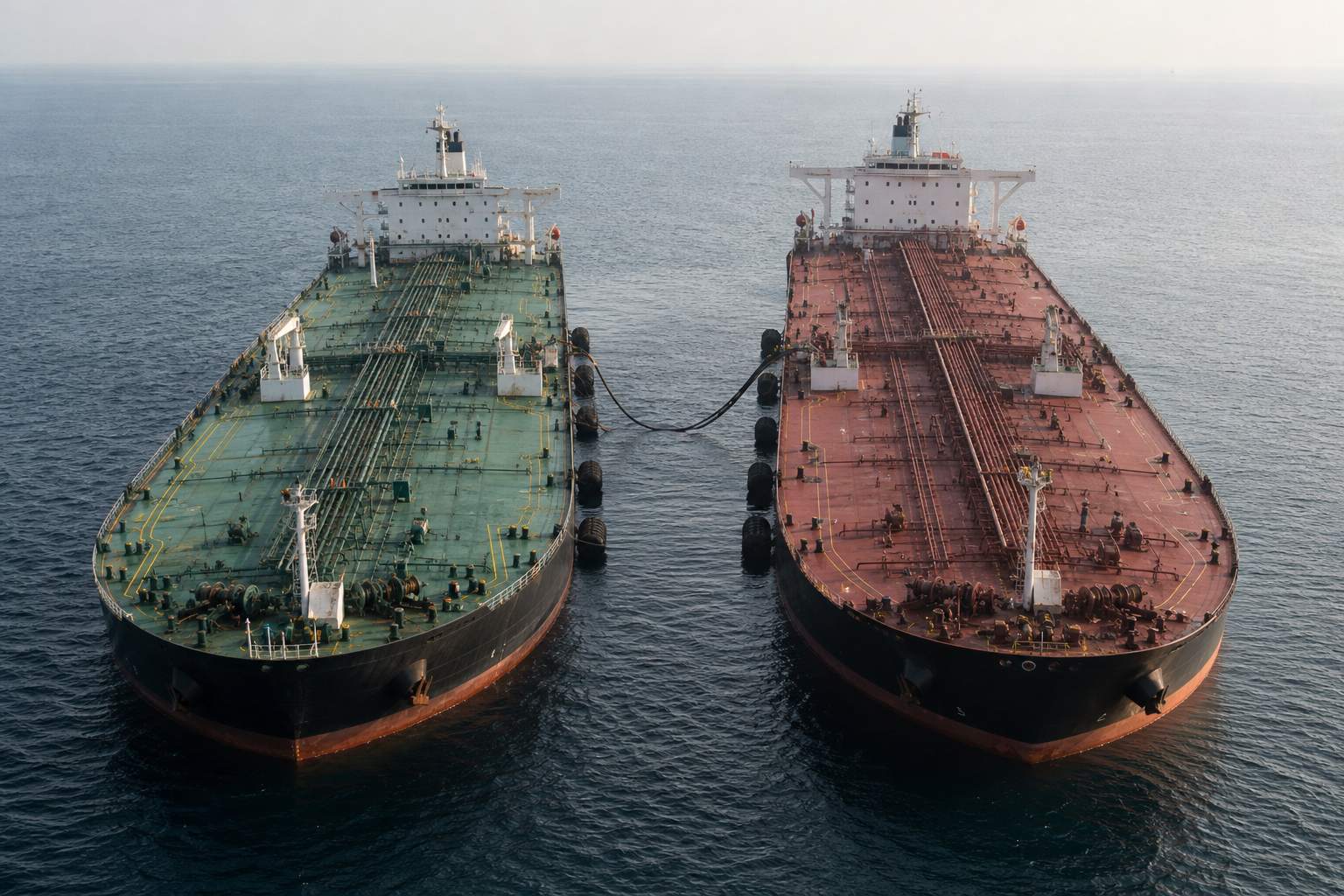
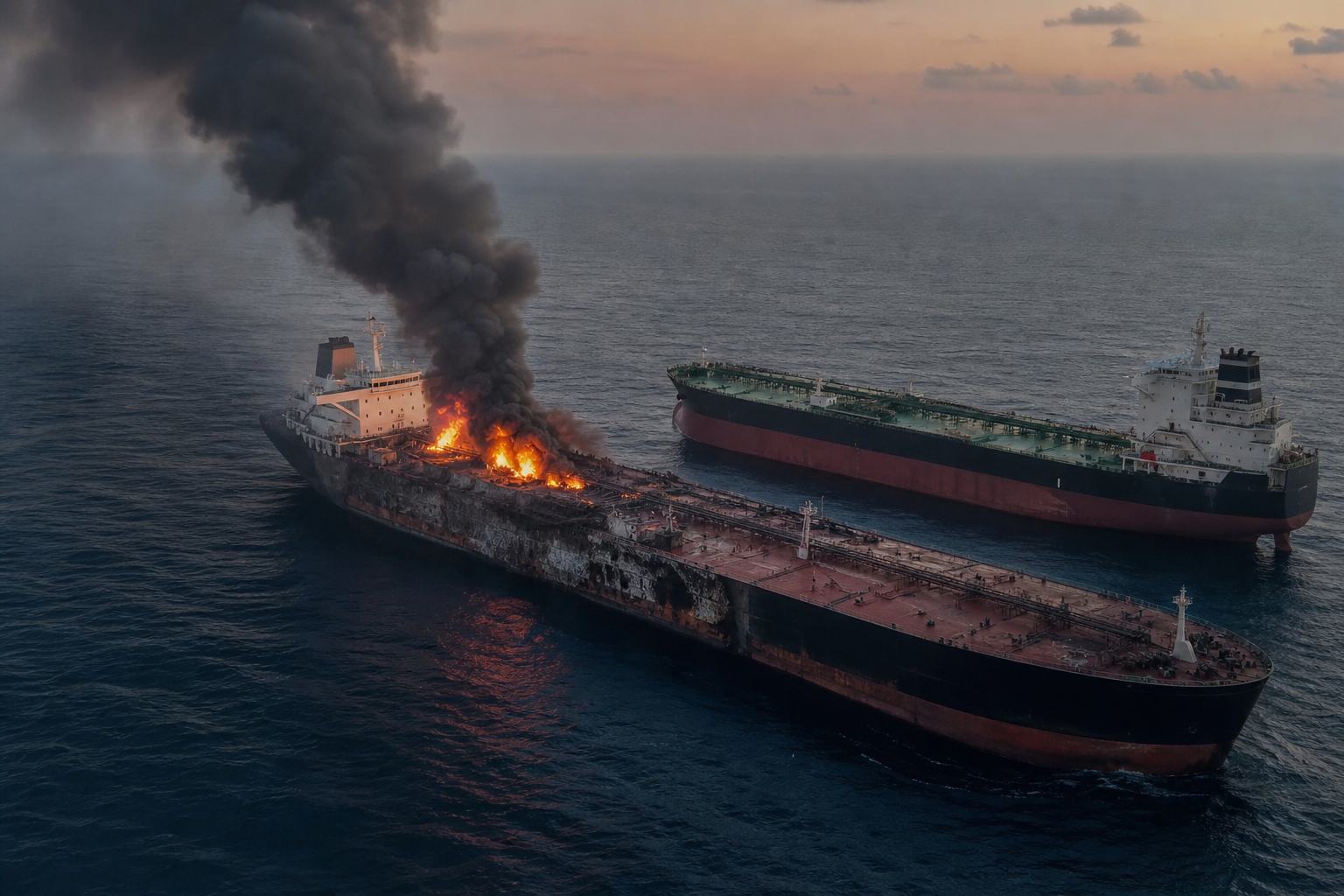
Tankers like these are often called a shadow fleet: ships that move sanctioned oil while hiding who owns them, often with little insurance and their AIS switched off.
The worry is wider than Iran. Analysts put the shadow fleet carrying Russian oil at four to six hundred tankers in 2025, most of them over fifteen years old.
In July 2024, off Malaysia, a tanker collided with a supertanker that MarineLink counts in these hidden fleets. Both caught fire.
Ship to ship Risky transfers of cargo between ships at sea are another shadow-fleet trait, says MarineLink. AI-generated illustration.
~435–591
tankers (Kyiv School of Economics; S&P Global)
72%
over 15 years old (CREA)
Russia’s shadow fleet, June 2025 (MarineLink)Fire at sea CREA puts the cost of a major spill clean-up at up to $1.6 billion. AI-generated illustration.
Chapter VI · False flags
Shadow fleets
MarineLink (June 2025): S&P Global counts about 591 shadow tankers carrying Russian oil and the Kyiv School of Economics about 435, roughly 17% of the world’s tankers; CREA says 72% are over 15 years old and puts a spill clean-up at up to $1.6 billion. Traits: little or no insurance, flags of convenience, hidden owners, AIS switched off and risky ship-to-ship transfers. In July 2024 the tanker Hafnia Nile collided with the supertanker Ceres I off Malaysia, which MarineLink describes as part of the dark fleet, and both caught fire. The Russian figures are about Russia’s shadow fleet, not Iran’s.
The 3D scenes are simplified teaching models: the ship, the globe markers and the flags are schematic, not real vessels or exact positions.
Every ship at sea is meant to belong to a country that checks it, its crew and its papers, wherever it goes.
Open registries made that tie cheaper to get. False registries sell it with no country behind it at all.
So when you next see a ship passing, ask not only where it is going, but who answers for it, if anyone does.
1919 first foreign ship to Panama’s flag
1948 Liberia’s registry opens
1982 UNCLOS; the Paris MoU
1996 IMO numbers compulsory
2004 AIS required
2026 IMO registration guidelines; US sanctions on false registries
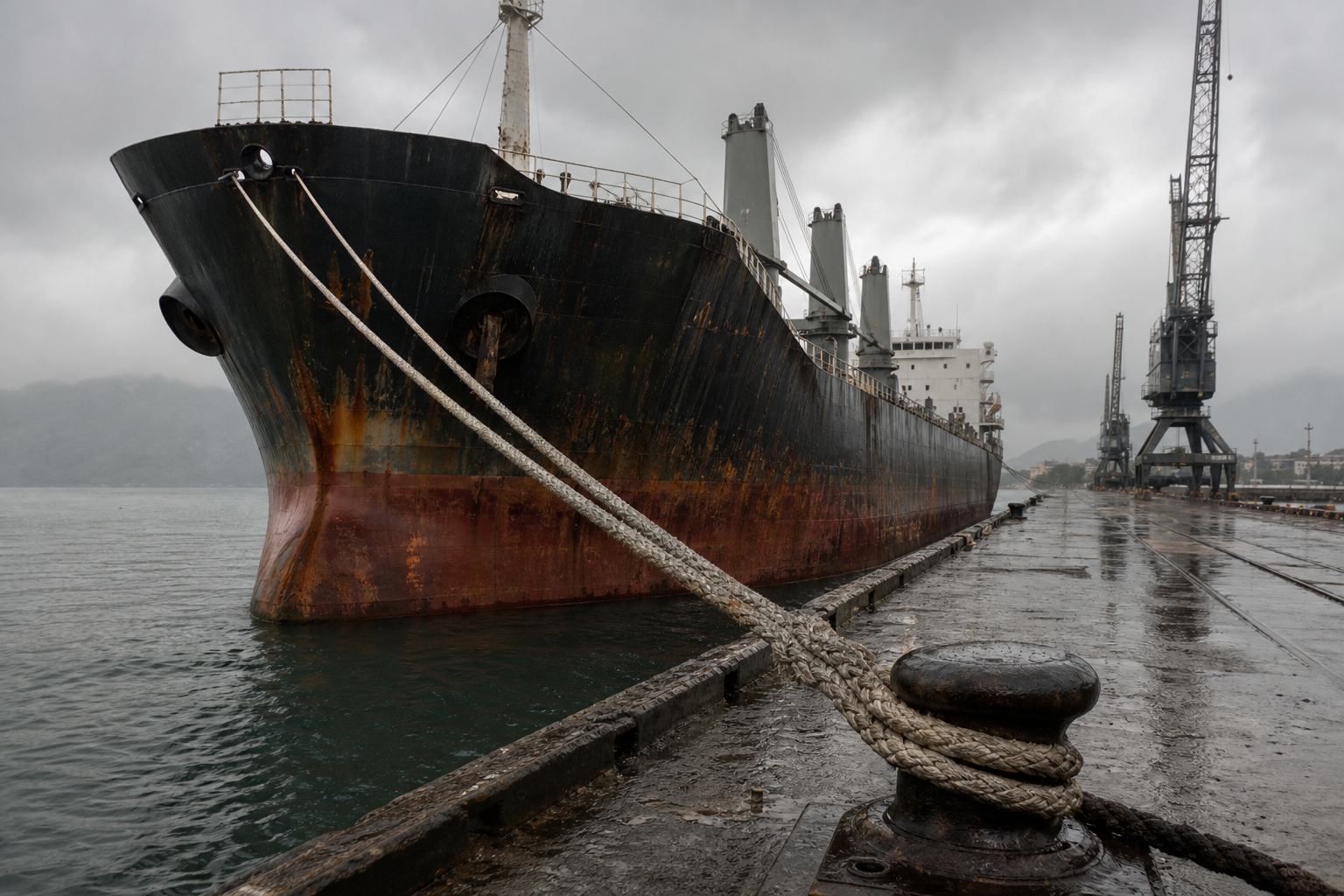
Ship flags: a timelineAt anchor Every ship in a harbour like this needs a flag, a registry and an IMO number. AI-generated illustration.An empty flagstaff Under UNCLOS, a ship without a valid nationality has no flag state to answer for it. AI-generated illustration.
Epilogue · Sources
Sources
Every fact in this film comes from the sources below. The sanctions and the accusations behind them are given as the US government’s account; Iran’s position is quoted with its date; the ITF’s criticism of flags of convenience is its own view. Shadow-fleet figures are about Russia’s fleet. Fleet shares change every year and are given with their date. The chapter stills and pictures are AI-generated illustrations and show no real ships or people. The globe, ship and flags in the 3D scenes are schematic.