Technology
Coming home backwards
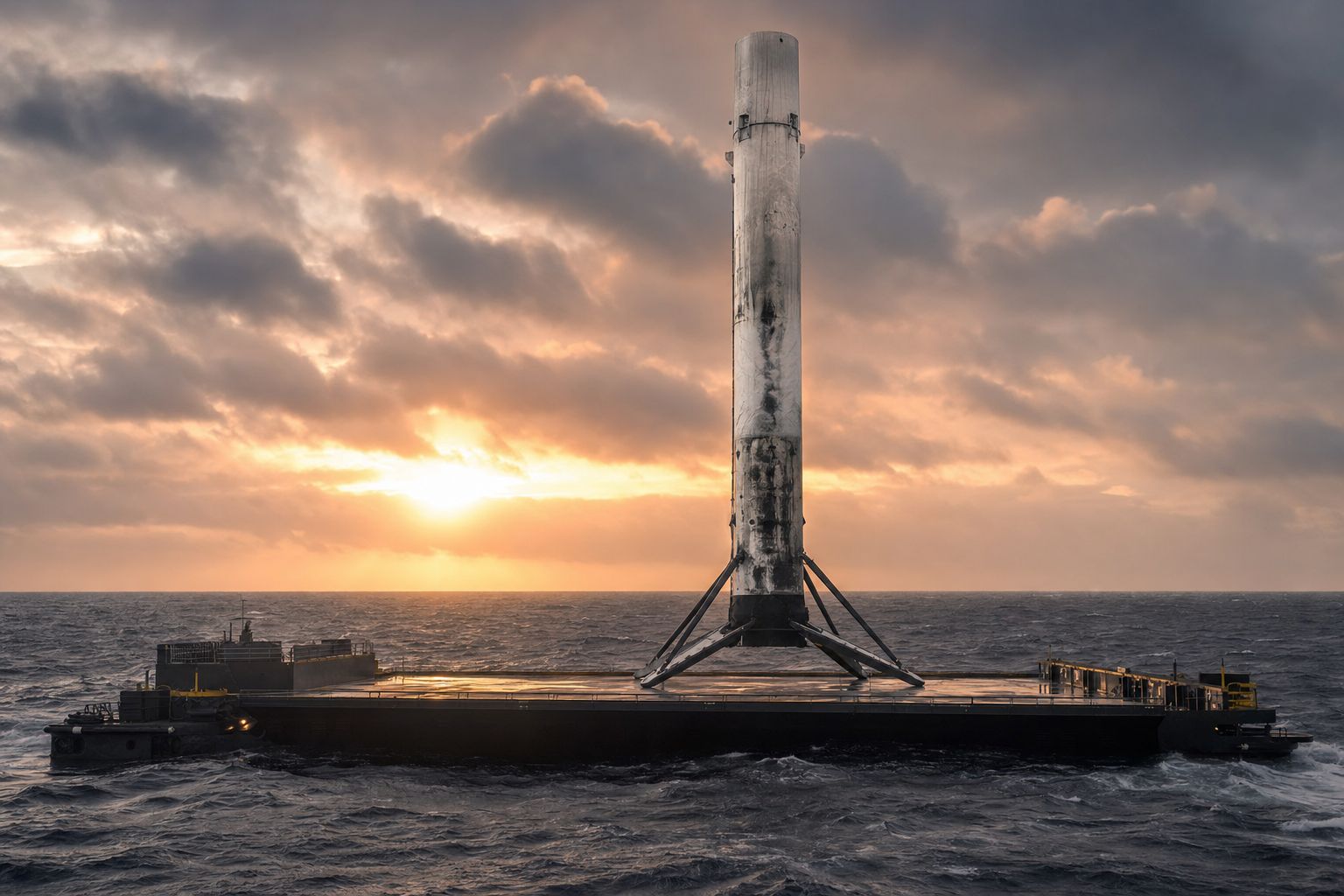
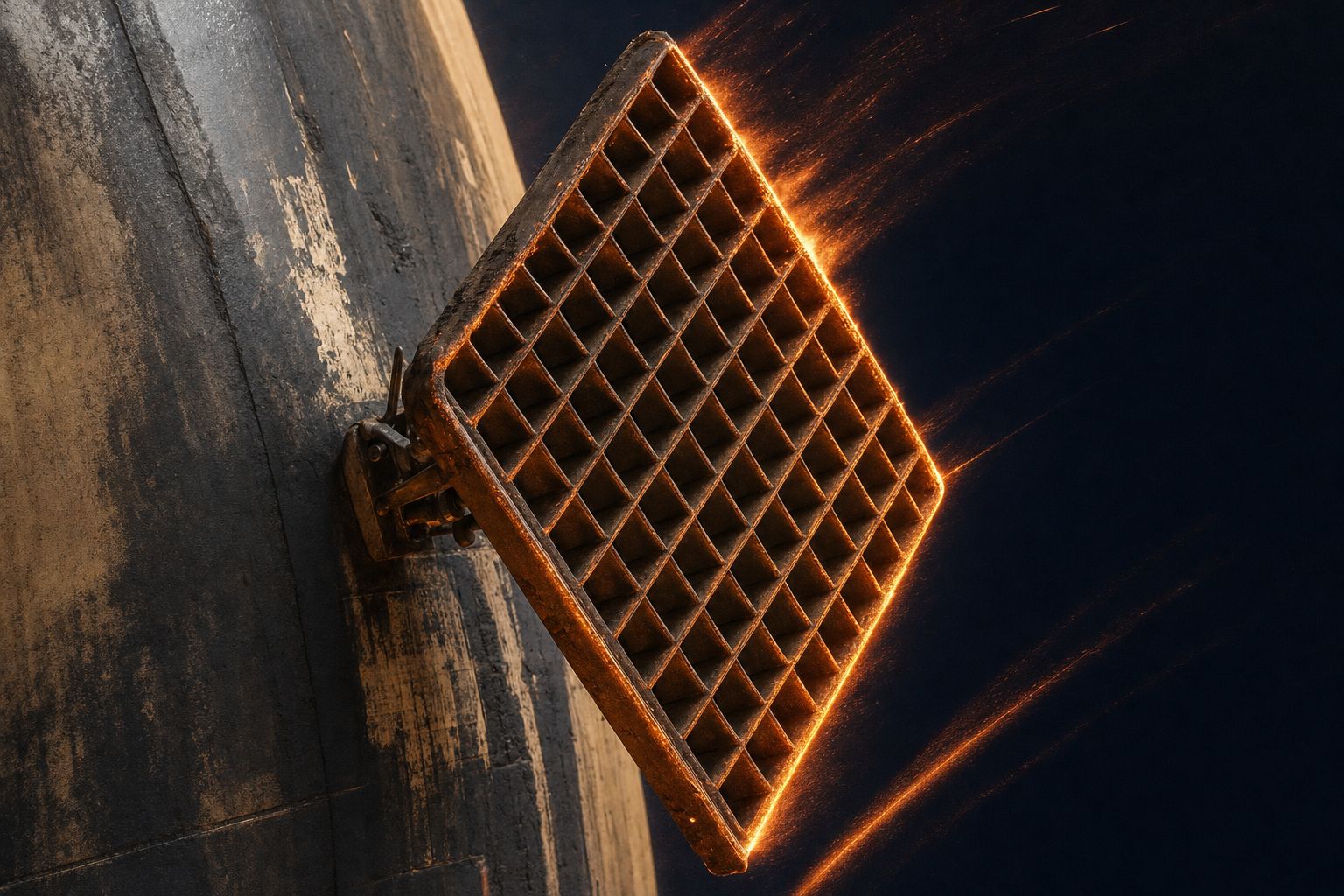
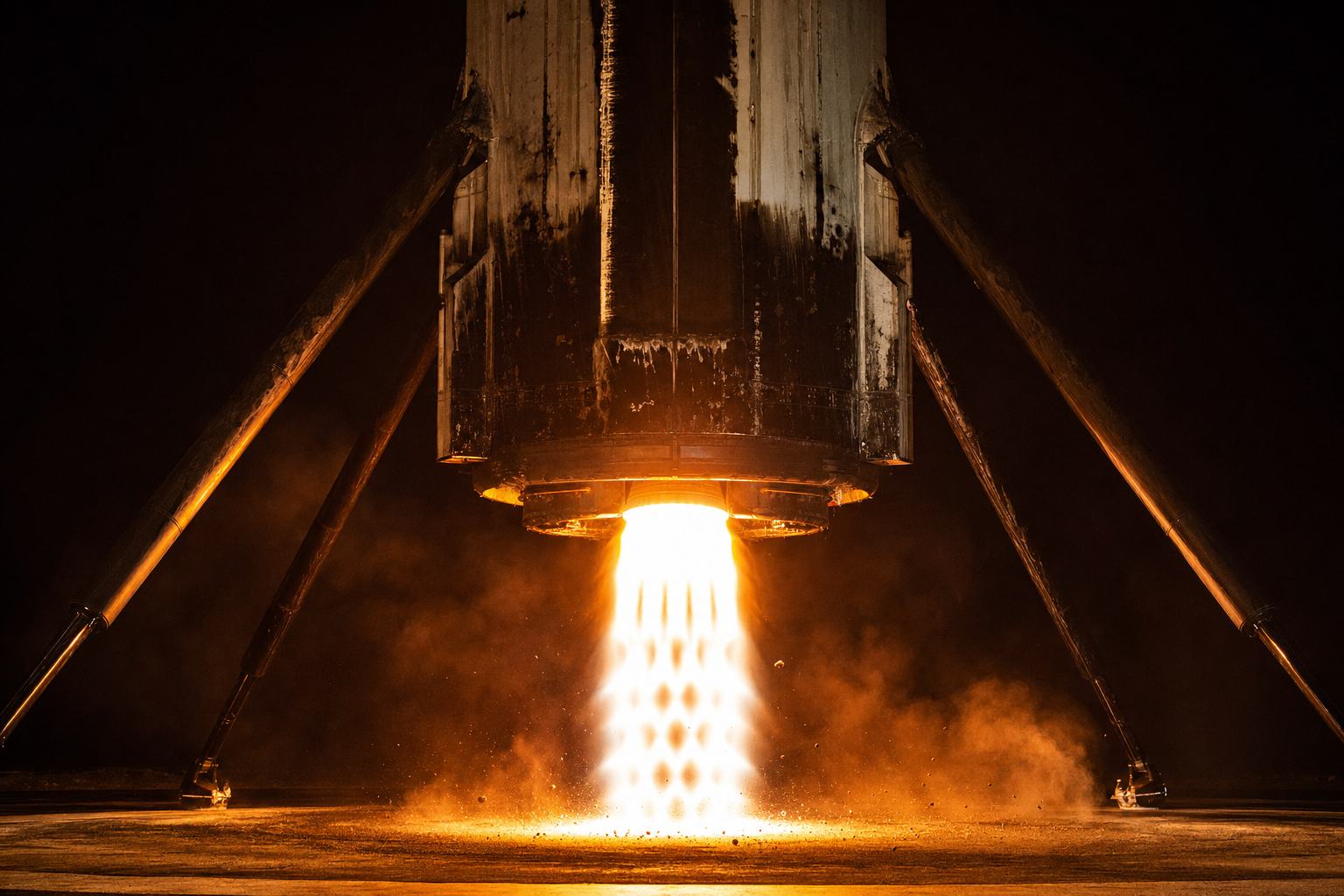
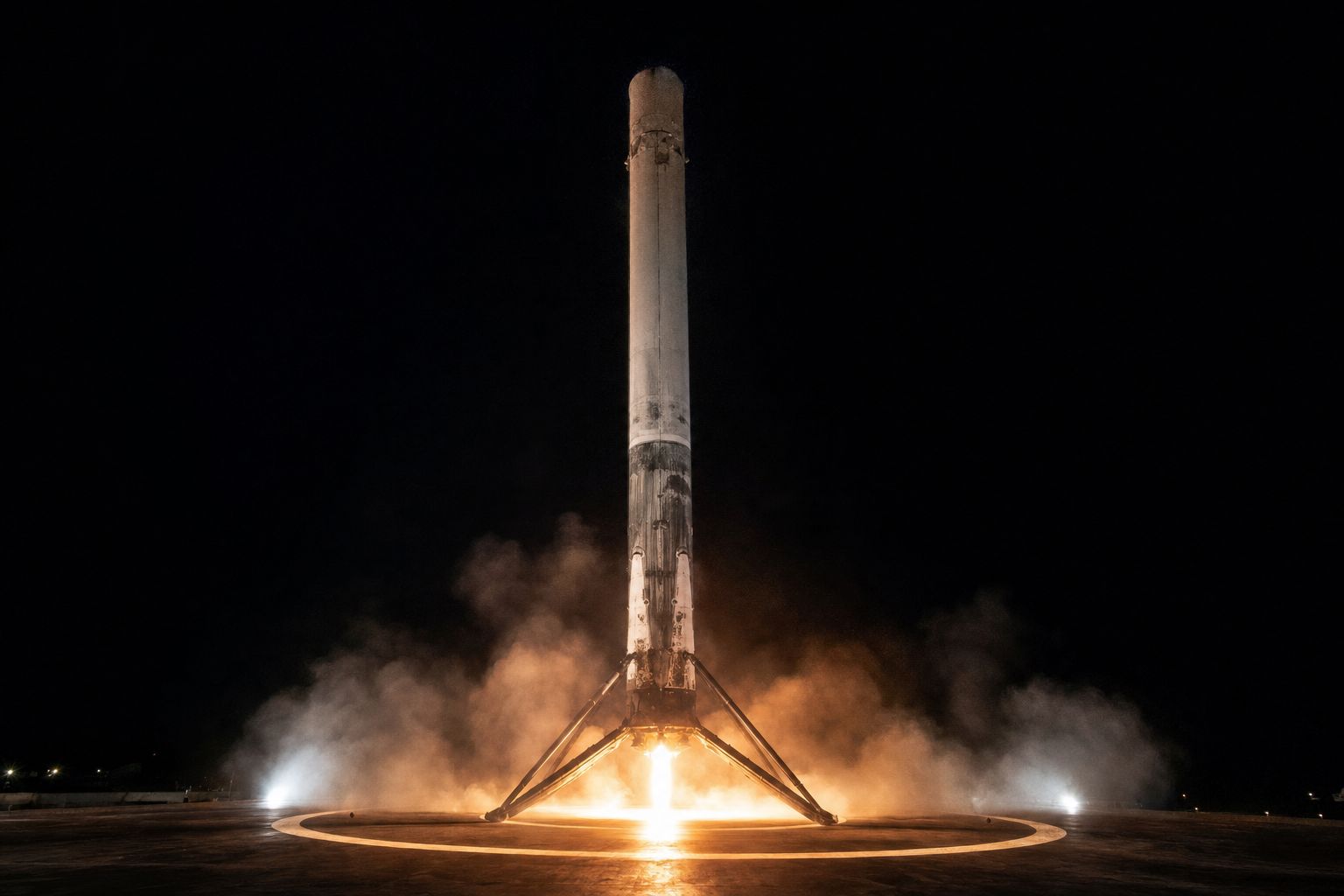
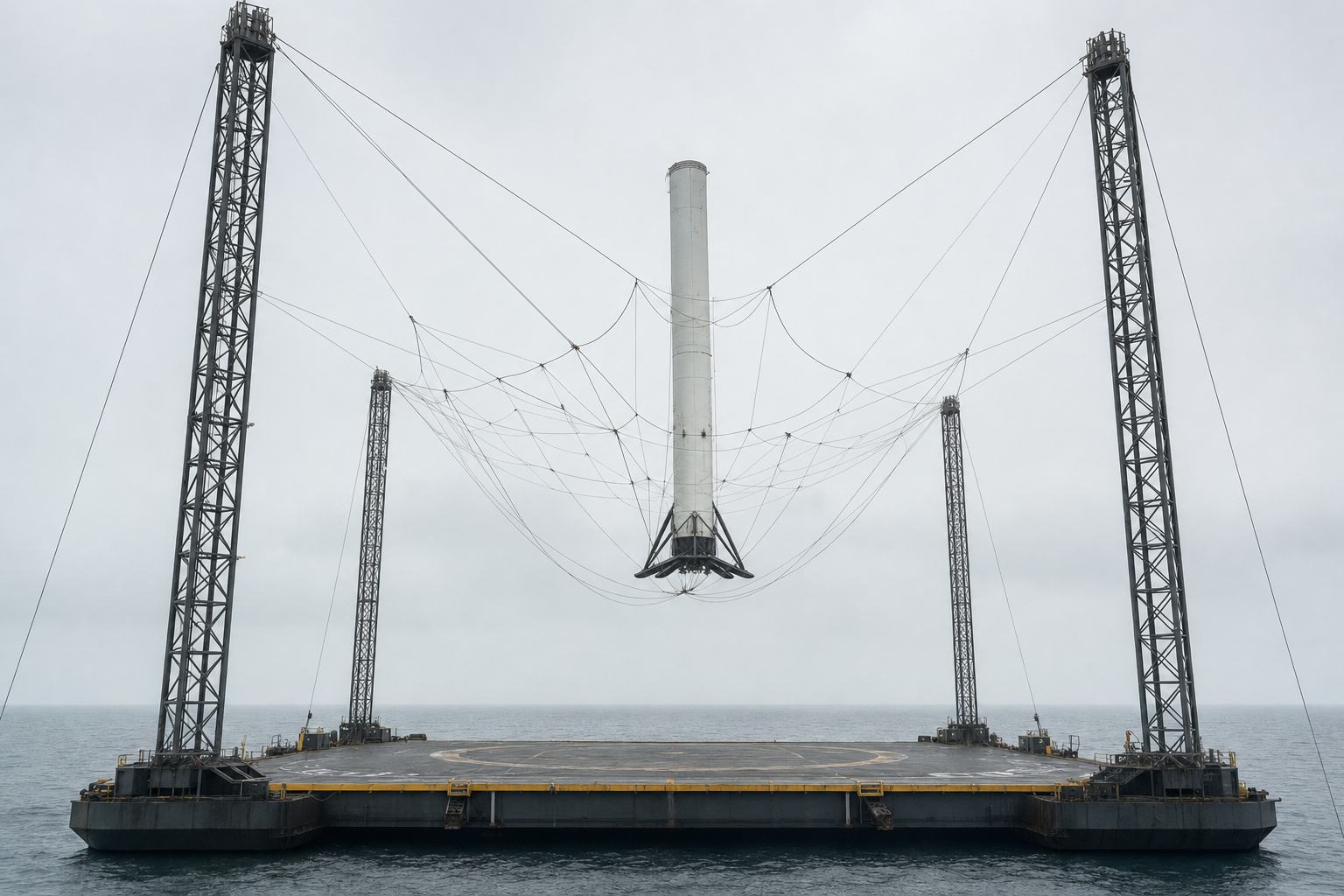
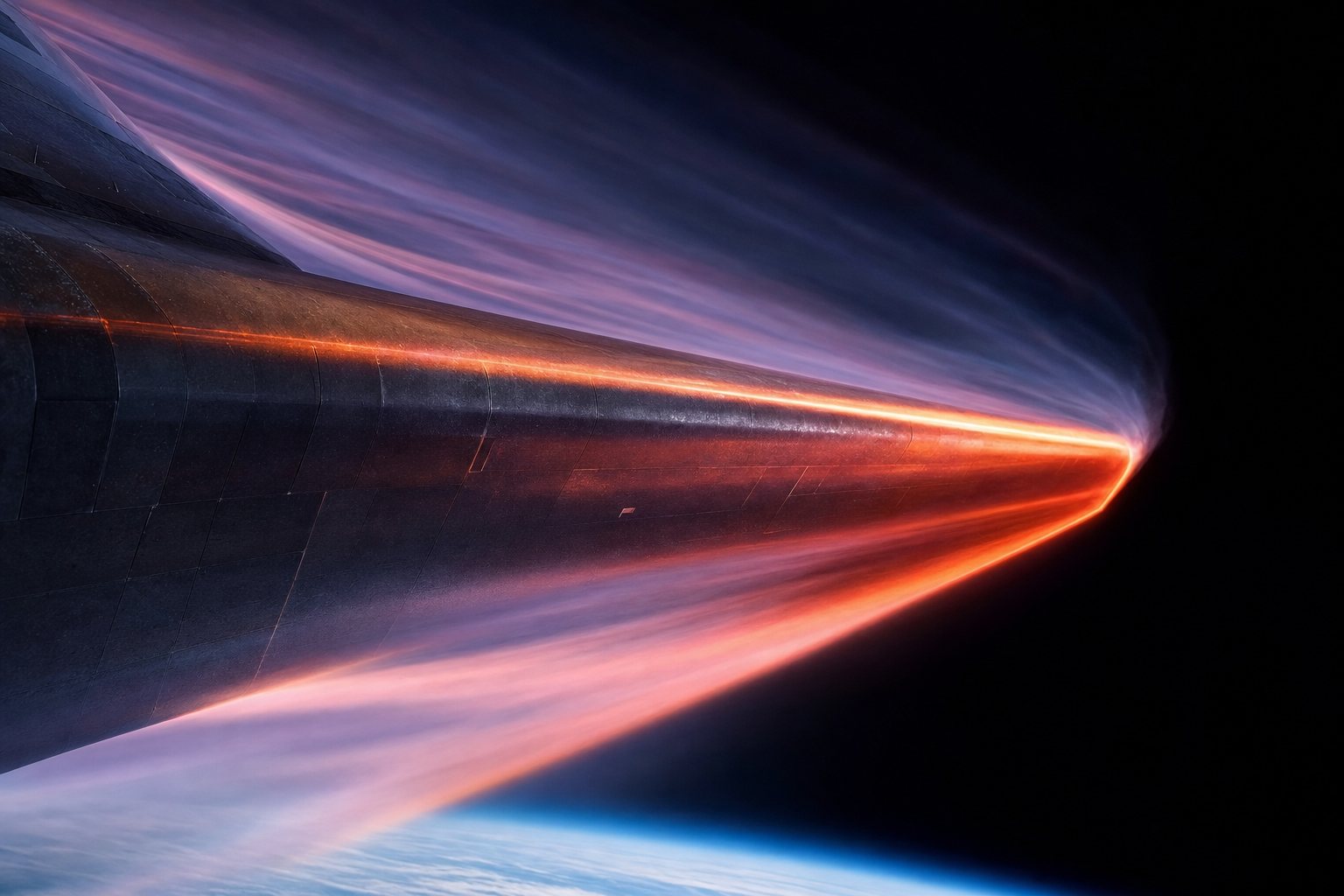
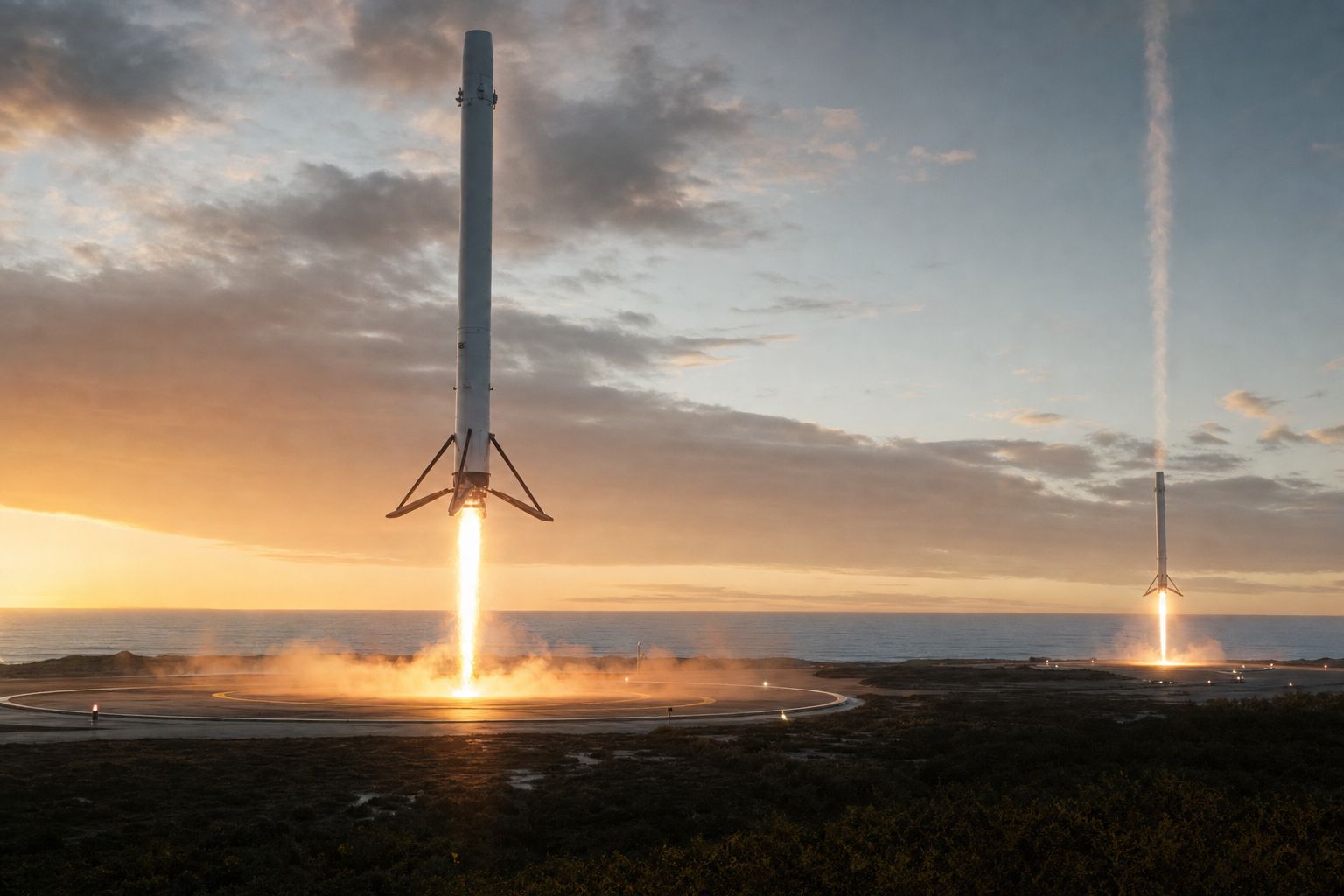
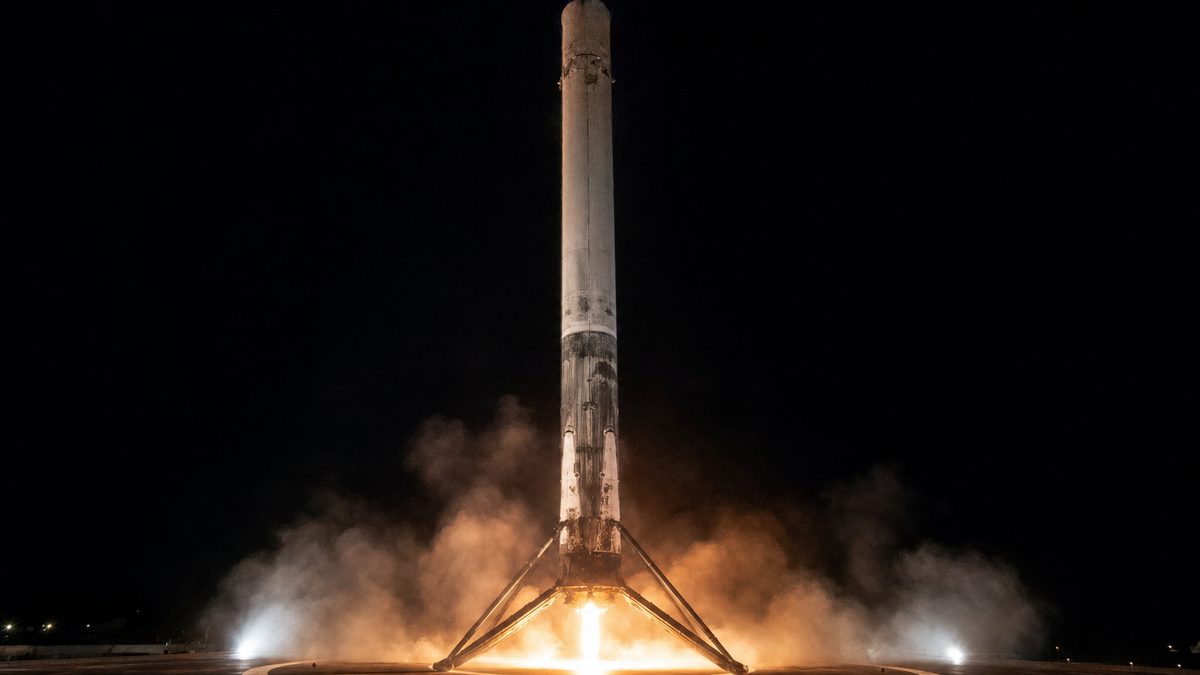
How a rocket flies back, steers through the air and lands on its tail.
SpaceX is aiming to launch the fifteenth flight of its giant Starship rocket no earlier than the thirteenth of November 2026.
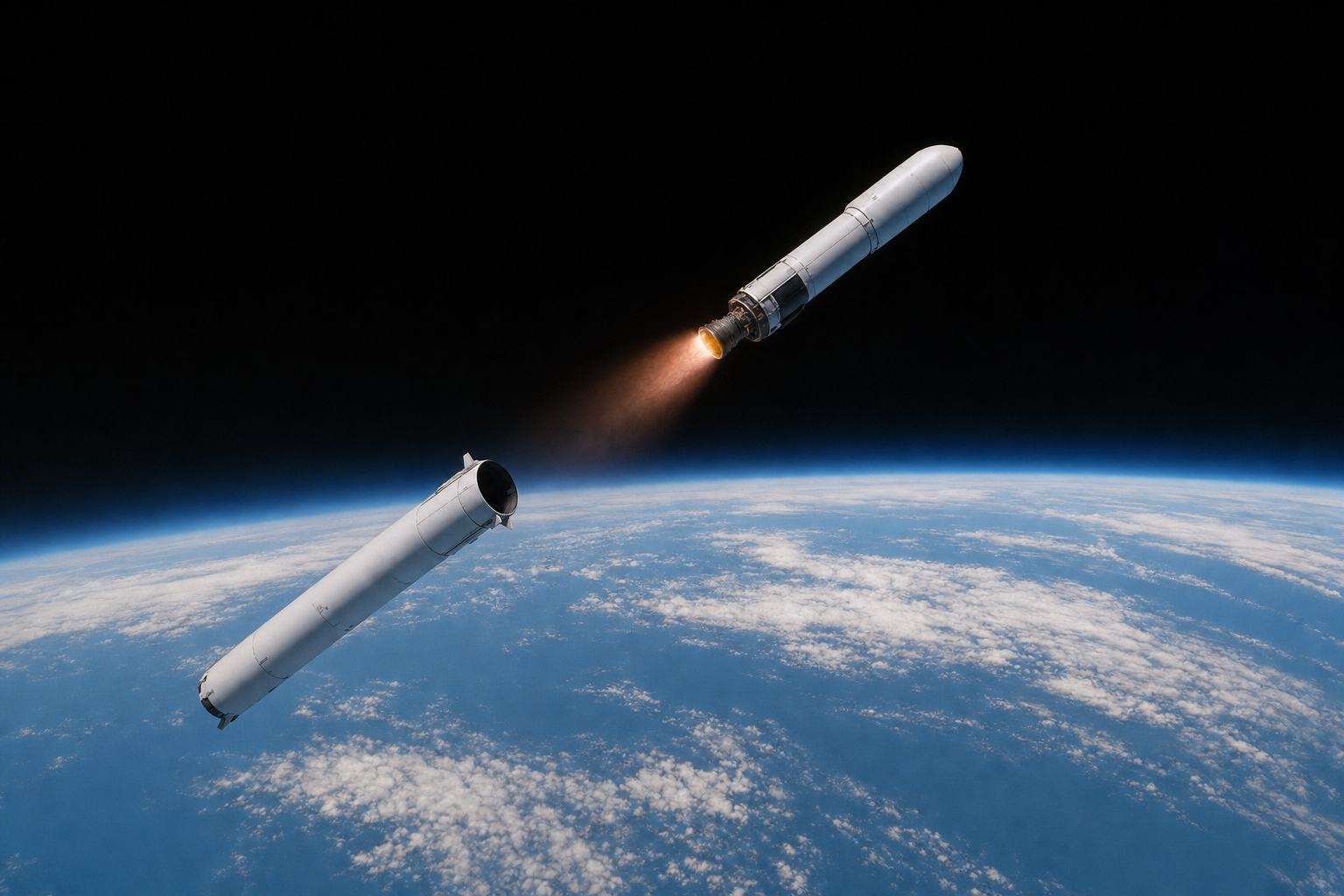
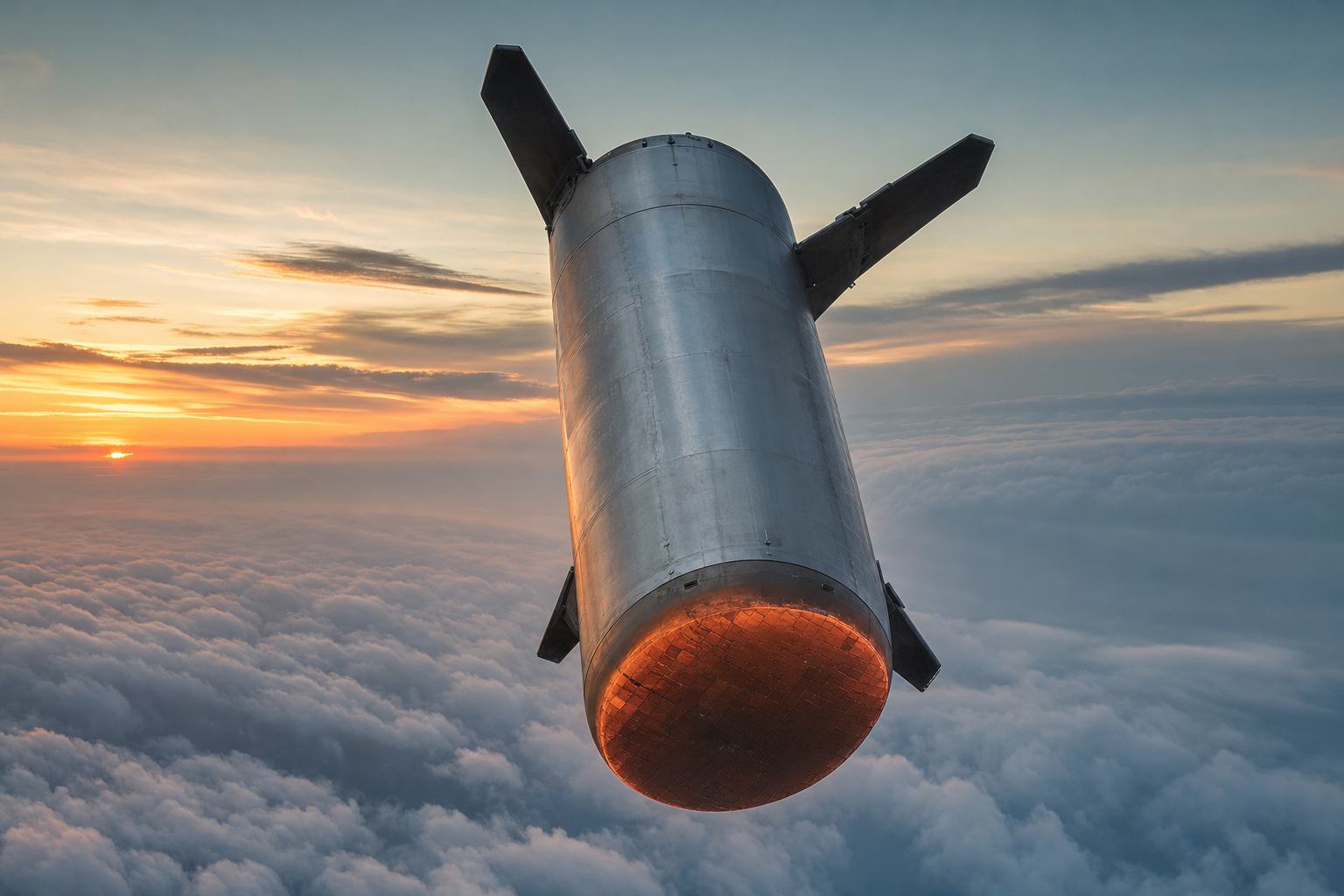
Starship has two stages: a booster called Super Heavy at the bottom, and an upper stage on top, called Ship.
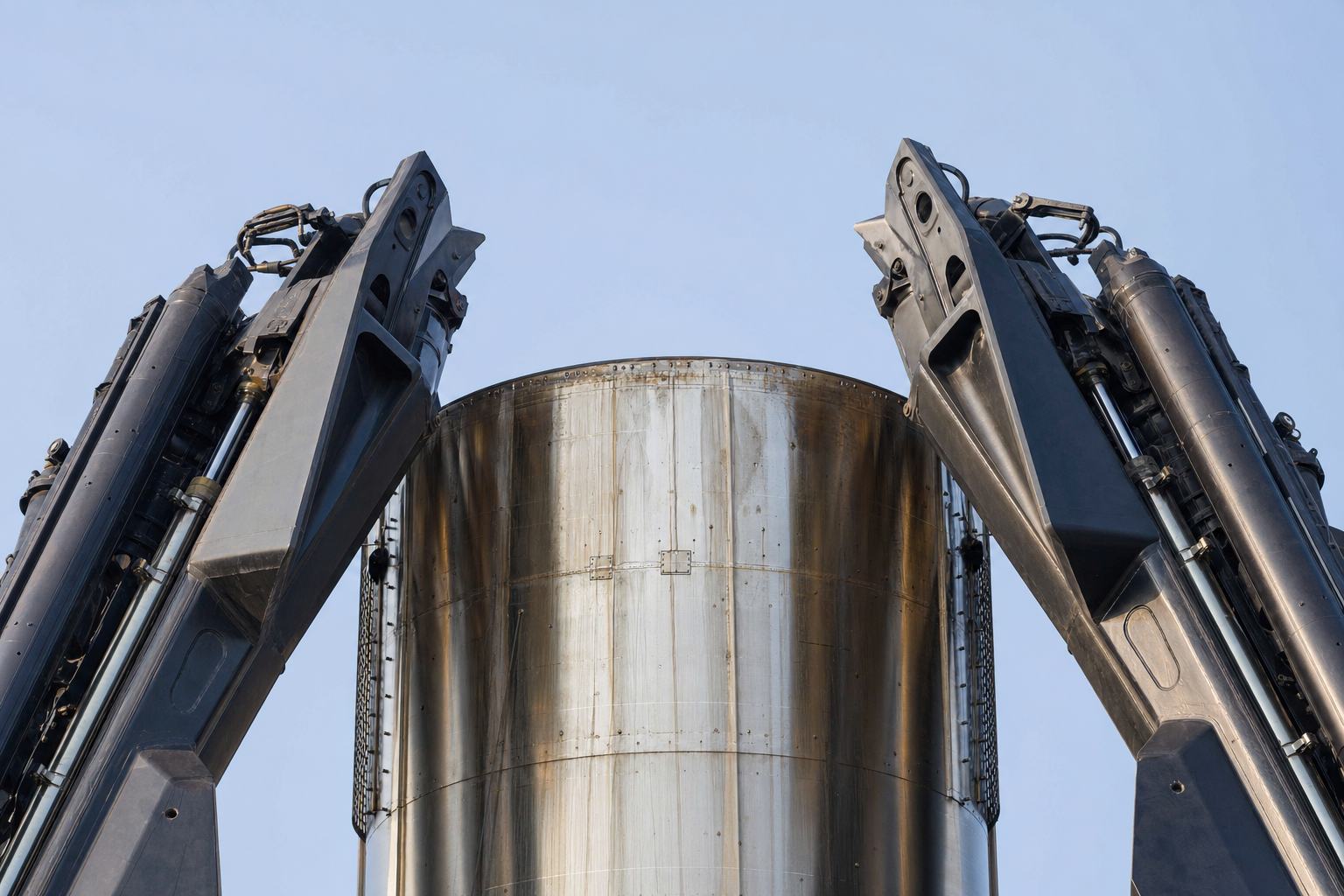
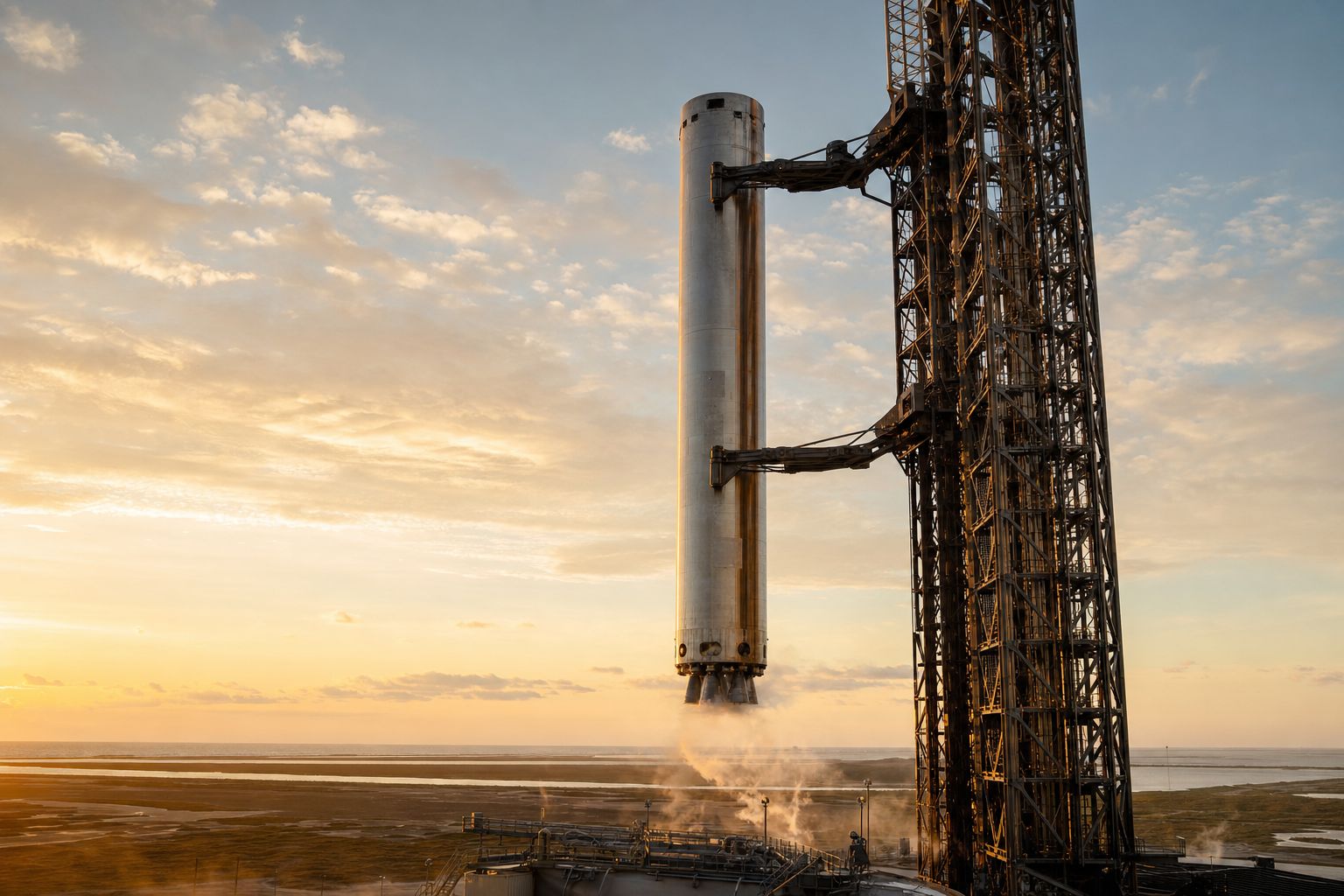
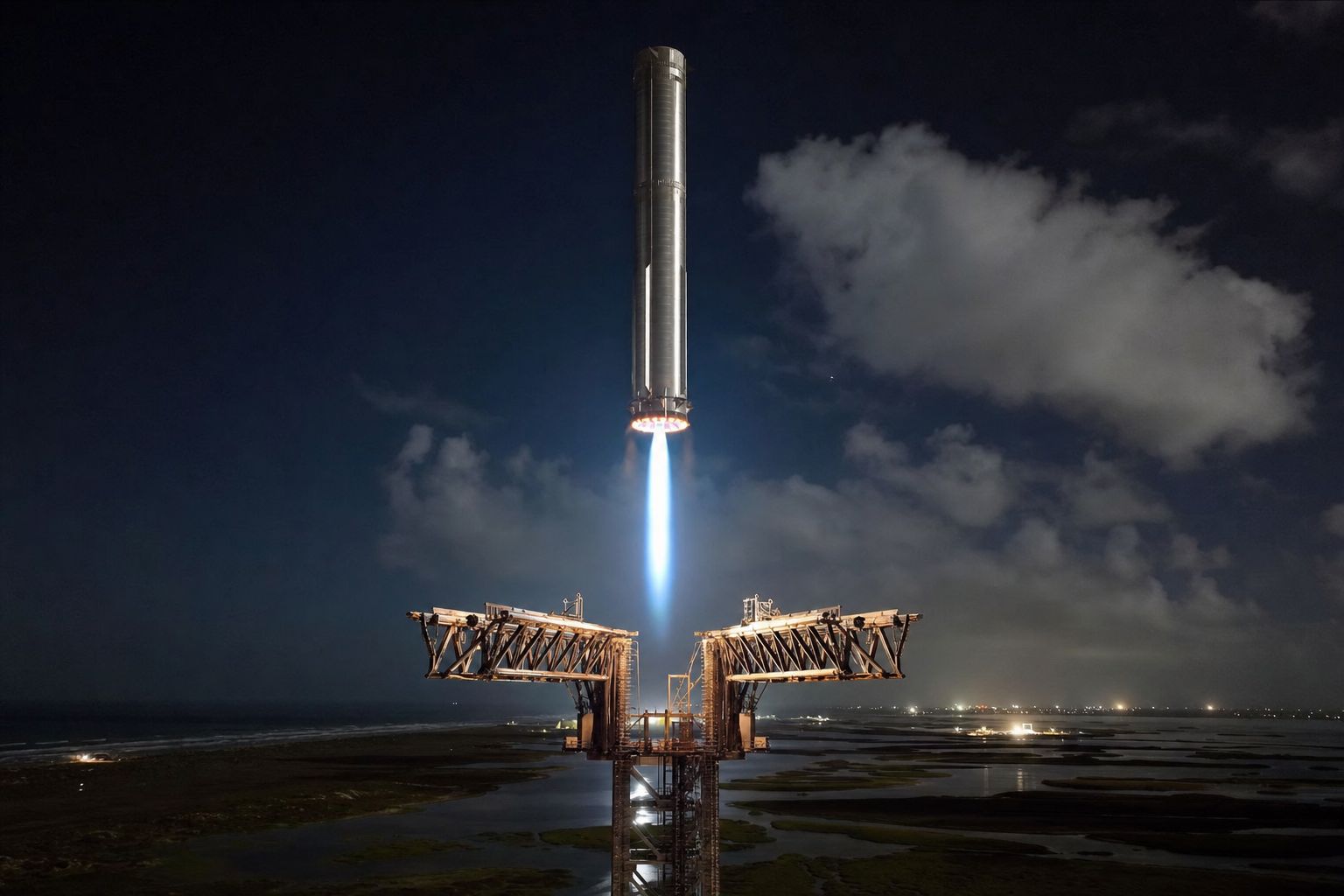
Elon Musk has said that, if regulators approve, SpaceX will try to catch both with the tower's arms: first the booster, then the ship.
Boosters have been caught before. A ship never has. To see why it is hard, start with how any rocket comes home.
- 13 Nov
- target date, not before (TeslaNorth, 5 Nov 2026)
- 3
- boosters caught on test flights so far (Space.com, 29 Oct 2026)
- 0
- ships caught
A planned double catch
SpaceX’s vice-president of launch, Kiko Dontchev, gave Friday 13 November 2026 as the target for Starship Flight 15 (TeslaNorth, 5 November 2026, reporting Eric Berger). Elon Musk said SpaceX would try to “catch both Ship and Super Heavy” on this flight, but only with regulatory approval (Space.com, 29 October 2026). Super Heavy boosters have been caught on three test flights; no ship has been caught. This is a plan, not a result: dates slip and profiles change.
The 3D scenes are simplified teaching models, not to scale; the rockets in them are generic, not any company’s design.
Sources: TeslaNorth (5 Nov 2026): SpaceX targets 13 November for Starship Flight 15 (Kiko Dontchev, via Eric Berger); The News (Pakistan): SpaceX targets Nov 13 for Starship Flight 15 and first dual catch attempt; Space.com (29 Oct 2026): SpaceX fires up Starship upper stage ahead of landmark Flight 15 test launch; Wikipedia: Starship flight 15