Nobody can put crude oil in a car. Between the oil well and the fuel pump stands the refinery, and when fuel prices climb, as they did in 2026, refining is part of the story. This film explains the chemistry: why crude is a mixture of hydrocarbon molecules of every length, how a distillation tower sorts them by boiling point, how cracking breaks big molecules into petrol, how reforming raises octane, and how hydrogen strips out sulfur. Heat the crude yourself, crack a molecule and compare a barrel before and after cracking.
Interactive 3D film8 min1852 to 2026Published 17 October 2026
The factory between the oil well and the fuel pump.
Nobody can pour crude oil into a car. In 2026, fuel prices climbed to among the highest on record: in mid-October the average American paid about four dollars and thirty cents for a gallon of petrol.
Part of that story is crude oil itself. Part of it is the place crude must pass through first: between the oil well and the fuel pump stands a refinery.
$4.33
per gallon of petrol (3.785 litres)
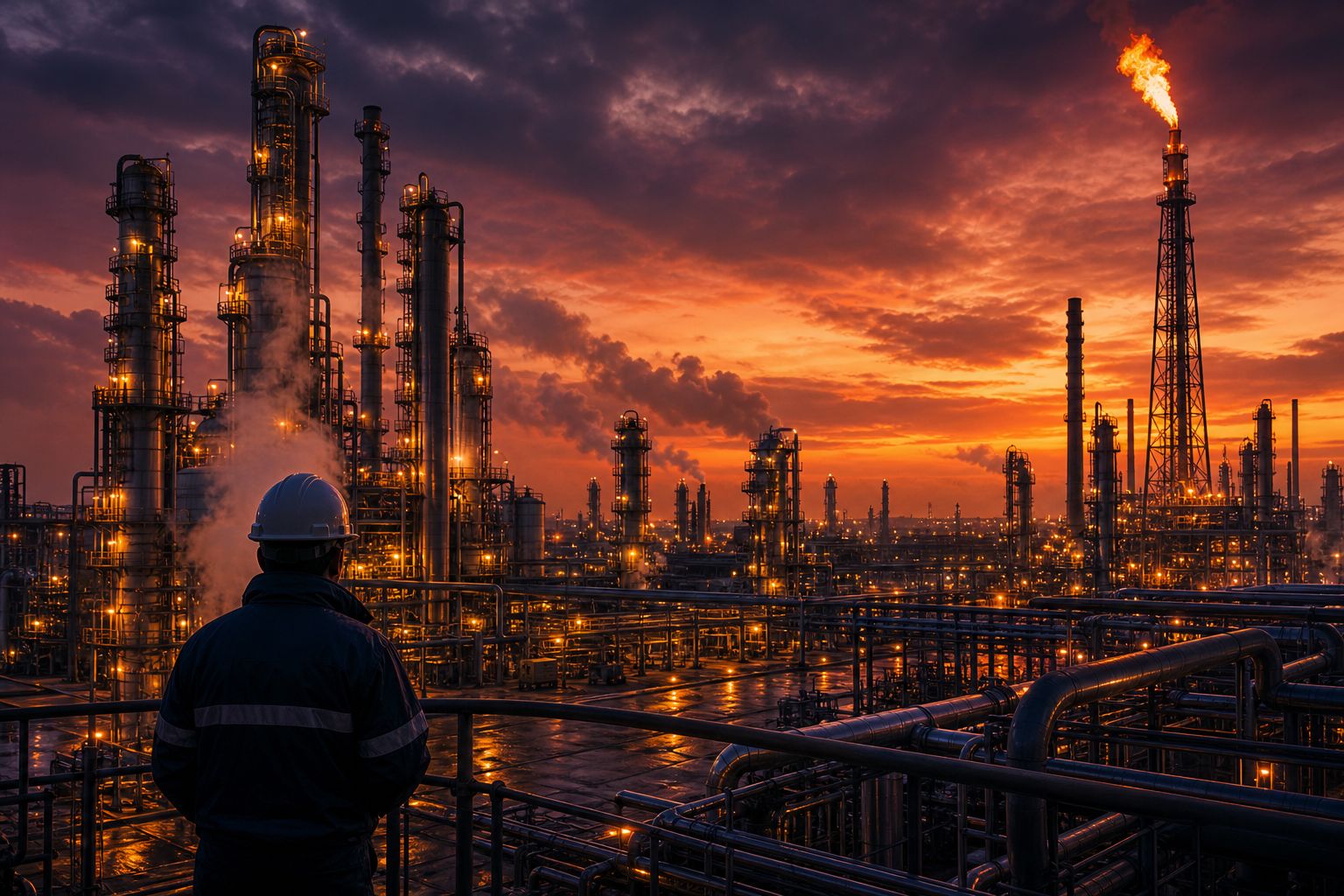
US average, mid-October 2026 (AAA)Fuel for flight Jet fuel, diesel and petrol all begin as the same black crude. AI-generated still.
petrol, diesel, jet fuel
cooking gas (LPG)
feedstock for plastics
asphalt for roads
What comes out of a refinery
Prologue · The news
Why refining is in the news
AAA put the US national average price of gasoline at $4.33 a gallon in mid-October 2026, after a summer of prices described as among the most expensive on record. An oil industry group cited both global supply shocks and limits on US refining capacity. This film explains what a refinery does with the crude it receives.
How to use: pick a chapter or press ← →; drag to rotate. Many steps have buttons you can press.
Crude oil is not one substance. It is a mixture of hundreds of different compounds, most of them hydrocarbons: molecules made only of carbon and hydrogen.
Some are tiny, with one to four carbon atoms. They are gases. Others are chains or rings of dozens of carbons, so large that at room temperature they are thick, tarry solids.
Mixed together they are useless as fuel. The first job of a refinery is to sort them.
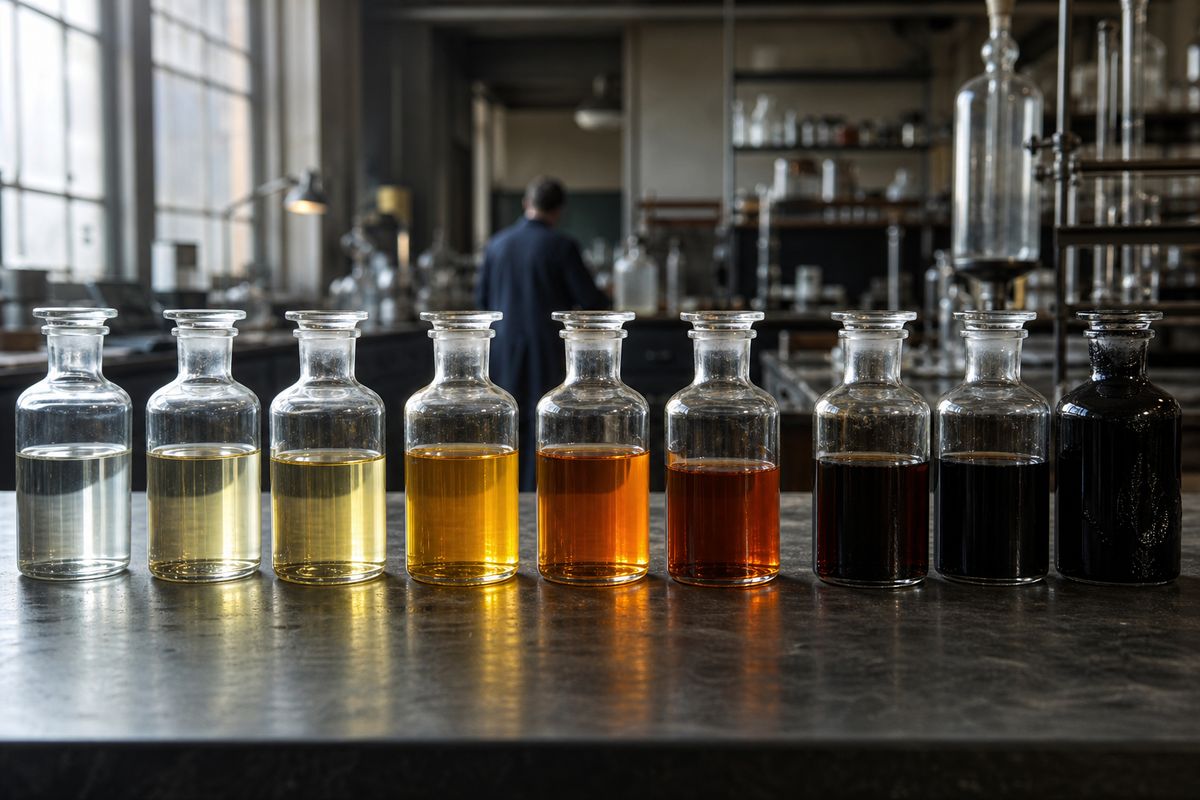
A sample of crude Crude from different fields ranges from thin and amber to thick and black. AI-generated still.
CH₄ methane: 1 carbon, a gas
C₈H₁₈ octane: 8 carbons, a liquid in petrol
up to ~70 carbons: bitumen for roads
One family, many sizes
sulfur compounds: the main impurity
traces of nitrogen, metals, salt water
Besides hydrocarbons
Chapter I · The mixture
What crude oil is
Crude oil is a complex mixture of hundreds of individual compounds whose make-up varies with its source; sulfur compounds are the main impurity to be removed (EBSCO). Chemguide gives refinery gases as molecules with up to four carbon atoms and the bitumen residue as up to about seventy.
The 3D tower, molecules and plant are simplified teaching models, not to scale.
Refining began with lamps, not cars. In 1852, in Lviv, then part of the Austrian Empire and today in Ukraine, the pharmacist Ignacy Łukasiewicz distilled oil to get kerosene, and by early 1853, with a tinsmith, he had built a lamp to burn it.
In July 1853, the city hospital lit its wards with kerosene lamps. In 1856 he opened one of the world's first oil refineries.
For half a century, kerosene was the prize. Petrol was a light, dangerous leftover.
A kerosene lamp A glass chimney steadies the flame and draws air past the wick. AI-generated still.
1852 kerosene distilled from oil
Mar 1853 first recorded lamp, a Lviv pharmacy
Jul 1853 Lviv hospital buys 500 kg of kerosene
1854 oil mine at Bóbrka
1856 kerosene refinery at Ulaszowice
Łukasiewicz (Culture.pl)
kerosene
the product people paid for
petrol
often a waste stream
The 1800s refinery
Chapter I · The mixture
The first refiners
According to Culture.pl, Ignacy Łukasiewicz and Jan Zeh distilled kerosene in Lviv in 1852; the first recorded use of their lamp was in March 1853; Łukasiewicz and the tinsmith Adam Bratkowski designed a kerosene lamp, and in July 1853 the Lviv hospital bought 500 kg of kerosene. In 1856 Łukasiewicz opened a refinery at Ulaszowice, near Jasło, often described as the first kerosene refinery.
Other early refiners worked in Romania, Scotland and the United States in the same decade; “first” depends on the definition.
Here is the idea a refinery is built on. Hydrocarbon molecules cling to each other with weak attractions, and the longer the molecule, the more surface it has to cling with.
So long molecules need more heat to pull apart and escape as vapour. Small ones boil away first, big ones last.
Turn up the heat and watch which molecules leave the liquid.
called van der Waals or dispersion forces
weak, but they add up along a chain
Forces between molecules
butane, C₄
−1 °C
octane, C₈
126 °C
dodecane, C₁₂
216 °C
hexadecane, C₁₆
287 °C
Boiling point of straight-chain alkanes
bigger = later
to boil; first to condense as it cools
The rule
Chapter I · The mixture
Boiling point and chain length
Chemguide explains that larger hydrocarbon molecules have stronger van der Waals dispersion forces between them, so fractions with larger molecules have higher boiling points, are less volatile and more viscous. Standard reference values for straight-chain alkanes: butane about −1 °C, octane about 126 °C, dodecane about 216 °C, hexadecane about 287 °C.
The 3D tower, molecules and plant are simplified teaching models, not to scale.
First the crude is washed of salt and heated in a furnace to around four hundred degrees Celsius, until most of it turns to vapour.
The hot vapour enters the bottom of a tall tower. The tower is hottest at the bottom and coolest at the top.
As the vapour rises it cools. Each kind of molecule condenses back into liquid at the height where the temperature falls below its boiling point, and collects on a tray there.
~400 °C
furnace outlet: most of the crude is vapour
Into the tower
25–40 °C
at the top
350–400 °C
at the bottom
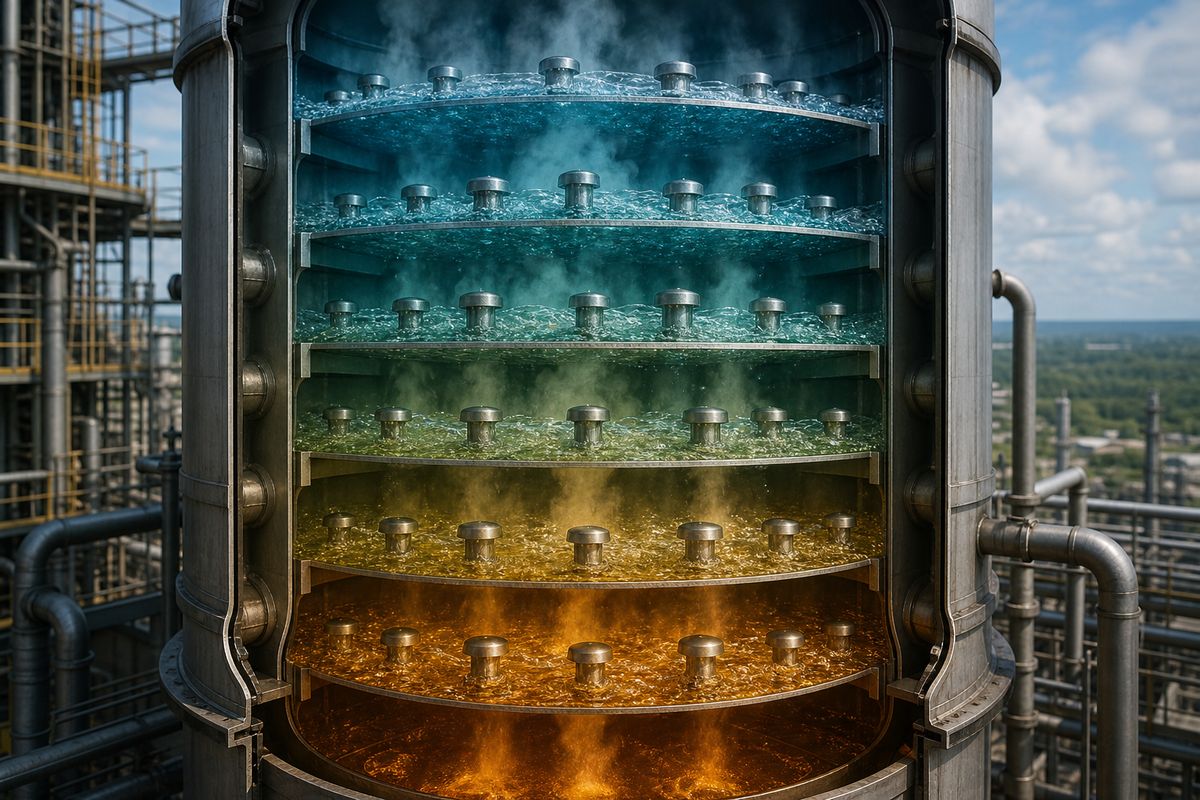
Inside (approximate)Trays inside the tower Vapour bubbles up through liquid on each tray; heavier molecules drop back down. AI-generated illustration.
Chapter II · The tower
Fractional distillation
EIA: crude oil is piped through hot furnaces, and the resulting liquids and vapours are discharged into distillation units, where they separate by boiling point; the lightest fractions rise to the top and condense, the heaviest settle at the bottom. Chemguide gives the crude a temperature of about 400 °C, with roughly 25–40 °C at the top of the column and 350–400 °C at the bottom.
Before distillation, crude is usually desalted: washed with water to remove salts that would corrode equipment.
The 3D tower, molecules and plant are simplified teaching models, not to scale.
Pipes draw off each layer, called a fraction or a cut. At the very top come gases such as propane and butane, bottled as cooking gas.
Below them come petrol and naphtha, a light liquid that chemical plants turn into plastics. Then kerosene, the old lamp oil, now used as jet fuel; then diesel and heating oil.
Lower still, heavy fuel oil for ships, and at the bottom a residue too heavy to boil at all. Press a fraction to see what it becomes.
refinery gases (up to 4 carbons)
liquefied petroleum gas, LPG
Top of the towerLight to heavy Lower fractions are darker, thicker and harder to set alight. AI-generated still.
fuel oil: ships and power plants
lubricating oil and wax
residue: bitumen for roads
Bottom of the tower
Chapter II · The tower
From gases to bitumen
Penn State lists products in order of increasing boiling point: liquefied petroleum gas, gasoline, jet fuel, diesel and fuel oil, with asphalt made from the distillation residue. Chemguide gives uses: refinery gases for LPG, naphtha as chemical feedstock, kerosene for jet fuel, diesel for engines, fuel oil for ships, and bitumen for roads.
The 3D tower, molecules and plant are simplified teaching models, not to scale.
The residue still holds valuable oil, but heating it further would scorch it. So it goes to a second tower that works under low pressure.
At low pressure liquids boil at lower temperatures, just as water boils below one hundred degrees on a high mountain. This vacuum distillation squeezes out heavy gas oils and lubricating oils. What even this tower cannot boil becomes bitumen, the black binder of asphalt roads.
atmospheric unit: every refinery has one
vacuum unit: in more complex refineries
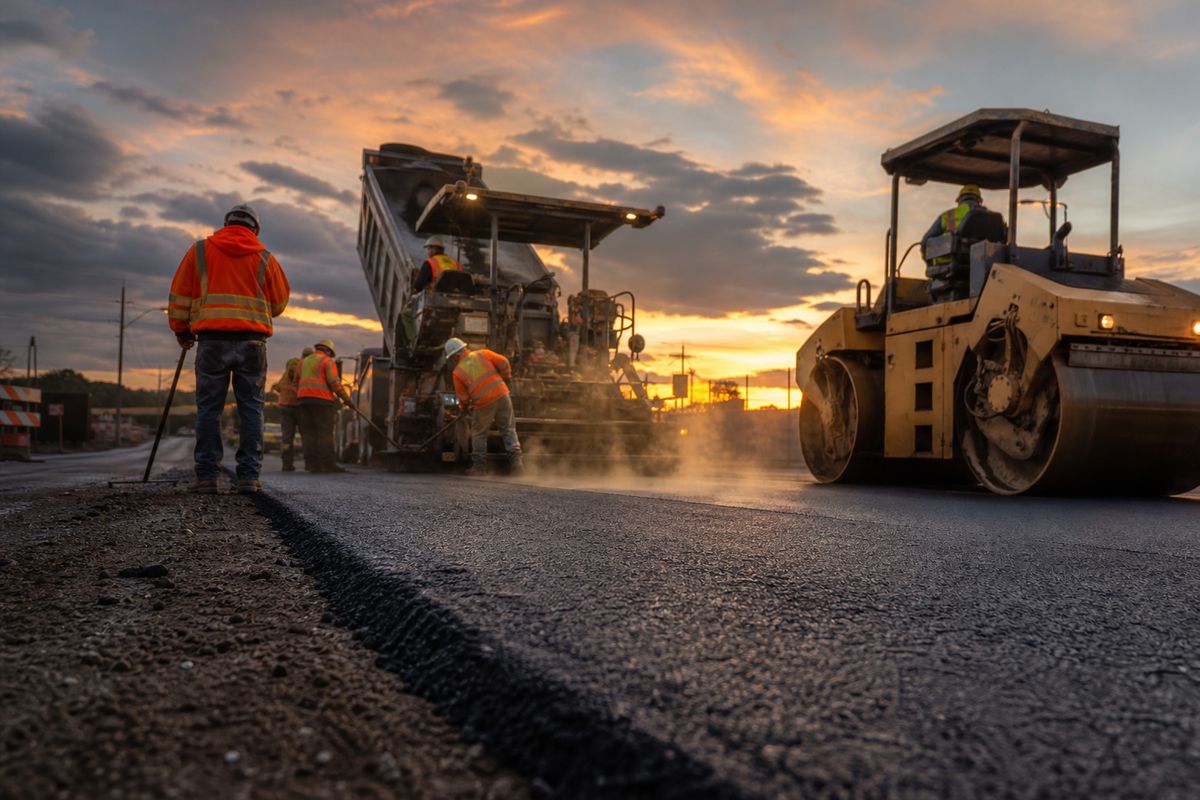
Two towersThe last of the barrel What even the vacuum tower cannot boil can end up on a road. AI-generated still.
Chapter II · The tower
Vacuum distillation
EIA notes that all refineries have atmospheric distillation units, while more complex refineries may also have vacuum distillation units. Penn State describes vacuum distillation feeding the production of lubricating oils and waxes, and the vacuum residue going to deasphalting (asphalt) or coking.
The 3D tower, molecules and plant are simplified teaching models, not to scale.
Crude gives what nature put in it, not what drivers want.
Distillation only sorts. It can give you only as much petrol as the crude happened to contain.
When cars spread in the early twentieth century, demand for petrol soared, and refiners were left with too much heavy oil and too little light fuel.
The answer was to stop sorting molecules and start changing them. Compare the two barrels.
separation: distillation, by boiling point
conversion: cracking, reforming, alkylation
treatment: removing sulfur, blending
Sorting vs changing
1
separation
2
conversion
3
treatment
EIA’s three steps of refining
break it: cracking
reshape it: reforming
join small ones: alkylation
Three ways to change a molecule
Chapter III · Cracking
Separation is not enough
EIA describes refining in three steps: separation (distillation), conversion (cracking and rearranging heavy, low-value fractions into lighter, higher-value products such as gasoline) and treatment and blending.
The two barrels on screen are illustrative, not measured yields of any real crude.
The 3D tower, molecules and plant are simplified teaching models, not to scale.
Heat a long hydrocarbon hard enough and its chain snaps into shorter pieces. This is cracking.
A ten-carbon molecule from a heavier fraction can split into an eight-carbon molecule that belongs in petrol, and ethene, a small gas that chemical plants turn into plastic. Press crack to try it.
In 1913 the chemists William Burton and Robert Humphreys patented a way to crack oil with heat and pressure. It more than doubled the petrol a refinery could get from its crude.
C10H22→C8H18+C2H4
C10H22
decane, a heavier molecule
C8H18
octane, a petrol molecule
C2H4
ethene, a building block of plastics
carbon: 10 = 8 + 2
hydrogen: 22 = 18 + 4
nothing lost, only rearranged
Count the atoms
> 2×
petrol from the same crude
Burton process (1913)
Chapter III · Cracking
Thermal cracking
The Burton process, patented on 7 January 1913 by William Merriam Burton and Robert E. Humphreys of Standard Oil of Indiana, cracked heavy oil by heating it under pressure, and more than doubled gasoline output from various crudes. Decane splitting into octane and ethene is the standard textbook example of cracking; real crackers produce a mixture of products.
The 3D tower, molecules and plant are simplified teaching models, not to scale.
The catalyst that fuelled a war and a century of driving.
A catalyst made cracking faster and better. In 1937 a process invented by the French engineer Eugene Houdry went into a refinery near Philadelphia, cracking oil over a bed of solid catalyst.
Then engineers at Standard Oil of New Jersey found a better trick: a fine catalyst powder, blown with hot vapour so it flows like a liquid, between a reactor and a regenerator that burns off the carbon that builds up on it.
The first fluid catalytic cracker started in May 1942, in the middle of the Second World War, and greatly increased aviation fuel.
1937 first Houdry unit, Marcus Hook, Pennsylvania
1940 fluid pilot plant, Baton Rouge
25 May 1942 first full fluid cracker, 17,000 barrels a day
by 1945 34 more built
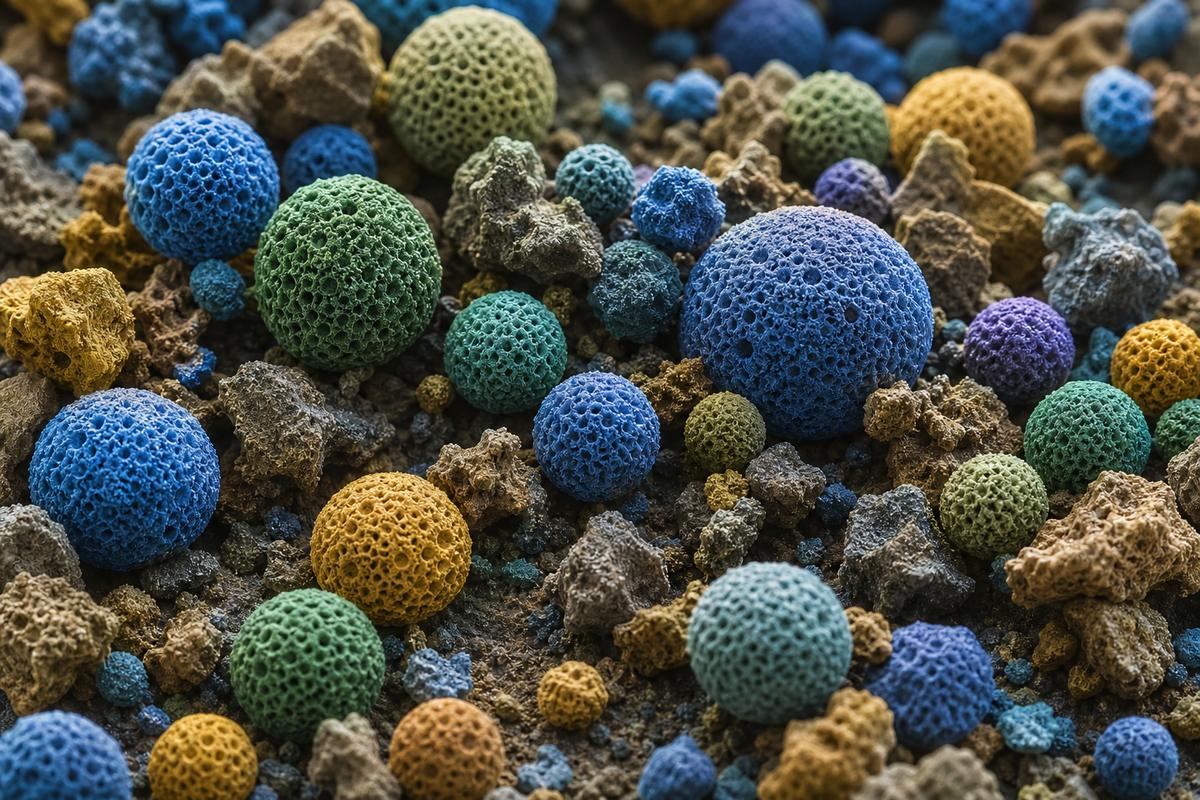
Catalytic cracking (The Chemical Engineer)Catalyst powder Modern crackers use porous zeolite grains; each grain has a huge inner surface. AI-generated illustration.
> 90
octane rating of its petrol (EBSCO; explained next)
Fluid catalytic cracking
Chapter III · Cracking
Fluid catalytic cracking
The Chemical Engineer: the first Houdry catalytic cracking unit was built at Sun Oil’s Marcus Hook refinery in 1937; a 100 barrel-a-day fluid pilot plant started at Baton Rouge in May 1940; the 17,000 barrel-a-day Model I fluid catalytic cracker started there on 25 May 1942, and 34 more units were built by 1945. The article estimates that catalytic cracking raised US aviation fuel production enormously during the war. EBSCO notes zeolite catalysts and gasoline with octane numbers above 90.
The 3D tower, molecules and plant are simplified teaching models, not to scale.
In a petrol engine, the fuel and air should burn smoothly when the spark fires. Some molecules ignite too early under compression, causing a knock that wastes power and can damage the engine.
Straight chains knock easily. Branched, compact molecules resist. The octane number measures that resistance, with a branched molecule called iso-octane set at one hundred. It is a rating, not the amount of octane in the tank: the 91 or 95 on a fuel pump is this number.
Toggle the two shapes: same eight carbons, very different fuel.
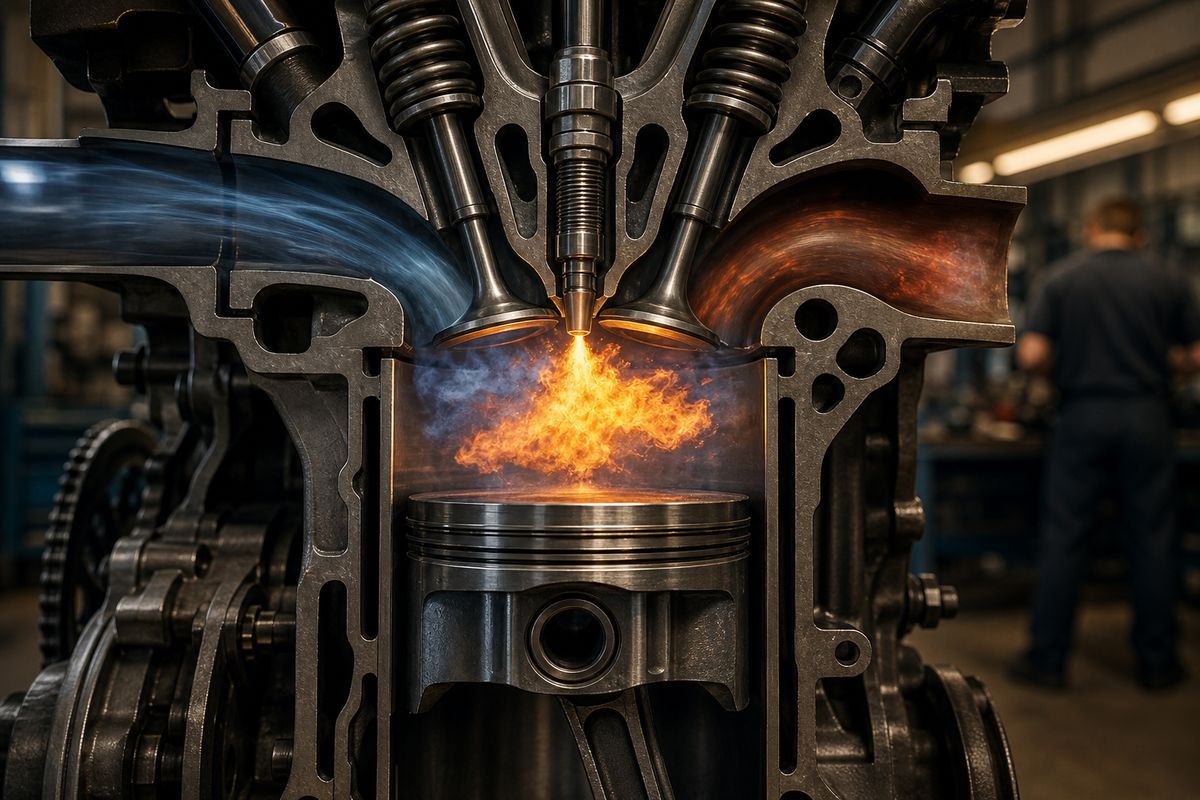
Inside a cylinder The flame should spread from the spark plug, not start by itself elsewhere. AI-generated illustration.
n-heptane, straight
0
iso-octane, branched
100
cat-cracked petrol
> 90
Octane number (reference scale)
C₈H₁₈
n-octane and iso-octane: isomers
Same formula
Chapter IV · Better fuel
Octane number
EBSCO: straight-chain paraffins have low octane numbers and branched isoparaffins high ones; iso-octane is the reference at 100. On the standard scale, normal heptane is defined as 0. Energy Education describes knock as fuel igniting prematurely under compression rather than from the spark.
The 3D tower, molecules and plant are simplified teaching models, not to scale.
Other units reshape molecules instead of breaking them. A catalytic reformer uses a platinum catalyst to turn naphtha into compact, high-octane molecules.
An alkylation unit does the opposite of cracking: it joins small gas molecules left over from the cracker into branched petrol molecules. And reforming gives off something useful besides fuel: hydrogen, which the refinery needs for its last big job.
feed: naphtha
catalyst: platinum (or nickel)
product: octane close to 100, plus hydrogen
Catalytic reforming
feed: small gases from the cracker
product: branched, high-octane petrol
Alkylation
Chapter IV · Better fuel
Reforming and alkylation
EIA: some conversion processes rearrange molecules rather than split them; alkylation combines gaseous byproducts of cracking into gasoline components, and reforming turns naphtha into high-octane gasoline components. EBSCO gives metal catalysts, typically platinum or nickel, and octane numbers close to 100 for reformate.
Reforming also releases hydrogen, which the refinery uses to remove sulfur, as the next step shows.
The 3D tower, molecules and plant are simplified teaching models, not to scale.
Crude oil carries sulfur. Burned in an engine, it becomes sulfur dioxide, which causes acid rain and harms lungs.
So refineries treat their fuels with hydrogen over a catalyst. The hydrogen pulls the sulfur off the hydrocarbon and carries it away as hydrogen sulfide gas.
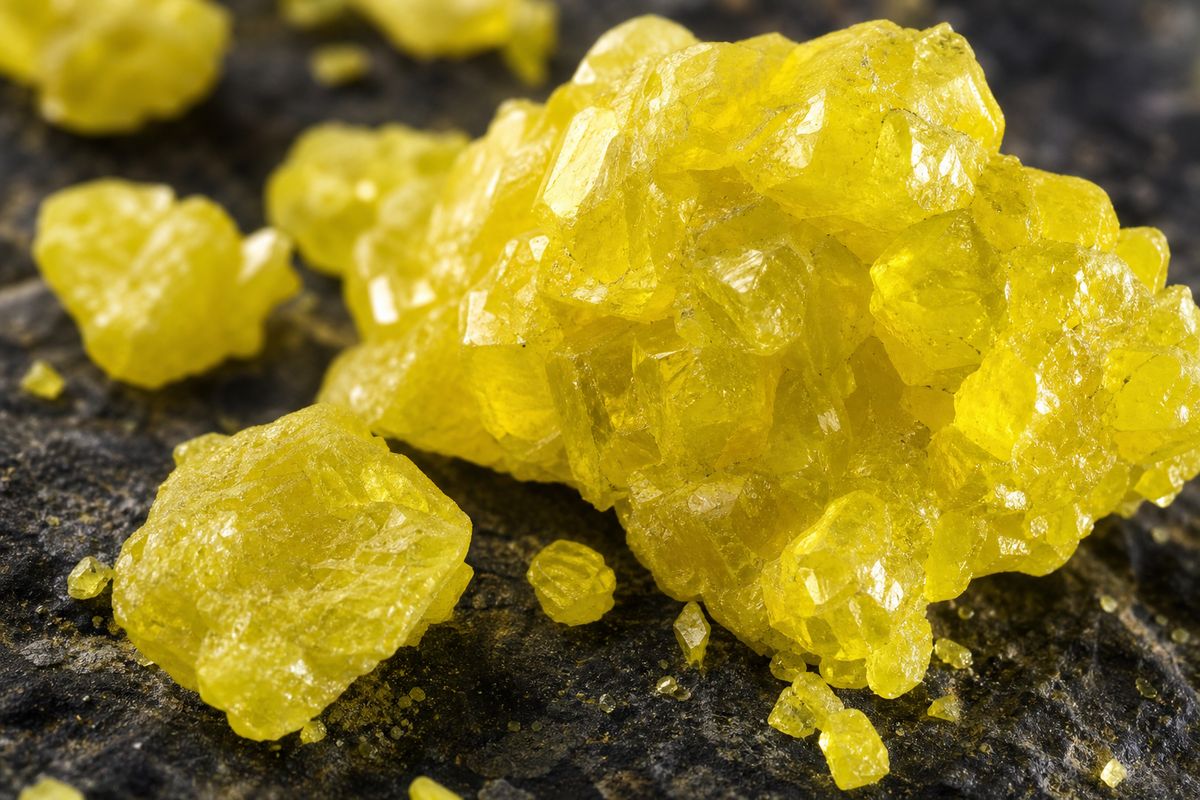
That gas is then recovered as solid yellow sulfur. Press the button to strip a sulfur atom.
less sulfur oxide pollution
less corrosion
less odour
Why remove sulfur (EBSCO)R−SH+H2→R−H+H2S
R
the rest of the hydrocarbon
H2S
hydrogen sulfide, removed as a gas
Recovered sulfur What was a pollutant in the fuel becomes a raw material. AI-generated still.
Chapter IV · Better fuel
Hydrotreating
Penn State describes hydrotreating as a finishing process that removes heteroatoms such as sulfur, nitrogen and metals. EBSCO: hydrodesulfurization removes sulfur to reduce sulfur oxide emissions and corrosion. The equation shown is the general textbook form for a thiol; in practice many sulfur compounds react, and the hydrogen sulfide is converted to elemental sulfur in a separate unit.
The 3D tower, molecules and plant are simplified teaching models, not to scale.
Put it all together. A barrel of crude holds forty-two US gallons, about one hundred and fifty-nine litres.
In 2023, American refineries turned each barrel into about nineteen and a half gallons of petrol, twelve and a half of diesel and heating oil, almost four and a half of jet fuel, and smaller amounts of everything else.
The total comes to about forty-five gallons. Nothing is created: cracked products are less dense, so the same mass takes up more space.
42 gal
= about 159 litres
One barrel
petrol
19.6 gal · ~74 L
diesel and heating oil
12.5 gal · ~47 L
jet fuel
4.4 gal · ~17 L
petroleum coke
2.1
everything else
6.1
US refinery output per 42-gallon barrel, 2023 (EIA)
44.65
gallons (~169 L) out of every 42 (~159 L) in
+6.3%
more volume, not more mass
Processing gain (EIA, 2023)
Chapter V · The barrel
Inputs and outputs
EIA (2023 data): from each 42-gallon barrel, US refineries produced 19.57 gallons of finished motor gasoline, 12.47 of distillate fuel oil, 4.41 of kerosene-type jet fuel and 2.06 of petroleum coke, among other products, totalling 44.65 gallons: a processing gain of about 6.3%. EIA explains the gain by the lower density of the refined products.
Yields vary from month to month and from refinery to refinery (EIA).
The 3D tower, molecules and plant are simplified teaching models, not to scale.
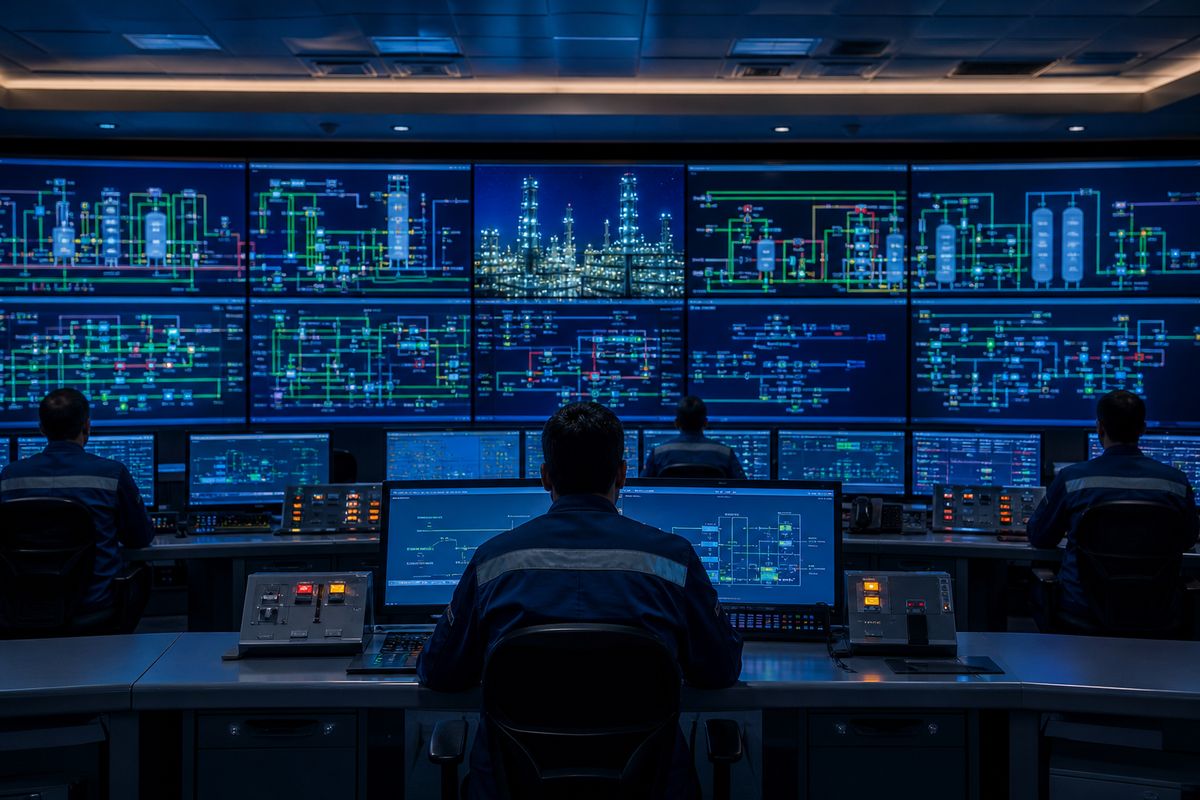
A modern refinery is one connected machine. The distillation towers feed the crackers, the reformer feeds hydrogen to the treaters, and tanks blend the streams into finished fuel.
The largest, at Jamnagar in India, can process about one point two million barrels of crude every day. Because the units depend on each other, a fault in one of them can slow the whole plant.
The control room Operators watch temperatures, pressures and flows across every unit at once. AI-generated still.
~1.24 million
barrels a day: the largest refinery
1999
opened
Jamnagar, India (Reliance)
Chapter V · The barrel
An integrated plant
EIA describes refinery products being blended from the streams of several processing units. The Jamnagar refinery in Gujarat, owned by Reliance Industries, opened in 1999 and after expansion has a capacity of about 1.24 million barrels per day; it is generally listed as the largest in the world.
The 3D tower, molecules and plant are simplified teaching models, not to scale.
One idea about boiling, and a century of chemistry.
A refinery does four things: it sorts molecules by boiling point, breaks the big ones, reshapes the small ones, and cleans out the sulfur.
It began with a kerosene lamp in a hospital ward. Today, when fuel prices jump, part of what you pay for is this chain: the crude itself, and the refining capacity to turn it into fuel.
1852–53 kerosene and the lamp, Lviv
1856 kerosene refinery, Ulaszowice
1913 thermal cracking patented
1937 catalytic cracking (Houdry)
1942 first fluid catalytic cracker
1999 Jamnagar opens
MilestonesThe end of the chain All stills and illustrations in this film are AI-generated.
Epilogue · Sources
How oil refineries work
Distillation, cracking, reforming, alkylation and hydrotreating are established industrial chemistry, described by the US Energy Information Administration and university course material. Yields are EIA’s US figures for 2023.
The 3D tower, molecules, barrels and plant are simplified teaching models, not to scale. Temperatures are approximate. All stills are AI-generated.