PlanetPast
EN

Earth science · Life

How Fossils Form

Written in Stone

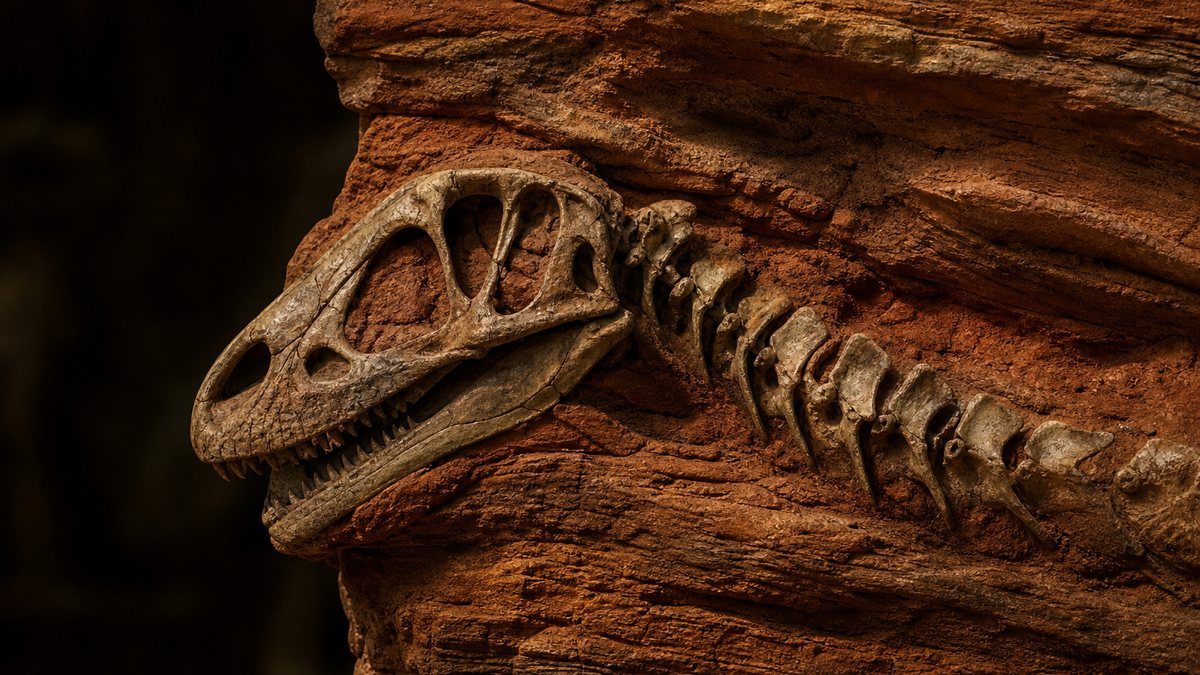
In November 2026 a team led by Kliti Grice of Curtin University reported in PNAS that the limb bones of a 115-million-year-old dinosaur from Brazil hold mineralised red blood cells with chemical traces of heme, a claim other experts question. This film explains the established science behind that news: why fossils are rare, the difference between body and trace fossils, how quick burial, groundwater and minerals turn bone to stone, moulds, casts and carbon films, animals kept in amber, ice and tar, exceptional sites such as the Burgess Shale and Messel, how fossils come back to the surface and are found, from Mary Anning in England to Phu Wiang in Thailand, how rock layers and volcanic ash give fossils their ages, and the long debate over whether anything soft can survive.

Interactive 3D film10 minAbout 510 million years ago to todayPublished 9 November 2026

Watch the interactive filmRead in ไทย

Prologue

Earth science · Life

Blood in stone?

A new claim, and an old question.

Red blood cells, turned to stone, inside a dinosaur bone 115 million years old: that is what a team of scientists says it has found.

The team, led by Kliti Grice of Curtin University, studied Aratasaurus, a small meat-eating dinosaur from Brazil, and reported in the journal PNAS in early November 2026.

They also report traces of heme, the iron-holding part of hemoglobin, the molecule that carries oxygen in blood.

Not everyone agrees. One outside expert, Mary Schweitzer, says the shapes are the wrong size and shape for reptile blood cells.

We will come back to that. But first: how does an animal become a fossil at all?

~115 Ma
Ma = million years ago · leg bones of Aratasaurus, Ceará, Brazil
PNAS, November 2026
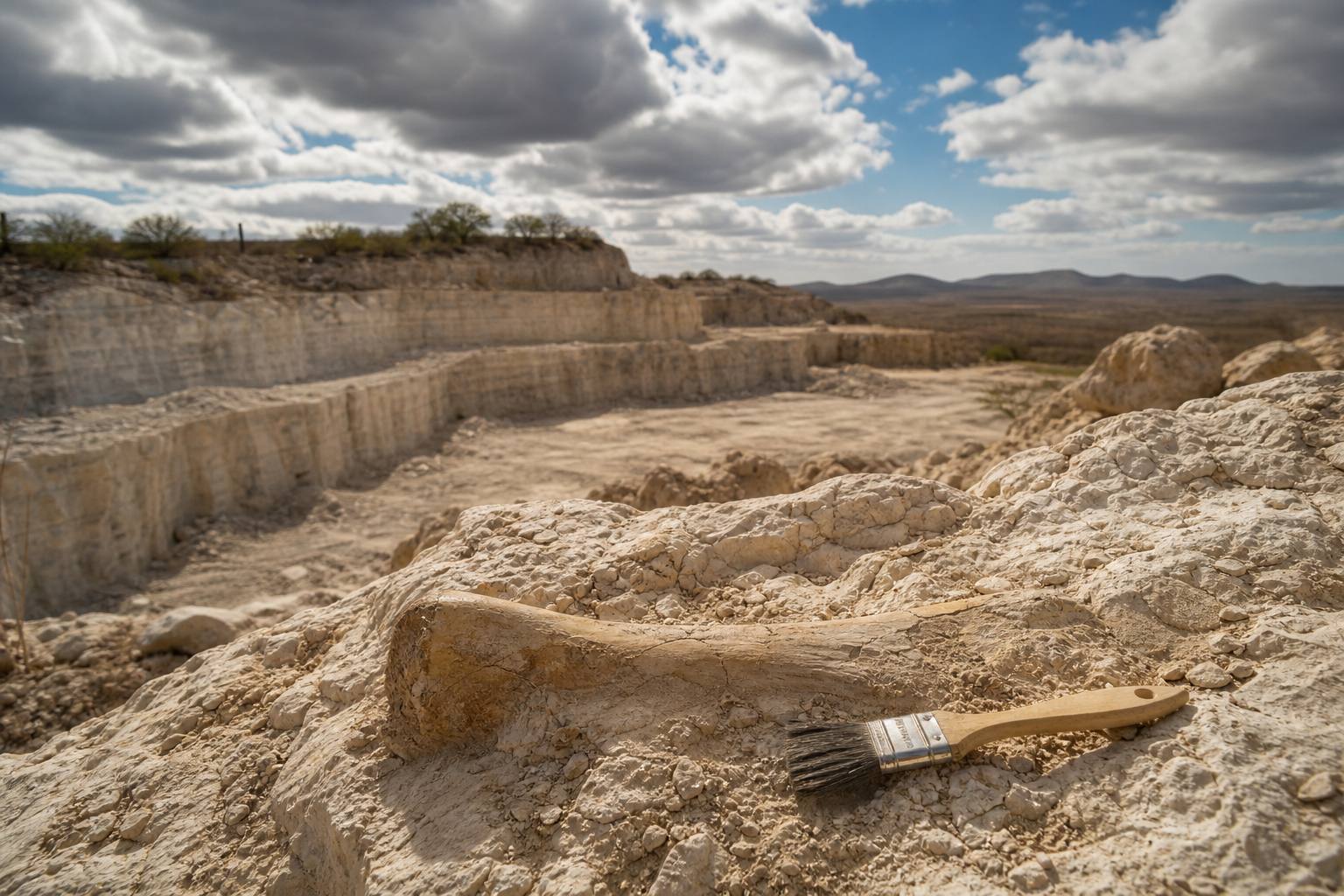
Northeastern Brazil Aratasaurus was found in 2008 in a plaster (gypsum) mine near Santana do Cariri. AI-generated illustration.
Fe
heme holds iron; the team also reports amino acids linked to collagen, a bone protein
ScienceDaily (Curtin University)
  • claimed: mineralised red blood cells
  • claimed: heme signatures in place
  • doubt: wrong size and shape, no nucleus
Claimed, and questioned
Prologue

The news

ScienceDaily (Curtin University release, November 2026): a team led by Kliti Grice reported in PNAS (vol. 123, no. 46) mineralised red blood cells inside vascular canals of the limb bones of Aratasaurus museunacionali, about 115 million years old, from northeastern Brazil, with heme-derived molecules and collagen-related amino acids; they suggest the mineral hausmannite and quick burial in low-oxygen sediment may explain the preservation. Live Science: Mary Schweitzer, who was not involved, praised the work but is not convinced the structures are red blood cells, because non-mammal red blood cells keep a nucleus, which usually makes a bulge, and these shapes are concave and smaller; Live Science also notes that “not everyone agrees”.

Wikipedia: Aratasaurus, a theropod (the two-legged, mostly meat-eating dinosaurs), was described in 2020; it was found in 2008 at a plaster (gypsum) mine near Santana do Cariri, Ceará, in the Romualdo Formation, and the young animal was about 3.1 m long.

The 3D scenes are simplified teaching models, not to scale; the ages in the rock column are made-up example numbers.

Sources: ScienceDaily / Curtin University (Nov 2026): Scientists find traces of blood in a 115-million-year-old dinosaur bone (Grice et al., PNAS 123(46), doi:10.1073/pnas.2614248123); Live Science (Nov 2026): Traces of ancient blood found in 115-million-year-old dinosaur fossil, new study claims (with comment by Mary Schweitzer); Wikipedia: Aratasaurus (Romualdo Formation, Ceará, Brazil; described 2020)
Chapter I · A race against decay

Chapter I · A race against decay

Most life vanishes

Why fossils are rare.

Most living things never become fossils. When an animal dies, its cells begin to break down, and microbes feed on what is left.

Scavengers tear the body apart, and water and wind scatter the bones. Press Leave exposed, then Bury fast.

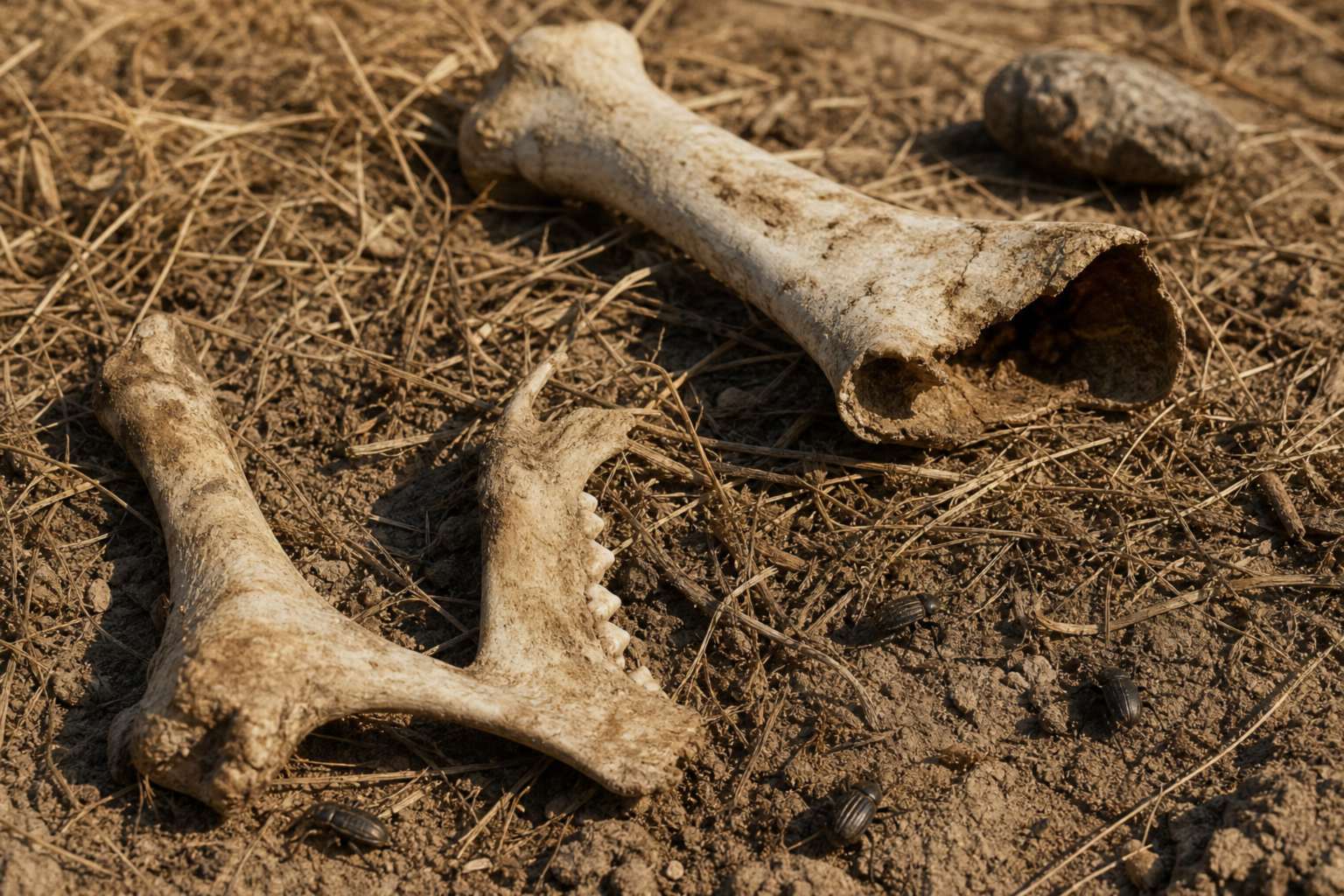
Left in the open, almost nothing survives: the flesh is eaten or rots, and the bones break and drift apart.

Buried quickly under mud or sand, a body is out of reach of scavengers, and cut off from most of the oxygen that decay needs.

So rule one is a fast burial. The study of what happens between death and discovery is called taphonomy.

90%+
of the organic matter in the environment is recycled by microbes before it can be buried
The Open University
  • its own enzymes and microbes
  • scavengers and trampling
  • waves, currents and wind
What destroys a body
  • early burial
  • little oxygen around it
  • nothing to move it
What helps a body last
Left in the open Bones on open ground crack, weather and drift apart. AI-generated illustration.
Chapter I · A race against decay

A race against decay

The Open University (OpenLearn) calls preservation “a race against decay”: after death cells self-destruct (autolysis); microbes recycle 90% or more of the organic matter in the environment before it is buried; and scavengers, trampling, waves, currents and wind scatter and destroy remains. Preservation needs special conditions, from early burial to a lack of oxygen around the body.

Try Leave exposed and Bury fast in the scene.

The 3D scenes are simplified teaching models, not to scale; the ages in the rock column are made-up example numbers.

Sources: The Open University, OpenLearn: Fossil soft parts (decay, scavengers and preservation); Live Science: How do fossils form?

Chapter I · A race against decay

Bodies and traces

Two kinds of fossil.

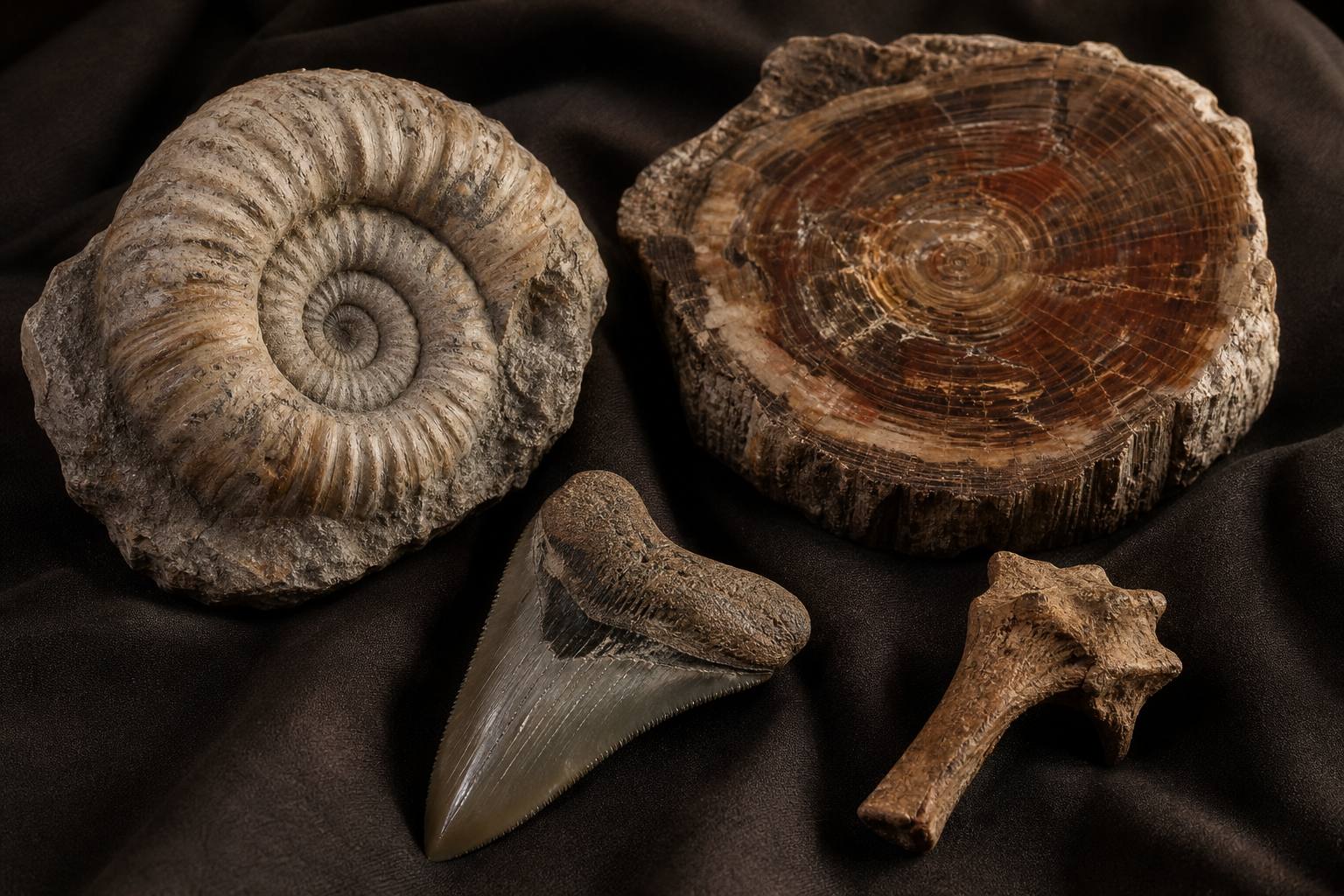
What survives is usually the hard parts: bones, teeth, shells and wood. These are body fossils, pieces of the body itself.

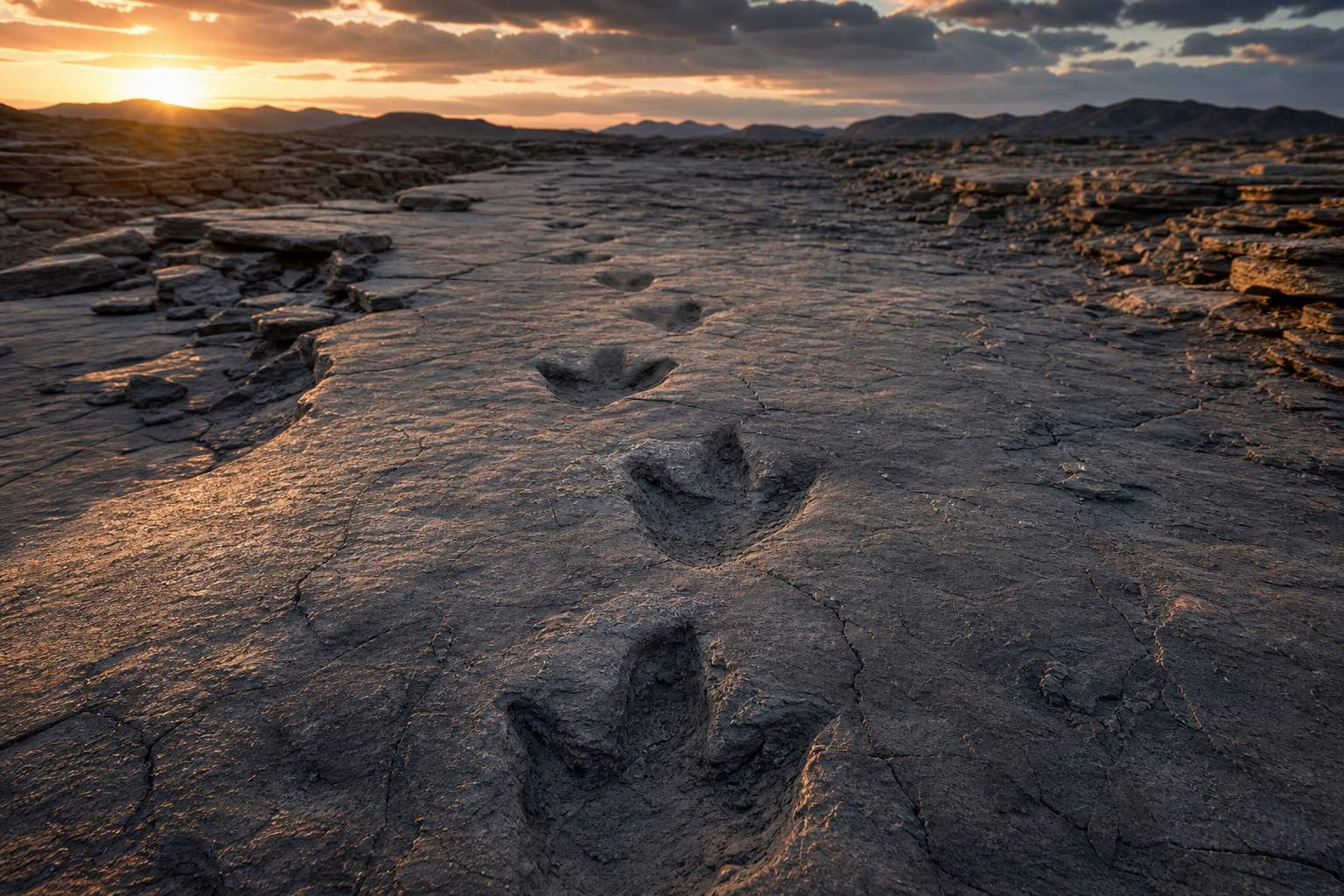
But animals also leave signs of what they did: footprints, burrows, even droppings. These are trace fossils.

A trackway shows an animal on the move. Fossil droppings, called coprolites, can show what it ate.

Body fossils A seashell, a shark tooth, petrified wood and a small bone. AI-generated illustration.
  • body: bones, shells, leaves
  • trace: footprints, trackways, coprolites
Two kinds (Oxford University Museum)
A trackway Three-toed footprints left in mud that later hardened to rock. AI-generated illustration.
Chapter I · A race against decay

Body and trace fossils

Oxford University Museum of Natural History: body fossils are the fossilised remains of an animal or plant, such as bones, shells and leaves; trace fossils record activity and include footprints, trackways and coprolites (fossil droppings). The Natural History Museum, London, credits Mary Anning with pioneering the study of coprolites.

The 3D scenes are simplified teaching models, not to scale; the ages in the rock column are made-up example numbers.

Sources: Oxford University Museum of Natural History, Learning Zone: Different types of fossils; Natural History Museum, London: Mary Anning, the unsung hero of fossil discovery

Chapter II · Turning to stone

Chapter II · Turning to stone

Layer upon layer

From river mud to rock.

Picture a dinosaur that dies beside a river. A flood washes the body into the channel, and it settles on the bottom.

Mud and sand pour over it. Flood after flood, new layers pile on top.

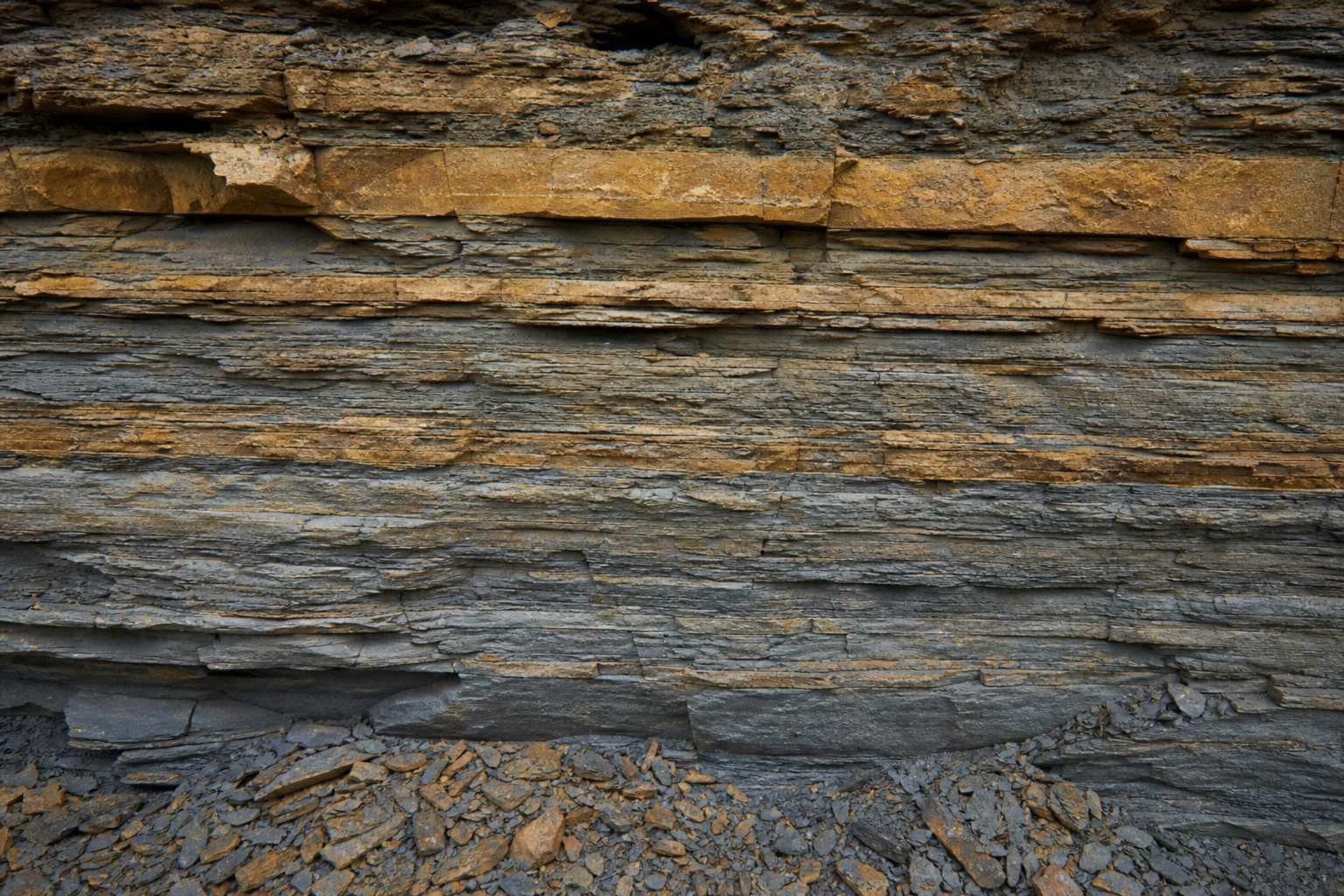
Their weight squeezes out water and presses the grains together, and slowly the loose sediment hardens into rock.

The flesh is long gone. The skeleton stays, sealed in stone.

  • dark brown: river mud
  • light brown: sand
  • each band: one flood
In the scene
Layers turned to rock Thin beds of mudstone and sandstone, each one a past flood or season. AI-generated illustration.
  • sand → sandstone
  • mud → mudstone and shale
  • pressure + time
Sediment to rock
Chapter II · Turning to stone

Burial

The Canadian Encyclopedia (on the Burgess Shale): sediment entering the sea buried living and dead animals, and as more layers built up the remains were compressed and fossilised. Live Science: burial in sediment brings heat and pressure that change the remains. The dinosaur in a river here is a typical example, not a particular fossil.

The 3D scenes are simplified teaching models, not to scale; the ages in the rock column are made-up example numbers.

Sources: The Canadian Encyclopedia: Burgess Shale fossils; Live Science: How do fossils form?

Chapter II · Turning to stone

Stone grows inside

Permineralisation.

Now look inside the bone. It is full of tiny channels and pores, where blood vessels and cells once were.

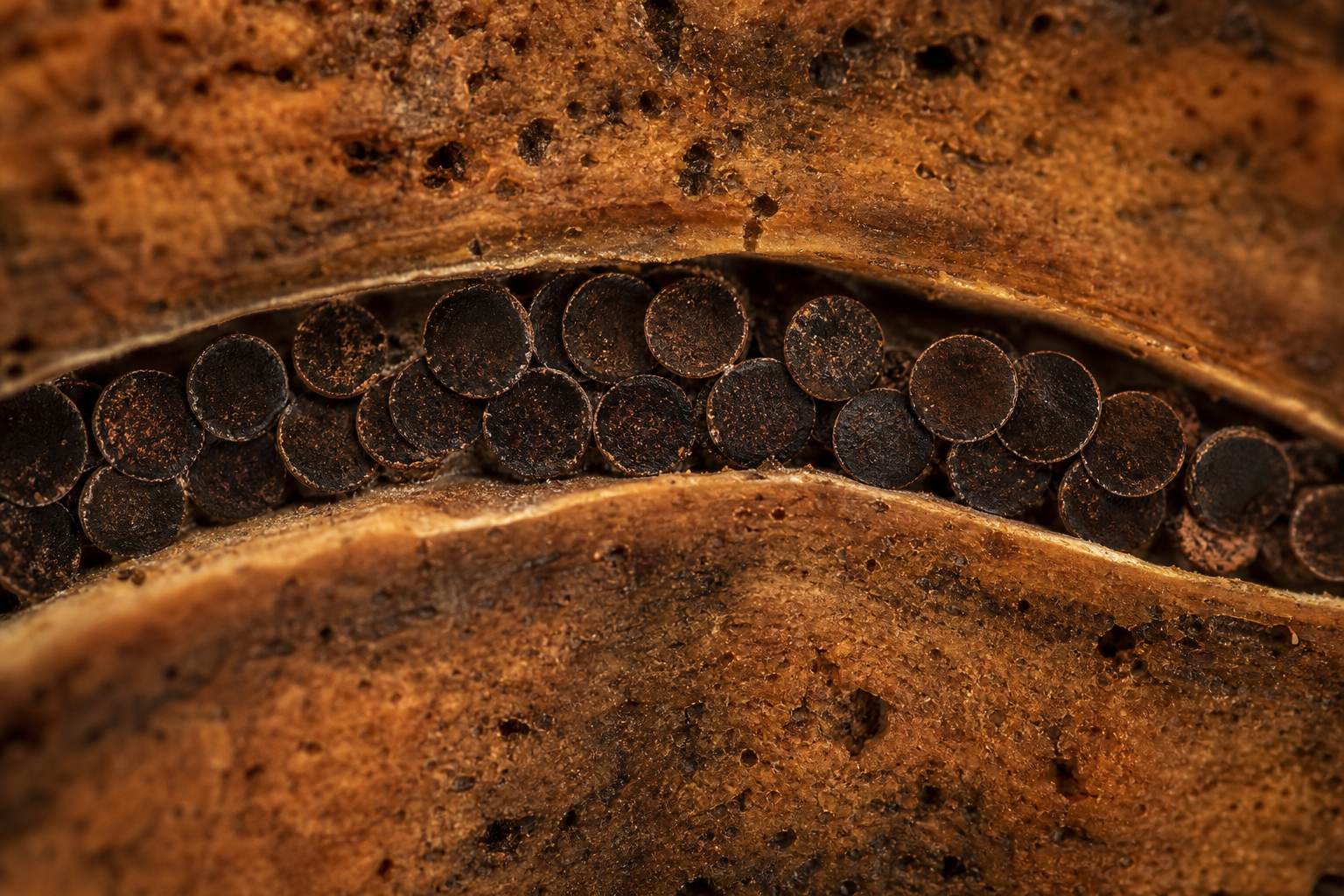
It was in channels like these that the Brazil team found its cell-like shapes.

Groundwater seeps through the buried bone, carrying minerals dissolved from the rock around it. Press Add minerals.

Crystals grow in the empty spaces until the bone is heavy and hard as rock.

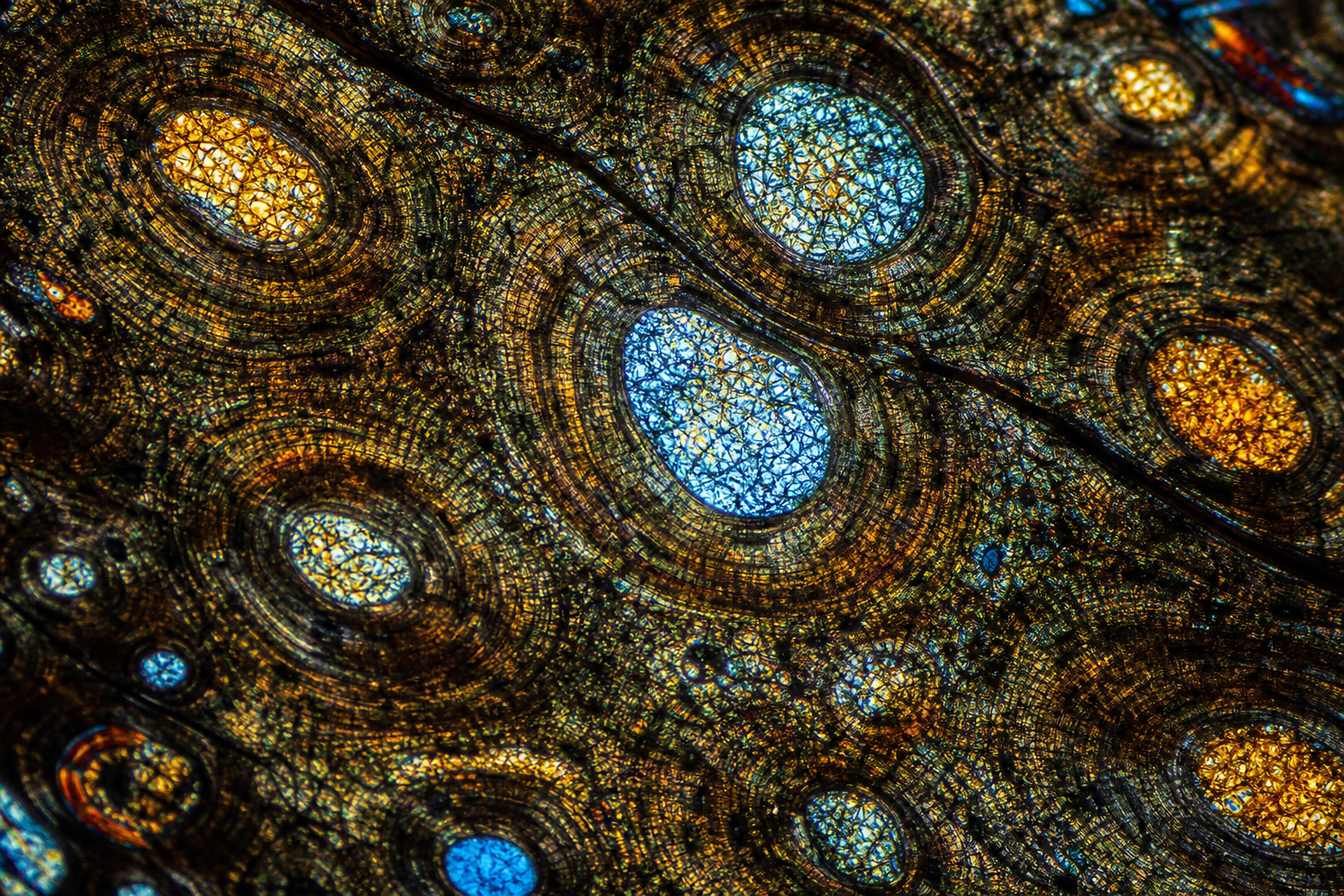
This is permineralisation, the commonest way bones become fossils: stone fills the pores, and the bone keeps its shape.

Cell-like shapes Tiny mineral discs lined up inside a canal that once held a blood vessel. AI-generated illustration.
  • pale: bone
  • dark blue: empty pores
  • gold: new crystals
In the scene
most common
the way fossils form: minerals crystallise inside the remains
Live Science
A thin slice Fossil bone under a polarising microscope: each ring circles an old blood channel, now full of crystals. AI-generated illustration.
Chapter II · Turning to stone

Permineralisation

Live Science: permineralisation is the most common way fossils form. After soft tissues decay, hard parts such as bones remain; water seeps in and dissolved minerals fill the spaces inside, forming crystals that harden the remains together with the surrounding rock. (Live Science also calls this petrification; Oxford University Museum of Natural History classes petrified wood as a replacement fossil, the next step in this film.)

Press Add minerals in the scene.

The 3D scenes are simplified teaching models, not to scale; the ages in the rock column are made-up example numbers.

Sources: Live Science: How do fossils form?; Oxford University Museum of Natural History, Learning Zone: Different types of fossils; ScienceDaily / Curtin University (Nov 2026): Scientists find traces of blood in a 115-million-year-old dinosaur bone (Grice et al., PNAS 123(46), doi:10.1073/pnas.2614248123)

Chapter II · Turning to stone

Copies in stone

Replacement, moulds, casts and carbon films.

Sometimes the original material dissolves completely and new minerals take its place. That is replacement: much petrified wood is wood swapped for stone.

Or a shell dissolves away and leaves a hollow with its shape in the rock: a mould.

If minerals later fill the hollow, they make a cast, a stone copy of the shell.

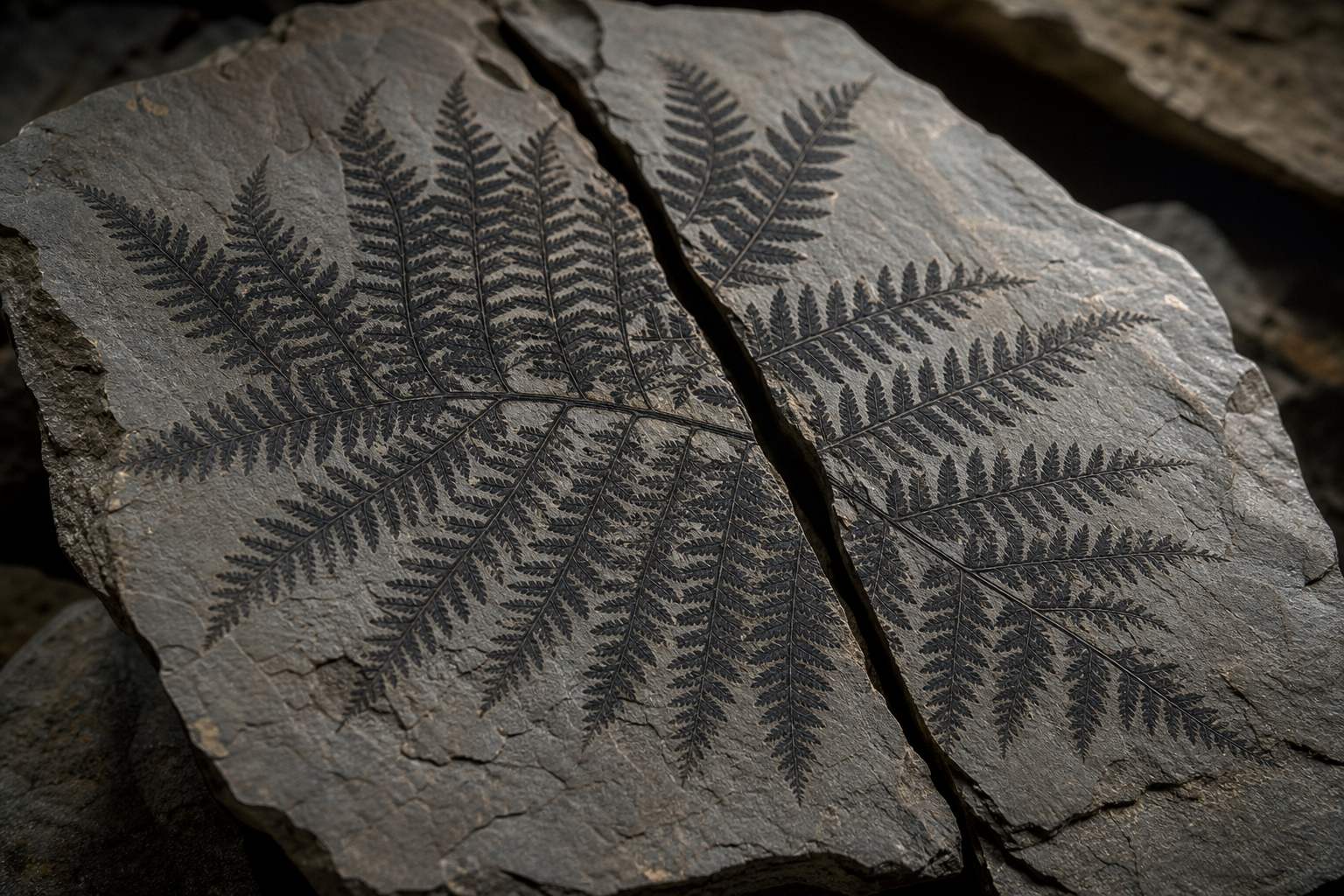
Thin leaves can leave another kind of record: heat and pressure drive off the hydrogen and oxygen, leaving a dark film of carbon.

  • replacement: new mineral, old shape
  • mould: a hollow with the outer shape
  • cast: the hollow filled in
Ways to copy a body
replacement
how it classes petrified wood; most dinosaur skeletons on show are moulds and casts
Oxford University Museum
A carbon film A fern frond drawn in carbon on split shale. AI-generated illustration.
Chapter II · Turning to stone

Replacement, moulds and casts

Live Science: in replacement, groundwater dissolves the original hard parts and minerals take their place; an external mould is the impression left when an organism dissolves in sediment, and a cast forms when the mould fills with other minerals; carbonisation drives hydrogen and oxygen out of soft tissues such as leaves under heat and pressure, leaving a detailed carbon impression. Oxford University Museum of Natural History gives petrified wood as an example of a replacement fossil, and says most dinosaur skeletons and large bones are mould and cast fossils.

Use the Shell, Mould and Cast buttons in the scene.

The 3D scenes are simplified teaching models, not to scale; the ages in the rock column are made-up example numbers.

Sources: Live Science: How do fossils form?; Oxford University Museum of Natural History, Learning Zone: Different types of fossils

Chapter III · Amber, ice and tar

Chapter III · Amber, ice and tar

Sealed in resin

Fossils that keep more than bone.

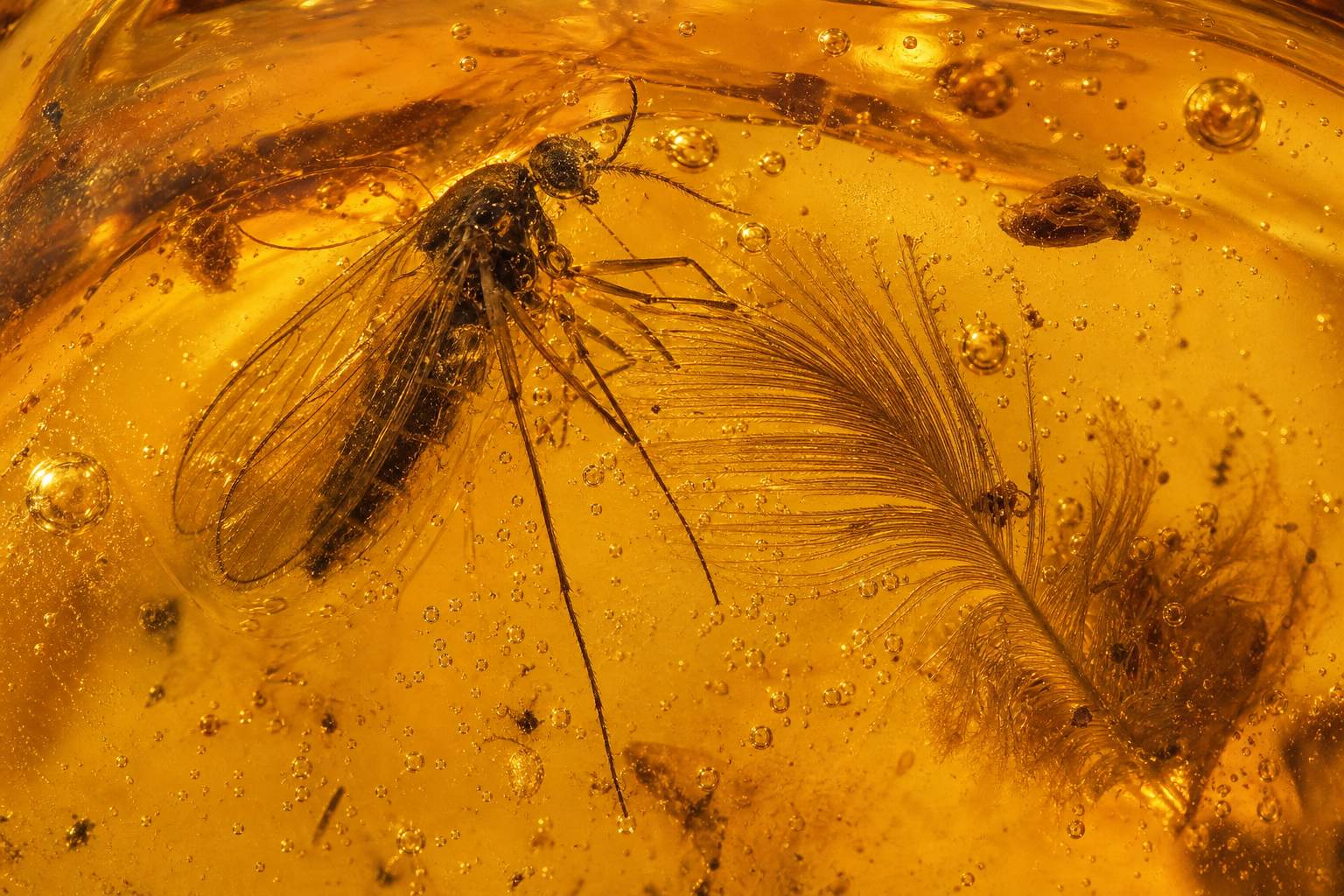
A few fossils keep far more than bone. Sticky tree resin can trap an insect, seal it in, and slowly harden into amber.

Amber can keep insects, pollen, hairs and feathers in fine three-dimensional detail.

The oldest amber known with creatures inside is about 230 million years old, from the Dolomites in Italy.

Inside amber A gnat and a tiny feather, with bubbles of air trapped beside them. AI-generated illustration.
~230 Ma
oldest amber with inclusions, Italy
43–35 Ma
Baltic amber, the largest deposit
Palaeontology Online · Ma = million years ago
Chapter III · Amber, ice and tar

Amber

Palaeontology Online (Seyfullah & Schmidt, 2015): amber is fossilised plant resin; organisms or their parts (pollen, spores, wing scales, feathers, hairs) stick to fresh resin, are sealed in by later flows and are often preserved in exquisite three-dimensional detail. The earliest amber with inclusions is Triassic, about 230 million years old, from the Italian Dolomites; Baltic amber, the largest deposit, is late Eocene, roughly 43 to 35 million years old. “Ma” means millions of years ago.

Use the Amber, Ice and Tar buttons in the scene.

The 3D scenes are simplified teaching models, not to scale; the ages in the rock column are made-up example numbers.

Sources: Seyfullah & Schmidt, Palaeontology Online (2015): Fossil focus: amber

Chapter III · Amber, ice and tar

Cold and sticky

A frozen mammoth and an asphalt trap.

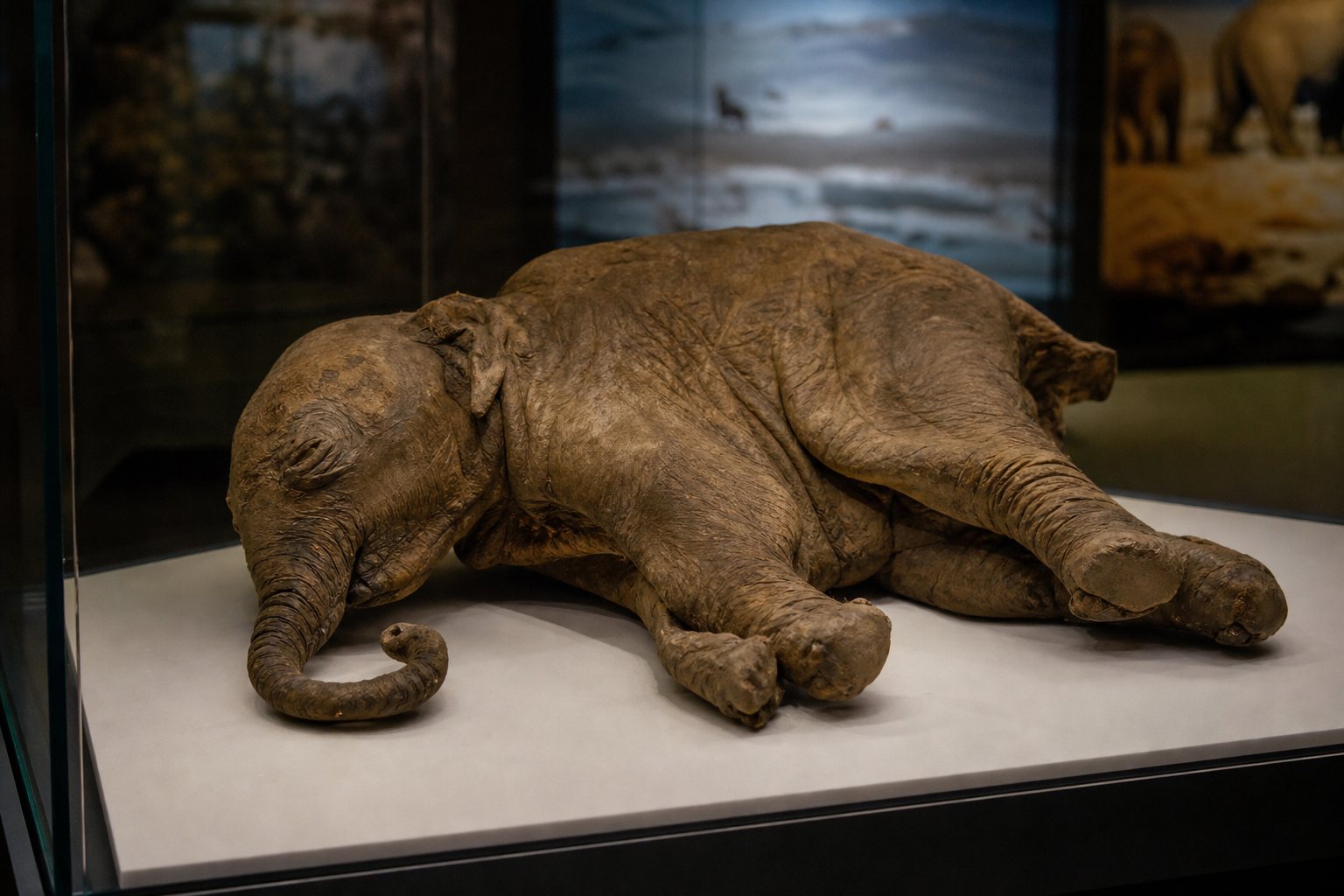
Cold works too. Freezing stops the bacteria that feed on a dead body, so frozen ground can keep skin, hair and even organs.

In 2007 a reindeer herder in Siberia found Lyuba, a baby mammoth about 42,000 years old, almost intact.

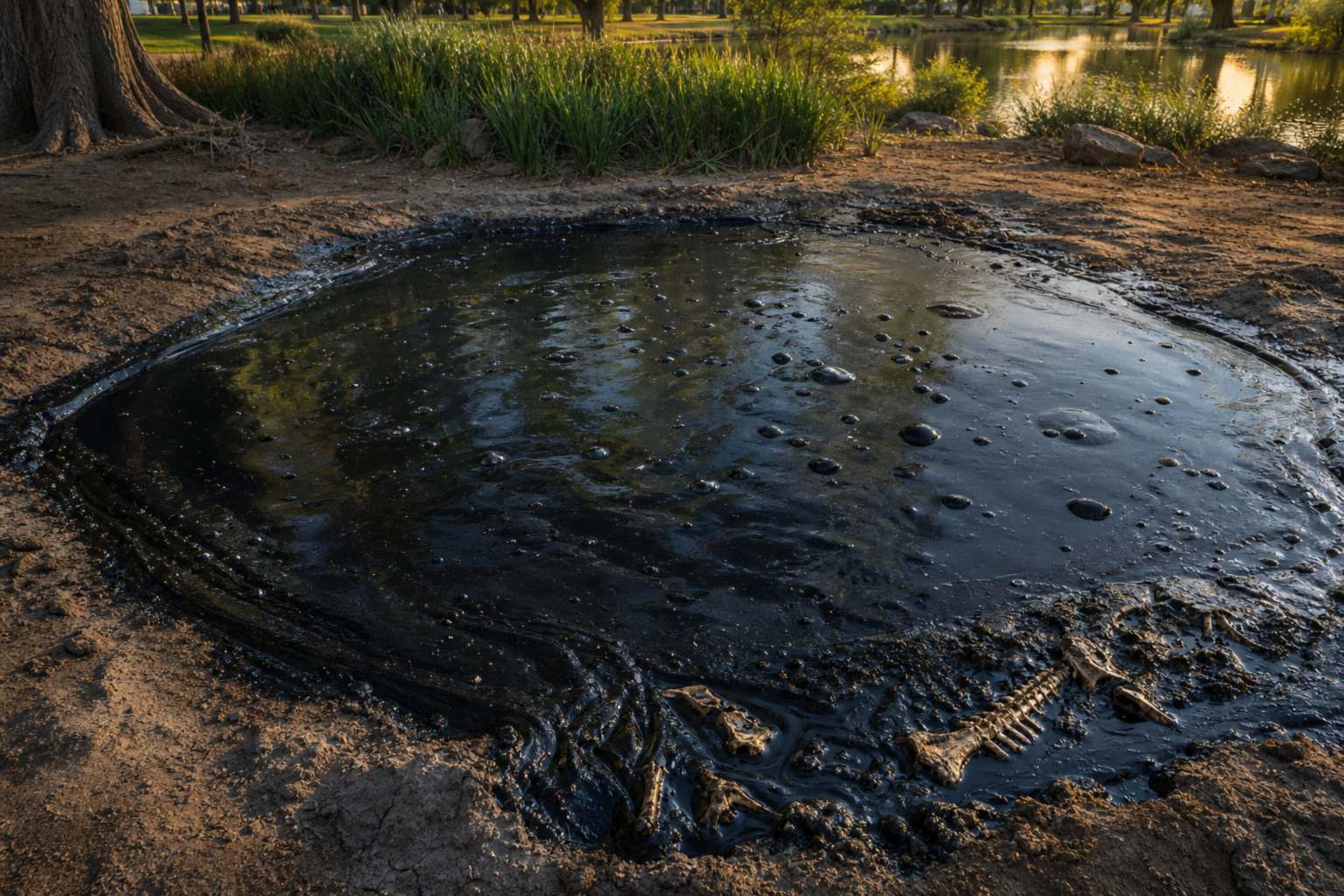
At La Brea, in Los Angeles, natural asphalt seeping up from an oil field has trapped animals for tens of thousands of years.

Digs there since 1906 have found millions of fossils.

A frozen calf A baby mammoth in a museum case. Lyuba was almost fully intact, with organs and eyelashes preserved. AI-generated illustration.
sabre-tooth cats
dire wolves, mammoths, mastodons and ancient camels, all from the tar pits
City of Los Angeles
An asphalt seep Oil from the field below rises through cracks and pools at the surface. AI-generated illustration.
Chapter III · Amber, ice and tar

Ice and tar

Live Science (how nature preserves prehistoric creatures): cold halts decomposition by preventing the growth of the bacteria that would feed on the flesh; at tar pits, animals were trapped in the thick, sticky asphalt. Phys.org (AFP, 2012): Lyuba, a female baby woolly mammoth about 42,000 years old, was found by a reindeer herder on Russia’s Yamal Peninsula in 2007, almost fully intact with organs and eyelashes; scientists think she drowned in mud. City of Los Angeles: at the La Brea Tar Pits, asphalt seeping up from an oil field trapped and preserved plants and animals for tens of thousands of years; excavations since 1906 have recovered millions of specimens, including sabre-tooth cats, dire wolves, mammoths, mastodons and ancient camels.

The 3D scenes are simplified teaching models, not to scale; the ages in the rock column are made-up example numbers.

Sources: Live Science: Frozen mammoths, bog men and tar wolves: how nature preserves prehistoric creatures; Phys.org / AFP (2012): 42,000-year-old baby mammoth on show in Hong Kong (Lyuba); City of Los Angeles: Beneath Los Angeles lies a 50,000-year-old Ice Age time capsule (La Brea Tar Pits); Oxford University Museum of Natural History, Learning Zone: Different types of fossils

Chapter IV · Windows in the rock

Chapter IV · Windows in the rock

Where soft bodies survive

The Burgess Shale and Messel.

Very rarely, soft parts survive too. Such places are called Lagerstätten, German for storage places.

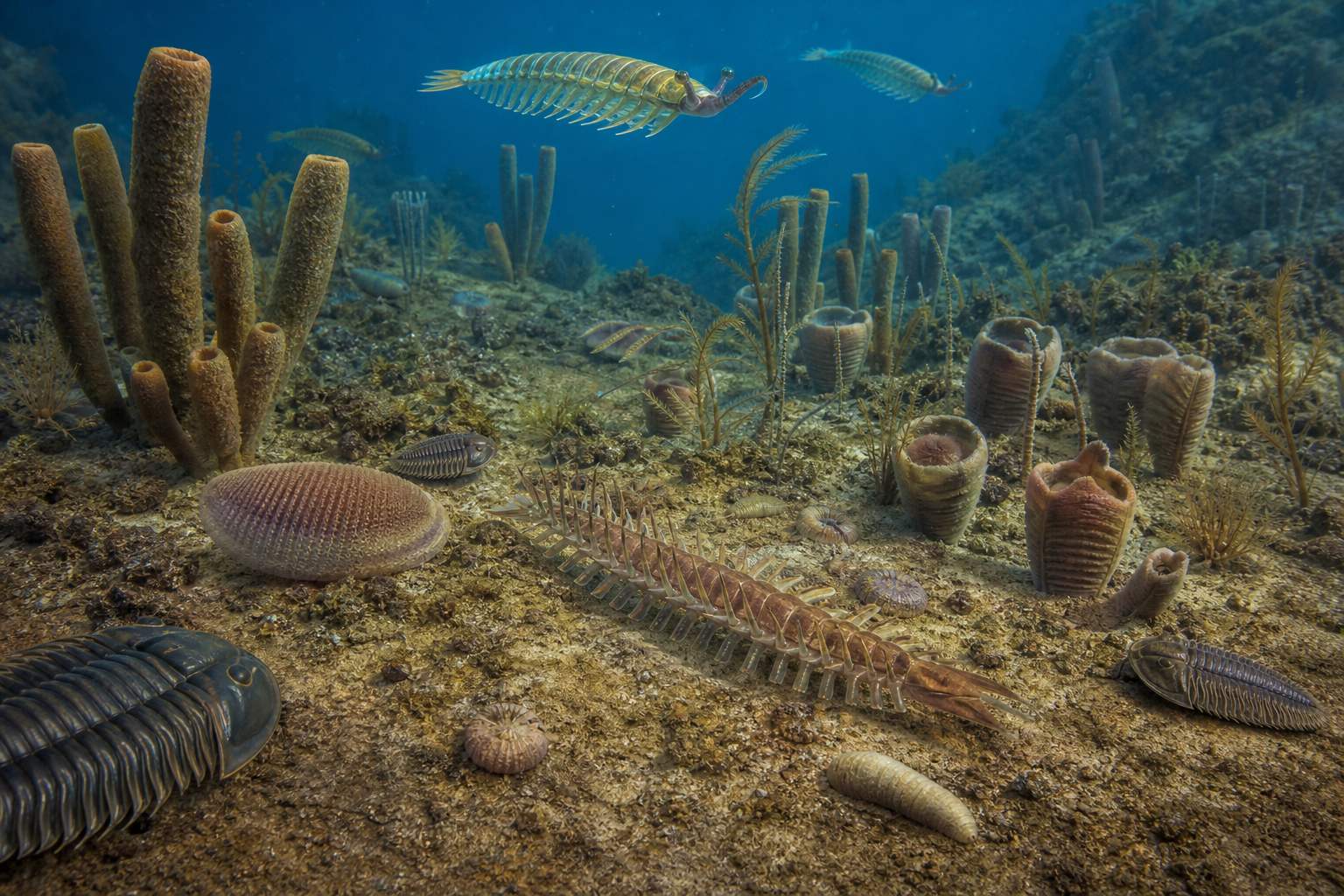
In the Burgess Shale, in the Canadian Rockies, floods of sediment buried sea creatures some 505 to 510 million years ago, in the Cambrian period, soft parts and all.

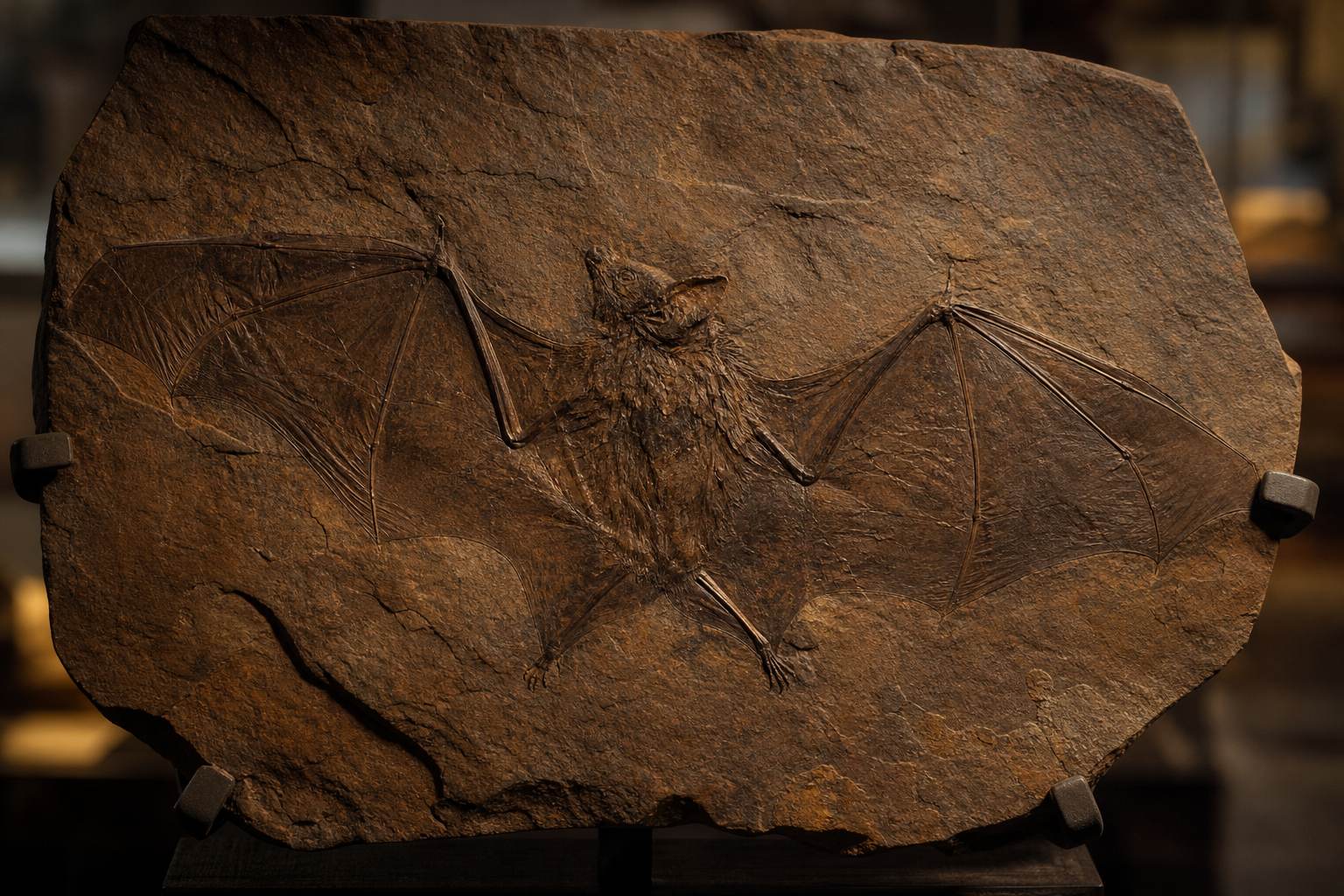
At Messel, in Germany, animals sank into a lake about 47 million years ago. Its still, oxygen-poor bottom kept scavengers and burrowers away.

There, fur, feathers and even the outlines of skin survived around the skeletons.

A Cambrian sea floor Sponges, trilobites (extinct sea animals with jointed shells) and soft-bodied swimmers, as reconstructed from the Burgess Shale. AI-generated illustration.
47–48 Ma
age of the fossil layers
1,000+
species of plants and animals
Messel Pit (UNESCO)
Messel oil shale A bat pressed flat in dark shale, the shadow of its wings still visible. AI-generated illustration.
Chapter IV · Windows in the rock

Lagerstätten

Everything Dinosaur: Lagerstätte (plural Lagerstätten) joins the German Lager, “storage”, and Stätte, “place”: a rock layer with exceptionally well-preserved fossils. The Canadian Encyclopedia: the Burgess Shale fossils are from the middle Cambrian, 505–510 million years ago, discovered by Charles Walcott on 30 August 1909 in Yoho National Park; sediment sometimes entered the sea in huge volumes and buried the animals, which lived in a sea where the Rocky Mountains now stand. UNESCO: the Messel fossil record dates from 47–48 million years ago, with over 1,000 species. Wikipedia (Messel Pit): about 47 million years old, dated from basalt beneath the fossil layers; a maar lake surrounded by subtropical forest, whose little-disturbed, low-oxygen bottom kept out scavengers and burrowers; fur, feathers and “skin shadows” are preserved; a World Heritage Site since 1995.

The 3D scenes are simplified teaching models, not to scale; the ages in the rock column are made-up example numbers.

Sources: Everything Dinosaur: the term Lagerstätte defined; The Canadian Encyclopedia: Burgess Shale fossils; Wikipedia: Burgess Shale; Wikipedia: Messel Pit; UNESCO World Heritage Centre: Messel Pit Fossil Site

Chapter V · Back to the surface

Chapter V · Back to the surface

The long way up

How buried bones come back into the light.

A fossil sealed deep in rock has to come back to the surface before anyone can find it.

Over millions of years, movements of Earth’s crust can lift old sea floors and river beds into hills and mountains.

Then rain, rivers, wind and frost wear the rock away, layer by layer.

One day a piece of bone starts to weather out of a hillside. Fossil hunters walk such slopes looking for fragments.

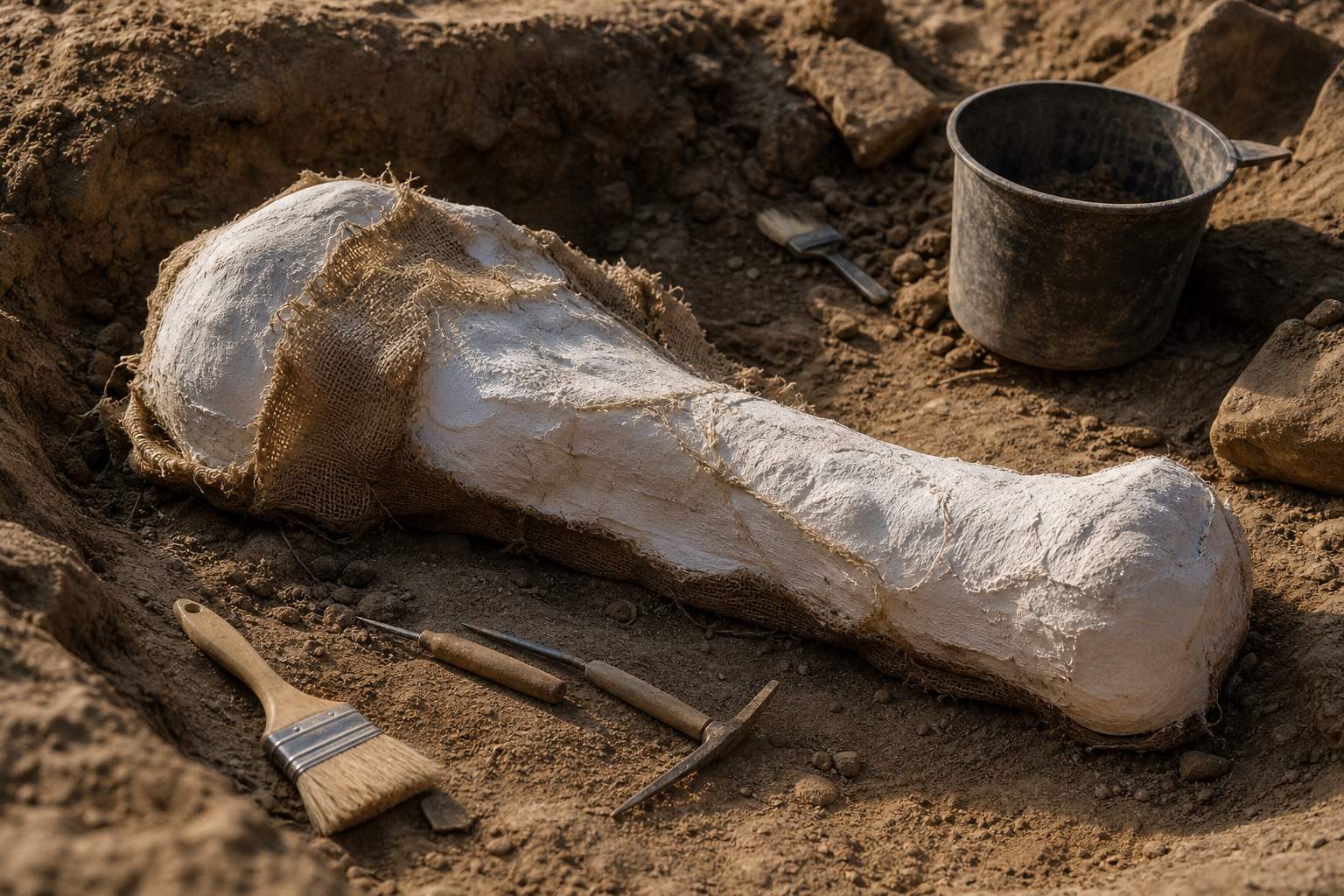
Exposed bone is fragile, and the weather that freed it will wear it away, so finds are dug out with fine picks and wrapped in plaster jackets.

sea → mountains
the Burgess Shale animals lived in a sea where the Rockies now stand
The Canadian Encyclopedia
  • uplift raises the buried layers
  • erosion strips the rock above
  • the bone weathers out
Back to the surface
A plaster jacket Plaster and burlap protect a fragile bone on its way to the lab. AI-generated illustration.
Chapter V · Back to the surface

Finding fossils

The Canadian Encyclopedia: the Burgess Shale animals lived in a sea that covered the area now occupied by the Rocky Mountains. Thomas Holtz (University of Maryland): palaeontologists walk the badlands looking for fragments of bone and teeth weathering out of the sediment and trace them to their layer; exposed bone is fragile, so they dig with awls and dental picks, harden it with a consolidant, and carry large bones in jackets of plaster and burlap to a museum lab.

The 3D scenes are simplified teaching models, not to scale; the ages in the rock column are made-up example numbers.

Sources: The Canadian Encyclopedia: Burgess Shale fossils; Thomas Holtz, University of Maryland, GEOL 104: Dinosaur field work (prospecting, excavation, jackets)

Chapter V · Back to the surface

The finders

From an English beach to a Thai valley.

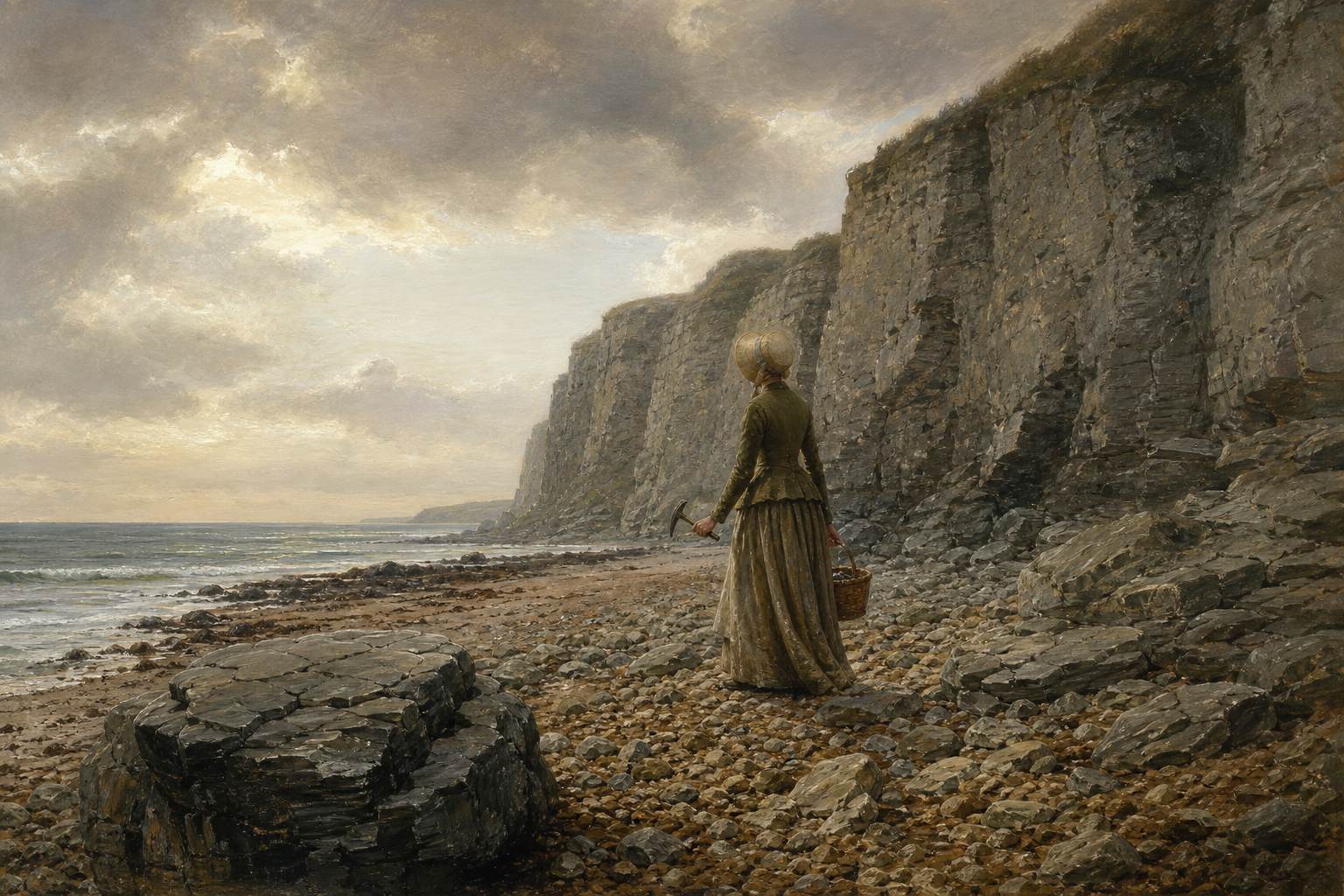
Some of the first great finds came from the sea cliffs of Lyme Regis, in England.

There, in 1812, a thirteen-year-old fossil seller, Mary Anning, dug out the skeleton of an ichthyosaur, a sea reptile.

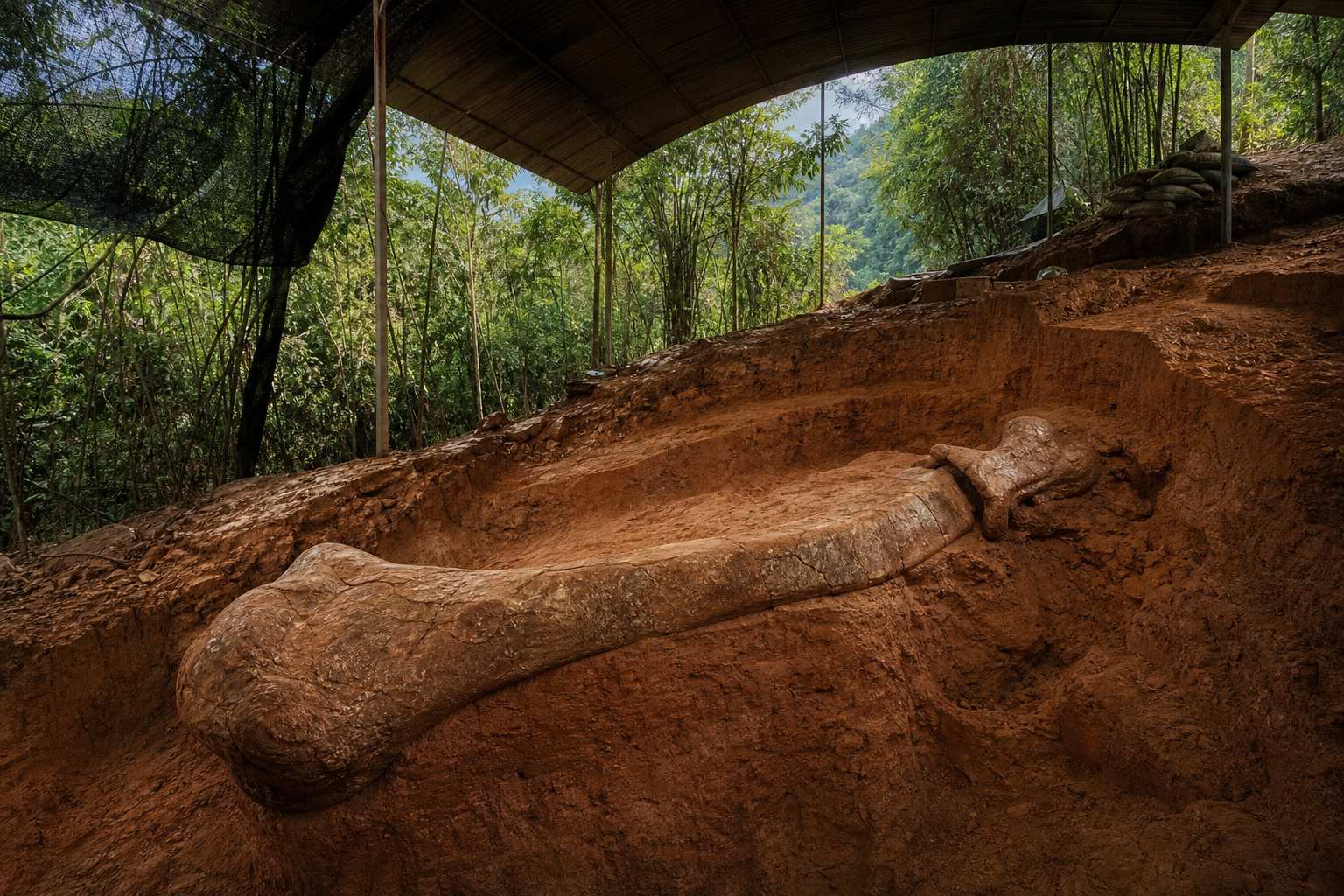
Thailand’s story began in 1976, when the geologist Sudham Yaemniyom, searching for uranium at Phu Wiang in Khon Kaen, found part of a dinosaur thigh bone.

It is regarded as Thailand’s first dinosaur find. In 1994 a long-necked plant-eater from Phu Wiang, a sauropod, was named Phuwiangosaurus sirindhornae.

  1. 1799 born in Lyme Regis
  2. 1811–12 brother Joseph finds the skull; Mary digs out the skeleton
  3. 1823 first complete plesiosaur skeleton
  4. 1847 dies, aged 47
Mary Anning (NHM, Geological Society)
A fossil hunter, 1810s A period-style painting of a collector on the beach below the cliffs; not a real portrait. AI-generated illustration.
1976
Huai Pratu Ti Ma, Phu Wiang (The Nation)
~130 Ma
age of the Sao Khua Formation there (Wikipedia)
Thailand (The Nation; Wikipedia)
Phu Wiang, Khon Kaen A sauropod thigh bone left in place under a shelter, as at Thai excavation sites. AI-generated illustration.
Chapter V · Back to the surface

The finders

Natural History Museum, London: Mary Anning was born in Lyme Regis in 1799; her brother Joseph found an ichthyosaur skull in autumn 1811, and Mary dug out the skeleton from November 1812; in December 1823 she found the first complete Plesiosaurus skeleton; in 1828 she uncovered remains later attributed to the pterosaur Dimorphodon; she died in 1847. The Geological Society: the family sold fossils; in 1824 a visitor wrote that scientists “all acknowledge that she understands more of the science than anyone else in this kingdom”. The Nation (2026): in 1976 the geologist Sudham Yaemniyom, during uranium exploration, found a large femur at Huai Pratu Ti Ma in the Phu Wiang valley, Khon Kaen, described as the nation’s first dinosaur fossil. Wikipedia: the bone was part of a sauropod femur, regarded as Thailand’s first dinosaur discovery (it also mentions fossils found in 1973 during uranium surveys); Phuwiangosaurus sirindhornae was named in 1994; the Phu Wiang dinosaurs come from the Sao Khua Formation, about 130 million years old.

The 3D scenes are simplified teaching models, not to scale; the ages in the rock column are made-up example numbers.

Sources: Natural History Museum, London: Mary Anning, the unsung hero of fossil discovery; The Geological Society: Mary Anning (1799–1847); The Nation Thailand (1 Sep 2026): Celebrating 50 years of Thailand’s dinosaur discoveries; Wikipedia: Paleontology in Thailand (Phu Wiang, 1976; Phuwiangosaurus sirindhornae, 1994)

Chapter VI · Reading the age

Chapter VI · Reading the age

Order in the rocks

Superposition and index fossils.

How old is a fossil? Start with the rocks: layers of sediment are laid down one on top of another.

So, unless the rocks have been folded or overturned, lower layers are older than the layers above them. This is the law of superposition.

Some kinds of living things existed for only a short slice of geological time.

Find their fossils, and you know roughly how old the layer is. These are called index fossils.

  • lower layer → older
  • upper layer → younger
  • unless folded or overturned
Relative dating (UC Berkeley)
older / younger
layers give an order, not a number of years
Relative, not absolute
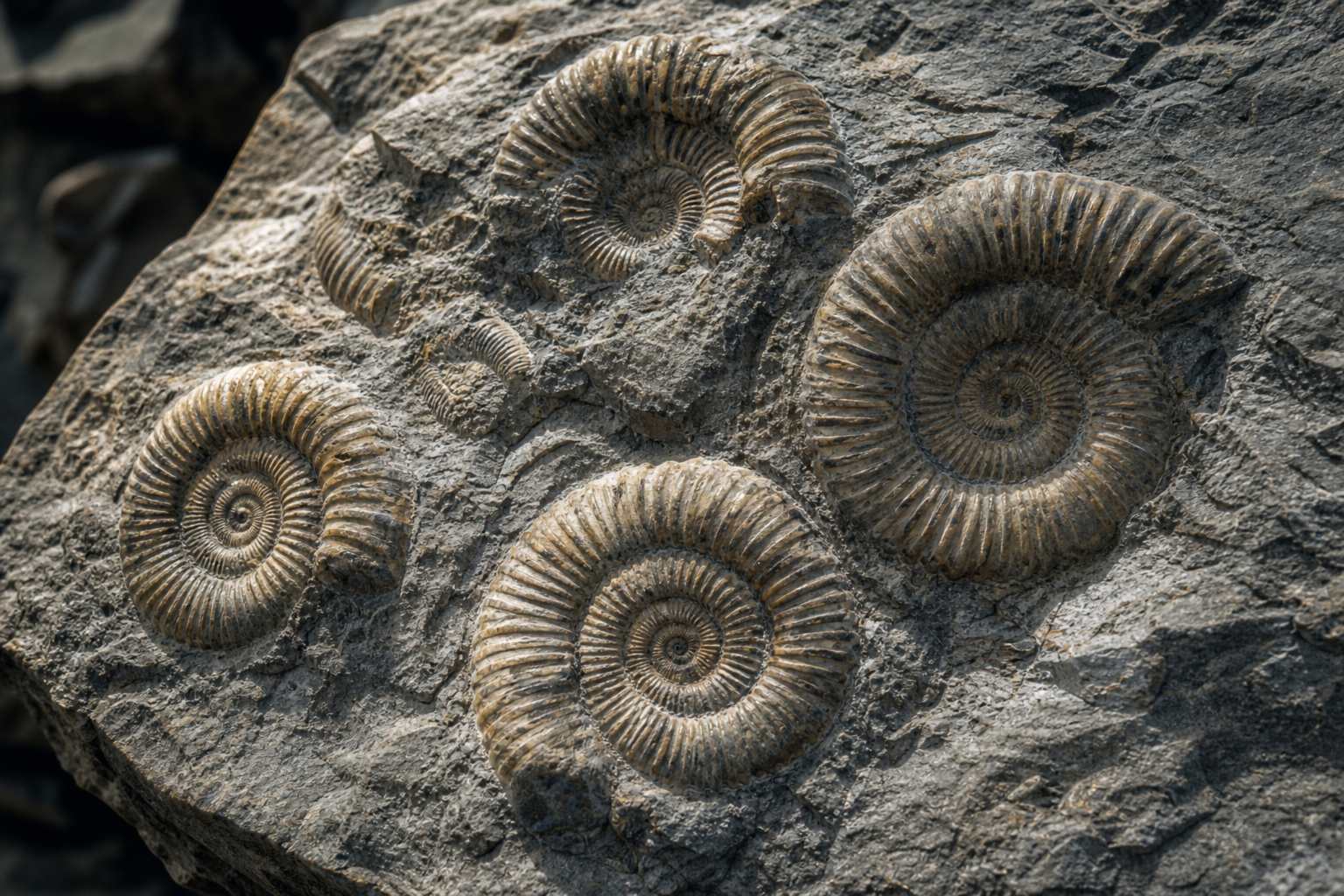
Shells in limestone Ammonites, coiled relatives of squid, packed into one layer. AI-generated illustration.
Chapter VI · Reading the age

Relative dating

UC Museum of Paleontology (Understanding Evolution): fossils in lower strata were deposited earlier and so are older than those in higher strata, although rocks can be overturned or displaced; index fossils are fossils restricted to a particular geologic age, so they help date nearby rocks and fossils.

Use the Older or younger? and Index fossil buttons in the scene.

The 3D scenes are simplified teaching models, not to scale; the ages in the rock column are made-up example numbers.

Sources: University of California Museum of Paleontology, Understanding Evolution: Chronology (relative and radiometric dating of fossils)

Chapter VI · Reading the age

Clocks in the ash

Bracketing a fossil between two dates.

Layers only give an order. For an age in years, geologists look for volcanic ash.

Ash from an eruption holds crystals containing radioactive atoms.

Those atoms slowly change into other atoms at a steady, known rate: a clock that starts when the crystal forms.

Date an ash layer below the fossil and one above it, and the fossil must lie between the two ages. Press Date the layers.

Most fossils cannot be dated directly. Remains younger than about 50,000 years can be, with a different clock: radiocarbon.

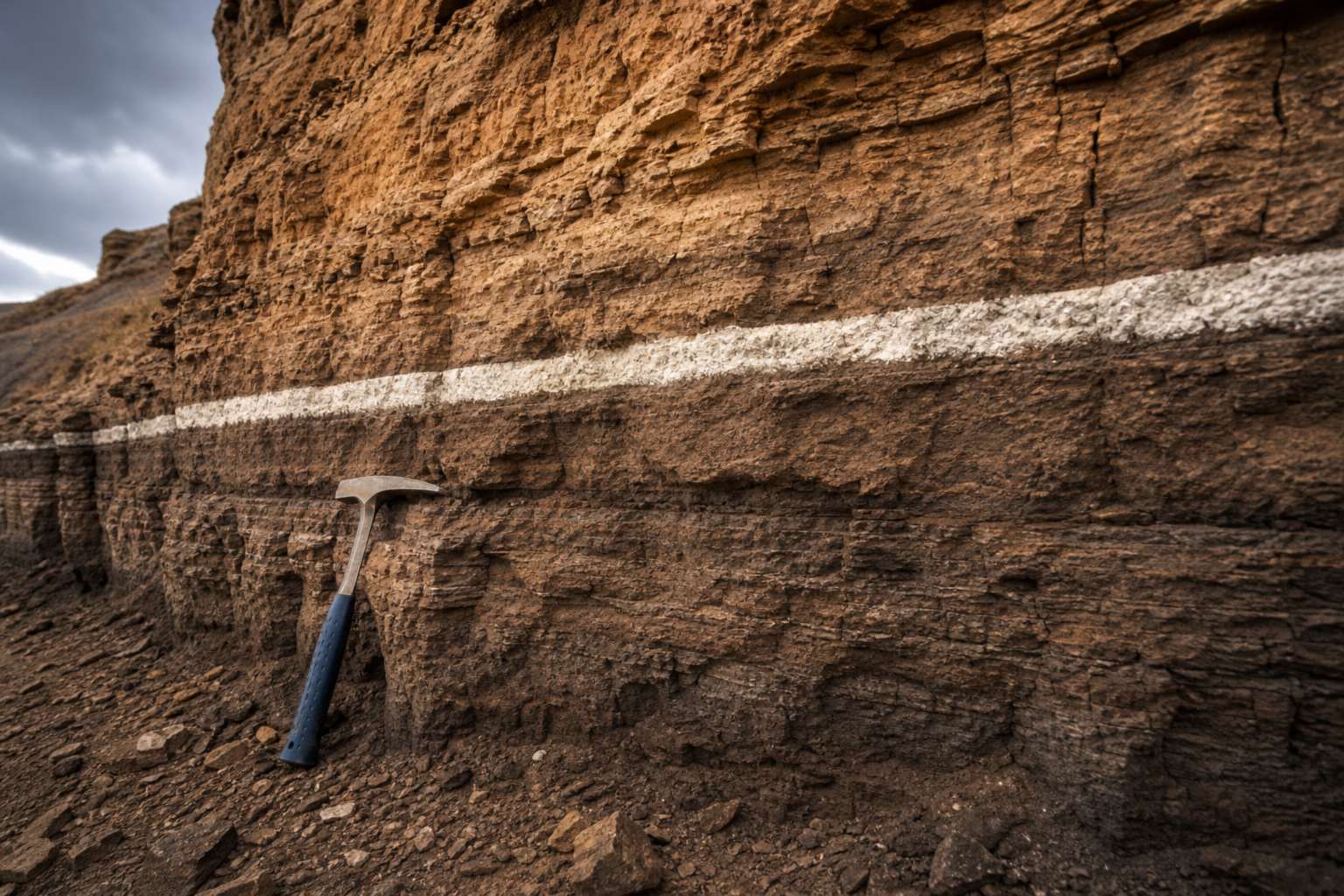
An ash band A pale layer of volcanic ash between darker sediments. AI-generated illustration.
  • white bands: volcanic ash
  • the fossil lies between them
  • the ages shown are made-up examples
In the scene
520–545 Ma
trilobites dated by ash layers above and below
A bracketed age (UC Berkeley example)
Chapter VI · Reading the age

Radiometric dating

UC Museum of Paleontology (Understanding Evolution): fossils are dated indirectly by dating volcanic ash layers above and below the fossil-bearing layer, so that, for example, some trilobites are known to be older than 520 but younger than 545 million years; for the most part fossils themselves cannot be dated directly from radioactive elements, except fossils younger than about 50,000 years, which can be dated with radiocarbon. The Messel layers were dated in the same spirit, from basalt beneath them (Wikipedia).

Press Date the layers in the scene. The ages there are made-up examples.

The 3D scenes are simplified teaching models, not to scale; the ages in the rock column are made-up example numbers.

Sources: University of California Museum of Paleontology, Understanding Evolution: Chronology (relative and radiometric dating of fossils); Wikipedia: Messel Pit

Chapter VII · Can anything soft survive?

Chapter VII · Can anything soft survive?

An open question

Twenty years of argument over dinosaur soft tissue.

Can anything soft survive for millions of years? For a long time, most scientists assumed not.

Then in 2005, Mary Schweitzer’s team reported in Science that a Tyrannosaurus bone, about 68 million years old, held flexible, vessel-like structures once its minerals were dissolved.

Her team later reported fragments of collagen, a bone protein, as well.

In 2008, Thomas Kaye and colleagues argued that such material could be biofilm, a slime made by bacteria long after death.

The new Brazilian study reports heme signals inside mineralised, cell-like shapes.

And Schweitzer, whose own discovery started this debate, is cautious this time: she says the shapes are the wrong size and shape for reptile blood cells, which keep a nucleus.

Contamination is hard to rule out, and few labs have repeated such results. Press the two views to compare them.

~68 Ma
T. rex femur: “still transparent and pliable” (NC State)
Science, 25 March 2005
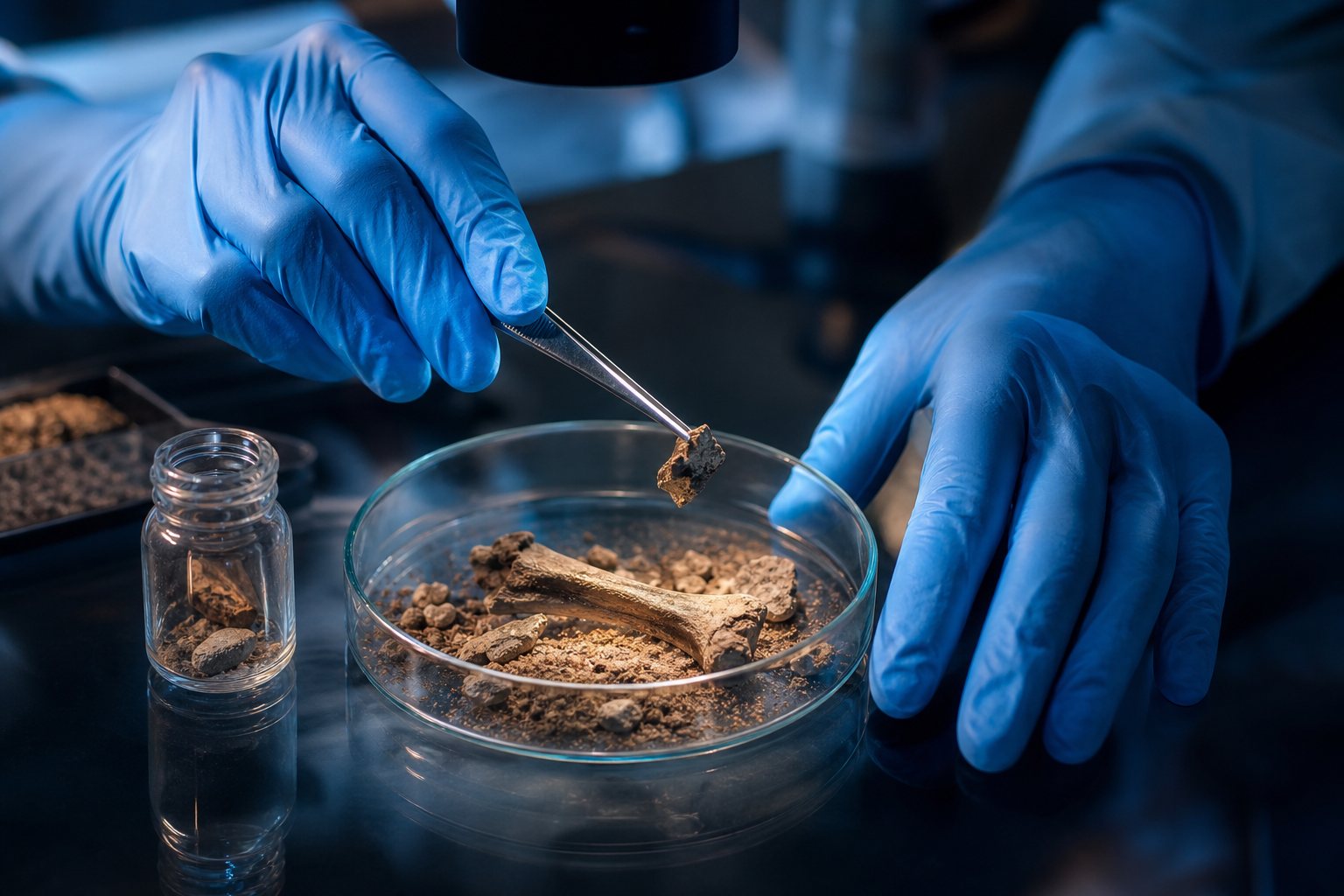
In the lab Dissolving the mineral out of a fossil fragment leaves only what is not stone. AI-generated illustration.
You have to go where the science leads, and the science leads me to believe that this is bacterial biofilm.Thomas Kaye, 2008 (University of Washington)
  • modern bacteria and lab handling can add molecules
  • shapes can look like cells without being cells
  • independent labs rarely repeat the results
Why it is hard to settle
Chapter VII · Can anything soft survive?

The soft-tissue debate

NC State University (2005): Schweitzer’s team reported in Science (25 March 2005) that after stripping the mineral from a fragment of a roughly 68-million-year-old T. rex femur, flexible, hollow, transparent vessels and cell-like structures remained. University of Washington (2008): Thomas Kaye and colleagues argued in PLoS ONE that such material was bacterial biofilm, that iron-rich spheres taken for blood cells were mineral framboids, and that radiocarbon placed the biofilm around 1960. Smithsonian Magazine noted that Kaye did not sample the same T. rex specimen. EARTH Magazine (2017): Schweitzer’s team later reported collagen peptides; critics such as Matthew Collins point to possible contamination, and independent replication is the main missing piece. Live Science (2026): Schweitzer praised the new PNAS study’s rigour and agrees that original molecules can persist, but doubts the red-blood-cell identification on shape and size.

Press Study’s view and Sceptics’ view in the scene. Both drawings are schematic.

The 3D scenes are simplified teaching models, not to scale; the ages in the rock column are made-up example numbers.

Sources: North Carolina State University via EurekAlert (24 Mar 2005): soft tissue in a Tyrannosaurus rex bone (Schweitzer et al., Science); University of Washington (29 Jul 2008): New research challenges notion that dinosaur soft tissues still survive (Kaye et al., PLoS ONE); Smithsonian Magazine: T. rex protein was mere bacterial goop? (the 2008 biofilm debate); EARTH Magazine (Oct 2017): Cretaceous collagen: can molecular paleontology glean soft tissue from dinosaurs?; Live Science (Nov 2026): Traces of ancient blood found in 115-million-year-old dinosaur fossil, new study claims (with comment by Mary Schweitzer); ScienceDaily / Curtin University (Nov 2026): Scientists find traces of blood in a 115-million-year-old dinosaur bone (Grice et al., PNAS 123(46), doi:10.1073/pnas.2614248123)

Epilogue

Epilogue

Lucky survivors

What fossils tell us, and the sources.

Fossils, in the order the rocks lay them down, record how life has changed over hundreds of millions of years, and how climates changed too.

Each one is a lucky survivor: buried fast, sealed from decay, turned to stone, lifted up, and found before the weather wore it away.

As for the bones from Brazil, what would settle it is other laboratories repeating the result. Until then, it is a claim worth testing.

  1. 505–510 Ma Burgess Shale
  2. ~230 Ma oldest amber with inclusions
  3. ~130 Ma Phu Wiang dinosaurs
  4. ~115 Ma Aratasaurus, Brazil
  5. ~68 Ma Schweitzer’s T. rex
  6. ~47 Ma Messel lake
  7. ~42,000 yr Lyuba the mammoth
Through deep time (Ma = million years ago)
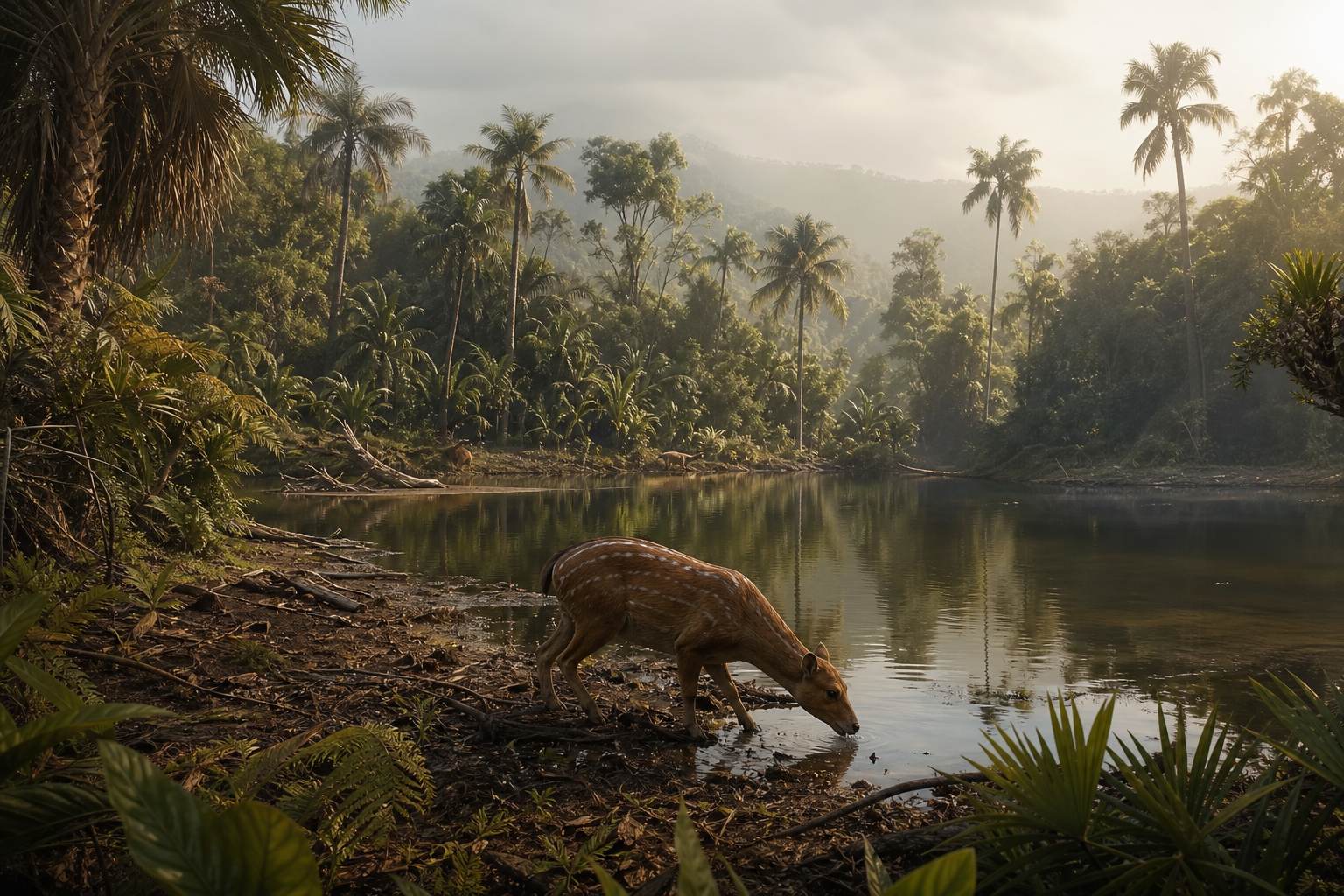
Messel, 47 million years ago A reconstruction of the warm forest lake: Messel’s fossils come from a lake ringed by subtropical forest in what is now central Germany. AI-generated illustration.
  • independent labs repeating the result (the missing piece, says EARTH Magazine)
  • ruling out modern contamination
  • shapes that match real blood cells
What would settle the Brazil claim
Epilogue · Sources

Sources

Every fact in this film comes from the sources below. The new PNAS study is one study; its interpretation is debated and is presented here as a claim, with the doubts of other scientists. The chapter stills and pictures are AI-generated illustrations; none is a photograph of a real fossil, place or person, and the painting of a collector is not a portrait of Mary Anning. The 3D scenes are simplified teaching models, and the ages in the rock column are made-up example numbers. Wikipedia (Messel Pit): the lake was surrounded by subtropical forests. UC Berkeley: the order of fossils in the rocks (faunal succession) is evidence for how life changed over time.

Sources: ScienceDaily / Curtin University (Nov 2026): Scientists find traces of blood in a 115-million-year-old dinosaur bone (Grice et al., PNAS 123(46), doi:10.1073/pnas.2614248123); Live Science (Nov 2026): Traces of ancient blood found in 115-million-year-old dinosaur fossil, new study claims (with comment by Mary Schweitzer); Wikipedia: Aratasaurus (Romualdo Formation, Ceará, Brazil; described 2020); The Open University, OpenLearn: Fossil soft parts (decay, scavengers and preservation); Live Science: How do fossils form?; Live Science: Frozen mammoths, bog men and tar wolves: how nature preserves prehistoric creatures; Oxford University Museum of Natural History, Learning Zone: Different types of fossils; Seyfullah & Schmidt, Palaeontology Online (2015): Fossil focus: amber; Phys.org / AFP (2012): 42,000-year-old baby mammoth on show in Hong Kong (Lyuba); City of Los Angeles: Beneath Los Angeles lies a 50,000-year-old Ice Age time capsule (La Brea Tar Pits); Everything Dinosaur: the term Lagerstätte defined; The Canadian Encyclopedia: Burgess Shale fossils; Wikipedia: Burgess Shale; Wikipedia: Messel Pit; UNESCO World Heritage Centre: Messel Pit Fossil Site; University of California Museum of Paleontology, Understanding Evolution: Chronology (relative and radiometric dating of fossils); Thomas Holtz, University of Maryland, GEOL 104: Dinosaur field work (prospecting, excavation, jackets); Natural History Museum, London: Mary Anning, the unsung hero of fossil discovery; The Geological Society: Mary Anning (1799–1847); Wikipedia: Paleontology in Thailand (Phu Wiang, 1976; Phuwiangosaurus sirindhornae, 1994); The Nation Thailand (1 Sep 2026): Celebrating 50 years of Thailand’s dinosaur discoveries; North Carolina State University via EurekAlert (24 Mar 2005): soft tissue in a Tyrannosaurus rex bone (Schweitzer et al., Science); University of Washington (29 Jul 2008): New research challenges notion that dinosaur soft tissues still survive (Kaye et al., PLoS ONE); Smithsonian Magazine: T. rex protein was mere bacterial goop? (the 2008 biofilm debate); EARTH Magazine (Oct 2017): Cretaceous collagen: can molecular paleontology glean soft tissue from dinosaurs?