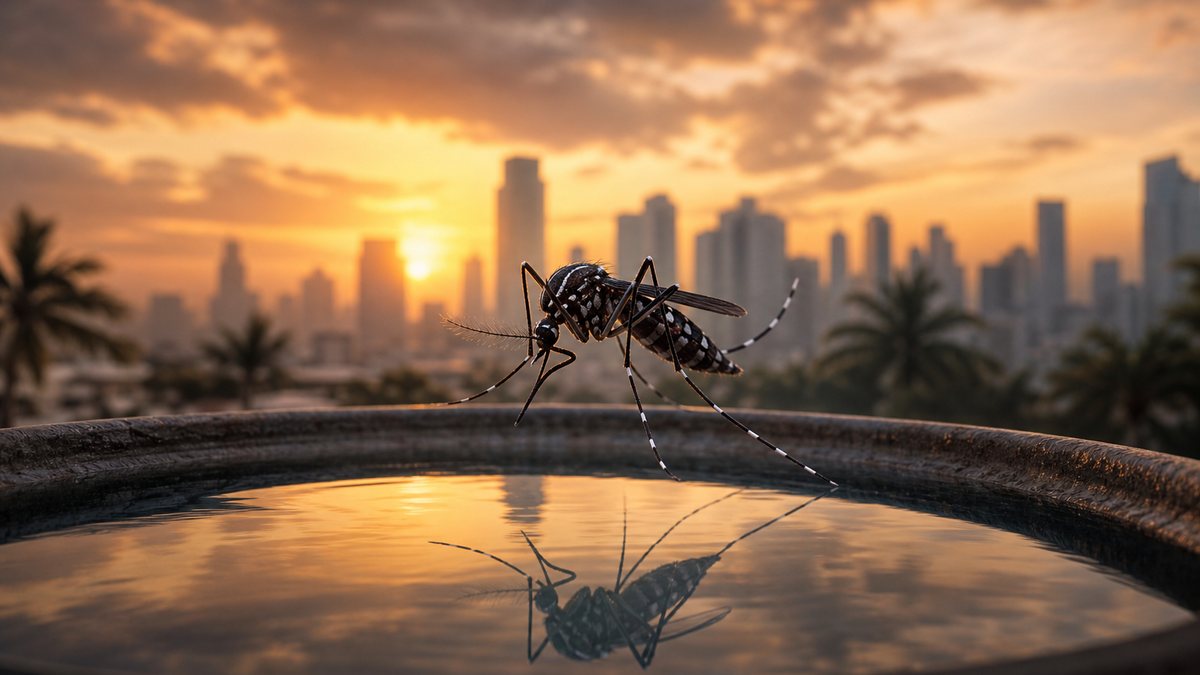
In October 2026 Bangladesh recorded its deadliest month of dengue that year, and by 8 November its health services counted 462 deaths and nearly 150,000 hospital admissions. This film explains the established science behind that news: the dengue virus and its four serotypes, first isolated in 1943–44; the epidemics of 1779–80 and Benjamin Rush’s description of breakbone fever; the Aedes aegypti mosquito, which prefers people and bites by day; eggs that survive months of drying and hatch when water returns; the 8 to 12 days the virus needs inside a mosquito; why warmth, crowded cities and stored water help it; the rise from half a million reported cases in 2000 to 14.6 million in 2024; why a second infection with a different type carries a greater risk of severe dengue, and a leading explanation, antibody-dependent enhancement; WHO’s warning signs; and how dengue is fought, from emptying containers to the Wolbachia method tested in Yogyakarta and the vaccines WHO has prequalified. It is education, not medical advice.
Interactive 3D film10 min1779 to 2026Published 12 November 2026
Get dengue once, and the second time can be worse. And the mosquito that spreads it can breed in the water left in a cup.
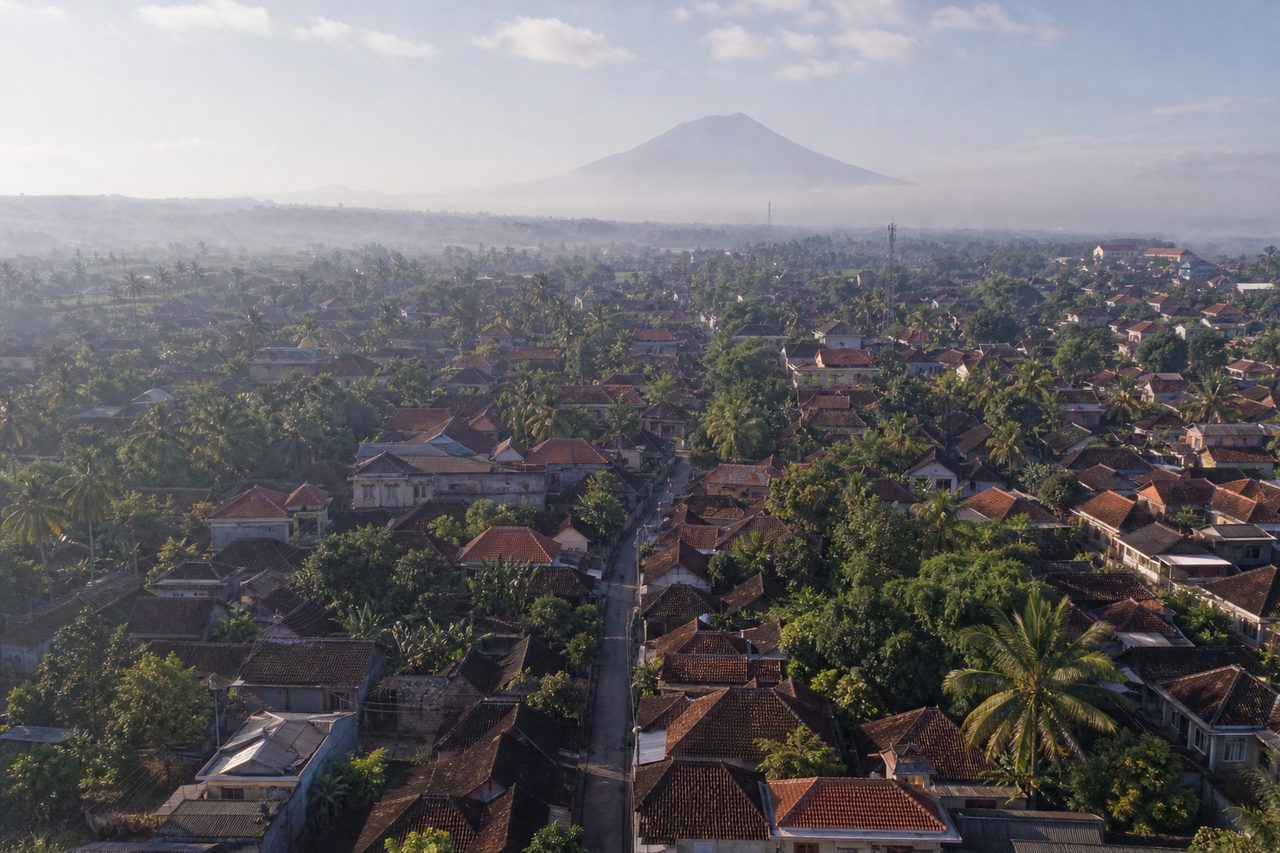
This October was Bangladesh’s deadliest dengue month of the year, with 173 deaths, Reuters reported.
And Bangladesh is not alone: dengue now threatens about half the people on Earth.
So how does one bite become an epidemic, and why can the second illness be worse than the first?
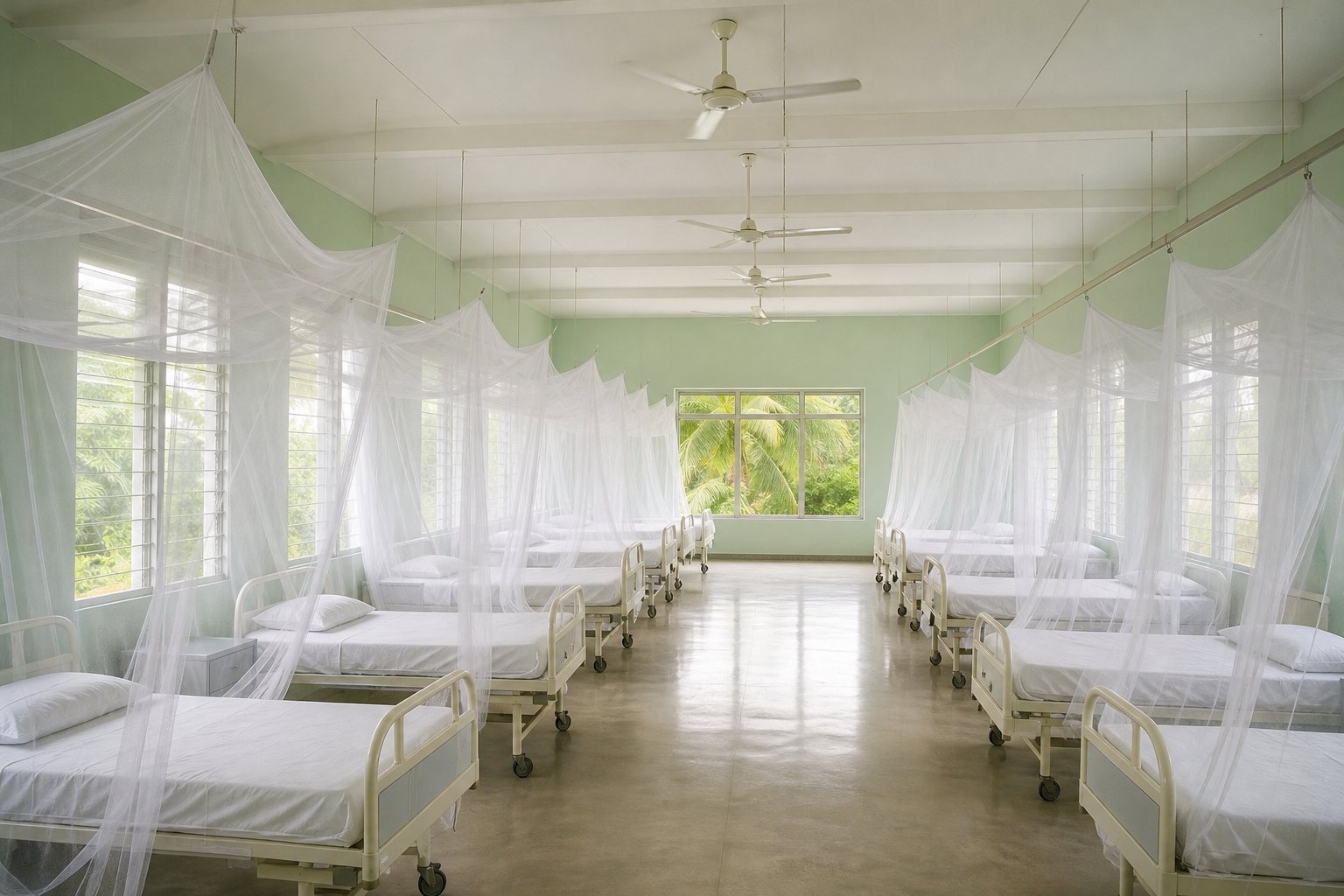
Wards under nets On 31 October one Dhaka hospital had 279 dengue patients under treatment, after 67 admissions in a single day (Reuters). AI-generated illustration.
September
148
October
173
Dengue deaths per month, Bangladesh 2026
462
dengue deaths since January
149,913
people admitted to hospital
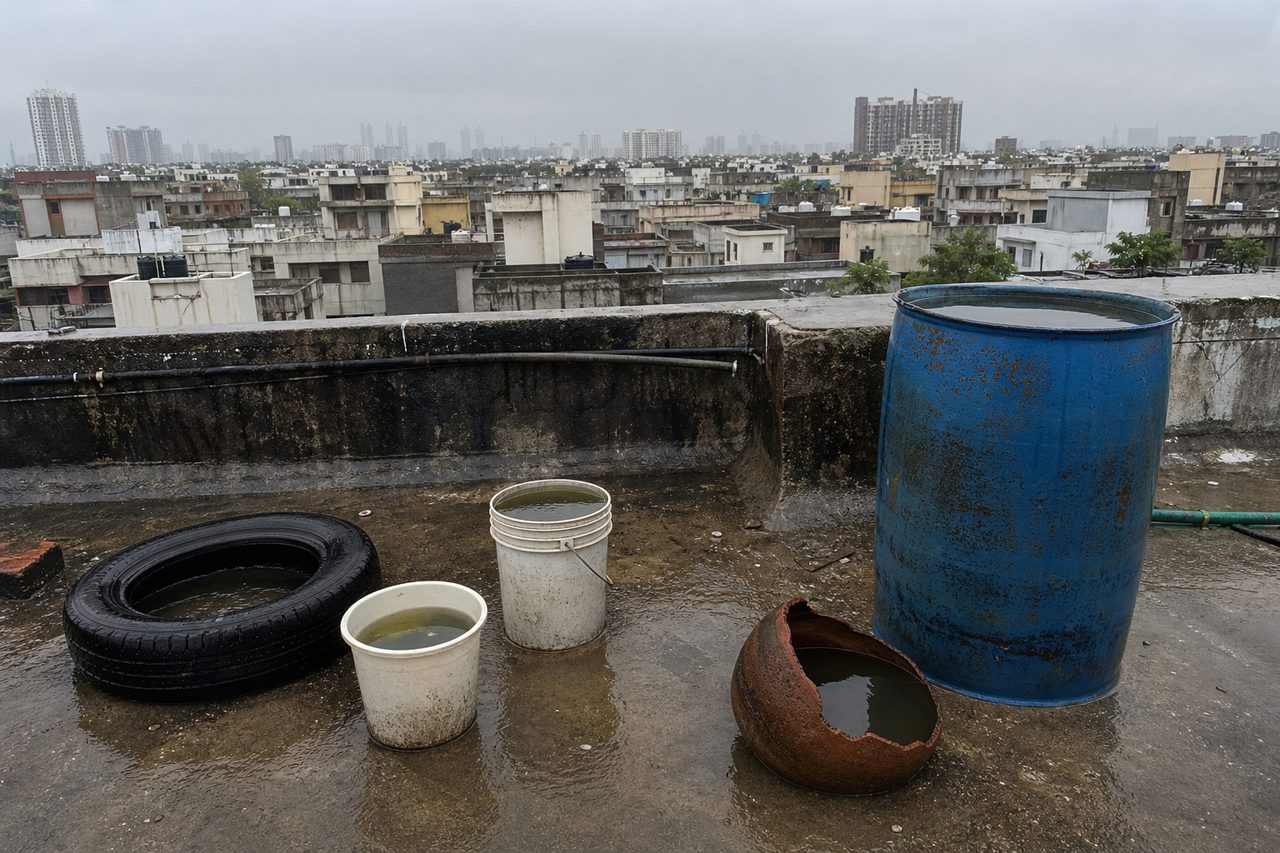
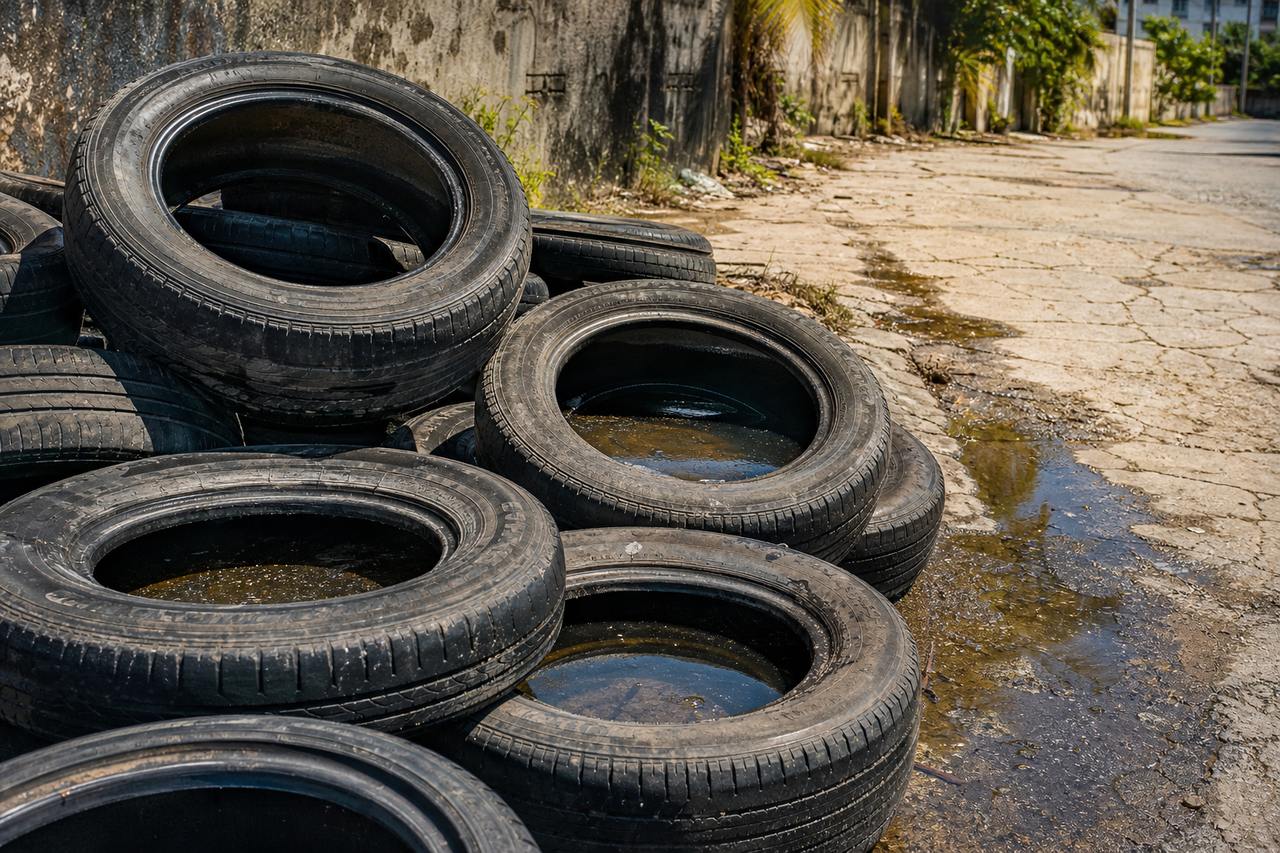
Bangladesh, 2026 (DGHS, via bdnews24, 8 Nov)After the rain A tyre, a bucket, a drum: every pool of rainwater on this roof is a possible mosquito nursery. AI-generated illustration.
Prologue
The news
Reuters (via ARY News, 31 October 2026), citing health ministry data: Bangladesh recorded its highest monthly dengue death toll of the year in October, 173 deaths, against 148 in September; the outbreak had killed 418 people and put more than 133,000 in hospital by 30 October. bdnews24.com (8 November 2026), citing the Directorate General of Health Services (DGHS): 462 deaths and 149,913 hospital admissions so far this year. The DGHS bulletin quoted by bdnews24 on 4 November gives 174 deaths for October; the small difference is between the two counts as published.
WHO: about half of the world’s population is now at risk of dengue.
This is general education, not medical advice. Anyone who feels ill should see a doctor, and the warning signs of severe dengue need urgent medical care.
The 3D scenes are simplified teaching models, not to scale: real virus particles, cells and mosquitoes look different, and the numbers in the scenes are illustrative unless a source is named.
Start with the culprit: a virus, a tiny package of genetic code written in RNA that can only multiply inside living cells.
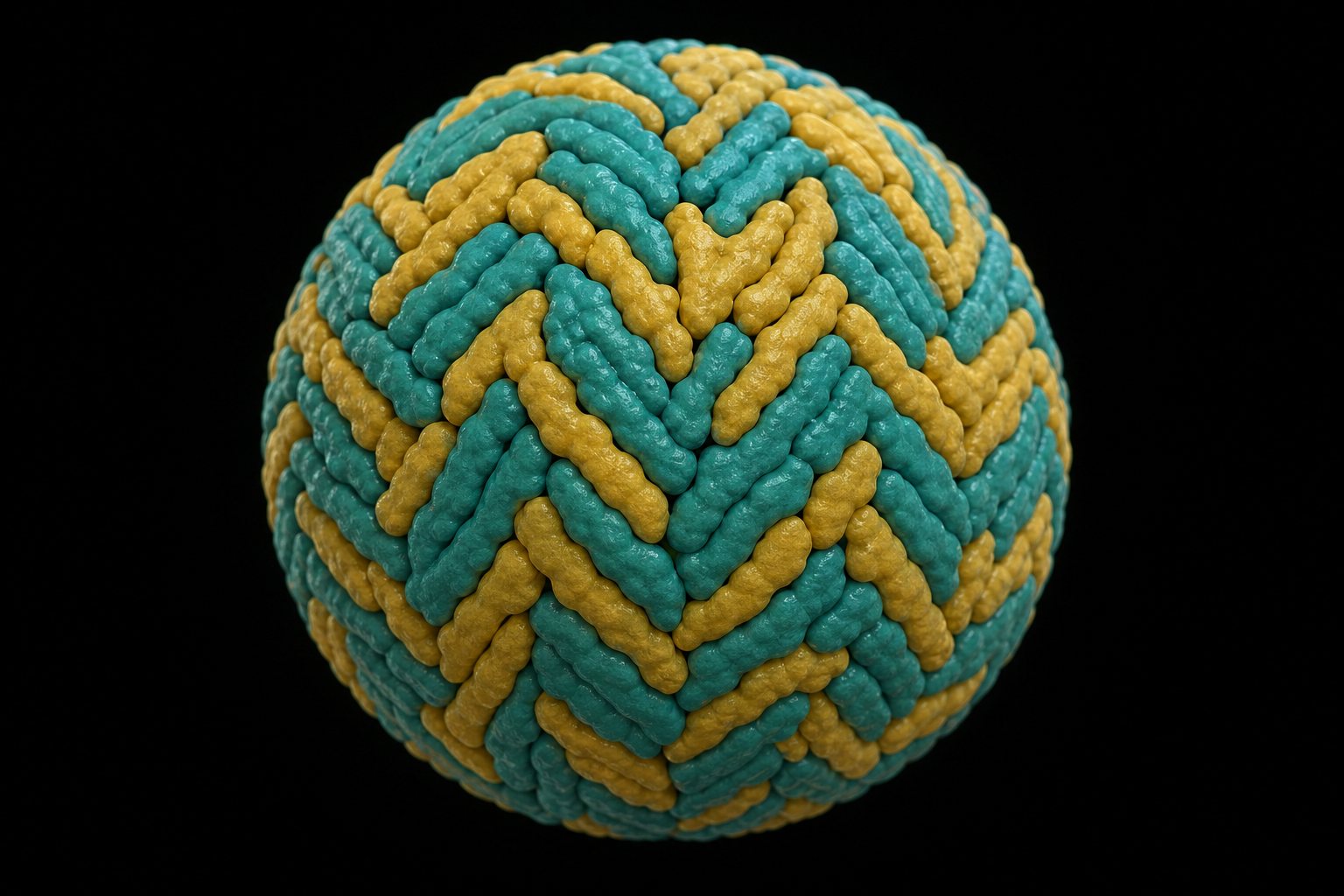
It is a flavivirus, a cousin of yellow fever and Zika, about fifty millionths of a millimetre across.
It was first isolated in 1943, from an epidemic in Nagasaki, Japan.
And there is not one dengue virus but four, called serotypes: close cousins, DENV-1 to DENV-4, that the immune system tells apart.
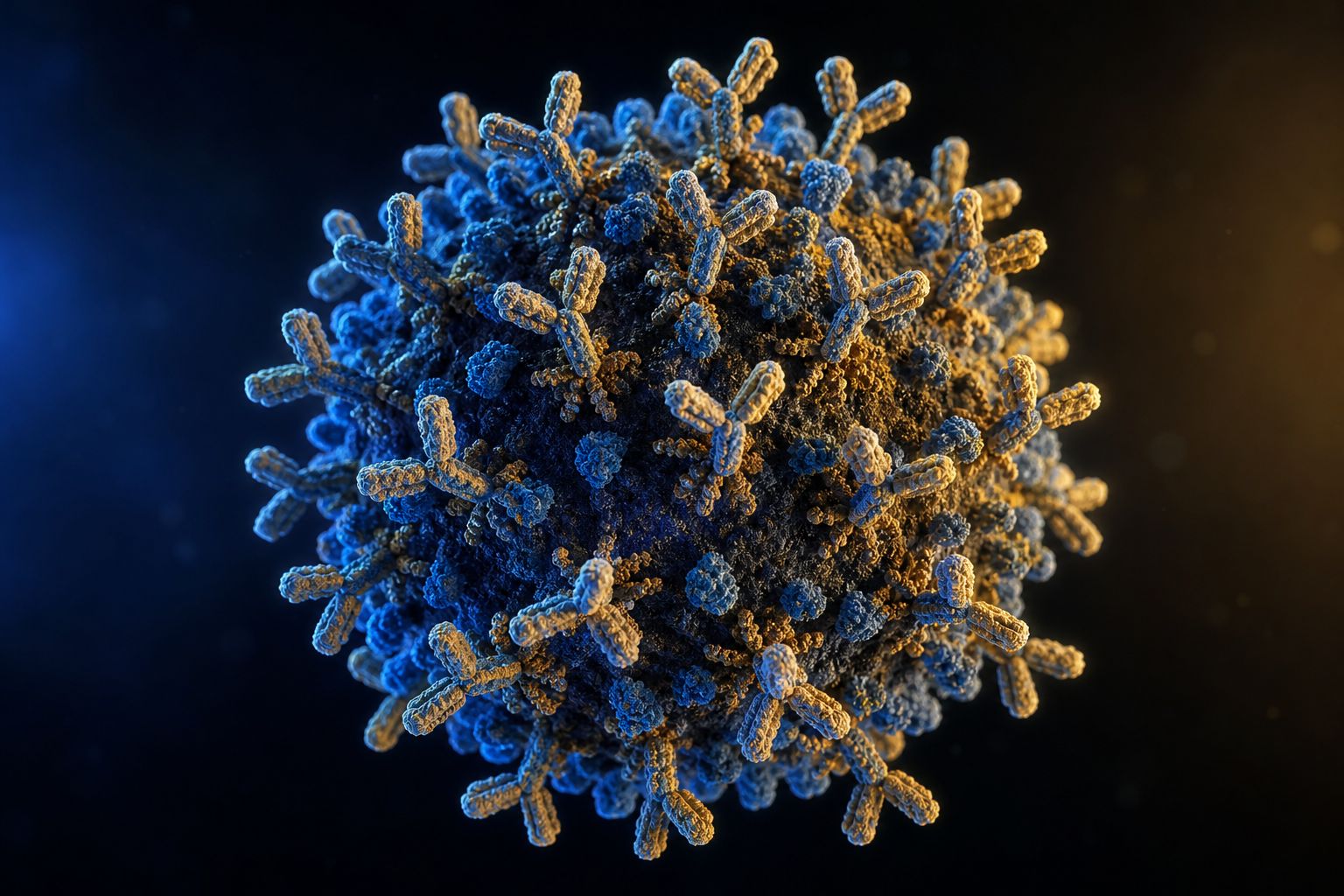
One particle The surface is tiled with 180 copies of the envelope (E) protein, the part our immune defences learn to recognise (Nature Scitable). AI-generated illustration.
~50 nm
across: 20,000 of them side by side would span one millimetre
SizeWartime laboratories Ren Kimura and Susumu Hotta in Japan found it first; Albert Sabin’s team in the US did so on its own in 1944. AI-generated illustration.
DENV-1, DENV-2, DENV-3, DENV-4
all four cause the same disease, dengue
the scene’s buttons show each one in its own colour
Four serotypes (CDC)
Chapter I · A virus with four faces
The dengue virus
US CDC (Yellow Book): dengue is caused by four related single-stranded RNA viruses of the genus Flavivirus, DENV-1 to DENV-4. Nature Education (Scitable): the virion is roughly spherical, about 50 nm across, with an RNA genome inside a lipid envelope carrying 180 copies of the E and M proteins; Ren Kimura and Susumu Hotta first isolated the virus from blood samples of the 1943 Nagasaki epidemic, and Albert B. Sabin and Walter Schlesinger isolated it independently in 1944 (the strain now called DEN-1).
Try the serotype buttons in the scene.
The 3D scenes are simplified teaching models, not to scale: real virus particles, cells and mosquitoes look different, and the numbers in the scenes are illustrative unless a source is named.
The disease is far older than the discovery. In 1779, epidemics of a fever with crushing joint pain broke out in Cairo and in Batavia, today’s Jakarta.
In 1780 it struck Philadelphia. The physician Benjamin Rush treated patients there and, in 1789, published the first clinical description.
People called it breakbone fever, for the pain in joints and muscles.
Batavia, 1779 The Dutch physician David Bylon reported the Batavia epidemic (Britannica). AI-generated illustration.Philadelphia, 1780 A port city in late summer, the season of the 1780 outbreak. AI-generated illustration.The first description Rush’s account appeared in 1789, nine years after the epidemic he saw. AI-generated illustration.
There is no specific treatment for dengue.World Health Organization, fact sheet, 2025
Chapter I · A virus with four faces
Breakbone fever
Encyclopaedia Britannica: two outbreaks in 1779, in Cairo and in Batavia (now Jakarta), the latter reported by the Dutch physician David Bylon, and a third in Philadelphia in 1780; Benjamin Rush, who treated patients in Philadelphia, gave the first clinical description of dengue in 1789. The name breakbone fever refers to the extreme pain and stiffness of the joints. WHO calls dengue “break-bone fever” and states that there is no specific treatment for it.
Britannica also notes earlier dengue-like epidemics, and an account from China’s Jin dynasty; 1779–1780 are the first epidemics recognised as dengue.
This is general education, not medical advice. Anyone who feels ill should see a doctor, and the warning signs of severe dengue need urgent medical care.
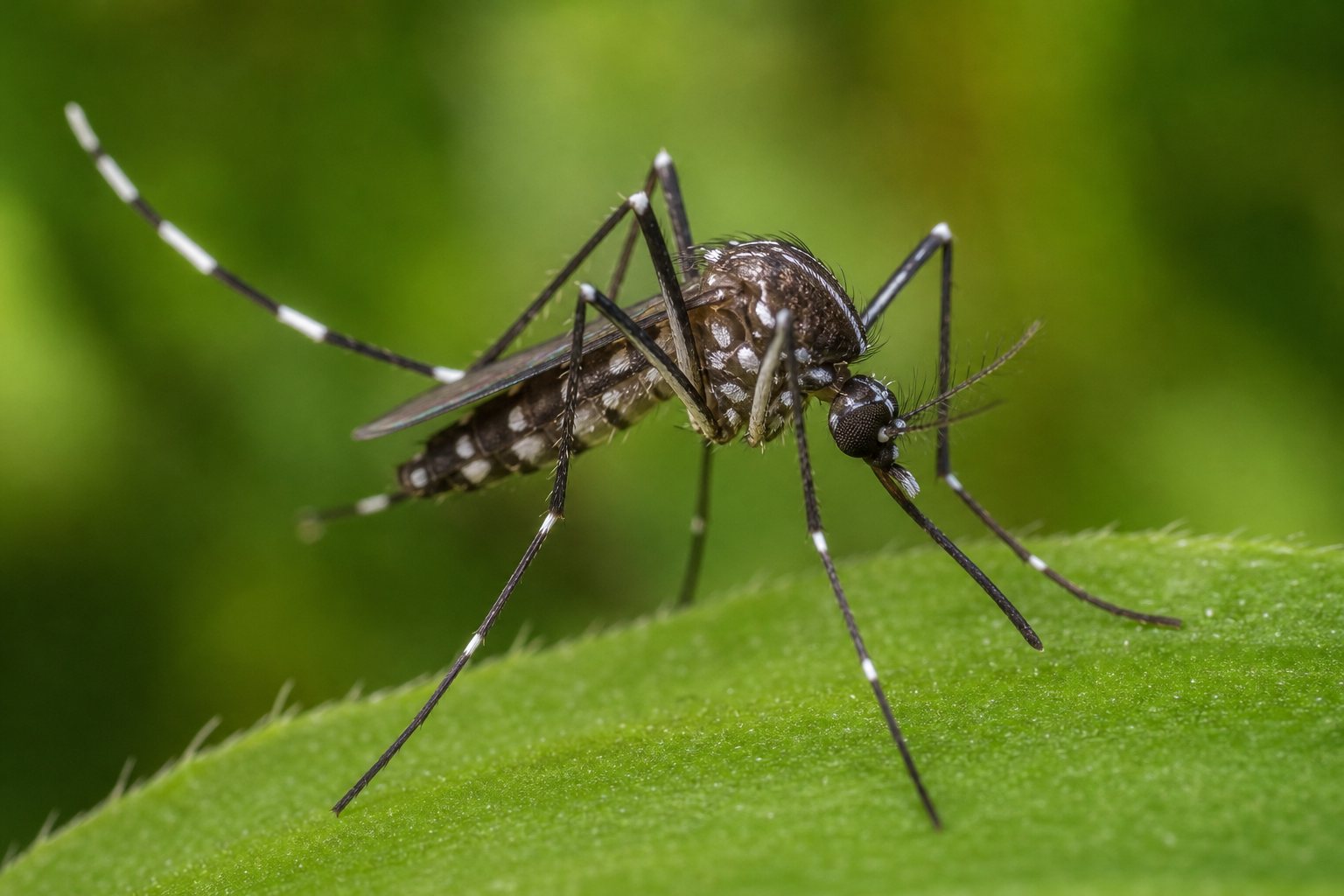
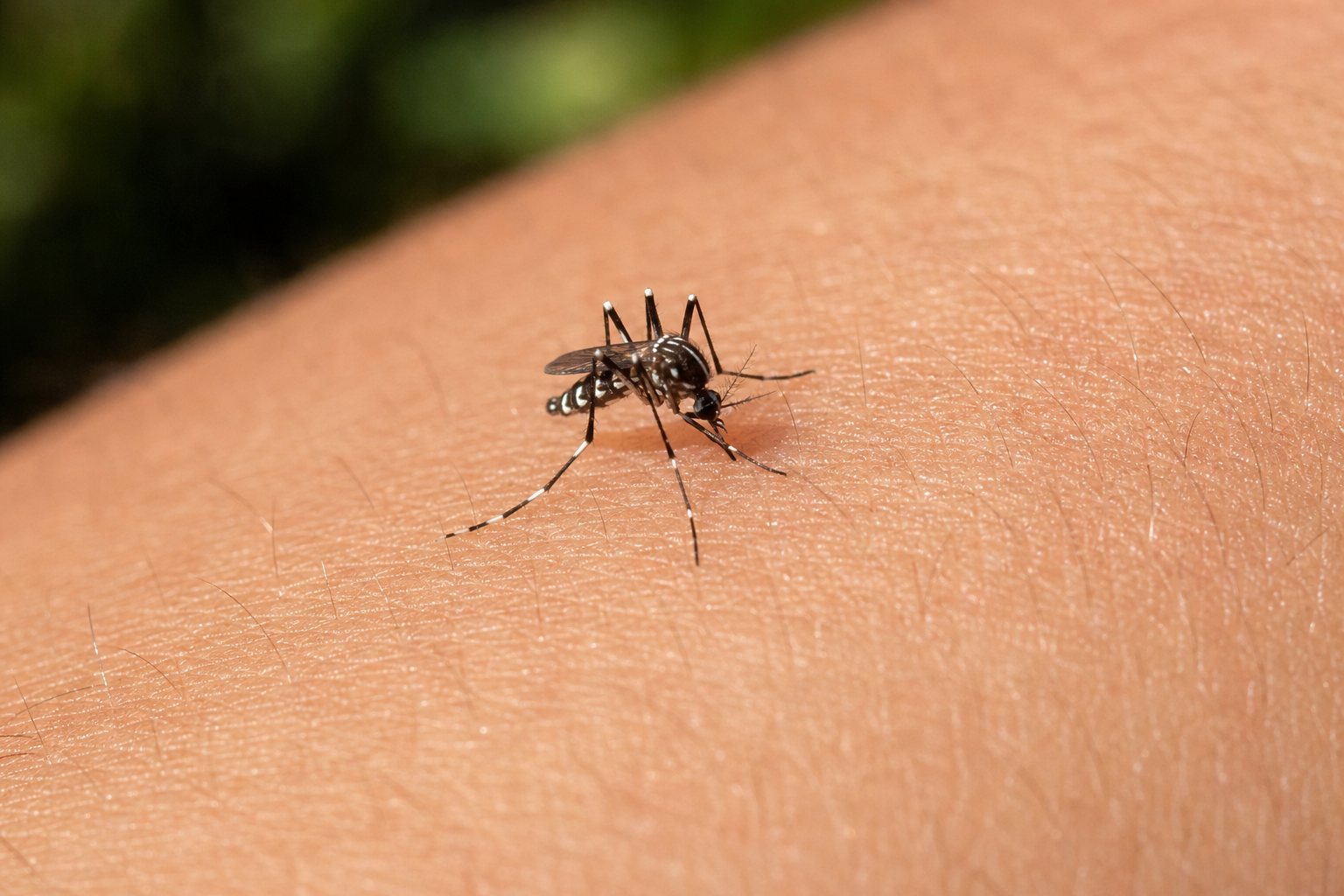
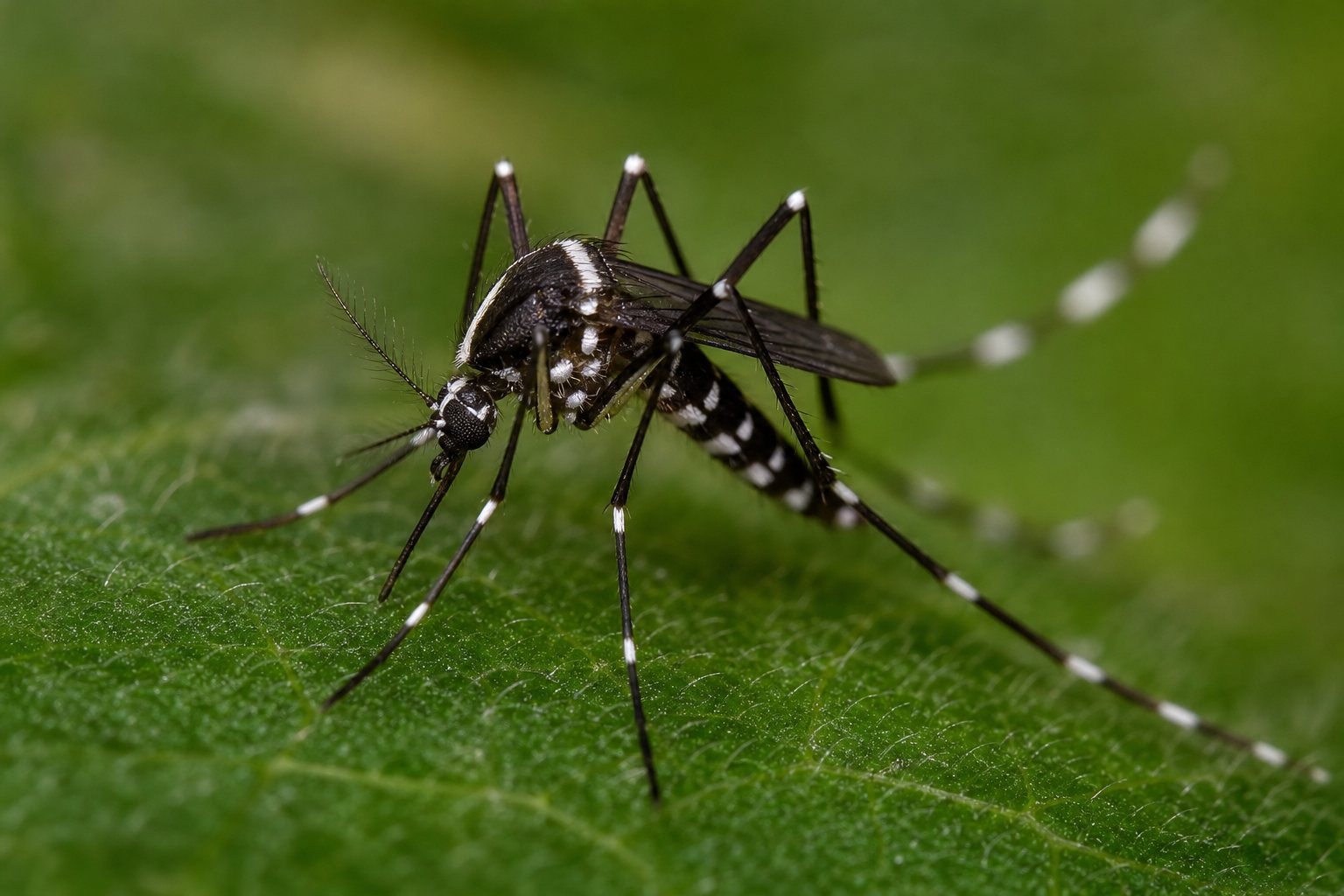
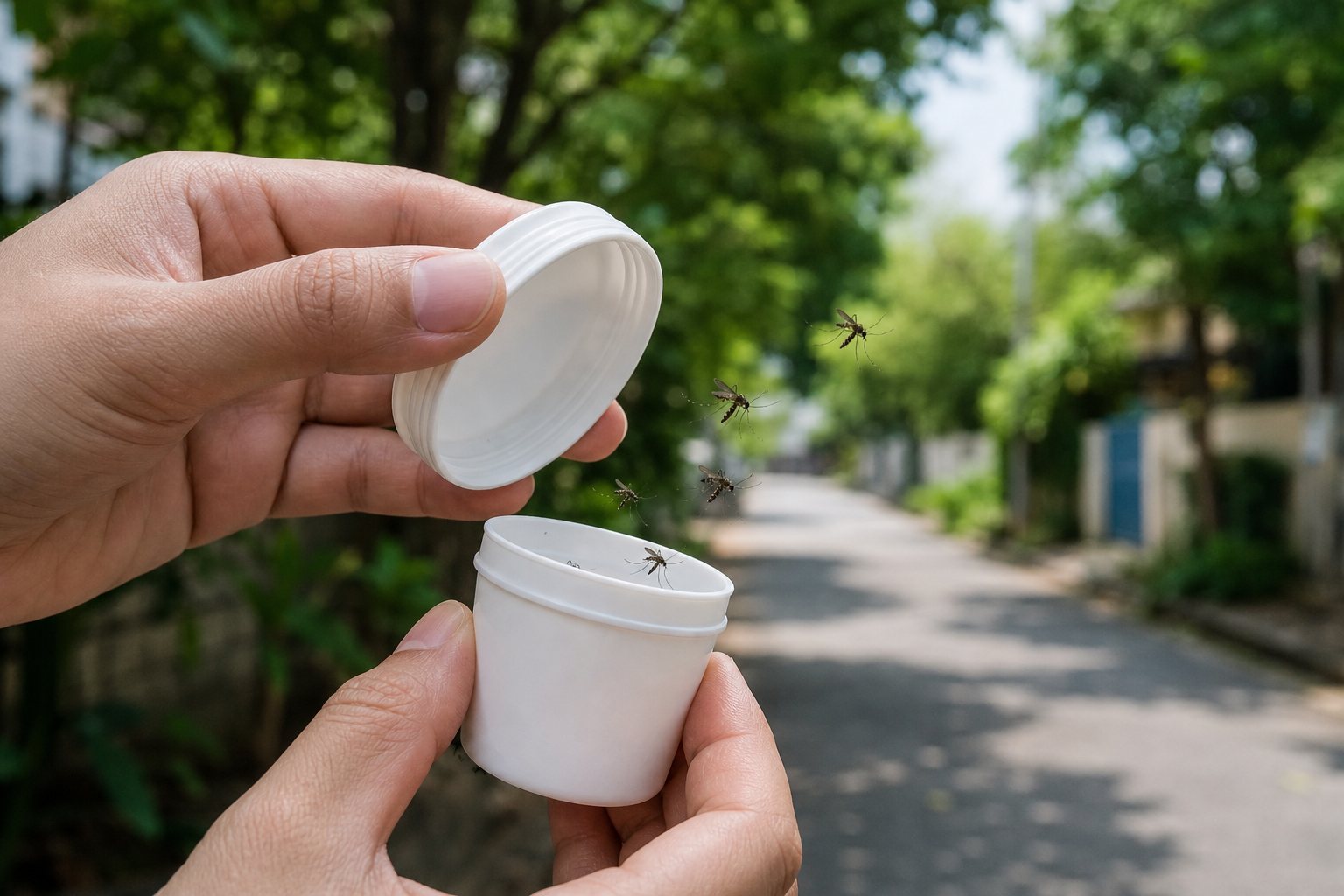
Dengue reaches us almost always through a bite, mainly from one mosquito: Aedes aegypti, black, with white stripes on its legs.
Only the female bites; she needs blood to make her eggs. And this species prefers people, lives near people, and is active by day.
Researchers at Yale traced that taste for humans to West Africa, where people stored water to get through long dry seasons.
Carried by slave traders’ ships, it spread to tropical and subtropical lands around the world.
Aedes aegypti A small mosquito, smaller than many people expect, with white bands on every leg. AI-generated illustration.
only females bite, for the protein to make eggs
prefers to live near and bite people
active during the day
Its habits (CDC, WHO)Water casks at sea The Yale team read this history in the mosquitoes’ genes, not in ships’ logs. AI-generated illustration.
tropical and subtropical climates, more than temperate ones (WHO)
in and around homes, close to the people it bites (CDC)
Where it lives today
Chapter II · The mosquito that chose us
The yellow-fever mosquito
WHO: dengue is mainly spread by infected female Aedes aegypti mosquitoes, which are active during the day; other Aedes species play a secondary role. US CDC: only female Aedes mosquitoes bite, because they need blood to produce eggs; Ae. aegypti prefers to live near and bite people. Yale News (2020): the mosquito’s preference for human hosts developed in West Africa, where water was stored to get through prolonged dry periods; transported by slave traders, it eventually spread to tropical and subtropical areas around the world.
The routes on the globe are schematic, not traced voyages.
The 3D scenes are simplified teaching models, not to scale: real virus particles, cells and mosquitoes look different, and the numbers in the scenes are illustrative unless a source is named.
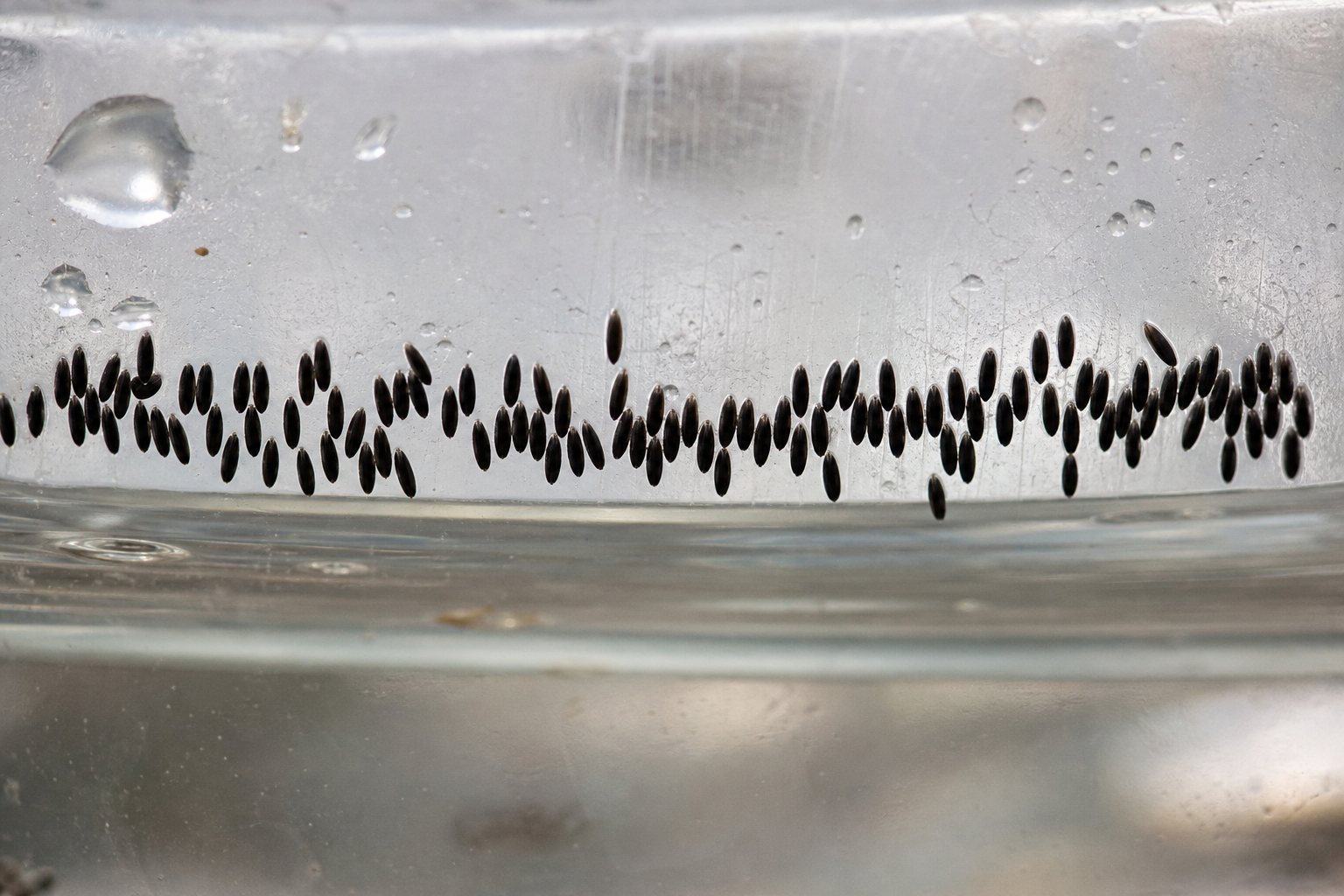
Now the trick that makes this mosquito so hard to beat. The female lays her eggs on the inside wall of a container, just above the water line.
The eggs can survive drying out for up to eight months. When the water rises and covers them, they hatch.
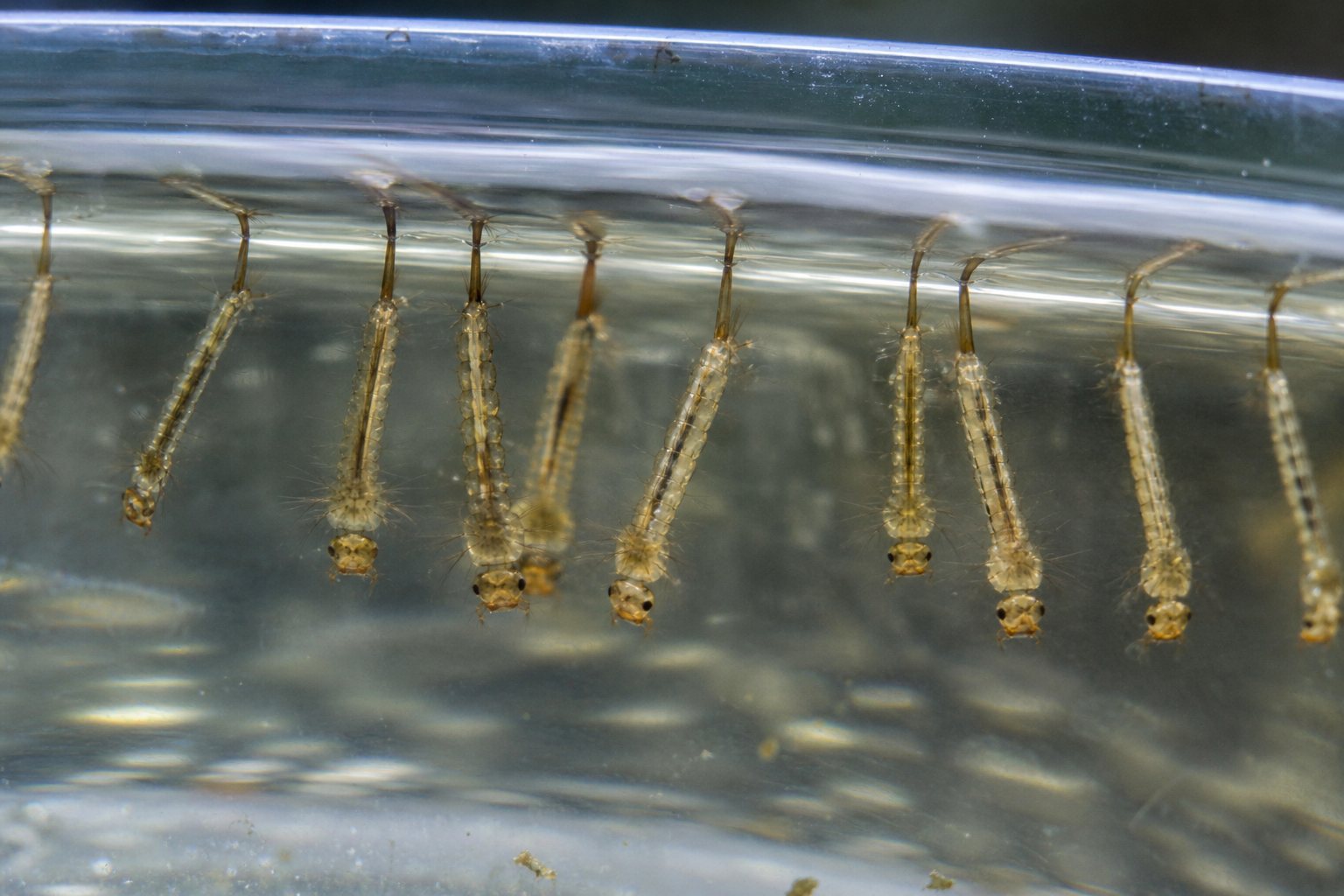
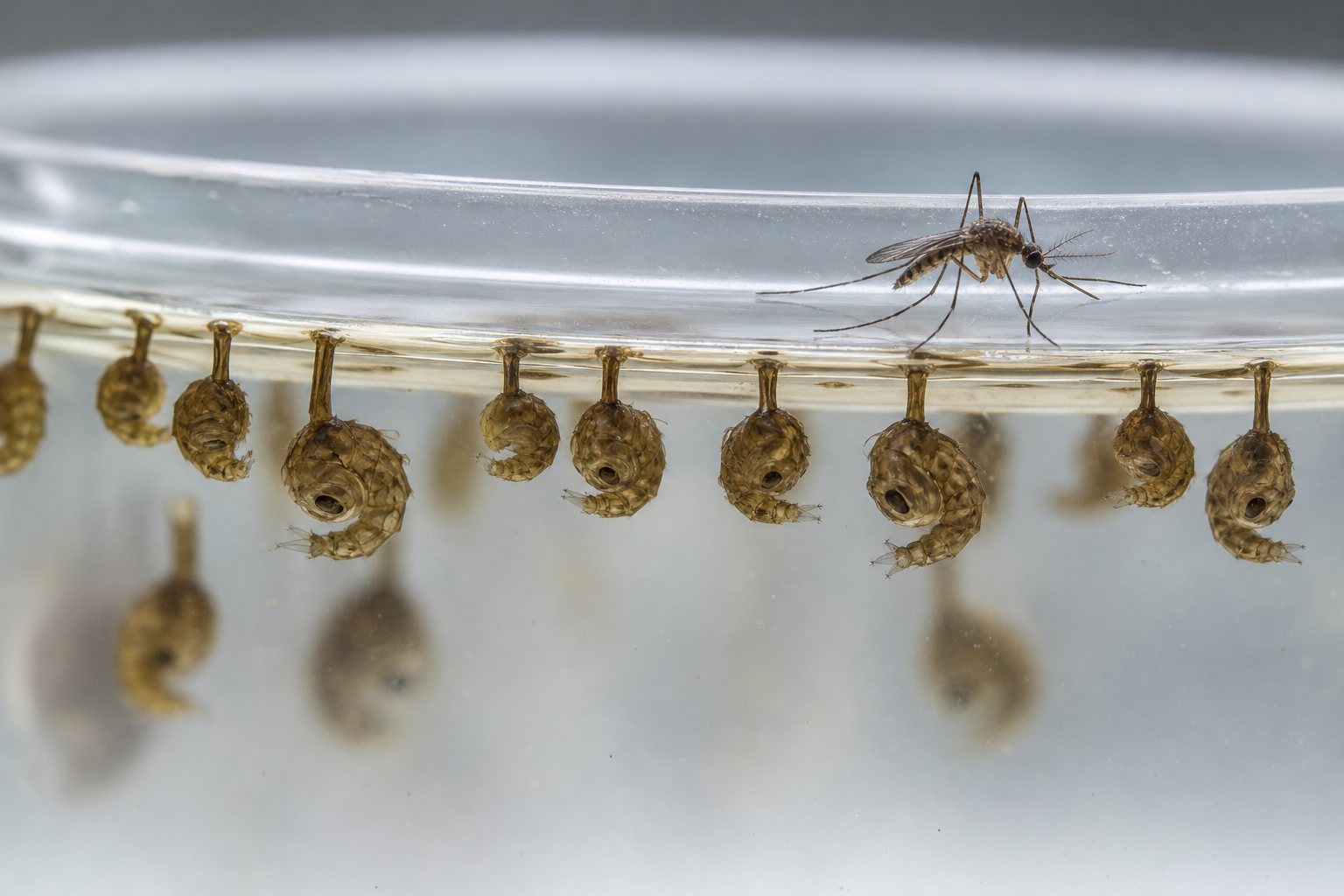
Out come larvae, the wrigglers that hang at the surface to breathe. They become pupae, which do not eat, and then flying adults.
From egg to adult takes seven to ten days, and she needs only a little water: a bucket, a tyre, a vase, even a cup.
Eggs above the water line On the wall, not in the water: they stick like glue (CDC). AI-generated illustration.
8 months
how long eggs can survive drying out
7–10 days
from egg to adult mosquito
US CDCLarvae Close-up: real larvae are only a few millimetres long. AI-generated illustration.Pupae, and a new adult A pupa does not eat; inside it, the larva rebuilds itself into a flying insect. AI-generated illustration.
Chapter II · The mosquito that chose us
Egg, larva, pupa, adult
US CDC (life cycle of Aedes mosquitoes): females lay eggs on the inner walls of containers with water, above the waterline; eggs stick to container walls like glue and can survive drying out for up to 8 months. Larvae hatch when water covers the eggs; pupae do not eat; a mosquito egg takes 7–10 days to develop into an adult. Females need only a small amount of water to lay eggs: bowls, cups, fountains, tyres, barrels, vases and other containers.
Try the buttons: add rain to hatch the eggs, then tip out the water.
The 3D scenes are simplified teaching models, not to scale: real virus particles, cells and mosquitoes look different, and the numbers in the scenes are illustrative unless a source is named.
A mosquito is not born with dengue. It picks the virus up when it bites someone whose blood is carrying it, a state called viraemia.
Most people stay viraemic for four or five days, and can pass the virus to mosquitoes from up to two days before they feel ill.
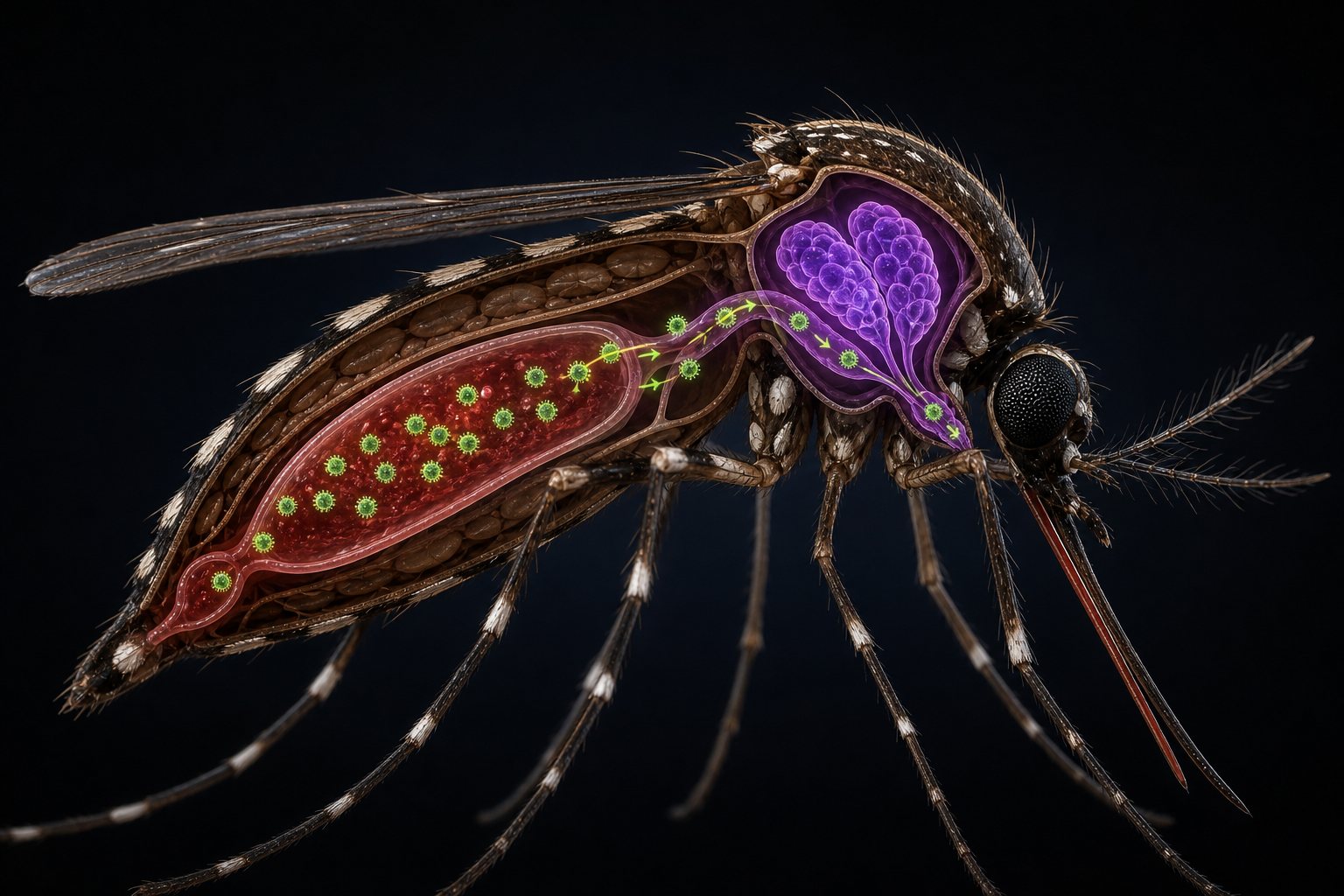
Inside the mosquito, the virus multiplies and works its way to the salivary glands. At 25 to 28 °C, that takes about 8 to 12 days.
After that, it stays infectious for life, and any bite can start a new infection.
The bite Two bites matter: one that collects the virus, and a later one that delivers it. AI-generated illustration.
day 0 bitten by an infectious mosquito
days 4–10 symptoms may begin
±2 days can infect mosquitoes from 2 days before symptoms to 2 days after the fever ends
One person’s infection (WHO)Gut to saliva Schematic cut-away: the virus must cross from the gut to the salivary glands before a bite can pass it on. AI-generated illustration.
8–12 days
at 25–28 °C; temperature swings, the virus strain and the dose change it
Extrinsic incubation (WHO)
Chapter III · From one person to the next
The transmission cycle
WHO: after feeding on a person infected with dengue virus, the virus replicates in the mosquito’s midgut before it spreads to secondary tissues, including the salivary glands; this extrinsic incubation period takes about 8–12 days at an ambient temperature of 25–28 °C, and is influenced by daily temperature fluctuations, the virus genotype and the initial viral concentration. Once infectious, a mosquito can transmit the virus for the rest of its life. Humans can infect mosquitoes from up to 2 days before symptoms appear until up to 2 days after the fever has resolved; most people are viraemic for about 4–5 days, and it can last up to 12 days. Symptoms usually begin 4–10 days after infection.
Press “Run 12 days” in the scene to watch the clock.
The 3D scenes are simplified teaching models, not to scale: real virus particles, cells and mosquitoes look different, and the numbers in the scenes are illustrative unless a source is named.
But this mosquito is a homebody. Over its whole life, the US CDC says, it flies only a few blocks.
Still, a study in Brazil found eggs from marked mosquitoes up to 800 metres away, so a block is not a wall.
So dengue spreads house to house in clusters, and travellers carry it much further.
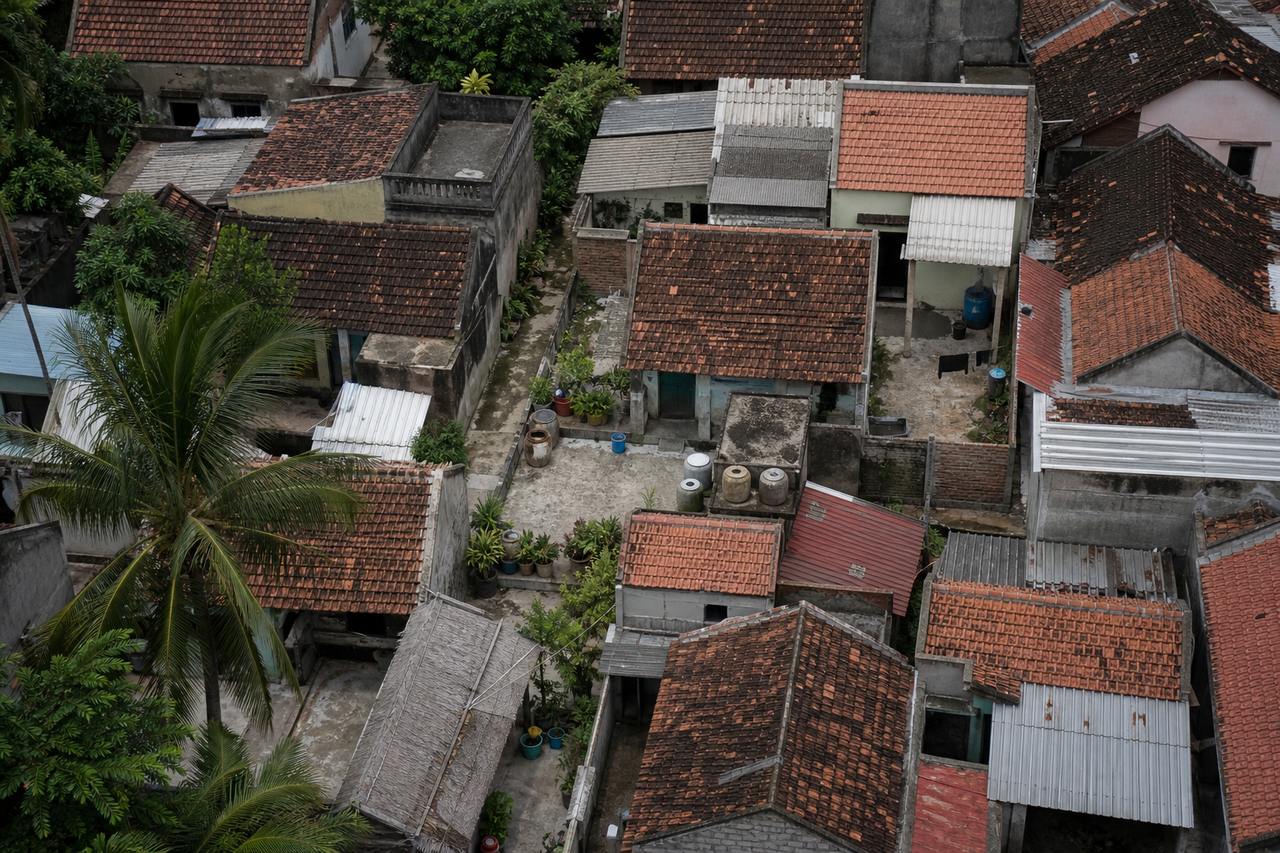
Within a few blocks For a mosquito, one neighbourhood of courtyards and water jars can be a whole world. AI-generated illustration.
100–200 m
2 of 118
200–400 m
12 of 515
400–600 m
20 of 850
600–800 m
17 (1.3%)
Ae. aegypti: egg paddles holding marked eggs, by distance (Honório et al., 2003)
rapid, unplanned urbanisation
population movement
rising temperatures, rain and humidity
What WHO links to its spread
Chapter III · From one person to the next
How far a mosquito flies
US CDC: Aedes mosquitoes do not fly far; over their lifetime they fly only a few blocks. Honório et al. (2003, Memórias do Instituto Oswaldo Cruz) fed female Aedes aegypti and Aedes albopictus blood laced with rubidium, a chemical tag that ends up in their eggs, released them in an urban dengue area of Rio de Janeiro State, and found marked eggs up to 800 m from the release point, the edge of the study area, so the true range may be larger; they note that most earlier estimates put Aedes aegypti flight at roughly 100–500 m. For Ae. aegypti, 1.3–2.3% of the egg paddles collected in each distance band held marked eggs; the number of traps grew with distance (69 at 100–200 m, 644 at 600–800 m), so raw counts do not mean more eggs farther away. WHO lists rapid unplanned urbanisation and population movement among the factors associated with dengue transmission.
The 3D scenes are simplified teaching models, not to scale: real virus particles, cells and mosquitoes look different, and the numbers in the scenes are illustrative unless a source is named.
Temperature matters at every step. In warmer weather the virus grows faster inside the mosquito, so the mosquito becomes infectious sooner.
A Stanford-led model found that transmission by Aedes aegypti peaks at about 29 degrees Celsius, and drops off when it gets much hotter.
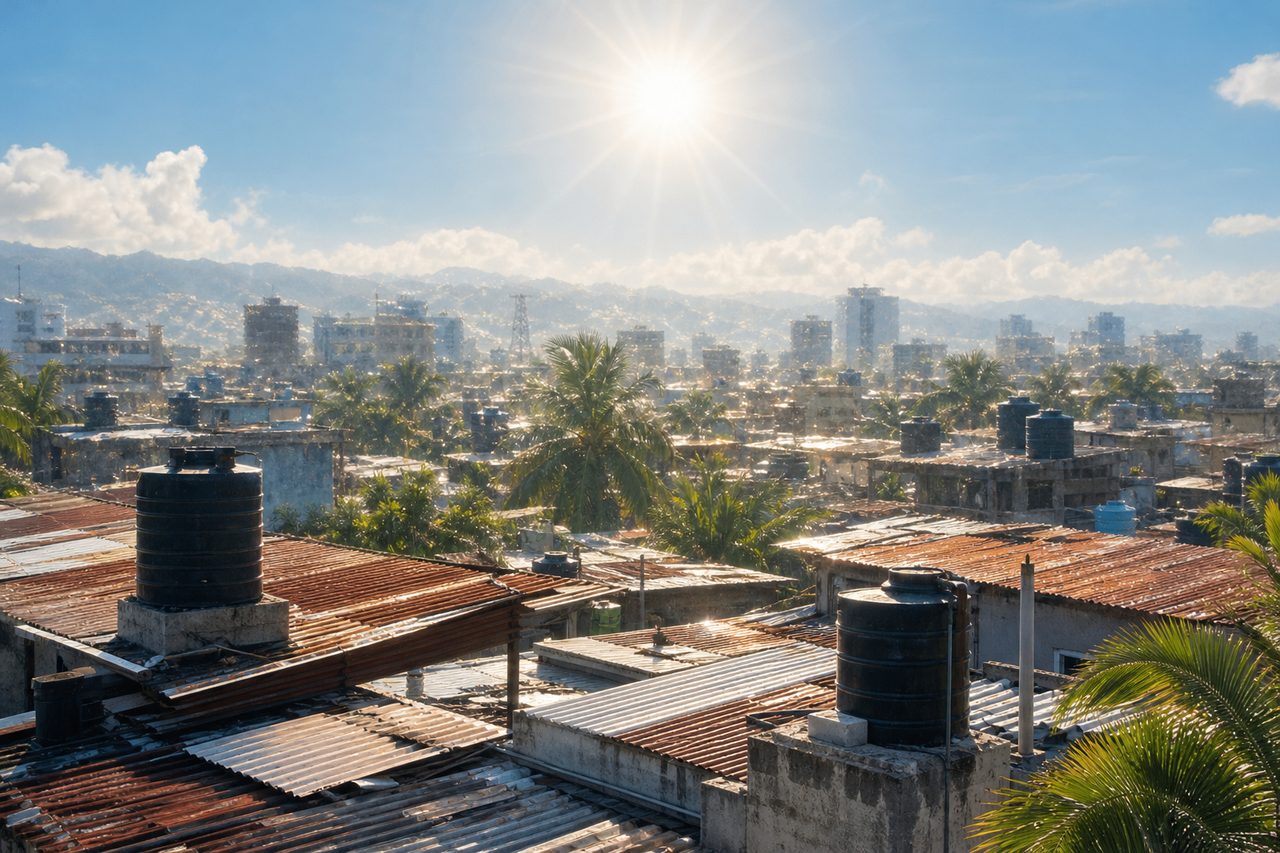
Cities add the rest: crowds of people to bite, and countless containers holding water, from rooftop tanks to old tyres.
Rain fills the ones left outside, and the ones people store water in stay full all year round.
Tropical heat Tin roofs and water tanks: heat from above, stored water below. AI-generated illustration.
29 °C
the peak of a bell-shaped curve: hotter is not always worse
Mordecai et al., PLOS Neglected Tropical Diseases, 2017Old tyres The US CDC names tyres among the containers Aedes females lay in. AI-generated illustration.
Urbanization (especially rapid, unplanned urbanization), is associated with dengue transmission.World Health Organization, fact sheet, 2025
Chapter IV · Heat and the city
Heat and the city
Futurity / Stanford (5 May 2017), on Mordecai et al. in PLOS Neglected Tropical Diseases: mosquito and virus traits that favour transmission increase with temperature to a point and then drop off; transmission by Aedes aegypti follows a bell-shaped curve that peaks at 29 °C (84 °F). WHO: the extrinsic incubation period depends on temperature; rapid unplanned urbanisation is associated with dengue transmission; and climate change leading to increasing temperatures, high rainfall and humidity is among the factors linked to the growing risk of dengue spread. WHO advises covering, emptying and cleaning domestic water storage containers weekly.
Try the temperature buttons: the curve in the scene is a schematic of the published model, not real case data.
The 3D scenes are simplified teaching models, not to scale: real virus particles, cells and mosquitoes look different, and the numbers in the scenes are illustrative unless a source is named.
These forces help explain a steep rise. Reported cases went from about half a million in 2000 to 14.6 million in 2024, WHO says, though reports also depend on how much countries test and count.
Most infections are never reported: WHO estimates 100 to 400 million every year.
And a second carrier, the Asian tiger mosquito, is now established in 16 European countries, Europe’s disease agency said in 2025.
2000
0.51
2024
14.6
Dengue cases reported to WHO
100–400 M
infections a year, most never counted
~50%
of the world’s people now at risk
WHO estimatesThe Asian tiger mosquito One white stripe down the middle of its back: Aedes albopictus. AI-generated illustration.Southern Europe ECDC (2025): 369 European regions now have the tiger mosquito, against 114 a decade earlier. AI-generated illustration.
Chapter IV · Heat and the city
A world at risk
WHO: reported dengue cases rose from 505,430 in 2000 to 14.6 million in 2024, with more than 12,000 deaths in 2024, and the real numbers are under-reported; WHO also names limitations in surveillance and reporting among the factors in dengue’s spread, so reported totals depend on testing and reporting as well as on infections; WHO estimates 100–400 million infections a year and says about half of the world’s population is now at risk. ECDC (20 August 2025): Aedes albopictus is now established in 16 European countries and 369 regions, against 114 regions a decade earlier.
The glowing band on the globe is schematic, not a risk map.
The 3D scenes are simplified teaching models, not to scale: real virus particles, cells and mosquitoes look different, and the numbers in the scenes are illustrative unless a source is named.
Most people with dengue have mild symptoms or none. When it does make people ill, it lasts two to seven days.
The body fights back with antibodies, Y-shaped proteins that grip the virus and neutralise it.
Recovering from one type gives long-term immunity to that type, but only short-lived protection against the other three.
And here is the strange part: severe dengue, when leaking blood vessels lead to shock, heavy bleeding or organ damage, is more likely in a second infection with a different type.
Two to seven days WHO: most people get better in one to two weeks. AI-generated illustration.
the same type: long-term immunity
the other three: protection that fades
so a person can have dengue up to four times
After one infection (CDC, Immunize.org)
The risk for severe dengue is greater during a second DENV infection.US CDC, Yellow Book
Chapter V · The second time
Immunity after dengue
WHO: most people with dengue have mild or no symptoms and get better in 1–2 weeks; symptoms usually begin 4–10 days after infection and last 2–7 days; individuals infected for the second time are at greater risk of severe dengue. US CDC (Yellow Book): infection with one dengue virus gives long-term immunity to that virus but only short-lived protection against the other three; the risk of severe dengue is greater during a second infection, although severe disease can also occur in a first infection. Immunize.org (on dengue): a second infection with a different serotype is the most likely of the four possible infections to cause severe dengue. US CDC (Yellow Book): in severe dengue, plasma leaks from blood vessels and can lead to shock; patients can develop severe bleeding, and organs such as the liver, heart or brain can be affected. The Thai name for the disease, khai lueat ok, means “bleeding fever”, after the bleeding of its severe form.
This is general education, not medical advice. Anyone who feels ill should see a doctor, and the warning signs of severe dengue need urgent medical care.
The 3D scenes are simplified teaching models, not to scale: real virus particles, cells and mosquitoes look different, and the numbers in the scenes are illustrative unless a source is named.
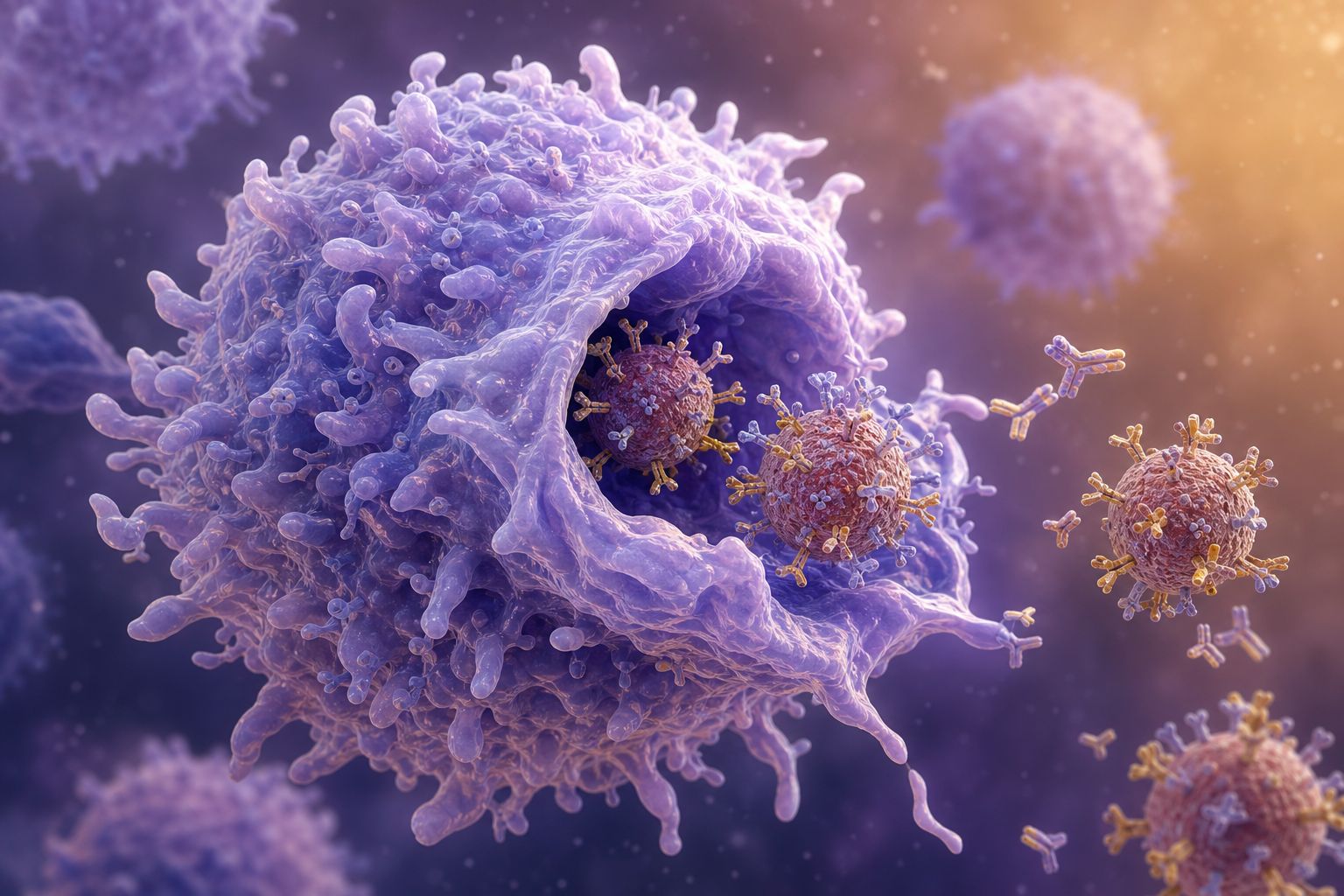
Now a second infection, with a different type. The old antibodies still find it, but many grip it only loosely.
Dengue can infect some of our own immune cells, and those cells grab antibodies by their stems. So a loosely tagged virus gets ferried straight inside.
More infected cells means more virus. This is called antibody-dependent enhancement, and it is a leading explanation for severe second infections.
The surprise came from a 2017 study in Nicaragua. Children with a narrow band of low antibody levels had about seven and a half times the risk of the most severe dengue, compared with children with no antibodies at all.
A tight grip After a first infection, matching antibodies coat that type so it cannot latch on to a cell; a new type slips this grip. AI-generated illustration.A way in Once inside, the virus uses the cell’s own machinery to copy itself, and the copies leave to infect more cells. AI-generated illustration.
a loosely bound antibody rides on the virus
the immune cell grabs the antibody’s stem
the cell swallows both, and the virus multiplies inside
Enhancement, step by step (schematic)
it helps explain why a second infection can be worse
several mechanisms likely add to it (Immunize.org)
Why it matters
6,500+
children aged 2–14 followed in Managua, 2004–2016
~7.5×
risk of the most severe dengue with a narrow band of low antibody levels, against children with none
Katzelnick et al., Science, 2017
Chapter V · The second time
Antibody-dependent enhancement
Science News (8 November 2017), on Katzelnick et al. in Science: antibody-dependent enhancement is the idea that antibodies left by an earlier infection can sometimes make a later infection with a different dengue virus type more dangerous rather than protecting against it. The team followed more than 6,500 children aged 2 to 14 in Managua, Nicaragua, from 2004 to 2016; children with a specific low range of anti-dengue antibodies had about 7½ times the risk of the most severe form of disease of children with no antibodies or high levels. Science News adds that enhancement had been shown in cells and lab animals before this human study. Immunize.org notes that multiple complex mechanisms likely contribute to the greater severity of second infections.
Toggle “First infection” and “Second infection” in the scene. The cell drawn is a generic immune cell of the kind dengue infects.
The 3D scenes are simplified teaching models, not to scale: real virus particles, cells and mosquitoes look different, and the numbers in the scenes are illustrative unless a source is named.
Severe dengue is a medical emergency, and its warning signs often appear just as the fever goes down, when people think they are getting better.
WHO lists among them severe abdominal pain, persistent vomiting, rapid breathing, bleeding gums or nose, and blood in vomit or stool.
Anyone with these signs needs medical care immediately. This film is education, not medical advice.
1 febrile: the fever
2 critical: begins as the fever falls, typically 24–48 hours
3 convalescent: recovery
Three phases of illness (CDC)
severe abdominal pain · persistent vomiting
rapid breathing · bleeding gums or nose
fatigue · restlessness · being very thirsty
blood in vomit or stool · pale, cold skin · feeling weak
Warning signs, after the fever (WHO)Get care WHO: anyone with these signs should seek care immediately. AI-generated illustration.
Chapter V · The second time
Warning signs of severe dengue
WHO: warning signs of severe dengue usually begin after the fever has gone away; they include severe abdominal pain, persistent vomiting, rapid breathing, bleeding gums or nose, fatigue, restlessness, blood in vomit or stool, being very thirsty, pale and cold skin, and feeling weak. People with these symptoms should get care right away. US CDC (Yellow Book): the critical phase begins as the fever falls (defervescence) and typically lasts 24–48 hours. WHO states that there is no specific treatment for dengue, and that non-steroidal anti-inflammatory drugs (NSAIDs) such as ibuprofen and aspirin “should be avoided as they can increase the risk of bleeding”.
This is general education, not medical advice. Anyone who feels ill should see a doctor, and the warning signs of severe dengue need urgent medical care.
The fever curve in the scene is a schematic of the phases, not a real patient’s chart.
Thailand knows this fight well. In 1958 a severe outbreak hit Bangkok and nearby areas: almost 2,500 cases, one in ten of them fatal.
Today all four types circulate there together, so people can be infected again and again.
The oldest defence is still the main line of prevention: no standing water, no mosquitoes. Empty, cover or throw away anything that holds water.
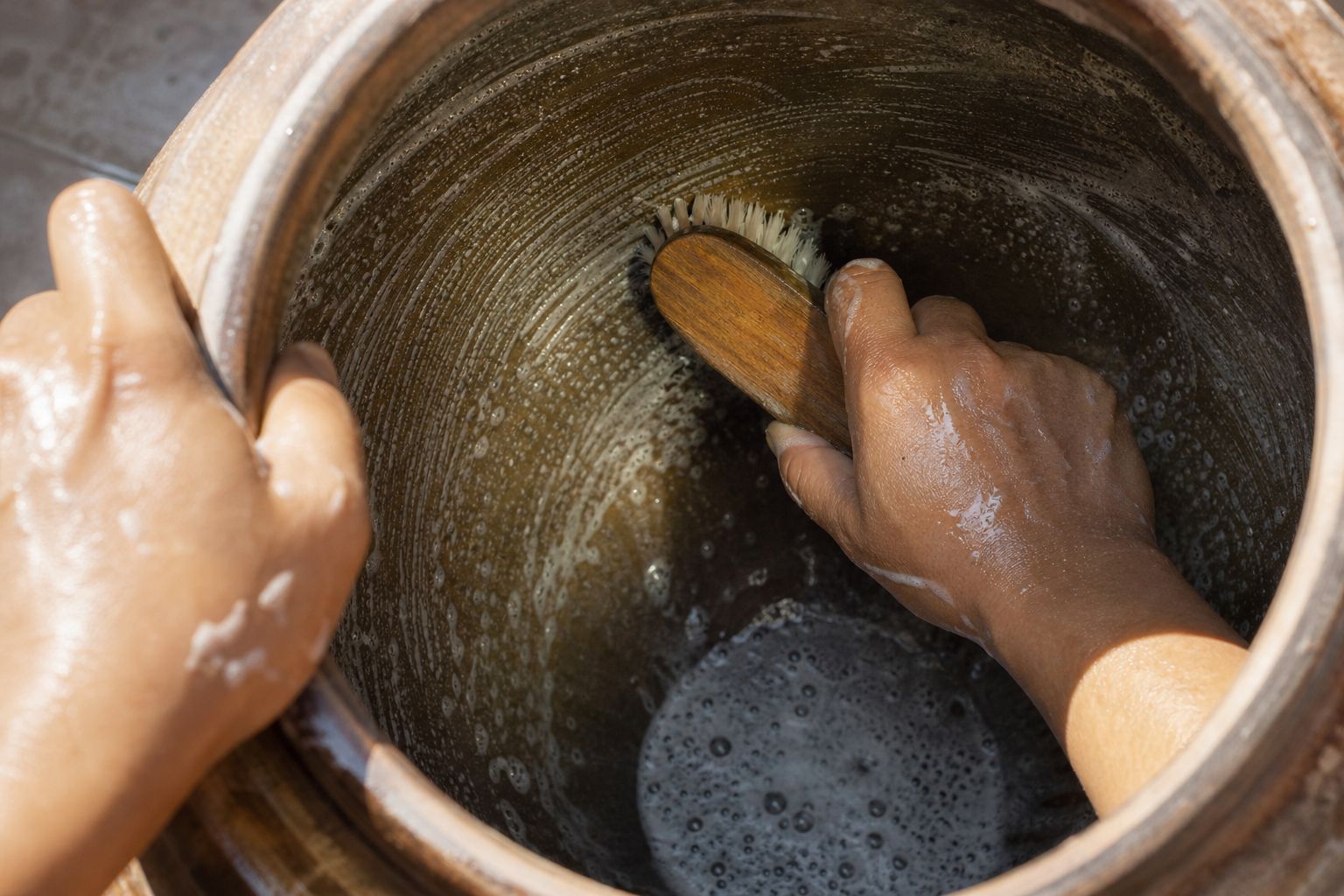
And scrub water containers once a week: eggs glued above the water line survive a simple tip-out.
~2,500
cases of dengue haemorrhagic fever
10%
of them died
Bangkok, 1958 (Yoksan, 2017)Water jars Large jars that store water for the household are classic breeding sites unless they are sealed. AI-generated illustration.
Once a week, empty and scrub, turn over, cover, or throw out any items that hold water.US CDC, Mosquito control at home
Scrub the walls A brush removes what tipping out leaves: the eggs on the inner wall. AI-generated illustration.
Chapter VI · Fighting back
Removing breeding sites
Yoksan (2017, Southeast Asian Journal of Tropical Medicine and Public Health): in 1958 an outbreak of dengue haemorrhagic fever occurred in Bangkok and nearby areas, with almost 2,500 cases and a case-fatality rate of 10%; all four dengue serotypes co-circulate in Thailand. WHO: prevention depends on vector control, including environmental management to remove egg-laying habitats, and covering, emptying and cleaning domestic water storage containers weekly. US CDC: once a week, empty and scrub, turn over, cover or throw out any items that hold water; tightly cover water storage containers; Aedes eggs stick to container walls like glue.
Try it in the scene: “Tip out”, then “Refill”, and watch the surviving eggs hatch; then “Scrub the walls” and refill again.
The 3D scenes are simplified teaching models, not to scale: real virus particles, cells and mosquitoes look different, and the numbers in the scenes are illustrative unless a source is named.
A newer idea uses a bacterium. Wolbachia lives naturally in about half of all insect species, and in Aedes aegypti it blocks dengue from growing.
Released mosquitoes carrying it breed with wild ones, and over time most local mosquitoes carry it too, without further releases.
In Yogyakarta, Indonesia, a trial split the city into 24 areas and released Wolbachia mosquitoes in 12 of them, picked at random.
In the treated areas, dengue fell by 77 percent and hospital admissions for dengue by 86 percent, the New England Journal of Medicine reported in 2021.
A release The World Mosquito Program usually releases a handful of mosquitoes every 50 metres, over 12 to 20 weeks. AI-generated illustration.
a natural bacterium; the mosquito’s genes are not altered
it does not wipe out mosquitoes
it makes them less able to pass viruses on
The method (World Mosquito Program)Yogyakarta Twelve areas got Wolbachia on top of routine dengue control; twelve kept routine control only. AI-generated illustration.
untreated areas
9.4%
Wolbachia areas
2.3%
Confirmed dengue in the trial (Utarini et al., NEJM 2021)
Chapter VI · Fighting back
The Wolbachia method
World Mosquito Program: Wolbachia is one of the world’s most common bacteria, found in about 50% of insect species; it blocks viruses such as dengue, chikungunya and Zika from growing in Aedes aegypti, so the mosquitoes are less able to pass them on. Released Wolbachia mosquitoes breed with wild ones and the bacterium becomes established; the method is self-sustaining, does not alter the mosquito’s genetic material and does not reduce mosquito numbers. Utarini et al. (New England Journal of Medicine, 10 June 2021), the AWED cluster-randomised trial in Yogyakarta: 12 of 24 clusters received wMel-Wolbachia Aedes aegypti; virologically confirmed dengue occurred in 2.3% of participants in intervention clusters and 9.4% in control clusters, a protective efficacy of 77.1% (95% CI 65.3–84.9), and the protective efficacy against hospitalisation for dengue was 86.2% (95% CI 66.2–94.3).
Press “Release” in the scene.
The 3D scenes are simplified teaching models, not to scale: real virus particles, cells and mosquitoes look different, and the numbers in the scenes are illustrative unless a source is named.
Vaccines face the same trap: one dengue vaccine has to protect against all four types at once.
The first, CYD-TDV, can raise the risk of severe illness in people never infected before, and its maker is discontinuing it.
In May 2024 WHO prequalified a second, TAK-003: it passed WHO’s checks, so UN agencies can buy it. WHO recommends it for children 6 to 16 where dengue is common.
Who should be vaccinated is for health authorities and doctors to decide.
four serotypes, one vaccine
protect against every type, not just some
and never leave the body worse off than before
The challengeTwo vaccines As of May 2024 both were on WHO’s prequalification list; neither is shown here as a real product. AI-generated illustration.
First first WHO-prequalified dengue vaccine (Sanofi Pasteur)
2024 CYD-TDV to be discontinued, the maker says, for lack of demand
10 May 2024 WHO prequalifies TAK-003 (Takeda), the second dengue vaccine on its list
Dengue vaccines (WHO, CDC)
It is recommended only for those aged 6–16 years in high transmission settings.World Health Organization, on TAK-003 (QDenga), fact sheet, 2025
Chapter VI · Fighting back
Dengue vaccines
US CDC (Yellow Book): in people not previously infected, Dengvaxia (CYD-TDV) can increase the risk of severe illness and hospitalisation, so in the United States it is recommended only for certain children aged 9–16 with laboratory-confirmed previous infection who live in endemic areas; in 2024 the manufacturer announced that it would be discontinued because of a lack of demand in the global market. WHO (15 May 2024): TAK-003, made by Takeda, was prequalified on 10 May 2024, the second dengue vaccine on the list after CYD-TDV from Sanofi Pasteur; WHO recommends it for children aged 6–16 in settings with high dengue burden and transmission intensity. Prequalification means a vaccine has passed WHO’s assessment and is eligible for purchase by UN agencies such as UNICEF and PAHO. Several more vaccines are being evaluated. This film does not recommend any vaccine; that is a decision for health authorities and doctors.
The 3D scenes are simplified teaching models, not to scale: real virus particles, cells and mosquitoes look different, and the numbers in the scenes are illustrative unless a source is named.
In Bangladesh, the entomologist Kabirul Bashar told Reuters that real improvement was unlikely before December.
Until then, it will be fought the way dengue is fought everywhere: container by container, and at hospital beds.
So after the next rain, look around you. Where is the water standing?
Any decline is likely to be modest, with significant improvement unlikely before December.Kabirul Bashar, Jahangirnagar University, to Reuters, 31 Oct 2026
1779–80 epidemics in Cairo, Batavia and Philadelphia
1789 Benjamin Rush describes breakbone fever
1943–44 the virus is isolated in Japan and the US
1958 severe outbreak in Bangkok
2021 Wolbachia trial results from Yogyakarta
2024 14.6 million cases reported; TAK-003 prequalified
Oct 2026 Bangladesh’s deadliest dengue month of the year
Dengue through timeNothing left to breed in Buckets turned over, saucers dry, the drum covered. AI-generated illustration.
Epilogue · Sources
Sources
Every fact in this film comes from the sources below, and the news figures are given with their dates and as each source published them. Reuters (31 October 2026) quotes the entomologist Kabirul Bashar of Jahangirnagar University: “We may see some relief, but dengue is unlikely to disappear in November.” The chapter stills and pictures are AI-generated illustrations, not photographs of real people, places or products. The 3D scenes are simplified teaching models, not to scale. This film is general education, not medical advice: anyone who feels ill should see a doctor, and the warning signs of severe dengue need urgent care.