Birds are the last living branch of the theropod dinosaurs. This film explains how a family tree is drawn from shared traits, follows the evidence from Archaeopteryx in 1861 and Huxley's comparisons to the feathered dinosaurs found in China since 1996, shows how feathers may have evolved in stages before flight, and finds wishbones, air-filled bones and brooding on nests in dinosaurs that were not birds. It covers the shrinking of the bird line, the four-winged Microraptor, the competing ideas for how flight began, and why only beaked birds came through the extinction 66 million years ago, starting from Yuezhuornis, a 150-million-year-old early bird described in 2026 as probably flightless.
Interactive 3D film9 minAbout 160 to 66 million years agoPublished 25 October 2026
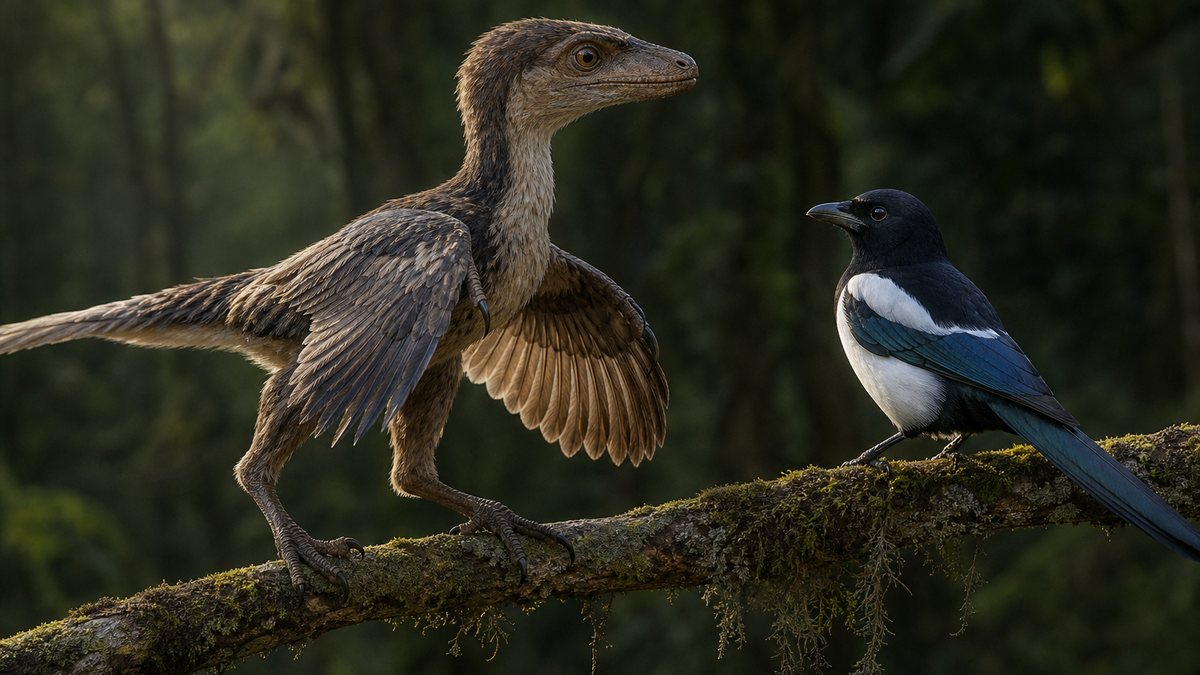
A bird with a sickle-shaped claw on its foot, serrated teeth, and wings too short to fly. Its fossil is about 150 million years old, among the oldest birds known.
Scientists in China named it Yuezhuornis and described it in the journal Nature in October 2026. Its wings were about a third shorter than its legs.
The team calls it the earliest known case of flight loss: a bird whose ancestors flew, but which itself probably lived on the ground and could not.
It is one fossil, and more are needed. But it raises an old question: how did dinosaurs become birds?
150–148 Myr
Myr = million years; Late Jurassic, Fujian, China
≈ 821 g
estimated body weight, about a crow’s size
Yuezhuornis yangyuanensis
Legs
100
Wings
≈ 67
Limb length (schematic) Compared with 377 living bird species, its proportions came closest to ground birds such as pheasants.
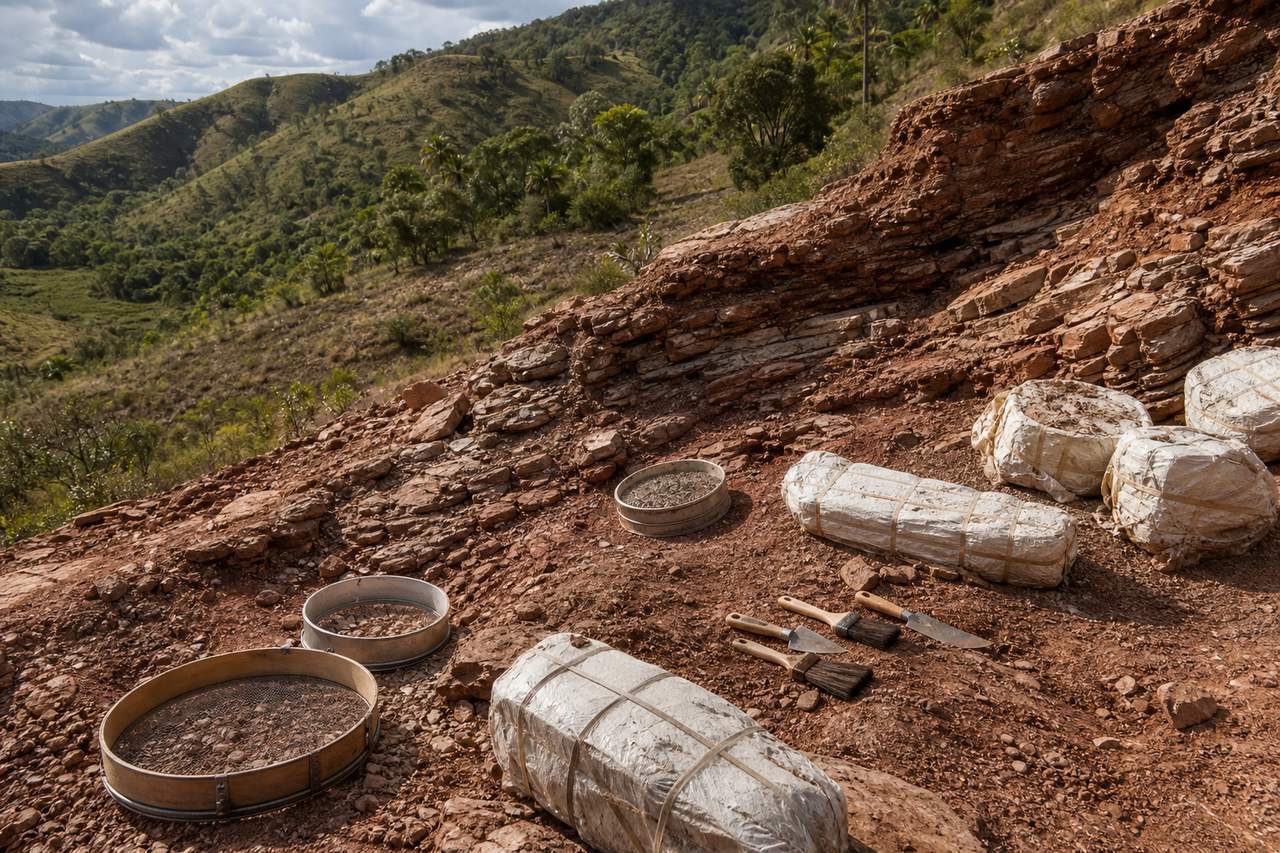
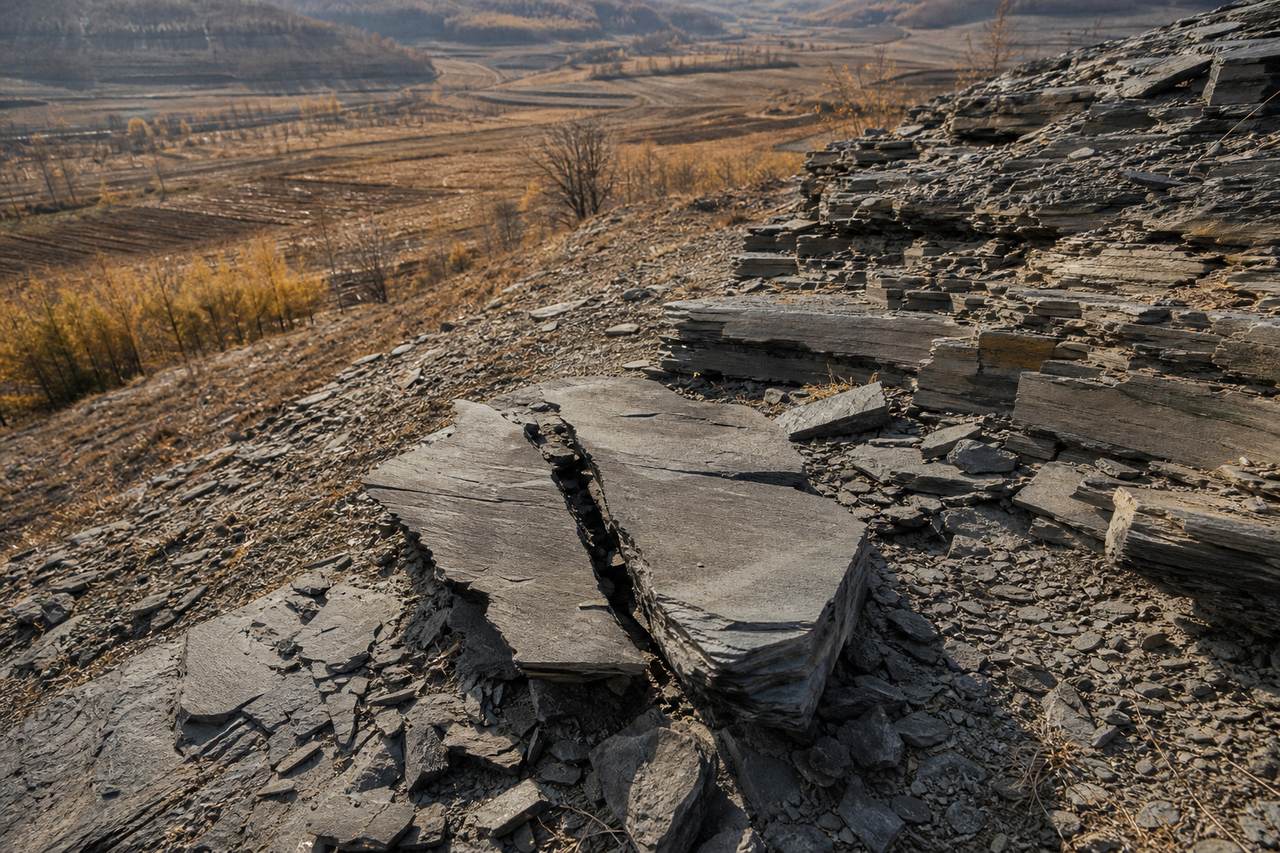
The Zhenghe fossil beds A dig in reddish layered rock: the Zhenghe Fauna of Fujian has also yielded other Jurassic birds and bird-like dinosaurs. AI-generated illustration.
How a family tree is drawn
Archaeopteryx and the feathered dinosaurs
Feathers, wishbones and nests before birds
How flight began, and who survived
In this film
Prologue
A bird that walked
Nature Asia press release and EurekAlert! (Chinese Academy of Sciences): Yuezhuornis yangyuanensis, from the Zhenghe Fauna of Fujian, China, is about 150–148 million years old and was described in Nature on 14 October 2026 by L. Xu, M. Wang, G. Lin and colleagues (the Institute of Vertebrate Paleontology and Paleoanthropology, Chinese Academy of Sciences, with a Fujian geological institute). It weighed an estimated 821 g; its forelimbs are roughly one-third shorter than its hind limbs, and compared with 377 living bird species its limb proportions are most like those of ground birds such as pheasants. It combines a bird-like skull and pelvis with closely packed serrated teeth and a hyperextensible second toe with a sickle-shaped claw, as in deinonychosaurs. The analysis places it among the earliest birds (Avialae), just above Archaeopteryx. The release calls it the earliest known example of flight loss among birds; the flightless lifestyle is inferred from limb proportions, and the species is known from a single incomplete specimen. Steve Brusatte (University of Edinburgh, not involved) told AFP it raises as many questions as it answers.
Some news reports described the find as an early example of flight; the paper and the press releases describe flight loss.
The 3D animals, feather and family tree are schematic teaching models built from simple shapes, not reconstructions of real fossils; proportions are simplified.
Start with a surprise. Birds are not just related to dinosaurs. Scientists classify them as dinosaurs: the last living branch of the theropods, the two-legged group that includes Tyrannosaurus rex.
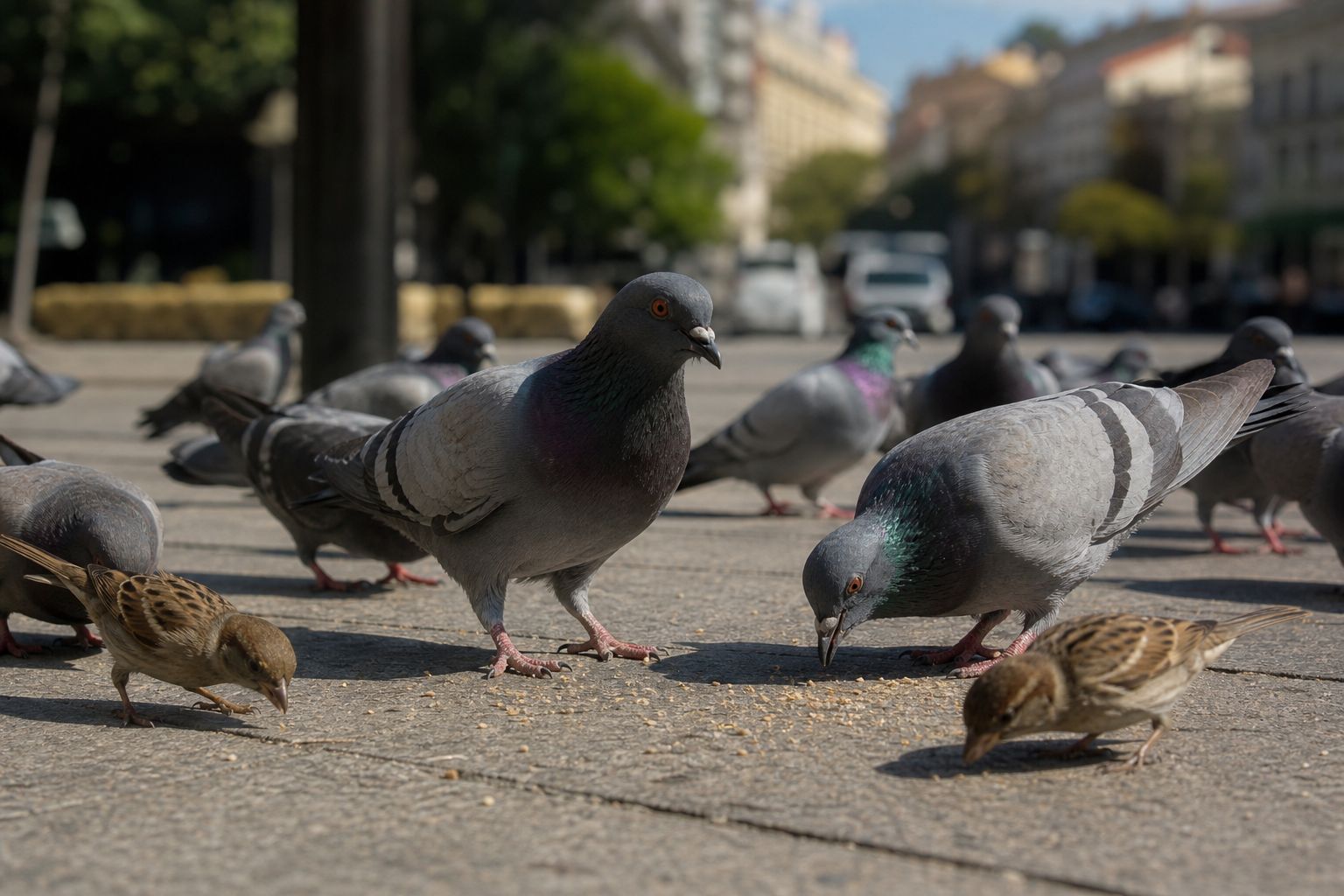
The pigeon on your street and the pheasant in a field belong in the same family tree as Velociraptor.
That is the scientific consensus today. To see why, we need to know how a family tree of life is drawn.
Birds that fill the world’s skies today are living dinosaurs.Natural History Museum, London
Tyrannosaurus rex
Velociraptor and Deinonychus
Archaeopteryx
Every living bird
Theropods: one dinosaur group
Maniraptoran theropods
theropods: the two-legged dinosaurs; maniraptorans: their long-armed sub-group that includes Velociraptor and birds
The consensus
Chapter I · A family tree
Birds are dinosaurs
Natural History Museum, London: birds are descended from theropod dinosaurs, the group that includes Tyrannosaurus rex: “Birds that fill the world’s skies today are living dinosaurs.” Wikipedia (origin of birds): “The present scientific consensus is that birds are a group of maniraptoran theropod dinosaurs that originated during the Mesozoic era.”
On screen: a simplified family tree of archosaurs. Branch lengths do not show time.
The 3D animals, feather and family tree are schematic teaching models built from simple shapes, not reconstructions of real fossils; proportions are simplified.
Biologists group living things by shared derived traits: new features that first appeared in one ancestor and were passed on to all its descendants.
Hair marks the mammals. Feathers, a wishbone, two collarbones fused into one, and air-filled bones turn up again and again in one part of the dinosaur tree.
Groups sit inside groups, like nesting boxes. Birds sit inside the theropods, which sit inside the dinosaurs. Press “Where are birds?” to follow the branch.
So calling birds dinosaurs is like calling bats mammals: it is where they sit on the tree.
appears first in one ancestor
is inherited by its descendants
so it marks a “clade”: an ancestor and all its descendants
A shared derived trait
Feathers
Wishbone (furcula)
Hollow, air-filled bones
Three-fingered hand, flexible wrist
Nests and brooding
Found in birds and other theropods
Dinosaurs
→ Theropods
→ → Maniraptorans
→ → → Birds
Boxes inside boxes
Bat → mammal
it flies, but has hair and feeds its young on milk
Bird → dinosaur
it flies, but sits inside the theropods
Same logic
Chapter I · A family tree
How a family tree is drawn
Holtz (University of Maryland): cladograms group organisms by shared characters inherited from common ancestors; a shared derived character (synapomorphy) is a new trait that appears in a common ancestor and is passed to its descendants, and a group made of an ancestor and all its descendants is a clade. Groups nest inside groups: Mammalia and Reptilia inside Amniota, Amniota inside Tetrapoda. Wikipedia (origin of birds) lists features shared by birds and theropods, including the furcula (wishbone), hollow pneumatised bones, nest-building and brooding, air sacs, a semi-lunate wrist bone and a three-fingered hand.
Try it: “Where are birds?” lights the path from the root to living birds; “Traits” marks where each feature first appears on this simplified tree.
The 3D animals, feather and family tree are schematic teaching models built from simple shapes, not reconstructions of real fossils; proportions are simplified.
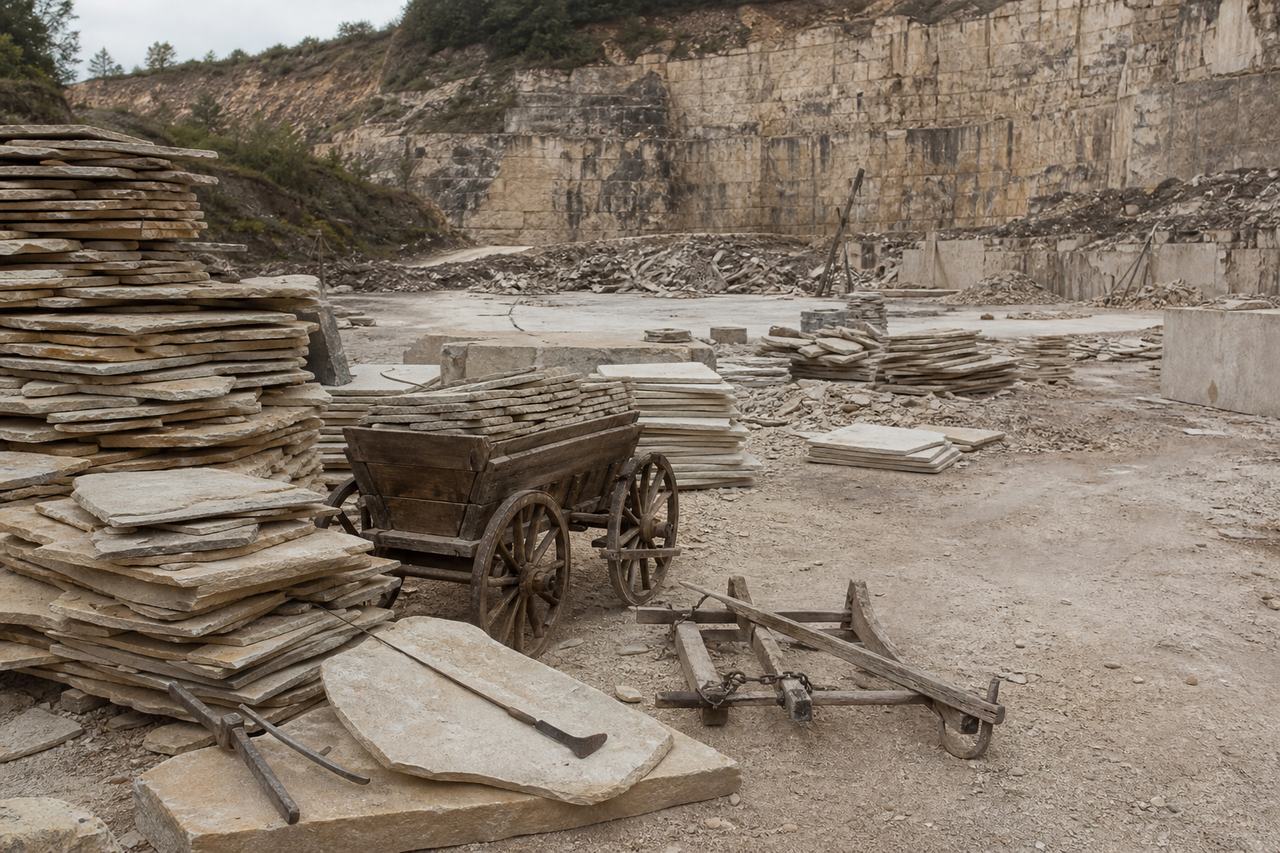
The first clue came out of a Bavarian quarry. In 1861, in the fine limestone of Solnhofen, workers found a single fossil feather, and soon after a skeleton with feathered wings.
It was named Archaeopteryx and is about 150 million years old. Darwin's On the Origin of Species had appeared only two years earlier.
Archaeopteryx was a mix: wings, feathers and a wishbone like a bird, but teeth, three clawed fingers and a long tail like a small dinosaur.
1859 Darwin’s On the Origin of Species
15 Aug 1861 Hermann von Meyer describes the feather
30 Sep 1861 He names it Archaeopteryx lithographica
Two years after DarwinLithographic limestone Solnhofen’s thin, fine-grained slabs were quarried for printing; the feather was about 58 mm long. AI-generated illustration.
≈ 150 Myr
Late Jurassic (Myr = million years)
14 + 1
body fossils and one feather, all from Solnhofen limestone
Archaeopteryx
Bird: feathered wings, wishbone
Dinosaur: teeth
Dinosaur: three free, clawed fingers
Dinosaur: long tail, feathered on both sides
Bird and dinosaur in one animal
Chapter II · The first bird
A feather from Solnhofen
EARTH Magazine: in summer 1861 a quarryman at Solnhofen found a single feather, about 58 mm long; Hermann von Meyer described it on 15 August 1861 and on 30 September proposed the name Archaeopteryx lithographica. A full skeleton was bought by the British Museum after more than a year of negotiation. Darwin’s On the Origin of Species had appeared in 1859. Wikipedia (specimens of Archaeopteryx): fourteen body fossils and a feather that may belong to it have been found, all in the Late Jurassic lithographic limestone quarried around Solnhofen. Britannica: about 150 million years old (Late Jurassic), from blue jay to large chicken in size, with feathers, well-developed teeth, a long tail with feathers on each side, three independently movable clawed fingers and a wishbone.
The 3D animals, feather and family tree are schematic teaching models built from simple shapes, not reconstructions of real fossils; proportions are simplified.
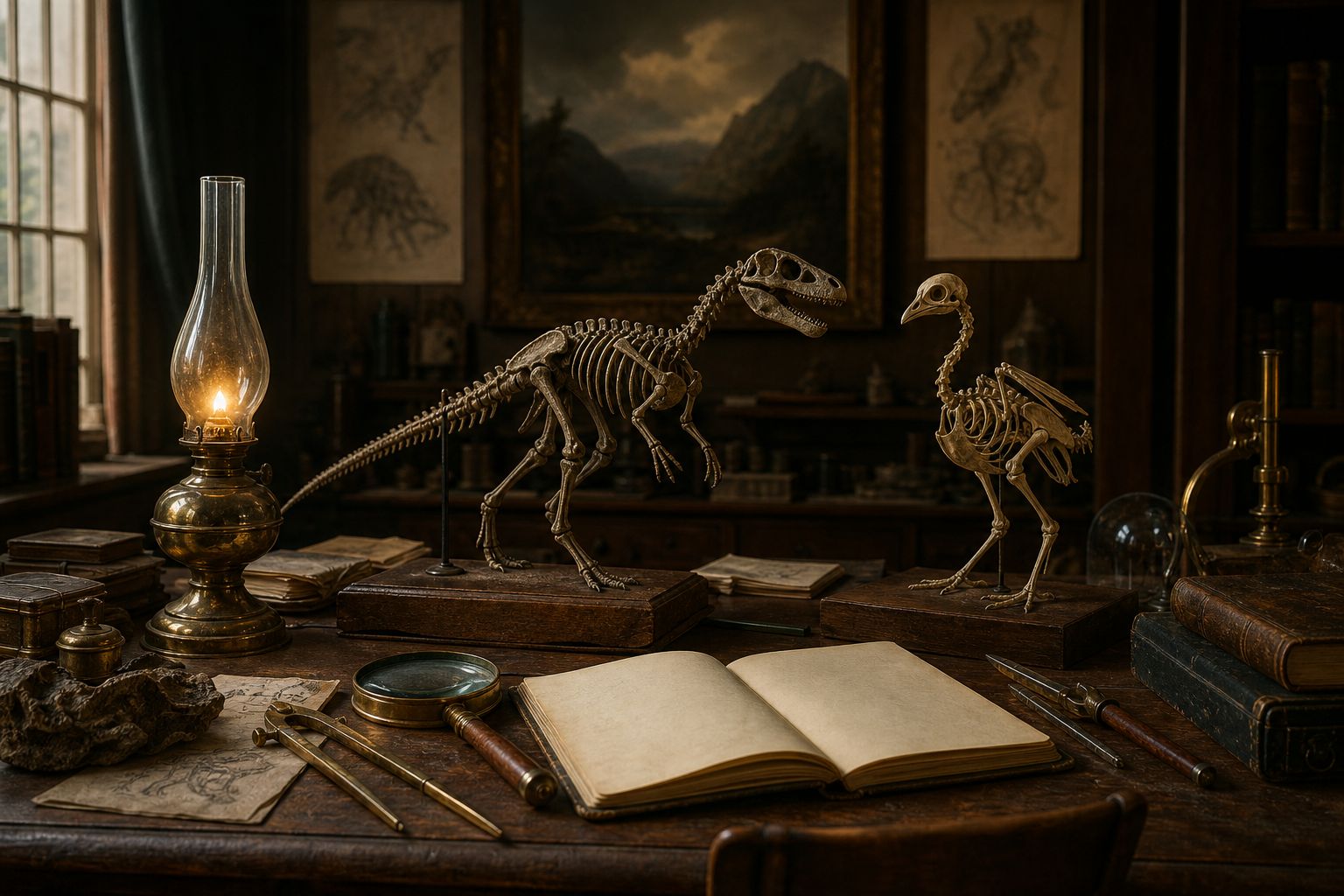
From 1868 the biologist Thomas Henry Huxley compared Archaeopteryx with small dinosaurs such as Compsognathus, and argued that it linked reptiles and birds.
Then, in 1926, Gerhard Heilmann's book The Origin of Birds argued that dinosaurs lacked collarbones, which fuse into a bird's wishbone. For decades, dinosaurs were dropped as bird ancestors.
He was wrong, as we will see: dinosaurs did have collarbones.
Comparing skeletons A Victorian naturalist’s desk: Huxley found Archaeopteryx most like small dinosaurs such as Compsognathus and Hypsilophodon. AI-generated illustration.
1868 Huxley: Archaeopteryx is like small dinosaurs
1926 Heilmann: no collarbones, so no dinosaur ancestors
The idea, lost
1936
collarbones found in a dinosaur, Segisaurus; now known as standard in its group
Heilmann’s mistake
Chapter II · The first bird
Huxley, Heilmann and Ostrom
Wikipedia (origin of birds): starting in 1868, Thomas Henry Huxley compared Archaeopteryx with prehistoric reptiles and found it most similar to small dinosaurs such as Compsognathus and Hypsilophodon. Gerhard Heilmann’s The Origin of Birds (English edition 1926) noted that birds have a fused furcula; believing dinosaurs lacked clavicles and that evolution could not reverse, he rejected them as bird ancestors. Clavicles were later found in dinosaurs, beginning with Segisaurus in 1936, and are now accepted as standard in saurischians. EARTH Magazine: Huxley considered Archaeopteryx a transitional species linking birds and reptiles.
The 3D animals, feather and family tree are schematic teaching models built from simple shapes, not reconstructions of real fossils; proportions are simplified.
In 1969 John Ostrom described Deinonychus, an agile hunter. A year later he noticed that its hand and wrist closely matched those of Archaeopteryx.
Ostrom revived Huxley's idea, and it has gained support ever since. Switch between the three skeletons: a small theropod, Archaeopteryx and a modern bird.
1969 Ostrom describes Deinonychus
1970 He spots the matching wrist in Archaeopteryx
mid-1970s He revives Huxley’s idea
The idea, found again
Tail: long and bony → short stump with a feather fan
Jaws: teeth → toothless beak
Hand: three clawed fingers → fused wing bones
Compare on screen
“Almost identical”
the hand of Archaeopteryx and of Deinonychus, in every detail (Holtz, UMD)
Ostrom’s comparison
Chapter II · The first bird
Ostrom and Deinonychus
Wikipedia (origin of birds): John Ostrom described Deinonychus in 1969; in 1970, re-examining a wing specimen of Archaeopteryx, he noticed wrist similarities with Deinonychus, and in the mid-1970s he argued for a close bird–dinosaur link, reviving Huxley’s idea. Holtz (University of Maryland): Ostrom found the hand of Archaeopteryx “almost identical in every detail” to that of Deinonychus, and argued that birds arose among coelurosaurian theropods. Today the scientific consensus places birds among the maniraptoran theropods.
Try it: the buttons switch the model between a small theropod, Archaeopteryx and a modern bird. All three are schematic.
The 3D animals, feather and family tree are schematic teaching models built from simple shapes, not reconstructions of real fossils; proportions are simplified.
The decisive evidence came from China. In August 1996 a farmer and fossil hunter, Li Yumin, uncovered a fossil in Liaoning province, in the north-east.
It was a small meat-eating dinosaur, about a metre long at most, similar to Compsognathus, and its body was covered in a fuzz of simple filaments.
Named Sinosauropteryx, and around 124 million years old, it was the first dinosaur outside the birds, the Avialae, found with feathers. And it was clearly not a bird.
Yixian Formation
Liaoning province, near Beipiao
124.6–122 Myr
age of the fossil beds, Early Cretaceous
August 1996Layer upon layer Fine lake shales, laid down near volcanoes, preserve soft parts such as feathers. AI-generated illustration.
≈ 1.07 m
longest known specimen
≈ 0.55 kg
estimated weight
Sinosauropteryx
A theropod, not a bird
Feathers as simple filaments
So feathers are older than birds
Why it mattered
Chapter III · Feathered dinosaurs
Fuzz in the rock
Wikipedia (Sinosauropteryx): the first specimen was uncovered in August 1996 by farmer and fossil hunter Li Yumin and described that year, from the Yixian Formation of Liaoning province, north-east China, in beds dated to 124.6–122 million years ago (Early Cretaceous). The longest specimen is about 1.07 m long, with an estimated weight of 0.55 kg. Its body was covered in “very simple filament-like feathers”, which most researchers interpret as primitive feathers; it was the first dinosaur outside Avialae found with evidence of feathers, and it is not considered a bird. Wikipedia (origin of birds): first described as a bird, it was soon recognised as a basal theropod close to Compsognathus.
The 3D animals, feather and family tree are schematic teaching models built from simple shapes, not reconstructions of real fossils; proportions are simplified.
More feathered dinosaurs followed. Even Deinonychus, once drawn as scaly, is now known to have had feathers, according to London's Natural History Museum.
Sinosauropteryx could not fly, so its fuzz must have done something else. Feathers came before flight.
What were they for? Keeping warm is a likely answer, as with a chick's down. Showing off in courtship, and camouflage, are others.
Only later were some feathers put to work for flight.
This work has shown that Deinonychus, originally depicted as a scaly dinosaur, was actually feathered.Paul Barrett, Natural History Museum, London
Insulation
Courtship display
Camouflage
Defence
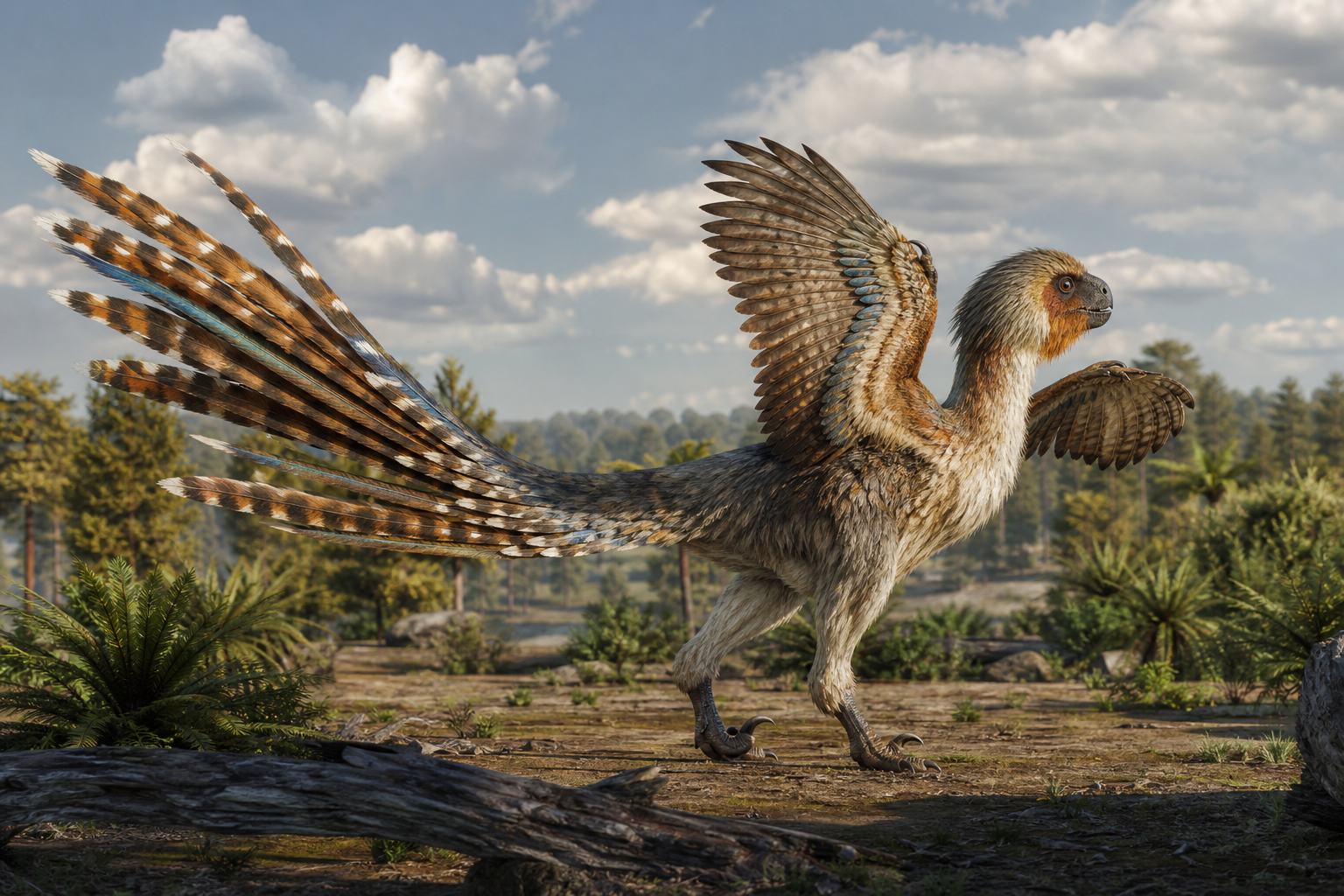
Possible first jobs of feathersFeathers for show A feathered dinosaur fanning its tail: display is one proposed early use of feathers. AI-generated illustration.
Exaptation
a trait that evolved for one job and was later used for another
A word for it
Chapter III · Feathered dinosaurs
Feathers came first
Natural History Museum, London: Deinonychus, a small predatory theropod of about 115 million years ago, originally depicted as scaly, was actually feathered (Paul Barrett). Prum and Brush (Scientific American, 2003): feathers evolved before flight and were not originally for it; only the closed, asymmetrical vane could have served in flight, so feathers were “exapted”, and early functions such as insulation, courtship, camouflage and defence remain plausible.
The 3D animals, feather and family tree are schematic teaching models built from simple shapes, not reconstructions of real fossils; proportions are simplified.
How did a simple filament become a flight feather? A feather grows from a pit in the skin, as a tube that splits into strands as it grows.
In 2003, Richard Prum and Alan Brush used that growth to propose a model in five stages.
First a hollow tube. Then a tuft of strands, called barbs. Then a central shaft with barbs on both sides, each barb sprouting tiny side branches.
Next, those branches hook together, zipping the barbs into a closed, flat vane. Last, the vane becomes lopsided, a shape that helps a wing feather produce aerodynamic forces. Step through the stages yourself.
A ring of cells at the base keeps adding new cells
Prum and Brush (Scientific American, March 2003): a feather grows from a follicle; cells proliferating in the collar at its base push older cells outwards, and the collar divides into barb ridges. Their developmental model: stage I, an unbranched hollow cylinder; stage II, a tuft of unbranched barbs on a hollow base (calamus); stage III, either barbs fusing into a central shaft (rachis) or barbules forming on the barbs, the order of these two not being decidable from development alone; stage IV, barbules with hooklets that interlock with neighbouring barbs, forming a closed vane; stage V, extra barb ridges on one side, giving the asymmetrical vane of modern flight feathers.
Try it: buttons I to V grow the feather to each stage of the model. The shapes are schematic, and the model is a hypothesis based on how feathers develop.
The 3D animals, feather and family tree are schematic teaching models built from simple shapes, not reconstructions of real fossils; proportions are simplified.
So which parts of a bird are older than birds? Start with Heilmann's missing collarbones. They did turn up in dinosaurs, and a fused wishbone is now known in many theropods.
Birds breathe with air sacs that work like bellows, and the sacs reach into the bones, leaving air spaces inside.
In 2005 Patrick O'Connor and Leon Claessens found signs of the same system in Majungasaurus, a predator from Madagascar.
It lived about 67 million years ago, long after the first birds: a cousin, not an ancestor, that kept an older family trait.
Many “bird” features, O'Connor said, may really be dinosaur features.
1926 Heilmann: dinosaurs had no collarbones
1936 Collarbones found in Segisaurus
Today Standard in saurischians, the dinosaur group that includes theropods; wishbone in many theropods
The collarbone question
9
flexible air sacs acting like bellows
One-way
air flows through nearly rigid lungs
A bird’s breathing
Majungasaurus
then called Majungatholus; found in 1996
≈ 67 Myr
Madagascar; a cousin of birds, not an ancestor
Nature, July 2005
Many avian features may really be dinosaurian.Patrick O’Connor, Ohio University, 2005
Chapter V · Bird parts before birds
Wishbones and air sacs
Wikipedia (origin of birds): clavicles were later found in dinosaurs, beginning with Segisaurus (1936), and are now accepted as standard in saurischians; the furcula and hollow, pneumatised bones are among the features birds share with theropods. Phys.org and ScienceDaily (July 2005): birds have nine flexible air sacs that act like bellows to move air through nearly rigid lungs, and parts of the system invade the skeleton, forming air pockets in bone. In Nature, Patrick O’Connor (Ohio University) and Leon Claessens (Harvard) compared bird skeletons with Majungatholus atopus (now Majungasaurus), a 67-million-year-old predatory dinosaur from Madagascar whose specimen O’Connor helped find in 1996, and found evidence of a very bird-like pulmonary system. The system suggests a stable, high metabolism, possibly closer to warm-blooded, but the authors stress the study does not show the animal was warm-blooded.
Try it: “Wishbone” highlights the wishbone in both animals; “Air sacs” shows schematic air sacs and an air-filled bone. Sac sizes and positions are simplified.
The 3D animals, feather and family tree are schematic teaching models built from simple shapes, not reconstructions of real fossils; proportions are simplified.
Behaviour is older than birds too. In 1993 a team from the American Museum of Natural History and the Mongolian Academy of Sciences was working in the Gobi Desert.
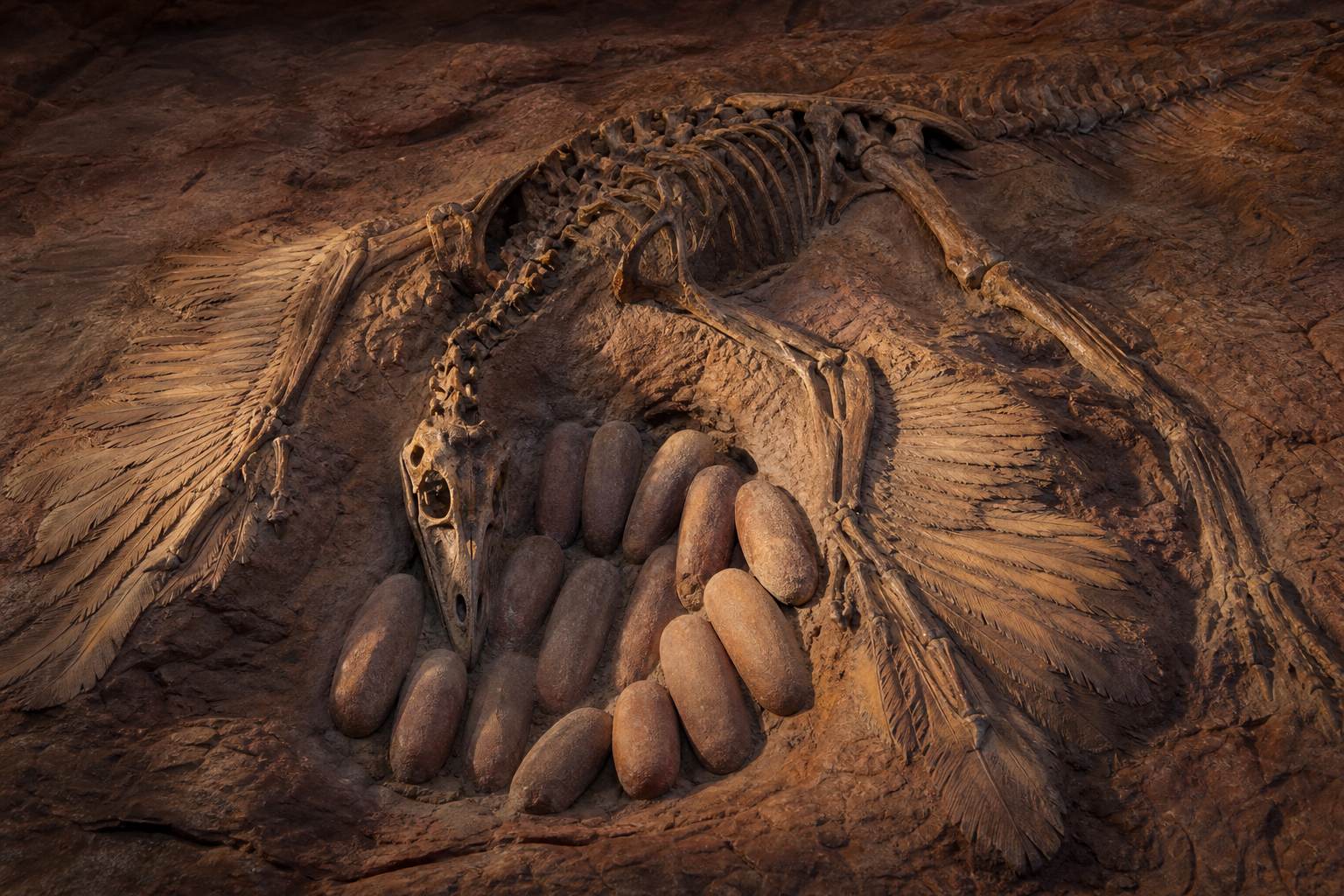
They found a Citipati skeleton sitting on a nest of eggs.
It is about 75 to 71 million years old, and its arms are spread around the clutch, much as many birds brood their eggs today.
Citipati was not an ancestor of birds but a cousin, so brooding must go back to an ancestor they shared.
Ukhaa Tolgod
Gobi Desert, Mongolia
“Big Mama”
nickname of the brooding specimen
Found in 1993Caught on the nest A brooding oviraptorid fossil in red sandstone: the eggs lie in a ring under the body. AI-generated illustration.
Sitting over the centre of the nest
Forearms spread over the edge
Feathered arms likely shaded and sheltered the eggs
Like a brooding bird
2.5–2.9 m
estimated length
75–110 kg
estimated weight
Citipati osmolskae
Chapter V · Bird parts before birds
A dinosaur on its nest
American Museum of Natural History: the first Citipati specimens were found in 1993 at Ukhaa Tolgod, Mongolia, by scientists from the museum and the Mongolian Academy of Sciences; the fossil shows the animal over the centre of its nest with its forearms spread, the position many modern birds use to brood; “many bird behaviors, such as guarding eggs in a nest, may find their roots in the lifestyles of dinosaurs.” Wikipedia (Citipati): the brooding specimen IGM 100/979 (“Big Mama”) comes from the Djadokhta Formation, about 75–71 million years old; Citipati was about 2.5–2.9 m long and 75–110 kg; long feathers on the arms and tail were likely present and would have shielded eggs and hatchlings.
The 3D animals, feather and family tree are schematic teaching models built from simple shapes, not reconstructions of real fossils; proportions are simplified.
Then size. In 2014 a team led by Michael Lee, writing in Science, compared 1,549 anatomical traits and found that the ancestors of birds kept shrinking for some 50 million years before the first birds appeared.
The same lineage evolved new features, such as feathers, wishbones and wings, about four times faster than other dinosaurs.
1,549
anatomical traits compared
≈ 50 Myr
of shrinking, from about 200 to about 150 million years ago
Lee et al., Science, 2014
Other dinosaurs
1×
Bird ancestors
≈ 4×
Pace of new skeletal features Being small and changing fast may also have helped birds through the later extinction, the authors suggest.
Chapter VI · Smaller, then airborne
The incredible shrinking theropods
Natural History Museum, London: the transition from fast, ground-dwelling bipedal theropods to small, winged birds probably began about 160 million years ago, and body size decreased in some theropod groups. Sci.News on Lee et al. (Science 345, 2014; Michael Lee, University of Adelaide and South Australian Museum, with Darren Naish and Gareth Dyke, University of Southampton): using 1,549 anatomical traits to rebuild the dinosaur family tree, the team found that the theropods ancestral to birds shrank continuously for 50 million years, beginning about 50 million years before the earliest known birds, and evolved new adaptations such as feathers, wishbones and wings four times faster than other dinosaurs. Lee suggested being smaller and lighter, with rapidly evolving anatomy, helped birds survive the later impact.
On screen: the row of animals shows the trend only; sizes and dates are schematic, not measured body masses.
The 3D animals, feather and family tree are schematic teaching models built from simple shapes, not reconstructions of real fossils; proportions are simplified.
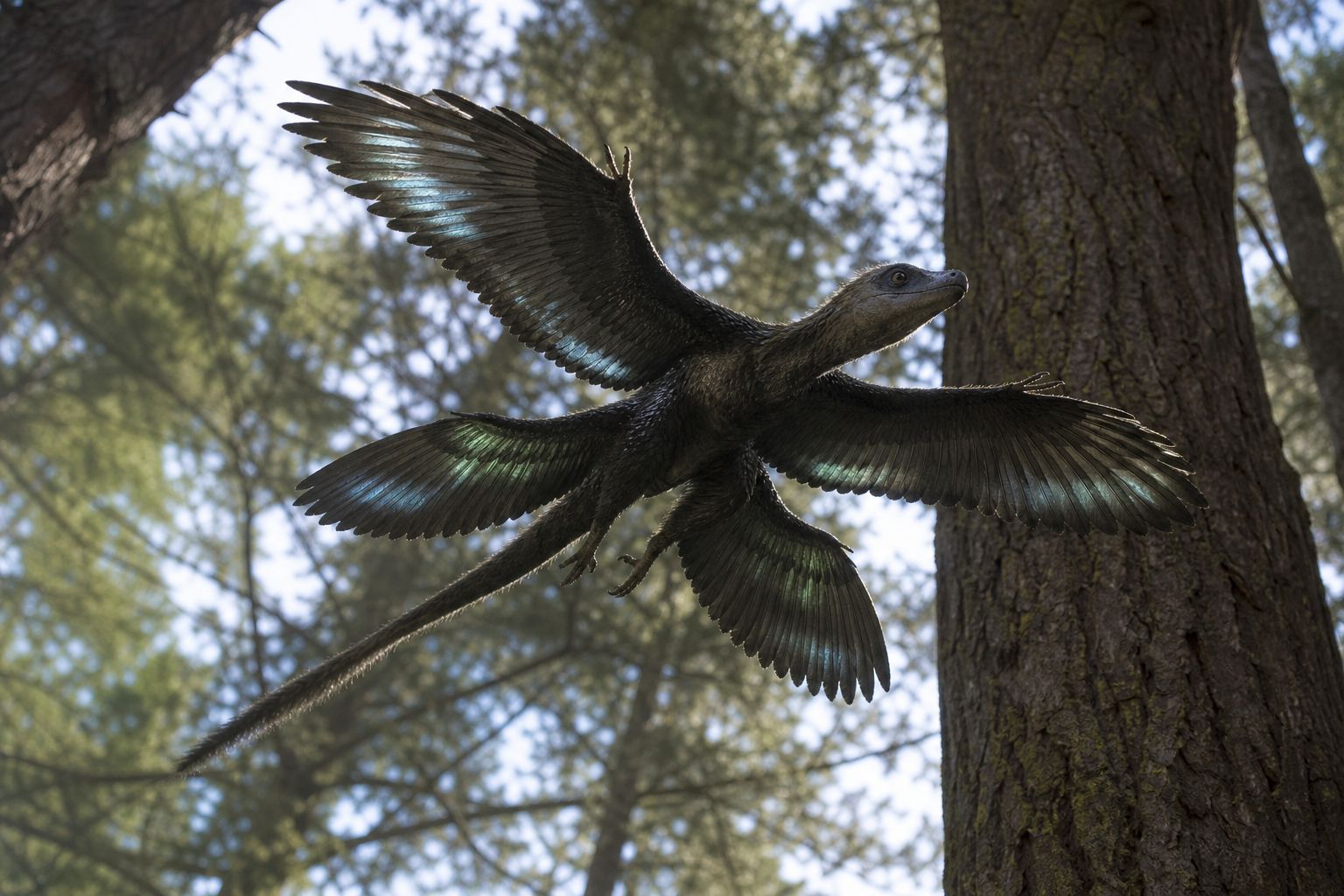
Small bodies could climb and glide. Microraptor, from Liaoning and about 120 million years old, was under a metre long, with long flight feathers on both its arms and its legs.
Xu Xing and colleagues described this four-winged dinosaur in 2003. Its feathers were lopsided, like a bird's flight feathers, and a 2012 study found they were glossy black.
Most scientists now think it could fly, though less well than modern birds.
125–120 Myr
Jiufotang Formation, Liaoning
77 cm
length of the M. gui type specimen
Microraptor guiFour wings Long feathers on arms and legs; colour based on melanosomes, tiny pigment structures preserved in the fossil. AI-generated illustration.
2003
Xu et al. describe M. gui, a “four-winged dinosaur”
2012
Li et al.: glossy, iridescent black feathers
Two findings
First thought to be a glider
Later analyses: powered flight
Most now: it flew, less well than birds
How well did it fly?
Chapter VI · Smaller, then airborne
Four wings
Wikipedia (Microraptor): from the Jiufotang Formation of Liaoning, China, about 125–120 million years old; the M. gui holotype is 77 cm long and weighed an estimated 0.5–1.4 kg. Xu and colleagues described M. gui in 2003 as a “four-winged dinosaur”, with long flight feathers forming a wing on each forelimb and hindlimb; its arm, leg and tail feathers had asymmetrical vanes like modern flight feathers. In 2012 Quanguo Li and colleagues reported, from fossil melanosomes, that its plumage was glossy, iridescent black. It was first thought to be a glider; later analyses suggested it could sustain powered flight, and most scientists now think it flew, though its flight was less advanced than that of modern birds.
The 3D animals, feather and family tree are schematic teaching models built from simple shapes, not reconstructions of real fossils; proportions are simplified.
So how did flight begin? There are two classic ideas, and both are hypotheses.
In the trees-down idea, small feathered animals climbed trees and glided, and gliding became flapping.
In the ground-up idea, fast runners used their feathered arms while running and leaping.
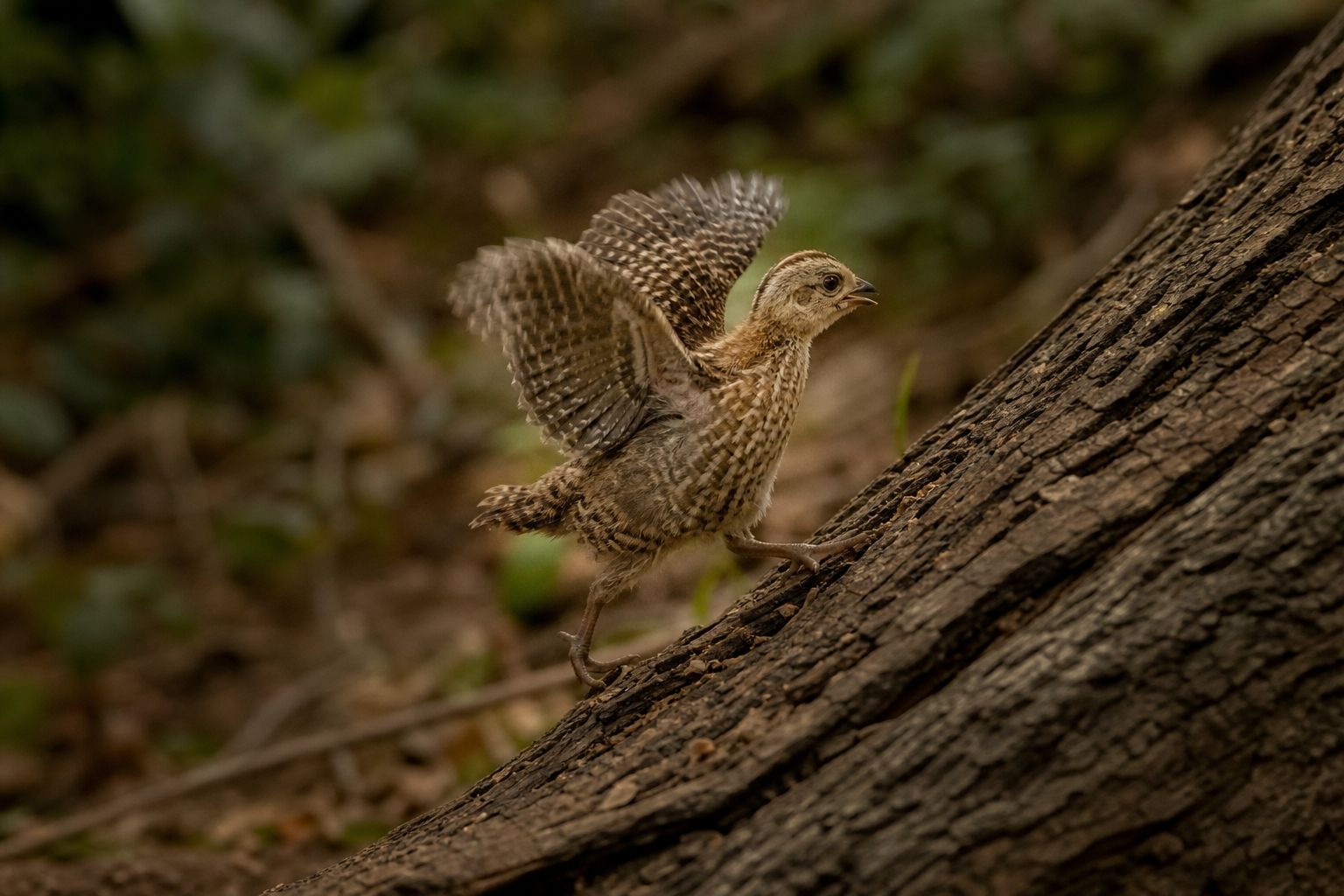
One version comes from Ken Dial, who showed in 2003 that young ground birds flap their wings to run up steep slopes before they can fly.
Yuezhuornis adds a twist: early birds were not all heading for the sky; some had already gone back to the ground.
Trees down: climb, glide, then flap
Ground up: run, leap, then flap
Neither is settled
Two classic hypothesesRunning up with wings A partridge-type chick flapping its half-grown wings to keep its feet on a steep surface. AI-generated illustration.
WAIR
wing-assisted incline running: wing force presses the feet onto the slope
Dial, Science, January 2003
Debated
some argue the earliest birds lacked the shoulder needed for WAIR
A caution
Chapter VI · Smaller, then airborne
Trees down or ground up?
Wikipedia (origin of birds): in the arboreal (“trees down”) hypothesis, powered flight evolved from gliding by tree-dwelling animals; in the cursorial (“ground up”) hypothesis, it evolved in small, fast ground-running predators. Wing-assisted incline running (WAIR), proposed by Dial in 2003, is a variant of the cursorial idea; the article notes that early birds likely lacked the shoulder mechanism WAIR needs. Dial (Science 299, January 2003): developing ground birds, from hatching and before they can fly, flap their wings while running up inclines; the wing force pushes them towards the surface, improving traction, and this may show how incipient wings worked in feathered theropods. EurekAlert! (2026): Yuezhuornis suggests early bird evolution was not a straight path towards better flight.
Try it: “Trees down” shows a glide from a trunk; “Ground up” shows a run up a slope. Both are illustrations of hypotheses, not reconstructions.
The 3D animals, feather and family tree are schematic teaching models built from simple shapes, not reconstructions of real fossils; proportions are simplified.
About 66 million years ago an asteroid impact ended the age of dinosaurs.
All the non-avian dinosaurs died out, and so did many birds, including the opposite birds, or Enantiornithes, mostly toothed birds named for a shoulder joint built the reverse way from modern birds'.
A 2018 study by Daniel Field and colleagues suggests that, as fires and darkness after the impact devastated the world's forests, only small, ground-dwelling birds survived.
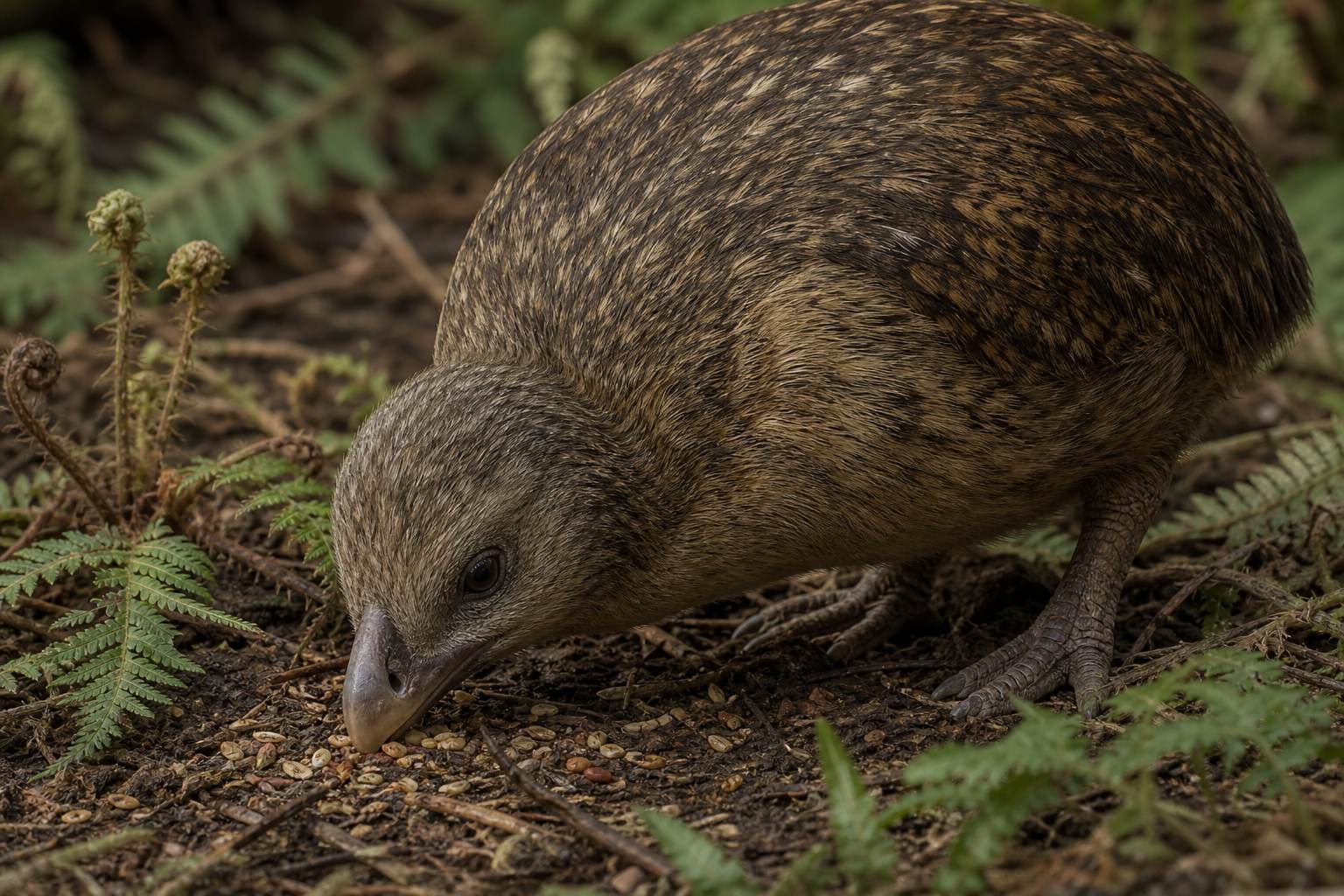
They were toothless, with beaks, and one hypothesis says eating seeds helped them through.
≈ 66 Myr
ago
> 5 kg
no land animal heavier than this survived, according to The Conversation
The K–Pg boundary: end of the Cretaceous, start of the Paleogene
All non-avian dinosaurs
Opposite birds (Enantiornithes)
Toothed relatives of birds
Lost
≈ 1,000 yr
for forests to recover after the impact
Ground birds
the likely ancestors of all living birds
Field et al., Current Biology, 2018A beak for seeds Larson and colleagues (2016) proposed that the last common ancestor of living birds was a toothless seed-eater. AI-generated illustration.
Chapter VII · The survivors
Who came through
The Conversation: the K–Pg extinction, about 66 million years ago, was caused by an asteroid impact that triggered wildfires, acid rain, darkness and cooling; it wiped out the non-avian dinosaurs and every land animal over five kilograms, and the opposite birds also went extinct. Only the ancestors of a few major bird lineages survived, and the ancestors of all living birds were “almost certainly ground-dwelling”. All About Birds (Cornell Lab) on Field et al. (Current Biology, 2018): forests collapsed worldwide and took about 1,000 years to regrow, and only small ground-dwelling birds survived. Sci.News on Larson et al. (Current Biology, 2016): toothed bird-like dinosaurs did not survive while toothless modern birds did; the team hypothesised that the last common ancestor of modern birds was a toothless, beaked seed-eater. This is a hypothesis. Wikipedia (Enantiornithes): the “opposite birds” are named for their shoulder joint, where the scapula forms the socket and the coracoid the ball, the reverse of modern birds; most had teeth, and they died out at the end of the Cretaceous. The impact itself is the subject of our film on the Chicxulub impact.
On screen: a schematic fan of lineages; the number of lines is illustrative.
The 3D animals, feather and family tree are schematic teaching models built from simple shapes, not reconstructions of real fossils; proportions are simplified.
From those few survivors came every bird alive today: 11,131 species, according to AviList, a unified world checklist released in 2025.
Every one of them is a living dinosaur.
What is still open is how flight began, and how many early birds, like Yuezhuornis, gave it up again.
11,131
bird species in AviList 2025, launched 11 June 2025
Living dinosaursOn every street Pigeons and sparrows: theropods that outlived every other dinosaur. AI-generated illustration.
Trees down, ground up, or both?
How many early birds were flightless?
What exactly let beaked birds survive?
Still open
Stills are AI-generated
3D animals and trees are schematic
Hypotheses are labelled as such
About this film
Epilogue · Sources
Sources
Every fact in this film comes from the sources below. The chapter stills and pictures are AI-generated illustrations, not reconstructions of specific fossils. The 3D animals, the feather, the family tree, the size row and the lineage fan are schematic teaching models; the feather stages follow Prum and Brush’s model, and the two flight scenes illustrate hypotheses. USGS: AviList, launched on 11 June 2025 with the support of the International Ornithologists’ Union, BirdLife International and the Cornell Lab of Ornithology, recognises 11,131 bird species.