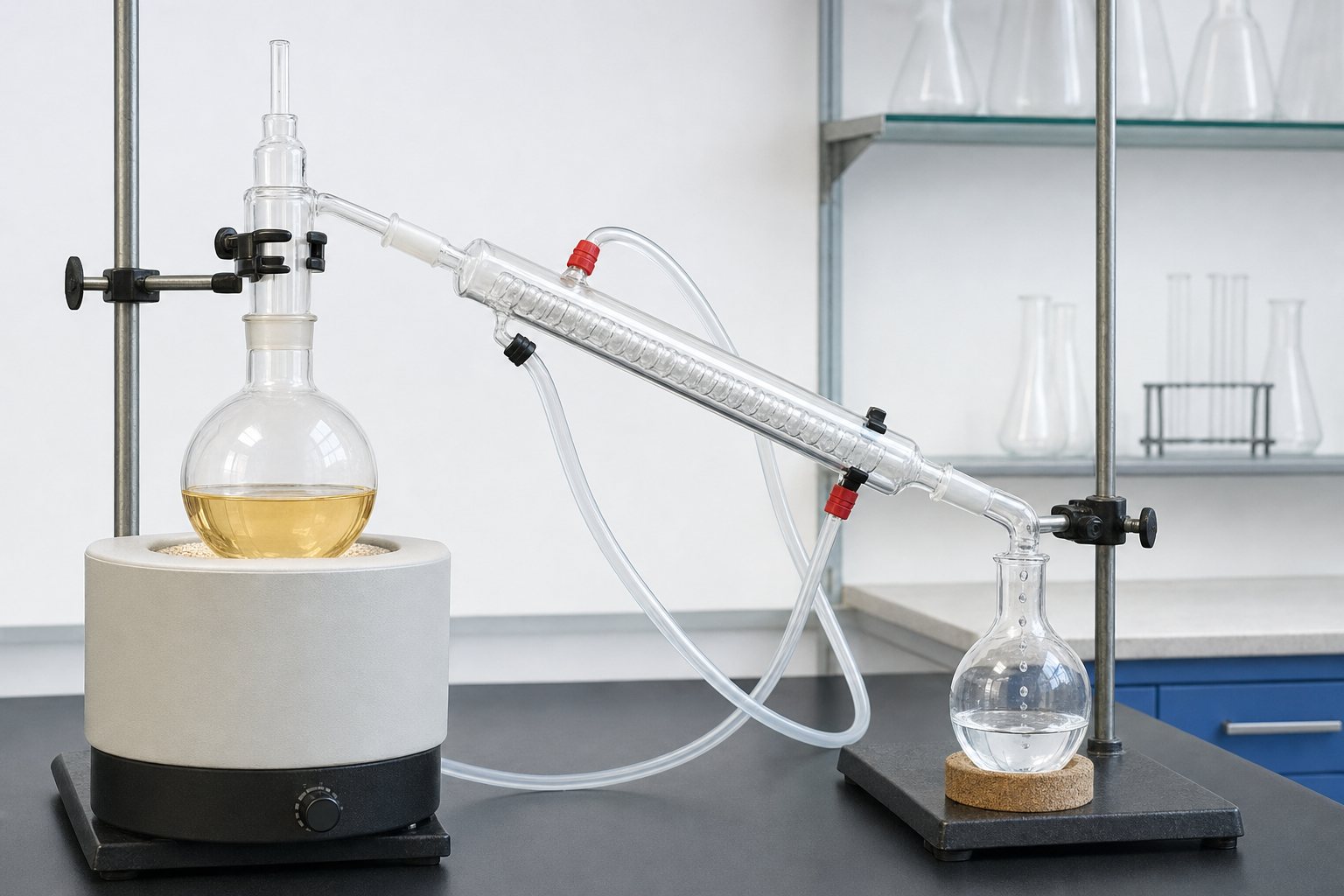
In November 2026 chemists in Spain reported a simple way to pull most of the oil out of used coffee grounds, a possible raw material for biodiesel. This film explains the chemistry and the debate behind biofuels: why fuel from plants can, in principle, recycle carbon the plants took from the air; how yeast turns sugar into ethanol and how oil and methanol become biodiesel and glycerol; Brazil’s sugarcane ethanol; why clearing land for fuel crops can create a carbon debt that takes decades or centuries to repay, according to several studies; and the next generation of fuels from plant waste, wood and algae.
Interactive 3D film8 min2007 to 2026Published 16 November 2026
Could your morning coffee end up in a fuel tank? The world grows about ten million tonnes of coffee beans a year, and the grounds left after brewing are about fifteen percent oil.
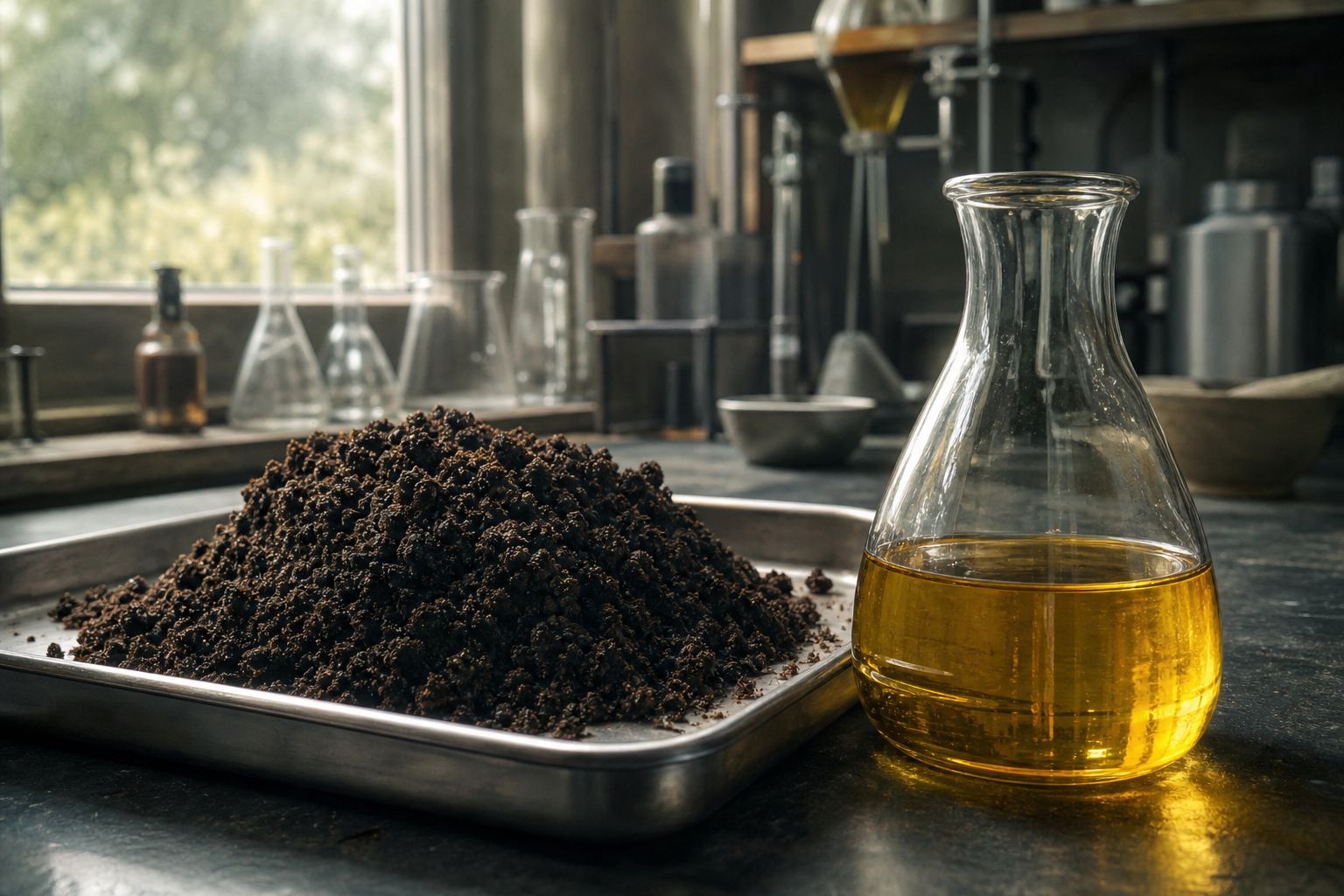
Chemists at Rovira i Virgili University in Spain have found a simple way to recover about ninety percent as much of that oil as the standard lab method, a possible raw material for biodiesel.
Fuel made from living things is called a biofuel. How is it made, and is it really better for the climate?
~10 million t
coffee beans a year
~15%
oil in spent grounds
~90%
of the standard method’s yield
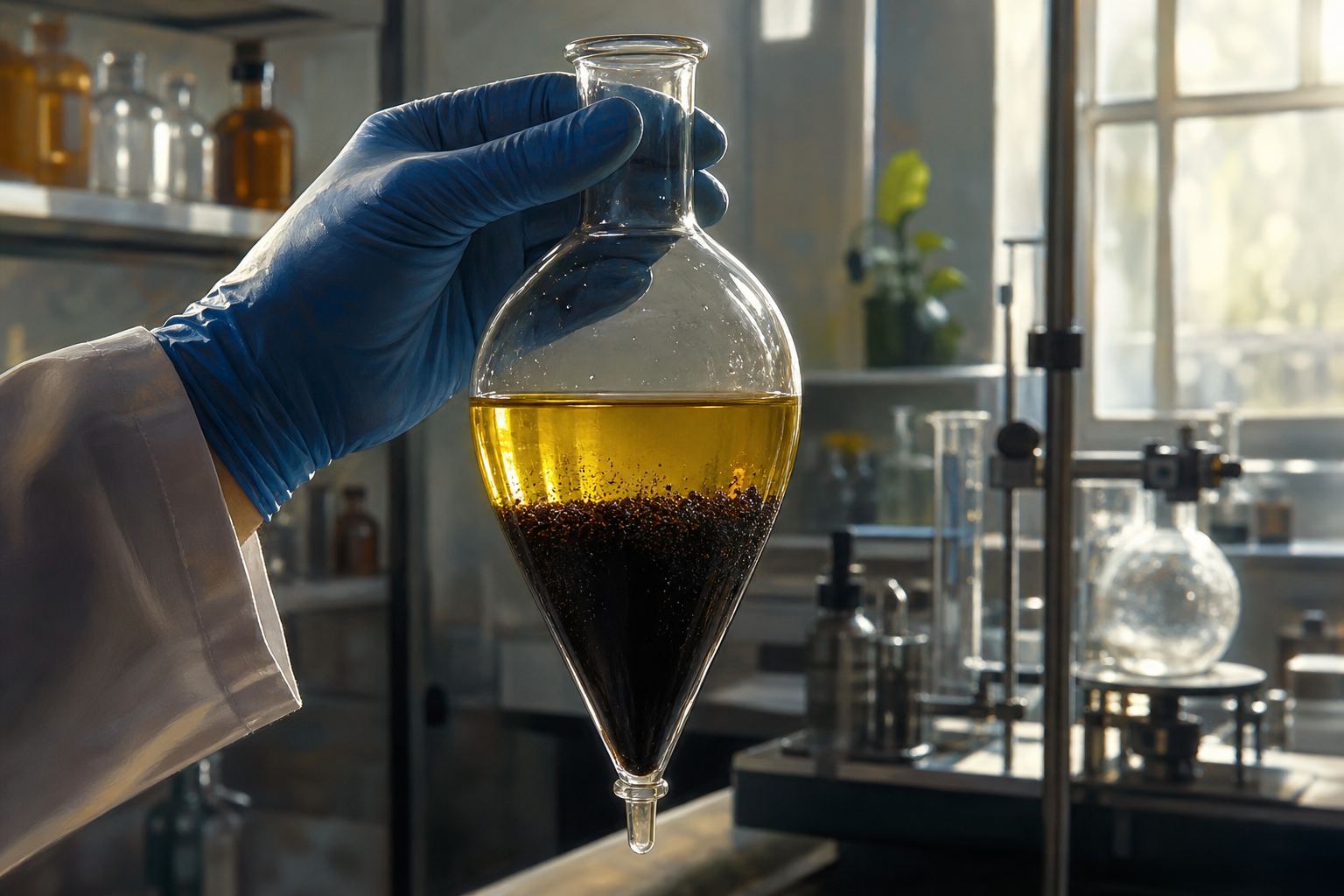
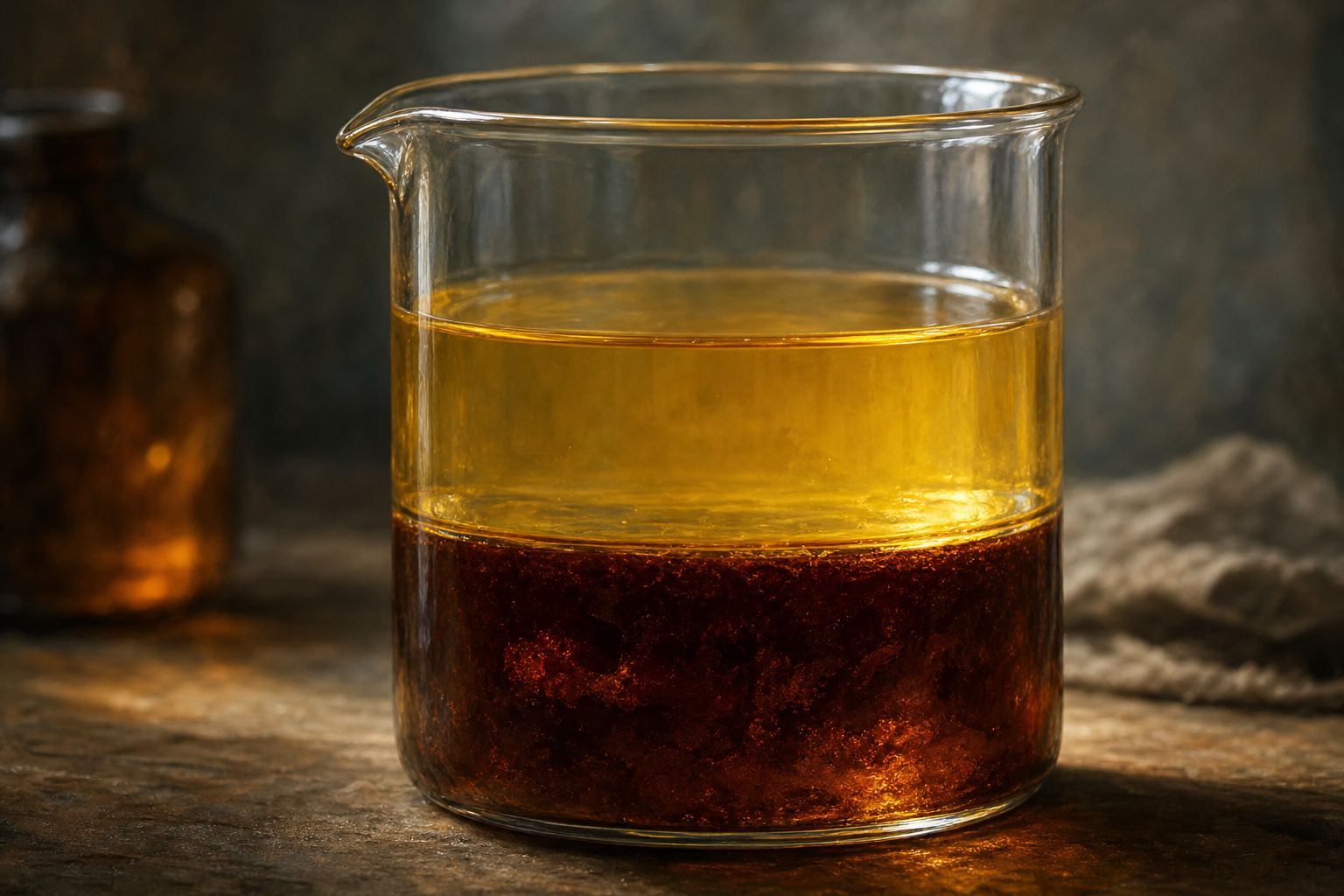
Coffee in numbersOil from grounds Grounds soaked in a solvent at 45 °C for an hour release their oil, which is then separated. AI-generated illustration.
why plant fuel can recycle carbon
sugar into ethanol
oil into biodiesel
the land problem
fuels from waste, wood and algae
In this film
Prologue
The news
Universitat Rovira i Virgili, via ScienceDaily (14 November 2026) and EurekAlert!: in Biomass and Bioenergy, a team recovered about 90% of the oil from spent coffee grounds by extraction with hexane at 45 °C for 60 minutes, with fewer impurities than the standard Soxhlet method. World coffee bean production is about 10 million tonnes a year; spent grounds hold about 15% lipids. The study extracts the oil; it does not report making biodiesel from it.
The 3D scenes are simplified teaching models: molecules are drawn as balls and sticks, and nothing is to scale.
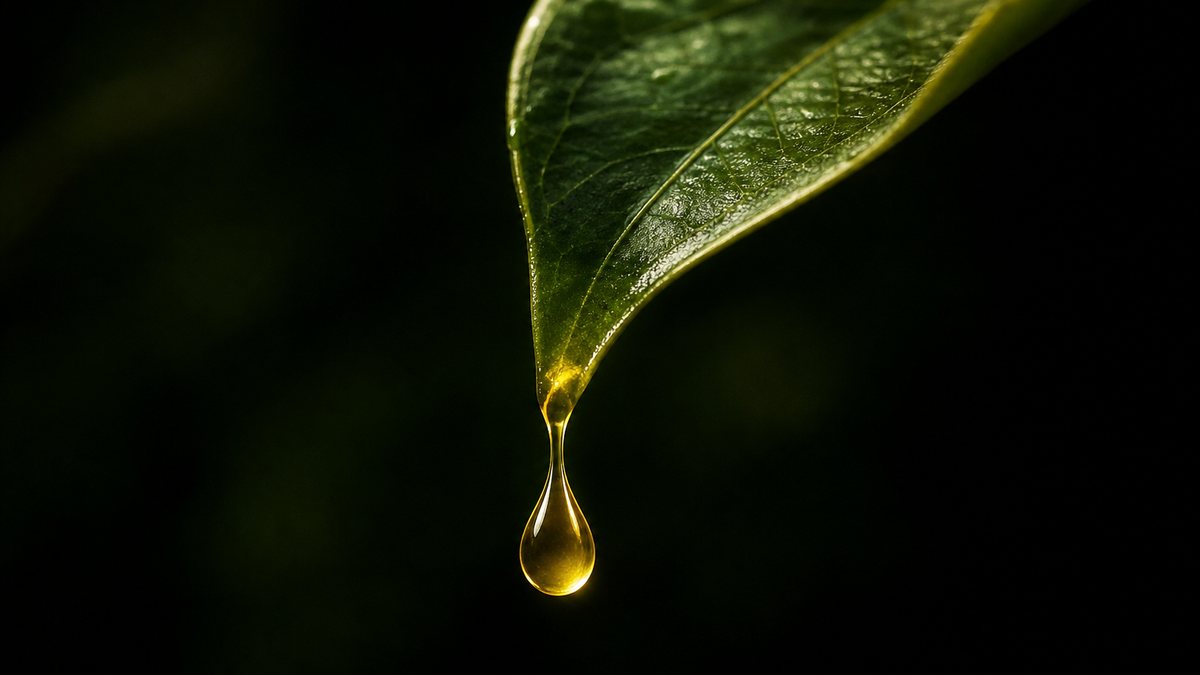
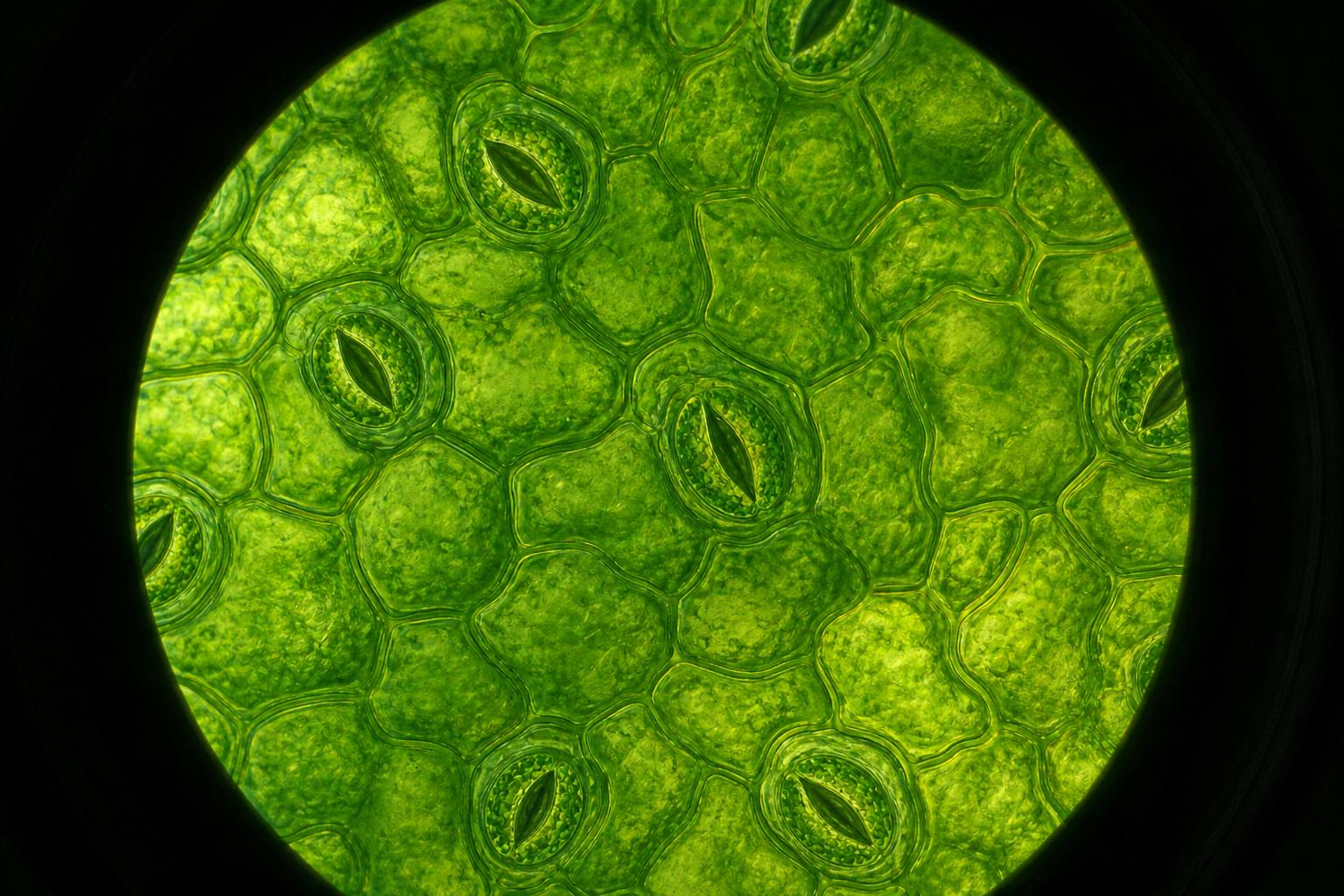
A plant builds itself out of air. Using sunlight, it pulls carbon dioxide in through its leaves and turns the carbon into sugar, oil and wood. About half the dry weight of a tree is carbon.
Burn fuel made from that plant, and the same carbon goes back into the air. In principle, the next crop takes it in again. That is why biofuels are often called nearly carbon-neutral: they release about as much carbon as their crops took in. In practice, farming and processing use energy too, so not every biofuel lives up to that.
Fossil fuels are different: their carbon was stored underground, outside this loop, and burning them adds it to the air.
Doors in a leaf Tiny pores on a leaf let carbon dioxide in. Photosynthesis captures less than a tenth of one percent of the sunlight that falls on plants. AI-generated illustration.
plant takes CO₂ from the air
carbon stored as sugar, oil, wood
fuel burned: CO₂ back to the air
next crop takes it in again
The loop
Essentially carbon-neutral.Scientific American, on the idea behind biofuels; Live Science notes some are not
~50%
of a tree’s dry weight is carbon
<0.1%
of sunlight on plants stored by photosynthesis
Old carbon, new carbon
Chapter I · Carbon in a circle
The carbon argument
Scientific American (about 2009): biofuels are “essentially carbon-neutral” because the organisms that make them draw down as much carbon dioxide as burning releases; photosynthesis captures less than a tenth of 1% of the solar energy reaching plants. Scientific American (Tilman, University of Minnesota): about half the dry weight of a tree is carbon. Live Science (2022): some biofuels are not actually carbon-neutral. Chapter IV shows why land matters most.
Press “Grow”, “Burn” and “Fossil fuel” to follow the carbon.
The 3D scenes are simplified teaching models: molecules are drawn as balls and sticks, and nothing is to scale.
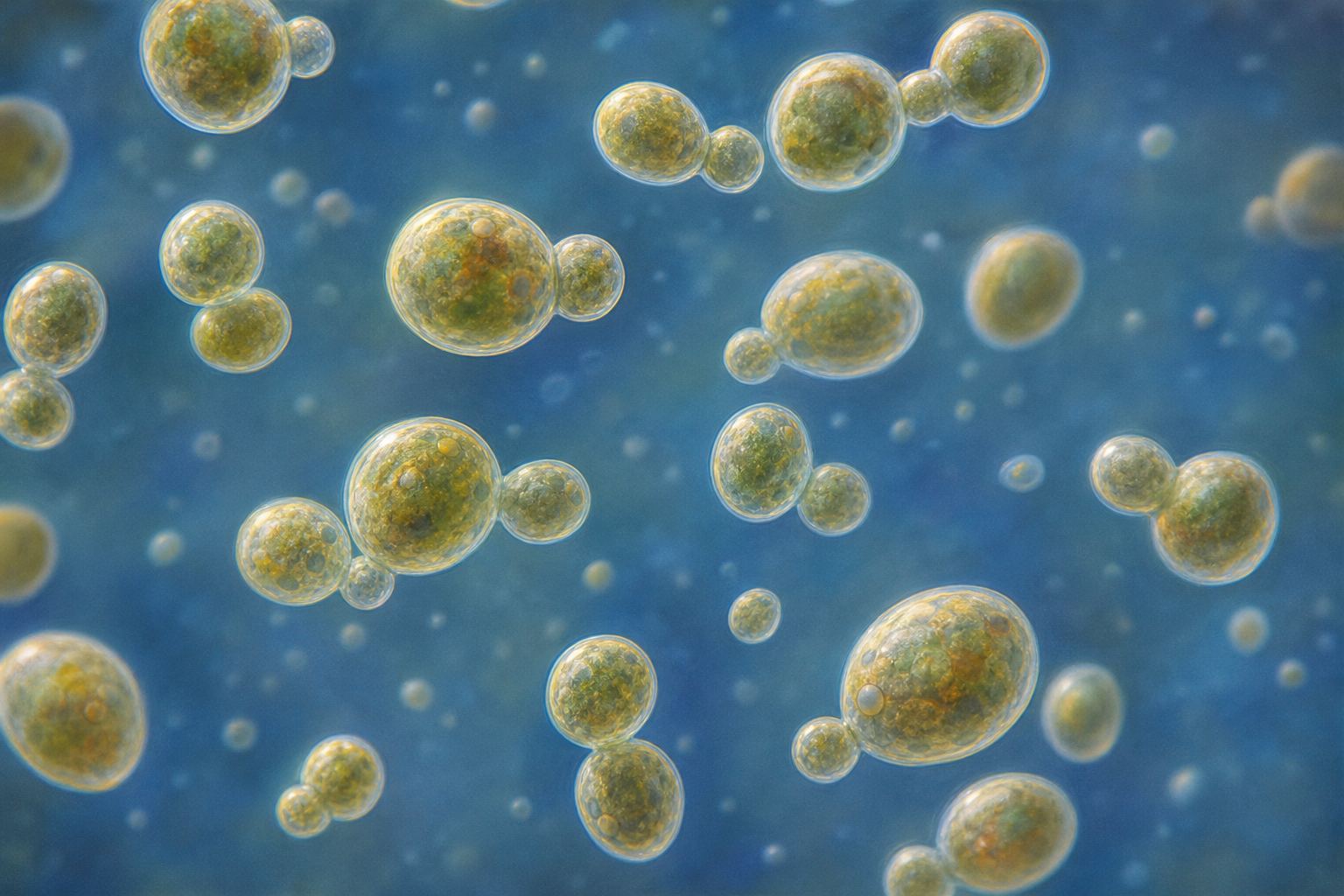
Ethanol is the alcohol in beer and wine. It is made by fermentation: enzymes in yeast turn sugar into alcohol and carbon dioxide.
The sugar comes from crops like sugarcane or corn. After fermenting, the alcohol is separated by distillation and blended into petrol.
E10 means ten percent ethanol, ninety percent petrol. Special flex-fuel engines can run on E85. But the same amount of ethanol takes a car only about two-thirds as far as petrol.
Yeast Single-celled fungi: Saccharomyces cerevisiae ferments sugars into ethanol and carbon dioxide. AI-generated illustration.C6H12O6yeast2C2H5OH+2CO2
C6H12O6
glucose, a sugar
C2H5OH
ethanol
CO2
carbon dioxide
The overall reaction of fermentation, as balanced in chemistry textbooks.At the pump In the US, more than 95% of petrol contains some ethanol, Live Science reports; E85 (85% ethanol) needs a flex-fuel engine. AI-generated illustration.
petrol
100
butanol
80
ethanol
67
Distance per unit of fuel (butanol is another alcohol fuel)
Chapter II · Ethanol
Ethanol
Live Science (2020): enzymes in yeast convert sugar into alcohol and carbon dioxide; EurekAlert! (2010): Saccharomyces cerevisiae ferments sugars, producing ethanol and carbon dioxide. Live Science (2022): ethanol is made by fermenting and distilling sugary crops. Scientific American (about 2009): E10 is 90% gasoline and 10% ethanol, E85 is sold for flex-fuel engines, and ethanol gives about 67% of gasoline’s mileage, butanol about 80%.
Press “Ferment” to watch sugar split into ethanol and CO₂.
The 3D scenes are simplified teaching models: molecules are drawn as balls and sticks, and nothing is to scale.
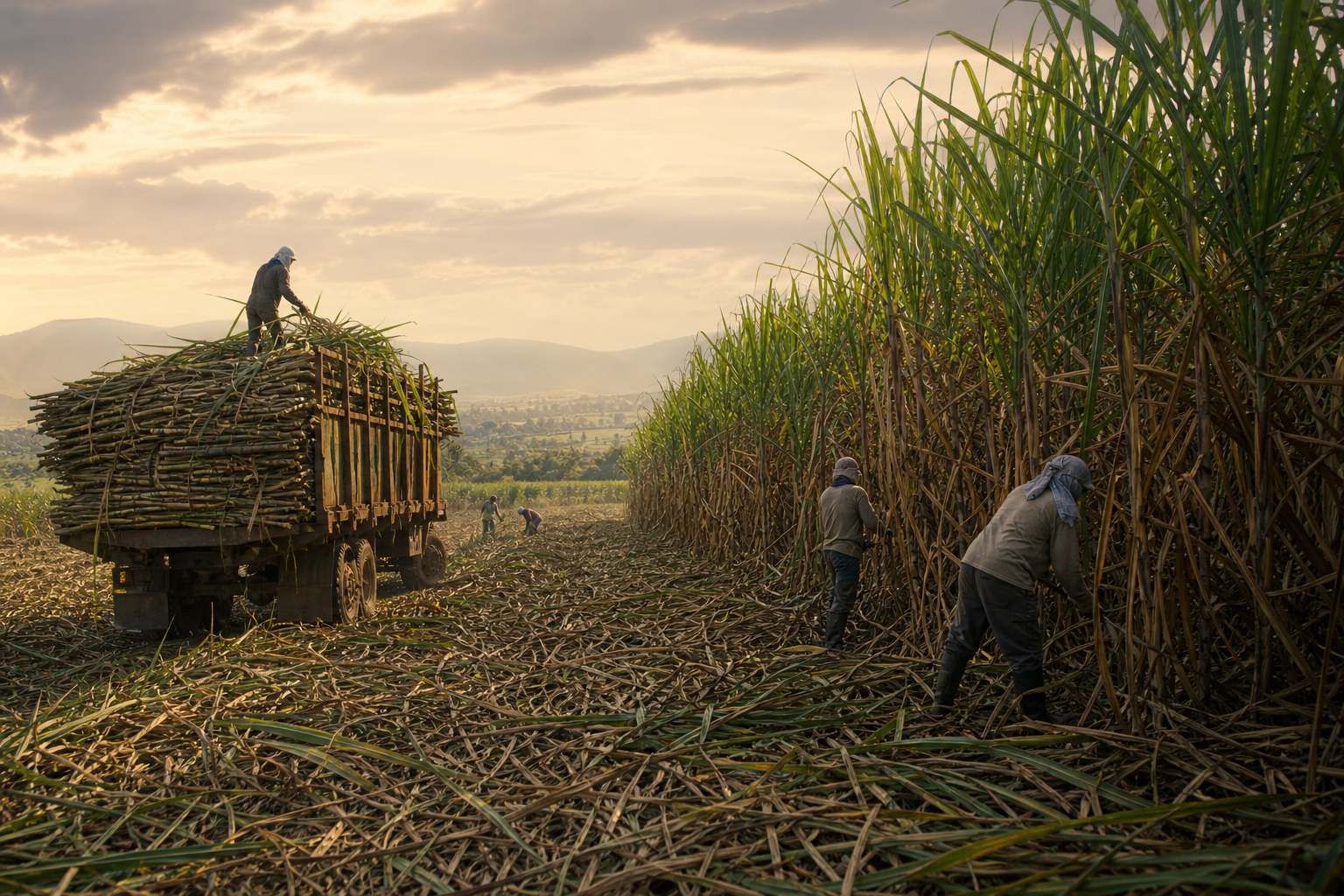
Brazil runs much of its traffic on ethanol from sugarcane. In 2007, its president Lula called the boom a new moment for mankind; Brazil was second only to the United States in ethanol output.
Then it stalled. By 2012, according to a São Paulo think-tank, ethanol's share of transport fuel had fallen from 55 percent to 35. Of about four hundred plants, 41 had closed.
Cane yields had dropped, and the government held petrol prices down, so drivers had less reason to choose ethanol. A fuel from fields depends on weather, harvests and politics.
Sugarcane Cane is crushed for its juice, which is fermented into ethanol. AI-generated illustration.
2008
55%
2012
35%
Ethanol’s share of Brazil’s transport fuel
41
of ~400 cane ethanol plants closed
115 → 69 t/ha
cane yield, 2008 → 2012
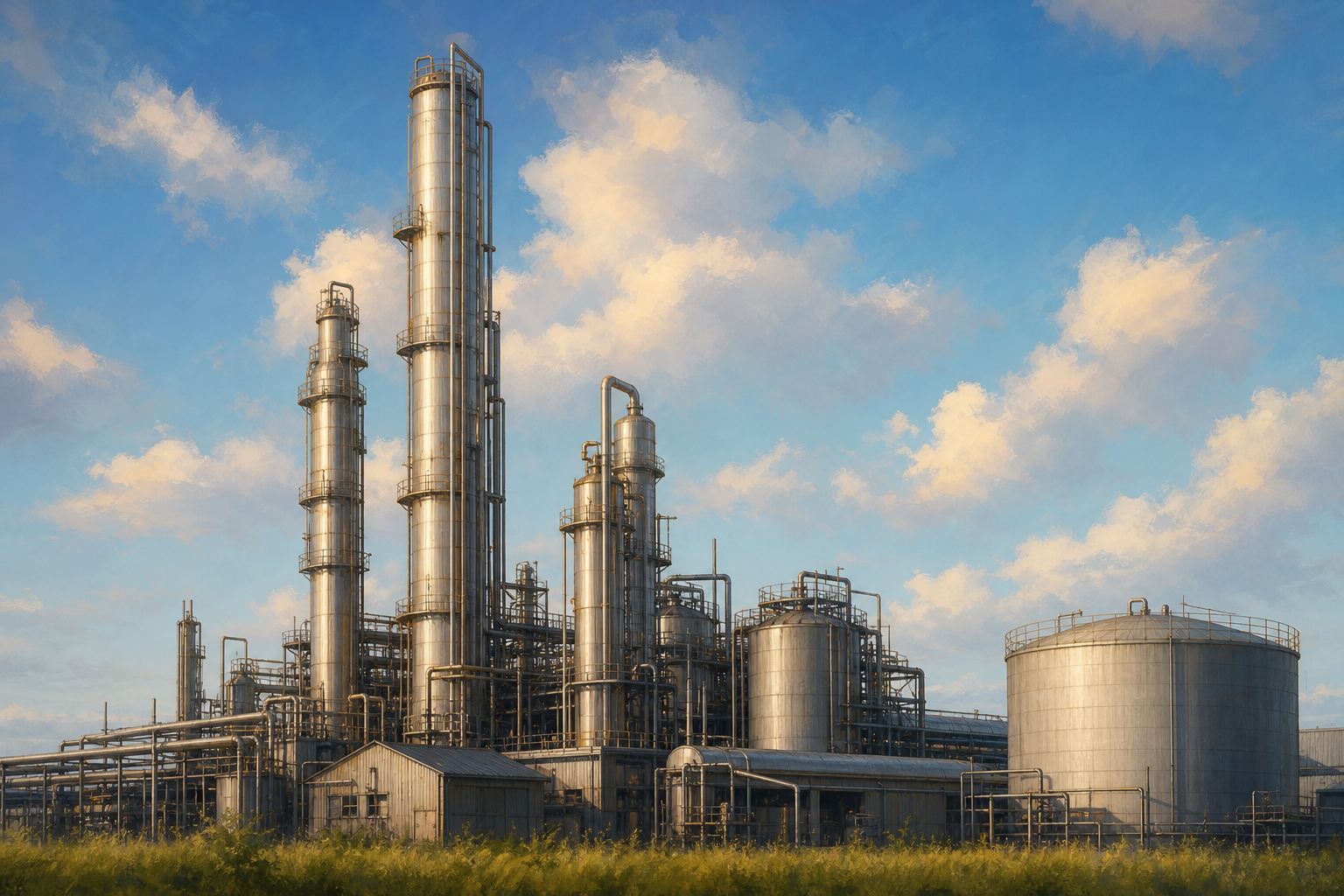
The stall, 2012A distillery Columns that separate ethanol from the fermented liquid by boiling. AI-generated illustration.
Chapter II · Ethanol
Brazil’s ethanol
Scientific American, reprinted from Nature (2012): in March 2007 President Lula called the ethanol boom “a new moment for mankind”, when Brazil was second only to the United States in ethanol output. By 2012 domestic ethanol consumption was 26% lower than in the same period of 2008, 41 of about 400 cane ethanol plants had closed, cane yields fell from 115 to 69 tonnes per hectare, and, according to André Ferreira of Brazil’s Energy and Environment Institute, ethanol’s share of transport fuel fell from 55% in 2008 to 35%; government price controls kept petrol cheap. Wiley/GCB Bioenergy (2011): the largest greenhouse-gas sources in cane ethanol are land-use change, fertiliser, residue burning and tillage.
Press 2008 and 2012 to compare.
The 3D scenes are simplified teaching models: molecules are drawn as balls and sticks, and nothing is to scale.
Diesel engines can burn fuel made from fats and oils: vegetable oils such as soybean or palm oil, and animal fat. But the oil has to be changed chemically first.
Each fat molecule is three long chains hanging from a small backbone. Mixed with an alcohol, usually methanol, and a catalyst, a substance that speeds the reaction up, the chains break off and become biodiesel. The backbone is left as glycerol.
Chemists call this transesterification. About a tenth of the output is glycerol, a low-value by-product that researchers are trying to turn into something worth more.
Reusable solid catalysts, which do not dissolve into the products, are one active area of research.
Feedstocks Vegetable oils such as soy and palm, and animal fats, are the usual feedstocks. AI-generated illustration.oil+3methanolcatalyst3biodiesel+glycerolThe standard textbook form: one fat (triglyceride) gives three fuel molecules (methyl esters) and one glycerol.
a fat or oil
an alcohol, usually methanol
a catalyst to speed it up
The ingredientsTwo layers Light biodiesel floats; the heavier glycerol settles to the bottom and is drained off. AI-generated illustration.
~10%
of biodiesel output is glycerol
By-product
Chapter III · Biodiesel
Transesterification
Basque Research, via ScienceDaily (2014): vegetable oils react with an alcohol, usually methanol, producing biodiesel and glycerine; catalysts that dissolve in the alcohol cannot be reused and contaminate the products, so researchers develop solid catalysts. Tokyo Institute of Technology, via ScienceDaily (2024): glycerol is about 10% of biodiesel output, a low-value by-product of transesterification. Live Science (2022): biodiesel is made from vegetable oil, animal fat, soy or palm, usually blended with diesel.
Press “React” to break the fat apart.
The 3D scenes are simplified teaching models: molecules are drawn as balls and sticks, and nothing is to scale.
This is why the coffee study matters. Its oil is mainly linoleic and palmitic acids, the kind of chains that can become biodiesel, and it comes from waste, not from a field.
The leftover solids could still be turned into ethanol or other products. But the extraction uses hexane, a solvent made from petroleum, and the study did not yet make biodiesel.
Still, it shows an idea that comes up again and again: start with what is already thrown away.
Spent grounds Used grounds hold about 15% oil, mostly linoleic and palmitic acids. AI-generated illustration.
45 °C
for 60 minutes
0.3%
impurities, against 3.9% by the standard method
The 2026 method
oil extracted, not converted
solvent: hexane, from petroleum
solids: possible ethanol, lactic acid
Not yet a fuel
Chapter III · Biodiesel
The coffee study
ScienceDaily and EurekAlert! (2026): the oil recovered from spent coffee grounds is dominated by linoleic and palmitic acids; the method reached about 90% of the Soxhlet yield with 0.3% impurities against 3.9%; the remaining lignocellulosic residue could be used for bioethanol, lactic acid and other products. The extraction uses n-hexane, and the study reports no biodiesel conversion.
Press “Extract” to draw the oil out.
The 3D scenes are simplified teaching models: molecules are drawn as balls and sticks, and nothing is to scale.
Here is the catch. Fuel crops need land. If forest or grassland is cleared to plant them, the carbon stored in trees and soil is released at once.
Two studies in Science called this a carbon debt. One found that turning American grassland into corn for ethanol would take 93 years to pay back. Another, led by Timothy Searchinger, found that corn ethanol, counting land changes, nearly doubled emissions over thirty years compared with petrol.
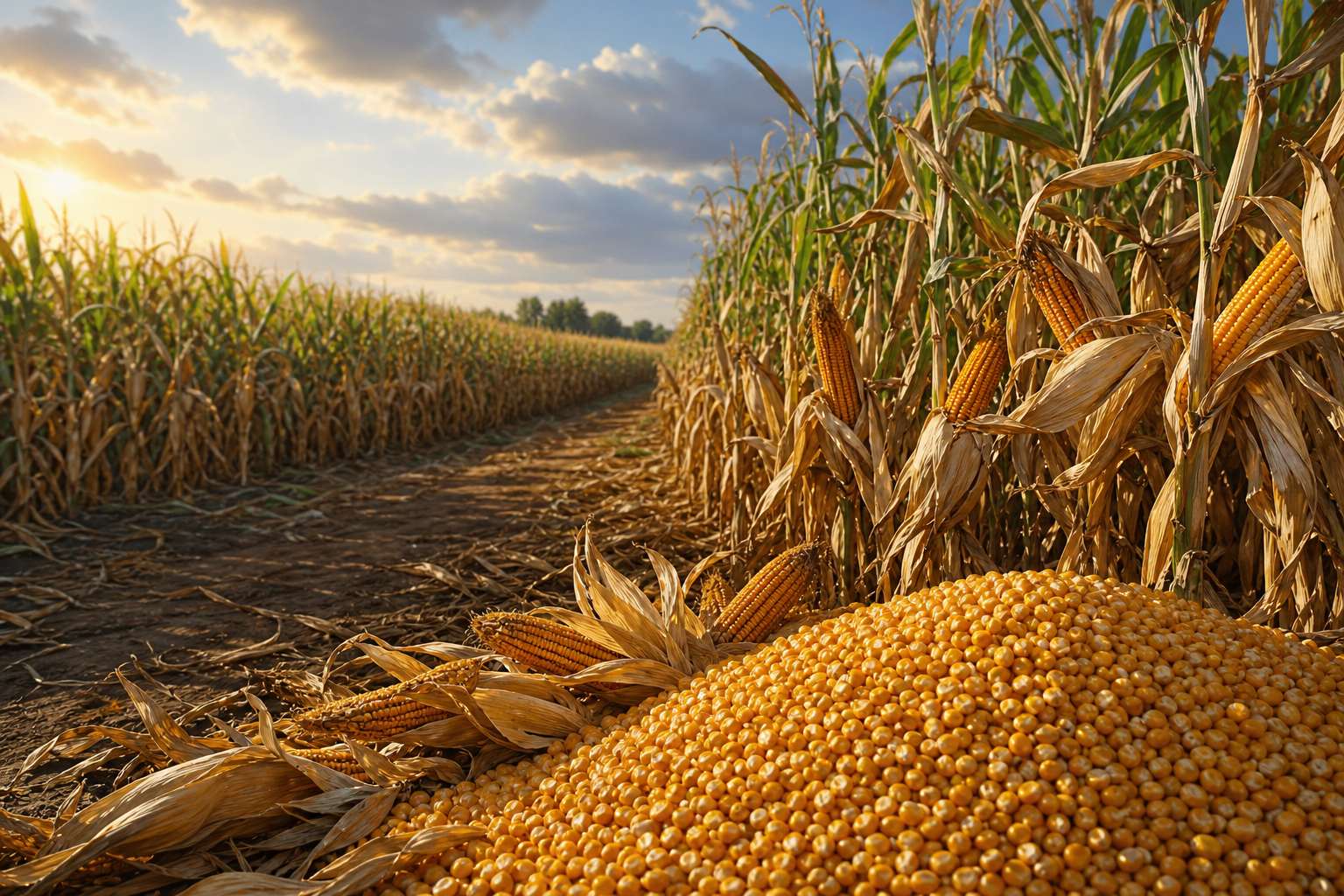
There is also food. If every corn kernel in the United States became ethanol, one researcher calculated, it would replace just twelve percent of the country's petrol. Searchinger himself said biofuels should not be abandoned.
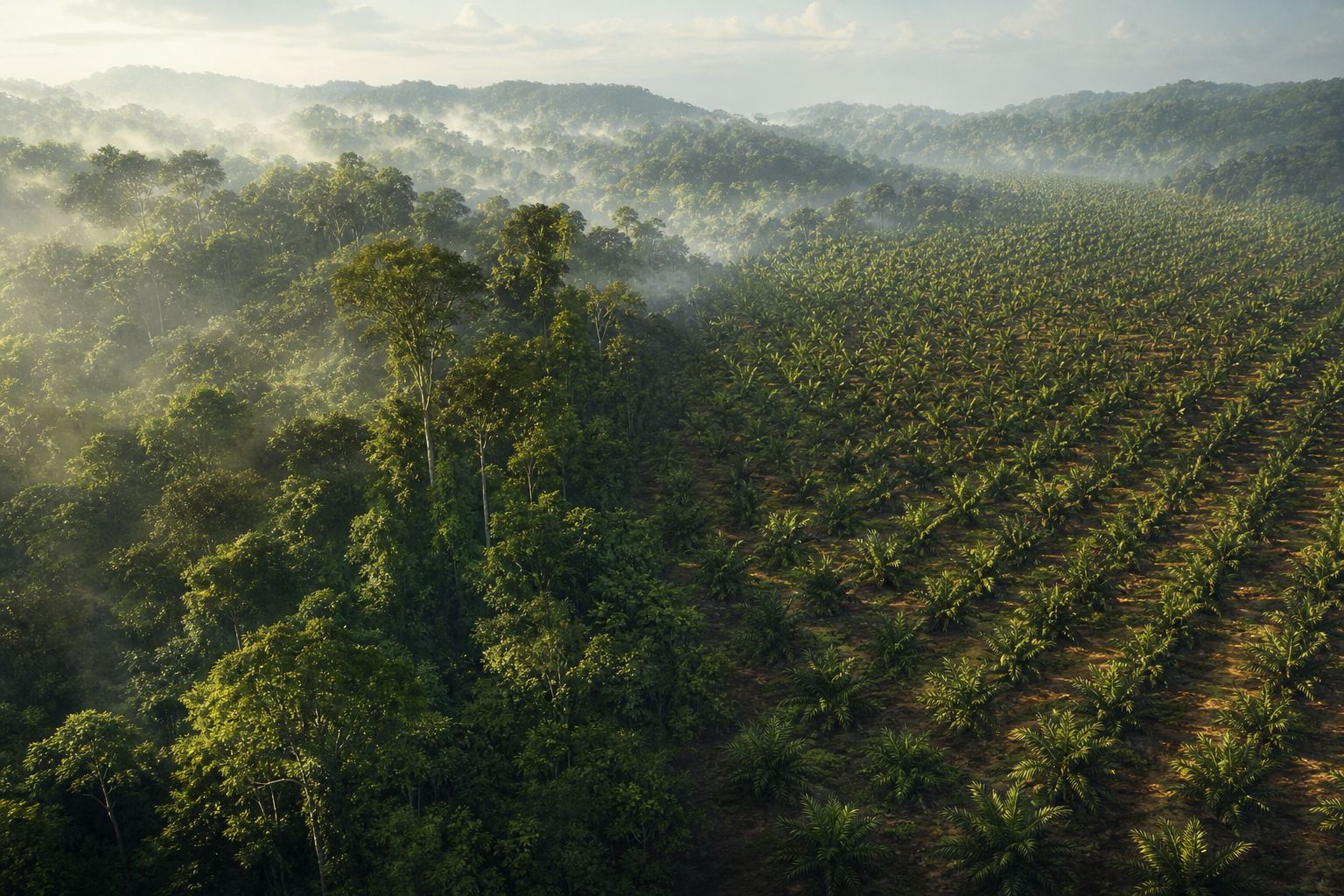
Forest meets plantation Clearing releases carbon that took centuries to store; the new crop recaptures it only slowly. AI-generated illustration.
93 years
payback: US grassland to corn
134 t CO₂/ha
released by that conversion
Two studies in Science
petrol
1
corn ethanol (Searchinger)
~2
Corn ethanol over 30 years, counting land change
Food or fuel All US corn as ethanol would cover about 12% of US petrol use, by Jason Hill’s estimate. AI-generated illustration.
Chapter IV · The land
Carbon debt and food
Scientific American, reporting two studies in Science: Timothy Searchinger (Princeton) found that corn ethanol, counting land-use change, nearly doubles greenhouse emissions over 30 years; Joseph Fargione and David Tilman found that converting US grassland to corn releases 134 tonnes of CO₂ per hectare, a 93-year payback. Jason Hill (University of Minnesota): turning every US corn kernel into ethanol would replace just 12% of US gasoline use. Searchinger adds that biofuels should not be abandoned, but made from the right sources.
Press “Clear the land” and watch the debt being repaid. The curve is schematic.
The 3D scenes are simplified teaching models: molecules are drawn as balls and sticks, and nothing is to scale.
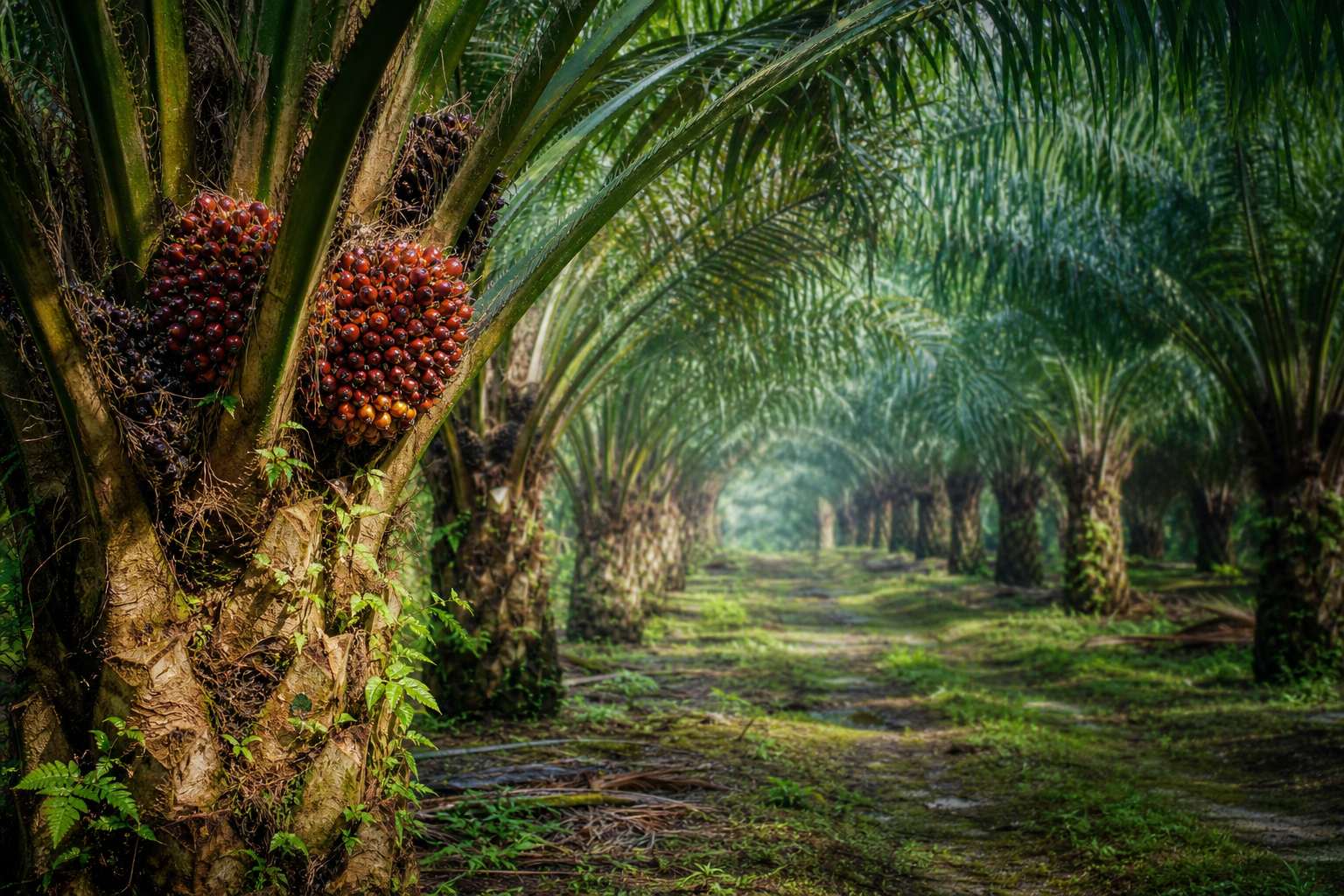
Palm oil is a common feedstock in Southeast Asia, where Indonesia and Malaysia are the largest producers. A 2008 study counted the cost of planting it on cleared land.
On cleared rainforest, the carbon took at least 75 years to repay. On peat swamp, where carbon has built up in the soil, more than 600 years. On degraded grassland, about ten.
And only about one in six forest species survived in the plantations. A 2019 study in Colombia found that palms planted on old pasture stored as much carbon as the pasture had, so that land change created no carbon debt.
Oil palm Plantations are replanted every 25 to 30 years; the question is what stood there before. AI-generated illustration.
peat swamp
600+
rainforest
75+
degraded grassland
~10
Years to repay the carbon, 2008 study
Peat swamp Waterlogged soil holding centuries of plant carbon; drained and cleared, it releases that store. AI-generated illustration.
1 in 6
forest species found in plantations
no debt
from the land change: palms on old pasture, Colombia 2019
Wildlife
Chapter IV · The land
Palm oil and peat
WWF, via ScienceDaily (2008): in Conservation Biology, Finn Danielsen and colleagues found that the carbon payback for oil palm on cleared tropical forest is at least 75 years, on peatland more than 600 years, and on degraded Imperata grassland about 10 years; only one in six forest species survives in plantations. EPFL, via ScienceDaily (2019): in Science Advances, a study of 56-year-old plantations on former pasture in Los Llanos, Colombia found total ecosystem carbon unchanged; Indonesia and Malaysia are the largest producers, and palms are replanted every 25–30 years.
Press “Rainforest”, “Peat swamp” and “Degraded grassland” to compare.
The 3D scenes are simplified teaching models: molecules are drawn as balls and sticks, and nothing is to scale.
A 2012 Swiss assessment found that many biofuels cut greenhouse gases but caused more of other harm, such as acidified soils and over-fertilised water. Only a few, such as biogas from waste, beat petrol overall.
A 2023 modelling study from the Potsdam Institute concluded that, without rules on land use, bioenergy could emit more than fossil diesel over thirty years.
So how clean a biofuel is depends on the land, or the waste, it comes from.
many biofuels: lower greenhouse gases
but more acidification and over-fertilised water
biogas from waste: as low as half petrol’s impact
fuel from cleared forest: more greenhouse gas than fossil
Swiss assessment, 2012
30 years
averaging period
> diesel
bioenergy emissions without land-use rules
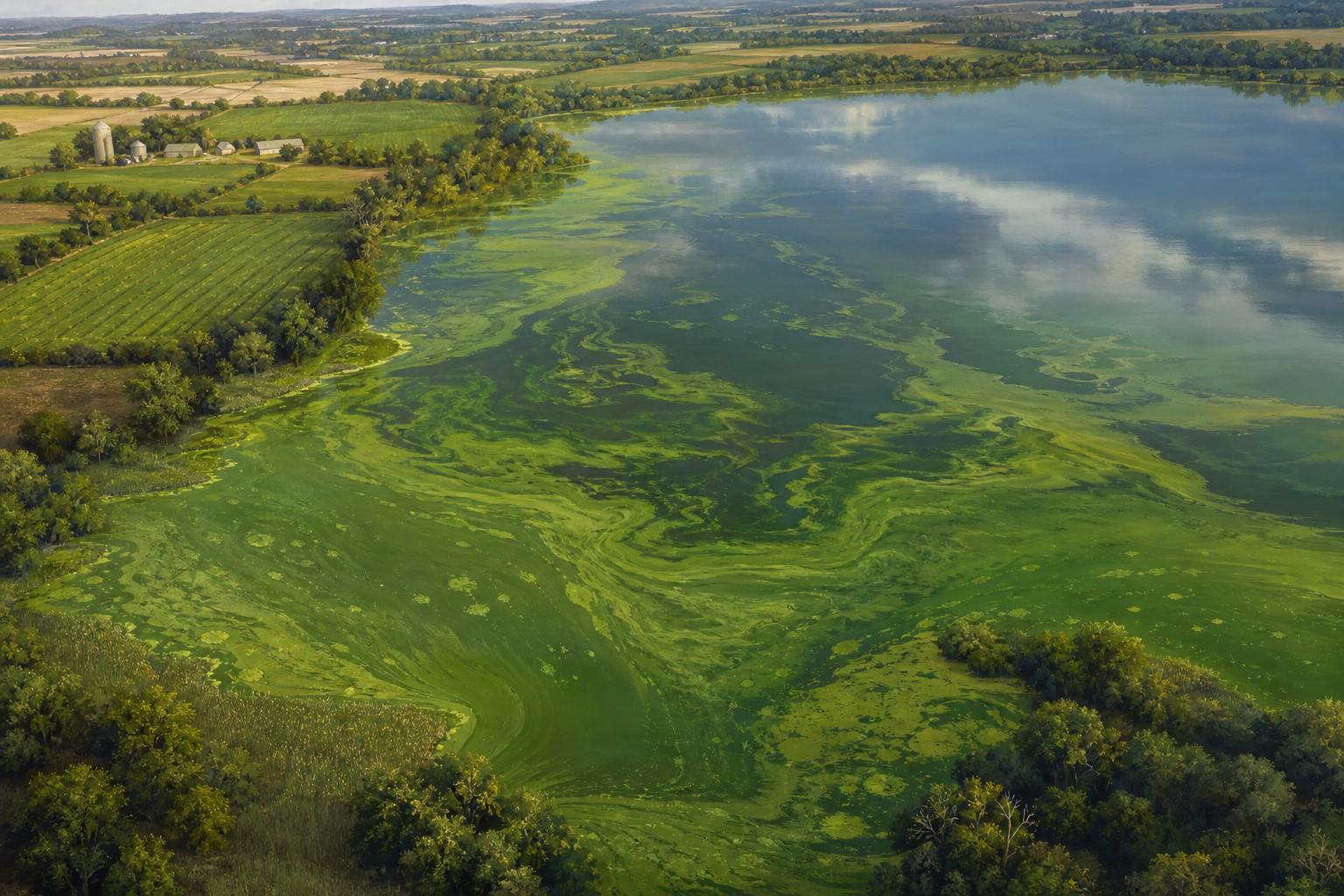
Potsdam model, 2023Too much fertiliser Fertiliser washing off fields feeds algal blooms, one of the harms the Swiss study counted. AI-generated illustration.
Most biofuels therefore just deflect the environmental impact.Empa’s summary of its 2012 assessment
Chapter IV · The land
Weighing biofuels
Empa, via ScienceDaily (2012): an assessment by Rainer Zah with Agroscope and PSI for the Swiss Federal Office of Energy found that most biofuels lower greenhouse gases but increase acidification and over-fertilisation; biogas from residues and waste can cut the impact to about half of petrol’s; biofuels linked to deforestation usually emit more than fossil fuels. Potsdam Institute for Climate Impact Research, via ScienceDaily (2023): in Nature Climate Change, a model study found that without land-use regulation, bioenergy’s emissions averaged over 30 years exceed those of fossil diesel; pricing land-use emissions works better than protecting forests alone.
The 3D scenes are simplified teaching models: molecules are drawn as balls and sticks, and nothing is to scale.
The answer many hope for is fuel from parts of plants we do not eat: stalks, straw, wood. Their cellulose, nearly half of all plant matter, is made of glucose, the same sugar yeast eats.
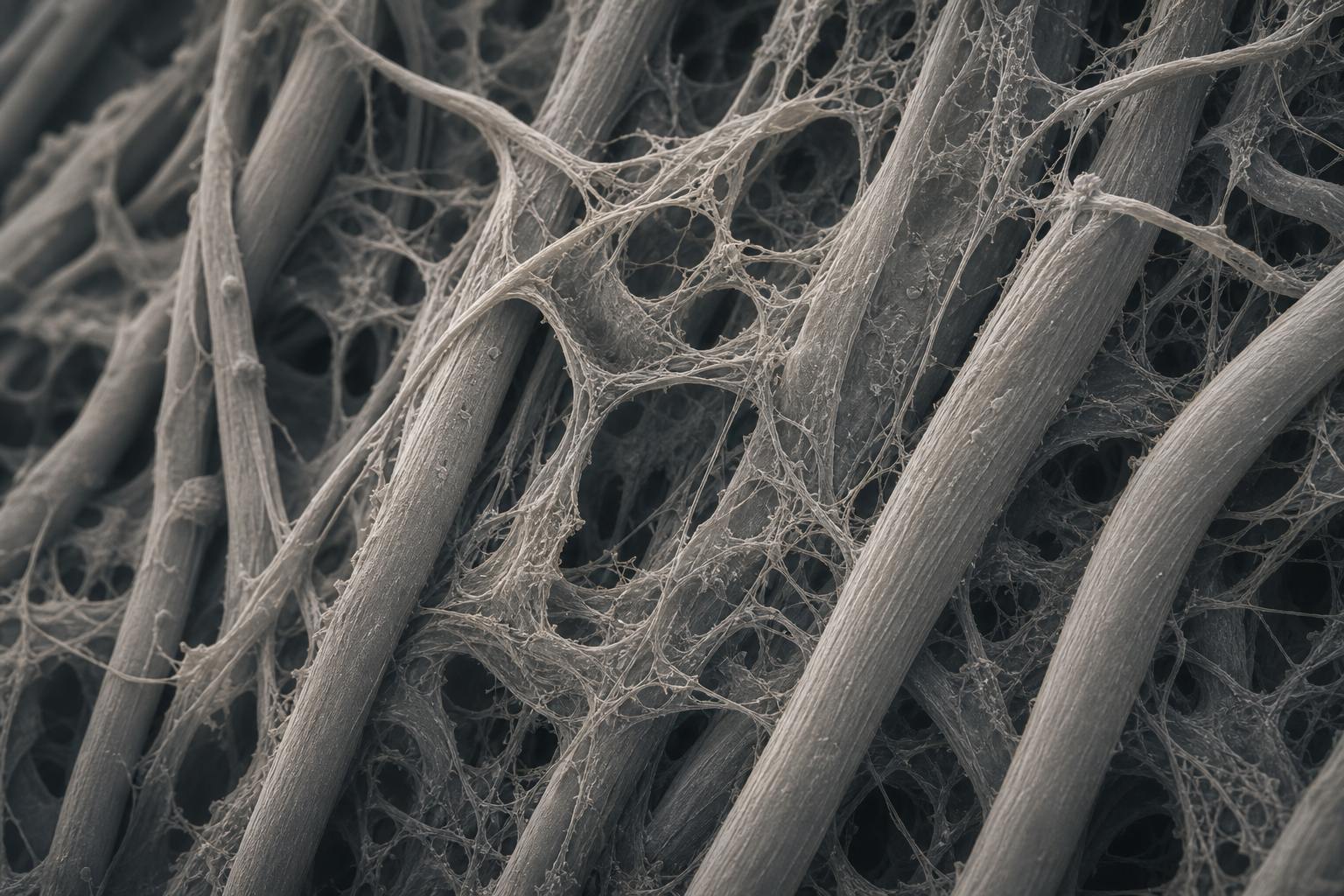
But it is wrapped in a tough mesh of lignin and hemicellulose, which keeps enzymes from breaking it into sugar.
In 2007 the United States set a goal of sixteen billion gallons of this cellulosic fuel a year by 2017. According to the American Fuel and Petrochemical Manufacturers, a refiners' group, output was a trickle: about ten million gallons.
Plant cell walls Long cellulose fibres in a tangle of lignin and hemicellulose, the barrier enzymes must get past. AI-generated illustration.
loosen the lignin mesh
enzymes (cellulases) cut cellulose into sugars
yeast ferments the sugars
distil the ethanol
From stalk to fuel
goal
16,000
made
~10
US cellulosic fuel: 2017 goal vs reported output
up to 40%
corn or soy fuels
90%+
cellulosic ethanol
Greenhouse savings, US Department of Energy
Chapter V · Next generations
Cellulosic ethanol
ScienceDaily (2015): cellulose, a carbohydrate made of glucose strands, makes up nearly half of all plant matter; lignin and hemicellulose form a tangled mesh around it that keeps enzymes from breaking it into simple sugars for fermentation. ScienceDaily (2010): enzymes called cellulases convert cellulose into short sugars. Scientific American / E&E News: the 2007 Energy Independence and Security Act set a goal of 16 billion gallons of cellulosic biofuel by 2017; actual output was “a mere trickle: 10 million gallons”, according to the American Fuel and Petrochemical Manufacturers; a Department of Energy study found corn or soy ethanol cuts greenhouse gases by up to 40%, cellulosic ethanol by more than 90%.
Press “Loosen the lignin” and “Cut with enzymes”.
The 3D scenes are simplified teaching models: molecules are drawn as balls and sticks, and nothing is to scale.
Aviation is a big target. Airlines burned 106 billion gallons of jet fuel in 2019, and use is expected to more than double by 2050.
In 2022, researchers at the US National Renewable Energy Laboratory turned oil from lignin into a jet-fuel blending ingredient in the lab, cutting its oxygen from about thirty percent to about one. Jet fuel needs less than half a percent.
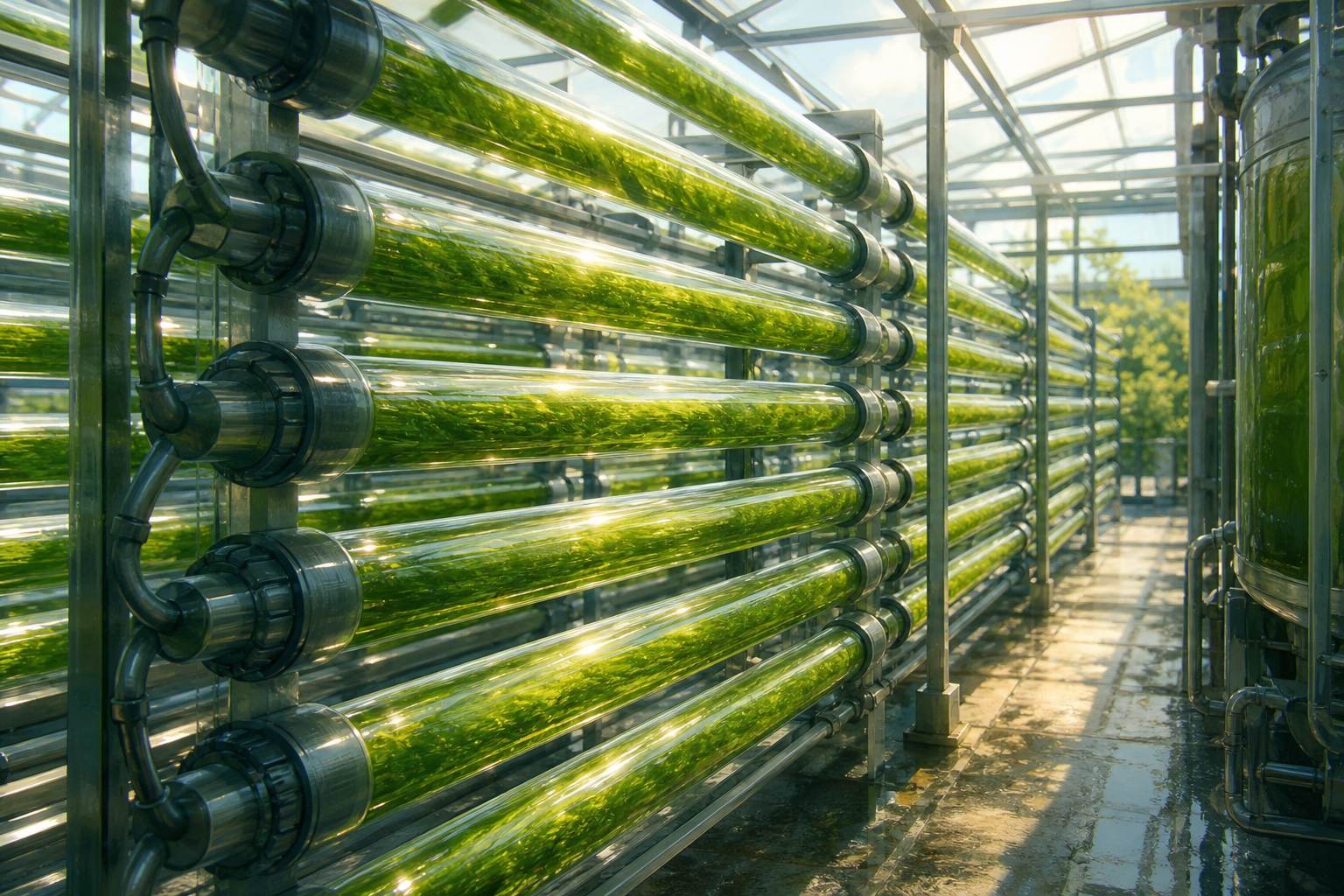
And algae? Engineered microbes can store up to half their dry weight as fat, but a US government algae fuel programme that began in 1978 ended eighteen years later, judged not economical.
Fuels from waste and wood avoid the land problem. Making them cheaply is still the hard part.
Jet fuel An airliner refuelling at dawn. Lignin, the woody part of plants, is nature’s largest renewable source of aromatic molecules, NREL notes. AI-generated illustration.
raw lignin oil
27–34
after the 2022 process
~1
jet fuel target
<0.5
Oxygen in the oil
Algae Tubes of algae in sunlight: high yields per area on paper, high costs in practice so far. AI-generated illustration.Made to a specification Jet fuel has to stay liquid near minus forty-seven degrees, which rules out most plant oils until they are reworked. AI-generated illustration.
from waste: no new land
from wood and stalks: hard to unlock
from algae: costly so far
Next-generation fuels
Chapter V · Next generations
Aviation and algae
NREL, via ScienceDaily (27 September 2022): airlines burned 106 billion gallons of jet fuel in 2019, expected to more than double by 2050; lignin oils contain 27–34% oxygen, jet fuel needs under 0.5%, and a molybdenum carbide catalyst brought it to about 1% in a continuous lab process (Stone et al., Joule). Scientific American (about 2009): the US Department of Energy’s algae biodiesel programme ran from 1978 and ended 18 years later as not economically feasible.
Press “Remove oxygen” to strip the oxygen atoms.
The 3D scenes are simplified teaching models: molecules are drawn as balls and sticks, and nothing is to scale.
The chemistry of biofuels is old and simple. The hard part is the land: what grew there before, and what else it could grow.
That is why the most promising fuels may come from what we throw away, like yesterday's coffee.
1978 US algae fuel programme begins
2007 Brazil’s ethanol boom; US cellulosic goal
2008 palm oil and peat carbon study
2012 Brazil’s ethanol stalls; Swiss assessment
2022 lignin towards jet fuel
2023 land-use warning from Potsdam
2026 oil from coffee grounds
Biofuels in seven dates
borrowed
from the air, by plants
released
when land is cleared
Two kinds of carbonWhat we leave behind Stalks and straw left after harvest: carbon already taken from the air, with no forest cleared. AI-generated illustration.
Epilogue · Sources
Sources
Every fact in this film comes from the sources below. The climate effects of biofuels are debated: the film attributes each figure to the study that produced it, and several are model estimates or single studies. Some Scientific American articles cited are undated reprints; the film dates them from their content. The fermentation equation is the standard balanced form of the reaction the sources describe. The 3D scenes are schematic. The chapter stills and pictures are AI-generated illustrations, not photographs of real places or products.