In November 2026, at their summit in Manila, Southeast Asian leaders extended the ban on Myanmar's leader attending ASEAN summits. This film explains the organisation behind the headline: the disputes that came before it, the four days of talks at Bang Saen and the Bangkok Declaration of 1967, how five members became eleven, the free trade area and the wider RCEP, the treaty of 1976, the ASEAN Way of consensus and non-interference and what its defenders and critics say about it, the 2007 Charter and the rotating chair, and why Myanmar has become ASEAN's hardest test.
Interactive 3D film9 min1961 to 2026Published 17 November 2026
At the Southeast Asian summit in November 2026, one member's leader was not allowed in.
The leaders met in Manila on the fifteenth of November. According to the Associated Press, they said Myanmar had failed to follow a peace plan agreed in 2021, and extended the ban on its leader attending their summits.
The ban stays, they said, until there is meaningful progress.
To see how a club of eleven countries came to shut out one of its own, we have to go back to a beach in Thailand, in 1967.
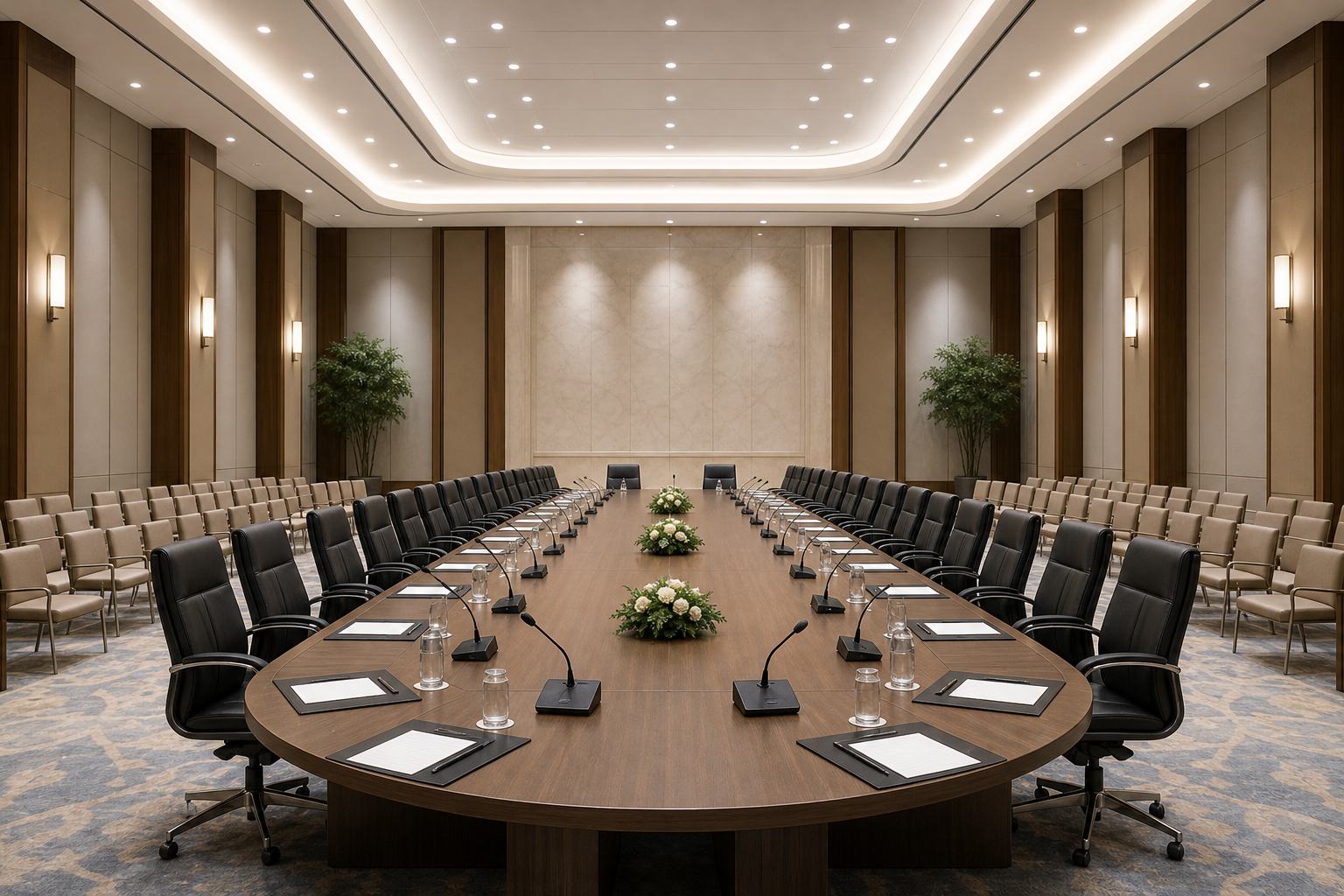
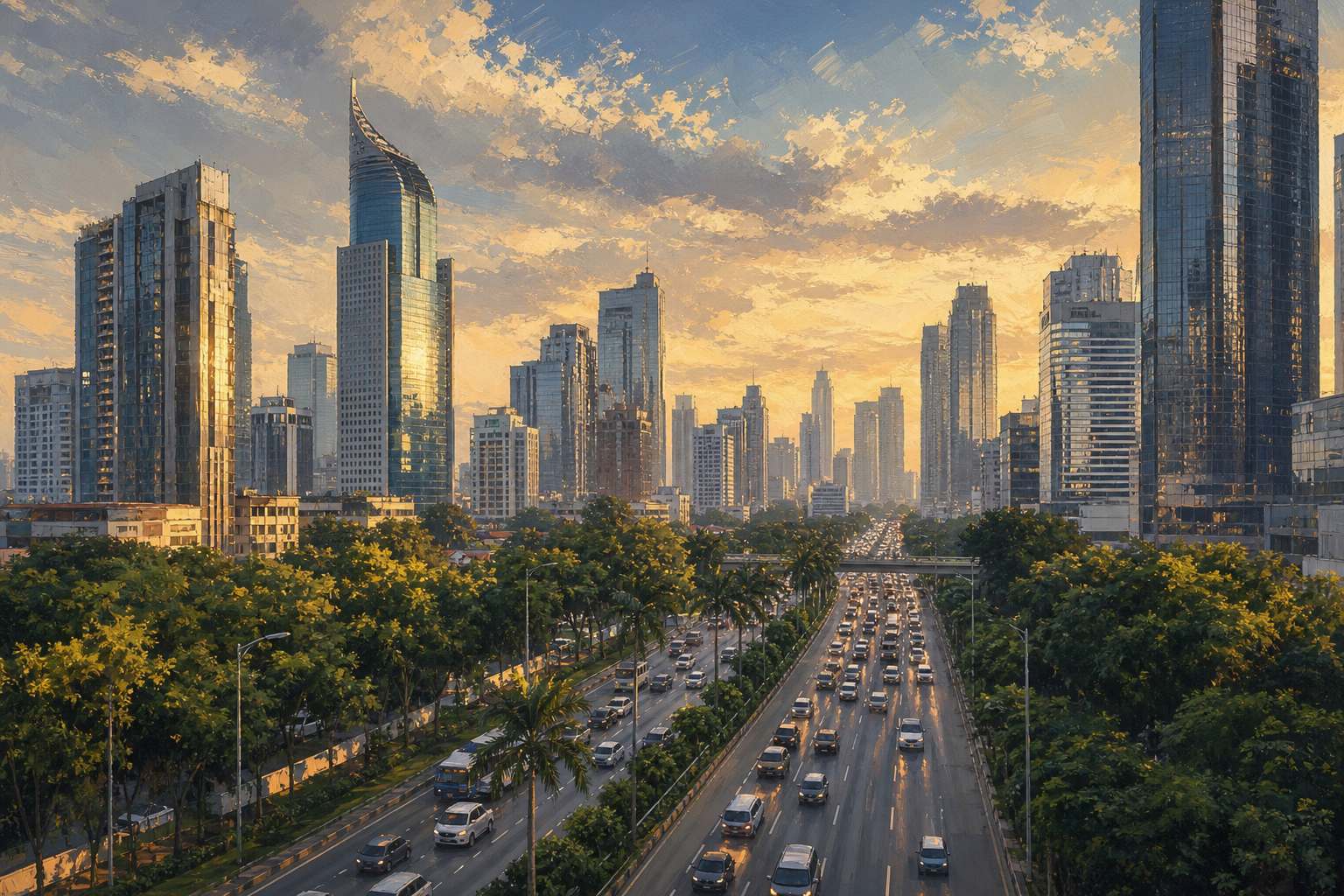
A changed host Myanmar was due to chair ASEAN in 2026. The Philippines hosted instead. AI-generated illustration.Manila The summit opened on a Sunday in Pasay City, in Metro Manila, and ran for three days. AI-generated illustration.
2021
year of the peace plan Myanmar was judged to have failed
2
Myanmar officials barred: its leader and foreign minister
The ban
until there is meaningful progress in the implementationASEAN leaders, on the five-point plan, as reported by AP, 16 November 2026
five ministers and a declaration
from five members to eleven, and one market
the ASEAN Way: consensus
a rotating chair, and the Myanmar test
In this film
Prologue
The news
AP, via Arab News and The Manila Times (16 November 2026): leaders opened the annual three-day summit in Manila on Sunday 15 November. They said Myanmar had failed to comply with the 2021 five-point peace plan and extended the ban on its leader and foreign minister attending summits “until there is meaningful progress in the implementation” of the plan.
Myanmar was due to hold the rotating chair in 2026; the role passed to the Philippines (AP; the Council on Foreign Relations says the turn was suspended in 2023).
The 3D scenes are simplified teaching models: the map is a rough schematic of coastlines with each member marked at its capital, not an exact map and not a statement about any border; the round table is symbolic.
In the mid-1960s, three neighbours had been in dispute: Indonesia, Malaysia and the Philippines.
Two earlier regional groups had not lasted: the Association of Southeast Asia, set up in 1961, and a short-lived grouping called MAPHILINDO.
Thailand's foreign minister, Thanat Khoman, set out to reconcile the three, and proposed a new organisation.
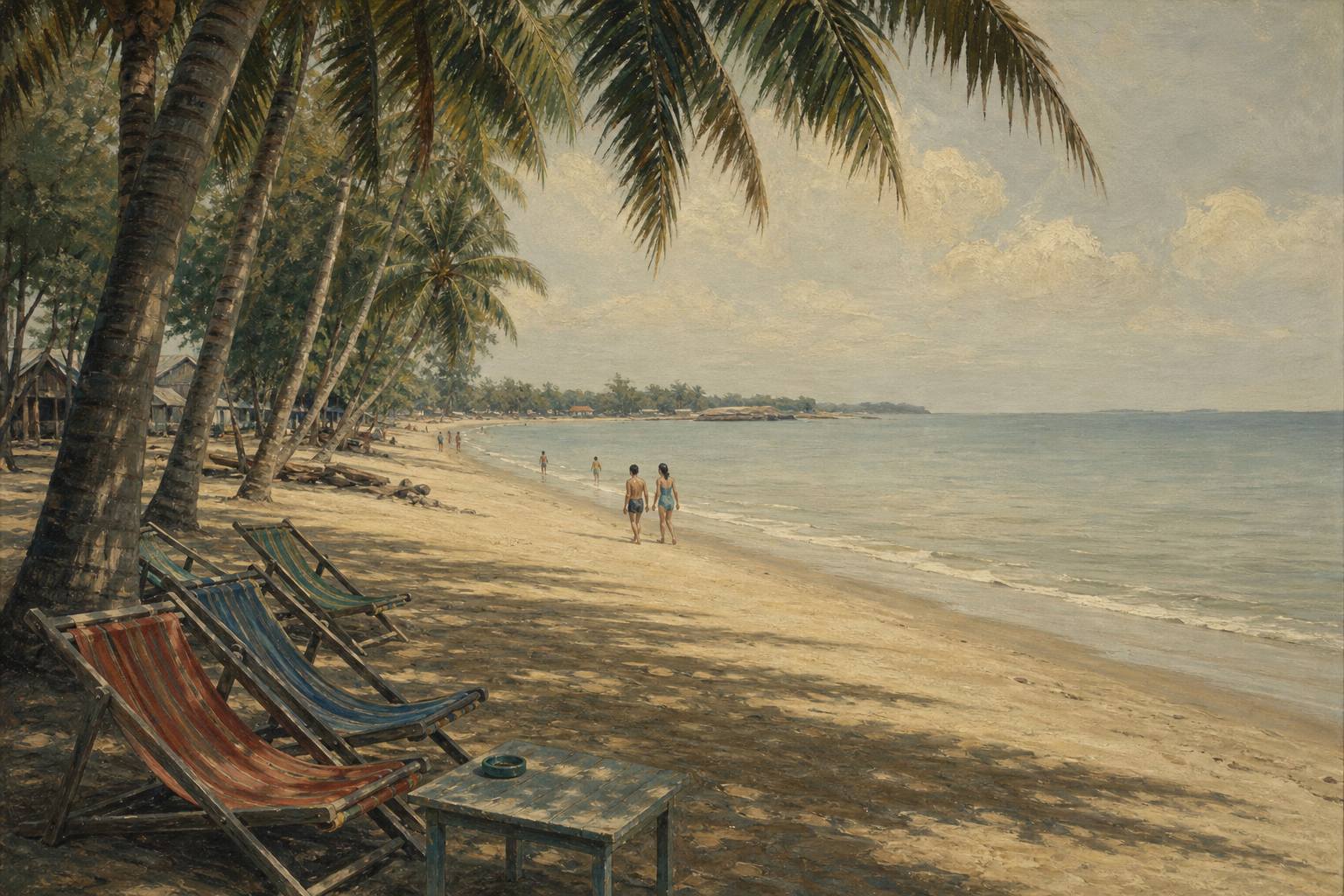
He brought the foreign ministers together at the seaside resort of Bang Saen.
Neighbours at odds ASEAN’s own founding story, kept by the Philippine mission to ASEAN, credits a Thai minister with the reconciliation. AI-generated illustration.
1961 Association of Southeast Asia (ASA)
1960s MAPHILINDO
1967 ASEAN
Groups before ASEANBefore the talks What followed: four days of talks, and five signatures in Bangkok on 8 August 1967. AI-generated illustration.
Chapter I · Four days at Bang Saen
Before ASEAN
Philippine Mission to ASEAN and EBSCO: Thailand’s foreign minister Thanat Khoman brokered reconciliation among Indonesia, Malaysia and the Philippines and proposed a regional organisation. New World Encyclopedia and the Asia-Europe Institute: the earlier Association of Southeast Asia (1961) and MAPHILINDO did not last. The sources used here do not describe the disputes themselves, so the film does not either.
The map lights the five future founders. Lines between Indonesia, Malaysia and the Philippines stand for the disputes Thanat Khoman set out to settle.
The 3D scenes are simplified teaching models: the map is a rough schematic of coastlines with each member marked at its capital, not an exact map and not a statement about any border; the round table is symbolic.
Around the table sat five foreign ministers: Adam Malik of Indonesia, Narciso Ramos of the Philippines, Tun Abdul Razak of Malaysia, S. Rajaratnam of Singapore, and Thanat Khoman of Thailand.
So ASEAN had five founders: the three neighbours, plus Thailand and Singapore.
Then, on the eighth of August 1967, in Bangkok, they signed a short text of five articles: the ASEAN Declaration, often called the Bangkok Declaration.
The five are remembered as ASEAN's founding fathers.
Bang Saen A Thai beach resort of the 1960s: the talks were held by the sea, the signing in the capital. AI-generated illustration.
Indonesia · Adam Malik
Philippines · Narciso R. Ramos
Malaysia · Tun Abdul Razak
Singapore · S. Rajaratnam
Thailand · Thanat Khoman
The founding five
4
days of talks at Bang Saen
5
founding states
5
articles in the declaration
The founding, in numbers8 August 1967 The five articles set out aims; the commitments came in a treaty nine years later. AI-generated illustration.
Chapter I · Four days at Bang Saen
Five ministers
Philippine Mission to ASEAN and Lao News Agency: the ASEAN Declaration, or Bangkok Declaration, was signed in Bangkok on 8 August 1967 by Adam Malik (Indonesia), Narciso R. Ramos (Philippines), Tun Abdul Razak (Malaysia), S. Rajaratnam (Singapore) and Thanat Khoman (Thailand), who are hailed as ASEAN’s founding fathers. It has five articles. The talks before it lasted four days at Bang Saen (EBSCO).
The round table is a symbol, not a picture of the real room. No real people are shown anywhere in this film.
The 3D scenes are simplified teaching models: the map is a rough schematic of coastlines with each member marked at its capital, not an exact map and not a statement about any border; the round table is symbolic.
The declaration set out simple aims: cooperation in the economy, society, culture, technology and education, and peace and stability in the region.
And it left the door open: any state in Southeast Asia that accepted these aims could join.
That door would stay open for almost sixty years.
economic and social cooperation
cultural, technical and educational cooperation
peace and stability in the region
The aims of 1967Open to the region Papua New Guinea, next door but outside Southeast Asia, was given observer status in 1976. AI-generated illustration.More than trade Education and culture sat beside the economy in the aims of 1967. AI-generated illustration.
Chapter I · Four days at Bang Saen
What the declaration said
Philippine Mission to ASEAN and Lao News Agency: the declaration’s aims were economic, social, cultural, technical and educational cooperation, and regional peace and stability. The association was open to all states in Southeast Asia that accepted those aims.
New World Encyclopedia: Papua New Guinea was granted observer status in 1976.
The 3D scenes are simplified teaching models: the map is a rough schematic of coastlines with each member marked at its capital, not an exact map and not a statement about any border; the round table is symbolic.
Vietnam joined in 1995. Laos and Myanmar followed together in July 1997.
Cambodia's entry was put off, and it joined in April 1999, making ten.
The eleventh took longest. Timor-Leste applied in 2011, became an observer in 2022, and joined in October 2025.
Each new member came in on the same terms: accepting the aims set out in 1967.
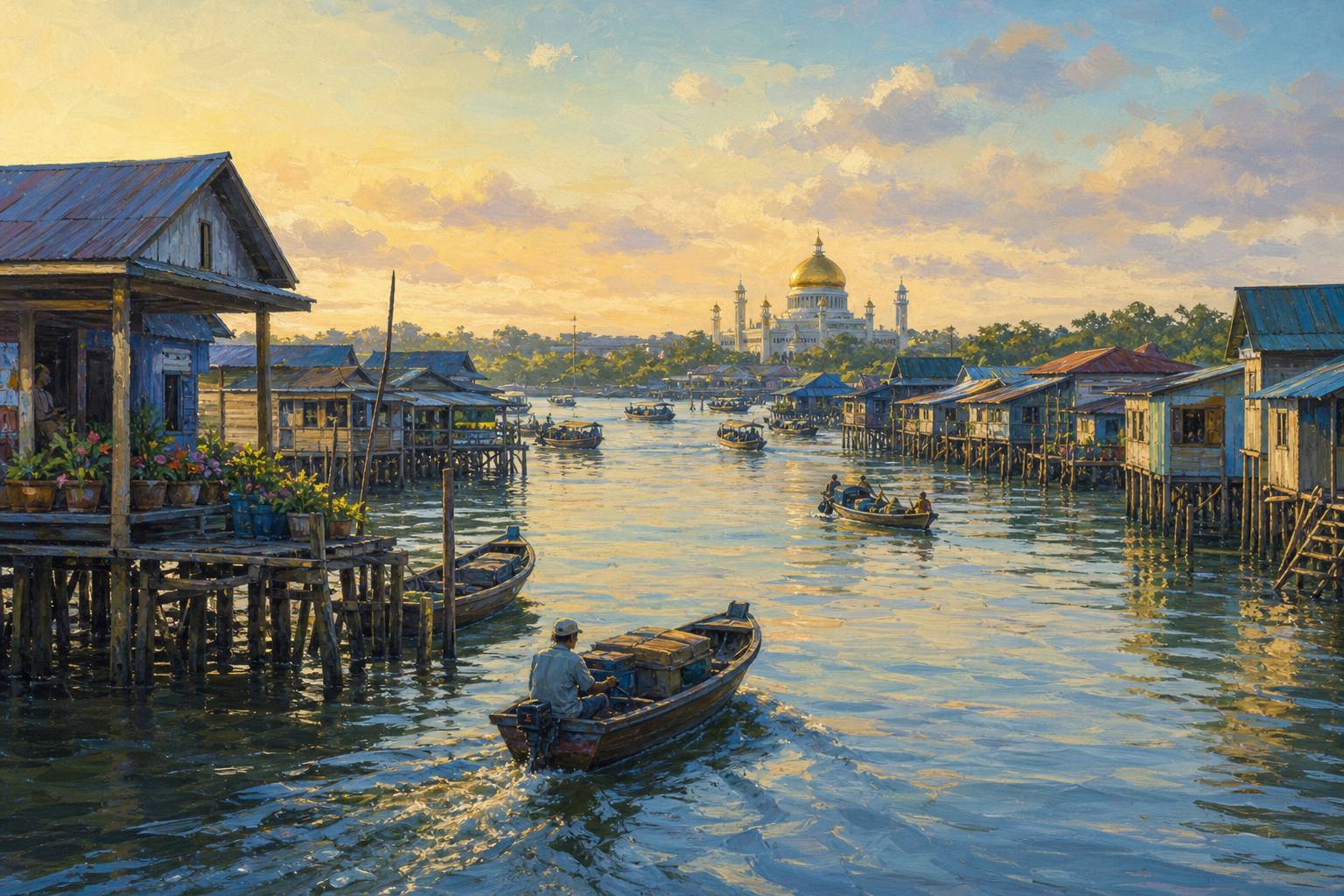
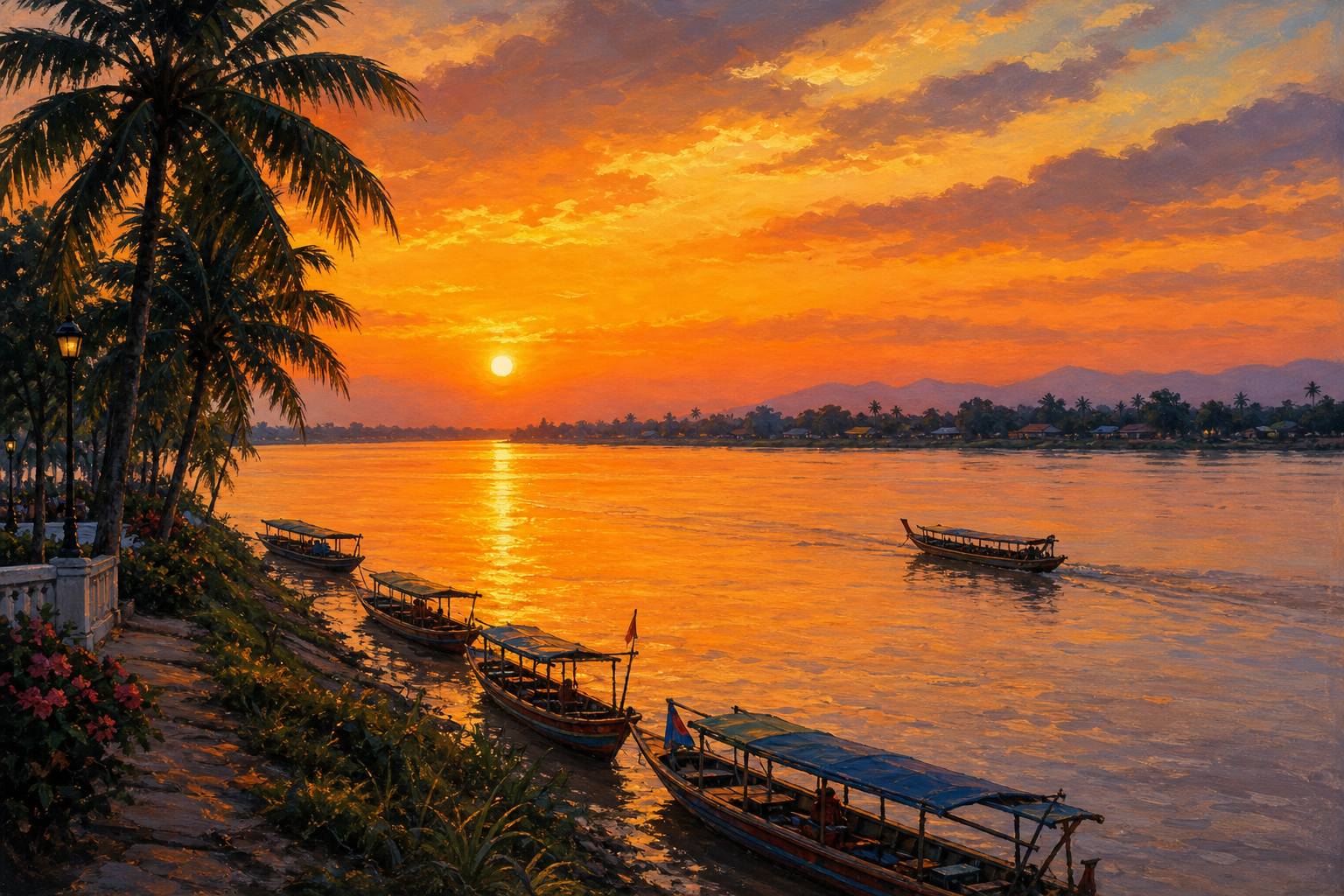
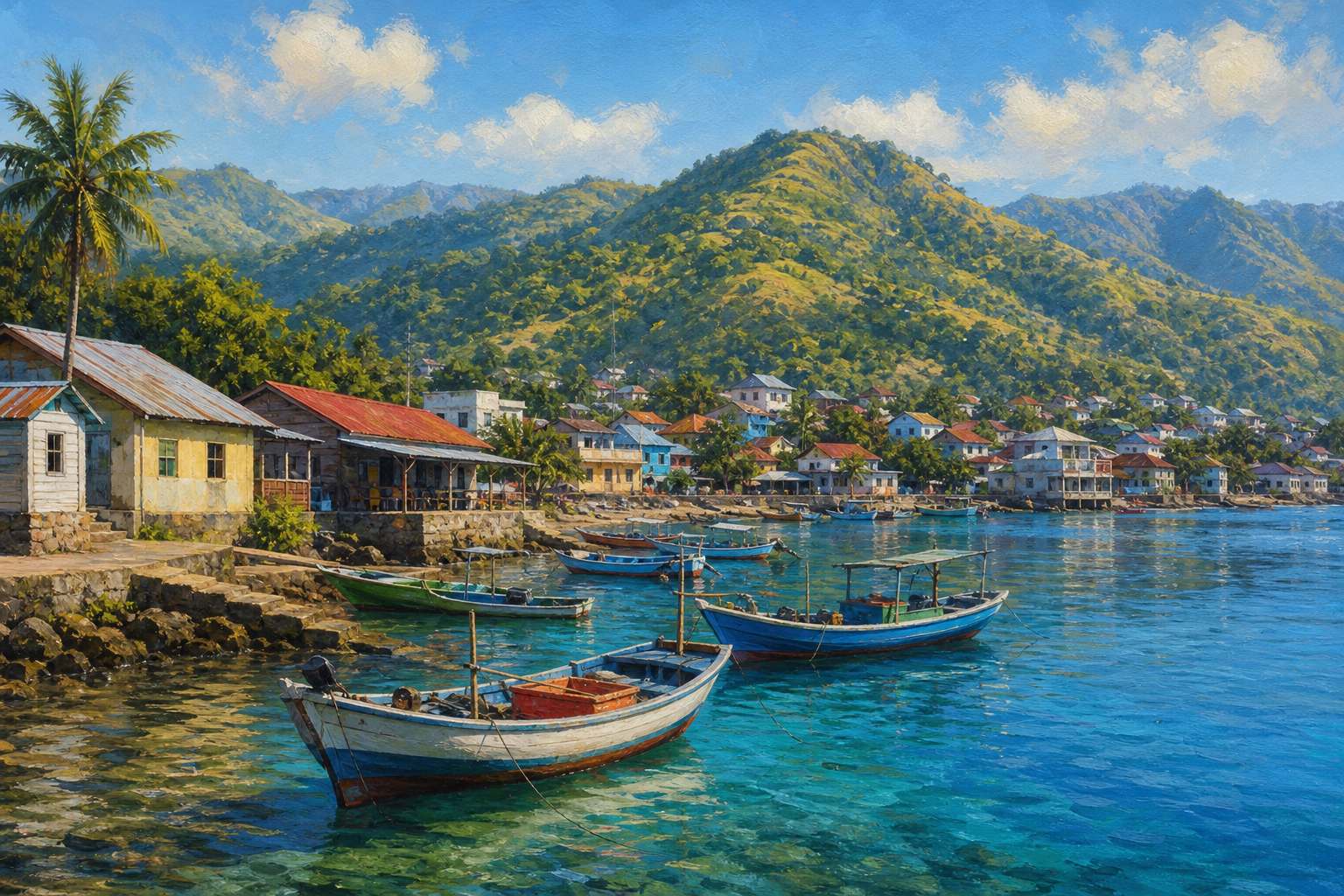
Brunei, 1984 Wooden houses on stilts over a river in Brunei, the sixth member, which joined on 8 January 1984. AI-generated illustration.Vietnam, 1995 An old street in Hanoi, capital of the seventh member, which joined on 28 July 1995. AI-generated illustration.Laos and Myanmar, 1997 The Mekong at Vientiane. Laos and Myanmar joined on the same day, 23 July 1997. AI-generated illustration.Timor-Leste, 2025 A harbour in Timor-Leste, the eleventh member since 26 October 2025. AI-generated illustration.
5 → 11
members
58
years from the founding to the eleventh
Membership, 1967–2025
Chapter II · From five to eleven
Joining dates
Council on Foreign Relations and New World Encyclopedia: Brunei joined on 8 January 1984, Vietnam on 28 July 1995, Laos and Myanmar on 23 July 1997, and Cambodia, after a deferral, on 30 April 1999. Timor-Leste applied in 2011, was an observer from 2022 and became the eleventh member on 26 October 2025.
Press a year to light every member that had joined by then.
The 3D scenes are simplified teaching models: the map is a rough schematic of coastlines with each member marked at its capital, not an exact map and not a statement about any border; the round table is symbolic.
In January 1992, in Singapore, the members agreed to create the ASEAN Free Trade Area, to lower the barriers to trade between them.
The goal grew into an ASEAN Economic Community, with 2015 as its target.
Together the members are big: 678 million people and an economy of 3.9 trillion dollars in 2024, according to the Council on Foreign Relations.
But most of their trade is still with the rest of the world. In 2023, trade among the members was only 22 percent of the total.
Switch the flows to compare.
1992 free trade area agreed, Singapore
2015 Economic Community target
2020 wider RCEP deal signed
Building a market
678 million
people
$3.9 trillion
combined GDP
ASEAN in 2024
with other members
22%
with the rest of the world
78%
Where members’ trade goes, 2023
Made for the world An assembly line. Nearly four-fifths of the members’ trade in 2023 was with partners outside ASEAN. AI-generated illustration.
Chapter III · One market?
AFTA and the AEC
New World Encyclopedia: the ASEAN Free Trade Area agreement was signed on 28 January 1992 in Singapore, and the ASEAN Economic Community had 2015 as its target. Council on Foreign Relations: in 2024 ASEAN had 678 million people and a GDP of $3.9 trillion; trade among members was 22 per cent of total trade in 2023.
Press “Inside ASEAN” or “With the world” to switch the flows; the number of dots is drawn roughly in the 22 to 78 proportion.
The 3D scenes are simplified teaching models: the map is a rough schematic of coastlines with each member marked at its capital, not an exact map and not a statement about any border; the round table is symbolic.
In November 2020 ASEAN signed a wider deal with partner economies around it: the Regional Comprehensive Economic Partnership, or RCEP.
It came into force in 2022, and covers about thirty percent of the world's people.
ASEAN itself says that by 2030 it could be the fourth-largest economic bloc in the world. That is a projection, not yet a fact.
Signed, November 2020 A container ship at sea: RCEP links ASEAN’s members with partner economies around the region. AI-generated illustration.
~30%
of the world’s population
2022
in force
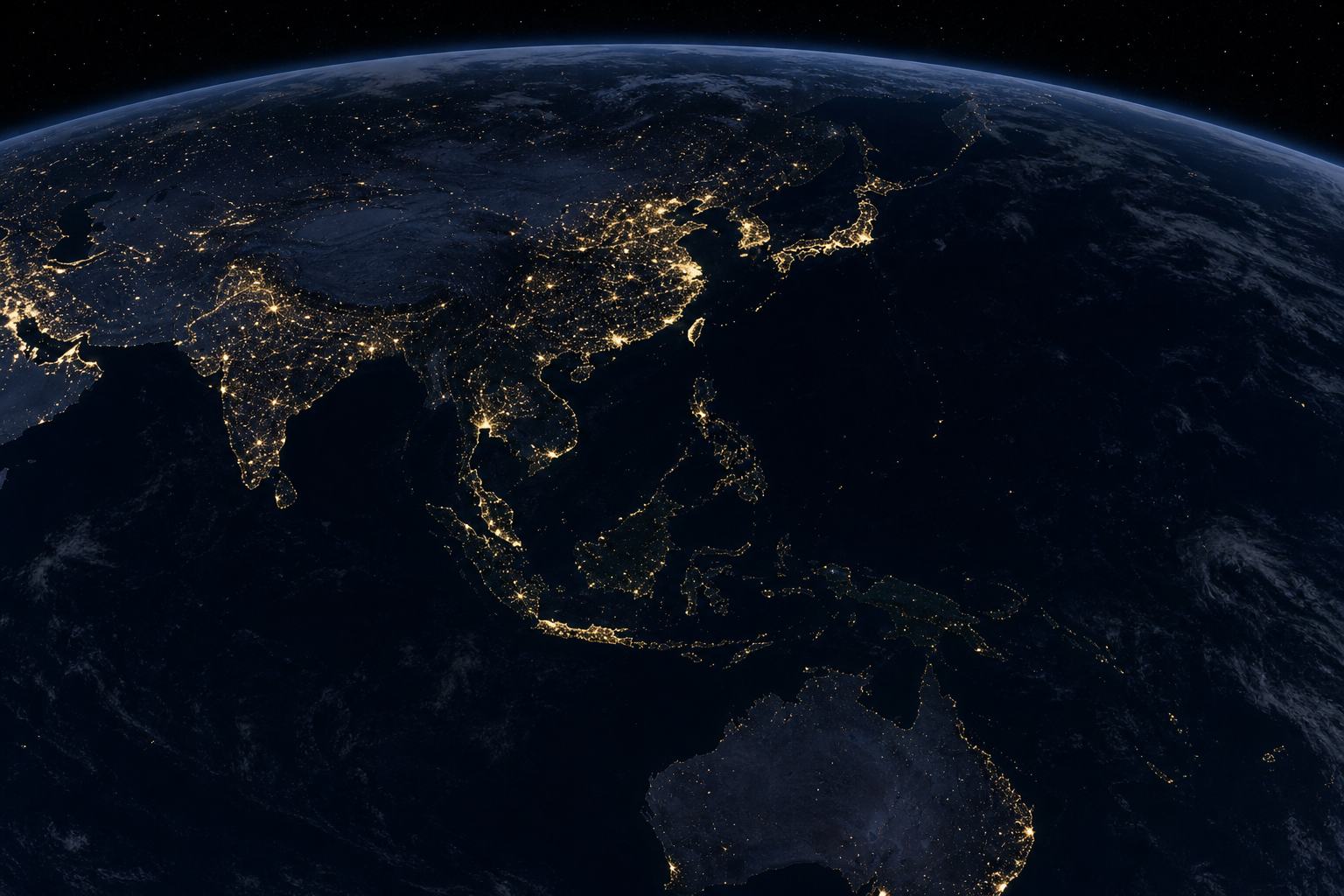
RCEPA projection City lights across the Asia-Pacific. The “fourth-largest by 2030” figure is ASEAN’s own projection, as reported by ABC. AI-generated illustration.
Chapter III · One market?
RCEP
Council on Foreign Relations: the Regional Comprehensive Economic Partnership was signed in November 2020 and covers about 30 per cent of the world’s population. EBSCO: it came into force in 2022. ABC (15 November 2026): ASEAN is “projected to become the fourth-largest economic bloc by 2030”, a projection attributed to ASEAN.
The outer ring stands for the partner economies; they are not drawn or named here.
The 3D scenes are simplified teaching models: the map is a rough schematic of coastlines with each member marked at its capital, not an exact map and not a statement about any border; the round table is symbolic.
ASEAN's leaders did not hold their first formal summit until 1976, on the island of Bali.
There they signed the Treaty of Amity and Cooperation.
Its members promised to respect each other's sovereignty, meaning each country's right to run its own affairs; not to interfere in each other's internal affairs; and to settle disputes without force.
Those promises became the core of what is called the ASEAN Way.
Bali, 1976 Bali hosted the first formal leaders’ summit, nine years after the founding. AI-generated illustration.
respect for sovereignty
no interference in internal affairs
no use of force in disputes
The treaty’s three promisesFrom aims to commitments Until 1976 ASEAN had only its declaration of aims; the treaty added commitments. AI-generated illustration.
Chapter IV · The ASEAN Way
The 1976 treaty
New World Encyclopedia: the first formal leaders’ summit was held in Bali in 1976. Council on Foreign Relations and EBSCO: the Treaty of Amity and Cooperation, signed in 1976, commits members to mutual respect for sovereignty, non-interference and rejecting the use of force.
The 3D scenes are simplified teaching models: the map is a rough schematic of coastlines with each member marked at its capital, not an exact map and not a statement about any border; the round table is symbolic.
Under the ASEAN Way, decisions are usually reached through consultation and consensus.
There is no majority vote. A decision is made when every member can accept it.
So in practice, each member has a veto. One no is enough to stop a decision.
Try it: switch one country to no, and the light in the middle goes out.
Critics say this means the members agree only on the little that everyone can live with.
Consensus is the usual rule, not an absolute one. As we will see, the decision to bar Myanmar's leader was taken by the other leaders.
Eleven voices A row of microphones. The Council on Foreign Relations names the guides of this way of working: non-interference and peaceful settlement. AI-generated illustration.
11
members who must accept
1
“no” that blocks it
0
majority votes
How a decision passesThe lowest common denominator New World Encyclopedia’s phrase for where consensus tends to land: the “lowest common denominator”. AI-generated illustration.
usually reached through consultation and consensusCouncil on Foreign Relations, on how ASEAN makes decisions
Chapter IV · The ASEAN Way
Consensus
Council on Foreign Relations: ASEAN decisions are usually reached through consultation and consensus, guided by non-interference and the peaceful settlement of conflict. New World Encyclopedia: under consensus each member effectively has a veto, so decisions tend toward the lowest common denominator. AP (November 2026): the ban on Myanmar’s leader was decided and extended by the other leaders at their summits; the sources used here do not describe the procedure.
Press a country’s button to switch it between yes and no. The light in the middle shows whether a decision can pass.
The 3D scenes are simplified teaching models: the map is a rough schematic of coastlines with each member marked at its capital, not an exact map and not a statement about any border; the round table is symbolic.
Supporters of the ASEAN Way point to how it began: neighbours who had been in dispute have kept talking at one table for almost sixty years.
Critics point to what it has not fixed.
A 2002 agreement on haze from fires did not stop the smoke, and a human rights commission set up in 2009 has no power to impose penalties.
In the South China Sea, claims compete. ABC notes that a tribunal at The Hague found, a decade ago, that China's nine-dash line had no basis in international law.
ASEAN and China signed only a non-binding declaration of conduct in 2002. A binding code is still not agreed.
Both sides are describing the same rule: no member can be made to act.
supporters: former rivals at one table since 1967
critics: slow on Myanmar, human rights and haze
Two readings of one ruleHaze Smoke drifts across borders. Haze returned in 2005 and 2006, after the 2002 agreement. AI-generated illustration.
no basisA tribunal at The Hague on China’s “nine-dash line”, under international maritime law, as summarised by ABC, 15 November 2026
South China Sea A code of conduct was hoped for at the 2026 summit; ABC reported that it “now appears unlikely”. AI-generated illustration.One rule, two readings Two paths to one pavilion: the same rule of consent, seen as a safeguard by some and a brake by others. AI-generated illustration.
Chapter IV · The ASEAN Way
Supporters and critics
Supporters point to the founding story: ASEAN began as a reconciliation among Indonesia, Malaysia and the Philippines (Philippine Mission to ASEAN; Asia-Europe Institute). Critics, summarised by the Council on Foreign Relations and New World Encyclopedia, say consensus and non-interference hinder responses to Myanmar, human rights and haze: the 2002 haze agreement did not prevent haze in 2005 and 2006, and the ASEAN Intergovernmental Commission on Human Rights (2009) has no sanction power. CFR: ASEAN and China signed a non-binding Declaration of Conduct in 2002; a binding code has not been agreed, and Cambodia has blocked joint statements. ABC (15 November 2026): a tribunal at The Hague found a decade ago that China’s “nine-dash line” had “no basis” under international maritime law.
Both readings are given in their own terms; the film does not judge between them. The haze area and the sea marker on the map are drawn roughly.
The 3D scenes are simplified teaching models: the map is a rough schematic of coastlines with each member marked at its capital, not an exact map and not a statement about any border; the round table is symbolic.
In November 2007 the members adopted the ASEAN Charter.
It gave ASEAN a legal personality, a standing in law as an organisation in its own right, and organised its work into three communities: political and security, economic, and socio-cultural.
A permanent secretariat works in Jakarta, and the leaders have met every year since 2001.
The chair passes from one member to the next every year. Press the button to pass it on.
In 2026 it was Myanmar's turn. That turn was suspended in 2023, and the Philippines took the chair instead.
By then, Myanmar had become ASEAN's hardest test.
3
communities
Nov 2007
Charter adopted
The 2007 CharterJakarta Indonesia’s capital is home to the ASEAN Secretariat, headed by a Secretary-General. AI-generated illustration.A turn skipped The Council on Foreign Relations dates the decision on Myanmar’s chairmanship to 2023, two years after the coup. AI-generated illustration.
Chapter V · Rules and a chair
Charter, secretariat, chair
Council on Foreign Relations and New World Encyclopedia: the ASEAN Charter, adopted in November 2007, gave ASEAN legal personality and a blueprint of three communities: political-security, economic and socio-cultural. The secretariat is in Jakarta, and the chair rotates every year among the members. Summits have been annual since 2001 (New World Encyclopedia). Myanmar’s 2026 chairmanship was suspended in 2023 and the Philippines took it instead (CFR; AP).
Press “Pass the chair” to move the gold ring to the next seat. The order shown is illustrative.
The 3D scenes are simplified teaching models: the map is a rough schematic of coastlines with each member marked at its capital, not an exact map and not a statement about any border; the round table is symbolic.
In February 2021, Myanmar's armed forces seized power in a coup. Protests were suppressed, and the conflict became a civil war.
ASEAN answered with a Five-Point Consensus: an end to violence, dialogue, mediation, humanitarian aid, and visits by an ASEAN envoy.
ASEAN has struggled to put it into practice, and since 2021 the junta's leaders have been kept out of the top summits.
There is no single count of the dead. A rights group cited by AP counts more than 8,600 people killed by Myanmar's security forces. UN officials quoted by ABC estimate about 100,000 deaths in the whole conflict.
Myanmar A golden stupa at dusk. Myanmar joined ASEAN on 23 July 1997, the same day as Laos. AI-generated illustration.
an end to violence
dialogue
mediation
humanitarian assistance
visits by an ASEAN envoy
The Five-Point Consensus, 2021Kept out A quiet highland road. This film shows no images of the fighting. AI-generated illustration.
8,600+
killed by security forces, counted by AAPP (via AP, November 2026)
Count 1: a rights group
~100,000
deaths in the whole conflict, estimated by UN officials (via ABC, November 2026)
Count 2: a UN estimate
Chapter VI · The Myanmar test
Myanmar since 2021
Council on Foreign Relations: after the February 2021 coup the junta suppressed protests and the conflict became a civil war. EBSCO: ASEAN adopted the Five-Point Consensus in 2021, has struggled to implement it, and has barred the junta from high-level summits since 2021. ABC summarises the five points as an end to violence, dialogue, mediation, humanitarian assistance and visits by an envoy.
The two figures count different things. The Assistance Association for Political Prisoners (AAPP), cited by AP, counts people killed (more than 8,600) and arrested (32,406) by Myanmar’s security forces. UN officials, cited by ABC, estimate about 100,000 deaths in the conflict as a whole.
The 3D scenes are simplified teaching models: the map is a rough schematic of coastlines with each member marked at its capital, not an exact map and not a statement about any border; the round table is symbolic.
In April 2026 the coup leader, Min Aung Hlaing, was sworn in as president, after elections held in stages that critics called a sham.
Since then he has visited five ASEAN countries, and some members are rebuilding ties one to one.
Theresa Lazaro, the Philippine foreign secretary and ASEAN's envoy to Myanmar, described those visits as members recalibrating their bilateral relationships, their ties between two countries.
In Manila the leaders kept the ban. Only with sustained and concrete progress, they said, might ASEAN restore Myanmar's full place, step by step.
Until then, Myanmar remains a member, with an empty chair at the top table.
Feb 2021 coup
2021 Five-Point Consensus; junta leaders barred
Dec–Jan elections held in stages
Apr 2026 sworn in as president
Nov 2026 ban extended in Manila
Myanmar and ASEAN, 2021–2026Visits An airliner at dawn. AP reported that ASEAN “has not discouraged” the visits. AI-generated illustration.
just recalibrating their bilateral relationshipsTheresa Lazaro, ASEAN’s envoy to Myanmar, on members’ visits, via ABC, November 2026
ASEAN may consider the gradual restoration of Myanmar’s full political representationASEAN leaders, if there is “sustained and concrete progress”, via AP, 16 November 2026
An empty seat Myanmar’s leader and its foreign minister are both barred from summits. AI-generated illustration.
Chapter VI · The Myanmar test
Manila, 2026
AP (via Arab News and The Manila Times) and ABC: Min Aung Hlaing, who led the 2021 coup, was sworn in as president in April 2026 after phased polls in December and January that critics called a “sham”. He has since visited five ASEAN states; AP says ASEAN “has not discouraged those visits”. ABC: analysts say some members are undermining the common position, while Theresa Lazaro, the Philippine foreign secretary and ASEAN’s special envoy, said they were “just recalibrating their bilateral relationships”. AP quotes her: “There’s still certain bombings and displacement of Myanmar people.” Leaders in Manila extended the ban and said ASEAN “may consider the gradual restoration” of Myanmar’s full representation if there is “sustained and concrete progress”.
The 3D scenes are simplified teaching models: the map is a rough schematic of coastlines with each member marked at its capital, not an exact map and not a statement about any border; the round table is symbolic.
Other tests were on the Manila agenda too, ABC reported, among them the haze from fires in Indonesia that drifts across borders.
On issues like these, decisions are usually reached by consultation and consensus, and sometimes not reached at all.
From five ministers at Bang Saen to eleven governments in Manila, the question is the same: can a club built to keep neighbours talking also make them act together?
1967 Bangkok Declaration
1976 Bali summit, Treaty of Amity
1984 Brunei joins
1992 free trade area agreed
1999 Cambodia joins: ten
2007 ASEAN Charter
2021 Five-Point Consensus
2025 Timor-Leste joins: eleven
ASEAN in eight dates678 million people An evening street market. About 678 million people lived in the member states in 2024. AI-generated illustration.Five to eleven Fifty-eight years passed between the first five members and the eleventh. AI-generated illustration.
Epilogue · Sources
Sources
Every fact in this film comes from the sources below. ABC (15 November 2026) listed the Manila agenda: energy, the South China Sea, haze from Indonesian fires and a digital economy agreement. Where sources give different figures (the number of people killed in Myanmar), the film names each source and what it counts. Supporters’ and critics’ views of the ASEAN Way are each given in their own terms. The 3D map is a rough schematic of coastlines with members marked at their capitals; it makes no statement about any border. The chapter stills and pictures are AI-generated illustrations, not photographs of real people, rooms or events.