PlanetPast

1944 → 2026 · Bretton Woods to Bangkok

The Bretton Woods Twins

How the IMF and the World Bank were born at Bretton Woods in 1944, how the dollar–gold system worked and broke in 1971, what the two institutions do today, and why they are debated, from Thailand's 1997 crisis to the 2026 Annual Meetings in Bangkok.

Interactive 3D film7 min1929 to 2026Published 2026-10-12

Watch the interactive filmอ่านภาษาไทย

Prologue

October 2026 · Bangkok

The Bretton Woods twins

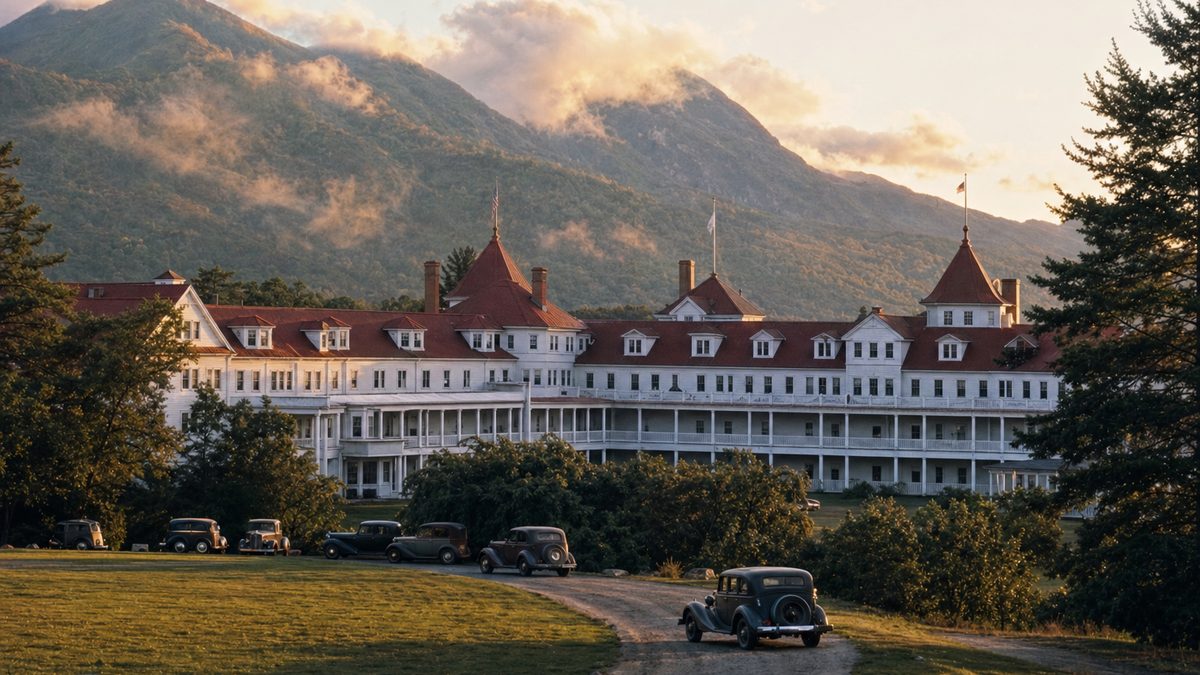
This week the world’s finance ministers and central bankers meet in Bangkok. The two institutions that bring them together were born in a hotel in the New Hampshire mountains in 1944.

From the twelfth to the eighteenth of October 2026, Bangkok hosts the Annual Meetings of the International Monetary Fund and the World Bank Group.

Finance ministers, central bankers, business leaders and campaigners from almost every country on Earth fly in. Thailand last hosted them in 1991.

The two institutions were designed together, in 1944, by countries that had just lived through a depression and were still fighting a world war.

Why were they created? What do they actually do? And why do people still argue about them, especially here in Thailand?

Prologue · Why the news matters

The world comes to Bangkok

The IMF–World Bank Group Annual Meetings take place from Monday 12 to Sunday 18 October 2026 at the Queen Sirikit National Convention Center in Bangkok. They are usually held in Washington, D.C. for two years and in another member country every third year. To understand what is being discussed there, it helps to know where the two institutions came from.

Dates
12–18 Oct 2026
Queen Sirikit National Convention Center
Attendance
~10,000
people at a typical Annual Meetings week
Last time in Thailand
1991
also in Bangkok
IMF members
191
the World Bank’s IBRD has 189

The globe shows lines converging on Bangkok from capitals around the world. They are illustrative, not a list of delegations.

How to use: pick a chapter below the scene or press ← → to change step · ▶ plays the step · drag to rotate, scroll or pinch to zoom · “Play the film” runs every step full-screen.

Sources: IMF: 2026 Annual Meetings; World Bank: Annual Meetings venue; IMF: What are the Annual Meetings?; Thai Government PR Department: hosting the 2026 Annual Meetings; IMF at a glance; World Bank: IBRD

Chapter I · The broken thirties

1929–1934 · The Great Depression

When the world stopped trading

Banks failed, factories closed, and countries tried to protect themselves by shutting each other out.

In 1929 the world economy was tied together by trade. Ships carried grain, cotton, coal and machines between the great ports.

Then came the Great Depression. As jobs and prices collapsed, governments raised tariffs to protect their own industries. The United States passed the Smoot–Hawley tariff in 1930.

Other countries put up barriers too. Every country tried to sell more and buy less, and so everyone sold less.

Between 1929 and 1934, world trade fell by about two-thirds.

Chapter I · Step 1 · 1929–1934

Trade collapses

During the Great Depression many countries raised trade barriers and restricted the use of foreign currency, hoping to save jobs at home. The IMF’s own history calls these measures self-defeating: world trade declined sharply, and employment and living standards fell in many countries.

World trade, 1929→1934
−66%
US Office of the Historian
Smoot–Hawley tariff
1930
the US Tariff Act of 1930

Historians still disagree on how much retaliation Smoot–Hawley itself provoked, and on how much tariffs, rather than the slump itself, explain the fall in trade. In the scene, the lines between trading ports fade as trade shrinks; their number and the path between 1929 and 1934 are illustrative.

Sources: US Office of the Historian: Protectionism in the interwar period; IMF: Cooperation and reconstruction (1944–71)

1931–1934 · The gold standard breaks

Racing to the bottom

One by one, countries cut their currencies loose from gold to make their exports cheaper.

Before the Depression, most major currencies were tied to gold. A dollar was worth a fixed weight of gold: one ounce cost twenty dollars and sixty-seven cents.

In September 1931, after speculative attacks on the pound, Britain abandoned the gold standard.

In 1933 the United States left gold too. In January 1934 it fixed a new price: thirty-five dollars an ounce. The dollar had lost about forty percent of its gold value.

Countries that left gold earlier tended to recover sooner. But the scramble of devaluations and trade barriers, as the IMF’s own history puts it, proved self-defeating.

Chapter I · Step 2 · 1931–1934

Gold, and the currency wars

Under the gold standard each currency was worth a fixed amount of gold, so exchange rates between them were fixed too. In the 1930s countries devalued their currencies to compete for export markets. The countries that left gold earlier, such as Britain and the Scandinavian countries, recovered sooner than France and Belgium, which stayed on gold longer.

  • Sep 1931 Britain abandons the gold standard after speculative attacks on the pound
  • Apr 1933 President Roosevelt formally suspends the gold standard
  • 30 Jan 1934 US Gold Reserve Act: gold goes from $20.67 to $35 an ounce

From $20.67 to $35 means each dollar was worth about 41% less gold. The coins and chains in the scene are symbols, not a model of gold reserves.

Sources: IMF: Cooperation and reconstruction (1944–71); Wikipedia: Gold standard; Wikipedia: Gold Reserve Act; Federal Reserve History: Nixon ends convertibility

Chapter II · Bretton Woods, 1944

July 1944 · Mount Washington Hotel, Bretton Woods

Forty-four nations

While the war was still being fought, the Allies sat down to design the peace for money.

On the first of July 1944, with the Second World War still being fought, delegates gathered at a large resort hotel in Bretton Woods, New Hampshire.

About seven hundred and thirty delegates came from forty-four Allied nations, from Australia to Yugoslavia, including China, India, and the Soviet Union.

Their task was to make sure the 1930s never happened again: no more currency wars, no more collapse of trade.

After three weeks, on the twenty-second of July, they signed a final act creating two new institutions: the International Monetary Fund and the International Bank for Reconstruction and Development, today’s World Bank.

Chapter II · Step 3 · July 1944

The United Nations Monetary and Financial Conference

The conference ran from 1 to 22 July 1944 at the Mount Washington Hotel, after a preliminary meeting in Atlantic City in June. The British economist John Maynard Keynes chaired the commission that designed the Bank; Harry Dexter White of the US Treasury chaired the one that designed the Fund.

Nations
44
all Allied nations
Delegates
~730
over three weeks
The Fund (IMF)
exchange-rate stability
and short-term help for payments deficits
The Bank (IBRD)
reconstruction
and development lending

The IMF’s own history page says 45 countries were represented; most accounts, including the US Office of the Historian, count 44 nations. The Soviet Union signed the final act but never ratified it. Each glowing point marks a capital of one of the 44. Thailand was not among them; it joined the IMF in 1949.

Sources: Wikipedia: Bretton Woods Conference; US Office of the Historian: Bretton Woods and GATT; IMF: Cooperation and reconstruction (1944–71)

1941–1944 · Two plans

Keynes against White

Who should fix a trade imbalance: the country that buys too much, or the one that sells too much?

Two men dominated the design. John Maynard Keynes for Britain, and Harry Dexter White for the United States.

Keynes wanted an International Clearing Union with its own unit of account, the bancor. Countries running deficits could overdraw, but countries running big surpluses would be charged too. Both sides had to adjust.

White wanted a stabilization fund instead. Deficit countries would have to adjust; there would be no penalty for piling up surpluses.

White rejected the idea outright. “We have taken the position of absolutely no,” he said. The IMF that emerged was much closer to White’s plan.

Chapter II · Step 4 · 1941–1944

Bancor or dollars?

Keynes first proposed his International Clearing Union in 1941. Every country would hold an account in bancor, a unit of account exchangeable for national currencies at fixed rates. Each would get an overdraft limit of half its average trade over five years, and countries with large surpluses would pay charges as well, so that creditors shared the burden of adjustment. White’s International Stabilization Fund placed that burden on deficit countries and set no limit on surpluses.

KeynesClearing union, bancor, overdrafts; surplus and deficit countries both adjust WhiteFund of national contributions; deficit countries adjust ResultThe IMF was much closer to White’s plan

Keynes died on 21 April 1946, a month after the new institutions held their inaugural meeting in Savannah, Georgia. The bars in the scene are made-up trade balances (green: surplus, red: deficit). Use the buttons on the scene to compare how each plan would push them.

Sources: Wikipedia: Bretton Woods Conference; Wikipedia: International Clearing Union; Wikipedia: John Maynard Keynes

1945–1971 · The Bretton Woods system

Gold, then the dollar, then everyone else

A chain of fixed links: one ounce of gold for thirty-five dollars, and every other currency fixed to the dollar.

The system agreed at Bretton Woods was a chain of fixed links.

At the centre, the United States promised to exchange dollars for gold with foreign governments at thirty-five dollars an ounce. Early on it held about three-quarters of the world’s official gold.

Every other member fixed its currency to the dollar, and kept it within one percent either way by buying and selling in the markets.

A country could change its rate only to correct a fundamental disequilibrium, and only with the IMF’s agreement. No more surprise devaluations.

Chapter II · Step 5 · 1945–1971

The par value system

From 1945 to 1971, IMF members pegged their exchange rates to the US dollar, and the dollar was pegged to gold. Central banks defended their pegs by buying or selling their own currency for dollars. The IMF’s job was to oversee the system and lend to members with temporary balance-of-payments deficits, so that they would not need to devalue or restrict trade.

  1. Gold: $35 per troy ounce, convertible for foreign governments
  2. The dollar: the anchor currency
  3. Other currencies: fixed to the dollar within ±1%
  4. Changes: only for a “fundamental disequilibrium”, with IMF agreement

The coins in the scene stand for currencies of the period, including the Thai baht: Thailand joined the IMF on 3 May 1949 as its 44th member. Their wobble shows the ±1% band, exaggerated.

Sources: IMF: Cooperation and reconstruction (1944–71); Wikipedia: Bretton Woods system; Federal Reserve History: Nixon ends convertibility; US Office of the Historian: Bretton Woods and GATT; Bank of Thailand: Thailand and the IMF

Chapter III · Rebuilding

1946–1948 · Washington, D.C.

The first loans

France asked for $500 million to rebuild. It got half, and a list of conditions.

The agreements came into force on the twenty-seventh of December 1945, once enough countries had ratified them. Both institutions settled in Washington, D.C.

On the ninth of May 1947 the World Bank signed its first loan: two hundred and fifty million dollars to France, half of what France had asked for. It bought ships, freight cars, coal and machinery.

Loans to the Netherlands, Denmark and Luxembourg followed. Then the Marshall Plan began to pour American aid into Europe, and the Bank turned elsewhere.

In March 1948 it approved its first development loans: sixteen million dollars to Chile, for hydroelectric power and farm machinery.

Chapter III · Step 6 · 1945–1948

From reconstruction to development

The IMF came into formal existence in December 1945, when its first 29 members signed the Articles of Agreement, and began operations on 1 March 1947; France was the first country to borrow from it later that year. The World Bank’s early lending rebuilt war-damaged Europe, then shifted to developing countries.

  • 9 May 1947 France: about $250 million, the Bank’s first loan, with conditions including a balanced budget
  • 1947 Netherlands, Denmark, Luxembourg: almost $500 million for reconstruction including France
  • 25 Mar 1948 Chile: $13.5 million for hydroelectric power and $2.5 million for farm machinery, the Bank’s first development loans and its first in Latin America

Arcs run from Washington to each borrower. They show who borrowed, not the size of each loan.

Sources: World Bank Archives: the first loan; World Bank: first development loans to Chile (1948); Wikipedia: World Bank; IMF: Cooperation and reconstruction (1944–71); Wikipedia: Bretton Woods Conference

1947 → 2024

From 40 members to 191

Independence in Africa and Asia, then the end of the Cold War, brought almost every country in.

When the IMF opened its doors in March 1947, it had forty members. Thailand joined in May 1949, as the forty-fourth.

In the late 1950s and 1960s membership grew fast as colonies became independent. Only three of the earliest members were in Africa; by the end of 1969 another thirty-four African countries had joined.

The Soviet Union had never ratified the agreements. After it dissolved in December 1991, about twenty formerly communist countries joined in a few years, including Russia.

In October 2024 Liechtenstein became the hundred and ninety-first member. Today almost every country belongs.

Chapter III · Step 7 · 1947–2024

A near-universal club

March 1947
40
members when operations began
3 May 1949
Thailand
joins as the 44th member
By end of 1969
+34
African members, up from 3 early ones
After Dec 1991
~20
formerly communist nations
Today
191 members (Liechtenstein, 21 Oct 2024)
190 UN members plus Kosovo

The Cold War kept most countries in the Soviet sphere out. Poland withdrew in 1950 and was readmitted in 1986. The points on the globe are illustrative positions for each wave, not one point per member.

Sources: IMF: Timeline; IMF: Cooperation and reconstruction (1944–71); Bank of Thailand: Thailand and the IMF; Wikipedia: International Monetary Fund; Wikipedia: Bretton Woods Conference

Chapter IV · The gold window closes

15 August 1971 · Camp David

The gold window closes

There were more dollars abroad than gold in the vault, and everyone knew it.

The system had a flaw. The world needed more and more dollars to trade, and it got them because the United States spent more abroad than it earned.

In 1960 the economist Robert Triffin warned of the trap. The more dollars piled up abroad, the less believable the promise to swap them all for gold. By 1966 foreign central banks held fourteen billion dollars; America’s gold was worth thirteen point two billion.

Spending on the Vietnam War and at home added to the strain. In March 1968 the London Gold Pool, set up to hold the gold price, collapsed.

On Sunday the fifteenth of August 1971, after a secret weekend at Camp David, President Nixon announced that the dollar would no longer be converted into gold.

Chapter IV · Step 8 · 1960–1971

The Triffin dilemma and the Nixon shock

The United States held about three-quarters of the world’s official gold early on, but over time there were more foreign-held dollars than it had gold. Robert Triffin argued in 1960 that if US deficits stopped, the world would run short of dollars; if they continued, confidence in the dollar’s gold value would erode.

1966: dollars held by foreign central banks
$14 bn
US gold: $13.2 bn, of which only $3.2 bn was available to cover them
15 Aug 1971
Three orders
gold window closed · 90-day wage and price freeze · 10% import surcharge

Nixon called the suspension “temporary”. It was never reversed. The heights of the two stacks in the scene follow the 1966 figures; the rest of their growth and shrinking is illustrative.

Sources: Federal Reserve History: Nixon ends convertibility; Wikipedia: Nixon shock; Wikipedia: Bretton Woods system; IMF: The end of the Bretton Woods system (1972–81)

1971–1976 · Fixed versus floating

Let the market decide

After one more attempt to fix the rates, the major currencies were set free.

In December 1971 the Smithsonian Agreement tried to rebuild the pegs, with gold at thirty-eight dollars and wider bands. It did not hold.

By March 1973 the major currencies were floating: their prices set every day by buyers and sellers, not by governments.

Here is why pegs break. To hold a fixed rate under selling pressure, a central bank must buy its own currency with its reserves. If the selling does not stop, the reserves run out.

Try it yourself with the buttons on the scene. Since 1978 every IMF member has been free to choose its own exchange-rate arrangement, except pegging to gold.

Chapter IV · Step 9 · 1971–1978

Fixed versus floating

With a peg, the central bank promises a rate and must trade at it, using its foreign-exchange reserves. With a float, the rate moves with supply and demand and the reserves are not used up, but the currency can swing sharply. The model on the scene is deliberately simple and illustrative: it shows the trade-off, not any real currency.

  • Dec 1971 Smithsonian Agreement: gold $38, bands of ±2.25%
  • Feb 1973 A further 10% devaluation of the dollar
  • Mar 1973 The major currencies float against each other
  • 1976 Jamaica Accords formally ratify the end of Bretton Woods
  • Apr 1978 IMF recognises each member’s right to choose its exchange-rate arrangement

On the scene: “Sell pressure” adds speculators selling the currency; “Defend the peg” spends reserves to hold the rate; “Let it float” stops defending; “Reset” starts again.

Sources: IMF: The end of the Bretton Woods system (1972–81); Wikipedia: Bretton Woods system; Wikipedia: Nixon shock; IMF: Timeline

Chapter V · What the twins do

Washington, D.C. · 191 members

The Fund

A watchdog, a lender of last resort for countries, and the issuer of a reserve asset that is not quite a currency.

Today the IMF does three main things. First, surveillance: usually once a year its staff visit each member to review its economy and policies.

Second, lending. It does not fund projects. It lends to countries that cannot pay their foreign bills, usually on conditions agreed with the government.

Its money comes mostly from quotas, members’ subscriptions sized to their economies. Quotas also set voting power. The United States has about sixteen and a half percent of the votes, and changing quotas needs eighty-five percent.

Third, since 1969 it can create Special Drawing Rights, a reserve asset valued against five currencies. In 2021 it issued about six hundred and fifty billion dollars’ worth, its largest allocation ever, to boost global liquidity.

Chapter V · Step 10 · The IMF

Surveillance, lending, SDRs

WatchAnnual “Article IV” reviews of each member, plus the World Economic Outlook, Global Financial Stability Report and Fiscal Monitor LendStand-By Arrangements (usually 12–18 months), the Extended Fund Facility (up to 4 years), zero-interest loans for low-income countries TrainTechnical help and training for governments
US share of votes
16.49%
changes to quotas need 85% of votes
Leadership
Kristalina Georgieva
Managing Director since 2019; by tradition a European
Largest SDR allocation
~SDR 456 bn (about US$650 bn), 2021
The 16th quota review (Dec 2023) approved a 50% quota increase, which takes effect as members consent
SDR basket since 1 August 2022
  • USD 43.38%
  • EUR 29.31%
  • CNY 12.28%
  • JPY 7.59%
  • GBP 7.44%

The coin on the scene is split in proportion to these weights.

Sources: IMF: Surveillance; IMF: Lending; IMF: Quotas; IMF: Special Drawing Rights; IMF: 2022 SDR valuation review; IMF at a glance; Wikipedia: International Monetary Fund

Washington, D.C. · Five institutions

The Bank

It borrows on the world’s bond markets and lends for roads, power, schools and health, and gives grants to the poorest.

The World Bank has grown into a group of five institutions. The original bank, the IBRD, raises most of its money by borrowing in world financial markets, helped by a top credit rating.

It lends that money on to middle-income countries, and to poorer ones that are creditworthy, for long-term development.

Since 1960 the International Development Association has given grants and very cheap loans to the poorest countries. It now serves seventy-eight of them. In December 2024 it raised a record one hundred billion dollars.

Thirty-five countries no longer need IDA, among them China, India, South Korea and Vietnam. The Group’s president, by tradition an American, has been Ajay Banga since 2023.

Chapter V · Step 11 · The World Bank Group

Five institutions

  • 1944 IBRD: loans to middle-income and creditworthy low-income countries; 189 members; AAA-rated since 1959
  • 1956 IFC: International Finance Corporation
  • 1960 IDA: grants and concessional loans for 78 low-income countries
  • 1965 ICSID: International Centre for Settlement of Investment Disputes
  • 1988 MIGA: Multilateral Investment Guarantee Agency
IDA21 (Dec 2024)
$100 bn
record replenishment; donors pledged $23.7 bn of it
IDA graduates
35
including China, India, South Korea, Vietnam

Gold arcs: money borrowed from markets. Green arcs: money lent out to borrowing countries. Both are illustrative and do not show real lending volumes.

Sources: World Bank: IBRD; World Bank: What is IDA?; World Bank: record $100 billion IDA21 (2024); Wikipedia: World Bank; World Bank: the President

Chapter VI · Crisis and controversy

2 July 1997 · Bangkok

The Tom Yum Kung crisis

Thailand let the baht float. Within months, a crisis that began in Bangkok had spread across Asia.

For years the baht was pegged at about twenty-five to the dollar. Thailand’s economy had grown more than nine percent a year, fed by foreign money that poured into property and finance.

By 1997 Thailand was running a current-account deficit of about eight percent of its economy. As confidence turned, the central bank spent its reserves defending the peg.

On the second of July 1997, unable to hold the peg any longer, the government floated the baht. By January 1998 a dollar cost fifty-six baht. The Thai stock market eventually fell by three-quarters.

In August the IMF approved a loan of about four billion dollars, part of a seventeen point two billion dollar package. The conditions included closing fifty-six finance companies, cutting the budget and rebuilding the banks.

The crisis spread to Indonesia, South Korea and beyond. Thailand repaid the IMF in 2003, ahead of schedule.

Chapter VI · Step 12 · 1997–2003

Thailand and the IMF

Thailand’s rapid growth had drawn in large short-term foreign capital, which fuelled bank lending and asset bubbles. When confidence turned, the Bank of Thailand could not hold the peg. In Thai the episode is called วิกฤตต้มยำกุ้ง, the Tom Yum Kung crisis.

Baht per US$
25 → 56
peg before 2 Jul 1997 → low in Jan 1998
IMF stand-by
SDR 2.9 bn
about US$4 bn, approved 20 Aug 1997
Total package
$17.2 bn
IMF, other lenders and governments; $14.1 bn drawn
Repaid
2003
ahead of schedule
Main conditions
  1. A managed float of the baht
  2. Closure of 56 insolvent finance companies, intervention in the weakest banks and bank recapitalisation
  3. Budget cuts: the first target was a surplus of 1% of GDP; from February 1998 it was relaxed to deficits of up to 6% by April 1999
  4. Reforms to bankruptcy, foreclosure and foreign-investment rules

The scene replays the defence of the peg and the float. Only the 25 and 56 baht rates are real values; the reserve level and pressure are illustrative. You can use the buttons too.

Sources: Wikipedia: 1997 Asian financial crisis; IMF staff brief: Recovery from the Asian crisis and the role of the IMF (2000); Bank of Thailand: Thailand and the IMF; Stanley Fischer: The Asian crisis, a view from the IMF (1998); IMF: Timeline

1982 · 1997 · 2008 · 2010

Rescuer or enforcer?

Every big crisis has brought the IMF in, and every rescue has been argued over.

In August 1982 Mexico said it could no longer pay its debts. The IMF coordinated the rescue; Latin America then lived through what is often called its lost decade.

In 1997 came Asia. Critics such as the economist Joseph Stiglitz argued that the IMF had pushed countries to open to hot money too early, then demanded austerity and high interest rates that deepened the slump.

IMF officials replied that high rates were needed to stop currencies collapsing, and that weak banks had caused the crisis. The IMF’s own reviews later found that the deep recessions were not foreseen, and that some early budget tightening had not been needed.

After 2008, the G20 tripled the IMF’s resources. In 2010 it joined Europe in lending to Greece; a 2013 IMF review found that confidence and growth were not restored, and that debt restructuring was delayed too long.

Chapter VI · Step 13 · The debate

Critics and defenders

  • 1982 Mexico declares it cannot service its debt; the IMF coordinates the response with commercial banks
  • 1997–98 Asian crisis: IMF programmes for Thailand, Indonesia and Korea; Malaysia chooses capital controls instead
  • 2 Apr 2009 G20 agrees to treble IMF resources to $750 bn and back a $250 bn SDR allocation
  • 9 May 2010 IMF lends Greece €30 bn, part of a €110 bn package with the euro area
What critics say

Austerity and high interest rates in a crisis can deepen recessions and hurt the poor; conditions reach too far into domestic policy; rescue money mainly protects foreign creditors; and voting power favours rich Western countries, while by tradition a European leads the IMF and an American the World Bank. Joseph Stiglitz (Globalization and Its Discontents, 2002) and Jeffrey Sachs made versions of these arguments about Asia.

What defenders say

Countries come to the IMF when they have run out of other options; without a loan the adjustment would be harsher. Stanley Fischer, then the IMF’s First Deputy Managing Director, argued in 1998 that high rates were needed to restore confidence in currencies and that bankrupt banks should not stay open. Several studies find IMF programmes improve the balance of payments, and loans are generally repaid with interest. Kenneth Rogoff, the IMF’s research director, called Stiglitz’s analysis “at best highly controversial”.

What the IMF’s own reviews found

A 2000 staff brief said the deep Asian recessions were not foreseen and fiscal easing “should have come earlier”. The Independent Evaluation Office (2003) judged the initial fiscal tightening in Indonesia and Korea “not warranted” and found too many structural conditions. The 2013 Greece evaluation found significant fiscal adjustment but said debt restructuring was delayed too long. The World Bank replaced its structural adjustment loans with a new poverty-focused approach in 1999.

Sources: IMF: Timeline; IMF: Debt and painful reforms (1982–89); Wikipedia: Latin American debt crisis; Wikipedia: Globalization and Its Discontents (Stiglitz, 2002); Wikipedia: 1997 Asian financial crisis; Stanley Fischer: The Asian crisis, a view from the IMF (1998); IMF staff brief: Recovery from the Asian crisis and the role of the IMF (2000); IMF Independent Evaluation Office (2003): capital account crises; G20 London communiqué, 2 April 2009 (full text); IMF press release 10/187: Greece stand-by arrangement; IMF (2013): Greece ex post evaluation; Wikipedia: International Monetary Fund; Wikipedia: World Bank

Epilogue

Bretton Woods → Bangkok

Eighty-two years later

The world they were built for is gone. The questions they were built to answer are still here.

The fixed exchange rates of Bretton Woods ended in the 1970s. The two institutions did not; they changed jobs.

The IMF went from guarding pegs to watching economies and lending in crises. The World Bank went from rebuilding Europe to fighting poverty.

Who should adjust when trade is out of balance? Who decides, and who pays when things go wrong? Keynes and White argued about it in 1944.

This week in Bangkok, the argument continues.

Epilogue · 1944 → 2026

From a mountain hotel to Bangkok

  • 1929–34 World trade falls by about two-thirds
  • 1944 44 nations meet at Bretton Woods
  • 1947 IMF opens; the World Bank’s first loan, to France
  • 1949 Thailand joins the IMF
  • 1971 The dollar’s link to gold is suspended
  • 1973 Major currencies float
  • 1997 The baht floats; the Asian financial crisis
  • 2026 Annual Meetings in Bangkok, 12–18 October

All full-screen stills are AI-generated to help the imagination; they are not photographs and show no real people. The globe uses NASA Blue Marble imagery. Scenes that show money flows, reserves or balances are simplified illustrations. This story describes the main arguments for and against the IMF and the World Bank as their supporters and critics have made them; it does not take a side.

Sources
IMF: 2026 Annual Meetings
World Bank: Annual Meetings venue
IMF: What are the Annual Meetings?
Thai Government PR Department: hosting the 2026 Annual Meetings
Wikipedia: Bretton Woods Conference
US Office of the Historian: Bretton Woods and GATT
US Office of the Historian: Protectionism in the interwar period
IMF: Cooperation and reconstruction (1944–71)
IMF: The end of the Bretton Woods system (1972–81)
IMF: Timeline
Wikipedia: Gold standard
Wikipedia: Gold Reserve Act
Wikipedia: Bretton Woods system
Wikipedia: International Clearing Union
Wikipedia: John Maynard Keynes
Federal Reserve History: Nixon ends convertibility
Wikipedia: Nixon shock
World Bank Archives: the first loan
World Bank: first development loans to Chile (1948)
Wikipedia: World Bank
IMF at a glance
Wikipedia: International Monetary Fund
IMF: Special Drawing Rights
IMF: 2022 SDR valuation review
IMF: Quotas
IMF: Surveillance
IMF: Lending
World Bank: IBRD
World Bank: What is IDA?
World Bank: record $100 billion IDA21 (2024)
World Bank: the President
Wikipedia: 1997 Asian financial crisis
IMF staff brief: Recovery from the Asian crisis and the role of the IMF (2000)
Bank of Thailand: Thailand and the IMF
Stanley Fischer: The Asian crisis, a view from the IMF (1998)
Wikipedia: Globalization and Its Discontents (Stiglitz, 2002)
IMF Independent Evaluation Office (2003): capital account crises
Wikipedia: Latin American debt crisis
IMF: Debt and painful reforms (1982–89)
G20 London communiqué, 2 April 2009 (full text)
IMF press release 10/187: Greece stand-by arrangement
IMF (2013): Greece ex post evaluation