Sent home from Cambridge by the plague, Isaac Newton split sunlight with a prism, weighed the Moon's fall against an apple's, and imagined a cannon firing hard enough to miss the Earth forever. Run all three experiments, then follow the twenty years, the feuds and the second career at the Royal Mint that came after. Episode 02 of the Great Scientists series.
Interactive 3D film8 min1642 to 1727Published 2026-10-13
What if the apple and the Moon are doing the same thing?
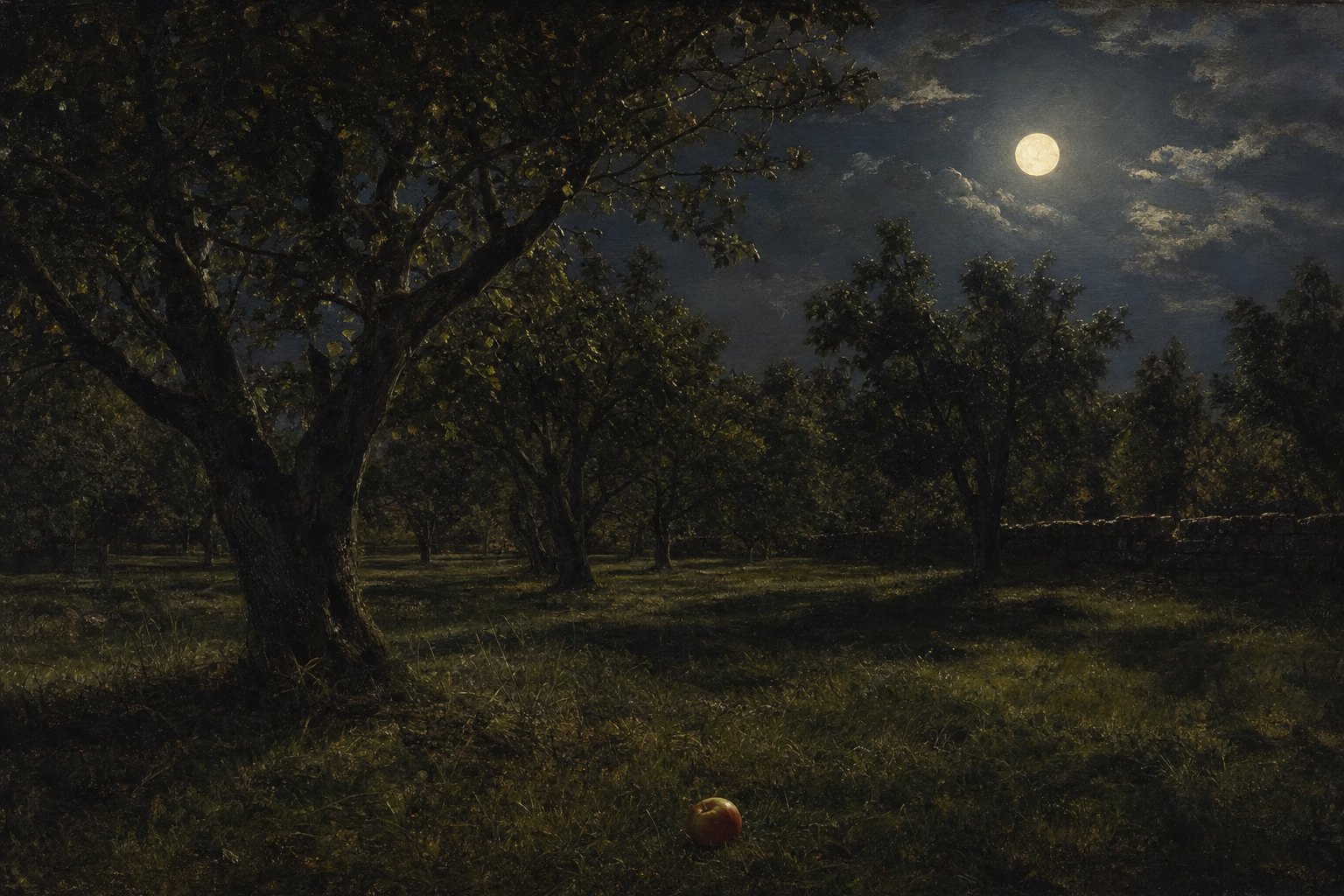
An apple falls. The Moon does not fall. Everyone had always treated those as two different kinds of event: earthly motion down here, heavenly motion up there.
A young man sent home from Cambridge by the plague asked whether they are the same event. Whether the Moon is falling too, and only misses the Earth because it is moving sideways fast enough.
Answering that took him twenty years, a new mathematics, and a book another man had to pay to print. It is still the physics we fly spacecraft with.
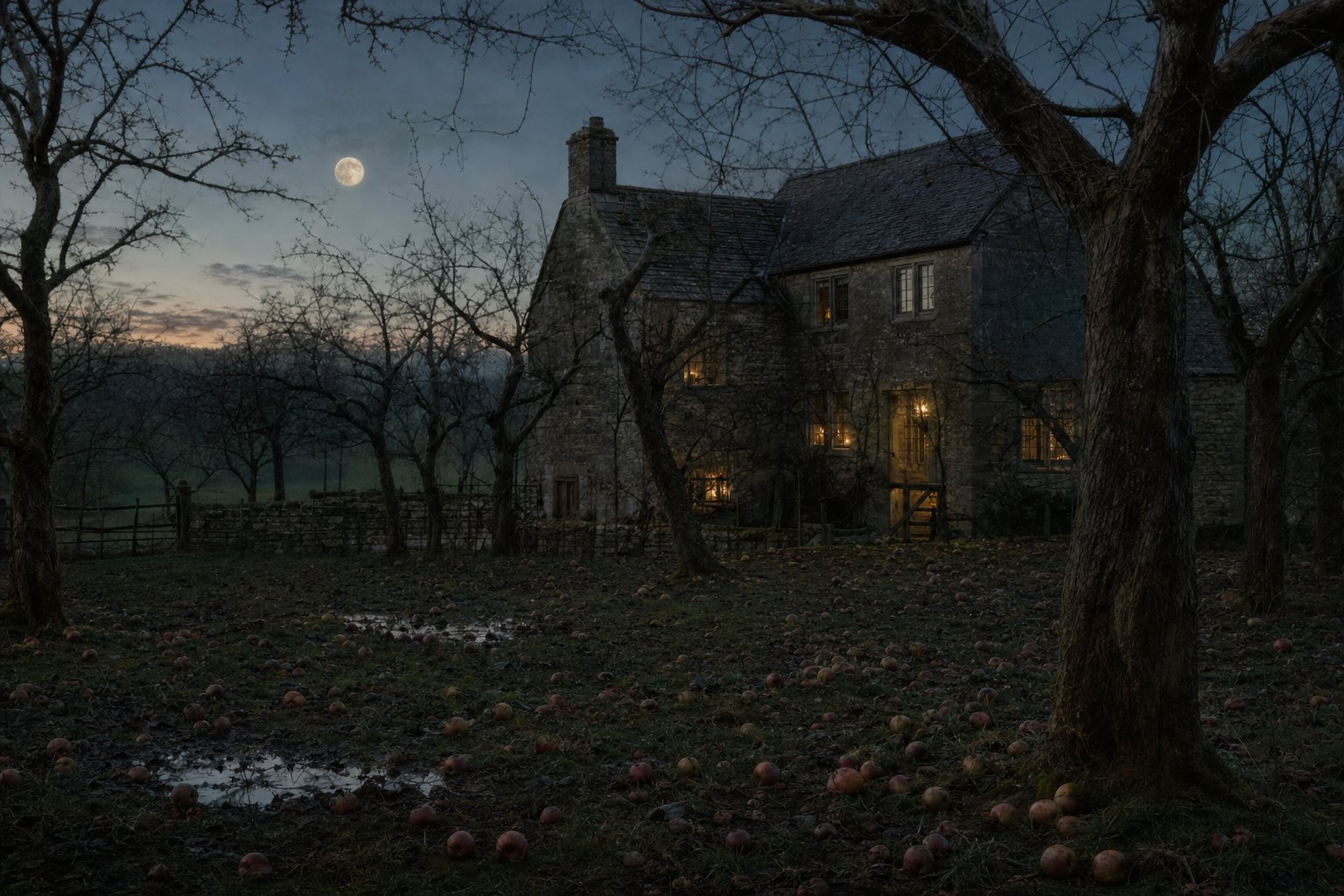
An orchard in Lincolnshire The plague closed Cambridge. He went home and stayed nearly two years.
1666
the plague years at home
1/3600
how much weaker gravity is at the Moon
1687
the book that explained the sky
Three numbers
Why should that apple always descend perpendicularly to the ground? Why should it not go sideways or upwards, but constantly to the earth’s centre?Newton, as recalled by William Stukeley, 1752
Prologue · Why he matters
The apple and the Moon
Newton’s question was whether the fall of an apple and the orbit of the Moon are the same thing at different distances. The answer, worked out over twenty years, became the first physics that applied everywhere at once.
Born
Woolsthorpe, 1642
25 December, old style
Died
London, 1727
buried in Westminster Abbey
Principia
July 1687
paid for by Edmond Halley
How to use: pick a chapter below or press ← → to change step · ▶ plays the step · drag to rotate, scroll or pinch to zoom · three steps have buttons you can press.
The planets obeyed three laws nobody could explain.
Galileo had shown how things fall on Earth. Kepler had found three rules the planets obey, by fitting decades of measurements.
But a rule is not a reason. Nothing said why an ellipse, or what was doing the holding. The fashionable answer was Descartes: invisible whirlpools carrying the planets like leaves in a stream.
Others suspected a force falling off with the square of the distance. Hooke, Halley and Wren discussed it in a London coffee house. None could prove what orbit it would produce.
Rules that worked Kepler’s three laws predicted where a planet would be — without saying what held it there.T2∝a3
T
time for one orbit
a
size of the orbit
Kepler’s third law, found by fitting observations. Newton later showed it follows from an inverse-square force.
Orbits are ellipses, not circles
A planet sweeps equal areas in equal times
Period squared goes as orbit size cubed
Kepler, 1609 and 1619
Chapter I · Step 1
Rules without a reason
Kepler’s laws described the planets beautifully and explained nothing. Descartes offered whirlpools; Hooke, Halley and Wren suspected an inverse-square force but could not derive the orbit from it.
That is the gap Newton walked into: not “what do the planets do?” but “what makes them do it, and does the same thing make an apple fall?”
Born premature, raised by a grandmother, paid his way by waiting on richer students.
He was born at Woolsthorpe on Christmas Day 1642, so small they did not expect him to live. His father was already dead, and his mother soon left him with his grandmother.
He went up to Trinity College, Cambridge, in 1661 as a sizar — a student who paid his way by serving wealthier ones.
Then the plague closed the university. He went home for two years, alone, and invented the calculus, worked out the composition of light, and began on gravity. He was a professor at twenty-six, and published almost none of it for twenty years.
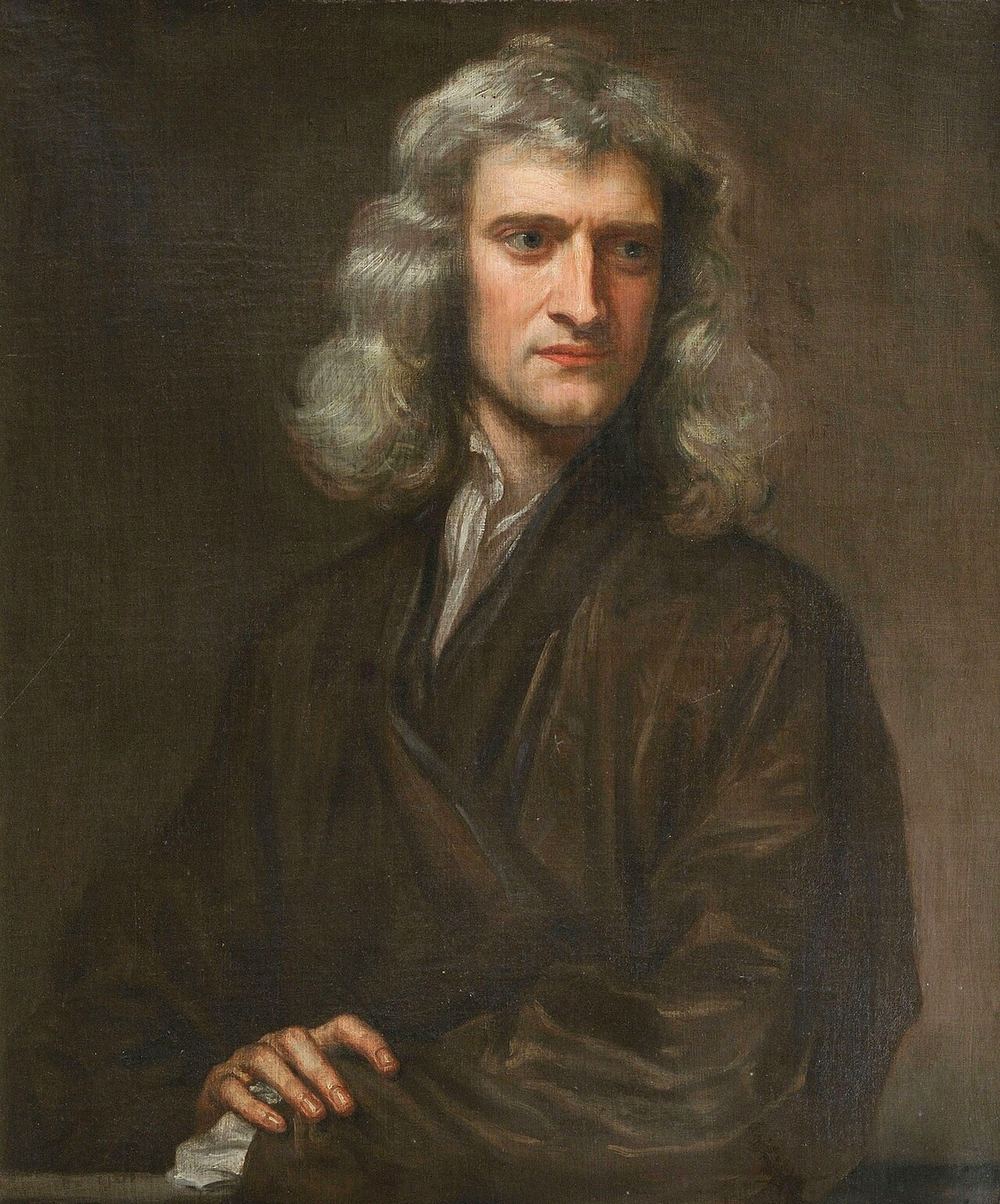
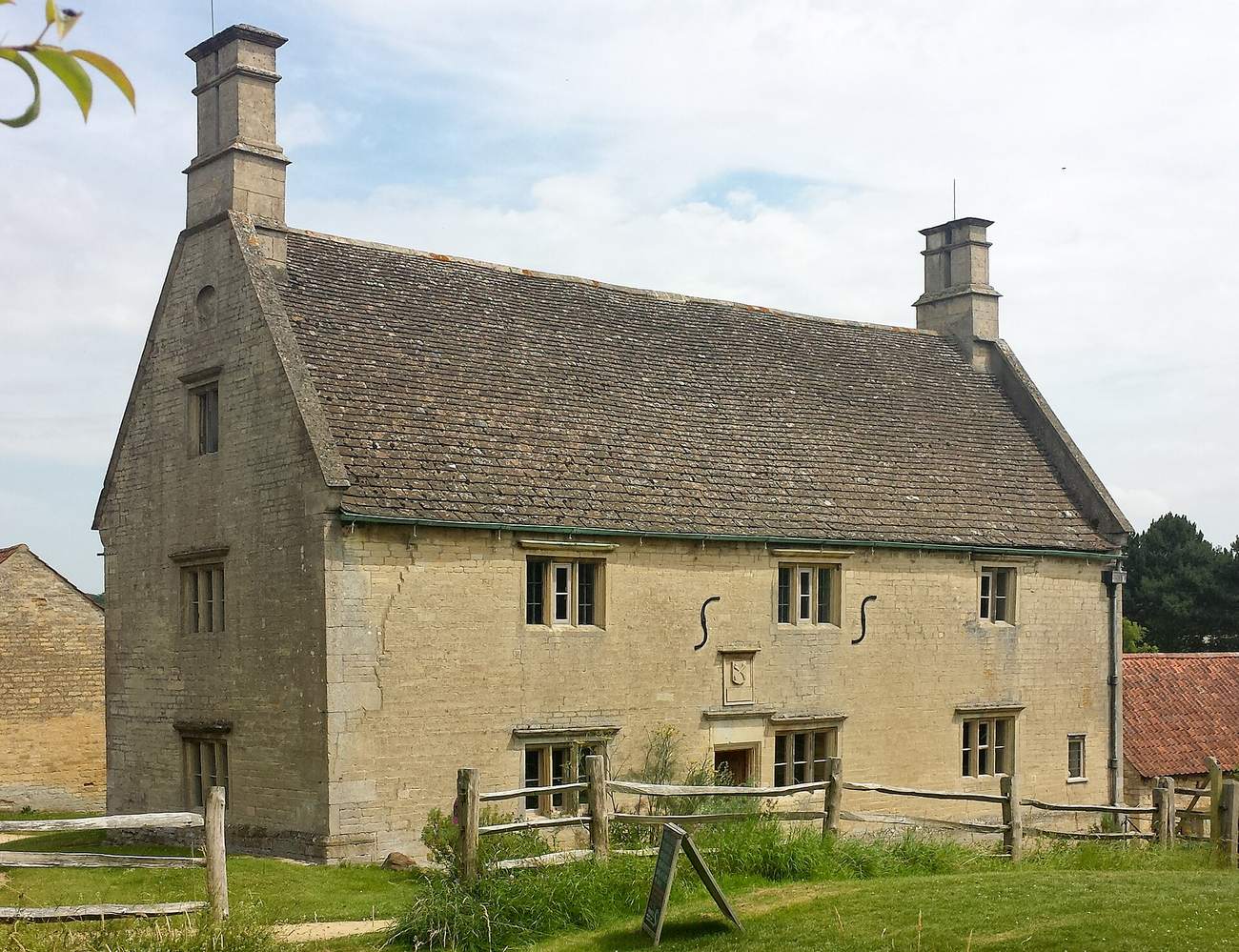
Newton at 46 Painted by Godfrey Kneller in 1689, two years after the Principia.Woolsthorpe Manor The farmhouse where he was born and where he spent the plague years.
1642 Born at Woolsthorpe, premature, father already dead
1661 Enters Trinity College, Cambridge, as a servant student
1665–67 Plague closes the university; he works at home
1669 Lucasian Professor of Mathematics at 26
The first twenty-seven years
Chapter I · Step 2
A difficult young man
Born 25 December 1642 at Woolsthorpe, fatherless and premature. Entered Trinity, 1661 as a sizar. The plague years 1665–67 at home produced the calculus, the theory of colour, and the start of gravitation. Lucasian Professor at 26.
Almost none of it was published at the time. Newton disliked argument, and publishing meant argument.
Everyone knew a prism made colours. The accepted explanation was that glass stains light.
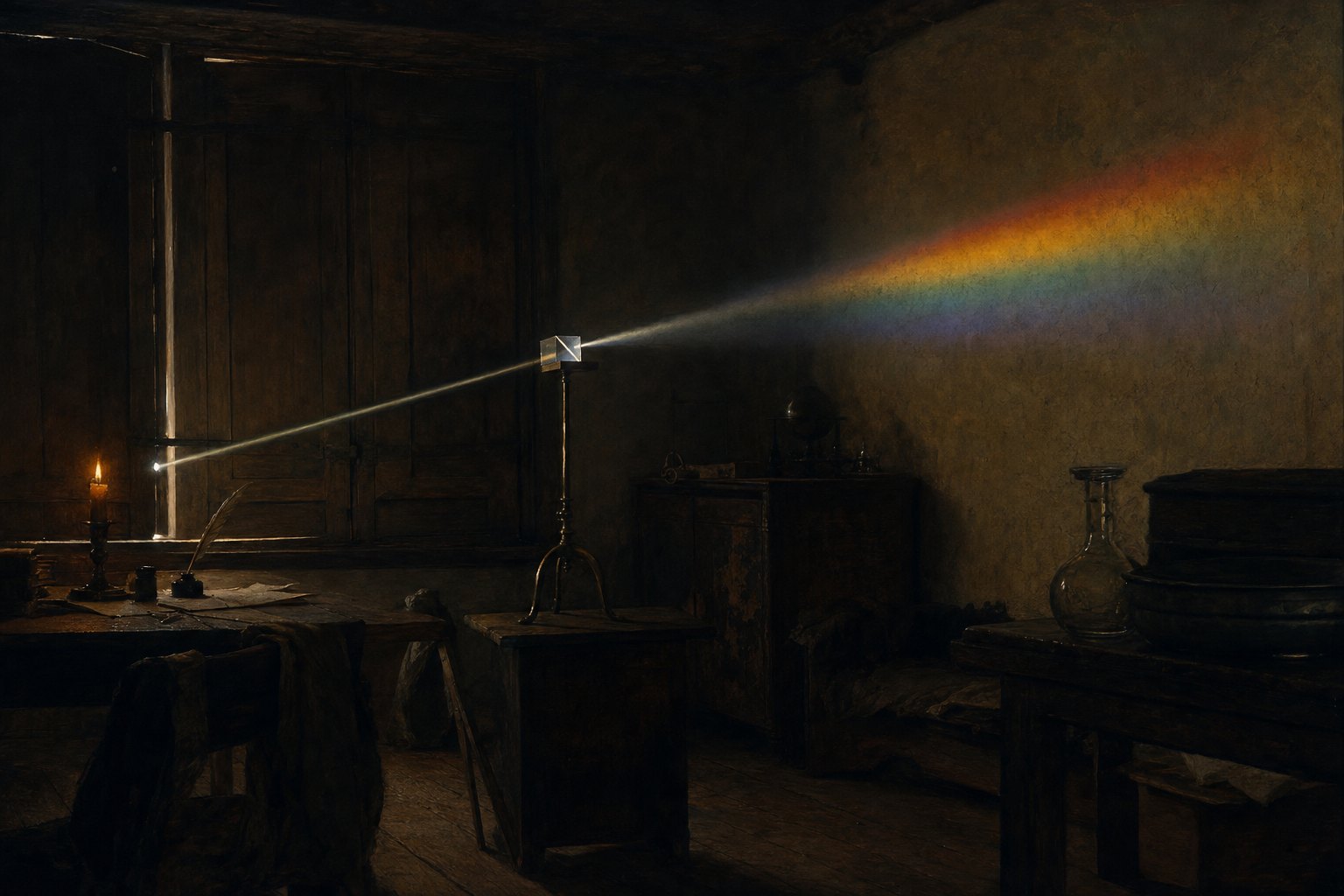
Newton closed the shutters, let one narrow beam in, and put a prism in its path. The patch on the far wall was not a round spot but a long band, always in the same order.
Then he settled it. He let through one colour only, and sent that through a second prism. It came out the same colour.
The glass makes nothing. White light is already a mixture, and the prism only sorts it. Press the buttons and run the three steps.
One hole, one prism Shutters closed, a small hole, a glass prism, and a long throw to the far wall.
White light goes in
A band of colours comes out, always in the same order
Pick out one colour and pass it through a second prism
It does not change. The colour is not made by the glass
The crucial experiment
1666
the prism experiments
1672
his first published paper
Light
Chapter II · Step 3 · Interactive
White is not simple
A prism does not stain light — it separates what is already there. Newton proved it by isolating a single colour and passing it through a second prism: it came out unchanged.
Press the buttons to spread the light, isolate one colour through the second prism, then recombine the whole band back into white.
If a lens bends each colour by a different amount, then every lens telescope must blur its images with coloured fringes. No careful grinding can fix that.
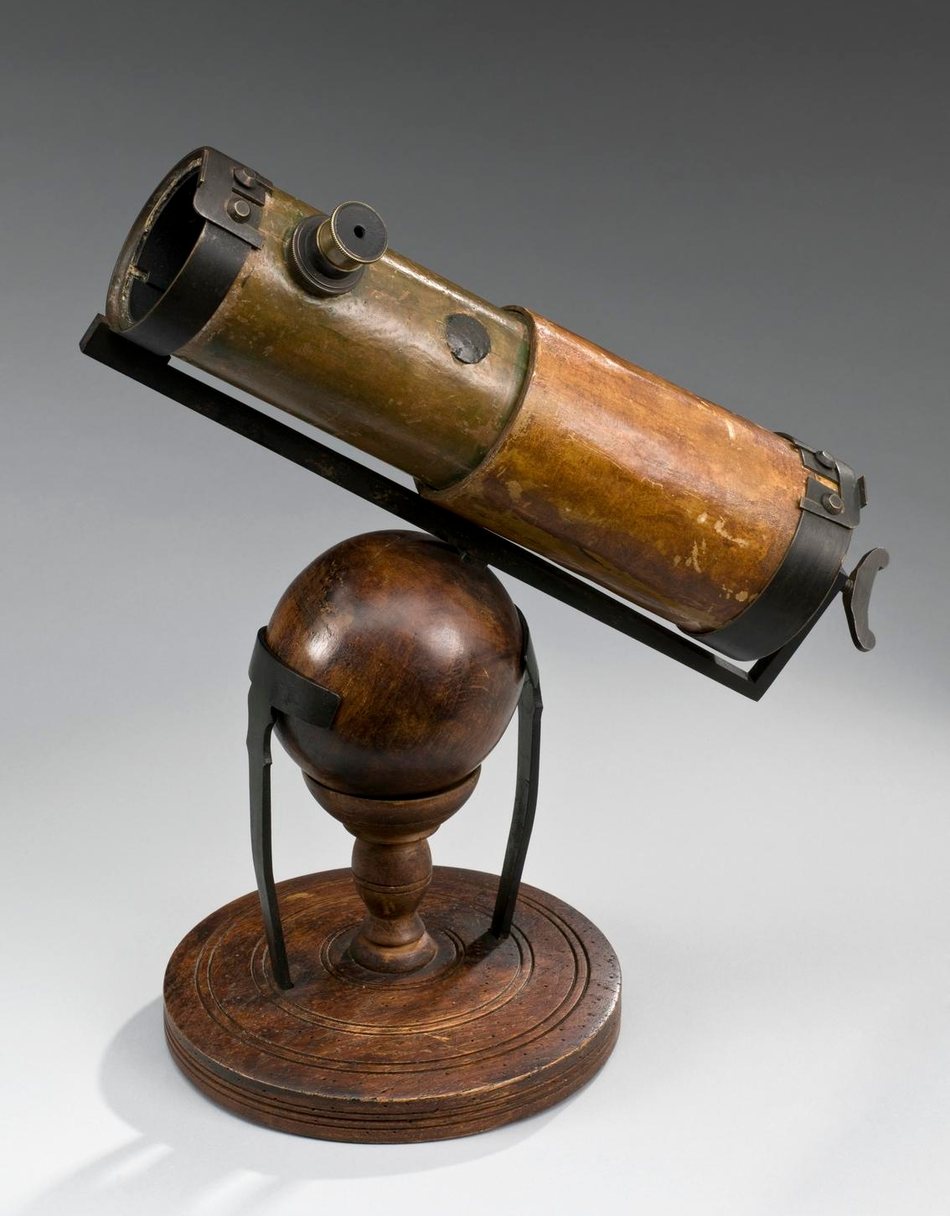
So Newton built a telescope with no lens to focus with. He cast and polished his own metal mirror, barely two inches across, and got a short instrument that worked as well as a much longer one.
The Royal Society saw it in 1671 and elected him. His first paper, on colour, went out the next year — and was attacked by Robert Hooke. Newton withdrew, and refused to publish his optics as a book until Hooke was dead.
A replica of his telescope Newton’s answer to coloured fringes: no lens to focus with, only a curved mirror.
A lens bends colours by different amounts
So a lens telescope always shows coloured fringes
A mirror bends all colours alike
So build the telescope out of a mirror
Why a mirror
1668
the first working reflector
2 inches
its mirror
The instrument
Chapter II · Step 4
He builds a better telescope
Because lenses split colour, lens telescopes smear it. Newton’s fix was to focus with a mirror instead — the first working reflecting telescope, finished in 1668, with a mirror about two inches across.
The Royal Society elected him in 1671. His 1672 paper on colour was publicly attacked by Robert Hooke; Newton withdrew from the argument, and held back Opticks until 1704, the year after Hooke died.
If the force thins out as the square of distance, the numbers must match.
The Moon is about sixty Earth radii away. If gravity thins out as the square of the distance, the pull out there should be sixty squared — three thousand six hundred times — weaker.
An apple at the surface accelerates at nine point eight metres per second squared. Divide by three thousand six hundred and you get about two and three quarter thousandths.
Work out what the Moon actually needs to keep curving around us, from its distance and its month-long period, and you get the same number. One force, doing both jobs. Move the test mass and watch the pull change.
The same force, or two? An apple falls 4.9 metres in the first second. The Moon falls too — about a millimetre and a half.F=Gr2m1m2
r
distance between the centres
m1,m2
the two masses
G
the gravitational constant
Double the distance and the pull drops to a quarter. The Moon sits at sixty Earth radii.
60
Earth radii to the Moon
3600
= 60², how much weaker the pull is there
9.8 → 0.0027
metres per second squared
The arithmetic that convinced him
Chapter III · Step 5 · Interactive
Weigh the Moon against an apple
The Moon is 60 Earth radii away, so an inverse-square force should be 3,600× weaker there. An apple falls at 9.8 m/s²; 9.8 ÷ 3600 ≈ 0.0027 m/s² — which is exactly the acceleration the Moon’s orbit requires.
Press a distance to move the test mass. The readout gives the distance in Earth radii and the acceleration there.
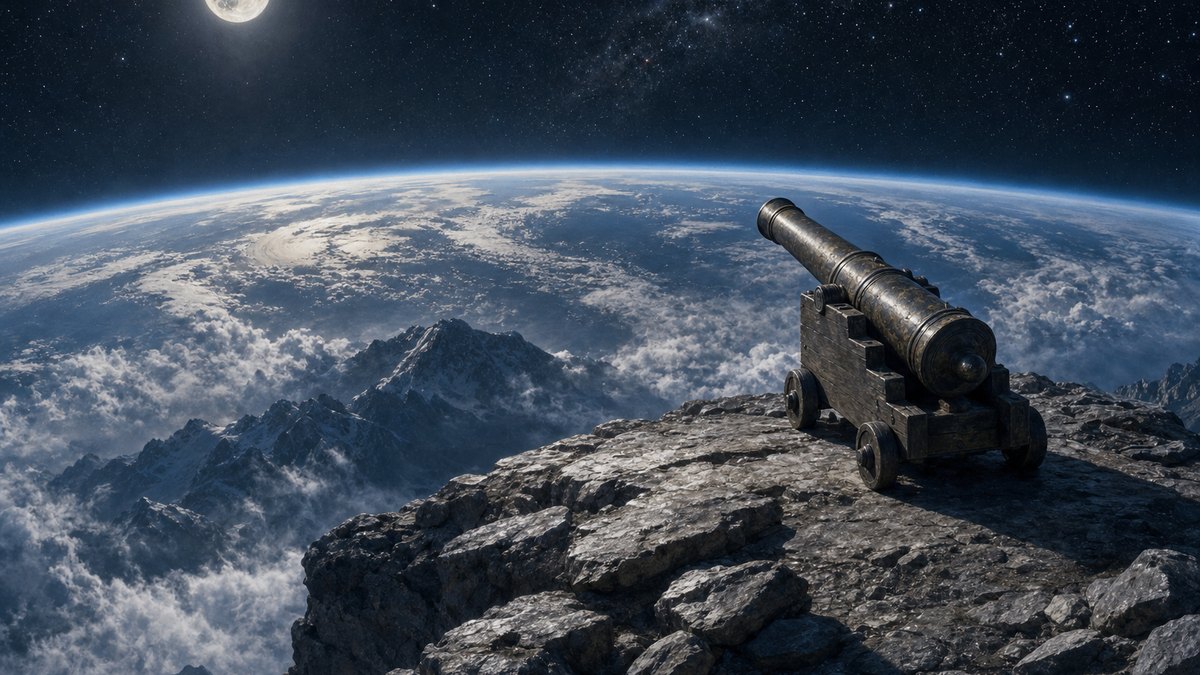
A cannon on a mountain, and no air to slow the shot.
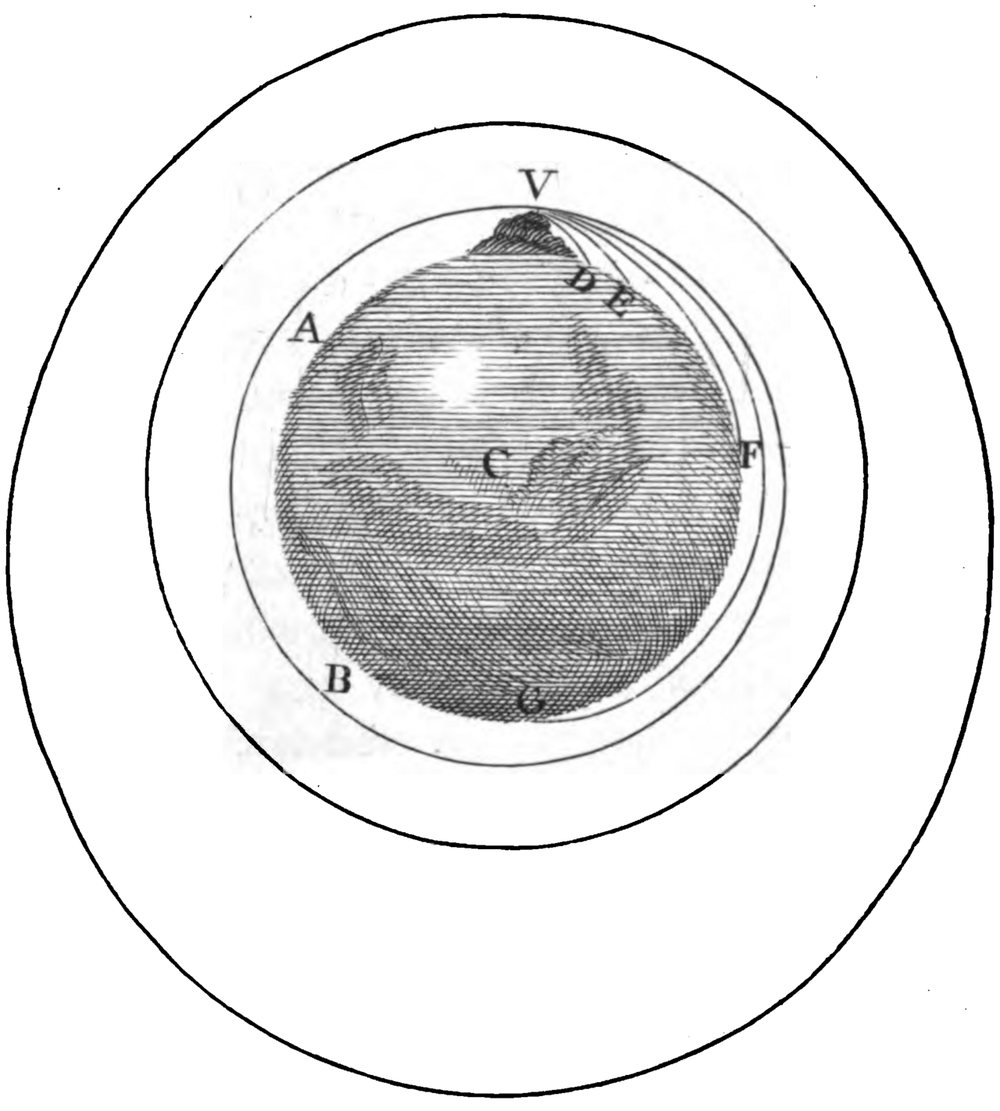
Newton put the whole idea into one picture. Stand a cannon on a mountain so high there is no air, and fire it horizontally.
Fire gently and the ball lands nearby. Harder and it lands further. Harder still, and the curve of the ball starts to match the curve of the Earth.
At about seven point nine kilometres a second it never lands at all. It keeps falling, the ground keeps curving away beneath it, and it comes back round and hits you in the back. Past eleven point two it leaves for good. Press a speed and fire.
Newton’s own diagram From A Treatise of the System of the World: paths V, W, X, Y, Z from one cannon on one mountain.
7.9 km/s
circular orbit just above the ground
11.2 km/s
fast enough to never come back
Two speeds
An orbit is not the absence of gravity
It is falling, and missing
Go sideways fast enough and the ground curves away as fast as you drop
What orbit means
Chapter III · Step 6 · Interactive
Fire it harder
A cannon on an airless mountain. Slow shots land. At about 7.9 km/s the ball falls exactly as fast as the Earth curves away, and never lands. Past 11.2 km/s it leaves for good.
The same drawing is in Newton’s own posthumous Treatise of the System of the World. Pick a muzzle speed and fire; the scene is schematic and the planet is not to scale.
What curve would a planet follow under an inverse-square force?
In January 1684 Hooke, Halley and Wren agreed the force probably falls off as the square of the distance. None could show what orbit that produced. Wren offered a prize; nobody collected it.
That August Halley rode to Cambridge and asked Newton directly. Newton answered at once: an ellipse. He had calculated it. Then he could not find the paper.
In November nine pages arrived in London, titled On the motion of bodies in an orbit. Halley read it and understood that this was not a paper but the beginning of a book. He spent three years getting it out of Newton.
The room Halley walked into Newton had solved it years earlier, put it down, and lost the paper.
An ellipse. I have calculated it.Newton to Halley, as the story is told
Jan 1684 Hooke, Halley and Wren argue it out in London
Aug 1684 Halley rides to Cambridge to ask Newton
Nov 1684 Newton sends back nine pages: De motu
Jul 1687 The Principia is published
Three years
Chapter IV · Step 7
The visit
August 1684: Halley asks Newton what curve an inverse-square force produces. “An ellipse — I have calculated it.” The mislaid proof came back in November as De motu corporum in gyrum, nine pages. Halley spent three years turning it into the Principia.
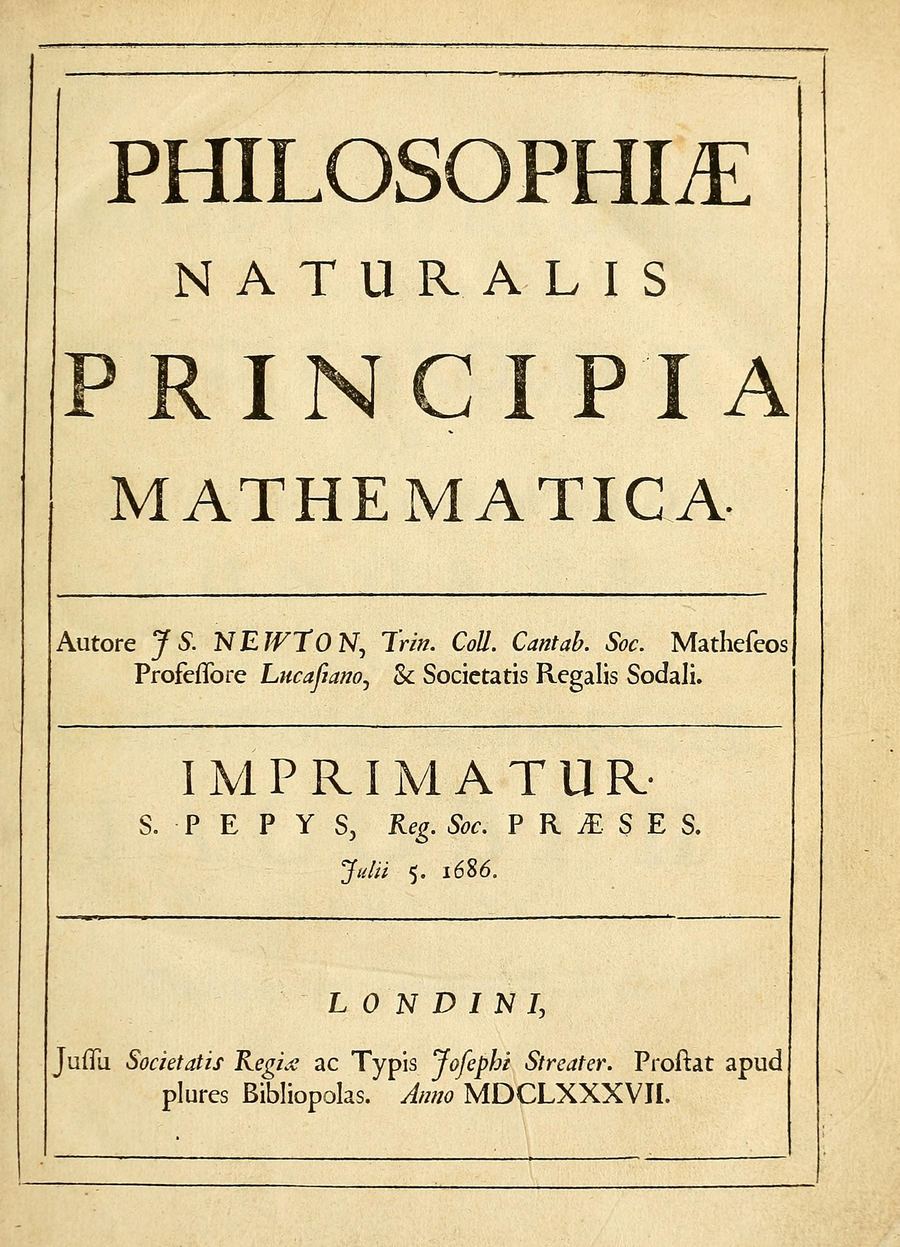
The Principia came out in July 1687. The Royal Society had spent its budget on a book about fish, so Halley paid the printer out of his own pocket.
It opens with three laws of motion, then claims that one force, weakening with the square of distance, holds between every pair of masses in the universe.
From that, Kepler’s rules fall out as consequences. So do the tides and the bulge at the Earth’s equator. The word is universal: the same rule for an apple, the Moon, and a comet nobody has seen yet.
The title page, 1687 Philosophiæ Naturalis Principia Mathematica. The Royal Society had no money left, so Halley paid for the printing himself.
A body keeps moving unless a force acts
Force changes motion, in proportion to the force
Every action has an equal and opposite reaction
And every mass pulls every other mass
Three laws and one force
1687
published
3
laws of motion
1
force, everywhere
Principia
Chapter IV · Step 8
One force, everywhere
Published July 1687, printed at Halley’s own expense. Three laws of motion plus one universal inverse-square attraction between every pair of masses — from which Kepler’s laws, the tides and the Earth’s equatorial bulge all follow.
Newton did not claim to know what gravity is. He said he framed no hypotheses about its cause, and that it was enough that it describes what the heavens do.
A theory earns its keep by sticking its neck out. Newton’s did it twice, after he was dead.
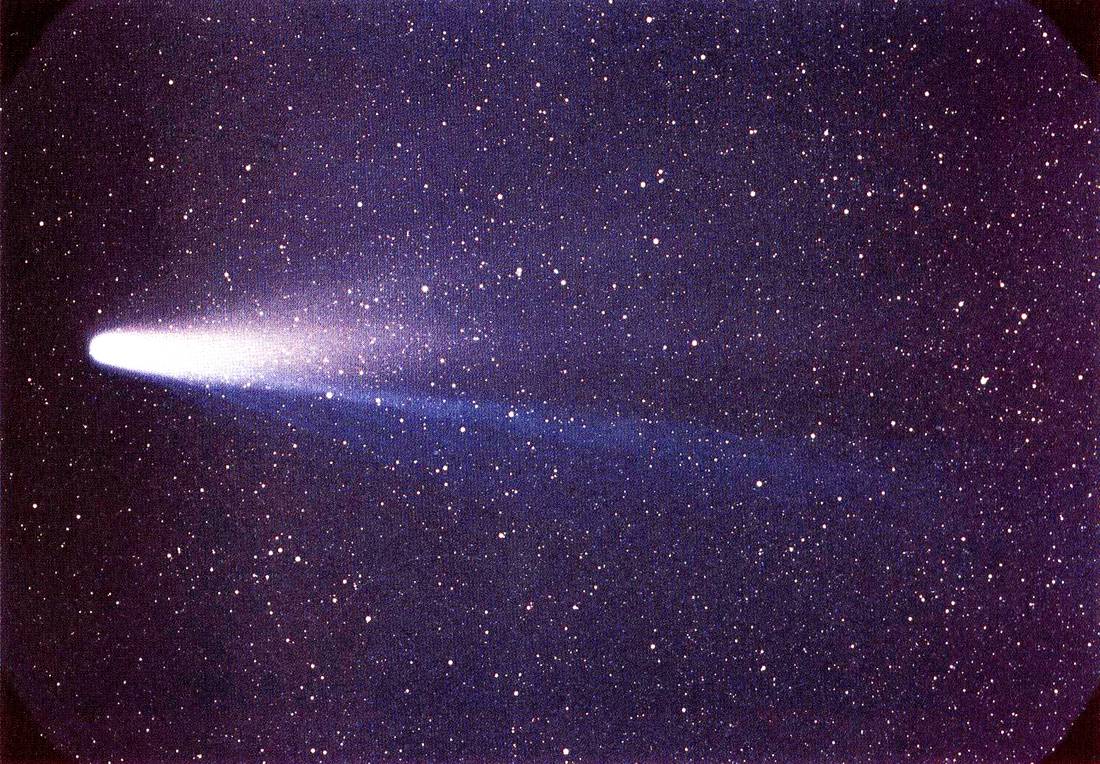
Halley used the new mathematics on comet records, concluded that three sightings were one object on a long ellipse, and predicted its return for 1758. He died in 1742. On Christmas night 1758 it came back.
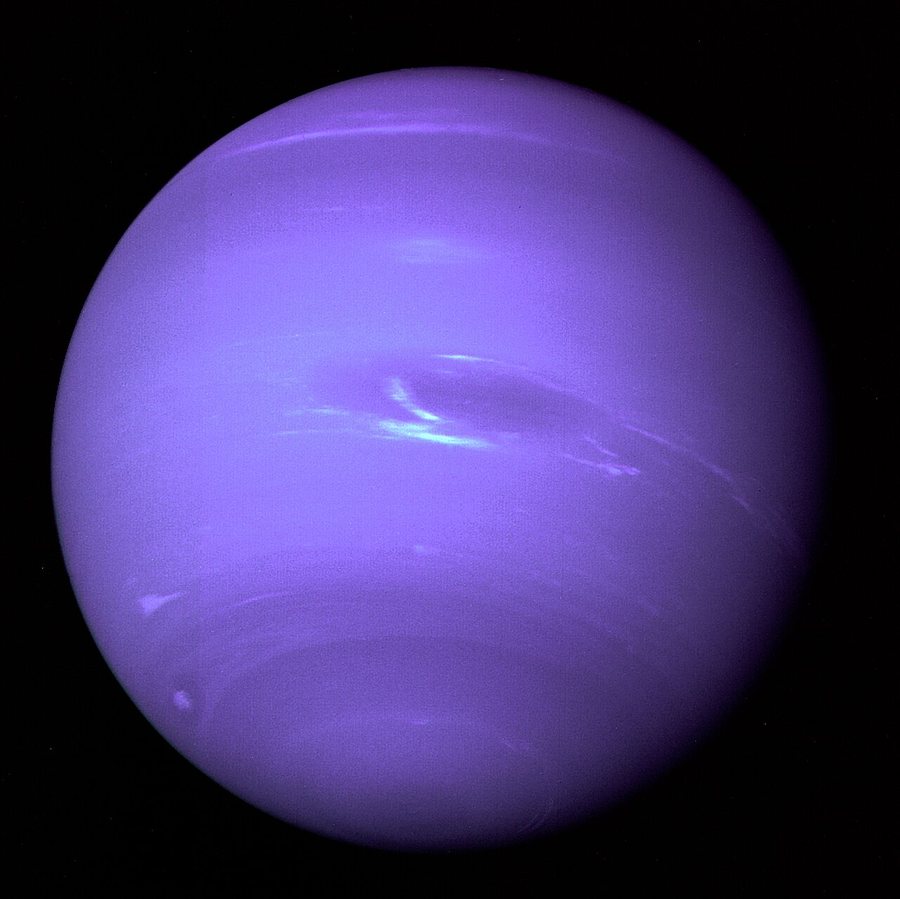
Then in 1846 Uranus was drifting off course. Le Verrier assumed Newton was right, calculated where the unseen planet had to be, and posted the position to Berlin. Galle found Neptune within the hour, less than a degree away.
The comet, 1986 Halley used Newton’s mathematics to claim one comet had come back three times, and would return in 1758. It did.Neptune, found on paper first Le Verrier calculated where an unseen planet must be. Galle found it the same night, less than a degree away.
1705 Halley predicts a comet will return in 1758
1758 It is seen on Christmas night
1846 Neptune found within a degree of the predicted spot
Two bets that paid
Chapter V · Step 9
Bets on the future
1758: the comet Halley predicted from Newton’s mathematics returned, sixteen years after his death. 23 September 1846: Neptune was found less than a degree from the position Le Verrier calculated from the wobble of Uranus.
Both are the same move: trust the law, measure the discrepancy, and let the law tell you what you have not seen yet.
It is tempting to make him the first modern scientist. His own papers do not allow it.
He spent decades on alchemy, with a furnace in his garden at Trinity, and wrote more on biblical prophecy than on physics. When Keynes read those papers in 1936 he said Newton was not the first of the age of reason but the last of the magicians.
He was also a ferocious enemy. He fought Hooke over optics and over credit for gravity, and Leibniz over the calculus, long past Leibniz’s death.
Years of alchemy, in his own laboratory
A million words of private theology
A long, bitter fight with Hooke
A longer one with Leibniz over the calculus
The rest of the notebooks
Newton was not the first of the age of reason. He was the last of the magicians.John Maynard Keynes, 1946, after reading Newton’s private papers
~10%
of his writing is what we would call physics
Proportion Most of the rest is alchemy and theology. His heirs kept it unpublished for two centuries.
Chapter VI · Step 10
The last of the magicians
Newton wrote far more on alchemy and theology than on physics, and pursued bitter priority fights with Hooke over light and gravity and with Leibniz over the calculus.
The private papers stayed unpublished until the twentieth century. Keynes bought a tranche at auction in 1936 and wrote the lecture that gave them their name.
He left Cambridge to chase counterfeiters, and was good at it.
In 1696, at fifty-three, he left Cambridge to run the Royal Mint.
England’s silver coinage was being clipped and forged into worthlessness. Newton ran the recoinage and went after the forgers personally, gathering evidence in taverns and prosecuting cases himself.
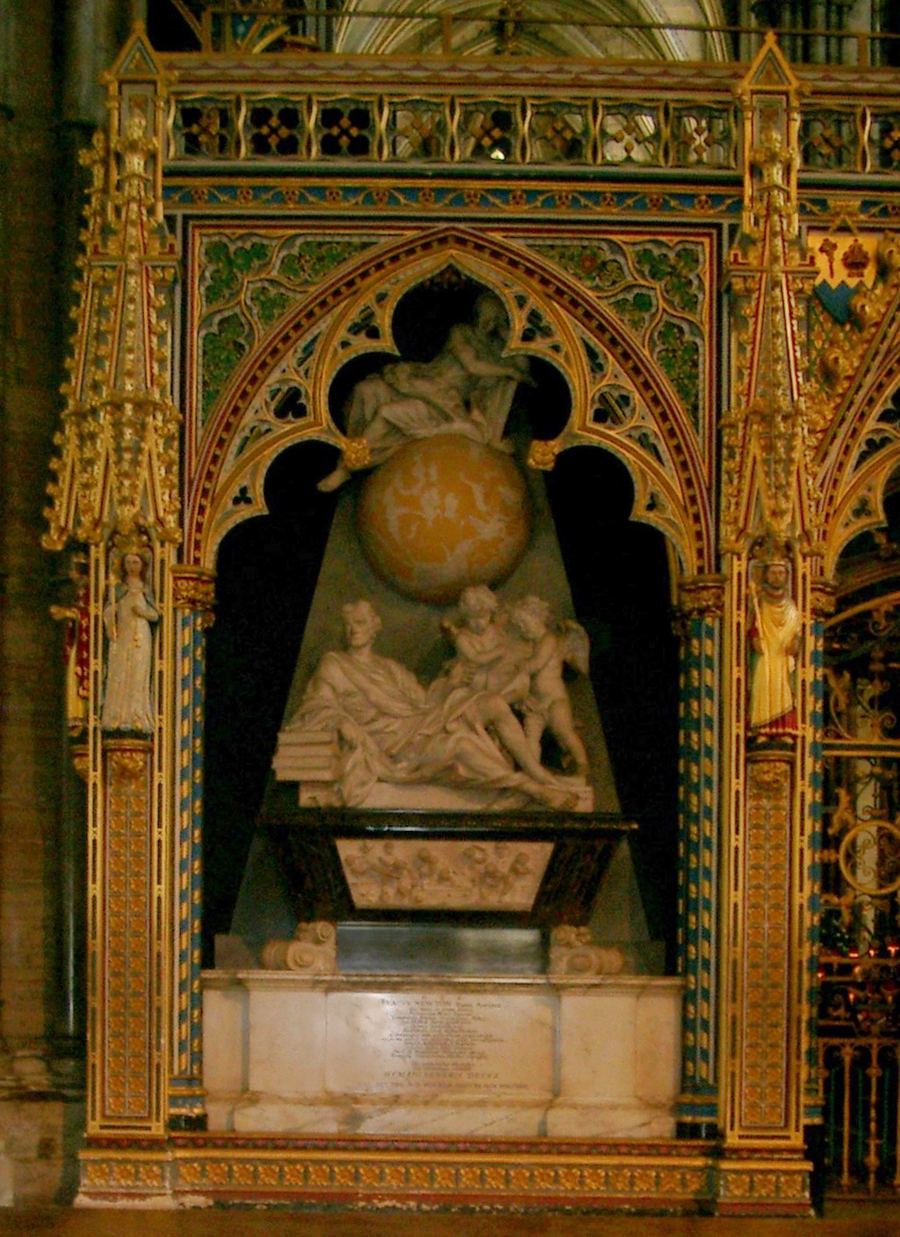
He became rich, became President of the Royal Society in 1703, and was knighted in 1705 — the first person knighted for scientific work. He died in London in 1727, aged eighty-four, and was buried in Westminster Abbey, the first scientist given that.
Westminster Abbey He was the first scientist buried there, in 1727.
1696 Leaves Cambridge to run the Royal Mint
1699 Master of the Mint
1703 President of the Royal Society
1705 Knighted by Queen Anne
1727 Dies in London, aged 84
The second career
28
counterfeiters he sent to the gallows, by one count
At the Mint He took the job seriously, interrogating suspects in taverns himself.
Chapter VI · Step 11
Master of the Mint
Warden of the Royal Mint from 1696, Master from 1699. He ran the great recoinage and personally prosecuted counterfeiters. President of the Royal Society from 1703, knighted in 1705, died in 1727.
The man who found Neptune also found the crack. Mercury’s ellipse creeps round, and about forty-three arcseconds a century of that creep had no Newtonian cause.
Le Verrier reached for the move that had worked before and proposed another hidden planet. Astronomers looked for fifty years. It was not there.
In 1915 Einstein’s general relativity gave the missing forty-three almost exactly, by treating gravity not as a force but as curvature in space and time. Newton was not wrong so much as approximate.
43″
per century: Mercury’s unexplained drift
1859
Le Verrier spots the discrepancy
1915
General relativity accounts for it exactly
Where Newton runs outΔϕ≈43′′per centuryThe slow turning of Mercury’s ellipse that Newtonian gravity leaves unexplained.
Le Verrier guessed another hidden planet, Vulcan
This time there was none
The law itself was the approximation
The same move, and it failed
Epilogue · Step 12
Where it breaks
Mercury’s perihelion drifts about 43 arcseconds per century more than Newton allows. Le Verrier proposed a hidden planet; there was none. General relativity (1915) produced the missing amount exactly.
Newtonian gravity remains the working tool: it is what flight dynamics teams use to put spacecraft around other planets, with relativistic corrections applied only where they matter.
The question in the orchard was whether the sky and the ground obey the same rules. The answer was yes, and it is the foundation under everything that followed.
Kepler’s laws stopped being brute facts; the tides and the shape of the Earth came from one equation. And it is still the working tool — flight plans to Mars and the orbit of every satellite over your head use Newton’s mechanics.
He wrote to Hooke, in the middle of their quarrel, that if he had seen further it was by standing on the shoulders of giants. In context the line is barbed — and true.
The chapter stills here are AI-generated; the portrait, the printed pages, Newton’s own diagram and the spacecraft photographs are real. Sources below.
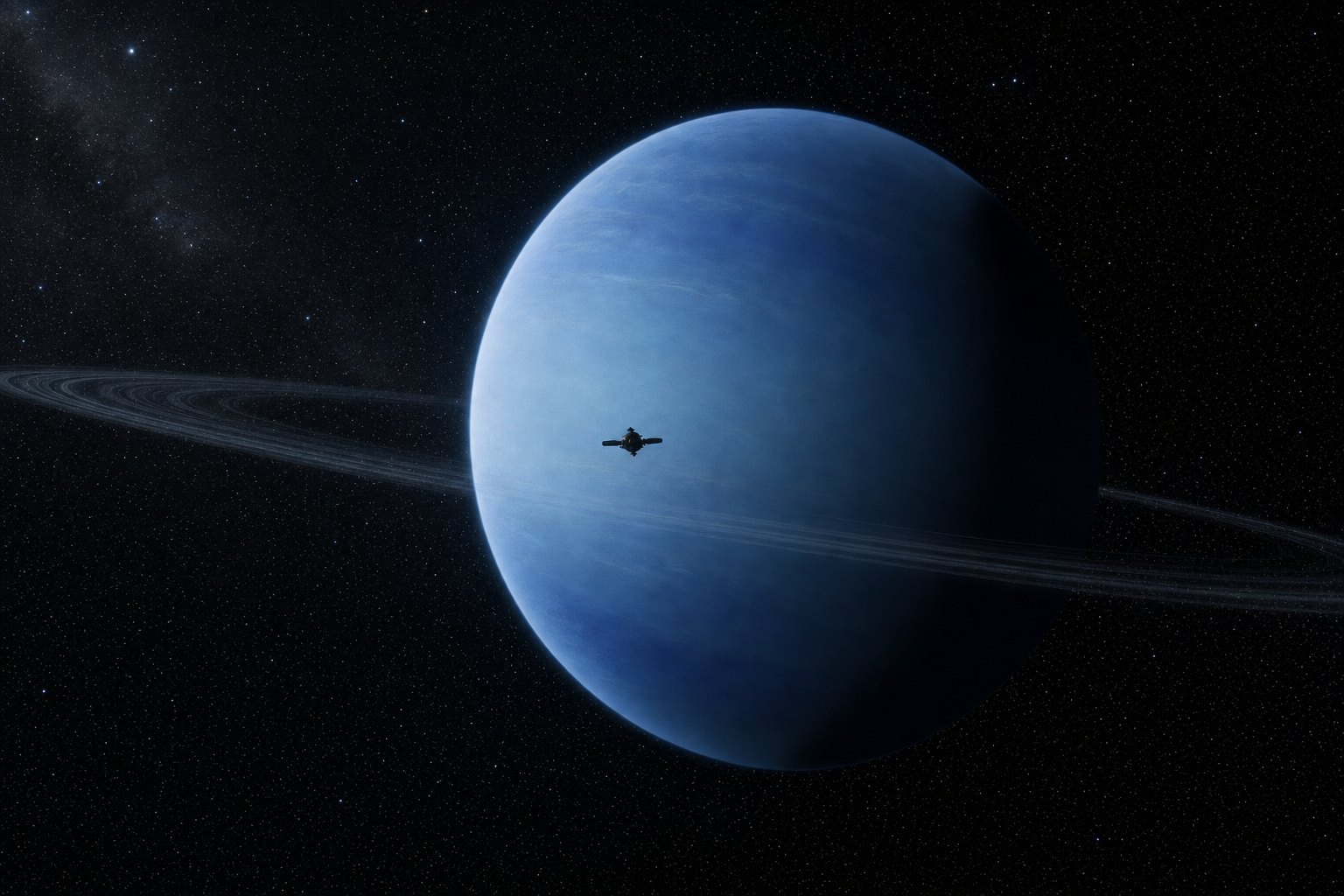
Still flying on it Every transfer orbit, gravity assist and landing is planned with Newton’s equations.
1666 Prism, calculus, and the first guess at gravity
1687 Principia
1758 Halley’s comet returns on schedule
1846 Neptune found by calculation
1915 Einstein shows where the law runs out
Now Still the mathematics of spaceflight
The line from the orchard
If I have seen further it is by standing on the shoulders of giants.Newton to Hooke, 1675 — written during their quarrel
Epilogue
What the orchard became
One force, applied everywhere, turned Kepler’s descriptions into consequences — and remains the mathematics used to plan every spaceflight today.
1666 prism, calculus, the first guess at gravity
1687 Principia
1758 / 1846 Halley’s comet returns; Neptune found by calculation
1915 relativity marks the limit
Chapter stills in this film are AI-generated illustrations. Kneller’s 1689 portrait, the 1687 title page, Newton’s own cannonball diagram, the replica of his telescope, Woolsthorpe Manor, his grave in Westminster Abbey and the NASA images of Halley’s comet and Neptune are real, credited where they appear.