Marie Curie measured pitchblende and got a number that was too big: the ore was four times as active as the uranium inside it could explain. Proving why took four years of boiling tonnes of ore in a leaking shed, and produced polonium, radium, and the illness that killed her. Run her electrometer, do the separation, and set the half-life clock. Episode 07 of the Great Scientists series.
Interactive 3D film8 min1867 to 1934Published 2026-10-13
She did not guess that something was hidden. She measured it.
In 1897 a thirty-year-old physicist in Paris took a routine measurement and got a number that was too big.
The ore in front of her was giving off more radiation than the uranium inside it could possibly produce. There was only one explanation: it contained something else, something nobody had ever seen.
Proving that took four years of shovelling, boiling and crystallising tonnes of ore in a shed with a leaking roof, and produced a tenth of a gram of a new element.
It also killed her, slowly, over the next thirty-six years.
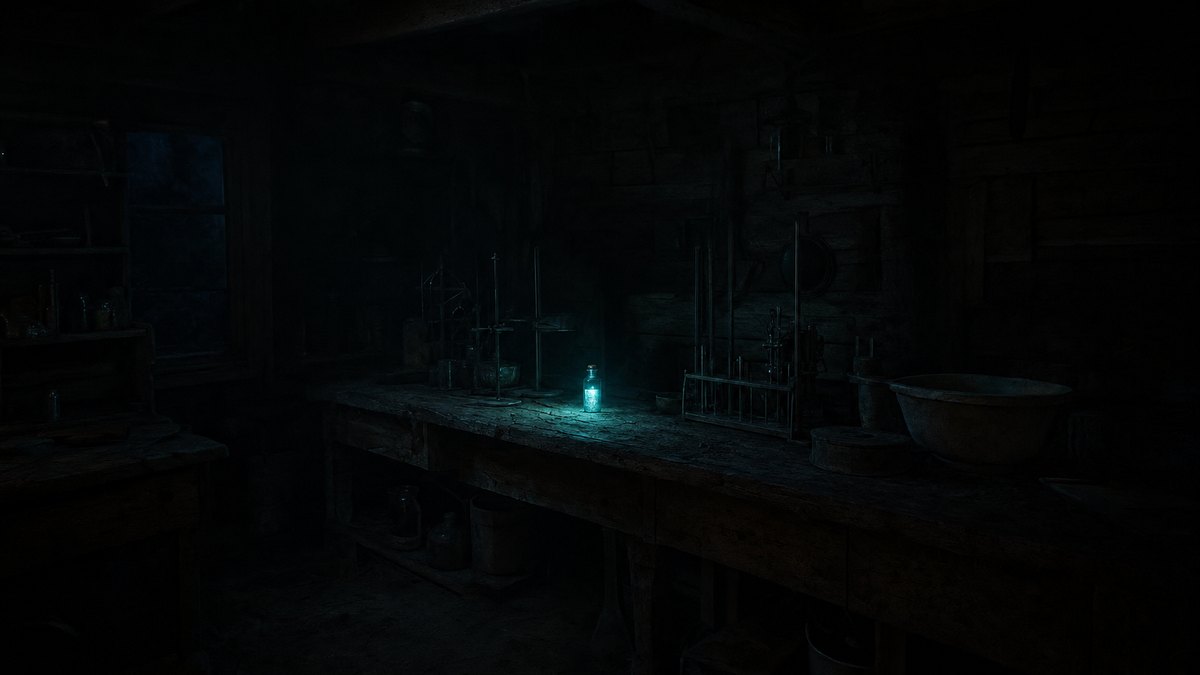
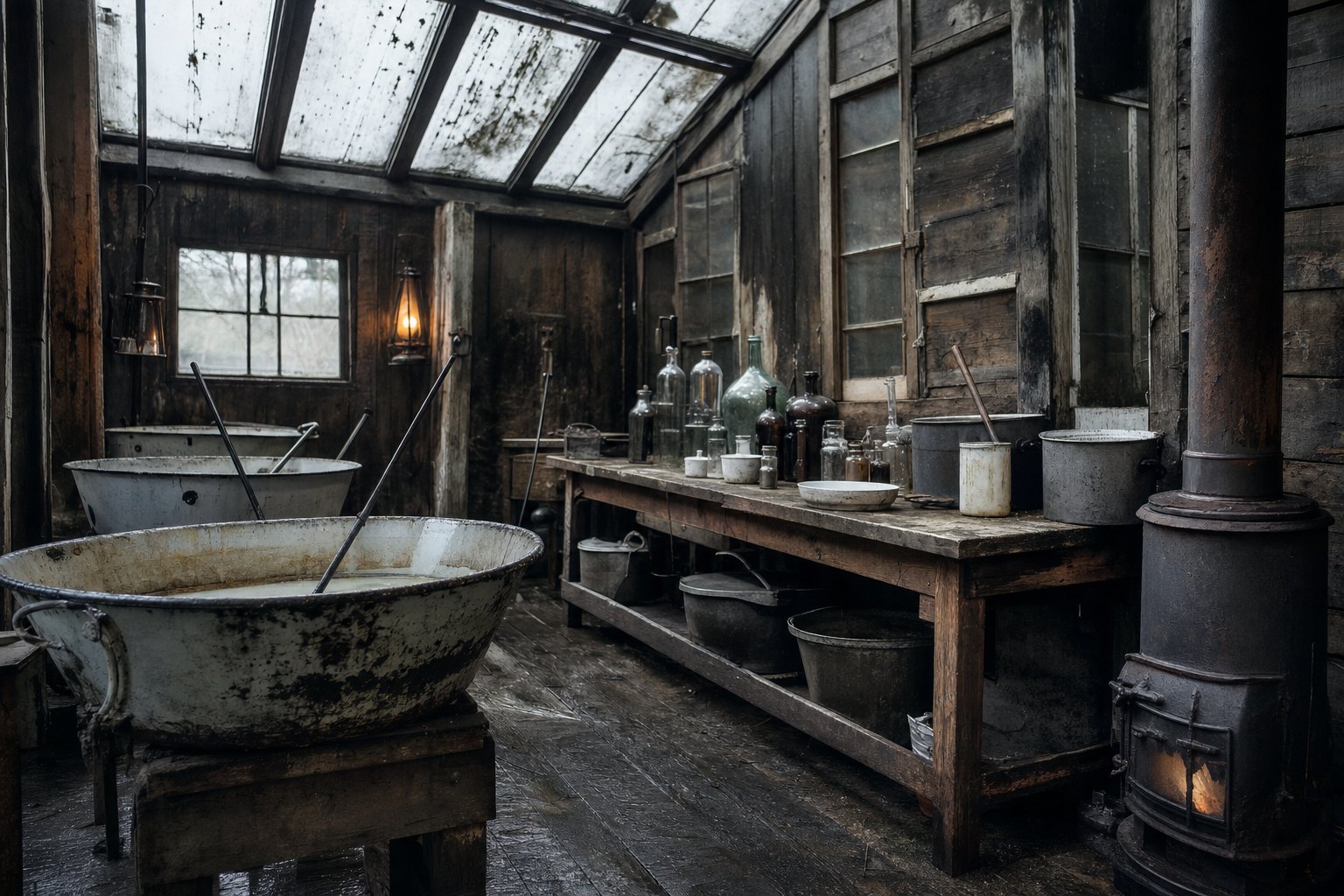
The shed A disused dissecting room with a leaking glass roof. The laboratory where radium was isolated.
4
years of boiling ore
0.1 g
radium chloride, from a tonne
2
Nobel Prizes, in two sciences
The cost and the result
One never notices what has been done; one can only see what remains to be done.Marie Curie, 1894
Prologue · Why she matters
A tenth of a gram
Curie’s discovery began as an anomalous measurement: pitchblende was more radioactive than its uranium content allowed. Four years of chemistry later, that discrepancy had a name — radium.
Born
Warsaw, 1867
7 November, under Russian rule
Died
France, 1934
4 July, of aplastic anaemia
Nobel Prizes
1903 · 1911
physics, then chemistry
How to use: pick a chapter below or press ← → to change step · ▶ plays the step · drag to rotate · three steps have buttons you can press.
Maria Skłodowska was born in Warsaw in 1867, in a Poland that had been erased from the map and was being run as a Russian province.
Polish was discouraged, Polish history was not taught, and universities did not admit women. She went to an illegal one instead — the Flying University, which met in private apartments and changed address to stay ahead of the police.
She and her sister made a deal: Maria would work as a governess and send money for Bronisława to study medicine in Paris, and then Bronisława would do the same for her.
It took five years. She reached Paris in 1891, aged twenty-three, and enrolled at the Sorbonne as Marie.
The Flying University Classes held illegally in private rooms, moving address to avoid the Russian police.
Poland was under Russian rule
Universities did not admit women
She studied in secret, in rotating apartments
Then worked as a governess to pay her sister’s fees
Getting an education at all
1891
she reaches Paris, aged 23
The escape
Chapter I · Step 1
A door that was shut
Born in Russian-ruled Warsaw in 1867, barred from university as a woman, she studied at the clandestine Flying University and worked as a governess for five years to fund her sister’s medical degree before taking her own turn in Paris, 1891.
An attic, no heating, and the best measuring instrument in Paris.
She arrived with almost no money and lived in an unheated attic, sometimes fainting from hunger while working.
In 1893 she came first in her class in physics; the next year, second in mathematics.
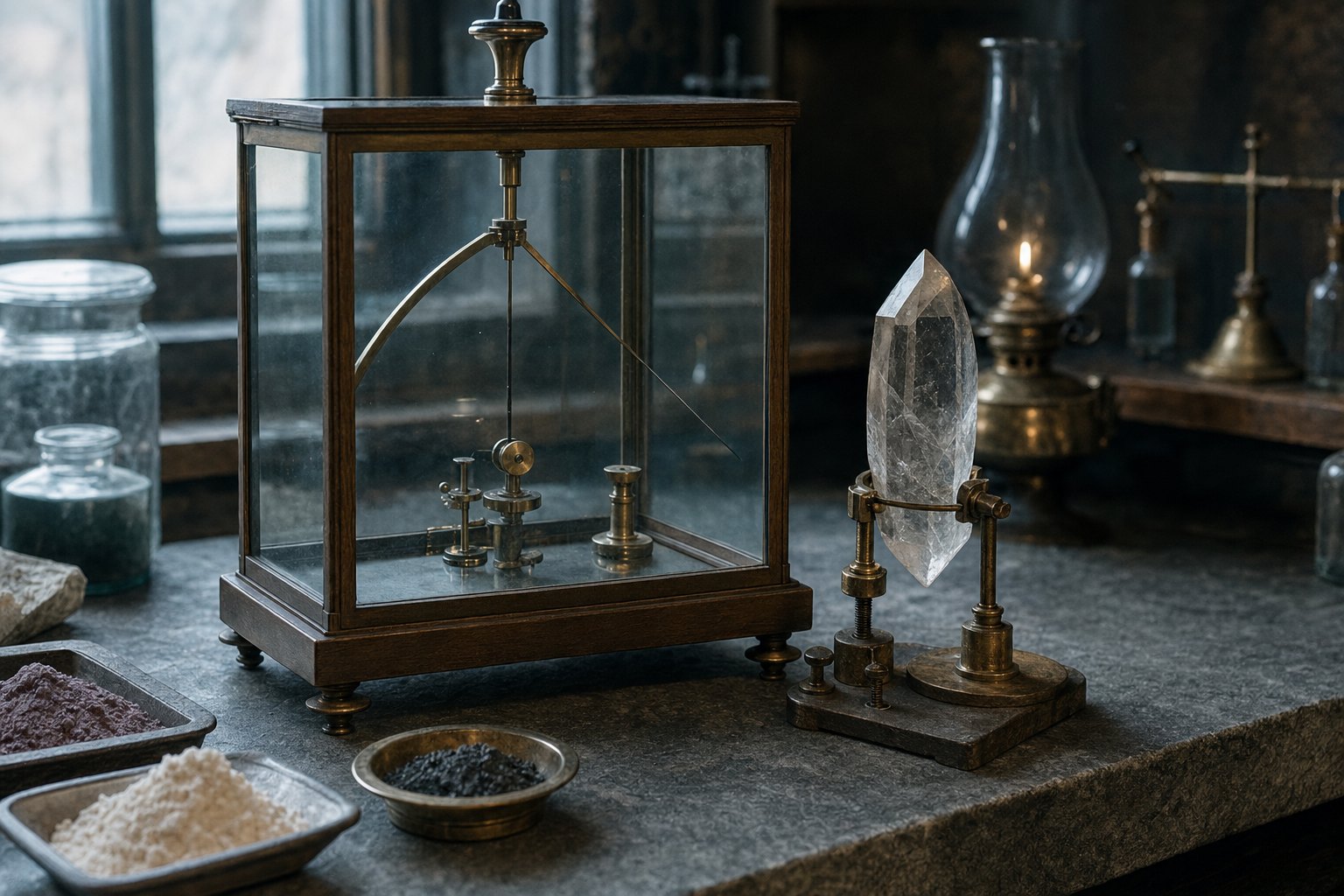
In 1894 she met Pierre Curie, a quiet physicist who had, with his brother, invented a device that turns tiny electric charges into measurable numbers using a quartz crystal.
They married in 1895. She refused a wedding dress and bought a dark one she could work in. That electrometer is the reason the next four years happened at all.
Marie and Pierre They married in 1895. No white dress; she bought a dark one she could wear in the laboratory.
1891 Arrives in Paris with very little money
1893 First in her class in physics
1894 Second in her class in mathematics
1895 Marries Pierre Curie
Four years
She lived in an unheated attic
Sometimes fainted from not eating
Pierre had built a precision electrometer
That instrument is why the discovery happened
The useful marriage
Chapter I · Step 2
First in the class
Paris on almost no money: first in physics in 1893, second in mathematics in 1894. In 1895 she married Pierre Curie, whose precision electrometer would make the discovery possible.
A photographic plate gives you an impression. An electrometer gives you a number.
In 1896 Henri Becquerel noticed that uranium salts fog a photographic plate in the dark. It was a curiosity, and most physicists moved on.
Curie took it up as a thesis topic and did one thing differently. Instead of looking at fogged plates, she measured the rays as electricity: the radiation makes the air conduct, and the tiny current is proportional to the activity.
With Pierre’s quartz electrometer that current became a number she could trust to a few per cent.
Then she measured everything she could get hold of. Press the samples and read the meter.
The electrometer Rays make the air conduct. The current is tiny — and Pierre’s instrument could measure it.
Becquerel 1896: uranium fogs a photographic plate
Curie: measure the rays as an electric current instead
Now the effect has a number
And numbers can be compared
Turning a glow into data
1896
Becquerel finds the rays
1897
she starts measuring everything
The method
Chapter II · Step 3 · Interactive
Measure, do not look
Becquerel saw uranium rays in 1896. Curie turned them into data: radiation ionises air, the air conducts, and Pierre’s quartz electrometer reads the current — a number proportional to activity.
Press each sample to place it on the plate. The bar is the ionisation current; the values here are relative, scaled so pure uranium reads 1.0.
The ore beats the pure element. That should be impossible.
Her measurements gave a clean rule: the activity of a uranium compound depends only on how much uranium it contains. Not on temperature, not on chemistry, not on light.
Then she measured pitchblende, the ore uranium is mined from. It was four times as active as pure uranium — despite containing less of it.
She checked another ore, chalcolite, and made an artificial version in the laboratory. The artificial one behaved itself; the natural one did not.
There was only one way out. Something else is in there, in traces too small to see, and whatever it is must be enormously more active than uranium.
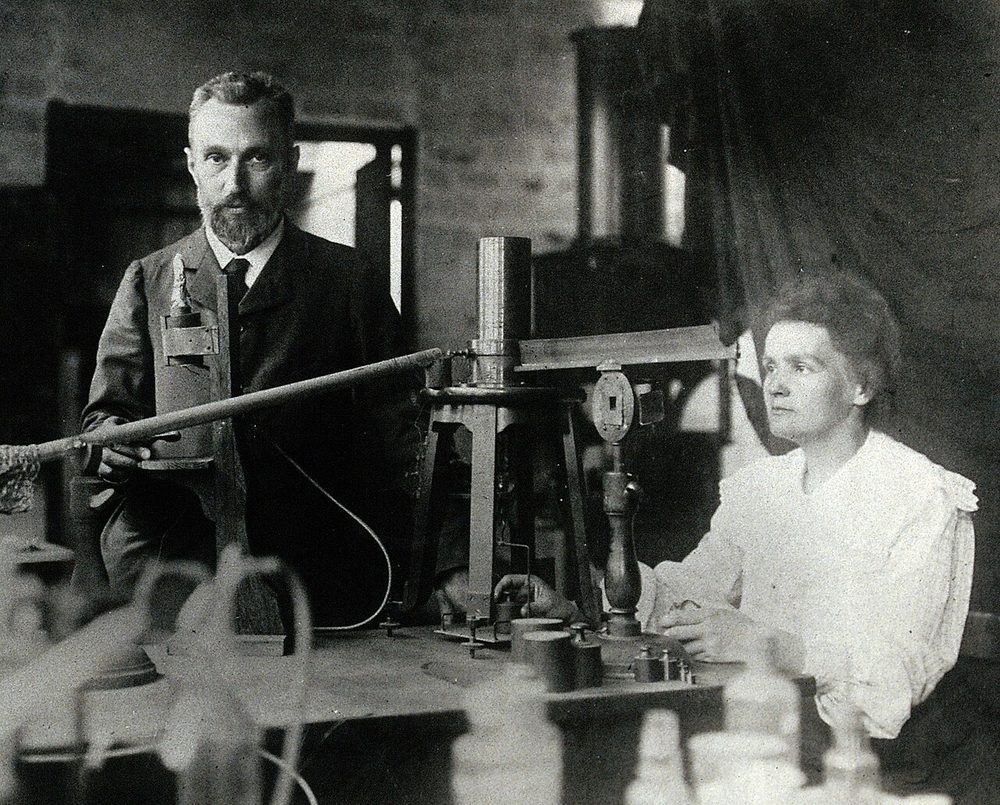
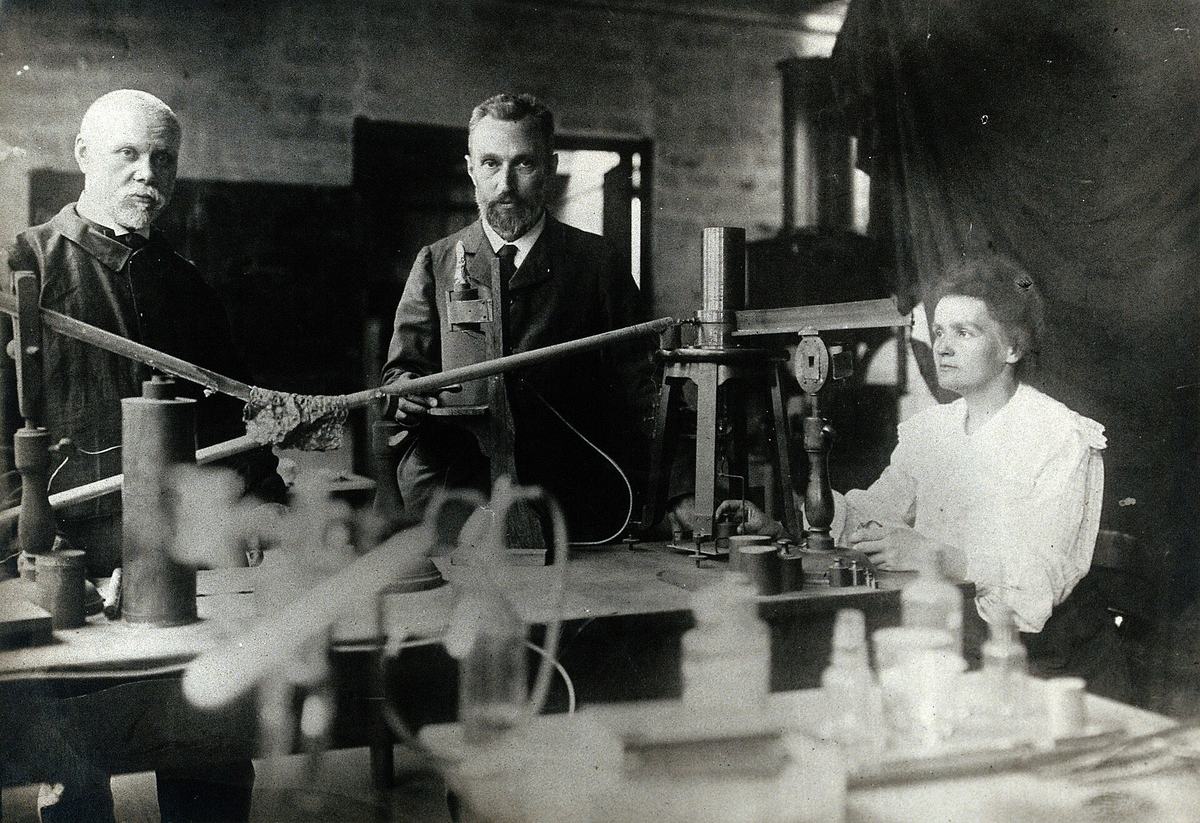
The working laboratory Marie and Pierre at work. The apparatus is simple; the patience is not.
×4
pitchblende, against pure uranium
×2
chalcolite, another uranium ore
The anomaly
Activity should depend only on how much uranium is present
The ore has less uranium than the pure salt
Yet the ore is four times as active
So something else in the ore is radioactive
The deduction
Chapter II · Step 4
Too active to be uranium
Activity tracked uranium content exactly — except in the natural ores. Pitchblende was about four times as active as pure uranium, and a laboratory-made copy of the ore was not. Something else had to be in there.
She also coined the word for the effect: radioactivity. And she showed it is a property of the atom itself, not of a chemical arrangement — which was the deeper shock.
To prove a new element exists you have to produce some of it, weigh it, and measure its atomic weight. There is no shortcut.
The Austrian government gave them tonnes of pitchblende residue, the waste left after the uranium had been extracted. The new elements were in the waste.
The process is ordinary chemistry done an extraordinary number of times: dissolve, precipitate, filter, crystallise, keep the fraction that is more active, repeat.
She did it in a shed, stirring boiling vats with an iron rod almost as tall as she was, in winter, while raising a child.
Run the separation and watch the mass fall.
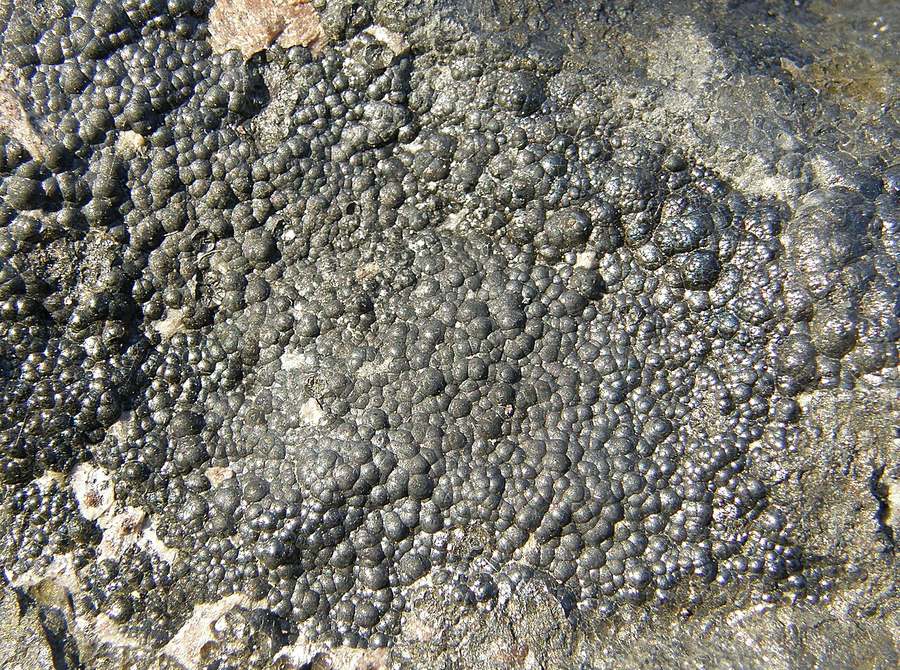
Pitchblende A heavy black uranium ore. The new elements are present at a few parts per million.
1 tonne
of ore residue to start
0.1 g
of radium chloride at the end
1902
the year it was finally weighed
The scale of it
Dissolve, precipitate, filter, crystallise
Then do it again on the richer fraction
Thousands of times, by hand, in a shed
Stirring vats with an iron rod nearly her own height
The method
Chapter III · Step 5 · Interactive
Boiling an ore down to a trace
From a tonne of pitchblende residue, by thousands of repeated crystallisations in an unheated shed, Curie separated about a tenth of a gram of radium chloride by 1902 — enough to weigh and to measure its atomic weight.
Press Next stage to carry the active fraction forward. The mass readout and the concentration are schematic but to scale.
One named for a country that did not officially exist.
By July 1898 the active fraction had been narrowed enough to announce a first new element. She named it polonium, after the country that had been wiped off the map.
It was a political act in a scientific paper, and it was deliberate.
In December they announced a second, far more active element: radium. Four more years of work turned that announcement into a tenth of a gram of pure radium chloride, and an atomic weight of two hundred and twenty-six.
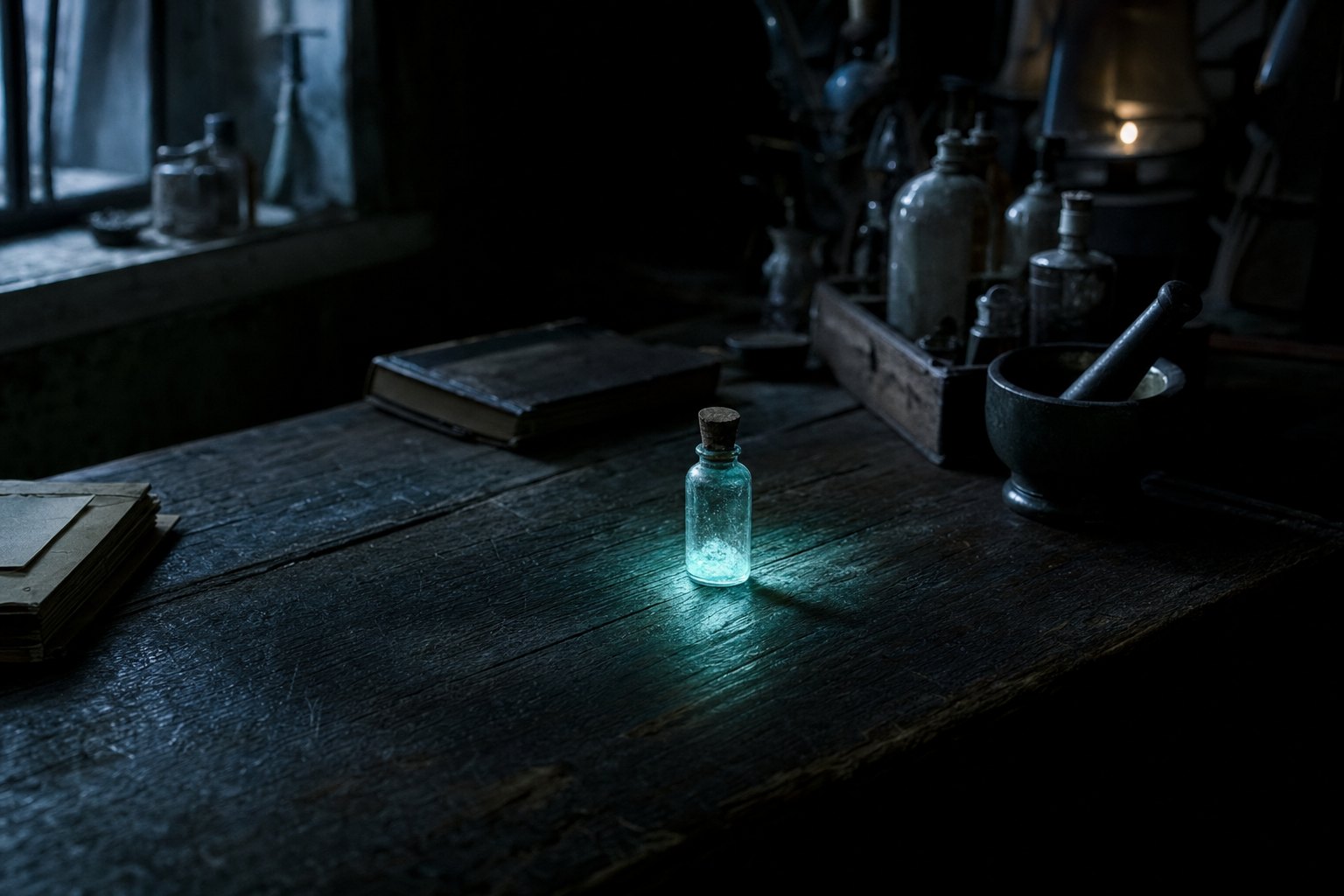
At night the shed glowed. The vials of concentrate gave off a faint blue light, and they would go and look at them in the dark.
Jul 1898 Polonium announced, named for Poland
Dec 1898 Radium announced with Gustave Bémont
1902 0.1 g of radium chloride, atomic weight 226
1910 pure radium metal isolated
Two elementsIt glows The vials gave off a faint blue light. They kept them by the bed to look at.
The glowing tubes looked like faint, fairy lights.Marie Curie, on the shed at night
Chapter III · Step 6
Polonium and radium
Polonium (July 1898), named for occupied Poland, and radium (December 1898, with Gustave Bémont). By 1902 she had 0.1 g of radium chloride and its atomic weight: 226.
Heat it, freeze it, dissolve it — the rate does not change.
What she had found was stranger than a new element. Radioactivity ignores chemistry completely.
Heat a radium sample, freeze it, dissolve it in acid, combine it into different compounds: the rate at which it emits is exactly the same. Nothing we can do to matter touches it.
That is because it comes from the nucleus, and in 1898 nobody knew there was a nucleus. What it meant was that atoms are not eternal and indivisible. They break.
Each atom goes at a random moment, but a large population halves on a fixed schedule. For radium, sixteen hundred years. For polonium, a hundred and thirty-eight days. Set the clock running.
N(t)=N02−t/T1/2
T1/2
the half-life
N0
how many atoms you start with
Each atom decays at random; the population halves on a fixed schedule.
1,600
years: the half-life of radium-226
138
days: the half-life of polonium-210
Two clocks
Radioactivity is not a chemical reaction
It comes from the nucleus of the atom
Nothing you do to a sample changes its rate
Atoms are not permanent after all
Why it mattered so much
Chapter IV · Step 7 · Interactive
Atoms are not forever
Radioactivity is untouched by heat, pressure or chemistry, because it comes from the nucleus. Individual atoms decay at random; populations halve on schedule — 1,600 years for radium-226, 138 days for polonium-210.
Pick an isotope and run the clock. The dots are atoms; the counter is how many are left.
Pierre strapped radium to his arm to see what it would do.
Radium burns living tissue. Pierre proved it by strapping a sample to his own arm and documenting the wound for weeks.
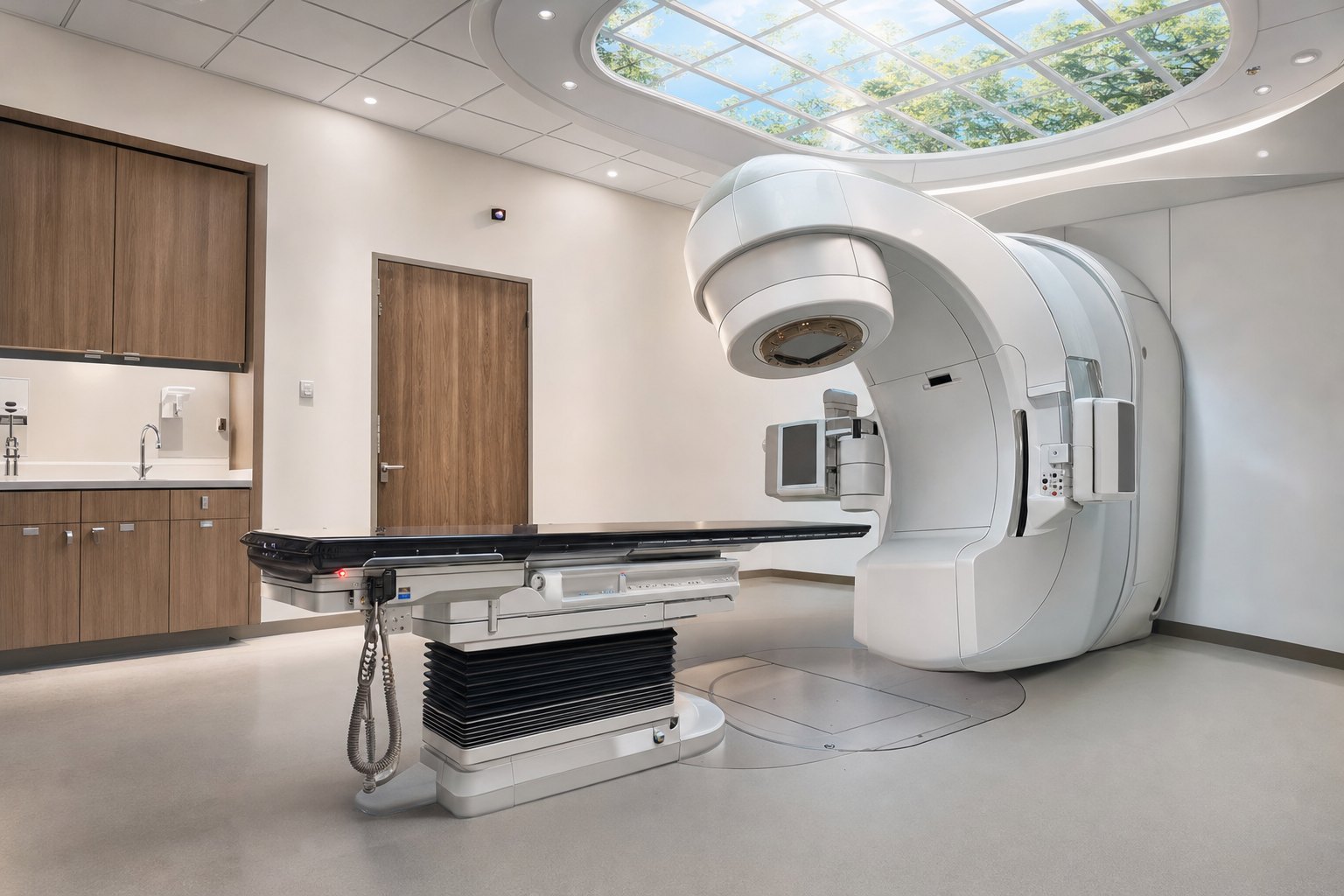
If it destroys tissue, it can destroy a tumour. Within a few years radium was being used against cancer, a treatment the French called curietherapy, and the ancestor of modern radiotherapy.
The same property was also sold as a tonic. Radium water, radium toothpaste, radium face cream. People died of it.
The Curies refused to patent their process. Anyone could use it. They kept almost nothing, and had to beg for the radium they needed to keep working.
Radium burns tissue — including tumours
Pierre deliberately burned his own arm to measure it
Curietherapy becomes cancer treatment
And radium is sold as a health tonic for decades
Both at once
0
patents they took out
A decision They refused to patent the isolation process, and stayed poor.Still in use Radiotherapy today is the direct descendant of her sealed radium tubes.
Chapter IV · Step 8
Burns that cure
Radium destroys tissue — which made it the first cancer radiotherapy, and also, disastrously, a fashionable tonic. The Curies refused to patent the isolation process and stayed poor.
In 1903 the Nobel committee prepared to award the physics prize for radioactivity to Henri Becquerel and Pierre Curie.
Pierre was told in advance, and wrote back that the work was hers as much as his and that he would not accept an award that excluded her. Her name was added.
She became the first woman to receive a Nobel Prize. She is still the only person to have won in two different sciences.
Most of the prize money went on equipment and on paying off the loans that had kept the shed running.
1903 Nobel Prize in Physics — she was nearly left off
1906 Pierre is killed by a cart in the rain
1911 Nobel Prize in Chemistry, alone
Eight years
The nomination named only Becquerel and Pierre
Pierre wrote to insist she be included
She became the first woman to win a Nobel Prize
And is still the only person to win in two sciences
1903
Chapter V · Step 9
Nearly left off the prize
The 1903 physics nomination listed Becquerel and Pierre Curie only. Pierre objected and refused to accept an award that excluded her. She became the first woman to win a Nobel Prize — and remains the only person to win in two sciences.
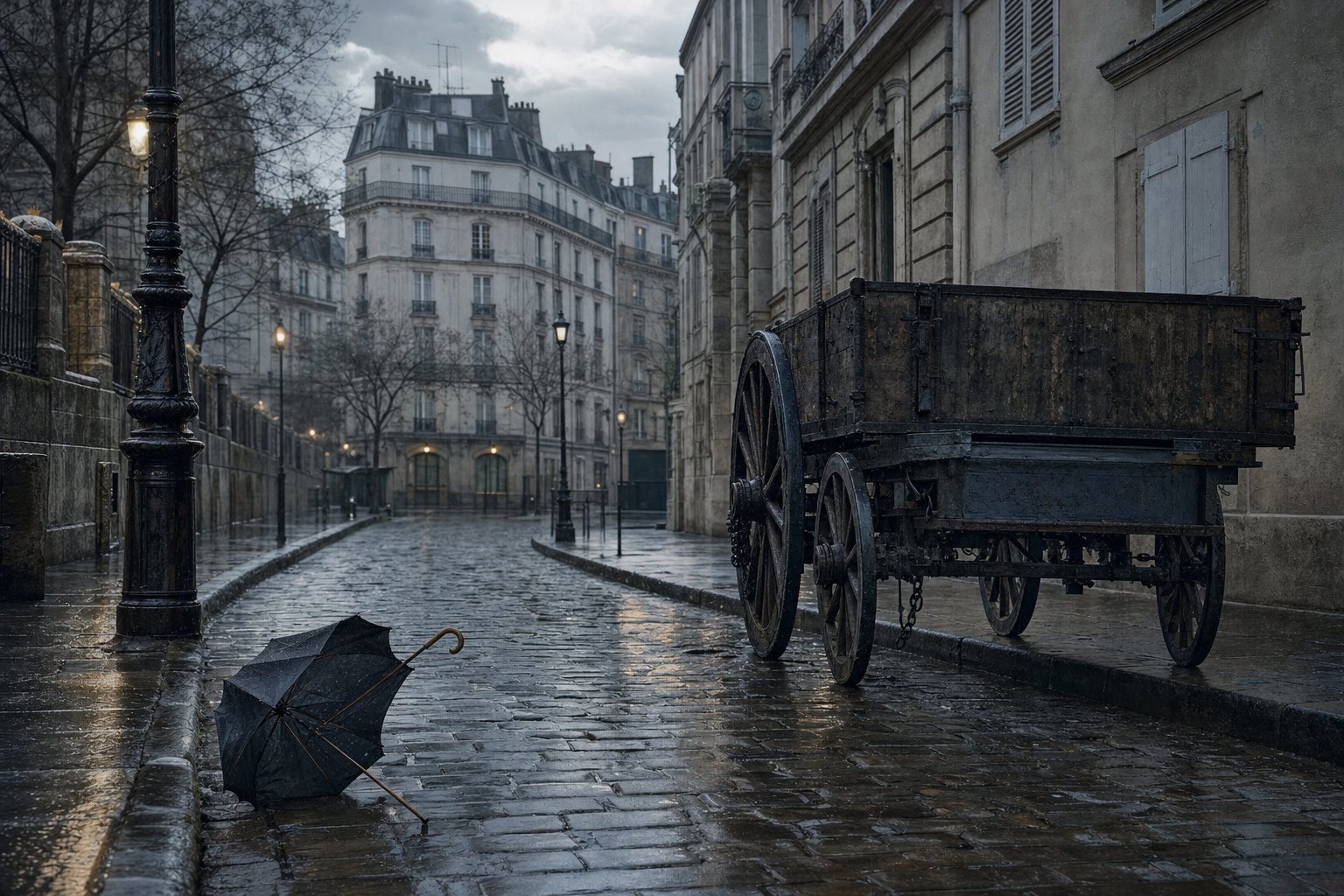
On the nineteenth of April 1906 Pierre stepped into a Paris street in the rain and was run over by a heavy wagon. He was forty-six.
She took his chair at the Sorbonne, the first woman to hold one, and kept the laboratory going.
In 1911, days before she was awarded a second Nobel Prize, French newspapers published private letters and ran a campaign against her as a foreigner and a homewrecker. A member of the Swedish Academy wrote suggesting she not come to the ceremony.
She replied that the prize was for radium and polonium, that her private life had nothing to do with her science, and that she would be attending. She went.
A wet street Pierre stepped into the road in the rain and was struck by a heavy horse-drawn wagon.
She took over his chair at the Sorbonne
The first woman to hold one there
In 1911 the press attacked her over a private affair
The Academy suggested she stay away from the ceremony
After
The prize has been awarded for the discovery of radium and polonium. I believe there is no connection between my scientific work and the facts of private life.Marie Curie to the Swedish Academy, 1911
Chapter V · Step 10
The cart and the newspapers
Pierre was killed by a wagon on 19 April 1906. Marie took his chair at the Sorbonne — the first woman to hold one. In 1911, amid a press campaign over her private life, the Swedish Academy suggested she skip the ceremony. She went.
Twenty vans, two hundred posts, and a seventeen-year-old assistant.
When the war started in 1914 she stopped research and did something unglamorous and enormous.
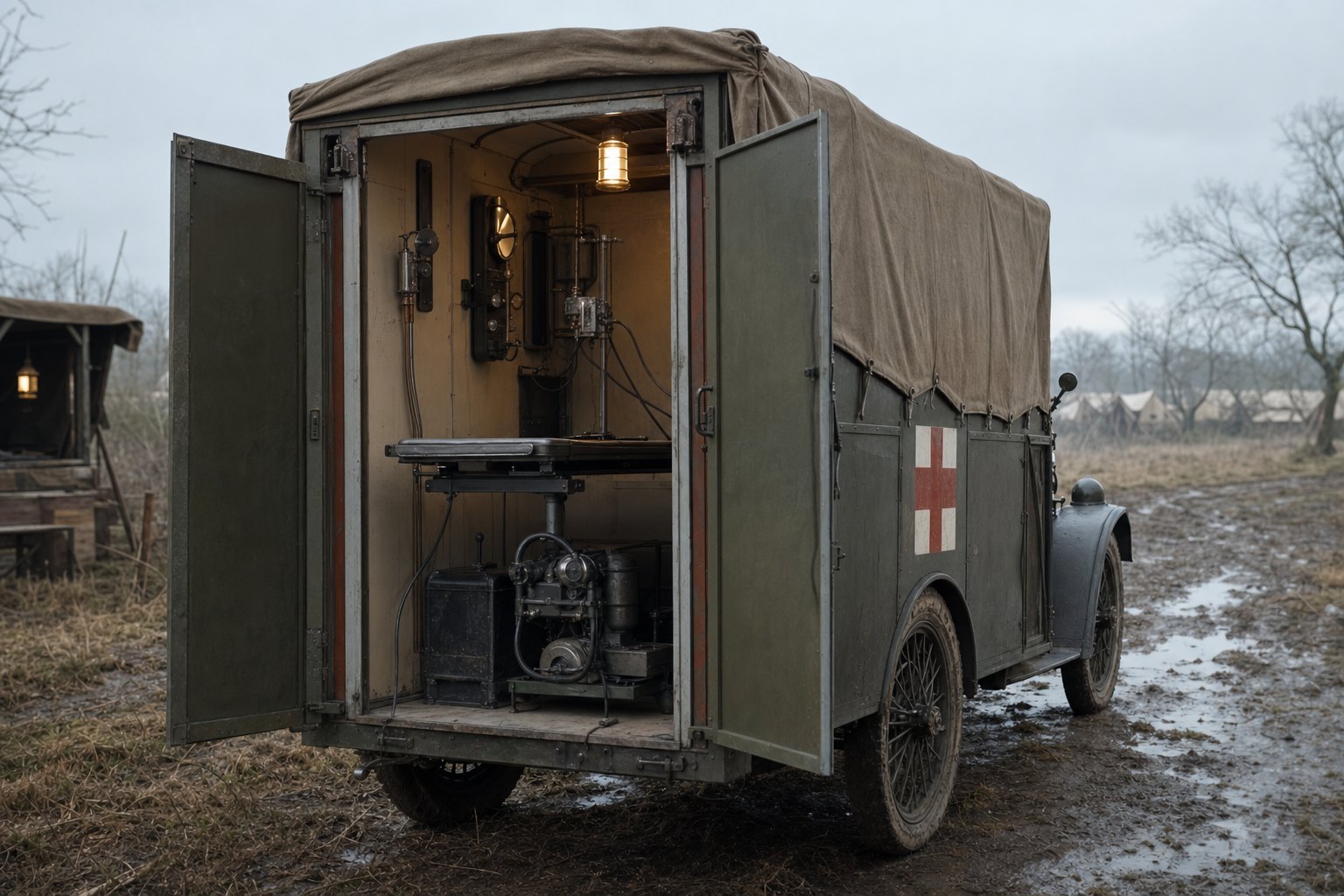
X-rays existed but were in hospitals far behind the lines. Curie raised money, had cars converted into mobile radiography units with their own generators, and got them to the front so surgeons could find shrapnel before operating.
She learned to drive, learned basic vehicle repair, trained women as radiographers, and worked at the front herself with her daughter Irène, who was seventeen.
Twenty vans in the first year, and about two hundred fixed radiological posts. The soldiers called the cars petites Curies.
A petite Curie A car with an X-ray set and a generator, driven to the front so surgeons could see the shrapnel.
20
mobile X-ray vans in the first year
200
radiological posts at field hospitals
The war work
She raised the money and had the cars fitted
Learned to drive and to change a tyre
Trained women as radiographers
Worked at the front with her daughter Irène, then 17
What she actually did
Chapter VI · Step 11
She learned to drive
In the First World War Curie built 20 mobile X-ray vans and about 200 radiological posts, learned to drive and repair them, trained women as operators, and worked at the front with her daughter Irène, aged 17.
She died on the fourth of July 1934 of aplastic anaemia: her bone marrow had stopped making blood cells, after nearly forty years of handling radioactive material with no protection at all.
Her laboratory notebooks are still radioactive. They are kept in lead-lined boxes at the Bibliothèque nationale, and anyone who wants to read them signs a waiver.
Radium-226 has a half-life of sixteen hundred years. The notebooks will be dangerous for a very long time, for exactly the reason she worked out.
The year after she died, her daughter Irène won a Nobel Prize of her own.
She carried tubes of radium in her pockets
Kept samples in a desk drawer to watch them glow
Nobody knew the dose mattered until much later
Her notebooks are still radioactive and kept in lead
The cost
1,600
years before her notebooks are safe to handle freely
Radium-226 The same half-life she measured is why the paper is still dangerous.
1935
her daughter Irène wins a Nobel Prize
The year after
Epilogue · Step 12
The notebooks are still hot
Curie died of aplastic anaemia in 1934 after decades of unprotected exposure. Her notebooks remain radioactive, stored in lead-lined boxes — radium-226’s half-life is 1,600 years. Her daughter Irène won a Nobel Prize the following year.
She followed a discrepancy, and the atom came apart.
The whole thing started with a measurement that did not fit, and a refusal to round it away.
Following that discrepancy produced two elements, the word radioactivity, the first evidence that atoms transform, the beginning of nuclear physics, and a cancer treatment still used every day.
The chapter stills in this film are AI-generated. The photographs of Marie and Pierre, their laboratory and the pitchblende are real.
Sources are listed below.
1896 Becquerel finds the rays
1898 polonium and radium
1902 a tenth of a gram, weighed
1903 · 1911 two Nobel Prizes
1914–18 the X-ray vans
1934 dies of radiation illness
Thirty-eight years
Radioactivity is a property of the atom
Which means atoms can change into other atoms
Which leads to the nucleus, and to nuclear physics
And to radiotherapy, dating and tracers
What the anomaly opened
Epilogue · Step 13
What one odd number opened
An anomaly she refused to round away produced two elements, the word radioactivity, the first evidence that atoms transform, and the ancestor of modern radiotherapy.
1898 polonium and radium announced
1902 0.1 g of radium chloride, atomic weight 226
1903 · 1911 Nobel Prizes in physics and chemistry
1914–18 mobile X-ray units at the front
Chapter stills in this film are AI-generated illustrations. The photographs of Marie and Pierre Curie, of their laboratory, and of pitchblende are real, credited where they appear.